
Creative Toddler Fall Crafts for Language Development
 By Speech Blubs Team•Feb 23, 2026•15 min.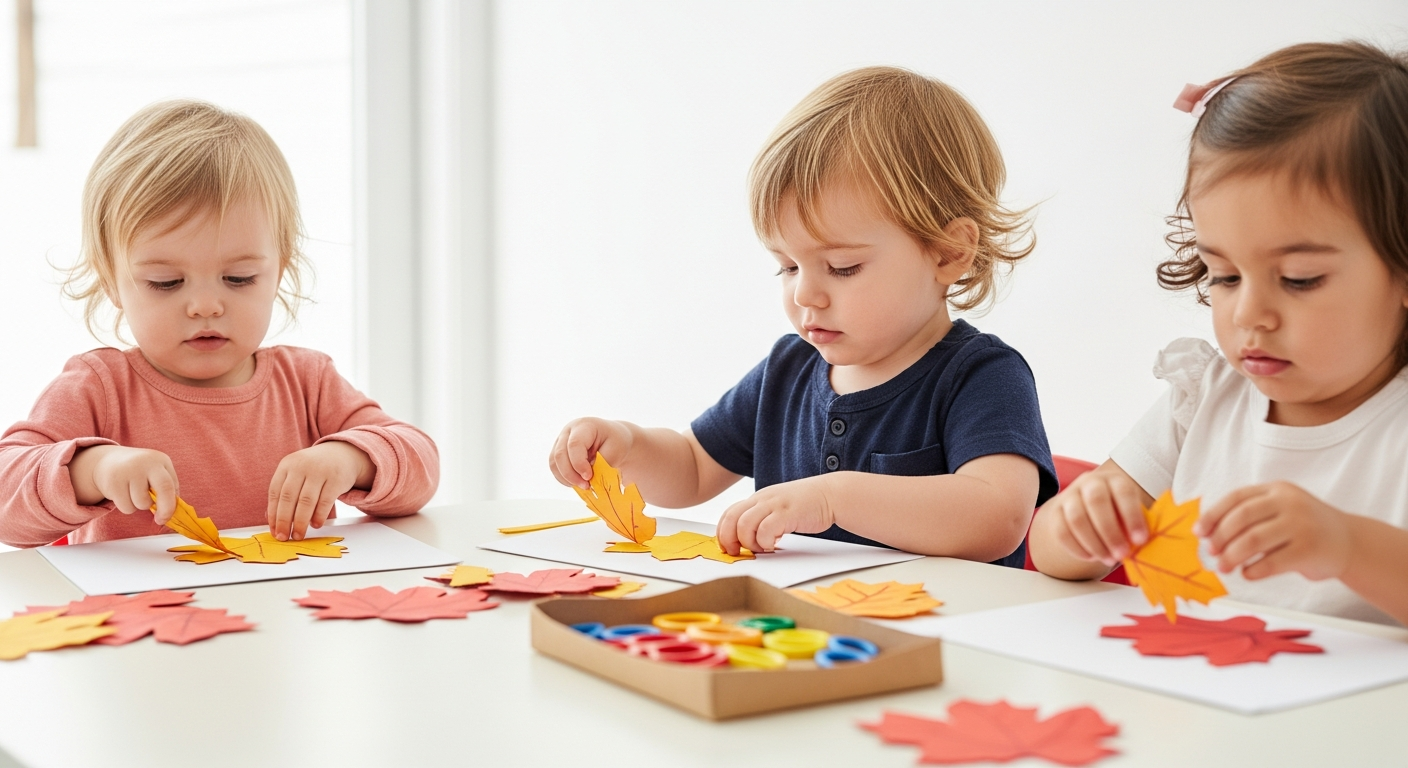
Table of Contents
- Introduction
- Why Fall Crafts are a Language Goldmine
- Setting Up Your "Smart Screen Time" and Craft Space
- Vibrant Leaf Crafts for Little Hands
- Apple and Pumpkin Delights
- Fine Motor and Sensory Exploration
- The Science of Play: How Speech Blubs Supports Development
- Building a Routine with the Right Tools
- Practical Tips for Success
- More Fall Craft Ideas to Explore
- Conclusion
- Frequently Asked Questions
Introduction
Did you know that a simple walk through a pile of crunchy, golden autumn leaves can spark a flurry of new words in a toddler’s vocabulary? There is something truly magical about the transition into fall—the air turns crisp, the colors shift to vibrant oranges and deep reds, and the world becomes a giant sensory playground for a developing child. For parents and caregivers, this season presents a golden opportunity to move beyond passive observation and step into the world of active, creative learning.
At Speech Blubs, we believe that every moment is a chance for a child to find their voice. Our mission is to empower children to "speak their minds and hearts," a goal born from the personal experiences of our founders who faced their own speech challenges as children. We know that the journey to clear communication isn't always a straight line, which is why we advocate for blending scientific principles with the pure joy of play. This blog post is designed to be your go-to resource for toddler fall crafts that don't just result in cute refrigerator art, but also build foundational speech and language skills.

Throughout this guide, we will explore a variety of hands-on activities—from leaf-stamping to sensory bins—and show you how to narrate these experiences to encourage your little one’s first words and complex sentences. We’ll also discuss how our unique "smart screen time" approach can complement these offline activities to create a holistic learning environment. Our goal is to help you foster a love for communication, build your child’s confidence, and reduce the frustration that often comes with speech delays, all while creating joyful family memories.
By the end of this article, you will have a comprehensive toolkit of autumnal activities and a deeper understanding of how to support your child's developmental milestones. Let's dive into the world of creative play and discover why fall is the perfect season for language growth.
Why Fall Crafts are a Language Goldmine
When we think about speech therapy or language development, we often picture flashcards or formal exercises. However, at Speech Blubs, we know that the most effective learning happens when a child is engaged, curious, and having fun. Toddler fall crafts provide a rich "linguistic environment" because they are inherently sensory.
When a toddler dips a potato into orange paint to make a leaf print, they aren't just making art; they are experiencing concepts like "wet," "cold," "squishy," and "press." As you describe these actions, you are mapping language onto their physical experiences. This is a core part of how children learn to associate sounds with meanings.
Our method at Speech Blubs is built on the concept of video modeling, where children watch their peers perform actions and make sounds. This activates "mirror neurons" in the brain, making them more likely to imitate what they see. You can act as a "live" version of this modeling during craft time. When you say, "I am sticking the leaf! Stick, stick, stick!" and your toddler watches you, they are learning the rhythm and mechanics of those words in a real-world context.

Setting Up Your "Smart Screen Time" and Craft Space
Before we get into the specific crafts, it is helpful to think about how to structure your day to balance physical play with digital learning. We recommend using our app as a "warm-up" for your craft sessions. For example, if you plan to do an activity involving apples, you might first explore the "Yummy Time" section of our app.
Watching other children say "apple" or "crunch" on the screen provides a powerful visual and auditory template. Then, when you transition to a real-life apple craft, your child already has those sounds fresh in their mind. This synergy between the digital and physical worlds is what makes Speech Blubs a powerful tool for family connection rather than just another passive cartoon.
If you are unsure where your child stands in their development, we highly recommend taking our quick 3-minute preliminary screener. It consists of 9 simple questions and provides you with an assessment and a next-steps plan, along with a free 7-day trial of our full suite of tools.
Vibrant Leaf Crafts for Little Hands
Leaves are the quintessential symbol of autumn, and they offer endless possibilities for language-focused play.
1. Fall Leaf Potato Stamping
This is a classic activity that never gets old. All you need are a few potatoes, some fall-colored paints (red, orange, yellow), and paper.
- How to do it: Cut a potato in half and carve a simple leaf shape into the flat side (or just use the oval shape as is). Let your child dip the potato in paint and press it onto the paper.
- Language Tips: Focus on action words like "push," "lift," and "more." You can also practice color identification. If your child is a "late talker," use the "Animal Kingdom" section of Speech Blubs to find animals that live in the forest, like owls or squirrels, and talk about them while you stamp.
2. The Nature Sticky Wall
This is a fantastic sensory experience that requires minimal cleanup.
- How to do it: Tape a piece of clear contact paper (sticky side out) to a wall or window. Go on a nature walk to collect leaves, small twigs, and acorns. Let your child "stick" their findings onto the wall.
- Language Tips: Use descriptive adjectives like "sticky," "rough," "smooth," and "crunchy." This is also a great time to practice prepositions: "Put the leaf up high" or "Put the twig down low."
3. Leafy Letter Collage
For toddlers who are starting to recognize the letters in their name, this is a wonderful personalized craft.
- How to do it: Draw a large version of your child’s first initial on a piece of cardstock. Have them glue small, colorful leaves inside the lines of the letter.
- Language Tips: Emphasize the sound of the letter. "L is for Leaf! L-L-L." This phonemic awareness is a building block for reading later on.
Apple and Pumpkin Delights
Food-themed crafts are highly motivating for toddlers because they relate to things they see every day in their kitchen.
4. Apple Print Banner
Instead of just eating your apples, turn them into stamps!
- How to do it: Cut an apple in half vertically to show the core. Dip it in red or green paint and stamp it across a long strip of paper to create a festive banner.
- Language Tips: This activity is perfect for practicing the "A" sound. You can also use repetitive phrases like "Dip and stamp, dip and stamp!" Repetition is key for toddlers learning to coordinate their speech muscles.
5. Washi Tape Patterned Pumpkins
If you want to avoid the mess of paint, washi tape is your best friend.
- How to do it: Cut pumpkin shapes out of orange construction paper. Give your toddler various rolls of patterned washi tape and let them decorate the pumpkins by sticking strips of tape across them.
- Language Tips: This is great for fine motor skills, which are closely linked to speech development. Talk about the patterns: "Stripes," "dots," "lines." Ask your child, "Do you want the blue tape or the green tape?" to encourage choice-making and vocabulary.
6. Pool Noodle Pumpkin Printing
Do you have old pool noodles from the summer? Don't throw them away!
- How to do it: Cut a pool noodle into 3-inch sections. The circular end makes a perfect stamp. Use orange paint to stamp circles on paper, then draw a little green stem on top.
- Language Tips: Use the word "circle" repeatedly. You can also talk about the "O" sound for "orange." For a child who loves vehicles, you could even pretend the pool noodle stamps are wheels, bridging their interests with the fall theme.
Fine Motor and Sensory Exploration
Developing the small muscles in the hands is vital for many aspects of a child's growth, including their ability to eventually hold a pencil or even gesture while speaking.
7. Fine Motor Yarn Wrapping
This craft is excellent for older toddlers who are developing better hand-eye coordination.
- How to do it: Cut a leaf or pumpkin shape out of thick cardboard. Notch the edges slightly. Give your child a length of fall-colored yarn and show them how to wrap it around the shape, catching the yarn in the notches.
- Language Tips: Use the words "around," "over," and "under." These spatial concepts are essential for language comprehension. If they get frustrated, remind them that it's okay to try again—building confidence is just as important as the craft itself.
8. Autumn Sensory Tub
Sensory bins are a staple in many speech therapy rooms because they encourage "self-talk" and narration.
- How to do it: Fill a large plastic bin with dried corn kernels, cinnamon sticks, silk leaves, and small plastic forest animals. Add some scoops and cups.
- Language Tips: This is an open-ended activity. Simply sit with your child and narrate what they are doing: "Oh, you are scooping the corn! Pour, pour, pour! I see a brown bear in the leaves." This mimics the "modeling" we do in our app, providing a constant stream of meaningful language.
9. Corn Painting (Process Art)
Instead of using a brush, use an ear of corn as the tool!
- How to do it: Use a real ear of dried "Indian corn" or a regular cob. Roll it in various colors of paint and then roll it across a large piece of paper.
- Language Tips: The texture of the corn makes a unique "bumpy" pattern. Use the word "bumpy" and talk about the "rolling" motion.
The Science of Play: How Speech Blubs Supports Development
You might wonder why we place such a high value on activities like these. It’s because our methodology is rooted in the understanding that children learn best through imitation and joy. Our app is designed to be a "smart" alternative to the passive viewing of cartoons. Instead of just watching a character on a screen, your child is invited to participate, to make faces, to mimic sounds, and to interact with peers.
This "video modeling" is backed by significant scientific research, placing us in the top tier of speech apps globally. We have seen firsthand how this approach helps children who are late talkers, those with Autism, Down Syndrome, or simply those who need a little extra boost in their communication skills.
For example, consider a parent whose 3-year-old "late talker" loves animals. While they are making a "Paper Plate Scarecrow" (another great craft!), they might be hesitant to speak. But if you open the "Animal Kingdom" section of the app and watch a peer make a "crow" sound, the child is often motivated to join in. You can read more about these heartwarming success stories on our testimonials page.
Building a Routine with the Right Tools
Consistency is key when it comes to speech development. Incorporating 10-15 minutes of "smart screen time" followed by a hands-on craft can create a powerful routine. To support this, we offer flexible plans to fit every family's needs.
Transparent Pricing and Best Value
We want to be upfront about our pricing to help you make the best decision for your family’s journey:
- Monthly Plan: $14.99 per month. This is a great way to test the waters and see how your child responds to the app.
- Yearly Plan (Best Value): $59.99 per year. This breaks down to just $4.99 per month, a 66% savings compared to the monthly plan.
Why the Yearly Plan is the clear choice: The Yearly plan isn't just more affordable; it's a comprehensive developmental package. When you choose the Yearly plan, you receive:
- A 7-day free trial to explore everything we have to offer.
- The Reading Blubs app, which focuses on early literacy and phonics—a perfect companion to speech development.
- Early access to all new updates and features.
- Priority 24-hour support response time from our dedicated team.
The Monthly plan does not include the Reading Blubs app or the free trial, so we always encourage parents to sign up for the Yearly plan to get the full suite of features and the best start for their child.
Practical Tips for Success
As you embark on these toddler fall crafts, keep these guiding principles in mind:
- Focus on the Process, Not the Product: Your toddler’s leaf collage might look like a pile of glue and crumpled leaves, and that is perfectly okay! The goal isn't a masterpiece; it's the conversation you have while making it.
- Follow Their Lead: If your child wants to spend the whole time sticking tape to their arm instead of the pumpkin, go with it. Narrate that experience! "Oh, the tape is on your arm! It is stuck!"
- Adult Co-Play is Essential: While the app is a powerful tool, it is most effective when used together. Sit with your child, laugh at the funny filters in the app, and carry that energy into your crafting.
- Be Patient: Speech development takes time. We don't promise that your child will be giving public speeches in a month. Instead, we focus on the small wins: a new sound, a reduction in frustration, or a joyful moment of connection.
More Fall Craft Ideas to Explore
If you’ve already mastered the leaf stamps and sensory bins, here are a few more quick ideas to keep the momentum going:
- Scribble Lanterns: Let your toddler scribble on a piece of paper with fall colors. Roll the paper into a cylinder and place a battery-operated tea light inside. Talk about "light" and "dark."
- Lego Stamped Indian Corn: Use the end of a Lego brick to stamp rows of "kernels" in various colors. This is a great way to talk about "patterns" and "colors."
- Bark Owls: Use pieces of bark found outside to create the body of an owl. Add googly eyes and a paper beak. Practice the "Whoo-Whoo" sound!
By integrating these activities with the Speech Blubs app, you are providing your child with a multi-sensory education that respects their pace and celebrates their unique voice.
Conclusion
The transition into autumn is a season of change, and it's the perfect time to foster positive changes in your child's communication skills. Through these toddler fall crafts, you aren't just filling an afternoon; you are building the neural pathways necessary for language, confidence, and connection. From the "stickiness" of contact paper to the "crunch" of a dried leaf, every sensory detail is a stepping stone toward helping your child speak their mind and heart.
At Speech Blubs, we are honored to be a part of your family’s journey. Our founders created this tool because they knew the struggle of feeling unheard, and they wanted to ensure that no child has to face that alone. By combining the physical world of crafting with our scientifically-backed video modeling, you are giving your child a "smart screen time" experience that truly makes a difference.
Are you ready to see your child's confidence bloom this fall? We invite you to start your journey with us today. Choose the Yearly plan to unlock our full suite of features, including the Reading Blubs app and your 7-day free trial. You can download Speech Blubs on the App Store or Google Play Store to begin, or create your account on our website. Let's make this autumn a season of joyful learning and breakthrough moments!
Frequently Asked Questions
1. How do crafts actually help my toddler learn to talk?
Crafts facilitate "situational language." When a child is actively doing something—like painting or gluing—they are more likely to absorb the words associated with those actions. It provides a concrete context for abstract sounds. By narrating the "process art," you are providing a rich vocabulary that they can eventually mimic.
2. What if my toddler has a short attention span and won't sit for crafts?
That is completely normal! Toddlers are built to move. For children with high energy, try "active" crafts like the Nature Sticky Wall or a sensory bin where they can stand and move around. You can also use the Speech Blubs app for short, 5-minute bursts of learning that keep them engaged without feeling overwhelmed.
3. Is Speech Blubs a replacement for professional speech therapy?
Speech Blubs is a powerful supplement to professional therapy, not a replacement. It is designed to be used at home to reinforce the skills a child might be learning in a clinical setting. Many speech-language pathologists (SLPs) actually recommend our app to parents as a way to maintain progress between sessions.
4. Why is the Yearly plan better than the Monthly plan?
While the Monthly plan offers access to the core app, the Yearly plan is designed for long-term success. It includes the Reading Blubs app for literacy, early access to new content, and priority support. Most importantly, it comes with a 7-day free trial and a 66% discount, making it the most cost-effective way to support your child's development over time.
About the author