
Creative Toddler Gym Activities to Keep Your Child Moving
 By Speech Blubs Team•Feb 23, 2026•15 min.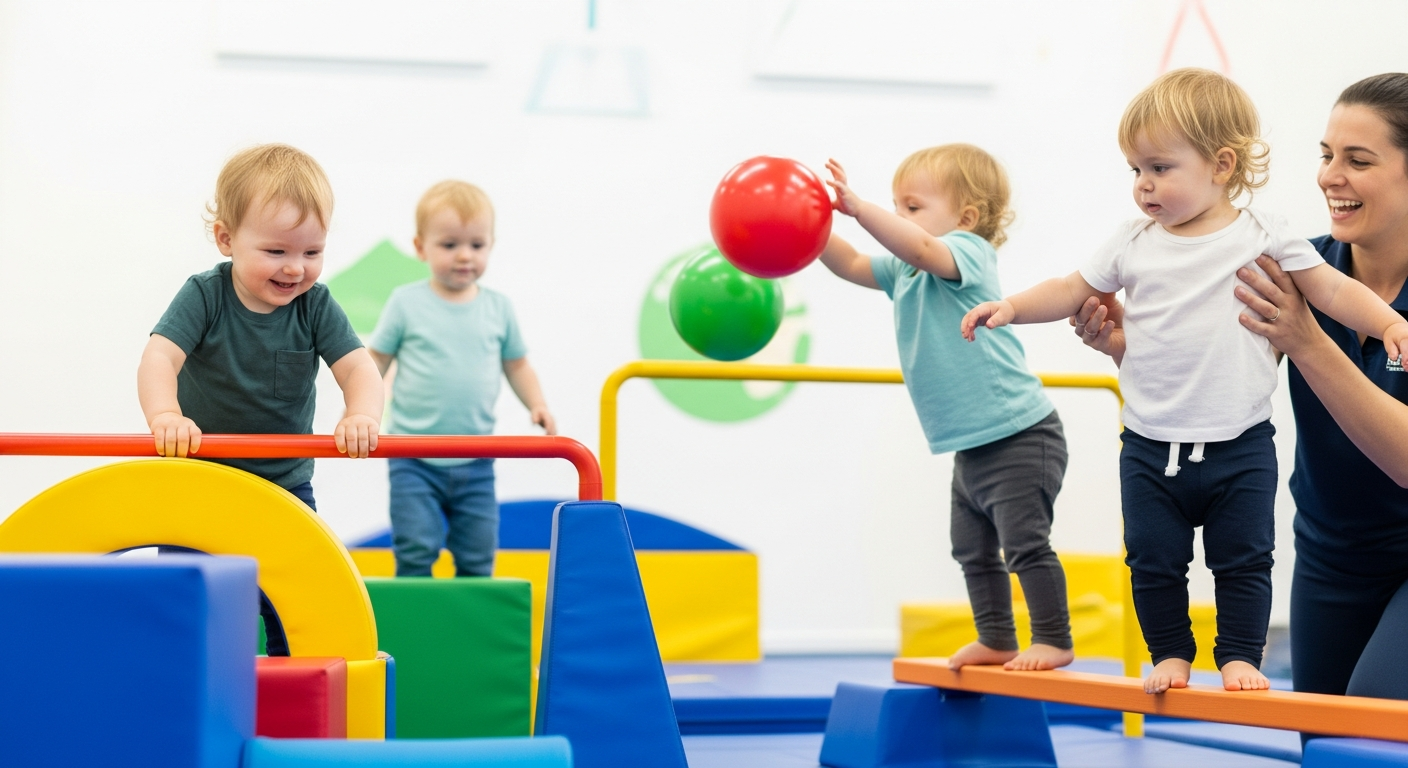
Table of Contents
- Introduction
- Why 180 Minutes of Movement Matters
- Creating a Safe Environment for Toddler Gym Activities
- Indoor Toddler Gym Activities for Rainy Days
- Outdoor Toddler Gym Activities for Fresh Air Fun
- How Movement Supports Speech: The Science
- Practical Scenarios: Real-World Play
- Why Speech Blubs is "Smart Screen Time"
- Choosing the Right Plan for Your Family
- Setting Realistic Expectations
- Summary of Key Takeaways
- Frequently Asked Questions
- Conclusion
Introduction
Have you ever watched your toddler zoom across the living room with the speed of a professional athlete, only to wonder where that endless reservoir of energy comes from? If you’ve ever felt like you’re chasing a tiny whirlwind, you aren’t alone. Research suggests that toddlers and preschoolers between the ages of two and four actually need about three hours of physical activity every single day. While that might sound like a marathon for us adults, for a growing child, it is the fundamental fuel for their physical, cognitive, and emotional development.
In this post, we are going to dive deep into the world of toddler gym activities. We aren’t just talking about organized sports or expensive gymnastics classes; we are exploring simple, joyful, and effective ways to turn your home or backyard into a "smart" play zone. We will cover why movement is non-negotiable for health, how to set up a safe environment for exploration, and provide a massive toolkit of indoor and outdoor activities that you can start today.

At Speech Blubs, our mission is to empower children to "speak their minds and hearts." We believe that movement and communication go hand-in-hand. By engaging in physical "gym" activities, toddlers aren't just building muscles; they are building the neural pathways required for complex language and social interaction. Our goal is to provide you with practical, science-backed strategies to foster a love for movement and communication in your little one, creating joyful family learning moments that last a lifetime.
Why 180 Minutes of Movement Matters
It can be startling to hear that a three-year-old needs three hours of activity, but "activity" for a child under five includes everything from light standing and rolling to vigorous running and jumping. This movement is the foundation of their overall health.
Physical Health and Disease Prevention
Regular physical activity helps in building stronger muscles and bones and boosting energy levels. More importantly, it sets a baseline for long-term health. Children who are physically active are significantly less likely to develop chronic health issues later in life, such as type 2 diabetes, heart disease, or high blood pressure. In an era where passive screen time (like mindlessly watching cartoons) is at an all-time high, finding ways to encourage active play is more critical than ever.
Brain Development and Gross Motor Skills
For toddlers, the world is one big laboratory. When they climb a pillow mountain or kick a ball, they are developing gross motor skills—the use of large muscle groups in their arms and legs. These movements are directly linked to brain development. At Speech Blubs, we focus on "smart screen time" that encourages this active participation. Our methodology is rooted in the idea that children learn best through imitation and play. When a child moves their body, they are priming their brain to take in new information, including the sounds and rhythms of language.
Mental Well-being and Confidence
Active play is a powerful tool for reducing frustration. We often see that "late talkers" or children struggling with communication feel a sense of pent-up energy. Giving them a physical outlet through toddler gym activities allows them to express themselves and build confidence. As they master a new skill, like hopping on one foot or catching a soft ball, their self-esteem soars.

Creating a Safe Environment for Toddler Gym Activities
Before we jump into the specific games, it is essential to create a "yes space"—an area where your child can explore safely without constant "nos."
Cater to Their Height
Toddlers explore by testing limits. To keep them safe, bring the fun down to their level. Use low shelves for toy organizers and ensure that any "climbing" activities use sturdy, low-profile furniture or soft cushions. If a toddler has to climb a dangerous bookshelf to reach a toy, they will. By organizing play items where they can easily access them, you encourage independence and safe exploration.
Layout and Furniture Placement
You don’t need a dedicated home gym to have a successful toddler gym session. You can use toy organizers or larger furniture items to divide a room into smaller play zones. If you need a larger space for a game like "Animal Walk," you can easily push the coffee table to the side to create a temporary "arena."
The Importance of Co-Play
While we want to foster independence, these activities are most effective when framed with adult co-play. You are your child’s favorite toy! Your participation not only keeps them safe but also provides the "video modeling" they need to learn. By watching you jump, crawl, or throw, they learn how to navigate their own bodies.
Indoor Toddler Gym Activities for Rainy Days
When the weather doesn't cooperate, your living room can become the ultimate training ground. Here are several engaging activities designed to burn energy and build skills.
1. The Animal Walk
This is a classic for a reason. Encourage your child to slither like a snake, hop like a frog, or walk like a heavy bear on all fours.
- Speech Connection: For a parent whose 3-year-old "late talker" loves animals, our "Animal Kingdom" section in the app offers a fun, motivating way to practice "moo" and "baa" sounds while acting out these movements.
- How it helps: This builds total body strength and coordination.
2. Keep the Balloon Up
Blow up a balloon and challenge your child to keep it from touching the floor using their hands or a soft pool noodle.
- Why it works: It requires hand-eye coordination and constant movement without the risk of breaking things in the house.
3. Avoid the Shark (Floor is Lava)
Scatter towels or foam floor tiles across the floor. Tell your child the floor is a shark-filled ocean and they must jump from one "island" to the next to stay safe.
- How it helps: This is excellent for developing balance and spatial awareness.
4. Bubble Wrap Jump
If you have leftover bubble wrap from a delivery, tape it to the floor. Let your child jump and stomp to hear the "pops."
- Sensory Benefit: This provides intense tactile and auditory feedback, which is great for sensory seekers.
5. Indoor "Skating"
Have your child place each foot on a paper plate or a face cloth (if you have hardwood or tile floors). They can "skate" around the room, sliding their feet.
- Why it works: This builds core strength and balance in a way that feels like pure play.
6. The Pillow Walk
Line up every couch cushion and pillow you own in a long row. Challenge your child to walk from one end to the other without stepping onto the "hot lava" floor.
- Challenge: As they get better, make the path more "zig-zaggy."
7. Sensory Bins with a Physical Twist
Fill a large bin with rice, beans, or pom-poms and hide small toys at the bottom. To add a "gym" element, place the bin at one end of the room and a "collection basket" at the other. The child must find a toy, run to the basket, drop it in, and run back.
Outdoor Toddler Gym Activities for Fresh Air Fun
When you can get outside, the possibilities for gross motor development expand significantly.
8. Wet Sponge Designs
On a warm day, give your child a bucket of water and several sponges. Let them throw the wet sponges against a brick wall or the driveway to create "splat" art.
- How it helps: Throwing develops shoulder stability and aim.
9. Traffic Safety (Red Light, Green Light)
Hold up colored paper circles. Green means "run," yellow means "walk slow," and red means "stop/freeze."
- Speech Connection: This is a perfect way to practice "functional language"—words like "Go" and "Stop" are foundational for communication.
10. Neighborhood Scavenger Hunt
Leave the stroller at home and go for a "discovery walk." Create a simple list: a blue flower, a stop sign, a dog, a yellow car.
- Why it works: It encourages walking long distances without the child realizing they are "exercising."
11. Obstacle Course
Use hula hoops to jump through, a garden hose to walk along like a tightrope, and a cardboard box to crawl through.
- How it helps: Obstacle courses require "motor planning"—the ability to think through a series of physical movements.
12. Leaf Play or Snowball Targets
In the fall, rake up a pile of leaves for jumping. In the winter, draw a target on a tree with chalk and have your child try to hit it with snowballs.
- The Goal: Joyful movement regardless of the season.
How Movement Supports Speech: The Science
At Speech Blubs, we are deeply committed to the science of child development. Our approach is based on the scientific methodology of video modeling. When children watch other children perform an action or say a word, their "mirror neurons" fire. This is the same reason why your toddler might start "exercising" just by watching you do yoga.
Physical activity and speech are linked in the brain's motor cortex. When a child engages in toddler gym activities, they are practicing:
- Breath Control: Blowing bubbles or "huffing" like a big bad wolf builds the lung capacity and oral motor control needed for speech.
- Rhythm: Activities like jumping or clapping to music help children understand the "beat" of language.
- Social Imitation: Games like "Simon Says" teach a child to watch another person and replicate their actions—the exact skill needed to learn new words.
If you are unsure if your child’s development is on track, we recommend taking our quick 3-minute preliminary screener. It consists of 9 simple questions and provides an immediate assessment and a personalized next-steps plan. It’s a great way to see how physical milestones and communication milestones overlap.
Practical Scenarios: Real-World Play
Let's look at how these gym activities can be integrated into a daily routine to solve common challenges.
Scenario: The High-Energy Transition If your child struggles with the transition from daycare to dinner time, they might have "pent-up" energy. Instead of trying to force them to sit still at the table, try 10 minutes of "Animal Kicks." Have them lie on their back and "kick" a soft beach ball held by you. This heavy work provides proprioceptive input that can actually help calm their nervous system, making the transition to dinner much smoother.
Scenario: The Reluctant Communicator For a child who is hesitant to use their voice, "Bubble Play" is a miracle worker. As you blow bubbles, encourage them to "Pop!" them. The physical excitement of chasing the bubbles often lowers the "affective filter," allowing words to pop out naturally. You can see what other parents are saying about how this blend of play and imitation has helped their children find their voices.
Why Speech Blubs is "Smart Screen Time"
We know that modern parents are often wary of screen time, and for good reason. Passive viewing—where a child sits silently watching a cartoon—doesn't offer much for development. However, Speech Blubs is designed to be a screen-free alternative in spirit. It is an interactive tool meant to be used with an adult.
Our company was born from the personal experiences of our founders, who all grew up with speech problems. They created the tool they wished they had: something joyful, effective, and rooted in play. By using the app, your child watches peers their own age model sounds and movements. This encourages them to put the phone down and do what they see on the screen. It is a bridge from the digital world back to the physical world of toddler gym activities.
To start your journey, you can download Speech Blubs on the App Store or find us on the Google Play Store.
Choosing the Right Plan for Your Family
We want to be transparent about our pricing so you can make the best choice for your family's needs. We offer two main paths:
- Monthly Plan: $14.99 per month. This is a great way to test the waters if you are looking for short-term support.
- Yearly Plan: $59.99 per year. This is our best value option, breaking down to just $4.99 per month.
When you choose the Yearly plan, you aren't just saving 66%. You also get access to exclusive high-value features that the Monthly plan lacks:
- A 7-Day Free Trial: You can explore the entire app with your child for a full week before committing.
- Reading Blubs: This additional app focuses on early literacy and reading skills, providing a comprehensive developmental suite.
- Priority Support: You get 24-hour support response times and early access to all our new updates and content releases.
We encourage families to choose the Yearly plan to ensure they have the time needed to build consistent habits. Development doesn't happen overnight, and having a full year of "smart screen time" at your fingertips provides the best environment for progress. You can create your account and begin your 7-day free trial today on our web sign-up page.
Setting Realistic Expectations
As a child development expert, I always remind parents that every child is on their own unique timeline. While these toddler gym activities are powerful tools, they are meant to foster a love for communication and build foundational skills—not to "fix" a child in a week.
Think of these activities as a powerful supplement to your child's overall growth. Whether you are using them alongside professional speech therapy or as a way to enrich your daily play, the focus should always be on creating joyful family learning moments. By reducing frustration and building confidence through physical success, you are laying the groundwork for a lifetime of effective communication.
Summary of Key Takeaways
To recap, here is how you can make the most of toddler gym activities:
- Aim for 3 hours: This can be broken into small chunks throughout the day.
- Mix it up: Use a combination of indoor "gross motor" play (like animal walks) and outdoor "exploratory" play (like neighborhood walks).
- Safety first: Create a "yes space" where your child can test their limits safely.
- Bridge to speech: Use physical movement to encourage breath control, rhythm, and imitation.
- Leverage technology wisely: Use Speech Blubs as a "smart" tool for video modeling and imitation, rather than passive entertainment.
Frequently Asked Questions
1. My toddler doesn't have a 3-hour attention span. How do I reach the 180-minute goal? You don't need to do three hours at once! The 180 minutes is a cumulative daily goal. It includes every minute they spend standing, walking to the car, playing with blocks on the floor, and running in the yard. Break it into 10-15 minute "gym" sessions throughout the day to keep it fun and engaging.
2. We live in a small apartment. Can we still do "gym" activities? Absolutely! Many of the best activities, like "Keep the Balloon Up," "Animal Walks," or "The Pillow Walk," require very little square footage. The key is to clear a small area and use vertical space (like taping bubble wrap to the floor) to keep things interesting.
3. How do I know if my child’s physical activity level is helping their speech? Look for signs of increased engagement. If your child is making more eye contact during a game of "Red Light, Green Light," or if they are attempting to vocalize animal sounds while crawling, you are seeing the brain-body connection in action. For a more structured check, use our preliminary screener.
4. Is the Yearly plan really better than the Monthly one? Yes, primarily because of the 7-day free trial and the inclusion of the Reading Blubs app. Reading and speech are closely linked, so having both tools allows you to support your child’s development more holistically. Plus, the $4.99/month price point makes it much more accessible for long-term use.
Conclusion
Toddler gym activities are about so much more than just burning off steam. They are a vital component of how your child learns to interact with the world and eventually, how they learn to speak their mind. By turning everyday moments into opportunities for movement, balance, and coordination, you are giving your child the physical confidence they need to explore their environment and communicate their needs.
At Speech Blubs, we are here to support you every step of the way with tools that blend science and play. Ready to see the difference for yourself? Download the Speech Blubs app today and start your journey. We highly recommend selecting the Yearly plan to take advantage of the 7-day free trial and get the full suite of features, including Reading Blubs. Let's make every movement a step toward a brighter, more communicative future for your little one!
About the author