
Creative Toddler Handprint Craft Ideas for Development
 By Speech Blubs Team•Feb 20, 2026•13 min.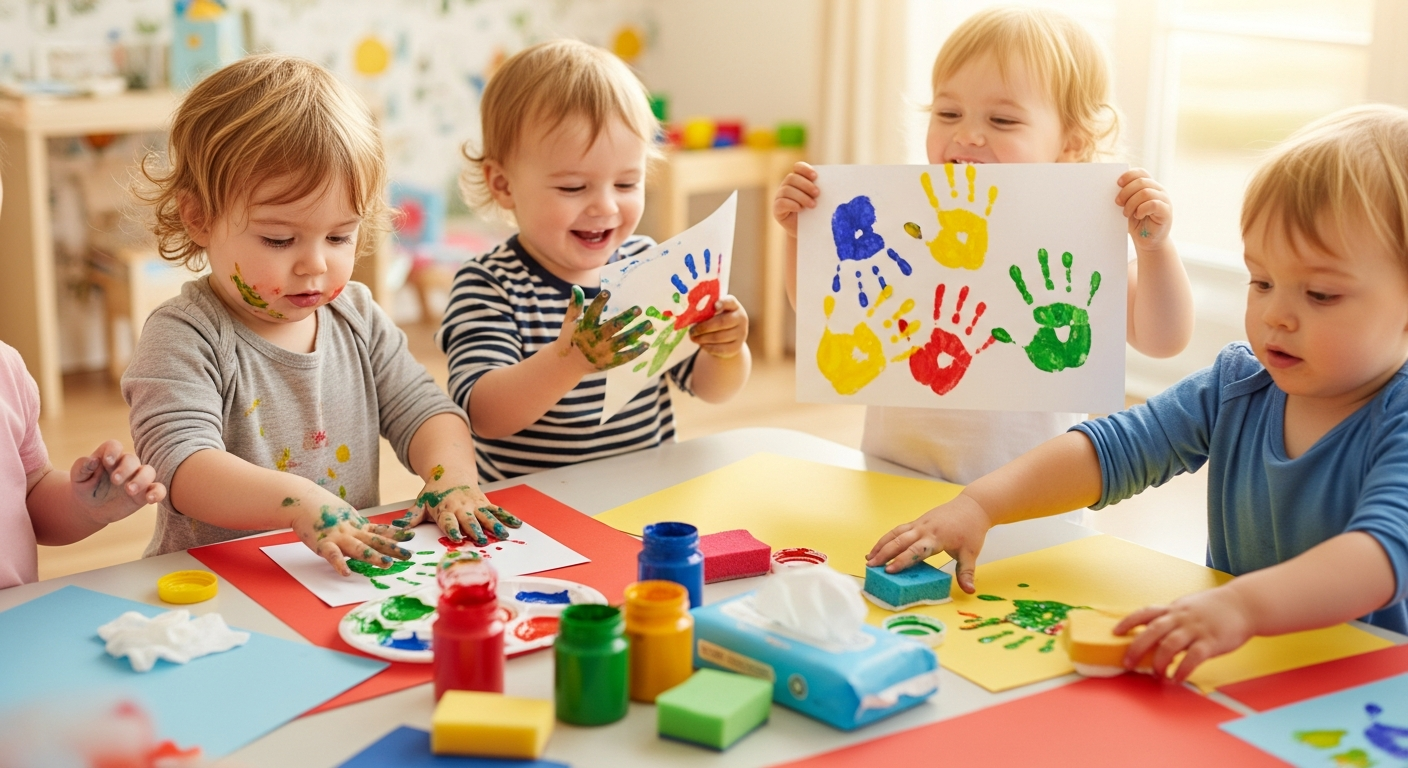
Table of Contents
- Introduction
- The Developmental Power of the Toddler Handprint Craft
- Getting Ready: Supplies and Setting the Stage
- Animal Kingdom Handprint Crafts
- Ocean-Themed Handprint Wonders
- Seasonal and Holiday Keepsakes
- Building Confidence Through Peer Imitation
- Advanced Tips for "Pro" Handprint Crafting
- The Speech Blubs Yearly Plan: The Best Value for Families
- Connecting the Craft to Conversation
- Frequently Asked Questions
- Summary and Next Steps
Introduction
Have you ever looked at your toddler’s tiny hand and wished you could freeze time, even just for a second? Those little fingers that reach for yours, messy with jam or crayon, are growing at a lightning-fast pace. It is often said that the days are long, but the years are short, and nowhere is this more evident than in the physical growth of a child. In this guide, we are going to explore the wonderful world of the toddler handprint craft—a simple, joyful activity that does so much more than create a cute keepsake.
Beyond being a beautiful memento for the refrigerator or a gift for Grandma, handprint crafts are powerhouse tools for development. They bridge the gap between sensory exploration, fine motor skill refinement, and language acquisition. At Speech Blubs, our mission is to empower children to speak their minds and hearts, and we believe that play is the most effective language a child speaks.

Throughout this article, we will dive into a variety of themed handprint projects, from the depths of the ocean to the magic of the holidays. We will also discuss how these activities can be paired with "smart screen time" to boost your child’s communication skills. Whether your little one is a "late talker" or just starting to experiment with sounds, these crafts offer a tactile way to bring learning to life. By the end of this post, you’ll have a full toolkit of creative ideas to foster confidence, reduce frustration, and create joyful family learning moments.
The Developmental Power of the Toddler Handprint Craft
Before we roll up our sleeves and get messy, it’s important to understand why we advocate so strongly for these activities. For a toddler, a handprint isn't just a shape; it's an extension of themselves.
Sensory Integration and Exploration
Toddlers learn about the world through their senses. Feeling the cold, squishy texture of non-toxic paint on their palm or the dry, rough surface of construction paper provides vital sensory input. This "sensory play" helps build nerve connections in the brain’s pathways, which are essential for completing more complex learning tasks later in life.
Fine Motor Skills and Hand-Eye Coordination
Placing a hand exactly where it needs to go on a piece of paper requires a surprising amount of coordination. As your child learns to steady their hand, spread their fingers, and press down firmly, they are strengthening the small muscles in their hands and wrists. These are the same muscles they will eventually use to hold a pencil, use a spoon, or button a shirt.
Language and Vocabulary Building
Crafting is a golden opportunity for "narrated play." As you work together, you can introduce new descriptive words like sticky, slippery, bright, squish, and press. You can talk about colors, shapes, and the names of the animals you are creating. For children who may be experiencing a speech delay, these low-pressure environments are perfect for practicing new sounds.

If you are curious about where your child stands in their communication journey, we invite you to take our quick 3-minute preliminary screener. It consists of 9 simple questions and provides an assessment and a next-steps plan to support your child’s unique needs.
Getting Ready: Supplies and Setting the Stage
To make your toddler handprint craft experience as stress-free as possible, preparation is key. You don’t need an expensive art studio; a few basic supplies will do.
- Washable, Non-Toxic Paint: Look for tempera or finger paints specifically labeled for children.
- Heavy Paper or Cardstock: Regular printer paper can curl or tear when it gets wet with paint.
- Foam Brushes or Large Brushes: These are easier for little hands to hold if they want to help apply the paint.
- A Mess-Friendly Zone: Use a plastic tablecloth or old newspapers to protect your surfaces.
- Wet Wipes or a Damp Cloth: Have these within arm's reach for immediate cleanup.
At Speech Blubs, we are big proponents of "smart screen time," which is an active, co-playing experience rather than passive viewing. You can set the mood by having your child watch a peer in the Speech Blubs app perform an action related to your craft. This "video modeling" is at the heart of our scientific methodology. When children see other children performing a task or making a sound, their mirror neurons fire, making them more likely to imitate the behavior. You can download Speech Blubs on the App Store to see this in action.
Animal Kingdom Handprint Crafts
Animals are often a toddler's first love. They have distinct sounds and recognizable shapes, making them the perfect subject for a toddler handprint craft.
1. The Roaring Lion
The lion is a classic choice. Paint your child’s palm yellow and their fingers orange. When they press their hand down, the fingers become the lion’s mane and the palm becomes the face.
- Speech Connection: Practice the "R" sound or a simple "Roar!"
- Real-World Scenario: Imagine a parent whose 3-year-old "late talker" loves animals. While making the lion, they can open the "Animal Kingdom" section of Speech Blubs. The child watches a peer roar, then tries to roar while pressing their hand onto the paper. This dual reinforcement—visual, auditory, and tactile—helps the child connect the sound to the concept.
2. The Playful Elephant
Turn the hand sideways! The thumb becomes the trunk, and the four fingers become the legs. Paint the hand grey or light blue. Once the paint dries, add a large floppy ear and a googly eye.
- Speech Connection: Practice the "Ph" sound or the "Toot" sound of a trunk.
3. The Busy Bee
Paint the palm with alternating yellow and black stripes. The thumb can stay tucked in, or be part of the wing.
- Speech Connection: This is the perfect time to practice the "Bzzzzz" sound, which is great for vocal cord vibration.
Ocean-Themed Handprint Wonders
The mystery of the deep blue sea provides endless inspiration for creative play.
4. The Grumpy Crab
This craft requires two handprints. Paint both hands red and place them side-by-side with the palms overlapping and the fingers pointing outward. The fingers become the crab's legs, and the thumbs become the claws.
- Speech Connection: Practice the "C" sound for "Crab" or "Click-click" sounds.
5. The Flowing Jellyfish
Paint the palm and fingers a vibrant purple or pink. Place the hand on the paper with the fingers pointing down. These are the tentacles! You can even glue on some yarn or ribbon to the fingers for extra texture.
- Speech Connection: Use descriptive words like "wobble" and "jiggle."
6. The Wise Whale
A single blue handprint with the thumb pointing up (as the water spout) and the fingers held together as the body makes a perfect whale.
- Speech Connection: Practice "Whoosh" sounds for the water spout.
Seasonal and Holiday Keepsakes
Handprint crafts are the ultimate holiday gift. They capture a specific moment in time that family members will treasure forever.
7. The Reindeer (Christmas)
Paint the hand brown and press it down with fingers spread wide. The fingers are the antlers. Flip the paper over and add a red pom-pom for a nose and some googly eyes.
- Speech Connection: Practice the "N" sound for "Nose" or "R" for "Reindeer."
8. The Spooky Ghost (Halloween)
This is the easiest one! Use white paint on dark paper. Turn the handprint upside down so the fingers are at the bottom. The fingers look like the ragged bottom of a ghost.
- Speech Connection: A simple, fun "Boo!"
9. The Flower Bouquet (Mother's Day)
Make several handprints in different colors (pink, yellow, purple). Once they dry, draw green stems coming down from the palms to a single point. It looks like a beautiful bouquet of hand-flowers.
- Speech Connection: Practice the names of different colors.
If you’re finding that your child is more engaged with these activities when they are part of a structured plan, consider creating a web account to track their progress and access more guided activities.
Building Confidence Through Peer Imitation
At Speech Blubs, we’ve seen firsthand how powerful it is for a child to see "someone like them" succeeding. Our company was born from the personal experiences of our founders, who all grew up with speech problems. They created the tool they wished they had—one that blends scientific principles with the pure joy of play.
Our video modeling approach is designed to be an immediate, effective, and joyful solution for the 1 in 4 children who need speech support. Instead of feeling like a "lesson," using Speech Blubs feels like a playdate. This reduces the frustration often felt by children who struggle to communicate their "minds and hearts."
When you are doing a toddler handprint craft, you are practicing a form of physical modeling. You show them how to press their hand, and they imitate you. Speech Blubs does the same for speech. You can see how this science works by visiting our research page, which details our methodology and high MARS scale rating.
Advanced Tips for "Pro" Handprint Crafting
To take your crafts to the next level and ensure they last for years, keep these tips in mind:
- Date Everything: Use a permanent marker to write the date and the child’s age on the back. You think you’ll remember, but those years go by fast!
- Add Mixed Media: Don't just stick to paint. Add glitter (if you’re brave!), buttons, fabric scraps, or feathers to give the crafts a 3D effect.
- Frame Them: A simple frame from a craft store turns a toddler's art into a masterpiece. This boosts your child's confidence by showing them that their work is valued.
- Use Salt Dough: If you want something even more permanent, you can press your toddler’s hand into salt dough (flour, salt, and water) and bake it. This creates a 3D cast that is perfect for Christmas ornaments.
The Speech Blubs Yearly Plan: The Best Value for Families
We believe that consistency is the key to developmental success. While a single craft session is fun, a long-term approach to learning yields the best results. This is why we recommend our Yearly plan for families looking to truly support their child's communication journey.
Our pricing is transparent because we want to build trust with our community:
- Monthly Plan: $14.99 per month.
- Yearly Plan: $59.99 per year.
The Yearly plan is the clear best choice, breaking down to just $4.99 per month—a saving of 66% compared to the monthly option. But it’s not just about the cost. The Yearly plan includes exclusive, high-value features that are not available in the monthly version:
- 7-Day Free Trial: Test all the features risk-free.
- Reading Blubs App: An extra app included to help transition your child from speaking to reading.
- Early Access: Be the first to try our new updates and modules.
- Priority Support: A 24-hour response time for any questions you have.
By choosing the yearly option, you are investing in a comprehensive toolset that grows with your child. You can get Speech Blubs on Google Play and start your journey today.
Connecting the Craft to Conversation
A common challenge for parents of toddlers is keeping a conversation going. A toddler handprint craft provides the perfect "anchor" for a conversation.
Ask Open-Ended Questions
Instead of asking, "Is that a bird?" which only requires a yes/no answer, try asking:
- "Where do you think this bird is flying to?"
- "What do you think this lion wants for lunch?"
- "How does the paint feel on your fingers?"
Modeling Correct Speech
If your child says, "Wed pish!" you can gently model the correct speech without correcting them negatively. You might say, "Yes, that is a red fish! He is swimming fast!" This validates their effort while providing the correct auditory target.
Our testimonials page is filled with stories from parents who have used these types of interactive techniques alongside our app to see real, heart-warming progress in their children's ability to express themselves.
Frequently Asked Questions
What is the best age to start doing handprint crafts with my toddler?
You can start as early as you feel comfortable, but generally, between 18 months and 2 years is when they begin to enjoy the sensory experience the most. At this age, they are developing better control over their hand movements, making the "press" part of the craft more successful. Always ensure you are using non-toxic, baby-safe paints.
How do I stop my toddler from making a huge mess with the paint?
The best way to manage mess is to be prepared. Use a high-chair tray to contain the paint, or perform the activity on a large plastic sheet on the floor. Have "one hand for painting, one hand for holding" rules, and keep a container of wipes nearby. Remember, a little mess is part of the learning process!
My child refuses to touch the paint. What should I do?
Some children have sensory sensitivities and don't like the feeling of wet paint. Don't force it! You can try "dry" handprint crafts by tracing their hand with a crayon or marker instead. Alternatively, put the paint inside a Ziploc bag, tape it to the table, and let them "move" the paint around with their hands from the outside.
Can handprint crafts really help with my child's speech delay?
While a craft alone isn't a cure for a speech delay, it is a powerful supplemental tool. It provides a low-stress, engaging environment for language modeling and vocabulary building. When combined with professional therapy or a scientifically-backed tool like Speech Blubs, it creates a "language-rich" environment that fosters the foundational skills necessary for communication.
Summary and Next Steps
The journey of a thousand miles begins with a single step—or in this case, a single handprint. A toddler handprint craft is more than just an afternoon activity; it’s an opportunity to connect, to teach, and to celebrate the unique way your child interacts with the world. From the fine motor skills required to press a palm onto paper to the language skills built while narrating the process, every moment spent crafting is an investment in your child's future.
At Speech Blubs, we are here to support you every step of the way. Whether you are navigating a speech delay or simply want to provide your child with the best developmental tools available, our app offers a "smart screen time" solution that is both effective and fun. We focus on fostering a love for communication and building the confidence your child needs to "speak their minds and hearts."
Ready to see your child's communication skills flourish?
Don’t wait to start building those vital foundational skills. Begin your 7-day free trial today by downloading Speech Blubs on the App Store or Google Play. For the best value and access to our full suite of features—including the Reading Blubs app and priority support—make sure to select our Yearly plan. Let's turn screen time into "growth time" and create joyful learning moments that your family will treasure forever.
About the author