
Creative Toddler Leaf Craft Ideas for Autumn Learning
 By Speech Blubs Team•Feb 23, 2026•14 min.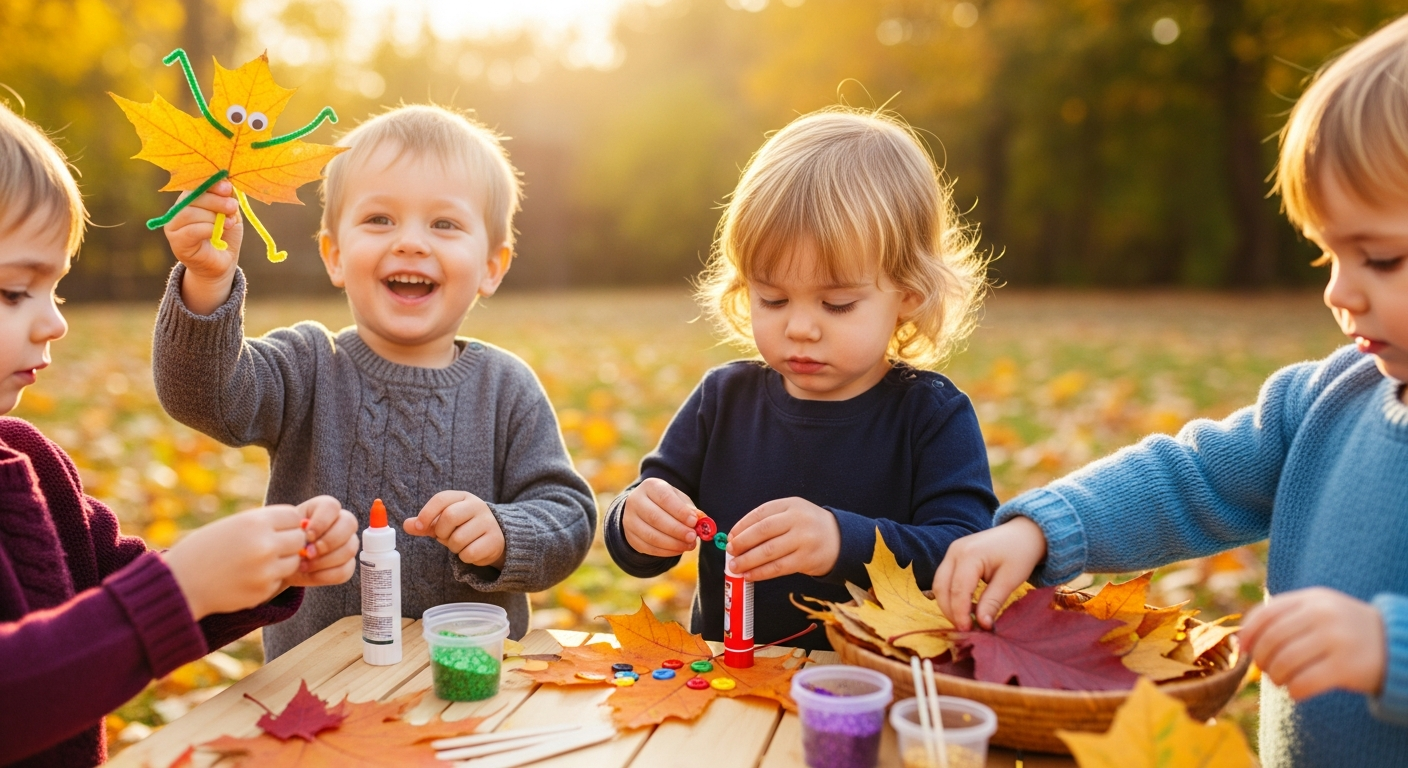
Table of Contents
- Introduction
- Why Leaf Crafts Are Perfect for Toddlers
- Setting the Stage: The Nature Walk
- 10 Creative Toddler Leaf Craft Ideas
- Integrating Language Development with Speech Blubs
- The Power of Video Modeling in Play
- Making the Most of Smart Screen Time
- Conclusion
- FAQs
Introduction
Did you know that nearly 1 in 4 children will face a communication challenge during their early development years? It is a staggering statistic, but it also highlights how vital it is for us to create environments rich in language and sensory experiences right from the start. As the air turns crisp and the trees begin their annual transformation into vibrant shades of amber and crimson, we are presented with a natural classroom right in our own backyards. A simple toddler leaf craft is more than just a rainy-day project; it is a gateway to expanding your child's vocabulary, strengthening their fine motor skills, and fostering a deep, joyful connection between parent and child.
At Speech Blubs, our mission is to empower children to speak their minds and hearts. We understand the journey of speech development intimately because our founders grew up with speech hurdles themselves. They created the tool they wished they had—a way to blend scientific principles with the pure joy of play. This blog post is designed to help you navigate the beautiful autumn season with ten creative and educational leaf crafts. We will explore how these activities act as the perfect screen-free alternative to passive viewing and how they can be seamlessly paired with "smart screen time" to support your child's journey toward confident communication. By the end of this guide, you will have a toolkit of activities that foster a love for learning and help build the foundational skills every child needs to thrive.

Why Leaf Crafts Are Perfect for Toddlers
The transition into fall is a sensory explosion for a little one. For a two or three-year-old, this might be the first time they truly notice the leaves changing color or feel the satisfying "crunch" under their boots. Engaging in a toddler leaf craft allows children to process these new concepts through hands-on experience.
When a child picks up a leaf, they aren't just holding a piece of nature; they are engaging their tactile senses. They feel the ridges, the smoothness, or the brittle edges of a dried leaf. This sensory input is crucial for brain development. Furthermore, the act of using a glue stick or placing a leaf on a specific spot on a page builds hand-eye coordination and fine motor strength. These are the same tiny muscles that will eventually help them hold a pencil and, more importantly, are closely linked to the neurological pathways used for speech.
We believe in providing an immediate and effective solution for families. While professional therapy is invaluable, the "work" of development often happens in these small, joyful moments at home. If you are ever unsure where your child stands in their development, you can take our quick 3-minute preliminary screener to get a simple assessment and a tailored next-steps plan. It involves just nine simple questions and provides the clarity many parents seek during these early years.
Setting the Stage: The Nature Walk
Before the glue sticks come out, the activity begins with a nature walk. This is a primary opportunity for language modeling. Instead of just walking, we encourage you to "narrate" the experience.
As you walk, point out the colors. "Look, a red leaf! Can you find a yellow one?" This helps with color recognition and categorization. You can also discuss concepts like "crunchy" vs. "soft," "big" vs. "small," and "high" in the tree vs. "low" on the ground. This rich descriptive language builds their internal dictionary.
For a parent whose 3-year-old "late talker" loves being outdoors, this walk is the perfect time to practice foundational sounds. You can prompt them to say "up" as they reach for a leaf or "down" as it falls. If they see a bird or a squirrel, you can mimic the animal sounds together—much like the "Animal Kingdom" section of our app, which uses peer-led video modeling to encourage imitation.

10 Creative Toddler Leaf Craft Ideas
1. The Classic Leaf Tree Collage
This is perhaps the most beloved toddler leaf craft. It requires minimal supplies: a piece of construction paper, a brown crayon, and a glue stick.
- How to do it: Draw a simple tree trunk and branches on the paper. Let your toddler color the trunk if they wish. Then, show them how to apply glue to the "branches" and press their collected leaves onto the paper.
- Language Tip: Use the "I do, we do, you do" method. First, show them how to glue a leaf. Then, do it together. Finally, let them try it on their own. This scaffolding builds confidence and reduces frustration.
2. Leaf Suncatchers
Suncatchers are a magical way to bring the autumn light indoors.
- How to do it: Use two pieces of clear contact paper. Lay one piece sticky-side up. Let your toddler arrange colorful leaves and maybe some bits of tissue paper on the surface. Place the second piece of contact paper on top to seal it. Cut it into a leaf or circle shape and tape it to a sunny window.
- Why it works: This activity focuses on "positional words" like "on," "under," and "middle."
3. Leaf People and Animals
Unleash your child’s imagination by turning nature into characters.
- How to do it: Glue a large leaf onto a piece of paper. Add googly eyes, or draw arms and legs with a marker. A round maple leaf can become the mane of a lion, or a long willow leaf can become a tall person.
- Language Tip: Give the characters names and ask your child what the "Leaf Lion" says. This encourages imaginative play and social communication. You can see how other parents have used similar creative play to spark speech by reading our success stories and testimonials.
4. Leaf Rubbing Art
This classic "science meets art" project is great for older toddlers who are developing better control over their hand movements.
- How to do it: Place a leaf under a thin sheet of white paper. Show your toddler how to rub the side of a crayon over the paper until the leaf’s shape and veins appear.
- Why it works: It’s a lesson in cause and effect. They do an action (rubbing) and see a result (the leaf appears).
5. Leaf Sorting by Color
This is less of a "craft" and more of a cognitive activity that prepares them for more complex art projects.
- How to do it: Set out several bowls or pieces of colored paper (red, yellow, orange, green). Ask your child to place the leaves in the matching bowl.
- Speech Connection: Practice the names of the colors repeatedly. If your child isn't talking yet, they can still participate by matching, which builds the foundational cognitive skills needed for later language.
6. Leaf Painting and Printing
If you don't mind a little mess, leaf printing creates beautiful patterns.
- How to do it: Let your child paint one side of a sturdy leaf with fall colors. Then, press the painted side down onto paper like a stamp.
- Language Tip: Focus on action words like "dip," "paint," "press," and "lift."
7. Leaf Puppets for Storytelling
Storytelling is a pillar of communication development.
- How to do it: Tape a leaf to a popsicle stick or a sturdy twig.
- Activity: Use the puppets to act out a simple story. Maybe the "Leaf Puppet" is looking for his friends. Ask your child, "Where is the leaf going?" or "Is the leaf happy?"
8. The Thankful Leaf Tree
As we approach the holiday season, this is a beautiful way to practice gratitude and social-emotional skills.
- How to do it: Create a large tree on a wall or door using brown paper. Every day, ask your child one thing they like or are happy about. Write it on a leaf and tape it to the tree.
- Speech Connection: This helps children move beyond basic needs (milk, cookie) into expressing feelings and thoughts.
9. Leaf Math and Counting
It’s never too early to introduce basic numeracy through play.
- How to do it: Line up a row of leaves and count them together. "One, two, three..."
- Activity: Ask your child to "give me two leaves" or "put one leaf on the table." Following one-step and two-step directions is a key developmental milestone.
10. Sensory Leaf Bins
For the toddler who loves to explore with their hands, a sensory bin is a winner.
- How to do it: Fill a large plastic container with leaves, acorns, sticks, and small toy animals. Provide scoops and cups.
- Smart Screen Connection: You can pair this with the Speech Blubs app, which features many of these natural elements in its interactive stories, reinforcing the vocabulary they are using in real life.
Integrating Language Development with Speech Blubs
While these physical activities are essential, we also recognize the role that modern tools play in a child's life. At Speech Blubs, we advocate for "smart screen time"—the kind that is active, educational, and designed for co-play. Our app is not meant to be a digital babysitter where a child sits passively watching cartoons. Instead, it is a tool for family connection.
Our unique approach utilizes video modeling. In our app, children see other kids—their peers—making sounds and saying words. Scientific research shows that children are much more likely to imitate other children than adults. This is due to "mirror neurons" in the brain that fire when we see someone like us performing an action. You can learn more about the science behind our methodology on our dedicated research page.
Imagine you are working on a toddler leaf craft. After you've spent 20 minutes gluing and coloring, you can open Speech Blubs and find a section related to the colors or animals you discussed. By watching a peer say the word "Orange" or "Yellow," your child receives a second, reinforced layer of learning that complements the physical activity they just completed.
The Power of Video Modeling in Play
The concept of video modeling is at the heart of everything we do. When a child sees another child successfully communicating, it builds their confidence. They think, "If that friend can do it, I can too!" This reduces the frustration often associated with speech delays.
In the context of fall activities, you can use the app to prepare for your nature walk or to wind down afterward. If your child is struggling with specific phonemes or sounds, the app provides a low-pressure way to practice. There are no "wrong" answers in Speech Blubs; there is only progress and joyful imitation. We recommend that parents sit with their children, mimicking the sounds alongside the app's "experts" to turn it into a bonding experience.
To start this journey with your child, we recommend our Yearly plan. While we offer a monthly subscription for $14.99, the Yearly plan at $59.99 (just $4.99/month) is the clear best choice for families committed to their child's growth.
The Yearly plan includes:
- A 7-day free trial so you can explore the content risk-free.
- The Reading Blubs app, which helps transition those hard-earned speech skills into early literacy.
- Early access to new updates and 24-hour support response time.
- 66% savings compared to the monthly rate.
The Monthly plan does not include these extra features, making the Yearly plan the most comprehensive tool for your child's developmental toolbox.
Making the Most of Smart Screen Time
Many parents feel guilty about screen time, and we understand why. Much of the content available today is "junk food" for the brain—fast-paced, over-stimulating, and passive. Speech Blubs is the antidote to that. It is a screen-free alternative in spirit, as it encourages the child to look away from the screen to interact with you and their environment.
When you use our app, you are engaging in a powerful supplement to your child's overall development plan. If your child is already in professional therapy, Speech Blubs serves as a wonderful bridge for daily practice. If you are just starting to notice a few "late talking" signs, it provides a fun, low-stakes way to encourage those first words.
Remember, the goal isn't perfection. We don't promise that your child will be giving public speeches in a month. Instead, we focus on fostering a love for communication, building their inner confidence, and creating those joyful family learning moments that you will cherish forever. Whether you are using the Apple App Store or Google Play Store, getting started is just a few clicks away.
Conclusion
The humble toddler leaf craft is a testament to the fact that the best learning often happens through simple, natural play. By taking the time to explore the outdoors, collect leaves, and create art together, you are doing the essential work of building your child's brain. You are teaching them how to categorize the world, how to use their hands with precision, and how to express the beauty they see around them.
At Speech Blubs, we are honored to be a part of that journey. We believe that every child deserves the chance to speak their mind and heart, and we are committed to providing the "smart screen time" experiences that make that possible. By blending the physical joy of autumn crafts with the scientific power of peer-led video modeling, you are giving your child a comprehensive and fun path toward communication success.
Don't wait to start building these memories. Download Speech Blubs on the App Store or Google Play today to begin your journey. For the best value and the most features—including the Reading Blubs app and a 7-day free trial—be sure to select our Yearly plan. Let's make this autumn a season of growth, connection, and many "first words."
FAQs
1. At what age can my child start doing leaf crafts?
Most children can start participating in simple leaf crafts around 18 months to 2 years old. At this age, the focus should be on the sensory experience—touching the leaves and exploring the glue. By age 3, they will have the fine motor skills to start placing leaves in specific spots or attempting basic leaf rubbings with your help.
2. What if we live in an area where there aren't many fall leaves?
No problem at all! You can still enjoy the spirit of the season. You can use green leaves from any tree and paint them in fall colors (red, orange, yellow) before crafting. Alternatively, you can cut leaf shapes out of construction paper or use coffee filters colored with markers and dipped in water to create a "bleeding" leaf effect that mimics autumn colors.
3. Is using a glue stick safe for toddlers?
Yes, with supervision! Glue sticks are generally safer and less messy than liquid glue for toddlers. It’s a great tool for teaching them how to twist the bottom and how much pressure to apply. Always choose non-toxic, washable brands. If your child still likes to put things in their mouth, keep a close eye and offer a "teachable moment" about how glue is for paper, not for eating.
4. My child gets frustrated when their craft doesn't look "right." How can I help?
Focus on the process, not the product! Toddlers are still developing their motor skills, so their "tree" might look like a brown scribble with one leaf. Praise their effort and the colors they chose rather than the final result. If they get frustrated, take a break and try a different activity, like a sensory bin or a quick session on Speech Blubs to reset their mood with some fun, peer-led play.
About the author