
Creative Toddler Pumpkin Art Activity Ideas for Fall
 By Speech Blubs Team•Feb 23, 2026•13 min.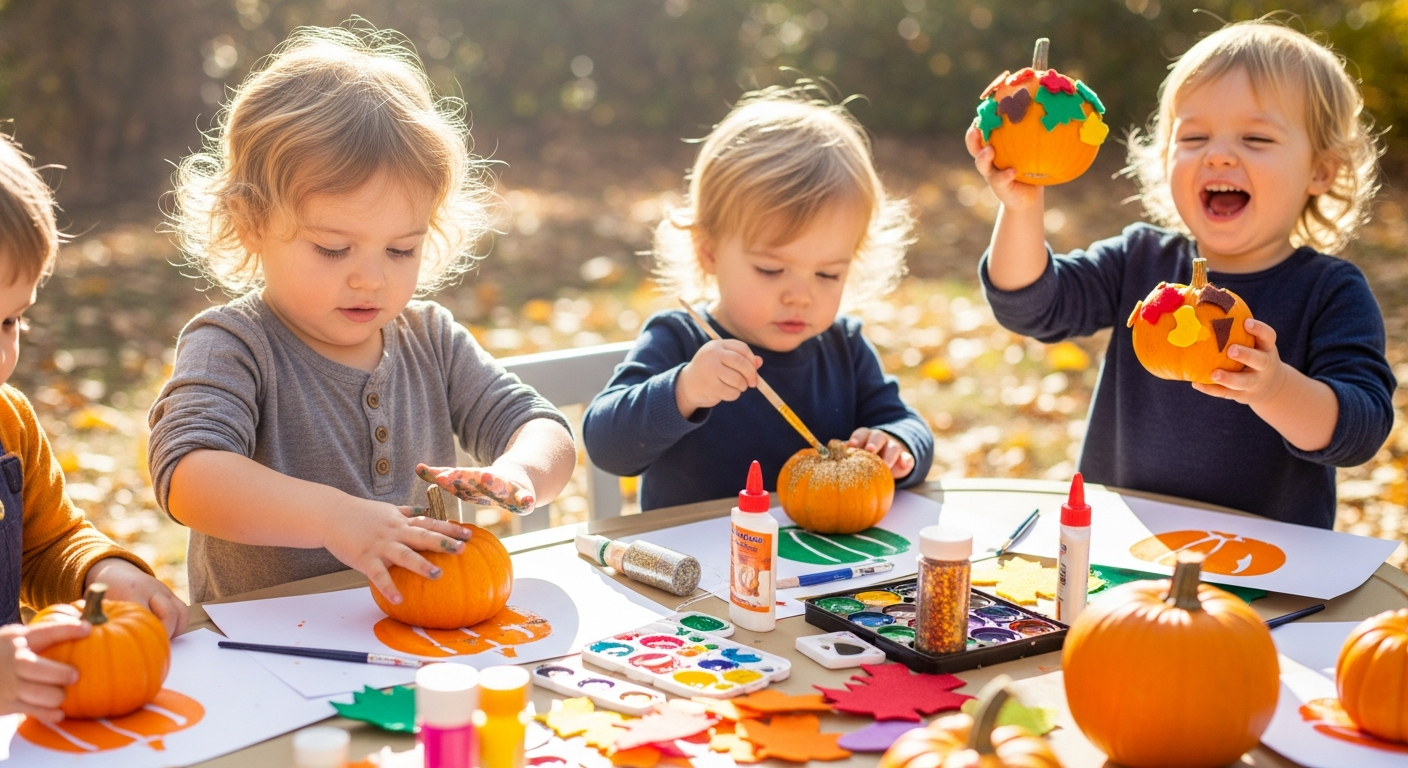
Table of Contents
- Introduction
- Why Process Art is Perfect for Toddlers
- Activity 1: The Rolling Pumpkin Canvas
- Activity 2: Scented Pumpkin Spice Painting
- Activity 3: The Sticky Pumpkin Collage
- The Science of Video Modeling in Art and Speech
- Making Art Accessible: Scissor Skills for Tiny Hands
- Smart Screen Time vs. Passive Viewing
- Choosing the Right Plan for Your Family
- Practical Tips for Stress-Free Art
- Building Authority through Social Proof
- Expanding the Vocabulary: Pumpkin Words
- Safety and Supervision
- Conclusion
- Frequently Asked Questions
Introduction
Have you ever watched a toddler’s eyes light up when they first sink their hands into the cool, squishy interior of a pumpkin? It’s a moment of pure sensory discovery. For a young child, a pumpkin isn’t just a seasonal decoration or the base for a pie; it’s a giant, orange canvas waiting to be explored. Engaging in a toddler pumpkin art activity is more than just a way to fill an autumn afternoon; it is a vital opportunity for sensory integration, fine motor development, and, most importantly, language expansion.
At Speech Blubs, our mission is to empower children to "speak their minds and hearts." We understand that communication starts with connection and play. Our founders, who navigated their own speech challenges as children, designed our tools to be the joyful support system they wished they had. We believe in blending scientific principles with the magic of play to create "smart screen time" that complements real-world, hands-on experiences like messy art projects.

In this post, we will explore various ways to turn the humble pumpkin into a masterpiece of learning. We’ll cover process-based art techniques that prioritize the "doing" over the "result," explain how these activities build foundational communication skills, and show you how to integrate our unique video modeling methodology to boost your child’s confidence. Whether your child is a "late talker" or simply a curious explorer, these activities are designed to create joyful family learning moments without the pressure of perfection.
By the end of this guide, you’ll have a toolkit of creative ideas to celebrate the season while supporting your child’s developmental milestones. Let’s dive into the world of orange paint, sticky glue, and big smiles.
Why Process Art is Perfect for Toddlers
When we talk about a toddler pumpkin art activity, we often lean toward "process art." But what exactly does that mean? Process art is art that focuses on the experience of creating rather than the final product. For a two-year-old, the joy is in the "smoosh" of the paint or the "rip" of the paper, not in whether the pumpkin looks like a Pinterest-perfect jack-o'-lantern.
Fostering a Love for Communication
When there is no "right" or "wrong" way to make art, a child’s frustration levels drop. This creates a safe space for them to experiment with sounds and words. As they roll a mini pumpkin through orange paint, they might naturally exclaim, "Roll!" or "Orange!" This spontaneous labeling is a huge win for language development. We focus on building this confidence, as a confident child is a child who is ready to communicate.
Developing Key Foundational Skills
Art activities are a workout for tiny hands. Gripping a paintbrush, squeezing a glue bottle, or tearing construction paper builds the fine motor strength needed for later skills like writing and even the delicate movements required for speech. At Speech Blubs, we see art as a companion to our digital exercises, providing the tactile feedback that helps solidify the concepts children see on the screen.

"Process art allows children to be the directors of their own learning. It encourages problem-solving, sensory exploration, and the freedom to express their unique perspective on the world."
Activity 1: The Rolling Pumpkin Canvas
This is a high-energy, high-sensory activity that toddlers absolutely love. It turns the pumpkin itself into the "brush."
Supplies Needed:
- A large cardboard box or a deep tray
- White construction paper or cardstock
- Orange, yellow, and red washable tempera paint
- Mini pumpkins or gourds (different textures are great!)
How to Do It:
- Place the paper at the bottom of the box or tray.
- Add a few dollops of different colored paint directly onto the paper.
- Place the mini pumpkins inside.
- Encourage your child to tilt the box back and forth, or use their hands to roll the pumpkins through the paint.
Language Tip: Use action words like roll, stop, fast, slow, and bumpy. If your child is using the Speech Blubs app, you might find that after seeing a peer say "Go!" in one of our videos, they are more likely to shout "Go!" as they tilt the box. This is the power of our "video modeling" methodology—kids learn best by watching and imitating other kids.
Activity 2: Scented Pumpkin Spice Painting
Why limit art to just sight and touch? By adding scent, you engage more areas of the brain, making the learning experience more "sticky" and memorable.
Supplies Needed:
- Orange paint
- Pumpkin pie spice (or a mix of cinnamon, nutmeg, and ginger)
- Paintbrushes or sponges
How to Do It:
Mix a generous amount of pumpkin pie spice into your orange paint. As your child paints their "toddler pumpkin art activity," the room will fill with the cozy scent of fall.
Real-World Scenario: Imagine a parent whose 3-year-old is a "late talker" and currently obsessed with everything in the kitchen. Using the scented paint mimics the spices they see in the cupboard. While the child paints, the parent can open the Speech Blubs app to the "Yummy Time" section to practice mouth movements related to eating and tasting, bridging the gap between the art activity and functional speech.
Activity 3: The Sticky Pumpkin Collage
This activity is fantastic for practicing "pincer grasp" (using the thumb and index finger), which is essential for fine motor control.
Supplies Needed:
- Orange construction paper cut into a pumpkin shape
- Contact paper (sticky back plastic) or glue sticks
- Scraps of black, green, and yellow paper
- Optional: Pumpkin seeds, yarn, or buttons
How to Do It:
If using contact paper, tape it sticky-side-up to the table. Place the pumpkin cutout on top. Let your child "stick" various items onto the pumpkin. If using glue sticks, let them practice the "push and smear" motion.
Speech Opportunity: This is a perfect time to practice "Parts of the Face." Ask your child, "Where do the eyes go?" or "Can you find the mouth?" See how many labels they can produce. If they are struggling, you can use our quick 3-minute preliminary screener to see if their vocabulary is on track for their age. It involves 9 simple questions and provides a personalized next-steps plan.
The Science of Video Modeling in Art and Speech
At Speech Blubs, we don't just provide "screen time"; we provide "smart screen time." Our app is built on the concept of video modeling. Scientific research shows that children are highly motivated to copy their peers. When a child sees another child making a "pucker" face or saying the word "pumpkin," their mirror neurons fire, making it much easier for them to replicate that sound or movement.
We suggest using the app as a "warm-up" for your art project. Spend 5-10 minutes in the app looking at the "Halloween" or "Colors" sections. When your child sees a peer enthusiastically interacting with a pumpkin on the screen, they will be much more excited to dive into their physical toddler pumpkin art activity. This creates a powerful tool for family connection, where the digital and physical worlds support one another.
Making Art Accessible: Scissor Skills for Tiny Hands
Many parents are nervous about introducing scissors, but for some toddlers, the "snip" is the highlight of their day. If your child shows advanced fine motor control, you can introduce safety scissors under close supervision.
- Start with Strips: Give them narrow strips of paper. One single "snip" is enough to cut through, giving them immediate satisfaction.
- Use Playdough: If paper is too tricky, practicing cutting playdough "snakes" is a great way to build hand strength.
- Model the Motion: Just as we use video modeling in our app, you should physically model the "open-shut" motion of the scissors.
Remember, the goal isn't a perfect shape. If they end up with a pile of tiny black "confetti," that's perfect! Those can be the "scales" or "dots" on their pumpkin.
Smart Screen Time vs. Passive Viewing
We often hear from parents who are worried about screen time. At Speech Blubs, we provide a screen-free alternative to passive viewing, like mindless cartoons. Our app requires active participation. The child isn't just watching; they are responding, imitating, and engaging.
When you combine a toddler pumpkin art activity with Speech Blubs, you are creating a multi-dimensional learning environment.
- Digital: They watch a peer model the word.
- Physical: They feel the paint and the paper.
- Social: They interact with you, the caregiver, sharing their creation.
This holistic approach is why we are a leading provider of speech support. We aren't here to replace the parent or the therapist; we are here to be the most effective, joyful tool in your kit.
Choosing the Right Plan for Your Family
We want every child to have the chance to "speak their minds and hearts." To make our tools accessible and provide the most value, we offer two primary subscription options.
The Yearly Plan: Our Best Value
The Yearly plan is the clear choice for families committed to their child's developmental journey. At $59.99 per year, it breaks down to just $4.99 per month—a 66% savings compared to the monthly option.
The Yearly plan includes:
- A 7-day free trial to explore everything we offer.
- The Reading Blubs app: An extra tool to help your child transition from speech to literacy.
- Early access to all new updates and features.
- 24-hour support response time from our dedicated team.
The Monthly Plan
For those who prefer a short-term commitment, we offer a Monthly plan for $14.99 per month. Please note that the monthly plan does not include the 7-day free trial, the Reading Blubs app, or the priority support benefits of the yearly plan.
Ready to see the difference for yourself? Create your account and begin your 7-day free trial today.
Practical Tips for Stress-Free Art
We know that "toddler" plus "paint" often equals "big mess." Here is how we keep the focus on joy rather than clean-up:
- Go Outside: If the weather permits, take the pumpkin painting to the grass.
- Use a Tray: A simple baking sheet or a dollar-store plastic tray keeps the paint contained.
- High Chair Art: For younger toddlers, the high chair tray is a perfect, confined space for "smoosh" art.
- Wet Wipes Ready: Have a damp cloth nearby so you can clean hands before they touch the walls.
Most importantly, follow your child's lead. If they only want to paint for three minutes and then spend ten minutes talking about the "green stem," that is a success! You are fostering a love for communication and building their confidence.
Building Authority through Social Proof
Don't just take our word for it. Thousands of parents have seen their children's confidence soar using our methodology. See what other parents are saying about their child's success. Whether it's a first word or the reduction of "communication frustration," these stories reflect our commitment to providing an immediate and effective solution for the 1 in 4 children who need speech support.
Expanding the Vocabulary: Pumpkin Words
As you engage in your toddler pumpkin art activity, try to weave these "target words" into your conversation. Don't pressure them to repeat you; simply model the words clearly and frequently.
- Nouns: Pumpkin, seed, stem, leaf, paint, paper, glue, eyes, nose, mouth.
- Adjectives: Orange, round, bumpy, smooth, sticky, cold, smelly, big, small.
- Verbs: Paint, roll, stick, rip, cut, wash, look, see.
If your child is a fan of animals, you can even make "Animal Pumpkins." Use the "Animal Kingdom" section of our app to find inspiration. Could you make a "Cat Pumpkin" with whiskers? Or a "Pig Pumpkin" that says "Oink"? This is a great way to use their existing interests to motivate speech.
Safety and Supervision
While art is about freedom, safety is always our priority.
- Supervise Tools: Always be within arm's reach when a toddler is using scissors or small items like buttons or seeds (which can be choking hazards).
- Non-Toxic Materials: Ensure all paints and glues are labeled non-toxic.
- Co-Play is Key: These activities are designed for adult co-play. Your presence and engagement are what transform a simple craft into a powerful learning moment.
Conclusion
A toddler pumpkin art activity is a beautiful gateway to a world of sensory exploration and language development. By focusing on the process, choosing activities that stimulate multiple senses, and providing "smart screen time" through Speech Blubs, you are giving your child the foundational skills they need to thrive.
Our goal isn't just to teach words; it's to build the confidence that allows a child to express who they are. We don't suggest that your child will be giving public speeches in a month, but we do promise that by using our tools as a supplement to your daily interactions, you will create more joyful family learning moments and reduce the frustration that often comes with speech delays.
We invite you to join our community of empowered parents. The best way to start is by choosing our Yearly plan, which offers the best value, exclusive access to Reading Blubs, and a full week to try everything for free.
Download Speech Blubs on the App Store or Google Play to begin your journey today. Let’s help your little one speak their mind and heart, one orange masterpiece at a time.
Frequently Asked Questions
1. What if my toddler just wants to eat the paint during the activity?
Safety first! Always use certified non-toxic, washable tempera paints. For very young toddlers who are still in the "mouthing" phase, you can create "edible" paint by mixing Greek yogurt or baby cereal with a few drops of food coloring. This allows them to explore the sensory aspect of the activity without any risk.
2. How can I encourage my child to use more words while we are crafting?
The best strategy is to "narrate" what they are doing without demanding a response. If they are painting, say, "You are using the big brush! Look at that bright orange paint." Give them plenty of "wait time" (at least 5-10 seconds) after you ask a question like "What color is this?" to allow them to process and respond.
3. Is it okay to use a screen during an art project?
We believe in "Smart Screen Time." Using the Speech Blubs app for a few minutes before or during the craft to watch peers model words like "pumpkin," "orange," or "scary" can actually provide a helpful visual and auditory prompt that encourages them to try those sounds themselves. It becomes a tool for connection rather than a distraction.
4. My child has a very short attention span. How can I keep them engaged?
Toddlers naturally have short attention spans! It is perfectly normal if they only want to paint for 5 minutes. To extend the activity, try changing the "tool." If they get bored with a brush, offer them a sponge, a mini pumpkin to roll, or even their fingers. Keep the environment low-pressure and follow their lead.
About the author