
Creative Toddler Shark Craft Ideas for Speech and Play
 By Speech Blubs Team•Feb 20, 2026•14 min.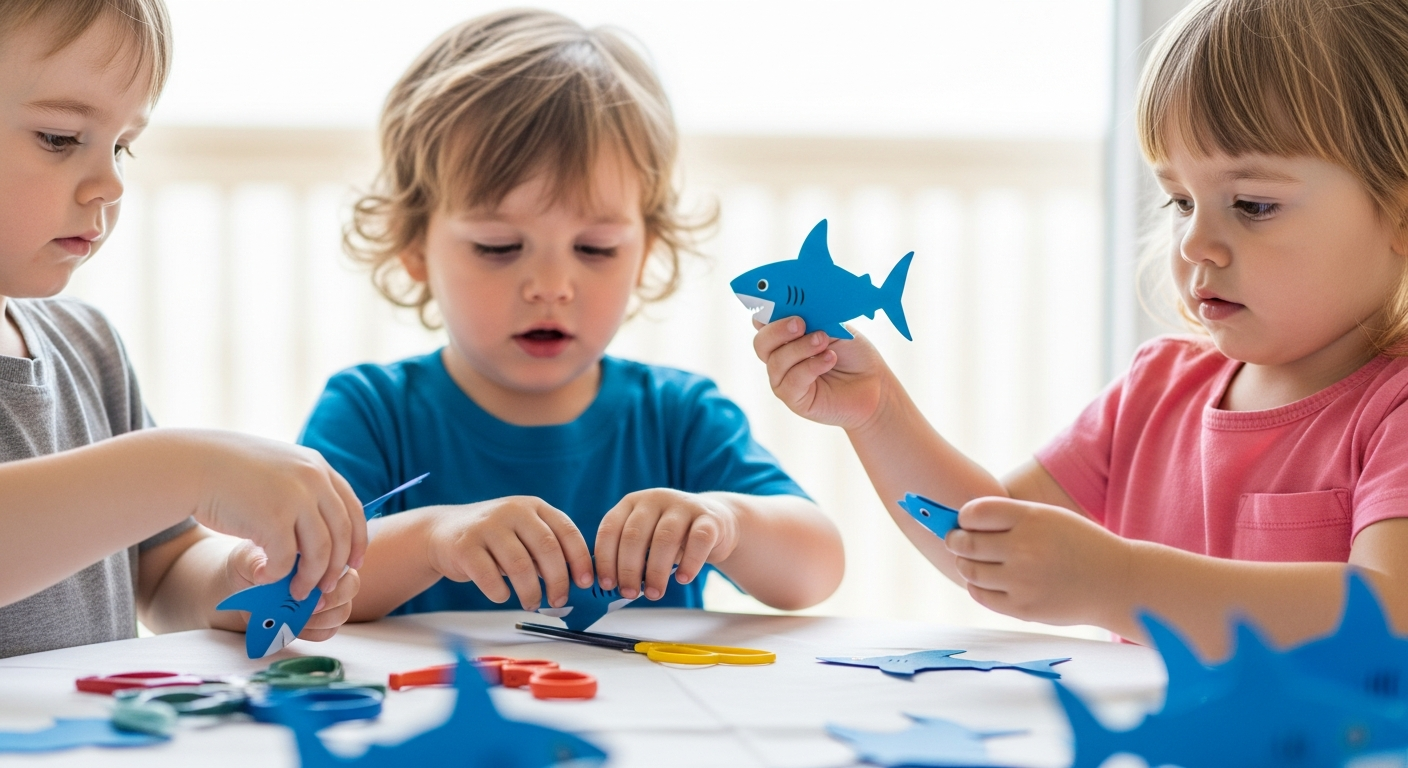
Table of Contents
- Introduction
- Why Crafting is a "Jawsome" Tool for Language
- 1. The Classic Paper Plate Shark
- 2. Recycled Newspaper Shark
- 3. Toilet Paper Roll "Shiver" of Sharks
- 4. Pool Noodle Shark Sensory Play
- 5. Cupcake Liner Sharks
- Using Video Modeling to Enhance Craft Time
- Strengthening the Family Connection
- Building a "Shark Scene" for Storytelling
- Specific Benefits of Different Shark Crafts
- Pricing and Value: Investing in Your Child's Future
- Creating a Language-Rich Environment
- Setting Realistic Expectations
- Fine Motor Skills and "Smart Screen Time"
- Frequently Asked Questions
- Summary and Next Steps
Introduction
Did you know that a group of sharks is actually called a "shiver"? It is a fitting name for creatures that often send a little chill down our spines, yet for toddlers, sharks are anything but scary. To a two-year-old, sharks are toothy, blue, and most importantly, the stars of their favorite catchy songs. This deep fascination provides a wonderful opportunity for parents and caregivers to turn a simple toddler shark craft into a powerful tool for language development, fine motor skills, and family bonding.
In this post, we will explore a variety of engaging shark-themed crafts that use everyday household items. We’ll look at how these activities do more than just create a cute memento; they help children practice essential communication skills and build the confidence they need to express themselves. At Speech Blubs, we believe in turning every moment into a learning opportunity, blending scientific principles with the pure joy of play. By the end of this article, you will have a toolkit of creative ideas to help your little one "speak their minds and hearts" while making a splash with their new shark friends.

Our goal is to provide you with practical, realistic strategies to support your child’s growth. Whether you are dealing with a "late talker" or simply want to enrich your child's vocabulary, these activities are designed to complement your daily routine and any professional therapy your child may be receiving. Let’s dive into the world of sharks and discover how to make "smart screen time" and hands-on play work together for your child’s benefit.
Why Crafting is a "Jawsome" Tool for Language
Crafting is often seen as just a way to keep hands busy, but for a developing child, it is a complex cognitive workout. When a toddler engages in a toddler shark craft, they are navigating a world of shapes, colors, textures, and sequences. This is the perfect environment for "incidental learning," where language is acquired naturally through the context of the activity.
For a parent whose 3-year-old "late talker" loves animals, the "Animal Kingdom" section of our app offers a fun, motivating way to practice "moo" and "baa" sounds, and crafting a shark can do the same for aquatic vocabulary. You can use words like "chomp," "big," "teeth," "blue," and "splash" repeatedly. Repetition is key to language acquisition, and crafts provide a physical anchor for these new words.
At Speech Blubs, our mission is born from the personal experiences of our founders, who all grew up with speech problems. They created the tool they wished they had—one that makes learning to speak an effective and joyful experience. We advocate for a "smart screen time" approach where digital tools like our app are used alongside tactile activities. This creates a bridge between what a child sees on the screen—like their peers mimicking shark sounds—and the physical shark they are building with you.
1. The Classic Paper Plate Shark
The paper plate shark is a staple for a reason. It’s simple, inexpensive, and incredibly versatile. It allows toddlers to practice big, sweeping movements with a paintbrush and refined movements with a glue stick.

Materials Needed:
- One paper plate
- Blue or gray paint
- White cardstock or construction paper (for teeth)
- Googly eyes
- Safety scissors and glue
How to Build Language:
As your child paints the plate, focus on the action words. "Paint, paint, paint." "Up and down." When it comes time to add the teeth, use the opportunity to count. "One tooth, two teeth." This introduces early math concepts alongside language.
If your child is using Speech Blubs on the App Store, you might notice they love watching other children make funny faces. You can mirror this during the craft. Make a "big shark mouth" yourself and encourage them to imitate you. This imitation is the core of our "video modeling" methodology, where children learn by watching and mimicking their peers.
2. Recycled Newspaper Shark
Sustainability meets creativity with this recycled craft. Using newspaper adds a unique texture and visual interest that standard construction paper lacks. It also teaches children that we can make art from almost anything.
The Process:
Have your child tear strips of newspaper. This is excellent for fine motor development. Glue these strips onto a shark-shaped cutout. The overlapping patterns mimic the rough skin of a shark.
Educational Pivot:
While you work, talk about "old" and "new." Talk about "paper" and "glue." If your child seems to struggle with following these simple multi-step directions, it might be a good time to check in on their milestones. You can take our quick 3-minute preliminary screener to get a simple assessment and a next-steps plan. It involves just 9 simple questions and can give you peace of mind or a clear path forward.
3. Toilet Paper Roll "Shiver" of Sharks
Don’t throw away those cardboard tubes! They are the perfect size for little hands to grip. By painting several tubes, you can create a whole "shiver" of sharks.
Making it Playful:
Cut a "V" shape out of one end of the tube to create the mouth. Your child can then glue small paper triangles inside for teeth. These "tube sharks" are great because they stand up on their own, allowing for imaginative play afterward.
For a child who is just starting to string words together, these puppets are gold. You can make the shark "talk." "Hello! I am hungry!" "I want a snack!" This encourages the child to respond. Our approach is about creating joyful family learning moments, and these small cardboard creatures are perfect facilitators for that. You can even download Speech Blubs on Google Play to find more inspiration for character voices and sounds.
4. Pool Noodle Shark Sensory Play
If you have leftover pool noodles from the summer, they make fantastic sensory toys. Cut the noodle into smaller chunks (about 4-5 inches long). You can use foam sheets to add fins and a tail. Because these are made of foam, they are waterproof.
Why Sensory Matters:
Sensory play is a foundational skill for communication. When a child feels the squishy texture of the pool noodle or the splash of water in a bin, their brain is firing in multiple areas. Use this time to focus on descriptive words: "Wet," "soft," "floating," "sinking."
Expert Tip: Sensory bins are a great way to reduce frustration in "late talkers." When children are engaged in a tactile activity, they often feel less pressure to perform and are more likely to vocalize spontaneously.
5. Cupcake Liner Sharks
This is a fantastic "tabletop" craft that requires very little cleanup. Cupcake liners already have a folded, textured edge that looks remarkably like fish scales or fins when cut and flattened.
Steps:
- Flatten a blue cupcake liner.
- Fold it in half to create the body.
- Cut another liner into triangles for the fins and tail.
- Paste them onto a piece of paper to create an "underwater scene."
This activity is perfect for practicing "on" and "under." "The shark is on the paper." "The shark is under the water." These prepositions are vital for developing complex communication skills. Our methodology focuses on these building blocks, helping 1 in 4 children who need speech support to reach their full potential.
Using Video Modeling to Enhance Craft Time
At the heart of Speech Blubs is the concept of video modeling. This isn't just a fancy term; it's a scientifically-backed method where children learn new behaviors and sounds by observing others. Our app features thousands of videos of real children—not cartoons—performing speech exercises.
When you are working on a toddler shark craft, you can integrate this by showing your child a video of a peer making a "fish face" or saying the word "shark." This peer-to-peer connection is much more effective than an adult simply telling a child what to do. It feels like a "playdate on a screen."
By choosing a Yearly subscription, you get access to our full suite of tools, including the Reading Blubs app, which can help transition your child from spoken words to early literacy. The Yearly plan is the best value at $59.99 per year (just $4.99/month), compared to the $14.99 Monthly plan. Plus, the Yearly plan includes a 7-day free trial so you can see the benefits for yourself.
Strengthening the Family Connection
One of our core values is providing a tool for family connection. In a world where screens are often used to "babysit" children with passive content, we offer a "smart" alternative. Use the app together for 10-15 minutes, then put the device away and build your shark craft.
This combination of digital learning and physical play is what we call the "Blub-way." It ensures that screen time is active, educational, and, most importantly, a shared experience. You can see how other families have used this method to overcome speech delays by reading our testimonials.
Building a "Shark Scene" for Storytelling
Once you have made your crafts, don't just put them on the shelf. Create a scene. Use a blue blanket for the ocean or a cardboard box for a "shark cave."
Scenario for Imaginative Play:
Imagine a caregiver whose child struggles with the "S" sound. As they play with their toddler shark craft, the caregiver can emphasize the "S" in "Shark," "Sea," "Sand," and "Swim." "The shark is swimming in the sea!" By making the "S" sound long and silly, it becomes a game rather than a chore. This reduces the child's frustration and fosters a love for communication.
Our research-backed method shows that when children are having fun, they are more likely to take risks with their speech. We don't promise that your child will be giving public speeches in a week, but we do promise a journey filled with more "joyful learning moments" and fewer tears.
Specific Benefits of Different Shark Crafts
Every toddler shark craft offers a unique developmental benefit:
- Paper Plate Sharks: Focus on spatial awareness (fitting the teeth inside the mouth).
- Newspaper Sharks: Focus on bilateral coordination (using both hands to tear and glue).
- Pool Noodle Sharks: Focus on sensory integration and "proprioceptive" input (squeezing and moving the foam).
- Clothespin Sharks: Focus on "pincer grasp," which is essential for future writing skills.
By rotating these activities, you are giving your child a well-rounded developmental "workout" that supports their overall growth.
Pricing and Value: Investing in Your Child's Future
We want to be transparent about how we support your family's journey. Speech Blubs offers two main paths:
FeatureMonthly PlanYearly Plan (Best Value)
Price
$14.99 / month
$59.99 / year ($4.99/mo)
Savings
-
Save 66%
Free Trial
Not Included
7-Day Free Trial
Bonus Content
Standard
Reading Blubs App Included
Support
Standard
24-Hour Priority Response
Updates
Standard
Early Access to New Features
We highly recommend the Yearly plan. It provides a long-term, sustainable tool for your child's development at a fraction of the monthly cost. When you create your account, you're not just buying an app; you're joining a community dedicated to helping your child thrive.
Creating a Language-Rich Environment
Beyond the craft table, you can bring the "shark" theme into other parts of your day to reinforce learning:
- Bath Time: Bring the pool noodle sharks into the tub. Use the "video modeling" technique to mimic the sounds of water—"Splash!" "Drip!" "Pop!"
- Meal Time: Cut sandwiches into triangle "shark fins." Talk about "eating" and "yum."
- Reading Time: Pair your craft with a book about the ocean. Point to the pictures and relate them back to the craft you made together.
This holistic approach is what makes Speech Blubs so effective. We don't just focus on the minutes your child is on the screen; we focus on how those minutes empower the rest of their day.
Setting Realistic Expectations
It’s important to remember that every child develops at their own pace. While a toddler shark craft is a wonderful tool, it is one part of a larger puzzle. Some days, your child might be very vocal; other days, they might just want to sit and paint in silence. Both are okay.
Our goal is to foster a love for communication and build the foundational skills—like imitation, turn-taking, and vocabulary—that will eventually lead to fluent speech. We provide a powerful supplement to your child's overall development plan. If you ever feel overwhelmed, remember that our mission is to empower you just as much as your child.
Fine Motor Skills and "Smart Screen Time"
Many parents worry about the impact of screens on fine motor development. This is why we advocate for "smart screen time." Instead of a child sitting passively watching a cartoon, they are interacting with the Speech Blubs app—mimicking facial expressions, choosing activities, and then taking those lessons to the craft table to use scissors, glue, and markers.
This dual approach ensures that their digital experience translates into physical skills. For a 2-year-old working on their first toddler shark craft, the simple act of "pinching" a googly eye to stick it onto a plate is a major victory. It’s these small wins that build the confidence needed for bigger challenges later on.
Frequently Asked Questions
What age is appropriate for a toddler shark craft?
Most shark crafts can be adapted for children as young as 18 months with adult supervision. For younger toddlers, focus on sensory play and painting. As they reach age 3 or 4, they can begin to help with more complex tasks like cutting with safety scissors or following multi-step instructions.
My child isn't talking yet. Can these crafts still help?
Absolutely. Language development starts long before the first word is spoken. These crafts focus on "pre-verbal" skills like imitation, joint attention (looking at the same thing as you), and following directions. These are the essential building blocks that must be in place before a child can begin to speak.
How often should we use the Speech Blubs app alongside crafting?
We recommend "short and sweet" sessions. About 10 to 15 minutes of "smart screen time" on the app is plenty to spark inspiration. You can then spend 20 to 30 minutes on the craft. This prevents overstimulation and keeps the focus on active, joyful learning.
What if my child has a very short attention span?
That is perfectly normal for a toddler! You don't have to finish the craft in one sitting. Paint the plate in the morning, and add the teeth in the afternoon. Break the activity into small, manageable chunks. The goal is to create "joyful family learning moments," not to finish a project as quickly as possible.
Summary and Next Steps
The journey of helping your child find their voice is one of the most rewarding experiences a parent can have. A simple toddler shark craft is more than just a rainy-day activity; it’s a gateway to new words, better coordination, and a stronger bond between you and your little one. By combining these hands-on projects with the "smart screen time" offered by Speech Blubs, you are providing your child with a comprehensive, scientifically-backed, and—most importantly—fun way to learn.
We invite you to join our mission to help every child "speak their minds and hearts." Whether you are just starting to notice a delay or are looking for ways to boost your child's existing skills, we are here to support you every step of the way.
Ready to make a splash? Download Speech Blubs on the App Store or Google Play to begin your journey. We highly recommend selecting our Yearly plan to unlock the full suite of features, including Reading Blubs and our 7-day free trial. It’s the best value for your family and the most effective way to see real progress. Let's start building those "jaw-some" memories today!
About the author