
Creative Toddler Water Play Activities at Home
 By Speech Blubs Team•Feb 23, 2026•15 min.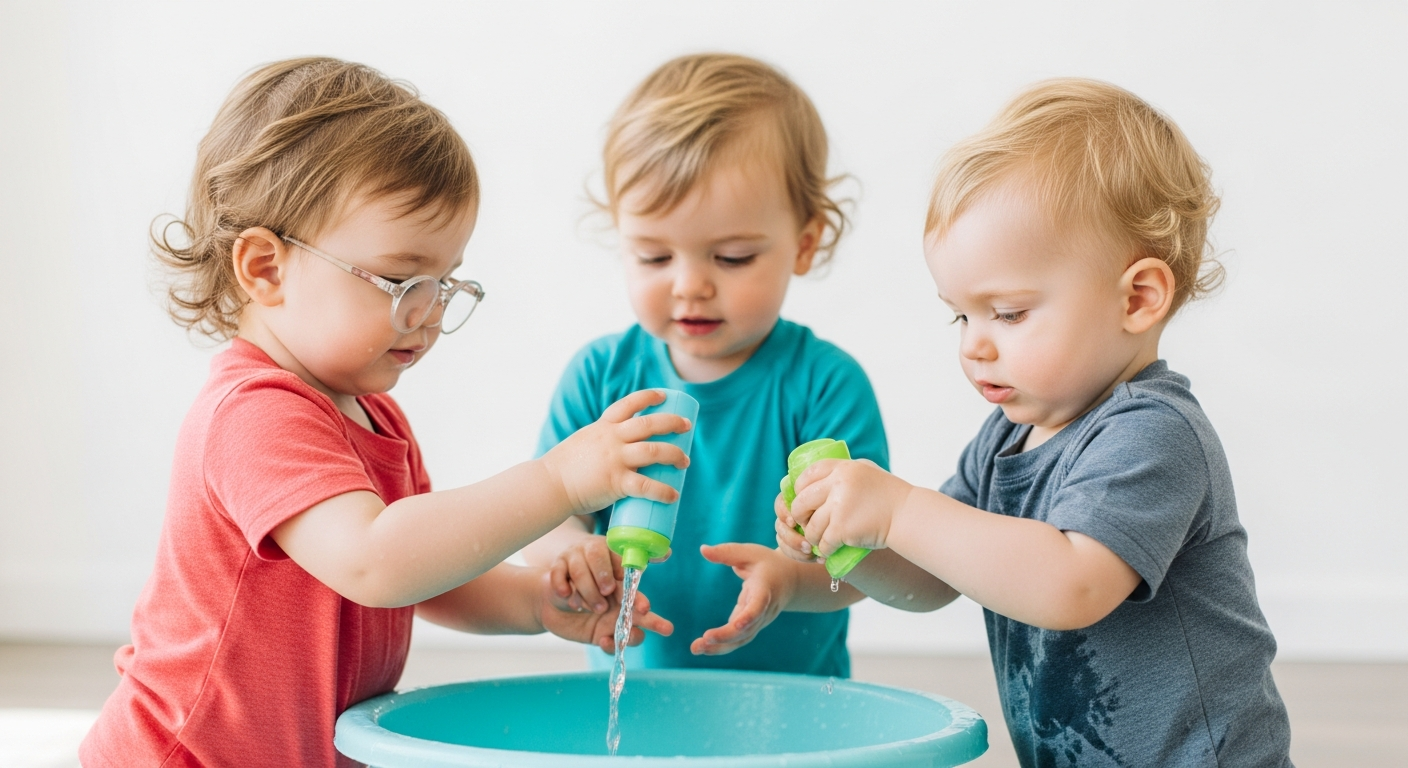
Table of Contents
- Introduction
- Why Water Play Matters for Your Toddler’s Development
- Setting the Stage: No-Stress Indoor Water Play Setup
- 15 Creative Toddler Water Play Activities to Try Today
- Making Screen Time "Smart": Connecting Water Play to Speech Blubs
- Choosing the Right Plan for Your Family’s Journey
- Practical Scenarios: Real-World Challenges and Solutions
- Frequently Asked Questions
- Conclusion
Introduction
Have you ever noticed how a simple cup of water can keep a toddler occupied longer than the most expensive electronic toy in the playroom? There is something truly magnetic about water. Whether it is the way it splashes, the way it changes temperature, or the way it pours from one container to another, water is a toddler’s ultimate laboratory. At Speech Blubs, we believe that the best learning happens through play. Our mission is to empower children to speak their minds and hearts, and often, that journey begins with the sensory-rich experiences found in simple toddler water play activities.
In this guide, we are going to dive deep—pun intended—into why water play is a powerhouse for development. We will cover everything from setting up a mess-free indoor "water table" to specific activities that build fine motor skills, boost vocabulary, and encourage social-emotional growth. We’ll also show you how to bridge the gap between physical play and "smart screen time" by integrating the Speech Blubs app into your daily routine.

Our goal is to provide you with a toolkit of realistic, low-prep ideas that foster a love for communication and build your child’s confidence. By the end of this post, you will see that water play isn't just about staying cool on a hot day; it’s a foundational tool for helping your little one find their voice.
Why Water Play Matters for Your Toddler’s Development
When a child dips their hands into a basin of water, they aren't just making a mess; they are engaging in a complex sensory workout. Research shows that sensory play is critical for brain development because it builds nerve connections in the brain’s pathways. You can learn more about the science behind our approach and how we prioritize developmental milestones on our research page.
Stimulating the Seven Senses
Most of us grew up learning about five senses, but in child development, we focus on seven. Water play hits every single one:
- Touch: Feeling the difference between warm and cold, or the slippery sensation of soapy bubbles.
- Sight: Watching ripples form, seeing reflections, or observing how blue and yellow water mix to create green.
- Hearing: Listening to the plop of a stone, the shhh of a sprayer, or the glug-glug of a bottle filling up.
- Smell: Noticing the scent of a fresh lemon slice in a sensory bin or the smell of rain-drenched pavement.
- Taste: While we encourage "safe" tasting (like with plain water or fruit-infused bins), it’s a natural part of how toddlers explore.
- Vestibular (Balance): Leaning over a water table or reaching for a floating toy helps develop the inner ear’s sense of balance.
- Proprioception (Body Awareness): Squeezing a heavy, water-logged sponge or pouring a full pitcher helps a child understand their own strength and where their body is in space.
Building Foundational Language Skills
Water play is a "language-rich" activity. It provides a natural context for kids to learn new verbs (pour, splash, sink, float), adjectives (wet, dry, cold, heavy), and prepositions (under, over, inside).
For a parent whose 3-year-old "late talker" loves animals, the "Animal Kingdom" section of our app offers a fun, motivating way to practice "moo" and "baa" sounds. You can bring this to life by creating a "Farm Wash" water station. As your child scrubs a toy cow, they can watch their peers in the app make the same sounds, reinforcing the connection through our unique video modeling method. If you are curious about where your child stands in their language journey, you can take our quick 3-minute preliminary screener to get a simple assessment and a free 7-day trial.

Setting the Stage: No-Stress Indoor Water Play Setup
The biggest barrier to toddler water play activities is often the fear of a soaked carpet or a slippery hardwood floor. We get it! But you don't need a fancy, expensive water table to make this work. Many of us at Speech Blubs are parents ourselves, and we’ve learned that the "low-tech" way is often the most effective.
The "Faux" Water Table
If you don't have an outdoor space or a dedicated plastic table, you can create a DIY version using a low coffee table or even the floor.
- The Gear: Grab two or three large, shallow plastic storage bins.
- The Floor Saver: Lay down a heavy-duty tarp, a shower curtain liner, or a few thick beach towels.
- The Water Level: You only need about half an inch to an inch of water. This is enough for splashing and pouring but small enough that one towel can handle any spills.
- The "Parent Zone": Set this up near a chair where you can sit with your coffee. This is about co-play and connection, but it’s also an opportunity for your child to lead the way.
By setting these boundaries, you reduce your own frustration and allow your child to focus on the joy of discovery. This mirrors our philosophy with "smart screen time." We provide a tool that is designed for family connection rather than passive viewing. You can download Speech Blubs on the App Store to see how we turn screen time into an interactive, collaborative experience.
15 Creative Toddler Water Play Activities to Try Today
Now that the stage is set, let’s look at specific activities that will keep your little one engaged and learning.
1. The Classic "Sink or Float" Experiment
This is a beginner science lesson that never gets old. Gather various household items—a plastic block, a metal spoon, a cork, a rock, and a toy car.
- The Activity: Ask your child, "Will it sink or float?" before dropping each item in.
- Language Boost: Use words like "heavy," "light," "bottom," and "top."
- Speech Blubs Connection: This is a great time to practice the "Early Sounds" section of our app. When an object hits the water with a "splash!" or a "pop!", use the app to find those corresponding sounds and mimic them together.
2. Ocean Sensory Bin
Turn your plastic bin into a mini-ocean. Use blue food coloring to tint the water and add toy fish, whales, and sharks.
- The Activity: Give your child a small net or a slotted spoon to "rescue" the sea creatures.
- Vocabulary: Focus on sea animal names and action words like "swimming" and "diving."
3. Kitchen Utensil "Soup"
Toddlers love nothing more than using "grown-up" tools.
- The Activity: Give them a whisk, a ladle, a funnel, and some measuring cups. Let them "cook" a giant pot of water soup.
- Motor Skills: Whisking and pouring are excellent for developing the wrist strength needed for later writing skills.
4. Sponge Squeeze-A-Thon
Sponges are a sensory delight. They change weight when wet and create bubbles when squeezed.
- The Activity: Place two bins side-by-side—one full of water and one empty. Show your child how to soak the sponge in the full bin and squeeze it out into the empty one.
- Proprioception: This teaches them how much pressure is needed to move the water.
5. Color Mixing Lab
If you want to spark some "aha!" moments, this is the one.
- The Activity: Fill several clear cups with water. Use food coloring to make primary colors (red, blue, yellow). Provide an empty cup and an eyedropper or small spoon.
- The Lesson: Let them mix blue and yellow to see green appear right before their eyes.
6. Lemon and Lime Sensory Wash
This activity engages the sense of smell and taste.
- The Activity: Slice up lemons and limes and toss them into a bin of water. Add some ice cubes for temperature contrast.
- Sensory Input: The bright colors and citrus scent are highly stimulating and keep kids focused for long stretches.
7. Shaving Cream Car Wash
This is a messy one, so it’s great for the bathtub or outside.
- The Activity: Cover toy cars in shaving cream "mud." Then, give your child a bin of soapy water and a toothbrush to scrub them clean.
- Social-Emotional: This encourages "caring" behaviors as they look after their toys.
8. Painting with Water
This is the ultimate low-mess "art" project.
- The Activity: Give your child a cup of water and a real paintbrush. Let them "paint" the driveway, a wooden fence, or even pieces of dark-colored construction paper.
- The Magic: As the water evaporates, their "painting" disappears, allowing them to start all over again.
9. Frozen Treasure Hunt
This requires a little prep but offers a huge payoff.
- The Activity: Freeze small plastic toys (dinosaurs, stars, or little dolls) inside a large container of water overnight.
- The Play: Give your child a spray bottle of warm water and a small toy hammer or spoon to "excavate" the treasures.
- Expectations: Focus on the process of melting and the patience required. It's a wonderful lesson in cause and effect.
10. The Alphabet Search
If your child is starting to recognize letters, bring them into the water.
- The Activity: Use foam letters that stick to the side of the bin or the bathtub when wet.
- The Challenge: Ask them to find the "B for Blubs!" or search for the letters in their own name.
- Speech Blubs Integration: We love seeing kids use our "Reading Blubs" feature (included in our Yearly plan) alongside physical letter play.
11. Pouring Station
Simple but effective.
- The Activity: Provide containers of various shapes and sizes—thin graduated cylinders, wide bowls, and tiny jars.
- The Math: This introduces the concept of volume. "Does the water from the tall cup fit in the short bowl?"
12. Doll Bath Time
Teaching empathy and self-care is a big part of early childhood.
- The Activity: Give your child a waterproof doll, a washcloth, and some "tear-free" bubbles.
- Language: Narrate the process. "Now we wash the doll's nose. Now we wash the doll's toes."
13. Bubble Foam Fun
You can make "breathable" foam by mixing a little dish soap and water in a blender (or just whisking it vigorously).
- The Activity: Add a drop of food coloring to create "rainbow foam." It’s a thick, tactile substance that feels very different from liquid water.
14. Garden Watering
If you have a garden or even a few pots on a balcony, your toddler can be the "official waterer."
- The Activity: A small watering can gives them a sense of purpose and helps them connect with nature.
- Gross Motor: Carrying a full watering can requires balance and core strength.
15. The "Squeeze Bottle" Car Race
Empty dish soap or ketchup bottles are perfect for this.
- The Activity: Fill the bottles with water and use the stream to "push" a light plastic boat or duck across the bin.
- Hand Strength: The repetitive squeezing motion is fantastic for developing the small muscles in the hand.
Making Screen Time "Smart": Connecting Water Play to Speech Blubs
You might wonder how a digital app fits into a world of physical water play. At Speech Blubs, we don't see ourselves as a replacement for "real-world" play; we see ourselves as a powerful supplement. Our app was born from the personal experiences of our founders, who all grew up with speech problems. They created the tool they wished they had—one that blends scientific principles with the joy of play.
The Power of Peer Video Modeling
Our secret sauce is "video modeling." Instead of watching a cartoon character, your child watches real children—their peers—demonstrating sounds, words, and facial movements. When your child sees a peer in the app blowing bubbles or making a "fish face," they are much more likely to imitate that behavior.
Imagine your child is playing with the Bubble Foam Fun activity mentioned above. You can open the Speech Blubs app to the "Mouth Gymnastics" section. As the child in the app practices blowing, your child can try to blow the foam in their bin. This isn't passive viewing; it’s an active, joyful learning moment that bridges the gap between the screen and the physical world.
This approach is highly effective for the 1 in 4 children who need speech support. It reduces frustration and fosters a genuine love for communication. To start your journey, you can download Speech Blubs on Google Play and see the difference peer modeling makes.
Choosing the Right Plan for Your Family’s Journey
We want to be transparent about how you can access our full library of over 1,500 activities. We offer two main paths to joining the Speech Blubs family:
- Monthly Plan: For $14.99 per month, you get full access to the Speech Blubs app. This is a great way to test the waters.
- Yearly Plan (Best Value): For $59.99 per year, which breaks down to just $4.99 per month, you receive the full suite of Speech Blubs features.
Why the Yearly Plan is the clear choice: The Yearly plan isn't just a 66% savings; it’s a comprehensive developmental package. It includes:
- A 7-day free trial so you can explore everything risk-free.
- The Reading Blubs app, specifically designed to help your child transition from speaking to reading.
- Early access to all new updates and content.
- 24-hour support response time from our dedicated team.
The Monthly plan does not include the Reading Blubs app or the trial period. We encourage families to choose the Yearly plan to ensure they have all the tools needed to support their child’s long-term growth. You can create your account and begin your 7-day free trial today via our web portal.
Practical Scenarios: Real-World Challenges and Solutions
Let’s look at how these activities solve common parenting hurdles.
Scenario A: The "Transition" Struggle If your toddler has a hard time stopping play to go to the grocery store, try the "Ice Cube Play." Give them two ice cubes in a cup as you head to the car. The sensory experience of the cold ice and the focus on watching it melt provides a calming distraction during the transition.
Scenario B: The Sensory Seeker If your child is constantly splashing in the dog's water bowl or the toilet, they are likely seeking proprioceptive input. Instead of just saying "no," redirect them to the "Sponge Squeeze-A-Thon." This gives them the heavy work their body is craving in a safe, controlled environment.
Scenario C: Building Confidence in a Late Talker If your child is shy about trying new sounds, use the "Animal Wash" activity alongside our "Animal Kingdom" section. Seeing other kids make "silly" animal sounds in the app makes it feel like a game rather than a lesson. Check out our parent testimonials to see how other families have used these strategies to boost their child's confidence.
Frequently Asked Questions
1. Is water play safe for toddlers who still put everything in their mouths? Yes, but with caveats. Always use plain water or food-safe additives like lemon slices or food coloring. Avoid small toys that could be choking hazards, and never leave a child unattended near water—even an inch of it. Constant adult supervision is the number one rule of water play.
2. How do I prevent a huge mess when playing with water indoors? The key is preparation. Use a large waterproof mat or several layers of towels. Keep the water level low (under one inch) and use smaller tools. If the mess becomes too much, try moving the activity to the bathtub, which is a contained, "water-ready" environment.
3. What if my child is afraid of water? Don't force it! Start with "dry" water play. Let them play with the empty bins and tools first. Then, add just a tiny bit of water to a cup and let them pour it. Sometimes, seeing other children enjoying water play in the Speech Blubs app can help normalize the experience and reduce their anxiety.
4. How long should a typical water play session last? There is no set time. Some toddlers might be done in five minutes, while others will stay engaged for forty-five. Follow your child’s lead. When they start throwing toys or seem restless, it’s a good sign that the session is over.
Conclusion
Toddler water play activities are more than just a way to pass the time on a Tuesday afternoon. They are a gateway to discovery, a workout for the senses, and a foundation for the complex communication skills your child will use for the rest of their life. By providing these simple, joyful experiences, you are helping your child build the confidence they need to "speak their minds and hearts."
We are here to support you every step of the way. Whether it’s through our science-backed video modeling or our fun, interactive games, our goal is to turn screen time into a bridge for real-world connection.
Ready to take the next step in your child's development? Download Speech Blubs on the App Store or Google Play to begin. Remember to select the Yearly plan to unlock your 7-day free trial, the Reading Blubs app, and the best overall value for your family. Let’s make every splash a step toward a brighter, more communicative future!
About the author