
Creative Toddler Yarn Crafts to Boost Development
 By Speech Blubs Team•Feb 20, 2026•12 min.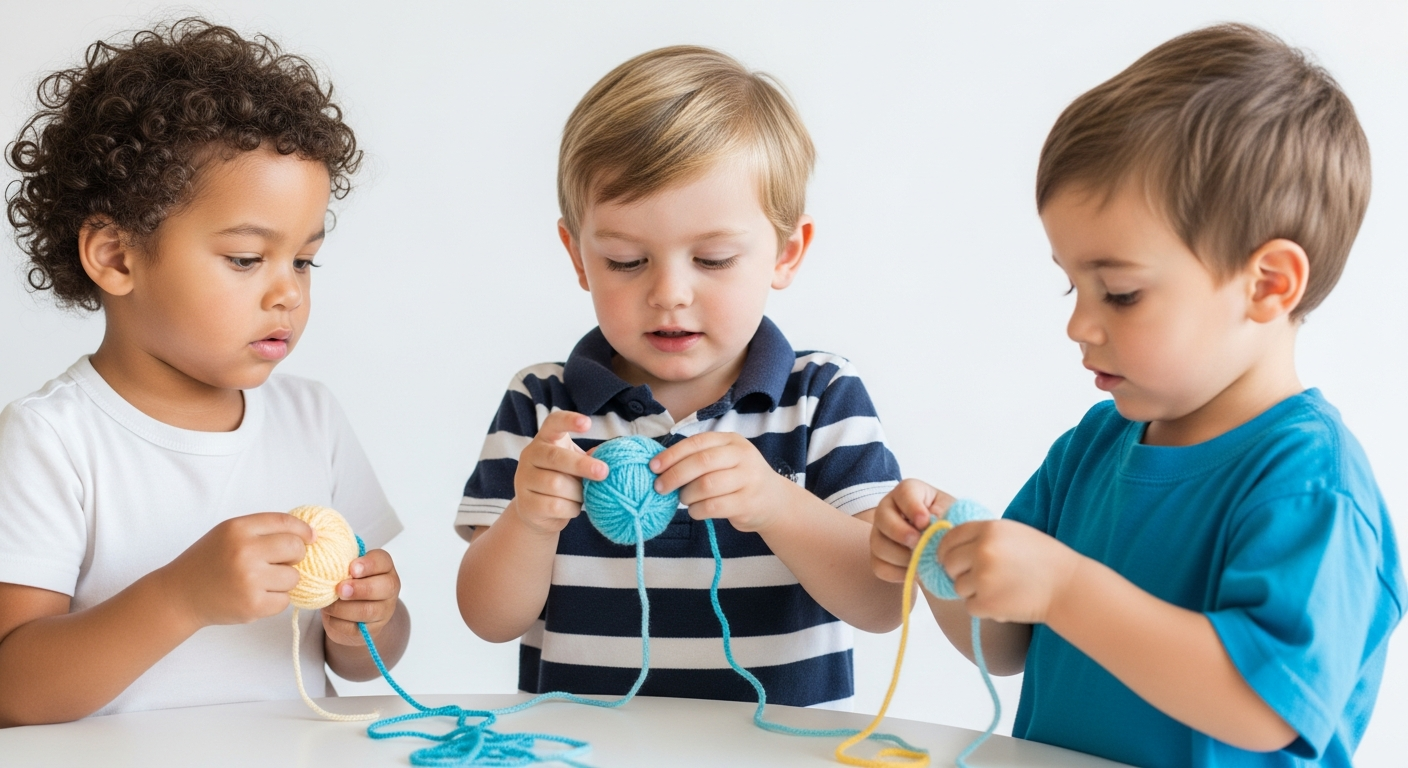
Table of Contents
- Introduction
- The Connection Between Tiny Hands and Growing Voices
- 1. Yarn Wrapping: The Gateway Craft
- 2. Beginner "Sewing" and Lacing
- 3. Nature and Yarn: The "God’s Eye" and Beyond
- 4. Sensory Yarn Play (No Glue Required!)
- 5. Paper Plate Weaving
- Safety First: A Note for Parents
- Why Speech Blubs is the Perfect Craft Companion
- Choosing the Right Plan for Your Family
- Frequently Asked Questions
- Conclusion
Introduction
Have you ever walked into a room only to find your toddler sitting amidst a chaotic web of colorful string, looking absolutely delighted with themselves? As a parent, your first instinct might be to worry about the tangled mess, but as child development experts, we see something much more profound: a child exploring their world through texture, color, and cause-and-effect. Yarn is a magical medium for little hands. It is soft, forgiving, and incredibly versatile, making it the perfect tool for developmental play.
The purpose of this post is to provide you with a treasure trove of engaging toddler yarn crafts that do more than just fill an afternoon; they are designed to strengthen fine motor skills, foster creativity, and, most importantly, encourage language development. We will explore everything from simple yarn-wrapping techniques to nature-inspired stick crafts, all while showing you how these activities complement the "smart screen time" we champion at Speech Blubs.

At Speech Blubs, our mission is to empower children to "speak their minds and hearts." We know that roughly 1 in 4 children face speech or language challenges, and our founders—who grew up with speech problems themselves—created the tool they wished they had. By combining tactile, real-world activities like yarn crafting with our evidence-based video modeling app, you can create a joyful, holistic environment for your child to thrive. Our main message is simple: through the blend of sensory play and strategic support, we can turn every "tangled mess" into a significant developmental milestone.
The Connection Between Tiny Hands and Growing Voices
You might wonder what winding a piece of blue yarn around a piece of cardboard has to do with your child learning to say "apple" or "more." The answer lies in the fascinating way a child’s brain develops. Fine motor skills (the small movements of the hands and fingers) and speech are closely linked in the brain's architecture.
When your toddler focuses on grasping a string or threading yarn through a hole, they are stimulating the same neural pathways required for the precise movements of the tongue, lips, and jaw. This is why we often see "late talkers" also struggle with fine motor tasks. By engaging in these crafts, you aren't just making art; you are building the physical and neurological foundation for communication.
Our approach at Speech Blubs is rooted in this understanding. We use a "video modeling" methodology where children learn by watching and imitating their peers. Just as your child watches your hands to see how to wrap yarn, they watch the "blubbers" in our app to see how to form sounds. If you are unsure where your child stands, you can take our quick 3-minute preliminary screener, which involves 9 simple questions to provide an assessment and a next-steps plan.
1. Yarn Wrapping: The Gateway Craft
Yarn wrapping is arguably the easiest and most satisfying of all toddler yarn crafts. It requires very little "technical" skill, yet it provides immense sensory feedback.

Cardboard Letter Wrapping
Help your child identify the first letter of their name by cutting a large version out of thick cardboard. Give them a ball of yarn and show them how to wrap it around the letter.
- The Speech Connection: As they wrap, talk about the letter. "W is for winding!" or "B is for Blue!"
- Speech Blubs Integration: If your child is working on specific sounds, find words in the app that start with that letter. For a 3-year-old "late talker" who loves animals, you might wrap a letter 'P' and then head to the "Animal Kingdom" section of the app to practice the "P-P-P" sound in "Pig."
Yarn Wrapped Apples or Pumpkins
Cut out circular shapes from cardboard and add small notches around the edges. This helps the yarn stay in place for frustrated toddlers. Use red or green for apples and orange for pumpkins.
- Developmental Benefit: This activity builds "bilateral coordination"—using both hands together (one to hold the shape, one to move the yarn).
- Try This: Download Speech Blubs on the App Store to find the "Yummy Time" section, where your child can see other kids eating the very fruits you are crafting!
2. Beginner "Sewing" and Lacing
Before children can use real needles, they can practice the rhythm of sewing with blunt tools and sturdy materials.
Styrofoam Tray Sewing
Save those clean Styrofoam trays from the grocery store. Use a pen to poke holes in a pattern (like a heart or a star). Tape one end of a piece of yarn to make a "needle" or use a large plastic yarn needle.
- Expert Tip: Focus on "Up and Down" language. Every time the yarn goes through a hole, say "Up!" then "Down!" This helps your child associate words with spatial movements.
Homemade Lacing Cards
Don't spend money on expensive lacing kits. Use old cereal boxes to cut out shapes (animals, cars, or houses) and use a hole puncher to create the lacing path.
- The Speech Connection: This is a perfect time for "parallel talk." Instead of asking your child questions, simply narrate what they are doing. "You are pulling the yellow string. Pull, pull, pull! Now it's through the hole." This takes the pressure off the child to respond and allows them to soak up your language modeling.
3. Nature and Yarn: The "God’s Eye" and Beyond
Taking crafting outdoors adds another layer of sensory exploration.
Classic God’s Eye (Ojo de Dios)
This is a childhood staple for a reason. Cross two sticks and tie them together with yarn. Show your child how to wrap the yarn around each stick in a circular pattern.
- Why it works: It’s rhythmic and mesmerizing. The repetitive motion can be very soothing for children with sensory processing sensitivities.
- The Methodology: This craft perfectly mirrors our scientific principles. Just as our app uses mirror neurons to help kids copy speech, you are using the same principles here as they copy your hand movements. You can read more about the science behind our method here.
Stick Wands and Rattle Sticks
Find a sturdy stick and let your child wrap it with different colors of yarn. You can even tie a few bells to the end.
- Scenario: If your child is currently obsessed with the "Early Sounds" section of Speech Blubs, they can use their "magic wand" to point at the screen every time they successfully imitate a sound. It turns therapy into a game, reducing frustration and building confidence.
4. Sensory Yarn Play (No Glue Required!)
Sometimes the "craft" is simply the act of exploring the material itself.
Snipped Yarn Sensory Bin
If you have leftover scraps of yarn that are too short for wrapping, don't throw them away. Fill a small bin with snipped yarn of different lengths, colors, and textures (wool, acrylic, cotton).
- Activity: Hide small toy animals inside the yarn. Ask your child to "rescue" the animals.
- Language Boost: Use descriptive words like "fuzzy," "scratchy," "long," and "short."
- Smart Screen Time: After finding a toy cow in the yarn bin, sign up for a free trial and let them see a real peer making the "Moo" sound. The transition from the physical toy to the digital peer helps solidify the concept in their mind.
5. Paper Plate Weaving
Paper plates are the unsung heroes of the craft world. They are sturdy enough to handle the tugging of an enthusiastic toddler.
Paper Plate Sunflowers
Cut slits around the edge of a yellow paper plate. Provide brown yarn for the center. Your toddler can "weave" the yarn back and forth across the plate to create the seeds of the flower.
- Focus on Process: Remember, the goal isn't a perfect sunflower. It’s the hand-eye coordination required to find the slits and the joy of creating something with Mom or Dad.
- Social Proof: We’ve seen thousands of parents use these types of tactile activities alongside our app to see real progress. Don't just take our word for it; read our testimonials to see how other families have found success.
Safety First: A Note for Parents
While yarn is generally safe, it does require adult supervision—especially with toddlers.
- Choking Hazards: Be mindful of small pom-poms or beads that might be added to yarn crafts.
- Strangulation Risk: Never leave a child alone with long lengths of yarn. Always cut yarn into manageable pieces (about 12–18 inches is usually plenty for a toddler).
- Supervised Play: These activities are designed for "co-play." Your presence is what turns a simple craft into a powerful language lesson.
Why Speech Blubs is the Perfect Craft Companion
We believe in "smart screen time." Unlike passive cartoons that can lead to "zombie mode," Speech Blubs is designed to be an active, engaging experience. We provide a screen-free alternative to passive viewing by making the screen an interactive participant in your child’s development.
Our app isn't a replacement for the wonderful tactile experiences of yarn crafting; it’s the bridge that connects those experiences to speech. When your child sees a peer in the app laughing, making sounds, and participating in "challenges," they feel motivated to do the same. This is the heart of our mission: providing an immediate, effective, and joyful solution for the millions of children who need a little extra help.
Setting Realistic Expectations
It’s important to remember that every child’s journey is unique. We don’t promise that your child will be reciting Shakespeare after one afternoon of yarn wrapping and using our app. Instead, we focus on the small, beautiful wins:
- Fostering a love for communication.
- Building the confidence to try new sounds.
- Reducing the frustration that comes from not being able to express needs.
- Developing key foundational skills like focus and imitation.
- Creating joyful family learning moments that you’ll cherish long after the yarn has frayed.
Choosing the Right Plan for Your Family
We want to be transparent and helpful as you decide how to best support your child's journey. We offer two main ways to access the full power of Speech Blubs:
FeatureMonthly PlanYearly Plan (Best Value)
Price
$14.99 / month
$59.99 / year (only $4.99/mo)
Savings
0%
Save 66%
Free Trial
No
Yes, 7-Day Free Trial
Reading Blubs App
No
Included for Free
Support
Standard
Priority 24-hour response
Updates
Standard
Early access to new features
The Yearly Plan is the clear favorite for families committed to seeing long-term progress. Not only do you save a significant amount of money, but you also get access to our Reading Blubs app, which helps transition speech skills into early literacy. Get started on Google Play or through our website to secure this value.
Frequently Asked Questions
1. My toddler still puts everything in their mouth. Is yarn safe?
Yarn is generally safe to touch, but it should not be ingested. For "mouthers," use thicker t-shirt yarn or chunky wool that doesn't shed fibers easily. Always supervise play closely, and ensure the pieces of yarn are short enough that they don't pose a tangle risk. If you're concerned about their oral-motor development, our app has specific exercises to help with tongue and lip control!
2. What if my child isn't interested in crafting?
That’s perfectly okay! Not every child is a "maker." Some prefer the sensory bin approach (just feeling the yarn), while others might prefer the digital interaction of Speech Blubs first. You can use the app to spark interest—show them the "Color Fun" section and then bring out the colored yarn to match. Follow your child's lead!
3. How long should we spend on these activities?
A toddler’s attention span is typically 3 to 5 minutes per year of age. Don't expect a 2-year-old to sit for 30 minutes wrapping a letter. Even 5 minutes of focused crafting followed by 5 minutes of Speech Blubs is a massive win for their development.
4. Can these crafts really help with speech delay?
On their own, crafts are a great fine motor and sensory tool. However, when you use them as a "context" for language (using parallel talk, modeling sounds, and describing actions) and pair them with a scientifically backed tool like Speech Blubs, you are creating a high-frequency language environment. This multi-sensory approach is one of the most effective ways to support a child with a speech delay.
Conclusion
Toddler yarn crafts are more than just a way to keep little hands busy on a rainy afternoon. They are a bridge to better communication, a workout for developing muscles, and a canvas for creative expression. From the simple joy of wrapping a cardboard apple to the rhythmic peace of creating a God’s Eye, these activities provide the tactile foundation that children need to thrive.
At Speech Blubs, we are honored to be part of your child’s developmental journey. Whether you are navigating a diagnosed speech delay or simply want to give your child the best possible start, we are here with the tools, the science, and the heart to help. We encourage you to blend these hands-on activities with our peer-led video modeling to see your child's confidence soar.
Ready to see the difference for yourself? Begin your 7-day free trial today by signing up on our website. We highly recommend the Yearly Plan to unlock the full suite of features, including Reading Blubs and early updates, all while saving 66% compared to the monthly option. Let’s work together to help your child speak their mind and heart!
About the author