
Creative Winter Toddler Crafts to Spark Joy and Speech
 By Speech Blubs Team•Feb 23, 2026•14 min.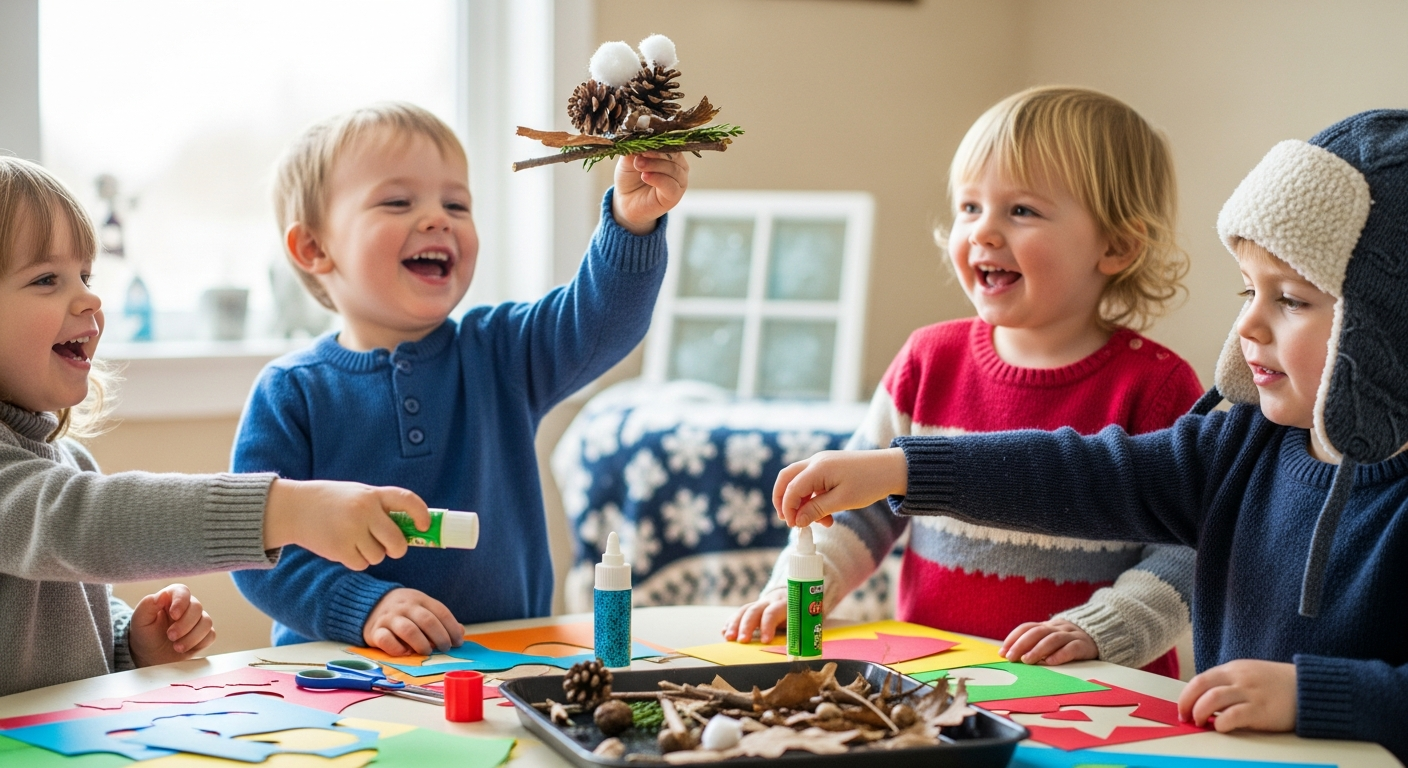
Table of Contents
- Introduction
- The Power of Sensory Play in Winter
- Snowman Crafts: Building Language Brick by Brick
- Magical Snowflake and Ice Art
- Arctic Animal Adventures
- Nature-Inspired Winter Crafts
- Process Art vs. Product Art: Why it Matters
- Integrating "Smart Screen Time" with Crafting
- Choosing the Right Plan for Your Family
- Tips for a Stress-Free Crafting Station
- Expanding the Vocabulary: Winter Word List
- Using Everyday Items for Winter Fun
- Building Confidence and Reducing Frustration
- Conclusion
- FAQs
Introduction
Have you ever watched your toddler stare out the window at the first snowfall, their eyes wide with wonder as they press their tiny nose against the cold glass? Winter is a season of magic for little ones, but for parents, it often means long days trapped indoors, navigating a whirlwind of "toddler energy" while the thermometer drops. At Speech Blubs, we believe these chilly days are a golden opportunity to turn your living room into a laboratory of creativity and communication.
In this post, we are going to explore a variety of engaging winter toddler crafts that do more than just fill the time. We’ll dive into sensory-rich art projects, fine motor activities, and "smart screen time" connections that help your child develop essential language skills. From fluffy cotton ball snowmen to "melting" ice art, these activities are designed to foster independence and confidence.

Our mission is to empower children to speak their minds and hearts, and we know that the best learning happens through joyful, hands-on play. By the end of this article, you’ll have a toolkit of easy-to-implement ideas that transform winter hibernation into a season of developmental breakthroughs.
The Power of Sensory Play in Winter
Winter offers a unique sensory palette: the crunch of snow, the coldness of ice, and the softness of fuzzy mittens. When we engage a toddler’s senses through winter toddler crafts, we aren't just making "fridge art." We are actually building neural pathways.
For many of us at Speech Blubs, this mission is personal. Our founders grew up with speech challenges and created the tool they wished they had—one that blends scientific principles with the pure joy of play. This same philosophy applies to crafting. When a child squishes "puffy paint" or tears blue tissue paper to make a winter sky, they are practicing the fine motor control needed for speech. They are also learning new vocabulary words like cold, sticky, white, and sparkle.
If you are ever unsure where your child stands in their communication journey, we invite you to take our quick 3-minute preliminary screener. It involves 9 simple questions and provides a professional assessment and a next-steps plan to support your child’s growth.
Snowman Crafts: Building Language Brick by Brick
The snowman is the undisputed mascot of winter. These crafts are perfect for toddlers because they rely on simple shapes—mostly circles—which are some of the first shapes children learn to recognize and draw.
1. The Loofah Snowman
Instead of a traditional paintbrush, try using a bath loofah! The texture of the loofah creates a "snowy" effect that is much more interesting than a flat stroke of paint.
- How to do it: Dip a round loofah into white washable paint and stamp it three times onto dark blue paper.
- Speech Connection: This is a great time to practice counting (1, 2, 3!) and the concept of "big, medium, and small." In the Speech Blubs app, you can reinforce these concepts in our "Numbers and Shapes" section.
2. Puffy Paint Melted Snowmen
Toddlers love the "messy" factor of puffy paint. You can make it easily at home by mixing equal parts shaving cream and white school glue.

- How to do it: Let your toddler dollop the mixture onto paper. Since it’s a "melted" snowman, it doesn’t have to be a perfect circle! Add googly eyes, a small orange paper triangle for a nose, and some buttons.
- Why it works: The 3D texture is highly stimulating. As they touch the dried, spongy paint, use descriptive words. This mimics our video modeling methodology, where children learn by observing and imitating.
Magical Snowflake and Ice Art
Snowflakes are nature’s masterpiece, and recreating them helps toddlers focus on patterns and "resist" techniques.
3. Tape-Resist Snowflakes
This is a "magic" reveal craft that never fails to delight.
- How to do it: Use painter's tape to create a snowflake shape on a piece of white cardstock. Let your toddler paint over the entire page with blue watercolors or watered-down tempera paint. Once dry, peel the tape away to reveal the white snowflake underneath.
- Pro Tip: For a child who is a "late talker," use the moment of peeling the tape to practice "Wow!" or "Look!" For more ideas on how to encourage these first words, download Speech Blubs on the App Store to see how peer models use these exclamations.
4. Coffee Filter Snowflakes
While traditional paper snowflakes require complex folding and sharp scissors, coffee filters are thin and easy for little hands to manipulate.
- How to do it: Give your toddler washable markers to color a coffee filter. Then, use a spray bottle or a dropper to add water. Watch the colors bleed and blend like ice crystals.
- Skill Building: Using a spray bottle is incredible for strengthening the tiny muscles in the hand, which is directly linked to the fine motor control required for clear articulation.
Arctic Animal Adventures
Learning about animals that love the cold is a fantastic way to expand a child’s world. At Speech Blubs, we see how motivated children are by animals. In fact, our "Animal Kingdom" section is one of the most popular areas of the app!
5. Fork-Painted Polar Bears
Who knew a plastic fork could be an art tool?
- How to do it: Give your child a plate of white paint and a plastic fork. Show them how to "scratch" the paint onto dark paper in a circular pattern to create the fluffy fur of a polar bear.
- Scenario: For a parent whose 3-year-old loves animals, the "Animal Kingdom" section in Speech Blubs offers a fun, motivating way to practice sounds like the "growl" of a bear or the "hiss" of the wind. You can start your 7-day free trial today to explore these interactive animal face filters together.
6. Handprint Arctic Foxes
Arctic foxes are known for their beautiful white coats that blend into the snow.
- How to do it: Paint your child’s hand with white paint and press it upside down on a piece of paper (the fingers are the legs, the thumb is the tail). Add ears and a face once it dries.
- Connection: This is a perfect "me and you" activity. Co-play is at the heart of everything we do. We aren't just providing "smart screen time"; we are providing a tool for family connection.
Nature-Inspired Winter Crafts
Even when it’s cold, a quick "nature walk" to the backyard can provide all the supplies you need for winter toddler crafts.
7. Frosty Pinecones
Pinecones are a sensory treasure trove with their bumpy, prickly scales.
- How to do it: Have your toddler roll a pinecone in white paint (to look like snow) and then dip it in silver glitter.
- Safety Note: Always supervise toddlers with glitter and small objects to ensure a safe and joyful experience.
8. Birch Tree Tape Art
Similar to the tape-resist snowflake, use long strips of tape to create tree trunks.
- How to do it: Let your child paint the background "sky." After removing the tape, use a credit card or a piece of cardboard dipped in black paint to "scrape" horizontal lines across the white trunks to create that iconic birch bark look.
Process Art vs. Product Art: Why it Matters
When crafting with two and three-year-olds, it is essential to focus on the process rather than the product. As experts in child development, we know that toddlers are in a phase of life where they are obsessed with independence. They want to do it "by myself!"
If their snowman has five eyes or their "winter hat" is painted neon green instead of blue, that is a success. By allowing them to make choices, you are building their confidence. This confidence carries over into their communication. A child who feels capable in art is a child who feels brave enough to try a new, difficult word.
We see this every day in our community. You can read testimonials from other parents who have seen their children's confidence soar as they transition from passive observers to active participants in their own learning.
Integrating "Smart Screen Time" with Crafting
We often hear from parents who worry about screen time. At Speech Blubs, we believe in a screen-free alternative to passive viewing like cartoons. Our app is designed to be a "smart" supplement to physical activities like crafting.
For example, after a morning of making "Snowman Bowling" pins out of recycled yogurt containers, you might spend 10 minutes on the Speech Blubs app. You could head to the "First Words" section to practice the names of the materials you just used—glue, paper, scissors.
This combination of physical play and digital reinforcement is incredibly powerful. Our methodology is backed by science, utilizing mirror neurons that fire when a child watches another child (a peer model) perform a speech sound or action. To learn more about how this works, visit the official Speech Blubs homepage.
Choosing the Right Plan for Your Family
We want to be transparent about how you can access the full suite of Speech Blubs tools to support your child's winter learning journey. While we offer a variety of resources, our premium plans provide the most comprehensive experience.
- Monthly Plan: For $14.99 per month, you get full access to the Speech Blubs app. This is a great "pay-as-you-go" option for families wanting to test the waters.
- Yearly Plan (Best Value): Our yearly plan is $59.99 per year, which breaks down to just $4.99 per month. This is a 66% savings compared to the monthly rate.
Why choose the Yearly Plan? Beyond the significant cost savings, the yearly plan is the only one that includes:
- A 7-day free trial so you can explore everything risk-free.
- Reading Blubs: A companion app designed to jumpstart literacy skills.
- Early Access: Be the first to try new updates and themes.
- Priority Support: A 24-hour response time from our dedicated support team.
The Monthly plan does not include the free trial or the Reading Blubs app. We highly recommend the yearly option to get the most "bang for your buck" and the most comprehensive support for your child. Download Speech Blubs on Google Play to get started with your trial.
Tips for a Stress-Free Crafting Station
To make winter toddler crafts enjoyable for you (and to protect your carpet!), follow these simple steps:
- Use a Disposable Tablecloth: A cheap plastic cloth from the dollar store makes cleanup a breeze. When you're done, just fold it up and toss the mess.
- The "Big T-Shirt" Trick: Instead of an expensive smock, use an old adult T-shirt. It covers the toddler from neck to knees.
- Time it Right: Never start a craft when a child is hungry or close to naptime. The "sweet spot" is usually about 30 minutes after breakfast.
- Keep Supplies Within Reach: Have your glue, paper, and "googly eyes" ready before you invite the "artist" to the table. Toddlers have a very short window of patience!
Expanding the Vocabulary: Winter Word List
While you are crafting, try to weave these words into your conversation. Repetition is key!
- Nouns: Icicle, mitten, scarf, penguin, polar bear, blizzard, cocoa.
- Verbs: Melt, freeze, shiver, slide, pour, stick.
- Adjectives: Chilly, frozen, slippery, fluffy, bright.
If your child struggles with specific sounds in these words, you can use the search function in Speech Blubs to find specific exercises. For instance, if the "S" in snowflake is tricky, our "S" sound section features peer models showing exactly how to position the tongue and teeth.
Using Everyday Items for Winter Fun
You don't need a trip to the craft store for every project. Many of the best winter toddler crafts use what you already have.
9. Egg Carton Penguins
- How to do it: Cut out the individual cups from an egg carton. Paint them black, leave a white "belly," and add a tiny orange beak.
- Educational Twist: These are great for "small world play." You can make a whole colony and talk about how penguins huddle together to stay warm.
10. Toilet Paper Roll "Snowy Owls"
- How to do it: Fold down the top of a cardboard tube to create "ears." Glue on white torn paper bits to represent feathers.
- Developmental Benefit: Tearing paper is an excellent way to build bilateral coordination (using both hands together), which is a foundational skill for dressing and writing later on.
Building Confidence and Reducing Frustration
Winter can be a frustrating time for toddlers. Being cooped up and unable to run outside can lead to tantrums. Crafting provides a constructive outlet for that energy. When a child successfully completes a project—no matter how messy it looks—they feel a sense of mastery.
At Speech Blubs, our goal is to reduce the frustration that comes from being unable to communicate. When a child can't find the words for what they want, they might act out. By building their vocabulary through these winter activities and using our app as a supplement, you are giving them the keys to express their "minds and hearts."
We don't promise that your child will be giving public speeches in a month, but we do promise that by focusing on the benefits of the process, you will foster a love for communication and create joyful family learning moments that last far beyond the winter season.
Conclusion
Winter doesn't have to be a season of "cabin fever." With a few simple supplies and a lot of imagination, you can turn these cold months into a time of incredible growth for your toddler. Whether you are building a loofah snowman, painting with forks, or exploring the "Animal Kingdom" in Speech Blubs, the most important thing is the connection you are building with your child.
Remember, every "stick," "pour," and "smear" is a step toward better communication. We are here to support you every step of the way with tools that are effective, joyful, and scientifically grounded.
Ready to make this winter your child's best season yet? Download Speech Blubs on the App Store or Google Play to begin your journey. We highly recommend choosing the Yearly Plan to take advantage of the 66% discount, the 7-day free trial, and the exclusive Reading Blubs app. Let’s help your little one speak their mind and heart today!
FAQs
What are the best winter crafts for a 2-year-old?
For 2-year-olds, focus on high-sensory, low-precision activities like cotton ball collages, loofah stamping, and finger painting "snow." At this age, the goal is exploring textures and practicing basic motor movements rather than creating a "perfect" picture.
How can winter crafts help my child's speech development?
Crafting provides a natural context for learning new vocabulary (colors, textures, winter-themed nouns) and following multi-step directions. It also strengthens fine motor skills, which are closely linked to the muscle control needed for clear articulation.
Are these winter toddler crafts safe?
Yes, provided they are done with adult supervision. Always use non-toxic, washable paints and glues. Be extra cautious with small items like sequins, buttons, or googly eyes, which can be choking hazards for young children.
Can digital apps really help with speech?
When used as "smart screen time," apps like Speech Blubs can be very effective. Our app uses video modeling, where children watch their peers make sounds. This triggers mirror neurons in the brain, encouraging the child to imitate and practice speech in a fun, non-pressured way. It is a powerful supplement to physical play and professional therapy.
About the author