
Delicious Fun: Easy Food Crafts for Kids
 By Speech Blubs Team•Jan 13, 2026•20 min.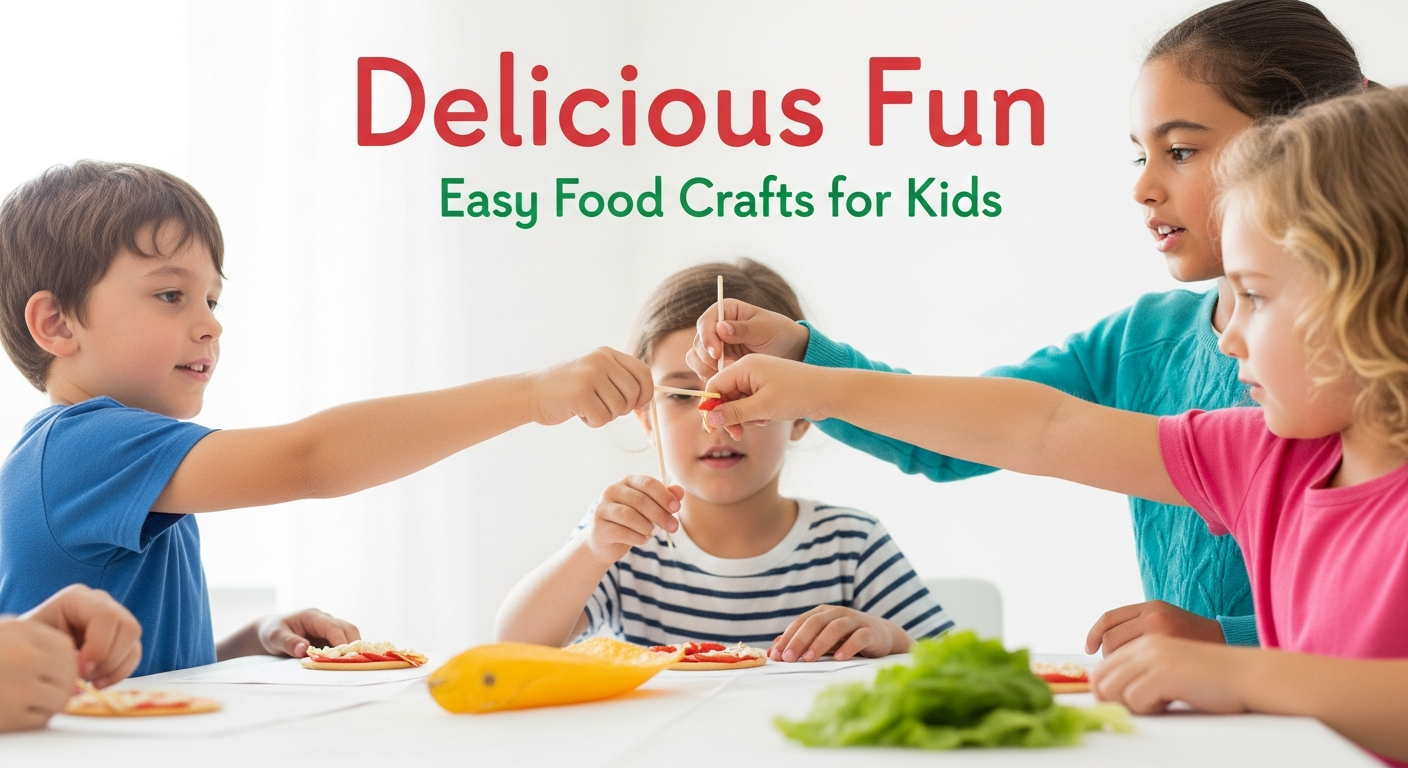
Table of Contents
- Beyond the Plate: Why Easy Food Crafts Spark Development
- Getting Started: Crafting a Joyful Kitchen Experience
- A Feast of Ideas: Simple & Engaging Food Crafts for Kids
- Boosting Communication Through Edible Creativity
- Speech Blubs: Your Partner in Joyful Learning
- Making the Most of Your Speech Blubs Journey: Pricing & Value
- When to Seek Additional Support
- Conclusion
- FAQ
Ever watched a child’s eyes light up as they transform a humble pile of ingredients into something magical and edible? It’s a moment of pure wonder, a testament to the incredible power of hands-on creativity. In a world increasingly dominated by screens, finding engaging, enriching activities that truly captivate young minds can feel like a quest. But what if the answer was right in your kitchen, waiting to be explored?
This isn't a fantasy; it's the everyday magic of easy food crafts for kids. These activities go far beyond simply occupying time; they transform your kitchen into a vibrant laboratory and art studio, sparking imagination and igniting a love for learning in the most delightful way. Our purpose today is to explore the rich landscape of edible crafts, highlighting their profound developmental benefits and offering a wealth of practical ideas to get you started. We’ll uncover how these seemingly simple activities naturally weave in crucial STEM (Science, Technology, Engineering, and Math) concepts, encourage artistic expression, and foster essential life skills. We’ll also share how, at Speech Blubs, we are dedicated to making communication development accessible and exciting for every family, providing unique "smart screen time" adventures that blend scientific principles with play seamlessly. By the end, you'll see why food crafts are not just a fun pastime, but an incredibly powerful tool for nurturing creativity, building confidence, and strengthening family bonds, all while enjoying something truly delicious. Ready to explore a powerful tool for joyful learning and communication development? Download Speech Blubs today!

Beyond the Plate: Why Easy Food Crafts Spark Development
When we think of "crafts," our minds often go to paper, glue, and glitter. But when you introduce food into the equation, something truly special happens. Food crafts engage children in a way that traditional crafts often cannot, tapping into multiple senses and offering an immediate, delicious reward for their efforts. This makes them incredibly effective learning tools, disguised as pure fun.
A Sensory Wonderland in the Kitchen
From the moment children touch the smooth dough, smell the sweet spices, or observe colors blending, their senses are fully engaged. This multi-sensory input is crucial for early brain development. Kneading bread, crumbling cookies, or shaping fruit allows children to explore textures, temperatures, and consistencies, building a richer understanding of the world around them. The vibrant colors of fruits and vegetables, the aroma of baking, and the taste of their creations all contribute to a holistic learning experience that is both memorable and enjoyable. These sensory experiences help children process information, refine their descriptive language, and build a more complex picture of their environment. For our youngest chefs, simply exploring the squishiness of banana slices or the crunch of bell peppers can be a profound learning experience, laying foundations for future cognitive development and providing natural opportunities for early vocabulary expansion.
Creative Expression: Art on a Plate
Food is an incredible medium for artistic expression. Children can design edible landscapes, sculpt characters from dough or fruit, or paint with food coloring on cookies. This allows them to translate their imaginative ideas into tangible (and tasty!) forms. There’s no right or wrong way to decorate a cupcake or arrange fruit slices; the focus is entirely on personal creativity. This freedom encourages innovation and helps children develop their unique artistic voice, fostering a sense of accomplishment whether they're creating a silly monster sandwich or a delicate flower cookie. It's a fantastic opportunity to experiment with color theory, composition, and presentation, transforming a simple snack into a canvas for their wildest ideas. Every edible creation is a testament to their budding artistic abilities, which in turn builds the confidence needed to express themselves in other ways, including through speech.

Fine Motor Skill Development
Many food themed crafts for kids require precise movements that are excellent for developing fine motor skills. Activities like sprinkling decorations, cutting shapes with cookie cutters, peeling fruit, spreading frosting, or even threading cereal onto a string for a snack necklace all contribute to hand-eye coordination, dexterity, and finger strength. These are foundational skills that support everything from writing and drawing to buttoning clothes and tying shoelaces. The repetitive, often intricate, motions involved in food crafting are a playful way to hone these vital abilities, preparing them for more complex tasks down the road. Even simple tasks like tearing lettuce for a salad or stirring a mixture can strengthen small muscles and improve control, all of which indirectly support the development of oral motor skills crucial for clear speech.
Problem-Solving & Critical Thinking
Following a recipe, even a simple one, involves a sequence of steps that requires children to think critically and solve problems. What happens if we add too much liquid? How can we make this shape hold together? How do we measure half a cup? They learn to adapt, troubleshoot, and understand cause and effect. For instance, making "volcano muffins" isn't just baking; it's a hands-on chemistry lesson where children observe a fantastic chemical reaction unfold before their eyes, learning about acids and bases in a truly unforgettable way. Every step, from ingredient selection to final decoration, presents miniature challenges that children can overcome, boosting their confidence in their problem-solving abilities. This practical application of logic in the kitchen helps develop their ability to plan, predict, and execute—skills invaluable in all areas of life and foundational for complex communication.
Patience & Persistence
Baking requires patience – waiting for dough to rise, cookies to bake, or frosting to set. Food crafts teach children that good things come to those who wait, reinforcing the value of persistence. Even if a first attempt doesn't go as planned, the process encourages them to try again, fostering resilience and a growth mindset. The anticipation of enjoying their creation makes the waiting worthwhile, teaching them to delay gratification for a rewarding outcome. This crucial life skill is practiced in a low-stakes, enjoyable environment, allowing them to learn from mistakes without fear of failure. It's about enjoying the journey as much as the delicious destination.
Math & Science in the Kitchen
The kitchen is a natural laboratory for STEM learning.
- Math: Measuring ingredients, counting items, understanding fractions (half a cup, a quarter teaspoon), and even simple geometry (cutting a sandwich into triangles or squares) are all practical math lessons. Children naturally grasp concepts of quantity and proportion when they're directly involved in the process. Doubling a recipe, for example, becomes a hands-on exercise in multiplication.
- Science: Children observe physical changes (melting chocolate, freezing water), chemical reactions (baking soda and vinegar bubbling), and states of matter (solids, liquids, gases). They learn about density when layering liquids for a colorful drink or about the properties of yeast when bread dough rises. These hands-on observations make abstract scientific concepts concrete and understandable, sparking a genuine curiosity about how the world works. Our methodology, deeply rooted in scientific research, empowers children to learn in similar engaging ways.
Language & Communication Booster
Perhaps one of the most significant benefits for parents is how food crafts naturally boost language and communication skills. Following verbal instructions, explaining steps to an adult, or discussing their creative choices helps children develop their vocabulary and communication. They learn new cooking terms, practice sequencing, and engage in collaborative dialogue, all while having fun. Describing the texture of dough, the color of frosting, or the taste of a finished product expands their descriptive language. Working together on a food craft provides a natural setting for conversation, negotiation, and sharing ideas, strengthening their social communication abilities.
For a child struggling with new words, describing the texture of cookie dough ("squishy!") or the color of sprinkles ("red! blue!") provides natural opportunities for verbal practice. Or, for a parent whose 3-year-old "late talker" loves animals, building a "bug" out of apple slices and pretzel sticks (a creative spin on "Cutie Bugs") offers concrete objects to label ("apple," "pretzel," "bug," "crunchy") and action words to practice ("build," "eat," "crawl"). This kind of interactive play is invaluable. Find out more about how we empower children to speak their minds and hearts by visiting our homepage or diving into our app!
Getting Started: Crafting a Joyful Kitchen Experience
Ready to turn your kitchen into a creative hub? Here's how to ensure your food crafting adventures are successful, fun, and safe for everyone.
Safety First: Adult Supervision is Key
Always remember that all food crafting activities require adult supervision, especially when using knives, ovens, stovetops, or small, potentially choking-hazard ingredients. Ensure tools are age-appropriate and teach children safe handling practices. Hot surfaces, sharp edges, and small items demand constant vigilance.
Simple Supplies: Stocking Your Creative Pantry
The beauty of easy food crafts is that you often don't need fancy equipment. Many ingredients and tools are already in your kitchen!
- Pantry Staples: Bread slices, tortillas, graham crackers, marshmallows, various cereals, pretzels, peanut butter (or allergy-friendly alternatives), cream cheese, frosting, fruit snacks, chocolate chips, dried fruit, nuts.
- Fresh Produce: Apples, bananas, grapes, berries, carrots, cucumbers, bell peppers.
- Basic Tools: Spreading knives (child-safe), cookie cutters, small mixing bowls, spoons, measuring cups and spoons, paper plates, toothpicks, rolling pins.
- Creative Extras: Food coloring, sprinkles, edible glitter.
Setting the Stage: Prep for Success (and Mess!)
Before you begin, think about your workspace. Lay down newspaper or a washable tablecloth to make cleanup easier. Gather all your ingredients and tools within reach. Pre-measure ingredients where possible, especially for younger children, to minimize waiting time and keep frustration at bay. Explain the steps of the craft beforehand to your child, giving them a clear idea of what to expect.
Involving Your Child: From Choosing to Cleaning
Empowering your child to be part of the process fosters engagement and ownership.
- Choice & Planning: Let them choose which craft they want to make from a few options. Discuss what ingredients they think they’ll need.
- Active Participation: Give them age-appropriate tasks: washing fruits, stirring mixtures, sprinkling toppings, arranging ingredients. Even "helping" with cleanup (wiping spills, putting away non-breakables) is part of the learning.
- Process Over Perfection: Focus on the joy of creating and the learning process, not on a perfect final product. Embrace the "happy accidents" that occur!
A Feast of Ideas: Simple & Engaging Food Crafts for Kids
Here are some easy and fun food craft ideas that encourage creativity, fine motor skills, and delightful communication moments.
Sweet Treats for Creative Hands
- No-Bake Cookie Canvas:
- What you need: Large round cookies (like shortbread or sugar cookies), various colors of frosting, small candies, sprinkles, fruit loops, mini chocolate chips.
- The craft: Let children spread frosting onto cookies as a base, then use candies and sprinkles to create faces, patterns, or miniature scenes. This is fantastic for fine motor control and color vocabulary.
- Fruit Rainbow Skewers:
- What you need: A variety of colorful fruits (strawberries, oranges, pineapple chunks, green grapes, blueberries, purple grapes), wooden skewers.
- The craft: Have kids thread the fruit onto skewers in rainbow order. This practices sequencing, color recognition, and fine motor skills. Plus, it's a healthy, vibrant snack!
- Edible Animal Crackers:
- What you need: Plain animal crackers, thin pretzel sticks, cream cheese or peanut butter (or alternative spread), mini chocolate chips, fruit leather strips.
- The craft: Use the spread to "glue" pretzel sticks as legs, chocolate chips as eyes, and cut fruit leather for wings or ears onto the animal crackers. Encourage naming the animals and describing their features.
- Graham Cracker "Stained Glass":
- What you need: Graham crackers, crushed hard candies of various colors, parchment paper, baking sheet.
- The craft: (Adult supervision for melting) Break graham crackers into squares. Place them on parchment paper on a baking sheet. Fill the center of each square with crushed candies. Bake until candies melt into a "stained glass" effect. Great for observing changes in matter and color mixing.
Savory & Healthy Bites for Little Builders
- Tortilla Pizzas with Veggie Toppings:
- What you need: Small tortillas or English muffin halves, tomato sauce, shredded cheese, various finely chopped vegetables (bell peppers, mushrooms, olives).
- The craft: Kids spread sauce, sprinkle cheese, and arrange their veggie toppings. This allows for choice-making, naming ingredients, and practicing fine motor skills for placing small items. Bake until cheese is bubbly.
- Animal Face Toast:
- What you need: Bread slices, cream cheese or hummus, various fruit and vegetable slices (cucumber, carrot, banana, blueberries).
- The craft: Let children spread their base and then use the fruit and veggie slices to create funny animal faces. "Bunny ears" from banana slices, "eyes" from cucumber with a blueberry pupil. Perfect for imaginative play and descriptive language.
- Ants on a Log (and variations):
- What you need: Celery sticks, cream cheese or peanut butter, raisins, mini chocolate chips, pomegranate seeds.
- The craft: Fill celery sticks with the spread, then let kids "march" their "ants" (raisins or other small toppings) along the log. This classic is excellent for fine motor precision.
- "Caterpillar" Fruit Skewers:
- What you need: Green grapes, banana slices, mini chocolate chips, wooden skewers.
- The craft: Alternate green grapes and banana slices on a skewer, then use a tiny dab of spread to attach mini chocolate chips as eyes onto the banana "head" for a cute caterpillar. This fosters healthy eating habits and sequential thinking.
Boosting Communication Through Edible Creativity
Food crafts are a goldmine for speech and language development. Here's how to maximize those moments:
- Ask Open-Ended Questions: Instead of "Do you want red sprinkles?", try "What color sprinkles should we use next? Why?" or "How does the dough feel in your hands?" These questions encourage more than a yes/no answer, prompting descriptive vocabulary.
- Narrate the Process: Talk through every step. "First, we add the flour. Now, we stir the mixture slowly. Look, it's getting thick!" This models sequencing, action verbs, and helps children understand cause and effect.
- Encourage Imitation: Many young children learn new words by imitating. During craft time, point to an action and say the word, then encourage your child to repeat it. "Can you say 'mix'?" "Show me 'stir'!" Then celebrate their attempts!
- Expand on Their Words: If your child says "apple," you can respond with "Yes, a crispy red apple!" or "That's a delicious apple!" You're adding new vocabulary and concepts to their existing knowledge base.
- Create Mini-Stories: As you build a "bug" or "animal" out of food, invent a short story about it. "Our happy cucumber caterpillar is going on an adventure!" This sparks imagination and embeds language in a fun context.
Just as these crafts provide a scaffold for hands-on learning, Speech Blubs offers a unique "smart screen time" experience, using video modeling where children learn by watching and imitating their peers. This active engagement stands in stark contrast to passive viewing, making it a powerful tool for family connection and communication development. For a child who is shy about new sounds, engaging in food crafts can offer a low-pressure way to practice descriptive words. Then, seamlessly transitioning to Speech Blubs, they can see peers confidently making those same sounds in the "Wow Sounds" section, reinforcing their learning. Many parents tell us how our "Animal Kingdom" section or "Early Sounds" games provide that direct imitation practice, mirroring the natural learning that happens during craft time.
Speech Blubs: Your Partner in Joyful Learning
At Speech Blubs, our mission is to empower children to "speak their minds and hearts." We understand the journey of speech development intimately; our company was born from the personal experiences of our founders, who all grew up with speech problems and created the tool they wished they had. We are committed to providing an immediate, effective, and joyful solution for the 1 in 4 children who need speech support, blending scientific principles with play into one-of-a-kind "smart screen time" experiences.
We believe that learning to communicate should be an exciting adventure, not a chore. That's why we provide a screen-free alternative to passive viewing (like cartoons) and a powerful tool for family connection. Our unique approach teaches complex communication skills through our "video modeling" methodology, where children learn by watching and imitating their peers. This method is backed by extensive research and has proven highly effective in fostering speech development.
Consider a child who is just starting to string words together. While food crafts offer a wonderful way to practice words like "mix," "cut," or "eat," Speech Blubs takes that learning further. After making their "animal toast," they can jump into the "Animal Kingdom" section of our app, seeing real children make animal sounds and say animal names, prompting them to imitate and build on their newfound vocabulary. This synergy between hands-on activities and our interactive app creates a holistic learning environment. Parents often share how both hands-on activities and Speech Blubs contribute to their child's progress. You can read some of their stories on our testimonials page.
Making the Most of Your Speech Blubs Journey: Pricing & Value
We believe in making effective speech support accessible to every family. That's why we offer transparent and flexible subscription plans for Speech Blubs.
- Monthly Plan: For those who prefer flexibility, our Monthly plan is available at $14.99 per month.
- Yearly Plan: For the best value and a comprehensive learning experience, we highly recommend our Yearly plan, priced at just $59.99 per year. This breaks down to an incredible $4.99 per month, allowing you to save 66% compared to the monthly option!
But the savings aren't the only reason the Yearly plan is the superior choice. It also unlocks exclusive, high-value features designed to enhance your child's learning journey:
- 7-Day Free Trial: Only with the Yearly plan do you get to experience the full app with a 7-day free trial, giving you ample time to explore all the features and see the incredible impact it can have.
- The Extra Reading Blubs App: This bonus app is included with your Yearly subscription, extending the learning fun into early reading skills.
- Early Access to New Updates: Be among the first to benefit from our continuous improvements and new content.
- 24-Hour Support Response Time: Our dedicated support team is there for you, ensuring any questions or concerns are addressed promptly.
The Monthly plan, unfortunately, does not include these invaluable benefits. To unlock these incredible features, including your free trial and the Reading Blubs app, we encourage you to choose our Yearly plan and start your 7-day free trial on our website today!
When to Seek Additional Support
While food crafts and apps like Speech Blubs can significantly boost a child's communication development, it's also important to know when to seek professional guidance. If you notice your child consistently missing key speech and language milestones, if their speech is difficult to understand, or if they show signs of frustration when trying to communicate, it may be time to consult with a pediatrician or a speech-language pathologist.
Unsure if your child could benefit from more structured support? Take our quick 3-minute preliminary screener. It involves just 9 simple questions and provides an immediate assessment and next-steps plan. This screener can offer valuable insights and, if appropriate, will lead you directly to a free 7-day trial of Speech Blubs, allowing you to see how our engaging approach can support your child's unique needs. Remember, Speech Blubs is a powerful supplement to a child's overall development plan and, when applicable, professional therapy, providing consistent, joyful practice at home.
Conclusion
Easy food crafts for kids offer so much more than just a tasty snack; they unlock a world of sensory exploration, creative expression, and vital developmental benefits. From honing fine motor skills and encouraging problem-solving to building confidence and fostering crucial language abilities, these activities transform your kitchen into a joyful learning space. By engaging children in hands-on, multi-sensory experiences, you’re not just making memories – you’re laying the foundation for a lifetime of curiosity, confidence, and effective communication.
Just as these crafts provide a tangible way for children to express themselves, Speech Blubs empowers them to speak their minds and hearts through our unique "smart screen time" approach. Our blend of scientific principles and play, especially our video modeling methodology, creates an effective and engaging environment that complements hands-on learning. We're here to support every child's journey to confident communication, ensuring that learning is always immediate, effective, and joyful.
Ready to start crafting delicious memories and fostering incredible communication skills? Download Speech Blubs on the App Store or Google Play to begin your 7-day free trial today! Remember to choose the Yearly plan to unlock exclusive features like the Reading Blubs app and early access to updates, ensuring you get the best value and a full suite of tools for your child's developmental journey.
FAQ
Q1: What age are easy food crafts suitable for?
A1: Food crafts can be adapted for a wide range of ages, from toddlers to school-aged children. For toddlers (1-3 years), focus on simple, safe activities like spreading soft toppings, sprinkling large items, or squishing edible playdough, always with close adult supervision. Preschoolers (3-5 years) can handle more complex tasks like using child-safe cookie cutters, arranging fruit skewers, and decorating with finer details. Older children (6+) can follow multi-step recipes, use more tools, and even take on minor baking responsibilities (with adult guidance). The key is to choose age-appropriate tasks and prioritize safety.
Q2: How can food crafts help with picky eaters?
A2: Engaging in food crafts can be a fantastic way to encourage picky eaters to explore new foods. When children are involved in preparing food, they are more likely to try it. The process makes food less intimidating and more exciting. By allowing them to touch, smell, and play with ingredients without the pressure to eat, you can desensitize them to unfamiliar textures and tastes. Making funny faces on toast, creating edible art, or building "food monsters" turns mealtime into an adventure, fostering a positive association with food and encouraging curiosity.
Q3: Are these crafts safe for children with allergies?
A3: When planning food crafts, it is crucial to be extremely mindful of food allergies, both for your child and any friends or family who might participate or consume the crafts. Always check ingredient labels carefully for common allergens like nuts, dairy, gluten, soy, and eggs. Many common ingredients have allergy-friendly alternatives (e.g., sunflower seed butter instead of peanut butter, dairy-free cream cheese, gluten-free crackers). If hosting a group, clearly communicate any allergies and ensure all ingredients are safe for everyone involved. It's always best to err on the side of caution and use alternatives if there's any doubt.
Q4: How does Speech Blubs fit with these hands-on activities?
A4: Speech Blubs seamlessly complements hands-on activities like food crafts by providing a targeted, engaging digital environment for communication development. While food crafts offer sensory exploration and natural conversation starters, Speech Blubs uses its unique video modeling methodology to encourage direct imitation of sounds and words from peers. For example, a child who has just learned to say "apple" during a food craft session can reinforce that word by seeing and imitating other children saying "apple" in the app's vocabulary games. This creates a powerful synergy: real-world application combined with structured, interactive practice. Speech Blubs offers "smart screen time" that actively engages children, boosting vocabulary, pronunciation, and confidence, making it a perfect partner to your kitchen adventures. You can download Speech Blubs from the App Store or Google Play.
About the author