
Delightful & Easy Leaf Crafts for Kids
 By Speech Blubs Team•Jan 13, 2026•17 min.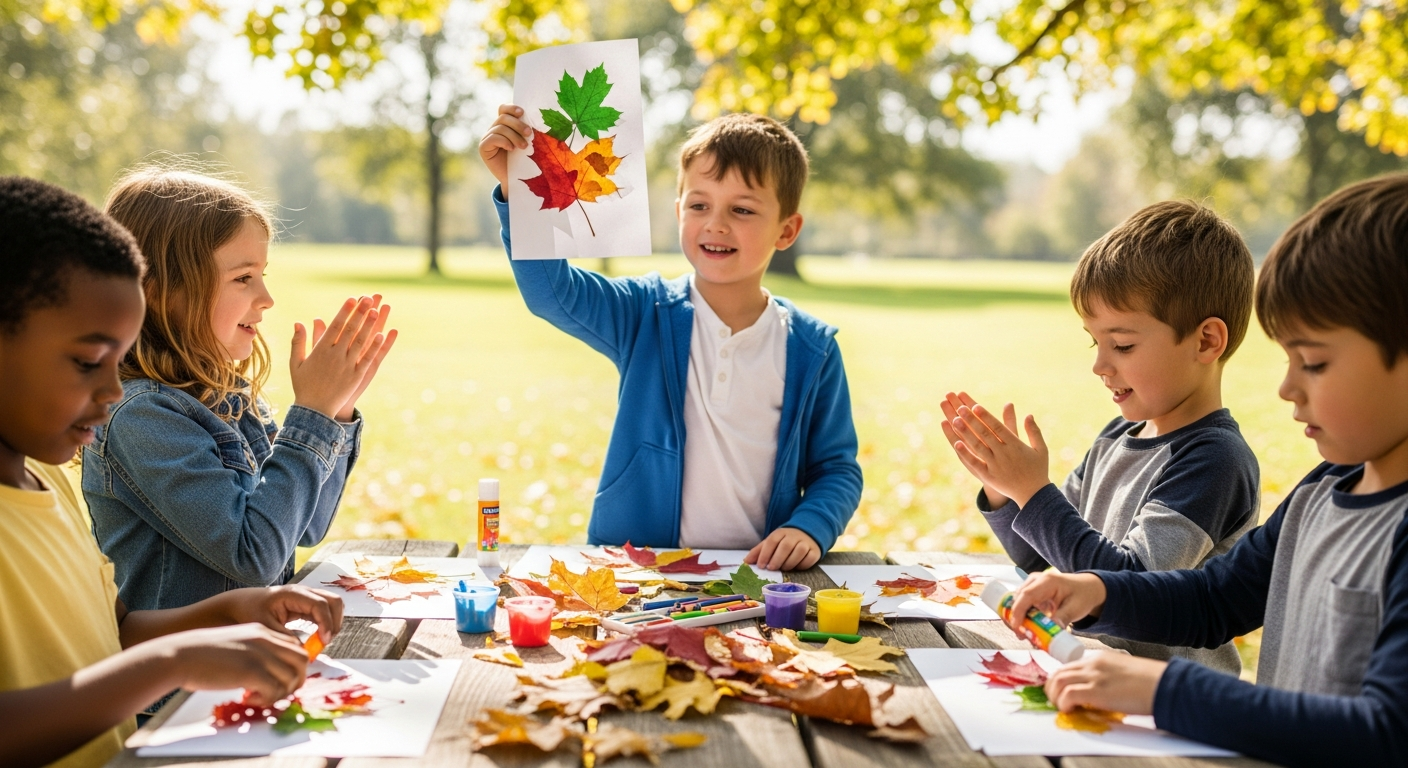
Table of Contents
- Introduction
- The Developmental Magic Behind Leaf Crafts
- Preparing for Your Leaf Craft Adventure
- Our Favorite Easy Leaf Crafts for Kids (with a Communication Focus!)
- Boosting Communication with Every Craft: Practical Strategies for Parents
- Speech Blubs: Your Partner in Communication Development
- Conclusion
- FAQ
Introduction
Imagine a crisp autumn afternoon, leaves swirling in vibrant hues of red, orange, and gold. For many parents, this season evokes a desire to capture nature's fleeting beauty and bring it indoors – often with the eager hands of their little ones. But beyond simply creating pretty decorations, what if these simple, joyful activities could also be powerful catalysts for your child's development, especially their communication skills? We believe that crafting with nature offers a unique blend of sensory exploration, creativity, and invaluable opportunities for language growth. This post isn't just about making beautiful things; it's about harnessing the magic of fall leaves to nurture your child's speech, confidence, and connection with the world around them. Join us as we explore accessible, engaging leaf crafts that are not only easy for kids but also rich in developmental benefits, seamlessly integrating into your child's journey to speak their minds and hearts.

The Developmental Magic Behind Leaf Crafts
Leaf crafts are far more than just a seasonal pastime; they are a multi-sensory playground that supports holistic child development. When children engage with natural elements like leaves, they embark on a journey of discovery that touches upon various crucial learning domains.
Sensory Exploration and Cognitive Growth
From the moment your child steps outside to gather leaves, their senses are awakened. The crunch underfoot, the earthy scent, the visual feast of colors, and the varied textures (smooth, rough, crinkly) provide a rich sensory input that is vital for brain development. This direct interaction with nature helps children understand their environment, fostering curiosity and observation skills. For a child who might be a "late talker" and benefits from hands-on learning, the tactile experience of holding a maple leaf or crumbling a dry oak leaf can spark new neural connections, laying groundwork for later language acquisition.
Fine Motor Skills and Hand-Eye Coordination
Many leaf crafts involve actions like picking up small leaves, tearing, gluing, arranging, or punching holes. These seemingly simple tasks are powerful exercises for developing fine motor skills, which are essential for tasks like writing, drawing, and even self-feeding. The precise movements required to place a leaf just so on a collage, or to carefully press a crayon over a leaf for a rubbing, refine hand-eye coordination. These foundational physical skills often go hand-in-hand with speech development, as both require intricate control and coordination.
Cultivating Creativity and Imagination
With a pile of leaves, a child's imagination can run wild. A long, thin leaf might become a feather for a bird; a broad, flat leaf, a boat on an imaginary river. Crafting encourages open-ended play, where there's no "right" or "wrong" way to create, only possibilities. This freedom fosters problem-solving, self-expression, and imaginative storytelling – all critical precursors to robust communication. When a child can imagine a scenario, they are more likely to articulate it.

Language and Communication Opportunities
Perhaps most importantly, leaf crafts are ripe with opportunities for language development. As children collect, sort, and create, parents can engage them in rich conversations. This is where the magic truly happens. Discussions about colors, shapes, sizes, textures, and even the names of trees expand vocabulary. Following multi-step directions for a craft helps with receptive language, while explaining their artistic choices or narrating their process boosts expressive language. For parents looking to explicitly support their child's communication, these natural interactions provide a perfect springboard.
Preparing for Your Leaf Craft Adventure
A successful and enjoyable leaf craft session starts even before the glue comes out. Thoughtful preparation ensures a smooth, fun, and educationally enriching experience for both you and your child.
The Great Leaf Hunt: Tips for Collecting
The adventure begins outdoors! Heading out to collect leaves is an activity in itself, offering fresh air, exercise, and observation.
- Choose the Right Day: Opt for a dry day. Wet leaves tend to tear easily and can be harder to work with or preserve.
- Seek Variety: Encourage your child to find leaves of different colors, shapes, and sizes. This variety isn't just visually appealing; it provides more talking points for language development ("Look at this tiny, round yellow leaf!" vs. "This big, pointy red leaf!").
- Look for Freshness: While crinkly, dry leaves are fun for sensory play, fresh, pliable leaves are generally better for crafts that require bending, gluing, or preserving, as they are less likely to break. You can sometimes gently pluck them from lower branches with permission, or find recently fallen ones.
- Safety First: Remind children not to put leaves in their mouths and to wash hands thoroughly after collecting.
Simple Steps for Preserving Your Nature Treasures
While many crafts can be done with fresh leaves, preserving them can make your creations last longer and maintain their vibrant colors.
- Pressing: This is the easiest and most common method. Simply place leaves between sheets of newspaper or paper towels, then stack heavy books on top. Leave them for 1-2 weeks. This flattens them, ideal for collages, rubbings, and sun catchers.
- Wax Paper Ironing: For a slightly more durable (and fun!) option, sandwich leaves between two sheets of wax paper and press with a warm iron (adult supervision required!). The wax melts and seals the leaves, preserving their color and making them more resilient.
- Mod Podge Seal: After pressing, you can brush a thin layer of Mod Podge or watered-down school glue over leaves to seal them. This adds a nice sheen and protection.
Gathering Your Basic Crafting Arsenal
Most easy leaf crafts require only a few common household items:
- Leaves: Of course!
- Paper: Cardstock, construction paper, or even wax paper.
- Adhesive: School glue, Mod Podge, or glue sticks.
- Scissors: Kid-safe scissors for cutting paper or string (adult supervision).
- Crayons/Markers: For rubbings or adding details.
- Optional: Hole punch, yarn/string, googly eyes, glitter (if you dare!), embroidery hoops.
Our Favorite Easy Leaf Crafts for Kids (with a Communication Focus!)
Now for the fun part! Here are some tried-and-true leaf crafts that are simple for little hands and packed with opportunities to boost language skills.
1. Leaf Rubbings & Collages: Textures and Tales
Leaf rubbings are a classic for a reason – they're incredibly simple and yield beautiful results. Collages take it a step further, inviting creative arrangement.
How to Create:
- Rubbings: Place a leaf vein-side up under a piece of paper. Rub the side of a crayon over the paper, revealing the leaf's intricate patterns. Experiment with different colors and leaf shapes.
- Collages: On a piece of paper or cardboard, children can glue various leaves, overlapping them to create a scene, an abstract design, or even a 'leaf creature.'
Communication Boost:
- Sensory Vocabulary: Encourage descriptive words. "How does this leaf feel? Is it smooth or bumpy? What color is this crayon – forest green or lime green?"
- Following Instructions: "First, put the big red leaf down, then glue the small yellow one on top."
- Narrative Skills: Ask your child to tell a story about their leaf collage. "Who lives in this leaf forest? What are they doing?" For a parent whose 3-year-old "late talker" loves animals, the "Animal Kingdom" section of Speech Blubs offers a fun, motivating way to practice "moo" and "baa" sounds, which can then be brought into the leaf animal stories. You can find more engaging activities like this when you download Speech Blubs on the App Store or Google Play.
2. Nature Confetti: Fine Motor Fun and Purposeful Play
Forget the glitter! Nature confetti is an eco-friendly and satisfying way for kids to practice fine motor skills while creating a beautiful, usable product.
How to Create:
- Gather a variety of colorful, relatively fresh (not brittle) leaves.
- Provide your child with a standard hole punch or even a selection of shape punches.
- Let them punch away! The colorful circles or shapes can then be used for other crafts, sprinkled on cards, or added to sensory bins.
Communication Boost:
- Action Words: "Punch! Punch! Punch! Can you push the hole punch? Can you empty the container?"
- Counting: "How many red pieces did you make? One, two, three..."
- Cause and Effect: "What happens when you press the punch? The leaf makes a little circle!"
3. Leaf Sun Catchers: Light, Color, and Simple Design
These gorgeous sun catchers transform a window into a display of autumn's beauty, and they're surprisingly simple to make.
How to Create:
- You'll need two pieces of contact paper (sticky side out), pressed leaves, and an embroidery hoop or a paper plate with the center cut out.
- Have your child arrange pressed leaves on one sticky side of the contact paper.
- Carefully place the second piece of contact paper on top, sealing the leaves inside.
- Trim the excess contact paper to fit inside an embroidery hoop or glue it to the back of the paper plate frame. Add a string for hanging.
Communication Boost:
- Positional Concepts: "Put the big leaf on top of the small leaf. Place this one next to that one."
- Color Identification: As light shines through, point out the colors. "Look at the bright yellow! Do you see the fiery orange?"
- Question Formulation: Encourage your child to ask questions about the light and colors. "Why is it shiny? Where does the light go?"
4. Leaf Animals & Creatures: Sparking Imagination and Storytelling
Transforming leaves into imaginative creatures is a fantastic way to combine nature with storytelling.
How to Create:
- Provide leaves of various shapes, sizes, and colors, along with glue, markers, and optional googly eyes.
- Encourage your child to look at the leaves and see what animals or fantastical creatures they resemble. A long leaf might be a squirrel's tail, a round one a hedgehog's body.
- Glue the leaves onto paper to form the body, then draw faces, legs, or other details with markers. Add googly eyes for extra fun!
Communication Boost:
- Imaginative Play: "What kind of animal is that? What sound does it make?"
- Vocabulary Expansion: Introduce animal names, body parts ("tail," "paws," "wings"), and action verbs related to animals ("jump," "fly," "hide").
- Story Building: Help your child create a short story about their leaf animal. "Once upon a time, there was a little leaf fox who loved to..." This type of expressive play is encouraged through interactive sections of the Speech Blubs app, where children imitate peers, building confidence in their own voice. If you're wondering if your child might benefit from more structured speech support, take our quick 3-minute preliminary screener to get an assessment and next-steps plan.
5. Simple Leaf Crowns/Masks: Pretend Play and Role-Playing
Adorning themselves with nature's beauty can transform a child into a forest king, a playful fairy, or a mysterious woodland creature, opening doors to engaging pretend play.
How to Create:
- Cut a long strip of paper or cardboard that can fit around your child's head, forming a band.
- Children can glue or tape various leaves onto the band, creating a vibrant crown.
- For a mask, cut out eye holes in a piece of paper, then decorate with leaves around the edges. Attach elastic string or a stick.
Communication Boost:
- Role-Playing and Expressive Language: Encourage your child to "become" their character. "What does a forest king say? 'I command all the squirrels!'"
- Feeling Words: "How does the fairy feel with her beautiful crown? Is she happy? Excited?"
- Social Scripts: Practice greetings and simple conversations in character. This is invaluable for building social communication skills.
Boosting Communication with Every Craft: Practical Strategies for Parents
Every leaf craft is an opportunity to nurture your child's communication skills. Here are some simple, effective strategies you can use during your crafting sessions:
The Power of "Parallel Talk" and "Self-Talk"
- Parallel Talk: Describe what your child is doing, seeing, and feeling. "You are picking up a red leaf. Now you are putting glue on the back. You are making a beautiful collage!" This models language for them without demanding a response, enriching their receptive vocabulary.
- Self-Talk: Describe your own actions. "I'm looking for a big, green leaf. Now I'm going to put some glue on the paper. I'm making a funny leaf monster!" This provides a real-time language model for how to describe actions and thoughts.
Ask Open-Ended Questions
Instead of questions that elicit a simple "yes" or "no," ask questions that encourage longer responses and deeper thinking.
- Instead of: "Is your leaf red?" try: "What color is your favorite leaf and why?"
- Instead of: "Did you like that?" try: "What was your favorite part of making the sun catcher?" These questions prompt children to use more complex sentence structures and expand their descriptive vocabulary.
Expand Vocabulary Related to Nature, Actions, and Attributes
Use the natural context of the craft to introduce new words.
- Nature: Maple, oak, elm, evergreen, deciduous, vein, stem, autumn, harvest.
- Actions: Collect, gather, press, glue, cut, tear, arrange, sprinkle, punch, create.
- Attributes: Smooth, rough, jagged, bumpy, soft, crisp, vibrant, dull, tiny, enormous, delicate.
- "Wow, that's a very jagged edge on that leaf! It looks like tiny teeth."
Following Multi-Step Directions
Crafts naturally involve following steps. Break down directions into manageable chunks and gradually increase complexity as your child's receptive language improves.
- "First, pick up a leaf. Then, put glue on the back. Next, stick it on the paper."
- Use visual cues and gestures to support understanding.
Encouraging Turn-Taking in Conversation
Model conversational turn-taking by pausing and waiting for your child's response. When they offer a comment or question, respond genuinely and then offer another observation or question of your own. This back-and-forth interaction is fundamental for developing social communication skills.
Speech Blubs: Your Partner in Communication Development
At Speech Blubs, we understand the incredible power of play and interaction in fostering a child's communication journey. Our mission is to empower children to speak their minds and hearts, providing them with the tools and confidence to express themselves. Our company was born from the personal experiences of our founders, who all grew up with speech problems and were driven to create the tool they wished they had as children. We are committed to providing an immediate, effective, and joyful solution for the 1 in 4 children who need speech support.
We blend scientific principles with play into one-of-a-kind "smart screen time" experiences. We provide a screen-free alternative to passive viewing (like cartoons) and a powerful tool for family connection. Our unique approach teaches complex communication skills through our "video modeling" methodology, where children learn by watching and imitating their peers. This peer-to-peer learning environment fosters confidence and makes learning engaging.
While leaf crafts offer wonderful real-world opportunities for language, Speech Blubs seamlessly complements these activities by providing structured, targeted speech practice in a fun, interactive digital environment. For a child who might be hesitant to try new words during a craft, our app offers a safe, encouraging space to practice sounds, words, and sentences by imitating other children. For example, after creating leaf animals, your child can practice animal sounds and names in the app, reinforcing the vocabulary learned during crafting. Our research page highlights how our method is backed by science, placing us in the top tier of speech apps worldwide.
Making the Most of Your Speech Blubs Experience
We believe in transparency and providing value. Here’s a quick overview of our subscription plans to help you choose the best option for your family:
- Monthly Plan: Priced at $14.99 per month. This plan offers flexibility for those who prefer a month-to-month commitment.
- Yearly Plan: Our best value, priced at just $59.99 per year. This breaks down to an incredible $4.99 per month, offering significant savings. You save 66% compared to the monthly plan!
Exclusive Benefits of the Yearly Plan:
Choosing the Yearly plan isn't just about saving money; it unlocks a full suite of features designed to maximize your child's progress and your family's experience:
- 7-Day Free Trial: Only with the Yearly plan can you access a generous 7-day free trial to explore everything Speech Blubs has to offer before committing.
- Reading Blubs App: Gain full access to our extra Reading Blubs app, a fantastic resource for early literacy development that complements speech therapy perfectly.
- Early Access: Be among the first to experience new updates and exciting features.
- 24-Hour Support Response Time: Get priority support with a guaranteed response within 24 hours for any questions or assistance you might need.
We strongly encourage you to choose the Yearly plan to take advantage of the 7-day free trial and experience the full range of benefits and features that empower your child's communication journey. It’s the smart choice for dedicated parents. You can create your account and begin your 7-day free trial today and start seeing the difference! To explore more about our app and how it can help your child, visit our main homepage.
Conclusion
The magic of autumn leaves offers more than just fleeting beauty; it presents a golden opportunity for rich, hands-on learning and communication development. Easy leaf crafts for kids are a delightful way to engage your child's senses, boost their fine motor skills, spark their creativity, and most importantly, nurture their language abilities. From the simple act of collecting leaves to transforming them into imaginative creations, every step is a chance to connect, communicate, and grow together. By integrating strategies like parallel talk, open-ended questions, and vocabulary expansion, you can turn a fun craft session into a powerful speech-boosting activity.
At Speech Blubs, we are dedicated to supporting families on this exciting journey. We provide a science-backed, engaging app that complements your hands-on efforts, offering a playful and effective way for children to build confidence and develop their communication skills. Together, through both screen-free and smart screen time, we can help your child find their voice and speak their minds and hearts.
Ready to embark on this enriching adventure? We invite you to experience the full potential of Speech Blubs with our Yearly plan. Choose the Yearly plan today to gain access to a 7-day free trial, our Reading Blubs app, early updates, and dedicated 24-hour support. Don't wait to empower your child's communication journey – download Speech Blubs on the App Store or Google Play and unlock a world of joyful learning!
FAQ
Q1: What are the easiest leaf crafts for toddlers and preschoolers?
A1: For toddlers and preschoolers, the easiest leaf crafts typically involve minimal fine motor demands and maximum sensory engagement. Leaf rubbings are fantastic as they only require holding a crayon. Simple leaf collages, where children glue leaves onto paper in any arrangement, are also great for developing early spatial reasoning and choice-making. Nature confetti, made with a chunky hole punch, is excellent for fine motor practice.
Q2: How can I make sure my leaf crafts last a long time?
A2: To preserve your leaf crafts, it's best to start by properly preserving the leaves themselves. Pressing leaves between heavy books for 1-2 weeks is a simple and effective method. For added durability, you can iron leaves between sheets of wax paper (with adult supervision) or brush them with a thin layer of Mod Podge after they've been pressed. These techniques help maintain color and prevent curling or crumbling.
Q3: My child gets frustrated easily with crafts. How can I make it more enjoyable?
A3: To make crafting more enjoyable for a child who gets easily frustrated, focus on the process rather than the perfect outcome. Choose very simple crafts with open-ended results, like a free-form leaf collage. Offer plenty of praise for effort, not just the finished product. Break down steps into very small, manageable chunks, and be ready to offer hands-on help. Remember, the goal is connection and engagement, not perfection.
Q4: How does Speech Blubs specifically help with language development during crafting?
A4: Speech Blubs complements hands-on activities like leaf crafts by providing structured practice for words and sounds learned in context. For instance, after discussing "red" and "green" leaves, your child can practice those color words in the app's interactive games. If you make leaf animals, they can then mimic animal sounds and names with peer models in Speech Blubs, reinforcing vocabulary and building confidence in a fun, non-intimidating way. The app offers a dedicated space to build on the language skills sparked by real-world play.
About the author