
Delightful Edible Christmas Activities for Kids
 By Speech Blubs Team•Dec 19, 2025•17 min.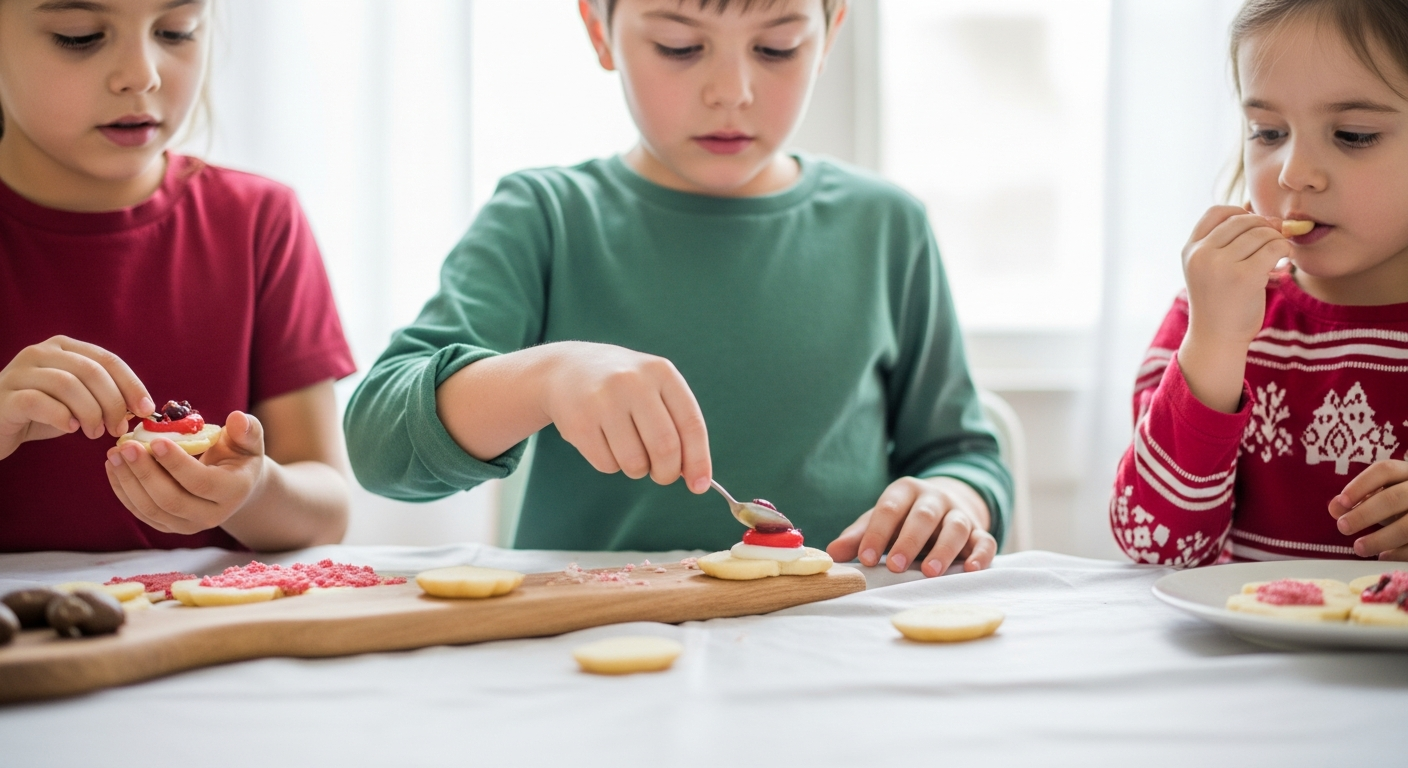
Table of Contents
- Introduction
- Why Edible Crafts Are Developmental Superstars
- Speech & Language Goldmine in Every Bite
- Top Edible Christmas Activities for Kids
- Tips for Maximizing Learning and Fun
- How Speech Blubs Elevates Your Child's Communication Journey
- Conclusion
- FAQ
Introduction
As the festive season twinkles into view, parents everywhere are seeking ways to capture the magic and create lasting memories with their children. But what if these joyful holiday traditions could also be powerful engines for your child's development, especially their speech and language skills? Imagine the scent of gingerbread filling your kitchen, the sight of vibrant sprinkles, and the delighted giggles as little hands get gloriously messy – all while building foundational communication skills. This isn't just about baking; it's about a multisensory adventure that fosters creativity, fine motor development, and most importantly, provides a natural, fun-filled context for language growth. In this comprehensive guide, we'll explore a delightful array of edible Christmas activities for kids that promise not only delicious results but also a rich environment for learning, connection, and speaking their minds and hearts.
Why Edible Crafts Are Developmental Superstars
Edible Christmas activities are more than just a treat for the taste buds; they are a feast for developing minds and bodies. These hands-on experiences offer a unique blend of sensory engagement, fine motor skill practice, and prime opportunities for speech and language development.

Multisensory Learning at Its Best
Think about it: edible crafts engage almost all of a child's senses.
- Touch: The stickiness of icing, the grittiness of sprinkles, the softness of dough.
- Smell: The sweet aroma of vanilla, the spice of cinnamon, the freshness of peppermint.
- Sight: The vibrant colors of candies, the intricate patterns created, the sparkle of edible glitter.
- Taste: The ultimate reward, connecting the entire experience to a delicious outcome.
This rich sensory input is incredibly beneficial for cognitive development, helping children build connections in their brains and understand the world around them in a tangible way.
Fine Motor Skill Development
From stirring dough to meticulously placing sprinkles, edible crafts are a covert operation in fine motor skill training. Children practice:
- Pinching: Picking up small candies.
- Squeezing: Decorating with icing bags.
- Stirring: Mixing ingredients.
- Rolling: Shaping dough or frosting.
- Cutting: Using cookie cutters or spreading with a dull knife.
These are critical skills for everything from writing and drawing to dressing themselves, and they're fundamental to a child's growing independence.
Speech and Language Benefits
This is where edible Christmas activities truly shine as a powerful tool for communication growth. Every step of the process, from planning to plating, is ripe with opportunities for language practice.
- Vocabulary Expansion: Naming ingredients ("flour," "sugar," "sprinkles"), actions ("mix," "spread," "decorate," "bake"), colors ("red," "green," "white"), shapes ("star," "tree," "circle"), and textures ("sticky," "smooth," "crumbly").
- Following Directions: "First, we add the flour, then we stir." This helps children understand and process multi-step instructions, a crucial pre-literacy skill.
- Sequencing: Discussing the order of operations – "What do we do next?" – strengthens narrative skills and logical thinking.
- Describing: Encouraging children to talk about their creations ("My cookie is a big red star!") builds descriptive language and expressive communication.
- Requesting & Expressing Needs: "More frosting, please!" or "I need the green sprinkles." empowers children to use language functionally.
- Social Communication: Sharing ingredients, taking turns, and discussing preferences with family members fosters crucial social pragmatic skills.
For parents supporting their child's speech journey, these activities are invaluable. Just like our mission at Speech Blubs, which is to empower children to speak their minds and hearts, these hands-on activities provide a natural, joyful environment for language to flourish. Our company was born from the personal experiences of our founders, who all grew up with speech problems and created the tool they wished they had. We believe in blending scientific principles with play, and these edible crafts are a perfect complement to the "smart screen time" experiences we provide, where children learn through engaging video modeling.

Speech & Language Goldmine in Every Bite
Let's dive deeper into how specific aspects of edible crafts translate into concrete speech and language opportunities.
Building Rich Vocabulary
The kitchen is a treasure trove of new words! As you bake, describe everything you see, touch, and do.
- Ingredients: Point to the "flour," the "sugar," the "eggs." Talk about the "vanilla extract" and how it smells "sweet."
- Tools: "Spoon," "bowl," "cookie cutter," "rolling pin."
- Actions: "Pour," "mix," "stir," "spread," "decorate," "sprinkle," "cut," "bake."
- Attributes: "Sticky," "smooth," "crunchy," "soft," "sweet," "spicy," "round," "star-shaped," "colorful."
When a child is working on expanding their vocabulary, these real-world experiences solidify word meanings in a way that flashcards simply can't. For instance, if your child is working on action verbs, decorating a gingerbread person involves a multitude of actions like "mix," "spread," "sprinkle," and "decorate."
Mastering Directions and Sequences
Following a recipe, even a simple one, is an excellent exercise in understanding and executing multi-step directions.
- Simple Directions: "Give me the red sprinkles." "Put the candy cane here."
- Two-Step Directions: "First, get the frosting, then spread it on the cookie."
- Sequencing: As you work, ask, "What do we do next?" or narrate, "First we roll the dough, then we cut the shapes, then we put them on the tray." This helps children develop narrative skills and understand the order of events, which is vital for storytelling and later, reading comprehension.
Describing and Expressing Ideas
Encourage your child to talk about their creation, their process, and their preferences.
- Descriptive Language: "Tell me about your gingerbread man! What color is his hat? What shape are his buttons?"
- Opinions and Preferences: "Do you like the red sprinkles or the green ones better?" "What's your favorite part to decorate?"
- Problem-Solving: "Oh no, the frosting is too sticky! What can we do?"
These open-ended questions prompt more complex language use than simple yes/no answers and encourage children to articulate their thoughts and feelings. For a parent whose 3-year-old "late talker" loves animals, the "Animal Kingdom" section in Speech Blubs offers a fun, motivating way to practice "moo" and "baa" sounds, or even more complex phrases like "the cow says moo," which can then be applied to discussing animal crackers during an edible activity. This seamless transition from app-based learning to real-world application is at the core of our approach.
Fostering Social Communication
Edible crafts are inherently social. They create opportunities for:
- Turn-taking: Sharing ingredients, waiting for a turn to decorate.
- Joint Attention: Both parent and child focusing on the same task or object.
- Sharing: Offering parts of their creation to others.
- Cooperation: Working together to achieve a common goal (like building a gingerbread house).
These are foundational skills for successful interactions at school and in life.
Top Edible Christmas Activities for Kids
Now, let's explore some specific, engaging edible Christmas activities that promise big fun and even bigger developmental benefits.
1. Gingerbread House/Cookies Decorating
Why it's great: A classic for a reason! Gingerbread offers a sturdy base for detailed decoration, encouraging creativity and fine motor precision. The spicy scent is also wonderfully sensory.
Speech & Language Opportunities:
- Vocabulary: "Gingerbread," "icing," "gumdrops," "candy canes," "roof," "door," "windows," "decorate," "stick," "attach."
- Following Directions: "Spread the icing on the roof," "Place a candy cane next to the door."
- Describing: "My house has a snowy roof and a red door." "This gingerbread man has sprinkle buttons."
- Problem-Solving: "How can we make the roof stay up?"
- Speech Blubs connection: After decorating, use descriptive words from our "Describing" categories within the app to talk about the finished house or cookies, reinforcing the new vocabulary.
2. Pretzel Rod Christmas Trees
Why it's great: Simple, delicious, and highly customizable. Even younger children can participate by dipping and sprinkling.
Speech & Language Opportunities:
- Vocabulary: "Pretzel," "melted chocolate," "sprinkles," "dip," "roll," "stand up."
- Action Verbs: "Dip the pretzel," "Roll it in sprinkles," "Let it dry."
- Colors: "Which color sprinkles do you want?"
- Speech Blubs connection: Our "Action Words" categories are perfect for reinforcing verbs like "dip," "roll," and "sprinkle" in a fun and interactive way.
3. Marshmallow Snowmen/Reindeer
Why it's great: Requires no baking and uses readily available ingredients. Encourages imaginative play and simple assembly.
Speech & Language Opportunities:
- Vocabulary: "Marshmallow," "pretzel sticks" (arms/antlers), "chocolate chips" (eyes), "candy corn" (nose), "stack," "attach," "face," "body."
- Sequencing: "First, we stack the marshmallows, then we add the eyes."
- Body Parts: Identifying and naming "eyes," "nose," "arms."
- Speech Blubs connection: Use our "People & Characters" category to talk about the snowman's or reindeer's body parts and even imagine their expressions or what they might say.
4. Christmas Tree Pizzas (Mini)
Why it's great: A savory option that involves more steps, perfect for older children to practice following a recipe.
Speech & Language Opportunities:
- Vocabulary: "Pizza," "crust," "sauce," "cheese," "peppers," "olives," "bake," "slice."
- Tools: "Knife," "spoon."
- Questioning: "Do you want green peppers or red peppers?" "How many olives should we put on?"
- Speech Blubs connection: Our "Food" category can help reinforce the names of ingredients, and the "Verbs" sections are great for practicing actions like "slice," "spread," and "bake."
5. Reindeer Food
Why it's great: A magical, imaginative activity that uses simple ingredients and offers great sensory play potential.
Speech & Language Opportunities:
- Vocabulary: "Oatmeal," "glitter" (edible), "sprinkles," "magic," "reindeer," "mix," "pour."
- Imaginative Play: "What will the reindeer like best?" "How will they find our house?"
- Descriptive Words: "Shiny," "sparkly," "crunchy."
- Speech Blubs connection: Practice animal sounds and names through the "Animal Kingdom" category, imagining the reindeer eating their special food.
6. Cookie Cutter Sandwiches/Cheese & Crackers
Why it's great: Perfect for toddlers and preschoolers who love cutting shapes. Requires minimal adult supervision for some steps.
Speech & Language Opportunities:
- Vocabulary: "Bread," "cheese," "cracker," "ham," "star," "tree," "cut," "press."
- Shapes: Naming the shapes they are cutting.
- Colors: "What color is the cheese?"
- Requesting: "I need more bread."
- Speech Blubs connection: Our "Shapes" category is an ideal match for this activity, reinforcing shape recognition and naming.
7. Candy Cane Hearts
Why it's great: Simple, visually appealing, and demonstrates the concept of melting and changing states.
Speech & Language Opportunities:
- Vocabulary: "Candy cane," "oven," "melt," "soft," "hard," "shape," "heart."
- Sequencing: Discussing the steps: "First, we put them in the oven, then they get soft, then we shape them."
- Predicting: "What do you think will happen to the candy canes in the oven?"
- Speech Blubs connection: Use our "Predicting" or "Sequencing" activities to prepare children for understanding cause and effect in the kitchen.
8. Fruit Skewers (Christmas Theme)
Why it's great: A healthy, colorful option that practices pattern recognition and fine motor skills.
Speech & Language Opportunities:
- Vocabulary: "Strawberry," "grape," "banana," "skewer," "pattern," "red," "green," "white."
- Counting: "How many strawberries did you put on?"
- Patterns: "What fruit comes next in your pattern?"
- Speech Blubs connection: Our "Numbers & Counting" activities can be directly applied here, and the "Colors" section can help them identify and name the vibrant hues of the fruits.
9. Edible Ornaments (Popcorn/Cranberry Strings)
Why it's great: This activity builds patience, fine motor coordination, and provides a tangible, decorative result.
Speech & Language Opportunities:
- Vocabulary: "Popcorn," "cranberry," "thread," "needle" (blunt plastic), "string," "decorate," "hang."
- Repetitive Actions: "Thread the popcorn, thread the cranberry."
- Counting: Counting how many pieces are on the string.
- Speech Blubs connection: For children working on articulation, repetitive words like "pop" (popcorn) or "thread" offer excellent practice.
10. "Snowball" Cookies (Powdered Sugar Cookies)
Why it's great: The tactile experience of rolling dough and coating in powdered sugar is incredibly sensory.
Speech & Language Opportunities:
- Vocabulary: "Dough," "powdered sugar," "roll," "coat," "messy," "sweet," "round."
- Texture Words: "Sticky dough," "powdery sugar," "crumbly cookie."
- Sensory Descriptions: "How does the powdered sugar feel on your fingers?"
- Speech Blubs connection: Our "Describing" activities are fantastic for helping children articulate the different textures and sensations they experience during this deliciously messy activity.
Tips for Maximizing Learning and Fun
To truly unlock the developmental potential of these edible Christmas activities, consider these expert tips for parents. Remember, these activities are most effective when coupled with attentive adult co-play and support.
- Involve Them from the Start: Take your child grocery shopping to gather ingredients. Talk about what you need and why. "We need flour for the cookies. Can you find the flour?"
- Narrate Everything: Be a commentator for the experience. "Now I'm stirring the batter," "You're pouring the sprinkles so carefully." This provides a constant stream of language input.
- Ask Open-Ended Questions: Instead of "Is this fun?", try "What's your favorite part so far?" or "What do you think will happen next?" This encourages more complex responses.
- Encourage Choices: "Do you want a star or a tree cookie cutter?" "Should we use red icing or green icing?" Giving choices empowers children and encourages them to use language to express preferences.
- Don't Stress Perfection: The goal is the process, not a Pinterest-perfect outcome. Embrace the mess, celebrate their efforts, and focus on the joy of creating together.
- Model Language and Expand: If your child says "cookie," you can expand with, "Yes, a delicious chocolate chip cookie!" or "You want more cookie?" Just like in Speech Blubs, where children learn by imitating their peers through our unique video modeling methodology, you can model rich language and actions for your child.
- Use Visuals: Point to ingredients as you name them, or use gestures to illustrate actions like "stir" or "spread."
- Embrace the Mess: Messy play is sensory play, and sensory play is learning! Put down a tablecloth and let them explore textures without fear of ruining something.
- Connect to Other Activities: Talk about how these activities relate to stories you've read or songs you've sung about Christmas.
How Speech Blubs Elevates Your Child's Communication Journey
At Speech Blubs, we understand that supporting a child's speech and language development is a journey, not a destination. These edible Christmas activities provide a fantastic real-world environment for practice, and our app serves as a powerful, scientifically-backed tool to accelerate progress and build confidence. Our mission is clear: to empower children to speak their minds and hearts, creating a world where every child can express themselves fully.
Our app was born from a very personal place. Our founders, all of whom grew up facing speech problems, developed Speech Blubs to be the immediate, effective, and joyful solution they wished they had access to. We are committed to providing support for the 1 in 4 children who need speech assistance, blending scientific principles with play to create one-of-a-kind "smart screen time" experiences. We offer a screen-free alternative to passive viewing, like cartoons, transforming screen time into an interactive, engaging learning opportunity that fosters family connection.
Our unique approach centers around "video modeling," where children learn by watching and imitating their peers. This method taps into natural learning processes, leveraging mirror neurons to make speech development intuitive and fun. This approach is backed by extensive research and has garnered high ratings on the MARS scale, placing us in the top tier of speech apps worldwide. But don't just take our word for it; read inspiring testimonials from parents whose children have found their voices with Speech Blubs.
Perhaps you're wondering if Speech Blubs is right for your child. We invite you to take our quick 3-minute preliminary screener. It involves 9 simple questions and provides an assessment along with a personalized next-steps plan, which includes access to a free 7-day trial of our app.
Speech Blubs is designed to be a powerful supplement to your child's overall development plan and, when applicable, professional therapy. It helps build foundational skills, fosters a love for communication, reduces frustration, and creates joyful family learning moments. We focus on benefits like building confidence and sparking joy in communication, rather than promising guaranteed outcomes, as every child's journey is unique.
If you're ready to explore how Speech Blubs can complement your family's learning and holiday fun, you can download our app on the App Store or Google Play Store. Or, if you prefer to get started on your desktop, you can create your account and begin your 7-day free trial today.
Conclusion
Edible Christmas activities are a truly magical way to celebrate the season while simultaneously nurturing your child's development. They transform the kitchen into a vibrant classroom, offering unparalleled opportunities for multisensory learning, fine motor skill enhancement, and robust speech and language growth. From the joyous mess of decorating gingerbread to the collaborative effort of making fruit skewers, these moments are building blocks for communication, confidence, and cherished family memories.
By combining the hands-on, interactive nature of edible crafts with the targeted, engaging support of Speech Blubs, you're creating an enriching environment where your child can thrive. Remember, every "sprinkle," every "mix," and every shared "yum!" is an opportunity to practice, learn, and grow. These activities are not just about delicious treats; they are about fostering a love for communication, building confidence, and reducing frustration through joyful exploration.
Ready to bake up some memories and help your child speak their mind and heart this Christmas? Take the next step in their communication journey by downloading Speech Blubs today or signing up for your free trial on our website. We highly recommend choosing the Yearly plan to get the best value, saving 66% compared to the monthly option. For just $59.99 per year (which breaks down to only $4.99/month), you'll unlock a 7-day free trial, the bonus Reading Blubs app, early access to new updates, and 24-hour support response time – benefits not included with the Monthly plan ($14.99/month). Give the gift of communication this holiday season!
FAQ
Q1: What age group are edible Christmas activities best for?
Edible Christmas activities can be adapted for a wide range of ages, from toddlers to school-aged children. For toddlers, focus on simple tasks like sprinkling, spreading frosting, or using large cookie cutters. Older children can handle more complex steps like measuring ingredients, following multi-step recipes, or intricate decorating. Adult supervision and assistance are recommended for all ages, especially when involving ovens or sharp tools.
Q2: How can I make these activities less messy?
Embracing some mess is part of the fun and learning, but you can certainly minimize it! Lay down an old tablecloth, newspapers, or a large plastic mat on your workspace. Use child-sized aprons. Prepare ingredients in individual bowls or small portions to avoid large spills. Keep wet cloths or paper towels handy for quick clean-ups. Remember, the focus is on the process and interaction, not a pristine kitchen!
Q3: My child has allergies. Can we still do edible crafts?
Absolutely! Many edible Christmas activities can be easily modified to accommodate various allergies (e.g., gluten-free, dairy-free, nut-free). There are many allergy-friendly recipes available for cookies, icing, and other treats. Always check ingredient labels carefully and use safe substitutes for your child's specific dietary needs. Focus on activities that naturally avoid allergens or where substitutions are straightforward, such as fruit skewers or rice crispy treats with safe ingredients.
Q4: How do edible crafts specifically help with speech development beyond general interaction?
Edible crafts offer concrete, sensory-rich contexts for practicing specific speech and language skills. For example, children naturally use action verbs ("mix," "spread," "decorate") and descriptive words ("sticky," "sweet," "colorful") while engaged in the activity. They practice following directions by executing recipe steps and engage in sequencing as they discuss "what comes next." These hands-on experiences anchor new vocabulary and grammatical structures in a memorable way, providing tangible referents that support understanding and expressive language, much like the video modeling and interactive games within the Speech Blubs app.
About the author