
Delightful Tea Party Games for Kids
 By Speech Blubs Team•Jan 28, 2026•21 min.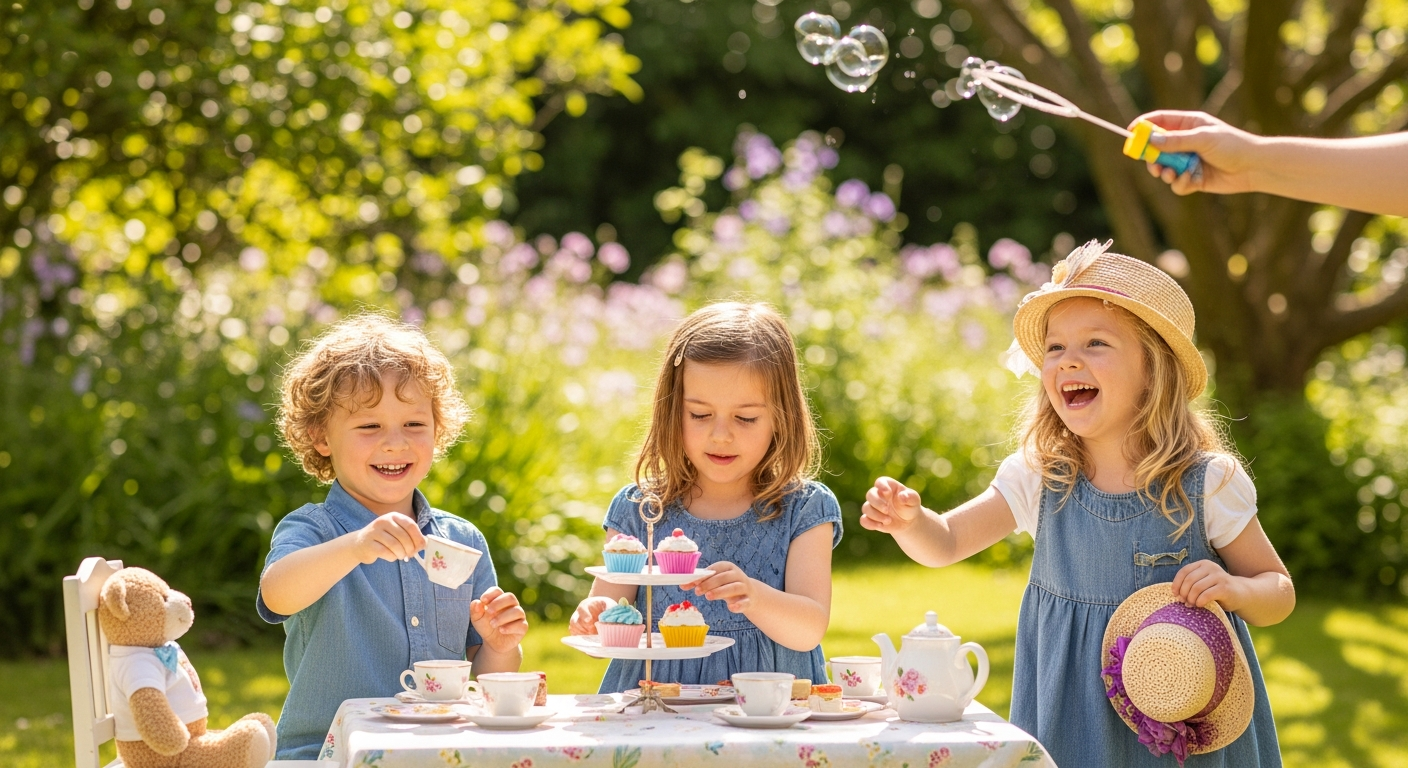
Table of Contents
- Introduction
- Why Host a Tea Party? More Than Just Fun
- Setting the Scene: Creating a Magical Tea Party Ambiance
- The Menu: Delicious Bites for Little Guests
- The Heart of the Party: Engaging Tea Party Games for Kids
- Integrating Speech Blubs into Your Child's Communication Journey
- Making the Most of Speech Blubs: Value and Features
- Conclusion
- FAQ
Imagine a world where tiny teacups clink, laughter echoes, and imaginations soar, all while little voices practice new sounds and words. That's the magic of a children's tea party! Far from being just a dainty gathering, a tea party is a vibrant playground for social, emotional, and communication development. Yet, for many parents, the idea of hosting such an event can feel daunting, wondering how to keep energetic little ones engaged beyond a few sips of pretend tea. The truth is, with a little planning and a sprinkle of creativity, a children's tea party can become a cherished memory, filled with delightful games that naturally encourage speech, social interaction, and imaginative play. This post will explore the wonderful world of children's tea parties, from setting the perfect scene to discovering a treasure trove of engaging games, all while highlighting how these experiences, supported by tools like Speech Blubs, can truly empower your child to speak their minds and hearts.

Introduction
Have you ever witnessed the sheer delight on a child's face as they pour an imaginary cup of tea or offer a perfectly cut cucumber sandwich? This seemingly simple act is a gateway to a rich tapestry of developmental opportunities. A children's tea party transcends mere play; it’s a stage where social graces are practiced, vocabulary expands, and the art of conversation blossoms. For many little ones, especially those who may be shy or working on their communication skills, these moments of structured, imaginative play are invaluable. This blog post will guide you through hosting an unforgettable tea party for your children, offering practical tips for creating a magical atmosphere, crafting a delectable menu, and, most importantly, orchestrating a collection of fun, speech-enhancing tea party games. We’ll delve into how these games, paired with purposeful support from parents and resources like Speech Blubs, can transform a simple get-together into a powerful learning experience, fostering confidence and a love for communication in every child.
Why Host a Tea Party? More Than Just Fun
Beyond the charming aesthetics, a children's tea party offers a wealth of developmental benefits. It's a unique setting that encourages a holistic approach to a child's growth, particularly in areas of communication and social-emotional learning.
Fostering Social Development and Etiquette
A tea party is a gentle introduction to social graces and etiquette. Children learn about turn-taking, sharing, polite conversation, and even the simple act of saying "please" and "thank you." These interactions build crucial social skills, helping them understand how to navigate group settings and respond appropriately to others. The structured yet playful nature of a tea party provides a safe space for practicing these new behaviors.
Boosting Language and Communication Skills
The narrative potential of a tea party is immense. Children engage in imaginative conversations, role-playing characters, and describing their actions. They practice expressive language by inviting guests, ordering food, or discussing the "flavors" of their tea. Receptive language skills are honed as they listen to instructions for games or follow the flow of a pretend conversation. For children who might be "late talkers" or those needing extra support, the low-pressure, engaging environment of a tea party can be incredibly motivating. It provides natural contexts for using new words and practicing sounds.

Nurturing Imagination and Creativity
From deciding on a theme to decorating their imaginary teacups, a tea party is a canvas for creativity. Children invent stories, assign roles, and create entire worlds around their tea settings. This imaginative play is vital for cognitive development, problem-solving, and developing empathy as they step into different characters' shoes. It encourages abstract thinking and the ability to visualize scenarios beyond their immediate reality.
Enhancing Fine Motor Skills
The act of pouring "tea," carefully placing a miniature sandwich on a plate, or stacking sugar cubes all contribute to the development of fine motor skills and hand-eye coordination. These precise movements are essential for tasks like writing and self-feeding.
At Speech Blubs, we understand that these foundational skills are the building blocks of confident communication. Our mission is to empower children to speak their minds and hearts, and we believe that enriching, interactive experiences like tea parties, combined with targeted support, are key. Our company was born from the personal experiences of our founders, who all grew up with speech problems and created the tool they wished they had – a joyful solution blending scientific principles with play.
Setting the Scene: Creating a Magical Tea Party Ambiance
The ambiance of a tea party is half the fun! Creating a visually appealing and immersive environment sets the stage for imagination and encourages participation.
Choosing a Theme
While a traditional tea party is lovely, a theme can add an extra layer of excitement for kids.
- Vintage Tea Party: Think floral patterns, lace, and delicate (or faux delicate) teacups.
- Wonderland Tea Party: Embrace whimsy with mismatched items, bright colors, and perhaps a "mad hatter."
- Garden Tea Party: Ideal for spring, with real or fake flowers, perhaps held outdoors.
- Princess/Superhero Tea Party: Let kids combine their favorite characters with the elegance of tea time.
- Teddy Bear Tea Party: Invite their favorite stuffed animals for extra guests and imaginative play opportunities.
Decorations and Table Setting
- Teapots and Teacups: You don't need expensive china! Plastic tea sets are perfect for little hands. If you do use glass or porcelain, choose sturdy pieces. Having multiple teapots can add to the fun.
- Tiered Trays: These instantly elevate the presentation of food. Even cardboard ones will do the trick.
- Tablecloth and Napkins: A colorful or patterned tablecloth instantly transforms the space. Cloth napkins can add a touch of "fancy."
- Centerpiece: A small bouquet of flowers (real or artificial), a whimsical toy, or a decorated teapot makes a charming focal point.
- Dress-Up Station: Provide fun accessories like play pearls, clip-on earrings, boas, and hats. This immediately gets children into character and can be a fantastic icebreaker.
Practical Considerations
- Drinks: For actual "tea," caffeine-free fruity teas are popular and parent-approved. Warm (not boiling!) water is much safer. Always have juice or water on hand for those who prefer it.
- Safety First: If using real teapots or cups, supervise closely. Plastic sets are a great alternative for younger children.
- Timing: As one etiquette expert noted, it's often best to introduce any structured activities or "lessons" before the tea and food are served to keep children's attention focused.
The Menu: Delicious Bites for Little Guests
The food is a highlight of any tea party, and for kids, it's all about bite-sized delights!
Savory Selections
Keep it simple and kid-friendly. The key is small portions that are easy to pick up.
- Finger Sandwiches: Crusts off, cut into triangles or fun shapes with cookie cutters. PB&J, ham and cheese, cream cheese and cucumber are classics.
- Pinwheels: Tortillas spread with cream cheese and deli meat, rolled up and sliced.
- Mini Quiches: Store-bought or homemade, these are a savory hit.
- Cheese and Crackers: Always a crowd-pleaser.
- Vegetable Sticks with Dip: Carrots, cucumbers, bell peppers with ranch or hummus.
Sweet Indulgences
This is where you can truly indulge their sweet tooth!
- Mini Cupcakes or Petit Fours: Perfectly sized for little hands.
- Frosted Cookies: Decorated with tea party themes (teapots, teacups, flowers).
- Brownie or Cake Squares: Cut into small, manageable pieces.
- Fresh Fruit: Berries, grapes, and melon slices add a refreshing touch.
- Sweet Scones: Mini versions with jam and cream are a delightful addition.
- Cake Pops: Fun and easy to eat.
Presenting these on tiered trays makes them feel extra special and encourages children to try a variety of treats. Remember, it's about the experience and the joy of sharing these delightful foods together.
The Heart of the Party: Engaging Tea Party Games for Kids
Now for the main event! These games aren't just for fun; they're cleverly designed to encourage movement, creativity, social interaction, and, most importantly, communication. We'll also explore how Speech Blubs can further enhance these developmental benefits.
Icebreakers & Arrival Activities
When guests first arrive, having a low-pressure activity helps everyone settle in and get into the tea party spirit.
1. DIY Fascinators or Party Hats
- Activity: Set out plain headbands or paper hat bases, along with a variety of craft supplies like feathers, glitter glue, fabric scraps, sequins, and silk flowers. Let children design their own fancy headwear.
- Speech & Language Benefits: Encourages descriptive language ("I'm using a sparkly purple feather!"), following multi-step instructions ("First, glue the flower, then add the beads."), and expressing preferences ("I want more pink!"). It's also a great way to initiate conversation as children compliment each other's creations.
- Speech Blubs Connection: For children who might struggle with describing objects or making choices, our app's "What Am I?" or "Guess the Animal" activities can help them practice using descriptive adjectives and making simple requests in a structured, fun environment, building confidence they can bring to activities like this.
2. Coloring Paper Teacups
- Activity: Provide printable outlines of teacups and saucers, along with crayons, markers, and stickers.
- Speech & Language Benefits: Promotes color recognition and naming, shape identification, and simple instructions ("Color the handle red."). It’s a quiet activity perfect for easing into the party.
- Speech Blubs Connection: Our "Color Wonderland" section within the app reinforces color recognition and expressive vocabulary through interactive play, making it a great precursor to hands-on coloring activities.
3. Dress-Up Station
- Activity: Lay out boas, play jewelry, gloves, scarves, and clip-on earrings. Encourage kids to pick out their "fancy" attire.
- Speech & Language Benefits: Sparks imaginative role-play and dialogue ("I'm a princess!"). Children practice naming clothing items and accessories, and describing their appearance.
- Speech Blubs Connection: This mirrors the imaginative play encouraged in many of our app's sections, where children adopt character voices or describe scenarios, fostering narrative skills and vocabulary expansion.
Movement & Active Games
Once everyone is comfortable, it’s time to get those little bodies moving and voices engaged!
4. Musical Teacups/Teapots
- Activity: Similar to musical chairs, but use teacups or teapots (one less than the number of players) placed on a table or on the ground. Children dance around, and when the music stops, they grab a "teacup." The child without one is out. Play continues until one winner remains.
- Speech & Language Benefits: Develops listening skills, following directions, and reacting quickly to auditory cues. It also provides opportunities for cheers and encouragement.
- Speech Blubs Connection: Games like this help develop auditory processing and quick response times, skills crucial for rapid conversational turns. Our "Sounds & Effects" category can help children differentiate between various sounds, improving their listening abilities.
5. Sugar Cube Relay Race
- Activity: Divide children into two teams. Each child must balance a sugar cube (or two!) on a spoon and race from one point to another, depositing it into a designated sugar bowl. If it drops, they restart. The first team to fill their bowl wins.
- Speech & Language Benefits: Encourages descriptive language related to movement ("Careful!", "Go slow!", "Almost there!") and teamwork. Children learn to follow multi-step instructions and use action verbs.
- Speech Blubs Connection: This game offers a fantastic chance to practice action words and spatial concepts ("over," "into"). In Speech Blubs, our "Action Words" activities use video modeling to demonstrate and encourage the use of various verbs, providing a solid foundation for real-world application.
6. Tea Bag Toss
- Activity: Set up several cups or a large plastic teapot at varying distances. Children take turns tossing small, beanbag-filled "tea bags" into the targets. Assign points for different targets.
- Speech & Language Benefits: Promotes counting, turn-taking, and simple score-keeping language ("My turn!", "You got three points!"). It also allows for encouragement and celebrating successes.
- Speech Blubs Connection: Turn-taking is a fundamental social skill emphasized in our app through interactive games and peer-to-peer engagement. This game provides a tangible way to practice that skill in a group setting.
7. Book Balance Grace
- Activity: Challenge children to walk across a room with a small, lightweight book balanced on their heads, imitating a "princess" or "prince." See who can go the furthest without dropping it.
- Speech & Language Benefits: Encourages imaginative descriptions of graceful movement and playful commands ("Walk tall!", "Don't wobble!"). It's a fun way to practice posture and body awareness.
Imaginative & Role-Playing Games
These games lean into the natural imaginative spirit of a tea party, fostering narrative skills and creative expression.
8. "Pass the Parcel" with a Tea Party Twist
- Activity: Wrap a main prize (like a small tea set or a book) in multiple layers of paper, placing a small treat or a "princess question" (e.g., "Name a princess who lives under the sea?") between each layer. Music plays, children pass the parcel, and when it stops, one layer is removed and the question answered or treat enjoyed.
- Speech & Language Benefits: Enhances listening skills, turn-taking, and problem-solving (answering questions). Children use expressive language to vocalize their answers or describe the treats.
- Speech Blubs Connection: Our app’s engaging content often uses questions and prompts to encourage children to think and respond, building their confidence in answering questions and forming sentences, much like the "princess questions" in this game.
9. Story Time
- Activity: Read aloud a tea-party themed book, such as Tea for Ruby or The Tiger Who Came to Tea. Encourage children to comment on the story or predict what happens next.
- Speech & Language Benefits: Boosts narrative comprehension, vocabulary acquisition (especially new words from the story), and encourages active listening. Children can practice retelling parts of the story, which is a key pre-literacy skill.
- Speech Blubs Connection: Storytelling and narrative development are cornerstones of communication. Our "Reading Blubs" app (included with the Yearly plan!) directly supports early literacy and comprehension, preparing children to engage more deeply with stories.
10. "Kiss the Frog Prince"
- Activity: Draw a large frog prince on a poster board. Children put on lipstick, are blindfolded, spun gently, and try to "kiss" the frog as close to the lips as possible.
- Speech & Language Benefits: Fosters laughter and lighthearted interaction. Children can describe their attempts ("I think I'm close!"), promoting spatial awareness and simple descriptions.
Creative & Sensory Games
Engaging multiple senses adds depth to the tea party experience and provides more avenues for communication.
11. Cupcake Icing Competition
- Activity: Provide plain cupcakes, piping bags with various colored frostings, and an array of sprinkles, mini candies, and edible glitter. Let children decorate their own masterpieces.
- Speech & Language Benefits: Encourages descriptive language ("Look at my swirly blue icing!"), expressing preferences ("I want more sprinkles!"), and following multi-step instructions. It’s a fantastic opportunity for children to explain their creative process.
- Speech Blubs Connection: Describing colors, textures, and actions involved in decorating provides rich vocabulary practice. Our app’s diverse range of themes helps children categorize and describe a wide array of objects and actions, enhancing their descriptive communication.
12. Blind Taste Test
- Activity: Prepare small samples of different caffeine-free teas, juices, or even various jams/spreads. Blindfold children and have them guess the flavor.
- Speech & Language Benefits: Develops sensory vocabulary ("sweet," "tart," "fruity," "smooth"), descriptive language, and question-asking skills ("Is it lemon?"). It encourages making educated guesses and expressing opinions.
- Speech Blubs Connection: Expanding descriptive vocabulary is crucial. Activities in Speech Blubs that focus on "My Body" or "My World" can help children identify and describe sensory experiences, which translates beautifully into a game like this.
13. Pin the Cup on the Saucer / Pin the Butterfly on the Flower
- Activity: Draw a large saucer or a flower on a poster. Give each child a cut-out teacup or butterfly with double-sided tape on the back. Blindfold them, spin them, and have them try to "pin" their item in the correct spot.
- Speech & Language Benefits: Enhances spatial reasoning and directional language ("Go left!", "A little higher!"). It's a fun game that naturally elicits verbal guidance and laughter.
14. Conversation Starters
- Activity: Place small cards with simple, open-ended questions (e.g., "What's your favorite animal?", "What makes you laugh?") at each place setting. During "tea time," encourage children to pick a card and share their answer.
- Speech & Language Benefits: Directly promotes expressive language, sharing personal thoughts, and active listening. It teaches the art of keeping a conversation flowing.
- Speech Blubs Connection: This is where our core mission truly shines. We aim for children to speak their minds and hearts. If a child feels shy about speaking up, our "video modeling" methodology, where children imitate their peers, provides a safe practice ground. They can practice expressing thoughts and feelings in a low-pressure setting, watching and mimicking other children.
Integrating Speech Blubs into Your Child's Communication Journey
A wonderful tea party provides invaluable developmental experiences, and for many children, these experiences can be significantly amplified with supportive tools like Speech Blubs. We are committed to providing an immediate, effective, and joyful solution for the 1 in 4 children who need speech support. Our app is not just another game; it's a carefully crafted "smart screen time" experience that blends scientific principles with play.
Beyond Passive Viewing: The Power of Smart Screen Time
We know parents are concerned about screen time, and rightly so. That's why Speech Blubs offers a screen-free alternative to passive viewing experiences like cartoons. Our unique video modeling methodology is at the heart of our approach. Children learn by watching and imitating their peers, activating mirror neurons in their brains. This isn't just watching; it's active engagement, mimicry, and practice, turning screen time into productive learning.
Practical Scenarios with Speech Blubs Support:
- For the Shy Speaker: Imagine a parent whose 4-year-old struggles to initiate conversation at the tea party's "Conversation Starters" game. Speech Blubs offers a safe space where children can practice expressing themselves without the pressure of a live audience. Our "Talk to the Animals" activities, for instance, encourage children to make animal sounds and simple phrases, building confidence in sound production and expressive language that can then be transferred to asking, "May I have more juice, please?" at the tea party.
- For Articulation Challenges: Consider a child working on specific sounds, like the 't' in "tea" or 's' in "saucer." Speech Blubs features dedicated sound sections (e.g., "Sounds & Effects") where children can isolate and practice these sounds through engaging video models and interactive games. This targeted practice outside the party can make them feel more confident when those words come up in social play.
- For Multi-Step Instructions: Games like the "Sugar Cube Relay" require children to follow several steps. If a child has difficulty with this, our app's various activities, especially those involving building or sequencing actions, reinforce listening comprehension and the ability to follow directions. This builds a strong foundation for understanding and responding to more complex instructions during group play.
- Fostering Family Connection: At Speech Blubs, we believe in the power of family connection. Our app is designed to be a tool for parents to engage with their children, providing prompts and ideas for interaction. This fosters a shared learning experience, much like enjoying a tea party together. Parents can actively participate in the app's games, making it a valuable tool for family bonding and shared communication practice.
By integrating Speech Blubs, you’re not just providing entertainment; you're supporting your child's communication journey with a tool created by founders who personally understood speech challenges. We help bridge the gap between playful learning and foundational communication skills, so every child can truly speak their minds and hearts.
Making the Most of Speech Blubs: Value and Features
We are dedicated to making effective speech and language support accessible to every family. That’s why we offer flexible plans, designed to provide the best value and features for your child's developmental journey.
Our Pricing Structure: Transparent and Value-Oriented
We believe in transparency. Here are our current plans:
- Monthly Plan: Priced at just $14.99 per month.
- Yearly Plan: Our most popular and value-packed option at $59.99 per year.
The Superior Value of the Yearly Plan
The Yearly plan is undeniably the best choice for families committed to their child's long-term communication development. When you choose the Yearly plan, you save a remarkable 66% compared to the monthly subscription, bringing the cost down to an incredible $4.99 per month.
But the value goes far beyond just savings. The Yearly plan includes exclusive, high-value features designed to supercharge your child's learning experience:
- A 7-day free trial: This allows you to explore the full breadth of Speech Blubs' engaging content and methodology risk-free, ensuring it's the perfect fit for your family. The Monthly plan does not include this free trial.
- The extra Reading Blubs app: An invaluable companion, Reading Blubs is designed to support early literacy skills, complementing the speech and language development fostered by Speech Blubs. This is a premium addition not available with the Monthly plan.
- Early access to new updates: Be among the first to experience exciting new content, features, and improvements, keeping your child's learning fresh and engaging.
- 24-hour support response time: Get prompt, dedicated assistance whenever you need it, ensuring a smooth and uninterrupted learning experience.
Choosing the Yearly plan means investing in comprehensive, continuous support for your child's communication and literacy, all while enjoying significant savings and exclusive benefits. It’s the ultimate choice for smart, joyful, and effective learning.
Conclusion
Hosting a children's tea party is far more than just serving tiny treats; it's an immersive experience that weaves together imaginative play, social skill development, and crucial language practice. From the excitement of designing a fascinator to the focused attention of a sugar cube relay, each activity serves as a delightful opportunity for children to grow, learn, and express themselves. These joyful gatherings foster confidence, reduce frustration by providing playful learning contexts, and help develop key foundational communication skills, all while creating cherished family memories.
For parents seeking to further support their child's communication journey, especially for the 1 in 4 children who need speech support, Speech Blubs offers an invaluable resource. Our "smart screen time" approach, rooted in scientific principles and utilizing unique video modeling, provides a powerful supplement to these real-world experiences. It's a tool built from personal experience, designed to empower children to confidently speak their minds and hearts.
Ready to unlock your child's full communication potential and create more joyful learning moments? Experience the magic for yourself! Start your 7-day free trial today by choosing our Yearly plan. This is the best value, offering not only significant savings but also the exclusive Reading Blubs app, early access to new features, and dedicated support. Download Speech Blubs on the App Store or Get it on Google Play and embark on a fun-filled adventure where every word counts.
FAQ
Q1: What age group are these tea party games best suited for?
A1: Most of these games are ideal for children aged 3 to 8 years old. Younger children will enjoy the simpler, more sensory-focused activities like coloring or dress-up, while older children can engage more deeply with games requiring strategy, detailed instructions, or imaginative storytelling. Always tailor the complexity of the games to your specific group of children.
Q2: How can I make a tea party educational beyond just fun?
A2: Every tea party game can be an educational opportunity! Focus on fostering communication by encouraging descriptive language, asking open-ended questions, and practicing polite phrases like "please" and "thank you." Incorporate counting, color recognition, and following multi-step instructions into the games. For a child needing extra support, tools like Speech Blubs can provide targeted practice in a fun, engaging way, helping them build the confidence to participate more fully in social settings like a tea party.
Q3: What if my child is shy or hesitant to participate in group games?
A3: It’s completely normal for some children to be shy. Start with low-pressure, individual activities like DIY fascinators or coloring. Encourage one-on-one interaction with you first. You can model participation and praise effort, not just outcomes. For consistent support, consider resources like Speech Blubs, which offers a safe, engaging environment for children to practice communication skills through video modeling with peers, building their confidence before they step into larger group settings.
Q4: Is Speech Blubs a substitute for professional speech therapy?
A4: Speech Blubs is a powerful supplemental tool designed to complement and enhance a child's overall communication development plan. It's built on scientific principles and uses engaging activities to encourage speech, language, and early literacy skills. However, it is not a substitute for professional speech therapy if your child has a diagnosed speech or language disorder. We recommend consulting with a speech-language pathologist for personalized guidance. You can also take our quick 3-minute preliminary screener to get an assessment and next-steps plan.
About the author