
Dive into Fun: Easy Shark Crafts for Kids
 By Speech Blubs Team•Jan 13, 2026•24 min.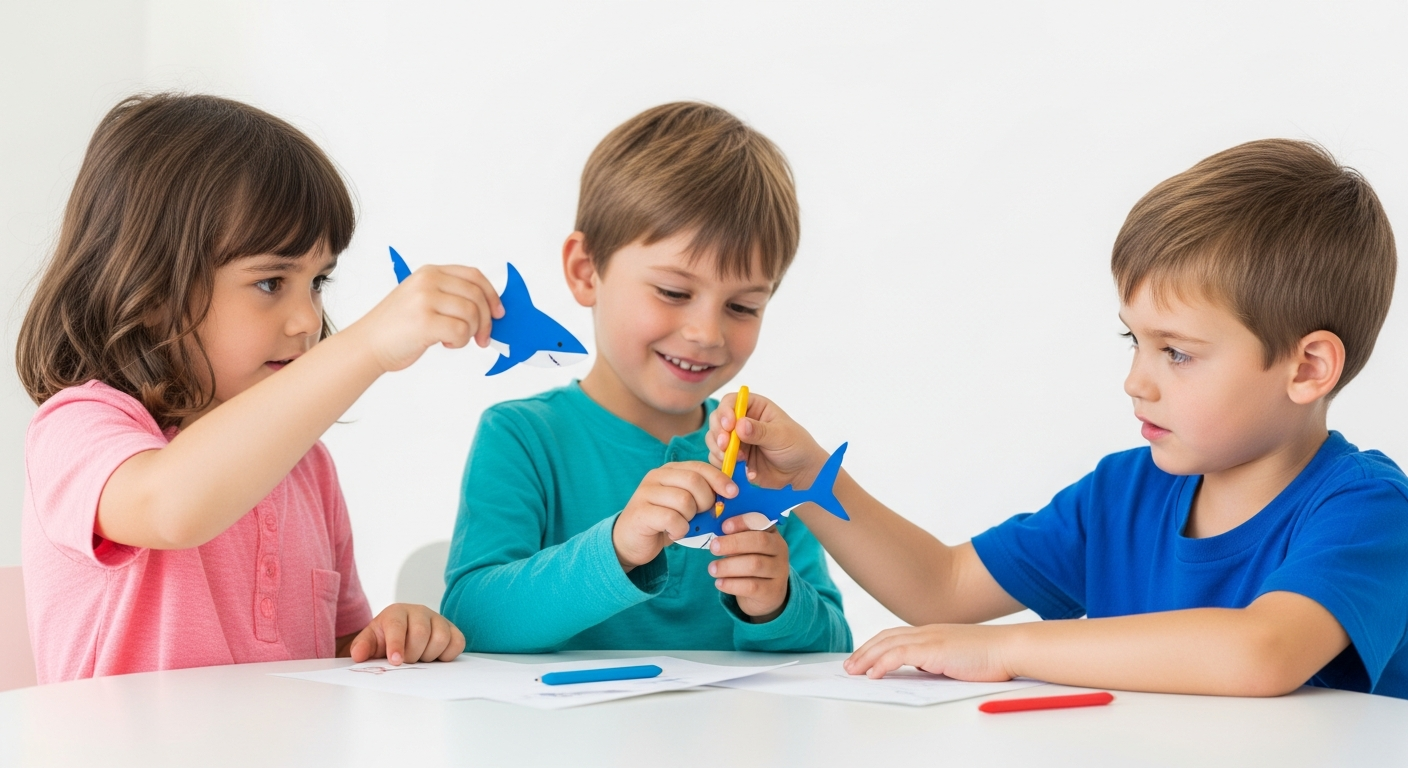
Table of Contents
- Introduction
- Why Crafts Are a Catch for Communication Development
- Simple Shark Crafts for Little Hands
- Getting Creative with Common Materials
- Interactive Shark Fun: Boosting Engagement and Language
- Integrating Speech Blubs into Craft Time
- Beyond the Craft: Fostering Communication During Play
- The Speech Blubs Difference: Your Partner in Communication Journey
- Making the Most of Your Speech Blubs Experience: Our Value
- Conclusion
- Frequently Asked Questions
Introduction
Does the mere mention of "shark" send shivers of excitement (or perhaps a tiny bit of playful fear!) through your home? For many children, sharks are fascinating creatures, sparking curiosity and wonder about the ocean's depths. But what if we told you that channeling this natural fascination into creative activities could also be a powerful way to nurture your child's communication skills? Crafting isn't just about glue and glitter; it's a dynamic playground for developing fine motor skills, imaginative thinking, and, crucially, language. From discussing colors and shapes to narrating stories about their toothy creations, children are constantly engaging their brains in ways that boost their speech and cognitive development. In this comprehensive guide, we'll explore a school of easy shark crafts perfect for kids of all ages, transforming ordinary materials into extraordinary ocean adventures. We'll show you how each craft can become a springboard for language growth and how tools like Speech Blubs can seamlessly integrate into these playful learning moments, empowering your child to speak their minds and hearts.

Why Crafts Are a Catch for Communication Development
At Speech Blubs, we understand that every sound, every word, and every attempt at communication is a monumental step for a child. Our mission, born from our founders' personal experiences with speech challenges, is to provide immediate, effective, and joyful solutions for the 1 in 4 children who need speech support. This commitment extends beyond our app; it informs our belief that all forms of play, especially hands-on activities like crafting, are vital for holistic development.
Crafting offers a unique environment for speech and language growth:
- Fine Motor Skills: Cutting, gluing, painting, and tearing all strengthen the small muscles in the hands and fingers. These skills are foundational not only for writing but also for the oral motor control needed for clear speech.
- Vocabulary Expansion: As you craft, you'll naturally introduce new words – "gills," "fin," "oceanic," "jaws," "camouflage," "predator," "smooth," "rough." Describing the process and the final product enriches their lexicon.
- Following Instructions: Simple multi-step craft instructions ("First, cut the paper. Then, glue the eyes") enhance auditory processing and comprehension.
- Narrative Skills: Creating a shark often leads to imaginative play. "What does your shark eat?" "Where does it swim?" "Is it a friendly shark or a super speedy one?" These questions encourage storytelling and expressive language.
- Problem-Solving: "Oh no, the fin fell off! How can we fix it?" Navigating minor craft mishaps builds critical thinking and the language to articulate solutions.
- Sensory Exploration: Different textures of paper, paint, fabric, and recycled materials provide sensory input that can be discussed, enhancing descriptive language.
By engaging in easy shark crafts for kids, you're not just creating a cute decoration; you're building a foundation for robust communication.
Simple Shark Crafts for Little Hands
Even the youngest crafters can join the fun with these easy shark craft ideas designed for minimal fuss and maximum developmental benefit. Remember, the goal isn't perfection, but participation and the joyful process of creation.

Paper Plate Shark
This classic craft is a fantastic starting point for toddlers and preschoolers, engaging them with basic shapes and colors while strengthening fine motor control.
Materials: Paper plates, grey/blue/white paint, paintbrushes or cotton balls, googly eyes, scissors, glue, black marker.
Instructions:
- Paint one side of a paper plate grey or blue. Let it dry.
- Fold the plate in half. Cut a small triangular wedge out of the folded edge (this will be the shark's mouth).
- From the discarded paper plate scraps or extra paper, cut out two small triangular fins and a larger tail fin.
- Glue the fins and tail onto the shark.
- Attach googly eyes.
- Use a black marker to draw jagged teeth inside the mouth.
Communication Connection:
- Color Recognition: "Let's paint our shark grey!"
- Shape Identification: "Can you find the triangle for the fin?"
- Action Verbs: "Paint, fold, cut, glue, draw."
- Counting: "How many fins does our shark have?"
- Descriptive Language: Talk about the shark's "sharp teeth" or "big eyes."
Handprint Shark
Personalized and simple, this craft captures a moment in time and creates a lasting memory, all while exploring concepts like size and texture.
Materials: Blue paper, grey or blue washable paint, black marker, googly eyes.
Instructions:
- Paint your child's hand (palm and fingers) with grey or blue paint.
- Press their hand onto the blue paper with fingers together, thumb slightly out (this will form the head and body of the shark, with the thumb as the nose).
- Once dry, use a black marker to draw a mouth with jagged teeth where the thumb is, and a fin on the back.
- Add a googly eye.
Communication Connection:
- Body Parts: "Where's your hand?" "We're using your fingers to make the shark!"
- Size Comparisons: "Your handprint is big!"
- Sensory Words: "The paint feels wet and slimy."
- Pre-reading Skills: Trace letters to spell "SHARK" next to the handprint.
Cotton Bud Dot Shark
Inspired by pointillism, this easy shark craft for kids is excellent for fine motor precision and exploring patterns and textures. It's a delightful change from traditional painting.
Materials: Shark outline template (or draw one), grey/blue/white paint, cotton buds (Q-Tips), paper plate or tray.
Instructions:
- Print or draw a simple shark outline on paper.
- Pour small amounts of paint onto a reusable plate or tray. You can mix black and white to create grey if needed.
- Give your child cotton buds. Dip a cotton bud into the paint and dab it onto the shark outline, creating dots.
- Encourage using different colors or shades to add depth. Using separate cotton buds for each color can prevent mixing if that's preferred, but experimenting is fun too!
- Let it dry completely before displaying.
Communication Connection:
- Spatial Concepts: "Dot inside the lines," "Dot on the fin."
- Patterning: "Can you make a pattern with the dots?"
- Counting: Count how many dots are on the shark.
- Descriptive Words: "Look at the bumpy texture!" "What a spotty shark!"
Shark Suncatcher
This craft beautifully plays with light and color, offering a visual reward for creative effort while working on tearing and cutting skills.
Materials: Black construction paper, various shades of blue/grey/white tissue paper, clear contact paper or laminating pouches, scissors, glue stick.
Instructions:
- Draw or print a large shark outline on black construction paper. Cut out the shark outline, and then carefully cut out the inside of the shark, leaving only the black outline frame.
- Have your child tear or cut small pieces of tissue paper in desired colors.
- Stick one piece of clear contact paper (sticky side up) onto a table.
- Your child can then arrange and stick the tissue paper pieces onto the contact paper, filling in the shark shape.
- Once filled, place the black shark outline over the tissue paper mosaic and press down.
- Cover with another piece of contact paper (sticky side down) or laminate. Trim the edges.
- Hang in a window and watch the light shine through!
Communication Connection:
- Color Mixing/Light Play: "What happens when the blue light shines through the green paper?"
- Action Verbs: "Tear, stick, press, trim."
- Texture Talk: "The tissue paper feels crinkly."
- Sensory Vocabulary: "Shiny," "bright," "transparent."
Getting Creative with Common Materials
You don't need fancy art supplies to make amazing shark crafts. Look around your home – many everyday items can be transformed into fantastic ocean creatures, fostering resourcefulness and creative thinking.
Clothespin Shark Puppet
A simple yet highly engaging craft that becomes an instant prop for pretend play, encouraging dialogue and narrative construction.
Materials: Cardstock (grey or blue), clothespin, googly eyes, scissors, glue stick, black marker.
Instructions:
- Cut out two identical shark body shapes from cardstock, making sure the mouth area is prominent.
- Cut a triangular fin and a tail fin.
- Glue the fin onto the top of one shark body piece.
- Carefully glue the top shark body piece to the top "jaw" of the clothespin, and the bottom shark body piece to the bottom "jaw" of the clothespin. Ensure the mouth opens and closes as the clothespin does.
- Add googly eyes and draw jagged teeth inside the mouth.
- Attach the tail fin to the back.
Communication Connection:
- Pretend Play: "What is your shark eating?" "Is it hungry?"
- Action Verbs: "Open, close, chomp, swim."
- Sound Imitation: "Chomp! Chomp!" (Great for early consonant sounds).
- Storytelling: Create a simple story about the shark's day.
Plastic Bottle Shark
This upcycled craft is a fantastic way to teach about recycling while creating a playful toy that encourages fine motor skills and imaginative scenarios.
Materials: Empty plastic bottle (e.g., water bottle), permanent markers, scissors, yarn/string, a small wooden shape or felt fish, googly eyes.
Instructions:
- Carefully cut the bottom third off the plastic bottle (adult supervision required). This will be the shark's body.
- Use permanent markers to draw shark features: eyes, gills, and a mouth. You can add googly eyes for extra character.
- Punch a small hole near the "mouth" of the bottle.
- Attach a piece of yarn or string to a small fish shape (cut from felt or paper, or use a wooden shape).
- Thread the other end of the yarn through the hole in the bottle and tie it to form a loop inside, allowing the fish to dangle just outside the shark's mouth.
- Kids can then try to "feed" the shark by swinging the fish into its mouth.
Communication Connection:
- Recycling Awareness: "We're turning trash into treasure!"
- Prepositions: "Put the fish in the mouth!" "The fish is outside."
- Problem-Solving: "How can we get the fish inside?"
- Sequencing: "First we cut, then we draw, then we feed!"
Newspaper Shark
Exploring textures and collage, this craft is wonderfully tactile and allows for artistic expression while building important hand-strength through tearing.
Materials: Newspaper, blue or grey paint, glue, construction paper (for background), googly eyes, black marker.
Instructions:
- Have your child tear strips or pieces of newspaper. This is fantastic for strengthening hand muscles!
- On a piece of construction paper, draw a simple shark outline.
- Your child can then glue the torn newspaper pieces inside the shark outline, creating a collage.
- Once the glue is dry, they can paint over the newspaper with thin layers of blue or grey paint, allowing some of the newspaper print to show through for an interesting texture.
- Add googly eyes and draw a mouth.
Communication Connection:
- Texture Vocabulary: "Crinkly," "smooth," "rough."
- Action Verbs: "Tear, glue, paint, press."
- Contrast: "Can you see the words under the paint?"
- Fine Motor Practice: Tearing paper is a pre-writing skill.
Cupcake Liner Shark
Surprisingly versatile, cupcake liners can be transformed into adorable sharks with minimal effort, perfect for a quick and satisfying craft.
Materials: Blue or grey cupcake liners, construction paper (for fins and teeth), googly eyes, glue, scissors.
Instructions:
- Flatten a cupcake liner. This will be the shark's body.
- Cut a small wedge out of one side of the liner to form the mouth.
- From construction paper, cut out two small triangular fins, a tail fin, and some jagged teeth.
- Glue the fins and tail onto the cupcake liner.
- Glue the jagged teeth inside the mouth.
- Attach googly eyes.
Communication Connection:
- Shape Recognition: "What shape is the cupcake liner?" (circle, then semi-circle). "Point to the triangles."
- Size Concepts: "Big cupcake liner, little teeth."
- Sequencing: "What do we do first?" "What comes next?"
- Comparison: "Are these teeth sharp or blunt?"
Interactive Shark Fun: Boosting Engagement and Language
Some crafts are designed to be played with, extending the learning and communication opportunities far beyond the crafting table.
Paper Bag Shark Puppet
Transforming a simple paper bag into a hungry shark puppet opens up a world of dramatic play and expressive language.
Materials: Brown paper lunch bag, grey/blue paint or construction paper, googly eyes, red and white construction paper (for mouth and teeth), glue stick, scissors.
Instructions:
- Cover the paper bag with grey or blue paint, or glue on sheets of grey/blue construction paper. Let it dry.
- On one side of the bag (the flap becomes the top jaw), cut out a large semi-circle from red paper and glue it inside for the mouth.
- From white paper, cut out many small jagged teeth and glue them along the top and bottom of the red mouth.
- Attach googly eyes above the mouth flap.
- Your child can put their hand inside the bag, using their thumb in the bottom flap and fingers in the top to make the shark "talk" and "chomp."
Communication Connection:
- Voice Modulation: Experiment with different voices for the shark.
- Dialogue Practice: Create conversations between the shark and other toys.
- Emotional Expression: "Is the shark happy? Grumpy? Hungry?"
- Answering "Wh-" Questions: "What is the shark doing?" "Who is the shark talking to?"
Feed the Shark Alphabet Game
This clever craft combines imaginative play with early literacy, making learning letters and sounds an engaging, active process.
Materials: Cardboard box (shoebox size works well), grey/blue paint or construction paper, googly eyes, white construction paper (for teeth), black marker, small fish shapes cut from paper (each with a letter or simple word written on it).
Instructions:
- Cut a large shark mouth opening in one side of the cardboard box.
- Decorate the box to look like a shark using paint or construction paper. Add fins, a tail, and googly eyes.
- Cut jagged teeth from white construction paper and glue them around the mouth opening.
- Prepare your "fish food": cut out small fish shapes from paper and write a letter (uppercase or lowercase), a sight word, or even a simple picture on each.
- Have your child "feed" the shark the correct fish by identifying the letter, sound, or word. "Feed the shark the letter 'A'!" or "Feed the shark the fish that says 'cat'!"
Communication Connection:
- Letter/Sound Recognition: "What sound does this letter make?"
- Early Word Recognition: Practicing sight words in a fun context.
- Following Multi-Step Commands: "Find the 'M' fish, then feed it to the shark."
- Turn-Taking: Practice taking turns feeding the shark.
Shark Visor/Mask
Stepping into the role of a shark can be incredibly empowering and a fantastic way to encourage descriptive language and dramatic play.
Materials: Paper plate or cardstock strip, grey/blue/white construction paper, elastic string or headband, googly eyes, glue, scissors.
Instructions (Visor):
- Cut a semi-circle from a paper plate or a strip of cardstock to fit around your child's forehead.
- From grey or blue construction paper, cut a triangular shark fin and two half-circle gills.
- Glue the fin to the top of the visor, and the gills to the sides.
- Attach googly eyes to the front of the visor.
- Cut jagged teeth from white paper and glue them along the bottom edge of the visor.
- Attach elastic string to the ends of the visor for wearing, or glue it to a headband.
Instructions (Mask):
- Draw a shark face shape on grey or blue cardstock, large enough to cover your child's face.
- Cut out eye holes.
- Cut a large, open mouth shape.
- Glue jagged white teeth around the mouth.
- Attach googly eyes.
- Punch holes on the sides and thread elastic string through to create a mask.
Communication Connection:
- Role-Playing: Encourage your child to "be" the shark. "What does a shark say?" "Where do you swim?"
- Descriptive Language: "My shark has pointy teeth and big eyes."
- Imagination: "What kind of shark are you?" (Great White, Hammerhead, etc.)
- Peer Interaction: Encourage playing with other children, each with a different shark persona.
Shark Sensory Bottle/Bag
A calming and visually stimulating activity that also offers opportunities for descriptive language and emotional regulation.
Materials (Bottle): Clear plastic bottle, water, clear glue (or glitter glue), blue food coloring, glitter, small plastic shark toys or ocean beads.
Instructions (Bottle):
- Fill the bottle about two-thirds full with warm water.
- Add a generous amount of clear glue or glitter glue (this makes the glitter sink slower).
- Add a few drops of blue food coloring.
- Pour in glitter and add small plastic shark toys, beads, or other ocean-themed items.
- Fill the rest of the bottle with water, leaving a small air gap.
- Securely superglue the lid shut (adult step!).
- Shake and watch the mesmerizing ocean scene!
Materials (Bag): Large ziplock bag, blue hair gel or clear gel, blue food coloring (optional), glitter, small plastic shark toys or ocean beads, duct tape.
Instructions (Bag):
- Squeeze hair gel into the ziplock bag. Add blue food coloring and glitter if desired, mixing well.
- Add small plastic shark toys or ocean beads.
- Remove as much air as possible and seal the bag tightly.
- For extra security, seal the opening with duct tape.
- Children can squish and explore the sensory bag.
Communication Connection:
- Sensory Vocabulary: "Squishy," "slippery," "sparkly," "calm," "fast," "slow."
- Emotional Regulation: Talk about how the sensory bottle can help us feel "calm" like the slow-moving glitter.
- Observation Skills: "What do you see floating?" "Which shark is moving fastest?"
- Predicting: "What will happen if we shake it faster?"
Integrating Speech Blubs into Craft Time
At Speech Blubs, we believe in "smart screen time" – using technology purposefully to foster development. Our app is not a replacement for hands-on activities, but a powerful supplement that can enhance and extend the learning from your easy shark craft for kids. Here's how:
Connecting Themes: Many of our app's sections, like "Animal Kingdom," "Ocean Animals," or "Vehicles" (think boats for sharks to chase!), naturally align with the themes of your crafts. After making a shark, you can open Speech Blubs and find videos of children imitating animal sounds or ocean-related words.
- For a parent whose 3-year-old "late talker" loves animals: After making a paper plate shark, the "Animal Kingdom" section within Speech Blubs offers a fun, motivating way to practice "shark" and other ocean animal sounds and words by watching and imitating peers. This connection strengthens vocabulary and articulation in a context that's already highly engaging for the child.
- Building Vocabulary: While crafting, introduce words like "fin," "gills," "predator." Afterward, use Speech Blubs to find activities that reinforce these words or introduce related concepts. Our research-backed video modeling methodology, where children learn by watching and imitating their peers, is incredibly effective for this. These "mirror neurons" in action make learning feel like play.
Reinforcing Concepts: If you worked on colors during your craft, Speech Blubs has sections dedicated to color identification. If you focused on action verbs like "swim" or "eat" with your shark puppet, you can find activities that emphasize those verbs. This repetition across different contexts solidifies learning.
Pre-Speech Skills: The lip movements and facial expressions children see in Speech Blubs' video models directly support the development of oral motor skills needed for speech. Many craft activities, like blowing paint or tearing paper, also contribute to these foundational skills. Our commitment to blending scientific principles with play ensures that these experiences are truly one-of-a-kind.
A Powerful Tool for Family Connection: We often hear from parents that Speech Blubs isn't just an app; it's a way to connect. Just like crafting together fosters bonding, using Speech Blubs together turns screen time into quality family time, with parents actively participating and encouraging their child's communication journey. It truly is a screen-free alternative to passive viewing, transforming passive observation into active engagement. Ready to make screen time smart time? Download Speech Blubs on the App Store or Google Play today!
Beyond the Craft: Fostering Communication During Play
The magic of easy shark crafts for kids doesn't end when the glue dries. The finished creations become props for continued play and communication. Here's how to keep the conversation flowing:
- Narrate as You Play: Describe your child's actions and the shark's actions. "The shark is swimming fast!" "You're making the shark open its mouth wide!"
- Ask Open-Ended Questions: Instead of "Is it a shark?", ask "What kind of shark did you make?" or "Where does your shark live?" This encourages more than a yes/no answer.
- Sing Songs and Rhymes: Incorporate shark-themed songs like "Baby Shark" or make up your own. Singing is a fantastic way to practice rhythm, intonation, and vocabulary.
- Role-Playing Scenarios: Set up a pretend ocean environment for your shark. "Oh no, there's a little fish! What will your shark do?"
- Extend the Theme: Read books about sharks or the ocean. Visit an aquarium. These experiences provide more vocabulary and topics for discussion.
Remember, every interaction is an opportunity for communication. Even if your child isn't speaking in full sentences yet, listening and responding to your language is building their comprehension and setting the stage for expressive language.
The Speech Blubs Difference: Your Partner in Communication Journey
When our founders created Speech Blubs, they weren't just building an app; they were building the tool they wished they had growing up with speech problems. This personal connection drives our commitment to empowering children to "speak their minds and hearts." We know that the journey to clear communication can sometimes feel daunting for parents, and that's why we're here to offer support, resources, and a scientifically-backed approach that's rooted in joy.
Our unique video modeling methodology is at the heart of what makes Speech Blubs so effective. Children learn best from their peers. By watching other children articulate sounds and words, children activate their "mirror neurons," making the learning process intuitive and highly engaging. This isn't passive screen time; it's active participation that turns learning into play. We are proud that our approach has consistently placed us in the top tier of speech apps worldwide, earning high marks on the MARS scale for app quality.
We're more than just an app; we're a community committed to your child's success, providing tools that foster confidence, reduce frustration, and build key foundational communication skills through joyful, "smart screen time" experiences. Don't just take our word for it; read what other parents are saying about their child's success with Speech Blubs. If you're wondering if Speech Blubs is right for your child, take our quick 3-minute preliminary screener to get a simple assessment and a free 7-day trial.
Making the Most of Your Speech Blubs Experience: Our Value
We believe in making effective speech and language support accessible to every family. That's why we offer transparent and flexible subscription options, but we want to be clear about which plan truly gives you the best value and the most comprehensive experience for your child's development.
Our Subscription Plans
- Monthly Plan: $14.99 per month
- This plan offers flexibility for short-term use.
- It does NOT include the 7-day free trial.
- It does NOT include access to our additional app, Reading Blubs.
- It does NOT provide early access to new app updates or priority 24-hour support response time.
- Yearly Plan: $59.99 per year
- This breaks down to just $4.99 per month, offering incredible savings.
- You save 66% compared to the monthly plan over a year!
- Includes a 7-day free trial so you can experience everything Speech Blubs has to offer before committing.
- Includes the extra Reading Blubs app, providing even more educational content to support your child's literacy journey.
- Offers early access to new updates and a dedicated 24-hour support response time, ensuring you always have the latest features and prompt assistance.
Why the Yearly Plan is the Best Choice
For long-term developmental progress, consistent engagement is key. The Yearly plan not only provides significant financial savings, but it also unlocks the full suite of Speech Blubs features, including the invaluable Reading Blubs app. This comprehensive approach ensures your child has every tool they need for both speech and early literacy development, all while benefiting from priority support and ongoing updates. It's the best way to support your child's communication journey without interruption and with the fullest range of resources.
Ready to provide your child with the best possible start in their communication journey? Choose the Yearly plan to begin your 7-day free trial today and unlock all the exclusive features! You can also find us in the app stores: Download Speech Blubs on the App Store or Google Play Store.
Conclusion
Engaging in easy shark crafts for kids is far more than a fun way to spend an afternoon; it's a profound investment in your child's developmental journey. From building fine motor skills and expanding vocabulary to fostering imagination and encouraging storytelling, each craft becomes a stepping stone towards stronger communication. By creating, playing, and talking about these fascinating ocean creatures, you're providing rich, hands-on experiences that lay a solid foundation for speech and language growth.
At Speech Blubs, we are dedicated to complementing these vital real-world interactions with our unique, scientifically-backed app. We understand the power of play-based learning and are committed to offering "smart screen time" that truly makes a difference. Through our engaging video modeling, children learn to speak their minds and hearts, building confidence and reducing frustration in their communication journey. Whether your child is just starting to babble or is refining their expressive language, combining creative crafts with our app creates a comprehensive and joyful learning environment.
Don't let this wave of opportunity pass you by! Empower your child's communication today. Take the plunge and start your 7-day free trial by signing up for a Speech Blubs account. Remember to select the Yearly plan to unlock incredible savings, the bonus Reading Blubs app, and exclusive features that provide the best value for your child's bright future. Download Speech Blubs from the App Store or Google Play and let the adventure begin!
Frequently Asked Questions
Q1: What age group are these easy shark crafts best suited for?
These shark crafts are designed to be adaptable for a wide range of ages, from toddlers (with adult assistance) to early elementary school children. Simple crafts like the Handprint Shark or Cotton Bud Dot Shark are perfect for younger kids focusing on sensory exploration and fine motor skills, while older children can enjoy more complex crafts like the Plastic Bottle Shark or Paper Bag Puppet, which encourage more intricate cutting, gluing, and imaginative play. Adult supervision and adaptation are always recommended based on your child's individual abilities.
Q2: How can I make these crafts more educational for my child?
Beyond simply completing the craft, you can enhance its educational value by engaging your child in conversation throughout the process. Ask open-ended questions like "What color should we use for the shark's gills?" or "How will your shark swim in the ocean?" Introduce new vocabulary related to sharks, marine life, colors, shapes, and actions. Encourage storytelling and role-playing with the finished crafts. For an even deeper dive into communication skills, consider integrating the craft with our Speech Blubs app by finding related themes or practicing sounds after the activity.
Q3: What if my child gets frustrated during crafting?
It's common for children to get frustrated, especially when developing new skills. The key is to keep the experience positive and low-pressure. If frustration arises, offer assistance, simplify a step, or suggest a break. Remind your child that it's okay if it's not "perfect" and that the joy is in the process, not just the outcome. Emphasize their effort and creativity. Sometimes, just changing the activity for a few minutes and returning to it can help. Remember, these easy shark crafts for kids are meant to be fun and build confidence, not add stress.
Q4: How does Speech Blubs specifically help with communication development?
Speech Blubs utilizes a unique video modeling methodology, where children learn by observing and imitating their peers on screen. This approach activates "mirror neurons" in the brain, making speech and language acquisition more natural and engaging. The app offers thousands of expertly designed activities focusing on articulation, vocabulary, early literacy, and social skills, all within a playful and interactive environment. It's a "smart screen time" solution that serves as a powerful supplement to a child's overall development, transforming passive viewing into active learning and empowering children to "speak their minds and hearts."
About the author