
DIY Festive Christmas Cards for Children
 By Speech Blubs Team•Dec 22, 2025•17 min.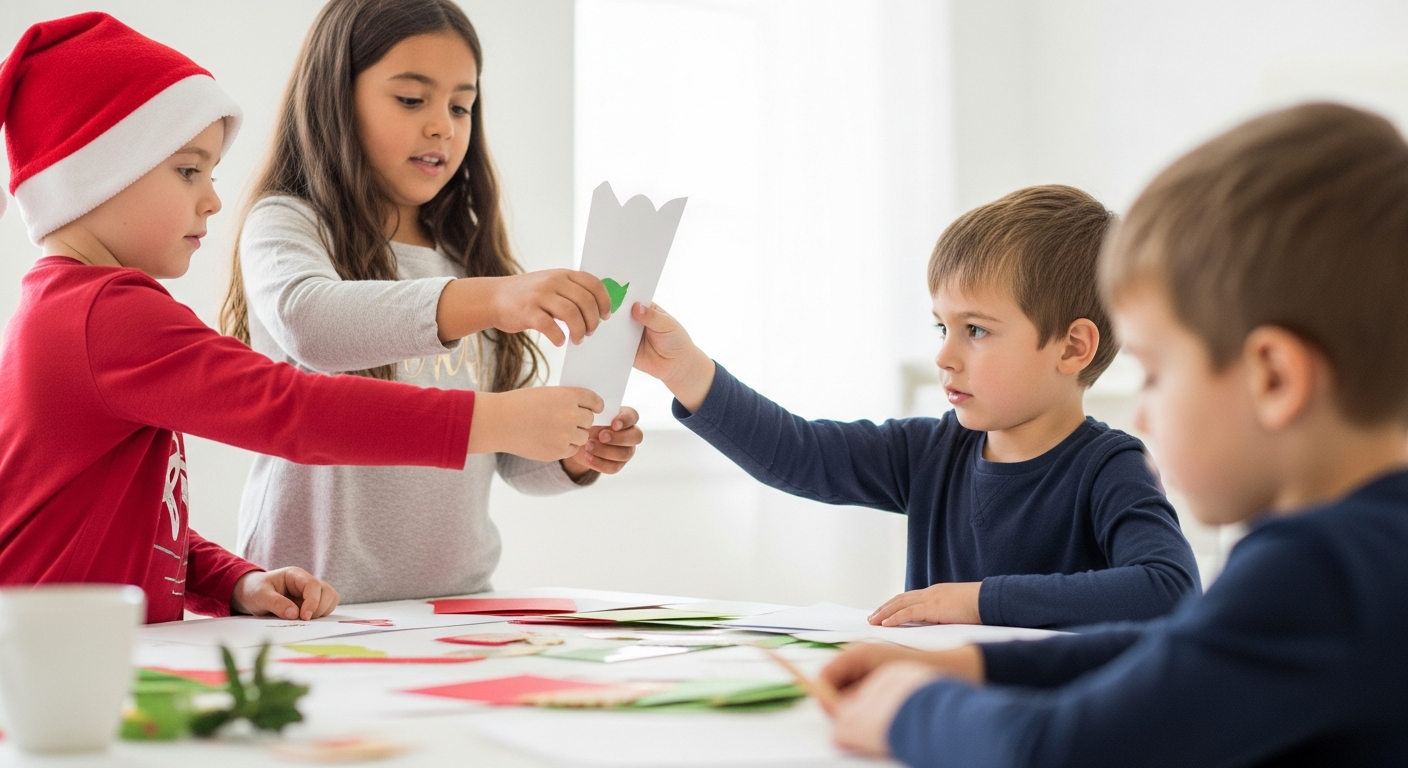
Table of Contents
- The Magic of Handmade: More Than Just a Card
- Crafting for Communication: How Artistry Nurtures Language
- Our Favorite Christmas Card Crafts for Kids (with a Developmental Twist!)
- Seamlessly Integrating Learning with Fun
- When to Consider Extra Support: A Quick Check
- Making the Most of Speech Blubs: Value and Features
- Conclusion
- Frequently Asked Questions
The air fills with the scent of pine and gingerbread, carolers sing, and a special kind of magic settles over our homes. For many families, this season is a cherished time for connection, celebration, and creativity. Amidst the hustle and bustle, there’s a quiet, profound joy in sitting down with your child to create something beautiful, especially a handmade Christmas card. More than just a festive gesture, crafting these cards can be a powerful, playful way to nurture your child's developing communication skills, fine motor abilities, and emotional intelligence. This post will delve into a sleigh-full of fun, easy Christmas card crafts perfect for kids of all ages, demonstrating how these artistic adventures naturally foster creativity, build essential foundational skills, and subtly, yet significantly, boost speech and language development. Our mission at Speech Blubs is to empower children to speak their minds and hearts, and we believe that joyful, interactive experiences like crafting are cornerstones of that journey.

The Magic of Handmade: More Than Just a Card
Imagine the recipient's delight when they open an envelope to find not a store-bought card, but a vibrant, unique creation made with love by your child. Handmade cards carry a warmth and personal touch that mass-produced options simply can't match. For children, the act of creating these cards is an adventure in itself, sparking imagination and offering a tangible result of their efforts. It’s a wonderful way to teach them about thoughtfulness, giving, and expressing affection. But beyond the emotional connection, crafting offers a treasure trove of developmental benefits that are often overlooked, yet incredibly vital for a child's overall growth, including their communication journey.
From the moment a child picks up a crayon or squeezes a glue stick, they are engaging multiple senses and honing critical skills. These activities are foundational, not just for artistic expression, but for building the cognitive and physical abilities necessary for more complex tasks, like speaking clearly and confidently. We understand that every moment of your child's day is an opportunity for learning, and we’re here to support you in making those moments count. For a broader look at how we merge scientific principles with play to create enriching learning experiences, visit our main homepage.
Crafting for Communication: How Artistry Nurtures Language
While it might seem like just glue and glitter, Christmas card crafting is a surprisingly rich environment for fostering speech and language development. Every step, from planning to execution, provides opportunities for skill-building.
Fine Motor Skills & Speech Development
The connection between fine motor skills and speech might not be immediately obvious, but it's incredibly strong. The precise movements of the tongue, lips, and jaw required for clear articulation are, in essence, fine motor skills. Activities that strengthen hand muscles and refine dexterity – like cutting with scissors, tearing paper, drawing, gluing small objects, or manipulating buttons – develop the neural pathways also used for speech. When a child carefully positions a piece of glitter or glues a tiny pom-pom, they are indirectly practicing the motor control necessary for forming sounds and words.

Following Directions & Sequencing
Crafting involves a series of steps: "First, get the paper. Then, cut a circle. Next, glue it here." These multi-step instructions are perfect for developing a child's receptive language skills – their ability to understand and follow spoken commands. As they progress, children learn about sequencing and understanding temporal concepts like "before," "after," "next," and "finally." This skill is crucial for telling stories, recounting events, and engaging in coherent conversations.
Vocabulary Expansion
Every craft introduces new vocabulary. Think of the words associated with materials (glitter, felt, yarn, buttons, construction paper, pipe cleaners), actions (cut, glue, fold, stamp, tear, draw, color, paste), colors, shapes, and descriptive words (sparkly, rough, smooth, tiny, big, long, short). Parents can narrate each step, asking questions like, "What color ribbon should we use?" or "Can you feel how soft the cotton ball is?" For a child who might be a "late talker" and loves animals, incorporating animal themes into cards (like a reindeer fingerprint card) provides a fun way to practice animal names and sounds, much like the engaging activities you'd find in the "Animal Kingdom" section of our app.
Social-Emotional Learning
Creating cards for loved ones encourages empathy and teaches children about giving. It sparks conversations about who the card is for, what to write, and how the recipient might feel. This builds crucial social communication skills, fostering a sense of connection and purpose. Discussing their creations, sharing their ideas, and even managing the frustration of a misplaced sticker all contribute to emotional regulation and self-expression. We believe that empowering children to "speak their minds and hearts" isn't just about pronunciation, but about giving them the tools and confidence to connect meaningfully with the world around them.
Our Favorite Christmas Card Crafts for Kids (with a Developmental Twist!)
Let's dive into some fantastic craft ideas that are not only fun but also packed with opportunities to boost your child's speech and language skills. Remember, the goal is interaction and enjoyment!
Handprint & Footprint Cards
These are timeless keepsakes that capture how tiny your child once was.
- Description: Use your child's hand or foot as the central element of a Christmas design. Think reindeer hoof prints, Santa handprints, or a footprint snowman.
- Materials: Non-toxic paint, cardstock, markers, googly eyes, cotton balls.
- Steps:
- Paint your child's hand or foot.
- Press firmly onto cardstock.
- Once dry, use markers and other embellishments to turn the print into a Christmas character.
- Speech Blubs Connection: This craft is fantastic for body part vocabulary ("hand," "foot," "fingers," "toes"), action verbs ("paint," "press," "squish"), and descriptive words ("wet," "smooth," "cold"). You can talk about the colors you're using and what the print will become. "We are going to make a red handprint. What will it be? A Santa!"
Fingerprint Character Cards
Simple, adorable, and great for fine motor control!
- Description: Use fingerprints to create mini Christmas characters like reindeer, snowmen, or even Christmas lights.
- Materials: Ink pads or non-toxic paint, cardstock, fine-tip markers.
- Steps:
- Press a finger into an ink pad or dab with paint.
- Carefully press onto the cardstock to make a fingerprint.
- Once dry, use markers to add details: antlers and eyes for reindeer, dots for snowmen, strings for lights.
- Speech Blubs Connection: This activity encourages naming characters ("reindeer," "snowman"), action words ("dot," "draw," "press"), and concepts of quantity ("one dot," "many dots"). It's also a great exercise in following multi-step directions.
Pop-Up Cards
A delightful surprise that adds an extra layer of engagement.
- Description: Create a card with a simple pop-up element inside, like a Christmas tree or Santa.
- Materials: Two pieces of cardstock (one for the card, one for the pop-up), scissors, glue, markers.
- Steps:
- Fold the inner cardstock in half. Make two parallel cuts along the fold, then push the cut section inwards to create a tab.
- Decorate the pop-up tab with a cut-out Christmas shape.
- Glue the inner card to the larger outer card.
- Speech Blubs Connection: Excellent for spatial concepts ("up," "down," "inside," "out"), sequencing ("first, cut; then, fold; next, glue"), and cause-and-effect ("If we fold it, it pops up!"). You can ask, "What do you want to pop up?"
Glitter & Sparkle Cards
A classic for a reason – kids love sparkle!
- Description: Add festive glitter or sequins to pre-drawn Christmas shapes or freehand designs.
- Materials: Cardstock, glue, various colors of glitter, sequins, glitter glue.
- Steps:
- Draw a Christmas shape (star, tree, bell) on cardstock.
- Apply glue within the lines of the shape.
- Sprinkle glitter or place sequins over the glue. Shake off excess.
- Speech Blubs Connection: Perfect for descriptive vocabulary ("sparkly," "shiny," "rough," "smooth"), color identification, and action words ("sprinkle," "shake," "stick"). "Wow! That glitter is so shiny! It makes the tree sparkle!"
Yarn-Wrapped Cards
A tactile craft that’s great for fine motor practice.
- Description: Use yarn to create patterns or cover shapes on a card, adding texture and color.
- Materials: Cardstock, yarn in various colors, glue, scissors.
- Steps:
- Draw a simple shape (e.g., a Christmas tree or star) on cardstock.
- Apply glue along the lines or within the shape.
- Help your child cut and wrap the yarn, pressing it onto the glue.
- Speech Blubs Connection: This activity introduces prepositions ("wrap around," "over," "under"), color names, and texture descriptions ("soft," "fuzzy"). It also reinforces action verbs like "cut," "wrap," and "glue."
Button Cards
Using small objects helps refine fine motor skills.
- Description: Create festive designs by gluing colorful buttons onto cards.
- Materials: Cardstock, various sizes and colors of buttons, strong glue.
- Steps:
- Draw an outline for a Christmas design (e.g., a snowman, a string of lights, a Christmas ornament).
- Apply glue along the outline or within the shape.
- Help your child press buttons onto the glue, creating the design.
- Speech Blubs Connection: Excellent for counting, sorting by color and size, and using action words like "press," "stick," and "arrange." "Can you find the small blue button? How many red buttons do we have?"
Photo Collage Cards
Personalize cards with family photos and memories.
- Description: Use small family photos combined with other craft materials to create a unique, personalized card.
- Materials: Cardstock, small printed photos, glue, scissors, markers, stickers, holiday-themed cutouts.
- Steps:
- Choose a few favorite family photos.
- Glue them onto the cardstock, arranging them into a collage.
- Add festive borders, stickers, or drawings to complete the design.
- Speech Blubs Connection: This is a fantastic opportunity for storytelling and describing. Talk about the people in the photos, what they are doing, and the memories associated with each picture. "Who is this? What were we doing in this picture? Remember when…?" This helps develop narrative skills.
Potato Stamp Cards
A fun, rustic, and easy way to create repeating patterns.
- Description: Cut shapes into potatoes to create stamps for unique designs.
- Materials: Potatoes, small cookie cutters or a knife (for adult use), non-toxic paint, cardstock.
- Steps:
- An adult cuts a potato in half and carves a simple Christmas shape (star, tree, bell) into the cut surface.
- Dip the potato stamp into paint.
- Press the stamp onto cardstock to create a pattern.
- Speech Blubs Connection: Great for shape recognition, color identification, and action words ("dip," "press," "stamp"). It also introduces concepts of repetition and pattern. "What shape is our stamp? Let's make many stars!"
Recycled Material Cards
Encourage creativity and resourcefulness with everyday items.
- Description: Use materials like old fabric scraps, empty toilet paper rolls (cut into rings), pasta shapes, or bottle caps to create textured, unique cards.
- Materials: Cardstock, glue, various clean recycled materials, scissors, markers.
- Steps:
- Lay out various recycled materials.
- Discuss with your child what they can create from them. A toilet paper roll ring could be an ornament!
- Glue the materials onto the cardstock to form a festive scene or abstract design.
- Speech Blubs Connection: This activity is a vocabulary goldmine! Naming the different materials ("fabric," "pasta," "cap"), describing their properties ("hard," "soft," "bumpy"), and discussing their original purpose fosters critical thinking and language skills. "What can we make with this bumpy bottle cap?"
Seamlessly Integrating Learning with Fun
At Speech Blubs, we are deeply committed to providing tools that empower children through joy and engagement. We know that learning flourishes when it's fun and when children feel supported. Crafting Christmas cards is a perfect example of this philosophy in action. It’s a natural, hands-on way for children to explore, create, and communicate.
Our approach to speech and language development mirrors the natural way children learn through observation and imitation. This is the core of our "video modeling" methodology. Just as a child watches you cut a paper snowflake and then tries to replicate it, our app allows children to learn by watching and imitating their peers on screen. This taps into the brain’s "mirror neuron" system, making learning intuitive and effective. Our scientific methodology has placed us in the top tier of speech apps worldwide, a fact we are proud to share more about on our research page.
We understand that modern families are often looking for alternatives to passive screen time. While crafting offers a wonderful screen-free experience, our app provides "smart screen time" – an active, engaging, and educational experience that complements hands-on play. It's a powerful tool for family connection, as parents can join in the interactive activities, celebrating every sound and word their child makes. Our company was born from the personal experiences of our founders, all of whom grew up with speech problems and created the tool they wished they had. We are committed to providing an immediate, effective, and joyful solution for the 1 in 4 children who need speech support, blending scientific principles with play.
When to Consider Extra Support: A Quick Check
As you engage in these wonderful crafting activities, you'll naturally observe your child's communication skills. If you ever find yourself wondering whether your child's speech and language development is on track, or if they could benefit from some additional support, you're not alone. Many parents have these questions.
To help provide some clarity and a potential path forward, we’ve developed a quick, helpful tool. You can take our preliminary screener – it's a quick 3-minute assessment involving 9 simple questions. It provides you with an immediate assessment and a personalized next-steps plan, along with the opportunity to start a free 7-day trial of our app. It's a great way to gain insight and explore how Speech Blubs can further support your child's communication journey.
Making the Most of Speech Blubs: Value and Features
We believe that every child deserves the chance to speak their minds and hearts, and we've designed Speech Blubs to be an accessible and engaging resource for families. Investing in your child’s development is one of the most important decisions you can make, and we want to ensure you get the best value possible.
We offer two main subscription plans, giving you flexibility to choose what works best for your family:
- Monthly Plan: This plan is available for $14.99 per month. It offers access to our core speech and language development activities.
- Yearly Plan: This is our most popular and highly recommended option, priced at just $59.99 per year. When broken down, this comes out to an incredible value of only $4.99 per month! By choosing the Yearly plan, you save a significant 66% compared to the monthly option, making it the clear best choice for long-term support and savings.
The Yearly plan doesn't just offer superior value; it also comes packed with exclusive, high-value features designed to enhance your child's learning experience:
- A 7-day free trial: This allows you to explore the full functionality of Speech Blubs and experience its benefits firsthand before committing.
- The extra Reading Blubs app: Expanding beyond speech, this additional app focuses on early literacy skills, providing a holistic approach to your child's communication and cognitive development.
- Early access to new updates: Be among the first to experience new games, activities, and features as soon as they are released.
- 24-hour support response time: Get prompt assistance whenever you need it from our dedicated support team.
The Monthly plan, while providing core access, does not include these exclusive benefits, nor does it come with a free trial. For the best experience, the most comprehensive features, and outstanding savings, the Yearly plan is the way to go. It’s a testament to our commitment to providing effective, joyful solutions that are also affordable for families. We've heard countless stories from parents about the positive changes they've seen, and you can read some of their testimonials here.
Conclusion
Christmas card crafting is far more than just a holiday activity; it's a joyful journey into creativity, fine motor development, and the wonderful world of communication. By engaging in these simple, heartfelt projects, you're not only creating cherished keepsakes but also actively nurturing your child's ability to follow directions, expand their vocabulary, tell stories, and express themselves. These moments of shared creation build confidence and strengthen family bonds, laying a crucial foundation for effective communication.
At Speech Blubs, we are dedicated to complementing these hands-on experiences with "smart screen time" that truly educates and empowers. Our app, built on scientific video modeling and designed with fun in mind, provides an immediate, effective, and joyful solution for speech and language development. It works hand-in-hand with the rich, interactive moments you create through activities like holiday crafting, ensuring a holistic approach to your child's growth. We believe in fostering a love for communication, building confidence, reducing frustration, and creating joyful family learning moments.
Ready to empower your child’s voice and continue their communication journey? Download Speech Blubs today to explore our engaging activities and see the difference for yourself. Remember to choose our Yearly plan to get your 7-day free trial, access to the Reading Blubs app, and all the exclusive features designed to support your child's development for the long term.
Download Speech Blubs on the App Store or Google Play to begin. You can also create your account and start your 7-day free trial today directly from our website!
Frequently Asked Questions
Q1: What age are these crafts suitable for?
Many of these Christmas card crafts can be adapted for a wide range of ages! Younger children (toddlers and preschoolers) will enjoy activities like handprint/footprint cards, fingerprint art, and potato stamping, with plenty of adult assistance. Older preschoolers and early elementary children can take on more responsibility with cutting, gluing, and designing, making pop-up cards or button cards. The key is to supervise, assist as needed, and focus on the process rather than a perfect end product.
Q2: How can I adapt these crafts for different skill levels?
For younger children or those with developing fine motor skills, pre-cut shapes, tearable paper, and larger, easier-to-grip materials are helpful. For example, instead of tiny buttons, use larger pompoms. For older children, encourage them to draw their own designs, write personalized messages, or incorporate more complex elements like weaving yarn. The goal is always to provide just enough challenge to encourage growth without causing frustration, ensuring a joyful experience for everyone.
Q3: How often should we do crafts?
There's no magic number! The best frequency for crafting is what works for your family. Some families enjoy a dedicated "craft time" once a week, while others prefer spontaneous projects. Even short, 15-minute crafting sessions can be incredibly beneficial. What's most important is the quality of the interaction and the opportunities for communication and connection that these activities provide. Remember, consistency in engaging activities, even for short bursts, often yields the best developmental results.
Q4: How does Speech Blubs fit in with hands-on activities like crafting?
Speech Blubs complements hands-on activities like crafting beautifully by providing a structured, engaging "smart screen time" experience that reinforces and expands on skills learned through play. While crafting focuses on tactile, fine motor, and immediate conversational skills, Speech Blubs offers targeted practice for articulation, vocabulary, and language comprehension through its unique video modeling approach. Together, they create a well-rounded approach to fostering a child's communication development, blending screen-free interaction with purposeful digital learning.
About the author