
Does White Noise Delay Speech? What Every Parent Needs to Know
 By Speech Blubs Team•Mar 12, 2026•15 min.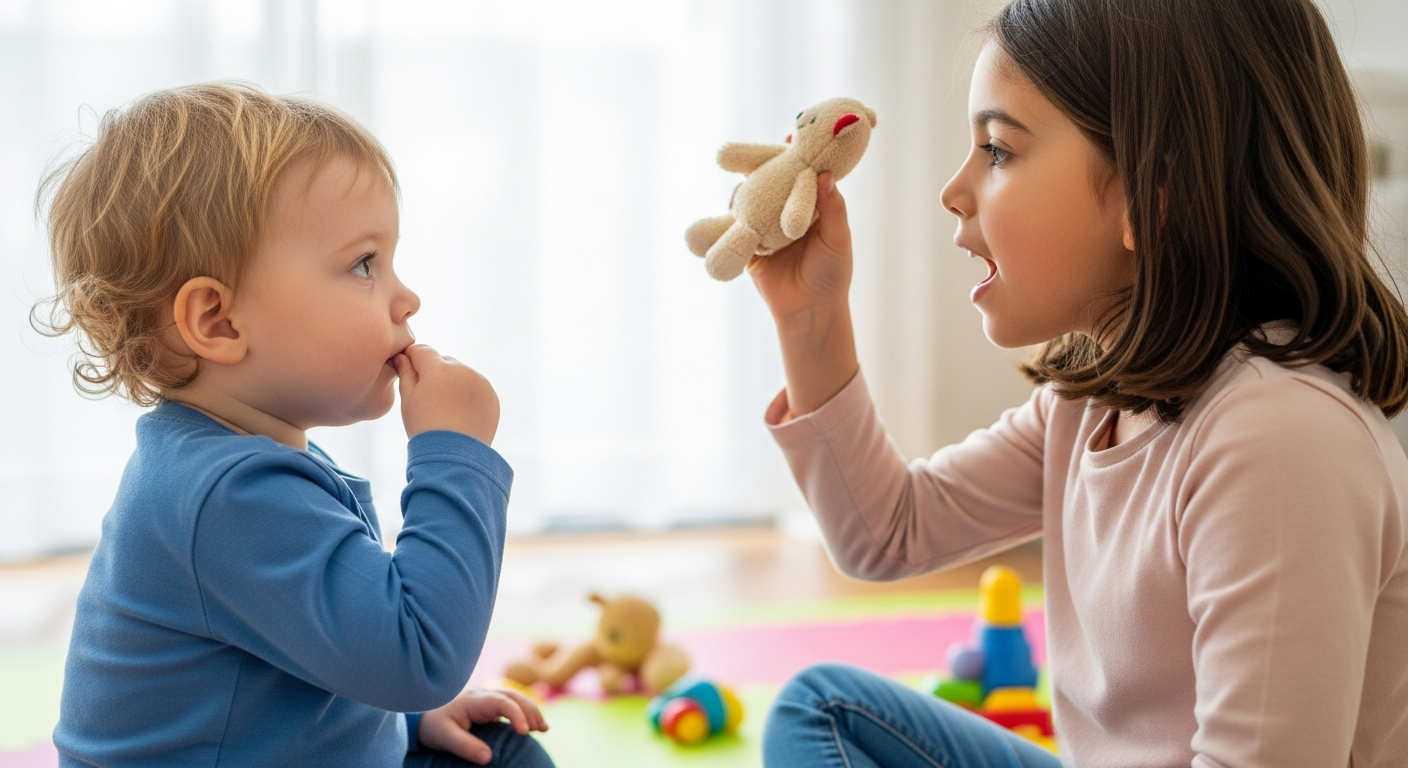
Table of Contents
- Introduction
- Understanding White Noise and the Infant Brain
- Does White Noise Delay Speech? What the Science Says
- The Importance of Speech-Rich Environments
- Potential Risks: Volume and Proximity
- The Benefits of Better Sleep for Language Skills
- Choosing "Smart Screen Time" Over Background Noise
- Value and Pricing: Investing in Your Child’s Future
- Supporting Your Child’s Speech Journey
- Realistic Expectations and the Power of Play
- Conclusion
- FAQs
Introduction
As the sun sets and the house begins to quiet, many parents reach for a small, glowing device on the nursery shelf: the white noise machine. It’s the sound of a thousand rushing waterfalls or a gentle hum that masks the creak of a floorboard or the bark of a distant dog. For many families, this hum is the "magic button" for a successful bedtime. But lately, you might have encountered worrying headlines or social media posts asking a stressful question: Does white noise delay speech?
In the journey of early parenthood, where every choice—from the type of bottle to the frequency of screen time—feels monumental, this concern can feel like yet another weight on your shoulders. We understand that you want to give your child every possible advantage in finding their voice. At Speech Blubs, our mission is to empower children to speak their minds and hearts. We were founded by people who grew up with speech challenges themselves, and we’ve dedicated our lives to creating the tools we wish we’d had as kids.

In this comprehensive guide, we are going to dive deep into the science behind auditory development, the reality of white noise machines, and the crucial distinction between a sleep aid and a noisy environment. We will explore whether there is a legitimate link between background sounds and language acquisition, and provide you with practical, evidence-based strategies to ensure your child’s environment supports both healthy sleep and vibrant communication. Our goal isn't to add to your "parental guilt," but to provide clarity, confidence, and joyful solutions for your family’s growth.
Understanding White Noise and the Infant Brain
To answer the question, "does white noise delay speech," we first have to understand what white noise actually is. Technically, white noise is a sound that contains all frequencies across the spectrum of audible sound in equal measure. In simpler terms, it creates a "wall of sound" that masks sudden changes in the environment.
From the perspective of a newborn, the world is shockingly quiet compared to the womb. Inside the mother, a baby is constantly exposed to the rhythmic whoosh of blood flow and the muffled beat of a heart, which can reach decibel levels similar to a vacuum cleaner. For many infants, total silence is actually startling. White noise mimics that intrauterine environment, providing a sense of security and helping them drift into the deep sleep they need for brain development.
However, the concern regarding speech development stems from how the brain processes sound. The first few years of life are a "critical period" for the auditory cortex—the part of the brain that organizes and interprets sounds. This is when the brain learns to distinguish the "p" sound from the "b" sound and begins to map out the complex patterns of human language. Critics of white noise worry that if a child is constantly bathed in a static hum, their brain might struggle to tune into the specific, nuanced sounds of human speech.
Does White Noise Delay Speech? What the Science Says
When looking for an answer to "does white noise delay speech," it is important to look at the actual data rather than just the headlines. Much of the concern originates from a 2003 study involving rat pups. Researchers found that rats exposed to continuous, 24/7 white noise experienced a delay in the development of their auditory cortex.

But here is the vital catch: the rats were exposed to the noise all the time. They weren't just hearing it during a nap or at night; it was their entire reality. Furthermore, the study found that once the white noise was removed, the rats' brains were still "plastic"—meaning they were capable of catching up and reaching normal developmental milestones once they were exposed to structured, meaningful sounds.
In human terms, there is currently no credible evidence that using a white noise machine at a moderate volume during sleep causes long-term speech or language delays in typically developing children. The brain is remarkably resilient and is looking for "signals" (like your voice) amidst the "noise."
Daytime Background Noise vs. Nighttime Sleep Aids
The real risk to language development isn't the white noise machine used during sleep; it’s the "noise floor" of the child's waking life. There is significant evidence that children who grow up in environments with high levels of chronic background noise—such as a television that is always on, or living directly next to a loud highway—may face challenges in speech perception.
If a toddler is trying to learn the word "apple" while a loud cartoon is blaring in the background and a dishwasher is humming, it becomes much harder for them to isolate the specific phonemes (sounds) of the word. This is often called the "speech-in-noise" problem. If the environment is consistently too loud, the child may stop "tuning in" to speech altogether because the effort required to filter out the noise is too taxing.
This is where the distinction becomes clear:
- Nighttime White Noise: Used at a safe volume to facilitate sleep, it is generally considered safe and even beneficial, as sleep is when the brain consolidates learning.
- Daytime "Environmental" Noise: Constant, unstructured noise during waking hours can interfere with the "smart" learning your child needs to do.
The Importance of Speech-Rich Environments
If you are worried that "does white noise delay speech" might apply to your situation, the best antidote is to focus on what happens when the white noise machine is off. Speech and language skills flourish when children are immersed in a "signal-rich" environment.
This means plenty of face-to-face interaction, singing, reading, and what we call "responsive communication." At Speech Blubs, we leverage the power of video modeling, a scientifically proven method where children watch and imitate their peers. Our methodology is built on the fact that children are biologically programmed to mirror other children. By watching a peer’s mouth movements and hearing them pronounce words, your child’s "mirror neurons" fire, helping them map out those sounds in their own minds.
For a parent whose 3-year-old "late talker" loves animals, the "Animal Kingdom" section of our app offers a fun, motivating way to practice "moo" and "baa" sounds. This isn't passive viewing like a cartoon; it’s an active, joyful exercise in communication. When you use the app together, you are turning screen time into a powerful tool for family connection, creating the exact opposite of the "passive noise" that concerns developmental experts.
If you are unsure where your child stands in their development, you can take our quick 3-minute preliminary screener. It involves 9 simple questions and provides you with an assessment and a next-steps plan to support your child’s unique journey.
Potential Risks: Volume and Proximity
While the "delay" in speech is not a direct consequence of moderate white noise, there is a very real concern regarding hearing health. If a white noise machine is too loud or too close to a baby’s head, it can exceed safe decibel levels.
A 2014 study found that some infant sleep machines, when set to maximum volume and placed on the crib rail, produced noise levels over 85 decibels. To put that in perspective, 85 decibels is roughly the volume of a loud restaurant or a hair dryer. Consistent exposure to this level of noise for eight hours a night could potentially lead to hearing damage, and if a child cannot hear well, they certainly cannot learn to speak well.
How to Use White Noise Safely:
- Keep it Quiet: The volume should be no louder than a soft shower or a quiet conversation (around 50 to 60 decibels).
- Keep it Distant: Never place the machine inside the crib or on the nightstand right next to the baby’s head. Place it across the room.
- Use a Timer: If possible, set the machine to turn off after your baby has fallen into a deep sleep, or at least lower the volume once they are out.
- Test the Volume: You can download free decibel-meter apps on your phone. Place your phone where your baby's head would be and check the reading to ensure it stays in a safe range.
The Benefits of Better Sleep for Language Skills
When discussing "does white noise delay speech," we must also consider the flip side: the benefits of sleep. Sleep is not just "down time" for a child; it is a period of intense neurological activity. During sleep, the brain processes the day’s events, strengthens neural connections, and moves information from short-term to long-term memory.
A child who is chronically overtired or frequently woken up by household noises may actually struggle more with speech and cognitive tasks. If white noise helps a child achieve the 12 to 14 hours of sleep they need, it is indirectly supporting their ability to learn language during their waking hours. A well-rested child is a more curious, attentive, and engaged learner.
Choosing "Smart Screen Time" Over Background Noise
Many parents worry about "noise" but then leave the TV on for background sound. This is often more detrimental than white noise because the TV contains "pseudo-speech"—sounds that mimic language but don't offer the interaction or the clear, slow, and repetitive modeling that toddlers need.
This is why we advocate for "smart screen time." Instead of passive viewing, we encourage interactive play. Speech Blubs is designed to be a "digital toy" that prompts your child to make sounds, copy faces, and learn new words. We want to help the 1 in 4 children who need speech support by providing an immediate, effective, and joyful solution.
Check out our testimonials to see how other parents have moved away from passive noise and toward active, joyful learning. You’ll find stories of children who went from silent to "chatty" after engaging with ourpeer-led videos. Our goal isn’t to replace professional therapy but to be a powerful supplement that fosters a love for communication and builds the foundational skills your child needs to succeed.
Value and Pricing: Investing in Your Child’s Future
We believe that every child deserves the chance to "speak their mind and heart." To make our tools accessible while continuing to innovate and provide high-quality, science-based content, we offer two simple plans:
- Monthly Plan: $14.99 per month. This is a great way to try out the app and see how your child responds to the video modeling methodology.
- Yearly Plan (Best Value): $59.99 per year. This breaks down to just $4.99 per month, saving you 66% compared to the monthly plan.
The Yearly Plan is our most popular choice for a reason. It’s not just about the lower price; it includes exclusive, high-value features designed to give your child the best possible experience:
- A 7-day free trial to explore everything the app has to offer.
- Access to the Reading Blubs app, which helps transition your child from speaking to early literacy.
- Early access to all new updates and sections.
- 24-hour support response time from our dedicated team.
Ready to get started? Create your account and begin your 7-day free trial today. Choosing the Yearly plan ensures you have the full suite of tools to support your child’s development throughout the year.
Supporting Your Child’s Speech Journey
While we’ve established that moderate white noise at night isn't the enemy, it’s always a good idea to be proactive about your child’s speech development. Language is a complex skill, and some children simply need a little extra "nudge" to get started.
If you are looking for ways to boost your child's communication skills, here are a few practical tips to use during your daily routine:
- Narrate Your Day: Talk about what you are doing as you do it. "I am picking up the red cup. Now I am pouring the water." This provides a constant stream of clear "signals."
- Wait for a Response: After you ask a question or make a sound, wait for 5 to 10 seconds. Children often need more time than adults to process information and formulate a response.
- Use High-Interest Topics: If your child is obsessed with trucks, use trucks to teach colors, numbers, and action words like "go" and "stop."
- Practice with Speech Blubs: Set aside 10-15 minutes of dedicated "co-play" time with the app. Watch the peer-led videos together and encourage your child to imitate the "Big Mouths" on the screen.
Our app is available for download on the Apple App Store and the Google Play Store. By integrating these playful moments into your day, you are creating a speech-rich environment that far outweighs any minor concerns about nighttime white noise.
Realistic Expectations and the Power of Play
At Speech Blubs, we want to be clear: every child develops at their own pace. We don’t promise that your child will be giving public speeches in a month. Development is a journey, not a race. Our focus is on fostering a love for communication, building confidence, and reducing the frustration that often comes when a child can't make themselves understood.
Using our app is a powerful supplement to your child's overall development plan. Whether you are using it alongside professional speech therapy or as a way to jumpstart a "late talker," the goal is to create joyful family learning moments. We believe that when children are having fun, they learn more effectively. By blending scientific principles with play, we provide a screen-free alternative to passive viewing and a powerful tool for family connection.
Conclusion
So, does white noise delay speech? The short answer is no, provided it is used responsibly. As long as you keep the volume at a safe level (around 50-60 dB), place the machine at a distance from your baby, and ensure their waking hours are filled with rich, human interaction, you can rest easy. White noise is a tool to help your child get the rest they need—and rest is a cornerstone of healthy brain development.
The real "magic" happens when the sun comes up. By being mindful of background noise during the day and prioritizing active, engaging communication, you are giving your child the best possible start. Whether it’s through reading books, singing songs, or using the peer-led video modeling in Speech Blubs, your involvement is the most important factor in their success.
We invite you to join our community of parents who are dedicated to helping their children speak their minds and hearts. Download Speech Blubs on the App Store or Google Play to begin. We highly recommend choosing the Yearly plan to take advantage of the 7-day free trial, the Reading Blubs app, and the best overall value for your family. Let’s make communication a joyful adventure for your little one today!
FAQs
1. What is the safest decibel level for a baby's white noise machine? The American Academy of Pediatrics (AAP) and various hearing experts suggest keeping the noise level at approximately 50 to 60 decibels (dBA). This is roughly the volume of a quiet conversation or a soft shower. You can use a free decibel-meter app on your smartphone to check the volume at the location where your baby sleeps. Always ensure the machine is placed at least several feet away from the crib.
2. Can I leave the white noise on all night? While many parents leave white noise on throughout the night to prevent the baby from waking due to sudden household sounds, some experts suggest using a timer. If your baby is a sensitive sleeper, you might consider having the noise fade out after they’ve reached a deep sleep. However, there is no evidence that all-night use at a safe, low volume causes developmental harm.
3. Will my child become "addicted" to white noise and be unable to sleep without it? White noise is a sleep association, much like a favorite blanket or a pacifier. While they may prefer it for a period, children can be "weaned" off white noise by gradually lowering the volume over the course of a week or two when they are older. It is not an addiction, but rather a comforting routine that helps signal that it is time for rest.
4. How does background noise during the day affect my child's speech? Chronic, loud background noise (like a constantly running TV) can create a "noisy environment" that makes it difficult for a child to distinguish individual speech sounds. This is known as the "speech-in-noise" problem. To support language development, it is best to have quiet periods during the day where your child can clearly hear and focus on human voices and interaction without competing sounds.
About the author