
Easter Fun: Easy Crafts for Kids
 By Speech Blubs Team•Jan 13, 2026•18 min.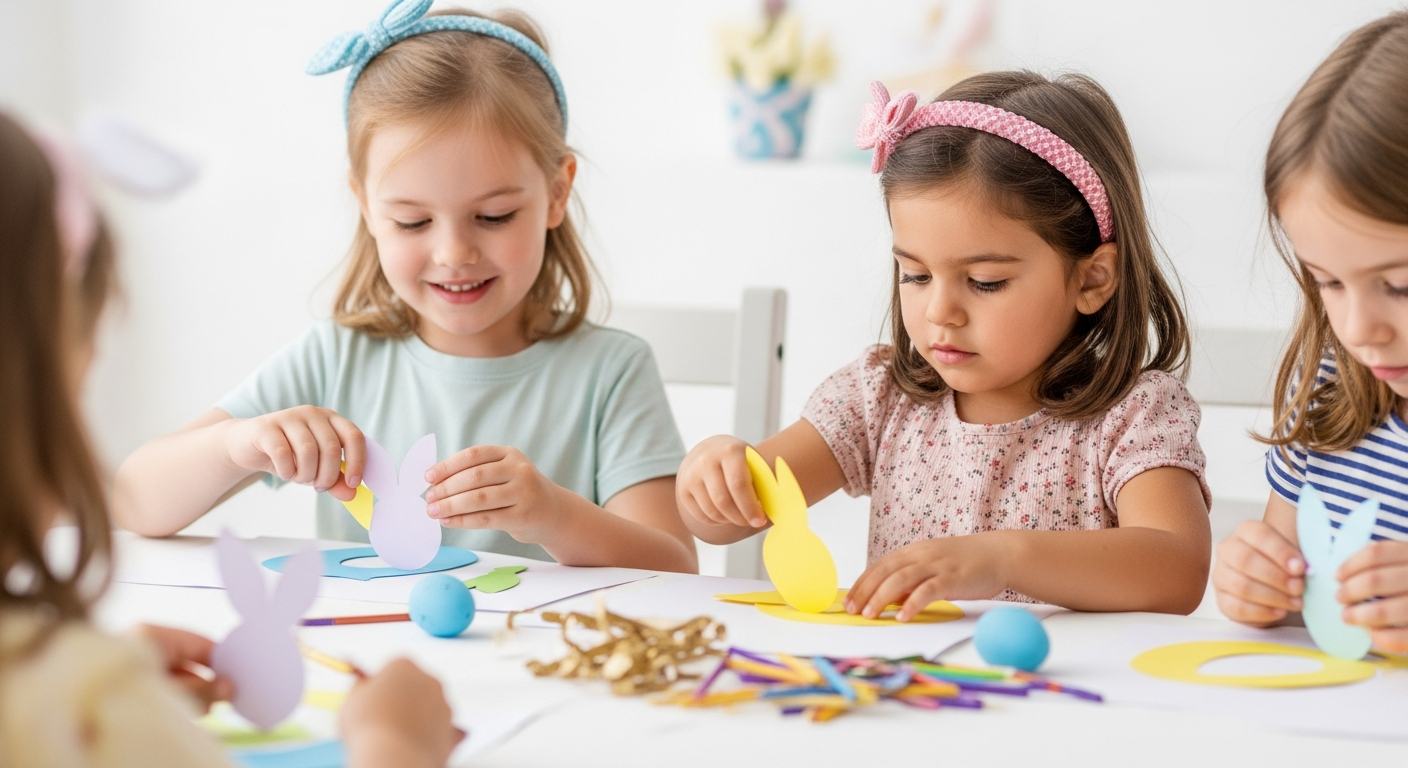
Table of Contents
- The Magic of Making: Why Crafts are More Than Just Fun
- Egg-cellent Easter Crafts for Every Age
- Bunny Bonanza: Hoppy Crafts and Creations
- Beyond Eggs and Bunnies: Other Delightful Easter Crafts
- Making the Most of Your Crafting Time
- Conclusion: Crafting Connections, Fostering Communication
- Frequently Asked Questions About Easy Easter Crafts
The air is buzzing with the promise of spring, and with it, the joyous arrival of Easter! This wonderful time of year brings with it a fresh sense of renewal, a celebration of new life, and countless opportunities for family connection. But beyond the egg hunts and chocolate bunnies, there’s a magical world of creativity waiting to be explored with your little ones: Easter crafts.
In a world that often pulls us in a million different directions, finding simple, engaging activities that bring families together is more important than ever. Crafting isn't just about making something pretty; it's a powerful avenue for learning, developing crucial skills, and creating cherished memories. This blog post will dive into an array of easy Easter crafts for kids of all ages, offering practical ideas that require minimal fuss but deliver maximum fun. We’ll explore how these hands-on activities contribute to your child's holistic development, from boosting fine motor skills and cognitive abilities to enhancing communication and language. Get ready to transform everyday materials into adorable Easter creations and discover how these joyful moments can spark speech, curiosity, and confidence in your child, perhaps even leading you to explore supplementary tools like our own Speech Blubs app to further empower their voice.

The Magic of Making: Why Crafts are More Than Just Fun
Crafting with children offers a treasure trove of developmental benefits, far beyond simply keeping little hands busy. When children engage in creative activities, they are not just having fun; they are actively building essential skills that support their growth and learning across various domains.
Nurturing Fine Motor Skills and Hand-Eye Coordination
Many Easter crafts involve tasks that are excellent for developing fine motor skills – the coordinated movements of the small muscles in the hands and fingers. Cutting paper, gluing small pieces, peeling stickers, drawing lines, and even painting with brushes all require precision and control. These actions strengthen the muscles needed for writing, self-feeding, and dressing themselves later on. Hand-eye coordination also gets a significant boost as children learn to guide their hands to match what their eyes see, which is fundamental for tasks like catching a ball or tying shoelaces.
Boosting Cognitive Development and Problem-Solving
Crafts are mini problem-solving sessions! Children learn to follow instructions (a vital pre-reading skill), think sequentially ("What do I do first, second, third?"), and make decisions ("Which color should I use here?"). They experiment with different materials and techniques, learning about cause and effect ("If I put too much glue, it gets soggy"). This process encourages critical thinking and creativity, allowing them to adapt ideas or come up with their own unique solutions. These are foundational cognitive skills that support academic learning and everyday challenges.
Fostering Creativity and Self-Expression
There's no single "right" way to make a craft. This freedom allows children to express their individuality, imagination, and emotions. Whether they choose unexpected colors for an Easter egg or add extra glitter to a bunny, they are making personal choices that reflect their inner world. This artistic expression is crucial for building self-esteem and a sense of accomplishment. It teaches them that their ideas are valuable and that they can bring their visions to life.

Enhancing Language and Communication Skills
Perhaps one of the most exciting aspects of crafting is its potential for language development. As you craft together, you naturally talk! You can introduce new vocabulary (e.g., "fluffy," "pastel," "wobble," "assemble"), describe actions ("cut," "glue," "fold," "decorate"), and explain steps. This rich language environment encourages children to ask questions, follow multi-step directions, and describe their creations. For a child who might be a "late talker" or needs support with expressive language, describing the steps of making a salt dough egg ("First, we mix the flour. Then, we roll it flat.") offers a concrete, low-pressure way to practice sequencing and narrative skills.
At Speech Blubs, we deeply understand that communication flourishes in joyful, interactive environments. Our mission is to empower children to "speak their minds and hearts" by blending scientific principles with play. Just as crafting encourages verbal interaction and imitation, our app uses a unique "video modeling" methodology where children learn by watching and imitating their peers. This approach leverages the power of mirror neurons, making learning natural and engaging. For instance, if your child is making a "hatching chick" craft and you're discussing the sounds a chick makes ("cheep, cheep!") or how the egg "cracks," you can then transition to exploring animal sounds in our app, reinforcing that learning through a complementary "smart screen time" experience. We are committed to providing an immediate, effective, and joyful solution for the 1 in 4 children who need speech support, and we believe that enriching activities like crafting, alongside tools like Speech Blubs, create a powerful synergy for development.
Ready to explore how Speech Blubs can further support your child’s communication journey? Download Speech Blubs on the App Store or Google Play today!
Egg-cellent Easter Crafts for Every Age
Easter wouldn't be complete without eggs! These versatile symbols of new life lend themselves perfectly to a variety of creative projects.
For Our Littlest Crafters: Toddlers & Preschoolers (Ages 1-5)
These crafts are designed for simplicity, big movements, and sensory exploration, perfect for short attention spans and developing coordination.
1. Egg Potato Stamping
- What you need: Potatoes, child-safe paint, paper, a blunt knife (for adult use).
- How to do it: An adult cuts a potato in half and carves simple designs (stripes, spots, zigzags) into the cut surface. Dip the potato "stamp" into paint and press onto paper to create colorful patterns.
- Speech Blubs Connection: While stamping, practice colors ("Red egg! Blue egg!"), action words ("stamp," "press," "dip"), and descriptive words ("bumpy," "smooth"). For a child who loves animals, this activity can be extended by making animal print stamps and then exploring the "Animal Kingdom" section within Speech Blubs to identify and make sounds for various creatures, practicing new words and sounds in a fun, interactive way.
- Developmental Boost: Fine motor skills (gripping the potato), hand-eye coordination, color recognition, pattern making, early vocabulary.
2. Sponge Painted Easter Eggs
- What you need: Sponges cut into egg shapes, various colors of child-safe paint, paper.
- How to do it: Let your child dip the sponge shapes into paint and dab them onto paper to create soft, textured egg outlines.
- Developmental Boost: Sensory exploration, fine motor control, color mixing, cause and effect.
3. Washi Tape Easter Eggs
- What you need: Hard-boiled eggs (or blown-out eggshells), various patterns of washi tape.
- How to do it: Simply tear or cut strips of washi tape and let your child stick them onto the eggs to create unique designs.
- Developmental Boost: Fine motor skills (tearing/cutting, peeling, sticking), pattern recognition, creativity, practicing words like "sticky," "stripes," "dots."
4. Stained Glass Easter Eggs Suncatchers
- What you need: Contact paper, colorful tissue paper squares, scissors, construction paper for a frame.
- How to do it: Draw an egg shape on contact paper, let your child stick tissue paper squares onto it, then cover with another piece of contact paper. Trim into an egg shape and frame with construction paper. Hang in a window!
- Developmental Boost: Fine motor skills, color recognition, light exploration, problem-solving (fitting pieces together), vocabulary like "shiny," "transparent," "colorful."
Growing Skills: Elementary Schoolers (Ages 6-9)
These crafts introduce more complex steps, encourage independent work, and allow for greater personalization.
5. Salt Dough Easter Eggs
- What you need: Flour, salt, water, cookie cutters (egg shapes), paint, string/ribbon.
- How to do it: Mix 2 parts flour, 1 part salt, and 1 part water to form dough. Roll it out, cut egg shapes, and poke a hole at the top for hanging. Bake until hard, then paint and decorate.
- Speech Blubs Connection: This multi-step project is fantastic for practicing sequencing and following instructions. Talk through each step: "First, we mix. Next, we roll. Then, we cut." This mirrors the structured yet playful learning within Speech Blubs, where children learn by following cues and imitating actions in our engaging video modeling sessions.
- Developmental Boost: Following multi-step directions, measuring, kneading, painting, creativity, patience.
6. Marbled Decorative Eggs
- What you need: Blown-out eggshells, shaving foam, food coloring gels, skewer or toothpick, disposable roasting tin.
- How to do it: Cover the bottom of a roasting tin with shaving foam. Dot food coloring gels on top and swirl gently with a skewer. Roll eggshells in the foam, let sit for 20 minutes, then wipe clean to reveal marbled patterns.
- Developmental Boost: Experimentation, color mixing, fine motor control, understanding cause and effect, descriptive language ("swirly," "blended," "unique").
7. Patchwork Easter Eggs
- What you need: Blown-out eggshells or craft eggs, fabric scraps, glue, scissors.
- How to do it: Cut small pieces of fabric and glue them onto the eggs in a mosaic or "patchwork" pattern.
- Developmental Boost: Fine motor skills (cutting, gluing), pattern design, texture exploration, vocabulary like "soft," "rough," "pattern," "overlap."
Challenging Creations: Pre-Teens (Ages 10+)
These crafts involve more detailed work, potentially using tools that require greater dexterity, and allow for sophisticated artistic expression.
8. DIY Easter Baskets
- What you need: Cardstock or thick paper, scissors, glue, decorative elements (ribbon, stickers).
- How to do it: Follow a printable template or design your own basket structure. Cut, fold, and glue to assemble, then decorate.
- Developmental Boost: Spatial reasoning, precision cutting, complex assembly, planning, personalization.
9. Modern Washi Tape Easter Eggs (Advanced Designs)
- What you need: Hard-boiled or craft eggs, a variety of washi tapes, precision scissors.
- How to do it: Instead of random application, encourage intricate patterns, geometric designs, or even creating images by layering and cutting washi tape pieces.
- Developmental Boost: Advanced fine motor control, design thinking, precision, attention to detail, abstract reasoning.
10. Paper Daffodils
- What you need: Colored paper (yellow, orange, green), scissors, glue, pencil.
- How to do it: Cut out multiple petal shapes and a central trumpet for each flower. Assemble them with glue to create 3D daffodils. Add green stems and leaves.
- Developmental Boost: Crafting flowers allows for discussion about nature, parts of a plant, and colors. This can inspire conversations about the world around them, enriching vocabulary and general knowledge.
- For parents who are unsure if their child could benefit from speech support, taking our quick 3-minute preliminary screener is a great first step. It provides a simple assessment and a free 7-day trial of Speech Blubs, helping you understand your child's communication needs and how we can assist. Take our quick 3-minute preliminary screener today!
Bunny Bonanza: Hoppy Crafts and Creations
Easter isn't just about eggs; bunnies are another iconic symbol that sparks joy and creativity.
Simple Bunnies for Little Hands
11. Handprint Bunny Egg Holders
- What you need: Colored cardstock, scissors, glue, felt-tip pens, chocolate eggs.
- How to do it: Trace your child's hand on cardstock and cut it out. Fold down the outer fingers to make "arms" that can hold a chocolate egg. Cut off the central finger, leaving two "ears" sticking up. Draw a face and ear details.
- Speech Blubs Connection: This craft provides a wonderful opportunity for imaginative play and storytelling. As your child creates their bunny, encourage them to give it a name, describe its personality, or even act out a little scenario. This sparks narrative skills and creative thinking, much like the imaginative play scenarios encouraged in Speech Blubs' "Talk About" section, where children are prompted to describe pictures and tell stories.
- Developmental Boost: Tracing, cutting, gluing, drawing, imaginative play, body awareness.
12. Marshmallow Bunny Rabbits (Edible Fun!)
- What you need: Large, medium, and mini marshmallows, icing (plain and colored), edible marker pens.
- How to do it: Use icing to stick different sized marshmallows together to form a bunny body, ears, cheeks, and tail. Decorate with icing and edible markers for faces.
- Developmental Boost: Following instructions, fine motor skills (manipulating small marshmallows), creativity, sensory experience (taste and texture).
13. Paper Plate Easter Chick & Bunny
- What you need: Paper plates, yellow/white/pink paint, construction paper, googly eyes, glue.
- How to do it: Paint a paper plate yellow for a chick or white/pink for a bunny. Add construction paper wings/ears, googly eyes, and a beak/nose/whiskers.
- Developmental Boost: Painting, cutting, gluing, recognizing animal features, practicing animal sounds and words like "fluffy," "beak," "whiskers."
Upcycled & Creative Bunny Ideas
14. Toilet Roll Easter Bunnies
- What you need: Empty toilet paper rolls, paint, construction paper, googly eyes, glue, markers.
- How to do it: Paint the toilet roll a pastel color. Cut out ears from construction paper and glue them on. Add googly eyes, a pom-pom tail, and draw a face.
- Developmental Boost: Recycling, transforming objects, painting, cutting, assembly, practicing words like "empty," "round," "fluffy."
15. No-Sew Sock Bunnies
- What you need: Old socks (single or mismatched), rice or cotton stuffing, rubber bands or string, felt, markers.
- How to do it: Fill a sock with rice or stuffing to form a body. Use a rubber band to create a "head" section. Tie the top of the sock to create ears, or cut and shape them. Add felt eyes, nose, and whiskers.
- Developmental Boost: Resourcefulness, problem-solving (how to shape the bunny), fine motor skills (tying, stuffing), creativity.
At Speech Blubs, we believe in empowering children to communicate effectively and joyfully. Our founders, who themselves grew up with speech problems, created Speech Blubs to be the tool they wished they had. We combine research-backed methods with engaging play to help children build confidence and reduce communication frustration. You can explore more about the science behind our effective "video modeling" method on our Research page.
Beyond Eggs and Bunnies: Other Delightful Easter Crafts
Expand your Easter crafting horizons with these diverse and engaging ideas.
16. Jelly Bean Bracelets (Edible & Fun)
- What you need: Jelly beans, elastic string or yarn, a needle (adult supervision needed).
- How to do it: Carefully poke a hole through each jelly bean (adult task) and let your child string them onto elastic to make a colorful, edible bracelet.
- Developmental Boost: Fine motor skills (stringing), pattern making, color recognition, sensory experience (taste). It's also a great way to practice counting and sequencing ("first red, then yellow, then green").
17. DIY Bird Feeder (Nature Connection)
- What you need: A large orange, kebab skewers, bird seed, string.
- How to do it: Cut an orange in half and scoop out the pulp. Poke two skewers through the orange to form a cross. Tie string to the skewers to hang it. Fill with birdseed.
- Developmental Boost: Connecting with nature, understanding cause and effect, fine motor skills, learning about local wildlife. This is a wonderful opportunity to discuss birds, their sounds, and habitats, encouraging descriptive language and observation skills.
18. Paper Pinwheels
- What you need: Paper (patterned or plain), scissors, drinking straws, split pins (brads).
- How to do it: Use a template to cut out a square, make diagonal cuts, fold corners to the center, and secure with a split pin through a straw.
- Developmental Boost: Precision cutting, folding, assembly, understanding mechanics (how the pinwheel spins), color and pattern recognition. This craft provides a tangible outcome that children can then use in imaginative play, further boosting their language skills as they describe its movement and create scenarios.
19. Teapot Cards (A Sweet Greeting)
- What you need: Cardstock, printable teapot template, scissors, glue, glitter, sequins, markers.
- How to do it: Cut out the teapot and teacup shapes from the template. Decorate them creatively with glue, glitter, sequins, and drawings. Assemble to create a charming Easter card.
- Developmental Boost: Cutting, decorating, personalization, creative expression, writing (if old enough to write a message), practicing descriptive words about the decorations ("sparkly," "colorful," "shiny").
20. Easter Cross Stitch Colouring
- What you need: Cross-stitch coloring packs (often come with a needle and thread, or simply pre-printed patterns for coloring), crayons/markers.
- How to do it: Children can either color in the pre-printed cross-stitch designs or, with supervision, use a plastic needle and thread to follow simple cross-stitch patterns.
- Developmental Boost: Fine motor control (precision coloring or stitching), pattern recognition, focus and concentration, hand-eye coordination. This activity can also be a quiet, calming way to practice following visual instructions.
Building Communication Through Shared Experiences
These crafts aren't just about the finished product; they are about the shared experience. The conversations you have, the laughter you share, and the challenges you overcome together are all invaluable for your child's communication journey. These moments foster a love for communication, build confidence, and reduce frustration, developing key foundational skills. They create joyful family learning moments that resonate far beyond the holiday itself.
We love hearing about the incredible progress children make! Many parents have shared their success stories, which you can read on our Testimonials page. These stories are a testament to the power of combining engaging activities with dedicated support.
Making the Most of Your Crafting Time
To ensure your Easter crafting sessions are as successful and speech-boosting as possible, consider these tips:
- Prepare Ahead: Gather all materials before you start. This minimizes interruptions and keeps the flow of activity smooth.
- Keep it Open-Ended: While some crafts have specific steps, always allow room for your child's creativity. If they want to use blue for a bunny's nose, let them!
- Focus on the Process, Not Perfection: The goal is engagement and learning, not a museum-worthy masterpiece. Celebrate effort and creativity.
- Narrate and Describe: Talk about what you're doing, what you see, and what your child is doing. "You're cutting the long, green strip!" "Look at the sparkly glitter!"
- Ask Open-Ended Questions: Instead of "Do you like it?", try "Tell me about your bunny!" or "What's your favorite part?"
- Connect to Real-World Concepts: Relate the crafts to Easter traditions, spring, animals, or colors they see around them.
Conclusion: Crafting Connections, Fostering Communication
Easter crafts offer a fantastic opportunity to infuse your home with festive cheer while providing rich learning experiences for your children. From the simplest egg potato stamps for toddlers to more intricate paper daffodils for pre-teens, each craft is a stepping stone for developing fine motor skills, cognitive abilities, creativity, and most importantly, language and communication. These shared moments of creation strengthen family bonds and build a foundation for your child to confidently "speak their minds and hearts."
Just as we encourage hands-on play, we at Speech Blubs are dedicated to providing tools that complement this natural development. Our app offers "smart screen time" that is interactive, educational, and fun, helping children practice sounds, words, and sentences by imitating their peers. It's a powerful supplement to a child's overall development plan and, when applicable, professional therapy, all while fostering family connection.
Are you ready to bring more communication and joy into your home this Easter? We invite you to try Speech Blubs and discover how our unique approach can empower your child's voice. Take the first step towards unlocking your child's full communication potential today!
Create your account and begin your 7-day free trial today!
When you sign up, we strongly recommend choosing the Yearly Plan for the best value and a complete experience. For just $59.99 per year (which breaks down to an incredible $4.99/month), you save a massive 66% compared to our Monthly plan ($14.99/month). The Yearly plan also includes exclusive, high-value features like a 7-day free trial, the extra Reading Blubs app to support early literacy, early access to new updates, and a 24-hour support response time. The Monthly plan does not include these benefits. Choose the Yearly plan to get the free trial and the full suite of features!
Frequently Asked Questions About Easy Easter Crafts
Q1: What are some good, mess-free Easter crafts for toddlers?
A1: For toddlers, mess-free crafts are a lifesaver! Consider activities like washi tape Easter eggs where they simply tear and stick tape onto eggs, or contact paper suncatchers where tissue paper pieces are pressed onto sticky paper. Sticker mosaics or using chunky Easter-themed stickers on paper are also great options that minimize cleanup.
Q2: How can I make Easter crafts educational for my child?
A2: You can make any craft educational by engaging in conversation! Focus on vocabulary (colors, shapes, textures, action words like "cut," "glue," "fold"), counting materials, following multi-step directions, and asking open-ended questions ("What do you like about your bunny?" "What will happen if we add more glitter?"). Connecting crafts to books or real-world observations (e.g., discussing real bunnies or birds after making a craft) also enhances learning.
Q3: What materials should I stock up on for general Easter crafting?
A3: To be ready for most easy Easter crafts, it's great to have: construction paper in various pastel colors, child-safe glue sticks and liquid glue, safety scissors, washable paints, cotton balls, googly eyes, pipe cleaners, pom-poms, empty toilet paper rolls, paper plates, and a variety of colorful tapes (like washi tape). Don't forget recycled items like egg cartons and plastic containers!
Q4: My child gets frustrated easily with crafts. How can I make it a positive experience?
A4: Focus on simplicity and adjust expectations. Choose crafts that are well within their developmental capabilities, and be prepared to offer plenty of assistance and encouragement. Break down tasks into very small steps, celebrate every effort (not just the perfect outcome), and allow for creative freedom – there's no "wrong" way to craft. If frustration arises, take a break or suggest a different activity. The goal is enjoyment and bonding, not perfection.
About the author