
Easy and Joyful Snowflake Craft Toddler Activities for Winter Fun
 By Speech Blubs Team•Feb 20, 2026•15 min.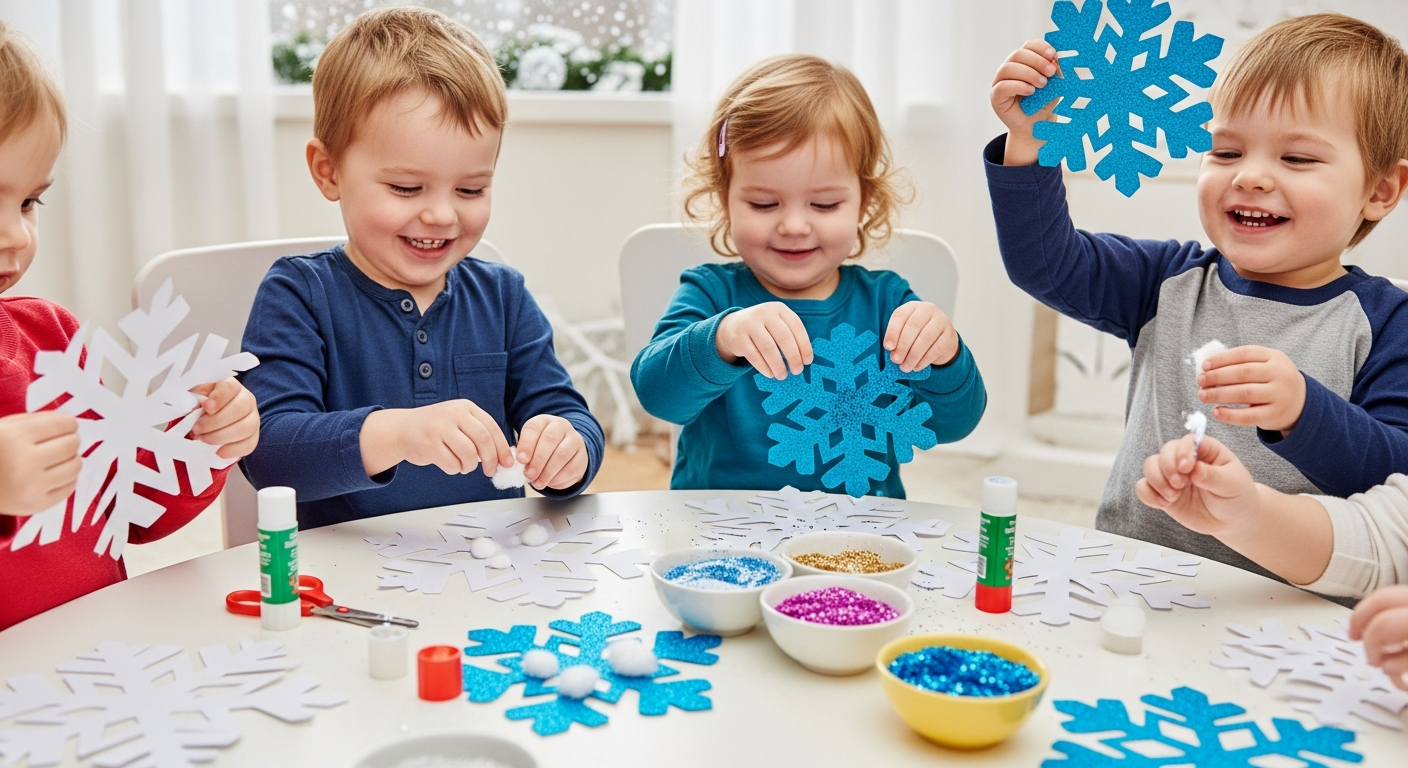
Table of Contents
- Introduction
- The Magic of Winter Play: Why Snowflake Crafts Matter for Toddlers
- 1. The Classic Cotton Ball Snowflake
- 2. Q-Tip Painted Snowflakes: Precision and Fun
- 3. Sparkly Popsicle Stick Snowflakes
- 4. Coffee Filter "Tie-Dye" Snowflakes
- 5. Paper Plate Snowflake Window Hangings
- The Speech Blubs Methodology: Why Video Modeling Works
- Fostering Communication During Craft Time
- Setting Realistic Expectations
- Transitioning from "Screen-Free" to "Smart Screen"
- Choosing the Right Plan for Your Family
- Winter Books to Pair with Your Crafts
- Conclusion
- Frequently Asked Questions
Introduction
Did you know that no two snowflakes are ever exactly alike? Just like the unique patterns found in a winter flurry, every child’s developmental journey is a one-of-a-kind masterpiece. As parents and caregivers, we often find ourselves looking for ways to fill those long January afternoons—the "witching hour" between naptime and dinner—with activities that aren't just "busy work," but are meaningful opportunities for growth. Whether you are navigating a speech delay or simply want to boost your child's communication skills, a simple snowflake craft toddler activity can be the perfect catalyst for connection.
In this post, we are going to explore a variety of engaging, sensory-rich snowflake crafts specifically designed for toddlers. We will also discuss how these hands-on projects pair perfectly with our mission at Speech Blubs to help children "speak their minds and hearts." From fine motor development to vocabulary building, you’ll discover how to transform a few household items into a winter wonderland of learning. Our goal is to provide you with a toolkit of joyful activities that foster confidence and curiosity in your little one.

By the end of this guide, you will have a full schedule of winter-themed crafts and a deeper understanding of how "smart screen time" can supplement these physical activities to create a holistic learning environment.
The Magic of Winter Play: Why Snowflake Crafts Matter for Toddlers
Winter can feel like a challenging season for parents of young children. When it’s too cold to spend hours at the park, the walls of the house can start to feel a little close. However, this indoor time provides a golden opportunity to focus on foundational skills. A snowflake craft toddler project isn't just about the finished product; it's about the process of exploration.
At Speech Blubs, we believe that play is the highest form of research for a child. When a toddler dips a brush into blue paint or feels the fluffy texture of a cotton ball, they are stimulating their senses and building neural pathways. For children who are working on their communication, these sensory experiences provide "communication temptations"—moments where they are so excited by what they are doing that they are naturally motivated to use their words, signs, or gestures to share the experience with you.
If you are ever unsure where your child stands in their development, you can always take our quick 3-minute preliminary screener. It involves just 9 simple questions and provides you with an immediate assessment and a next-steps plan to support your child’s unique needs.
1. The Classic Cotton Ball Snowflake
This is one of our favorite activities because it focuses on tactile exploration. Many toddlers love the soft, airy feel of cotton balls, making this a perfect "first craft" for the season.
Materials Needed:
- Blue construction paper
- White school glue
- Cotton balls
- A silver marker (optional)
How to Play:
Start by drawing a simple snowflake shape (an 'X' with a line through the middle) using the silver marker or a line of glue. Encourage your toddler to pull the cotton balls apart into smaller tufts. This "pinching and pulling" action is fantastic for developing the fine motor strength required for later writing and even the muscle control used in speech.

As they stick the cotton onto the paper, talk about what they are doing. Use descriptive words like "soft," "white," "sticky," and "fluffy." If your child is using the Speech Blubs app, you might visit the "Early Sounds" section afterward to practice soft "shhh" sounds, mimicking the quiet fall of snow. This connection between a physical activity and the video modeling in our app helps solidify new concepts in their minds.
2. Q-Tip Painted Snowflakes: Precision and Fun
For toddlers who are starting to show more interest in "tools," using a Q-tip instead of a bulky paintbrush can be a game-changer. This snowflake craft toddler activity encourages "pointillism"—or making lots of little dots—which requires focus and hand-eye coordination.
Materials Needed:
- Dark blue or black paper
- White washable paint
- Q-tips (cotton swabs)
How to Play:
Pour a small amount of white paint onto a paper plate. Show your toddler how to dip the tip of the Q-tip into the paint and "dot, dot, dot" across the paper. You can draw a faint snowflake outline for them to follow, or let them create a "blizzard" of dots all over the page.
Communication Tip: Every time they make a dot, say the word "pop!" or "dot!" Repetitive, rhythmic sounds are highly engaging for toddlers. We often see parents in our testimonials section mentioning how these simple, playful interactions—paired with our app's peer-led videos—helped their children finally move from silence to those first precious words.
3. Sparkly Popsicle Stick Snowflakes
This craft is a wonderful way to introduce the concept of shapes and symmetry. Since you will likely need to help with the "skeleton" of the snowflake, it becomes a beautiful co-play opportunity.
Materials Needed:
- Popsicle sticks (4 per snowflake)
- Glue (Hot glue for the base, white glue for decorating)
- Glitter, sequins, or buttons
- Blue or white paint
How to Play:
Pre-glue four popsicle sticks together in a star shape. Once the structure is dry, let your toddler paint the sticks. After the paint is tacky, they can add "sparkle." Using a large tray to contain the glitter is a pro-parent move that saves your floors!
For a child who loves building things, this activity is highly motivating. You can use this time to practice turn-taking. "My turn to put a blue button, your turn to put a silver sequin." This back-and-forth interaction is the foundation of conversation. To support this at home, you can download Speech Blubs on the App Store to find more interactive games that encourage your child to imitate and participate.
4. Coffee Filter "Tie-Dye" Snowflakes
This activity blends art with a tiny bit of science. Watching the colors spread across the filter is mesmerizing for young children and provides a great visual for the concept of "wet" and "dry."
Materials Needed:
- White coffee filters
- Washable markers (blues and purples)
- A spray bottle with water or a small dropper
How to Play:
Let your toddler scribble all over a flattened coffee filter with the markers. Don't worry about them making a specific shape—the more color, the better! Once they are finished, let them use a spray bottle to mist the filter with water. Watch together as the colors bleed and blend. Once dry, an adult can fold and cut the filter into a traditional snowflake shape.
This is a perfect time to use the word "more." If they want more water, encourage them to sign "more" or say the word before you give them another spray. If you want to see how other families have integrated these "learning through play" moments into their daily routines, check out our testimonials.
5. Paper Plate Snowflake Window Hangings
Creating something that can be displayed on the window gives toddlers a sense of pride and accomplishment. It also lets the winter sun shine through their beautiful creations.
Materials Needed:
- Paper plates (with the center cut out by an adult)
- Contact paper (clear sticky paper)
- Blue and white tissue paper squares
How to Play:
Place a piece of contact paper over the hole in the paper plate ring. Give your toddler a bowl of tissue paper squares and let them press the squares onto the sticky surface. This is a great "low-mess" craft for days when you don't want to break out the paint.
While they work, you can talk about the colors. "Is this blue? Yes! Light blue." Matching the physical color to the spoken word helps with category formation. At Speech Blubs, we focus on these foundational cognitive skills through our "Smart Screen Time" approach. To get started with our full suite of tools, including the Reading Blubs app, create your account and begin your 7-day free trial today.
The Speech Blubs Methodology: Why Video Modeling Works
You might wonder how a snowflake craft toddler project relates to a digital app. The answer lies in our unique scientific methodology: video modeling.
Our founders grew up with speech problems themselves, and they wanted to create the tool they wished they’d had. They discovered that children are most motivated to learn when they see other children doing it. This is based on the concept of mirror neurons—when a child watches another child make a sound or perform a task, their brain fires as if they were doing it themselves.
When you use Speech Blubs, your child isn't just passively watching a cartoon. They are watching a peer make a face, say a word, or celebrate a success. This builds the confidence they need to try those same things in the real world—whether that's saying "snowflake" or participating in a family craft. Our approach is designed to be an immediate, effective, and joyful solution for the 1 in 4 children who need speech support.
Fostering Communication During Craft Time
Every snowflake craft toddler activity is an opportunity for "Language Lab" at home. Here are some practical ways to boost communication while you craft:
- Narrate Everything: Become a sports commentator for your child's life. "You are picking up the blue stick. Now you are putting on the glue. Squeeze, squeeze, squeeze!"
- Offer Choices: Instead of just giving them a marker, hold up two and ask, "Do you want the blue marker or the silver marker?" This empowers them to "speak their minds" and make a choice.
- Wait for a Response: After you ask a question or make a comment, wait for 5-10 seconds. It feels like a long time, but toddlers need that processing time to formulate a response.
- Use "Smart Screen Time" as a Bridge: If you are making a snowflake craft, open Speech Blubs and find words related to winter or colors. Seeing a child on the screen say "blue" while your child is holding a blue crayon creates a powerful multi-sensory connection.
For parents whose 3-year-old "late talker" loves the outdoors, seeing the winter-themed activities in our app can be highly motivating. It turns a digital experience into a real-world invitation to speak. Ready to see the difference for yourself? You can find Speech Blubs on Google Play and start your journey today.
Setting Realistic Expectations
At Speech Blubs, we want to be your partner in development, which means being honest about the process. While we provide a powerful tool, we avoid making unsubstantiated claims. Your child might not be giving public speeches in a month, and that’s okay!
Our focus is on the benefits of the process:
- Fostering a love for communication.
- Building foundational confidence.
- Reducing the frustration that comes from not being understood.
- Developing key motor and cognitive skills.
- Creating joyful family learning moments.
Think of Speech Blubs as a powerful supplement to your child’s overall development plan and, when applicable, professional therapy. It’s a way to make the "work" of speech practice feel like play.
Transitioning from "Screen-Free" to "Smart Screen"
We know that many parents worry about screen time. That’s why we distinguish between "passive viewing" (like watching cartoons) and "active participation." Speech Blubs is a screen-free alternative to those passive experiences because it requires the child to engage, imitate, and interact.
A great routine for a cold winter day might look like this:
- Morning: Active play and a snowflake craft toddler project.
- Afternap: 15-20 minutes of Speech Blubs "Smart Screen Time" to reinforce vocabulary.
- Evening: Reading winter-themed books like The Mitten or Snowmen at Night together.
This balanced approach ensures that your child is getting the physical, social, and cognitive stimulation they need to thrive.
Choosing the Right Plan for Your Family
We want to be transparent about our pricing so you can make the best choice for your family’s needs. We offer two main paths:
- Monthly Plan: $14.99 per month. This is a great way to test the waters.
- Yearly Plan: $59.99 per year.
The Yearly Plan is our clear best-value choice. Not only does it break down to just $4.99 per month (a 66% savings!), but it also includes exclusive features that help you get the most out of the experience:
- A 7-day free trial so you can explore everything risk-free.
- The Reading Blubs app, which extends the learning into early literacy.
- Early access to new updates and features.
- 24-hour support response time from our dedicated team.
Please note that the Monthly plan does not include the free trial, the Reading Blubs app, or the priority support. We highly recommend the Yearly plan to provide your child with the most comprehensive support system. You can sign up for the Yearly plan here to lock in these benefits.
Winter Books to Pair with Your Crafts
To round out your winter learning, we recommend incorporating some classic winter literature. Reading together is another fantastic way to build vocabulary and bond with your child.
- "The Mitten" by Jan Brett: A beautiful story about animals squeezing into a lost mitten. It's great for teaching animal names and the concept of "big" vs. "small."
- "Snowmen at Night" by Caralyn Buehner: A whimsical look at what snowmen do while we sleep. It sparks imagination and "what if" conversations.
- "Holly’s Red Boots" by Francesca Chessa: A relatable story about a child looking for her boots so she can go play in the snow.
- "Snow! Snow! Snow!" by Lee Harper: Captures the pure excitement of a snow day.
As you read these books, you can point to the pictures and ask your child to find the "blue snowflake" or the "white snow," mirroring the activities you did during your snowflake craft toddler time.
Conclusion
The winter months don't have to be a time of "hibernation" for your child's development. By using simple activities like a snowflake craft toddler project, you are providing the building blocks for communication, fine motor skills, and confidence. At Speech Blubs, we are honored to be a part of that journey, providing a bridge between the digital world and real-world milestones.
Our mission is to empower your child to speak their mind and heart, and we’ve seen firsthand how the combination of joyful play and scientific methodology can make a world of difference. Whether you are painting with Q-tips, sticking cotton balls to paper, or practicing sounds with our video models, remember that every effort counts.
Ready to start your winter of growth? Download Speech Blubs on the App Store or Google Play today to begin your journey. For the best value, be sure to select the Yearly Plan to take advantage of the 7-day free trial, the Reading Blubs app, and a 66% savings. Let’s make this winter a season of joyful connection and new words!
Frequently Asked Questions
1. My toddler is still putting everything in their mouth. Is a snowflake craft safe?
Safety is always the priority! For toddlers who are still in the "mouthing" phase, avoid small items like sequins or buttons. Instead, stick to larger items like cotton balls (with close supervision) or use edible-safe "paint" made from yogurt and food coloring. You can also do the "Contact Paper" craft where the sticky side is sealed away once the project is finished.
2. How long should I spend on a craft activity with a 2-year-old?
Toddlers have short attention spans, often ranging from 5 to 10 minutes. The goal of a snowflake craft toddler project isn't to sit for an hour; it's to have a high-quality burst of interaction. If they lose interest, it's okay to stop and come back to it later or simply enjoy the 5 minutes of focused play you had together.
3. How does Speech Blubs help with speech delay specifically?
Speech Blubs uses a technique called video modeling, which is a proven method where children learn by imitating their peers. By watching other children perform speech exercises and say words, your child’s "mirror neurons" are activated, making them more likely to attempt the sounds themselves. It reduces the pressure of "therapy" and replaces it with the joy of play.
4. Can I use Speech Blubs if my child is already in speech therapy?
Absolutely! We frame the app as a powerful supplement to professional therapy. Many speech-language pathologists (SLPs) actually recommend Speech Blubs to parents as a way to keep up with practice at home between sessions. It’s a tool that makes the repetitive nature of speech practice engaging and fun for the child.
About the author