
Easy Bird Crafts: Fun for Little Hands
 By Speech Blubs Team•Jan 13, 2026•20 min.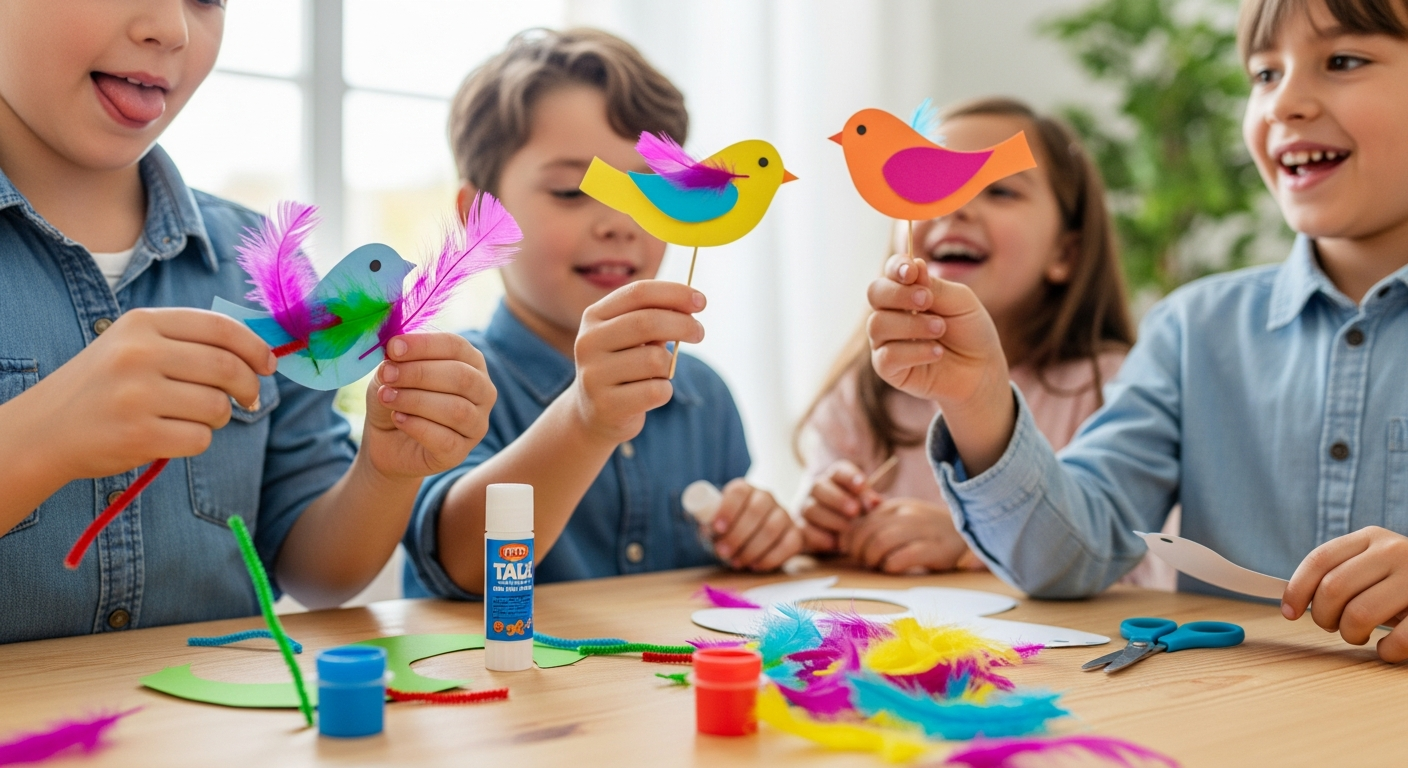
Table of Contents
- Introduction to the Wonderful World of Bird Crafts
- A Flock of Fun: Easy Bird Craft Ideas for Kids
- Tips for Making Bird Craft Projects Fun and Engaging
- Connecting Crafts to Communication: How Speech Blubs Helps
- Conclusion
- Frequently Asked Questions
Have you ever watched a child’s eyes light up when they spot a bird soaring through the sky or chirping merrily from a branch? There's an undeniable magic in our feathered friends that sparks curiosity and imagination in children of all ages. This innate wonder makes bird crafts an endlessly engaging activity, transforming simple materials into opportunities for creativity, learning, and connection. Crafting is more than just a pastime; it's a powerful tool for fostering development, from boosting fine motor skills to sparking rich conversations that lay the groundwork for strong communication. In this comprehensive guide, we'll explore a flock of super cute, easy, and sensory-friendly bird crafts perfect for little hands. We'll show you how these delightful projects not only inspire artistic expression but also subtly support crucial early language and communication skills, making every snip, glue, and dab a step toward empowering your child to speak their minds and hearts.
Introduction to the Wonderful World of Bird Crafts
Crafting with children offers a unique blend of fun and learning. When we engage in activities like making bird crafts, we're not just creating a pretty object; we're building bridges to understanding the natural world, refining crucial developmental skills, and fostering a love for communication. From the moment tiny fingers grasp a crayon to the proud display of a finished art piece, every step in the crafting process is an opportunity for growth. These projects encourage children to explore textures, colors, and shapes, all while listening, following instructions, and expressing their ideas. This interaction creates a rich environment for language development, turning everyday materials into tools for speech practice and imaginative play.

The Developmental Benefits of Crafting
Engaging in art and craft activities provides a wealth of benefits for children, far beyond just keeping them entertained. These hands-on experiences are foundational for holistic development:
- Fine Motor Skills: Activities like cutting, gluing, tearing, and painting strengthen the small muscles in the hands and fingers. This precision is vital for tasks like writing, self-feeding, and even the intricate muscle movements required for clear speech articulation.
- Cognitive Development: Following instructions, problem-solving (e.g., "How do I make the wings stick?"), and understanding sequences (first paint, then glue) boost cognitive functions, memory, and attention span.
- Language and Communication: Crafting is a natural conversation starter. Describing colors, textures, actions ("I'm cutting the blue paper"), and the final product ("My bird is flying!") significantly expands vocabulary and encourages descriptive language. It provides a real-world context for using words meaningfully. For a parent whose child is just beginning to explore sounds, the act of making a "chirping" bird can inspire attempts at vocalizing, a perfect prelude to the interactive "Animal Kingdom" section within the Speech Blubs app, where our video modeling helps children learn animal sounds by imitating their peers.
- Sensory Exploration: Many bird crafts involve diverse materials—soft feathers, rough pipe cleaners, smooth paper, squishy paint. This sensory input is crucial for brain development and helps children process information from their environment.
- Creativity and Imagination: There's no single "right" way to make a bird craft. Encouraging children to choose their own colors, add unique details, and imagine stories for their creations nurtures their imaginative capacities.
- Emotional Regulation and Patience: Crafting teaches children to focus on a task, work through challenges, and experience the satisfaction of completing something. It's a wonderful way to build confidence and reduce potential frustration when trying new skills.
A Flock of Fun: Easy Bird Craft Ideas for Kids
Let's dive into some delightful and easy bird crafts that promise hours of creative fun and learning!

1. Paper Plate Bird Nest
This classic craft is perfect for discussing how birds build their homes and care for their young. It's a fantastic way to introduce concepts of nature and animal habitats.
Materials: Cardstock, colored paper, googly eyes, paper plate, glue, scissors, brown pipe cleaners or small sticks, feathers.
How to make it: Start by cutting a paper plate in half and painting it brown to form the nest. While the nest dries, help your child draw and cut out two circles for each bird, one slightly smaller for the head, then glue them together. Add googly eyes and a small triangle beak. Glue craft feathers for wings. Finally, have your child glue the birds into the nest. Encourage them to cut up brown pipe cleaners or collect tiny sticks outside to glue onto the nest for added texture. This activity is wonderful for practicing descriptive language: "The nest is rough," "The bird has soft feathers," "The baby bird says cheep, cheep!"
2. Flamingo Noodle Craft
Flamingos are captivating birds, and their vibrant pink hue makes for a truly eye-catching craft, perfect for sensory exploration.
Materials: Acrylic paint, paintbrushes, googly eyes, parchment paper, tray, paper, bow-tie pasta noodles.
How to make it: Draw a simple flamingo outline on paper. Kids can then paint bow-tie pasta noodles pink (or any color they choose!) and let them dry on parchment paper. While waiting, they can color or paint the flamingo outline. Once dry, glue the painted noodles onto the flamingo's body to create textured "feathers." Use paint to add legs and a beak. The tactile experience of painting and gluing the noodles adds a wonderful sensory dimension to this craft.
3. Peacock Paper Plate
Peacocks are known for their stunning display of feathers. This craft allows children to explore color and pattern in a simple, engaging way.
Materials: Paper plate, construction paper, glue stick, googly eyes, washable paint, sponges, scissors.
How to make it: Cut a peacock head and neck shape from construction paper. Children can then use sponges to dab and stamp colorful patterns onto the paper plate, creating the magnificent tail feathers. Once dry, glue the peacock head to the plate, add googly eyes, and draw a small beak. This is a brilliant way to encourage color recognition and the use of expressive language like "beautiful," "sparkling," and "rainbow."
4. Coffee Filter Peacock
This craft is a magical exploration of color blending and transformation, sure to enchant children of all ages.
Materials: Coffee filters, spray bottles, markers (purple, blue, green), cardstock paper, googly eyes, scissors, glue stick, art trays.
How to make it: Children color coffee filters with markers. Encourage them to use blue, green, and purple, but any colors work! Then, place the colored filters on trays and spray them with water. Watch as the colors bleed and blend, creating beautiful, unique patterns. Let them air dry completely (this might take a day!). Once dry, children can cut out a peacock head from cardstock, add googly eyes and a beak, and glue it to their vibrant coffee filter "tail." This activity is fantastic for teaching cause and effect and developing patience.
5. Parrot Letter Craft
This craft combines art with early literacy, making learning letters a colorful and hands-on experience.
Materials: Construction paper, craft feathers, glue, scissors, pencil, googly eye.
How to make it: Draw and cut out a large bubble letter "P" from construction paper (or any letter that corresponds to a bird!). Have children glue the letter "P" onto a contrasting sheet of paper. Then, they can glue colorful craft feathers all around the letter to create the parrot's vibrant plumage. Add a googly eye and a small yellow beak. This activity reinforces letter recognition, color vocabulary, and provides a fun context for practicing the "P" sound or other consonant sounds, much like the engaging phonics activities found within our Reading Blubs companion app (available with our Yearly plan!).
6. Celery Printed Owls
Who knew a humble celery stalk could create such charming art? This craft introduces children to printmaking and texture.
Materials: Celery, washable paint, paper, owl template (optional), construction paper, glue stick, scissors, googly eyes, white cardstock.
How to make it: Print or draw an owl outline on brown construction paper and cut it out. Add a white cardstock "belly" to the owl. Children then dip the end of a celery stalk into washable paint and stamp it onto the owl's belly, creating a unique feathered texture. Add googly eyes and a beak. This tactile painting method is great for sensory input and exploring patterns. Discuss the "hoot hoot" sound an owl makes, prompting vocal imitation.
7. Chick Sponge Craft
Perfect for spring or Easter, this simple craft is adorable and easy for even the littlest hands.
Materials: Sponges, Sharpie, scissors, markers, googly eyes, glue, paint (yellow), feathers.
How to make it: Cut a sponge into a circular chick shape. Children paint the sponge yellow and then press it onto paper to make chick prints. Once the prints are dry, they can use orange markers to draw legs and beaks, and glue on googly eyes and small feathers for wings. This craft is excellent for encouraging repetition of sounds like "cheep cheep" and discussing the life cycle of a bird.
8. Plastic Egg Birds
Don't toss those leftover plastic eggs! They make fantastic 3D bird bodies for a fun and eco-friendly craft.
Materials: Paper plate (cut in half), plastic Easter eggs, paint (brown acrylic), paintbrush, googly eyes, craft feathers, orange cardstock, hot glue (adult use), scissors, brown shredded paper or small sticks.
How to make it: Paint half a paper plate brown to form a nest and glue shredded paper or small sticks onto it. Children can then decorate plastic eggs by gluing on googly eyes and a small orange cardstock triangle for a beak. Use craft feathers for wings. An adult can use hot glue to secure the finished "birds" into their nests. This craft encourages children to reuse materials and engage in imaginative play with their 3D creations, prompting narratives and discussions.
9. Ripped Paper Bird Craft
This craft is wonderfully simple, focusing on the sensory experience of tearing paper and strengthening hand muscles.
Materials: Construction/cardstock paper in various colors, glue stick, googly eyes, bird template (optional).
How to make it: Provide children with different colored papers and encourage them to rip them into small pieces. This tearing action is excellent for building hand strength and fine motor skills, which are crucial for developing proper pencil grasp and articulation. Print or draw a simple bird outline on paper. Children then glue the ripped paper pieces onto the bird outline, filling it with color and texture. Add googly eyes and a paper beak. This simple activity is fantastic for developing fine motor skills, as children strengthen the small muscles in their hands by tearing paper into pieces. This dexterity is incredibly valuable, not just for future writing, but also for the precise movements needed for clear articulation when speaking. For instance, guiding your child to rip paper and then paste it to create a bird can be a natural segue into practicing animal sounds, or even describing the bird's colors, which they can then reinforce through the interactive animal sections within the Speech Blubs app, where our video modeling helps them see and hear how peers make those sounds.
10. Paper Plate Owls
Another take on the wise owl, this paper plate version allows for creative folding and painting.
Materials: Paper plates, acrylic paint, cardstock paper, glue stick, hot glue (adult use), acrylic paint marker.
How to make it: Children paint their paper plates with acrylic colors. Once dry, fold the sides of the paper plate towards the center to create the owl's wings, and fold down the top to form the "ears." Cut large circles from cardstock for eyes and smaller circles for pupils, gluing them into place. Draw a triangle beak. This craft is great for exploring shapes and symmetry.
11. Popsicle Stick Bird Feeder
This craft transitions from art to nurturing nature, teaching children about caring for local wildlife.
Materials: Popsicle sticks, craft glue, string, birdseed, paint (optional).
How to make it: Children can paint popsicle sticks for a colorful touch, then an adult can help them glue the sticks together to form a shallow, open-top box. This involves careful alignment and patience. Once completely dry, attach a string for hanging. Fill with birdseed and hang it outside. Children will love observing the birds that come to visit their handmade feeder, sparking conversations about different bird species, their colors, and the sounds they make. This real-world observation can be linked to the engaging outdoor and animal themes within the Speech Blubs app, encouraging children to verbalize what they see and hear.
12. Feather Sensory Collage
This open-ended activity is all about tactile exploration and creative freedom.
Materials: Feathers, pom-poms, paper scraps, sensory sequins, colored dry pasta, white school glue, paper.
How to make it: Fill a bin with a variety of textures and colors: feathers, pom-poms, paper scraps, etc. Provide paper and glue. Let children freely arrange and glue the materials to create their own unique "bird" or abstract feathered artwork. This activity encourages descriptive language ("bumpy," "smooth," "fluffy"), spatial awareness, and imaginative storytelling.
13. Toilet Paper Owl
An eco-friendly craft that transforms a common household item into an adorable owl!
Materials: Toilet paper roll, construction paper or foam craft sheets, glue, googly eyes.
How to make it: Squish the top inward on a toilet paper roll to create the owl's "ears." Children can then cut out wings, eyes (from paper or foam), and a beak, and glue them onto the roll. Adding googly eyes brings the owl to life. This 3D craft helps with spatial reasoning and following simple instructions.
14. Handprint Peacock
A truly personal and memorable craft, perfect for keepsakes and exploring vibrant colors.
Materials: Green construction paper, blue construction paper, glue, feathers, glitter glue, sequins.
How to make it: Trace your child's handprint onto green construction paper to form the peacock's "tail feathers." Cut out the handprint. Then, trace and cut out the peacock's body from blue construction paper and glue it onto the base of the handprint. Add real craft feathers to the "fingers" for an extra touch. Children can then decorate with glitter glue and sequins. This craft is not only beautiful but also a fantastic way to discuss body parts ("hand," "fingers") and colors.
15. Paper Bird Garland
Children love seeing their creations displayed. This garland is a joyful decoration and a testament to their hard work.
Materials: White paper, markers, crayons, or paints, scissors, string or yarn, glue.
How to make it: Draw or trace bird shapes onto white paper. Children color or paint their birds with their choice of vibrant hues. Once dry, cut out the birds. Then, glue the finished paper birds onto a long piece of string or yarn, spacing them out to create a garland. Hang the garland in their room or a communal space to celebrate their artistic efforts. This activity promotes a sense of accomplishment and sequential thinking.
16. Egg Shakers
This sensory craft combines visual art with sound exploration, perfect for rhythm and music play.
Materials: Plastic eggs, birdseed (or rice/beans), hot glue (adult use), felt sheets, googly eyes, feathers.
How to make it: Help your child fill plastic eggs with a small amount of birdseed (or rice/beans) to create a gentle rattling sound. An adult should then securely hot glue the two halves of the egg together. Children can then decorate their egg shakers with felt (cut into wings, beaks), googly eyes, and feathers to transform them into little baby birds. These shakers are excellent for developing a sense of rhythm and can be used to accompany songs or stories. They offer a unique way to explore auditory sensory input, much like the sound-focused activities within the Speech Blubs app help children identify and produce specific sounds.
Tips for Making Bird Craft Projects Fun and Engaging
To ensure these crafting sessions are truly joyful and beneficial for your child's development, keep these tips in mind:
- Pick a Theme: While our overall theme is birds, you can narrow it down further. Focus on a specific type of bird like owls, flamingos, or parrots. This helps children learn more about that particular animal, including its unique sounds, colors, and habitat.
- Add Lots of Color: Children are naturally drawn to vibrant hues. Offer a wide array of colorful materials—paints, markers, construction paper, feathers, sequins—to keep them engaged and excited.
- Encourage Creativity, Not Perfection: The goal is the process, not a flawless product. Let your child choose colors that might not be "realistic" for a bird or add details that are uniquely theirs. This fosters imagination and confidence. Remind them that every bird is unique, just like every child!
- Make it Hands-On: Involve your child in every possible step, from selecting materials to cutting (age-appropriately, with safety scissors), gluing, and assembling. The more they participate, the more they develop fine motor skills and a sense of ownership over their creation.
- Teach as You Go: Crafting is a fantastic stealth learning opportunity. While making a parrot, talk about its bright colors and how it can "talk." While making an owl, discuss its nocturnal habits and "hooting" sound. These conversations naturally expand vocabulary and introduce new concepts. For instance, creating a "talking" bird puppet can inspire your child to practice new words, much like our interactive "smart screen time" experiences on Speech Blubs encourage verbal participation.
- Celebrate Their Work: Display your child's finished crafts prominently. Showing appreciation for their efforts builds self-esteem and encourages continued creative exploration.
Connecting Crafts to Communication: How Speech Blubs Helps
At Speech Blubs, our mission is to empower children to "speak their minds and hearts." We understand that every child's journey to communication is unique, and sometimes, they just need a little extra support. Our company was born from the personal experiences of our founders, who all grew up with speech problems and created the tool they wished they had. We are committed to providing an immediate, effective, and joyful solution for the 1 in 4 children who need speech support, blending scientific principles with play into one-of-a-kind "smart screen time" experiences.
When your child engages in bird crafts, they're developing crucial foundational skills for communication. They're refining fine motor control, expanding their vocabulary, listening to instructions, and expressing ideas—all prerequisites for clear and confident speech. Speech Blubs complements these hands-on activities by providing a fun, interactive platform for direct speech practice.
Our unique approach uses video modeling, where children learn by watching and imitating their peers. This is a powerful, science-backed method for teaching complex communication skills. Imagine a child proudly showing off their handmade bird, then moving to the Speech Blubs app to practice the "B" sound in "bird" or mimicking a peer making "chirp chirp" sounds. This connection bridges tangible play with targeted speech development.
We believe in "smart screen time" that is an active, not passive, experience. Unlike passive viewing (like cartoons), Speech Blubs encourages interaction, imitation, and engagement, fostering strong family connection as you play and learn together.
Take the Next Step with Speech Blubs
If you've ever wondered if your child could benefit from a little extra speech support, we're here to help. Take our quick 3-minute preliminary screener. It involves 9 simple questions and provides an assessment and a next-steps plan, along with a free 7-day trial of Speech Blubs.
Our pricing is designed to be accessible and provide incredible value:
- Monthly Plan: $14.99 per month.
- Yearly Plan: $59.99 per year, which breaks down to just $4.99 per month! This means you save 66% compared to the monthly plan.
The Yearly Plan is our most popular and truly the best value. It includes:
- A 7-day free trial, so you can experience all the benefits before committing.
- Access to our extra Reading Blubs app, a fantastic companion for early literacy.
- Early access to new updates and a dedicated 24-hour support response time.
The Monthly plan does not include these valuable benefits. We encourage you to choose the Yearly plan to get the free trial and the full suite of features designed to help your child thrive.
Conclusion
Easy bird crafts offer a fantastic avenue for children to express their creativity, engage their senses, and develop essential motor and cognitive skills. More than that, these joyful activities create precious moments for connection and naturally pave the way for robust language development. From tearing paper to mimic feathers to making "chirping" sounds, every step in crafting a bird can become a playful precursor to clearer communication.
By integrating these hands-on crafting experiences with tools like Speech Blubs, you're providing a comprehensive approach to nurturing your child's communication journey. We invite you to experience the magic of Speech Blubs, where scientific principles meet joyful play, empowering your child to find their voice.
Ready to embark on this exciting journey with your child? Download Speech Blubs on the App Store or Google Play to begin your 7-day free trial today. Remember to select the Yearly plan to unlock all premium features, including the Reading Blubs app and priority support, ensuring your child gets the absolute best start on their path to confident communication. Join our community of parents who are celebrating every word, every sound, and every connection!
Frequently Asked Questions
Q1: What age group are these bird crafts suitable for?
Many of these crafts are adaptable for a wide range of ages. Simple activities like sponge painting, ripping paper, or gluing feathers are great for toddlers and preschoolers (ages 2-5) with adult assistance. Older children (ages 5+) can handle more intricate cutting, folding, and detailed decorating, allowing for more independence and complex creations. Always supervise younger children, especially when using scissors or small parts.
Q2: How do crafts specifically help with speech and language development?
Crafts are inherently language-rich activities. They provide opportunities for:
- Vocabulary Expansion: Naming colors, shapes, materials, actions (cut, glue, tear), and descriptive words (soft, bumpy, shiny).
- Following Instructions: Listening and understanding multi-step directions.
- Requesting and Commenting: Children can ask for materials ("More glue, please!") or comment on their work ("I made a blue bird!").
- Storytelling: Creating narratives about their finished bird or the crafting process.
- Sound Imitation: Making bird sounds (chirp, hoot, squawk) while crafting. These interactions are vital for building a strong communication foundation.
Q3: What if my child isn't interested in crafting?
It's perfectly normal for some children to be less enthusiastic about crafts. Try these tips:
- Follow their interests: If they love a specific bird (like an owl), start with an owl craft.
- Keep it short and simple: Don't force long sessions. A 5-10 minute activity is often enough.
- Focus on the process: Let them explore materials without pressure to create a "perfect" product.
- Make it sensory: Incorporate diverse textures like feathers, googly eyes, or even playdough for sensory engagement.
- Connect to play: Incorporate their finished craft into imaginative play afterward.
- Lead by example: Sit down and make your own craft alongside them without pressure.
Q4: How can Speech Blubs enhance the learning from these crafts?
Speech Blubs acts as a powerful complement to hands-on learning from crafts. While crafting builds foundational skills and vocabulary, Speech Blubs provides targeted, interactive practice for articulation and language. For example, after making a bird craft, your child can then use Speech Blubs to:
- Practice Animal Sounds: Imitate "chirp," "hoot," or "squawk" from real peer videos.
- Develop Vocabulary: Reinforce words like "bird," "nest," "fly," and "feathers" through engaging activities.
- Improve Articulation: Focus on specific sounds related to their craft, seeing and hearing how peers make those sounds.
- Build Confidence: The app's positive reinforcement and fun environment encourage consistent practice.
Our unique video modeling approach, where children imitate other children, makes learning speech and language skills engaging and effective, turning screen time into "smart screen time" that supports their overall communication development.
About the author