
Easy Cheap Crafts for Kids: Fun & Frugal Family Bonding
 By Speech Blubs Team•Jan 13, 2026•19 min.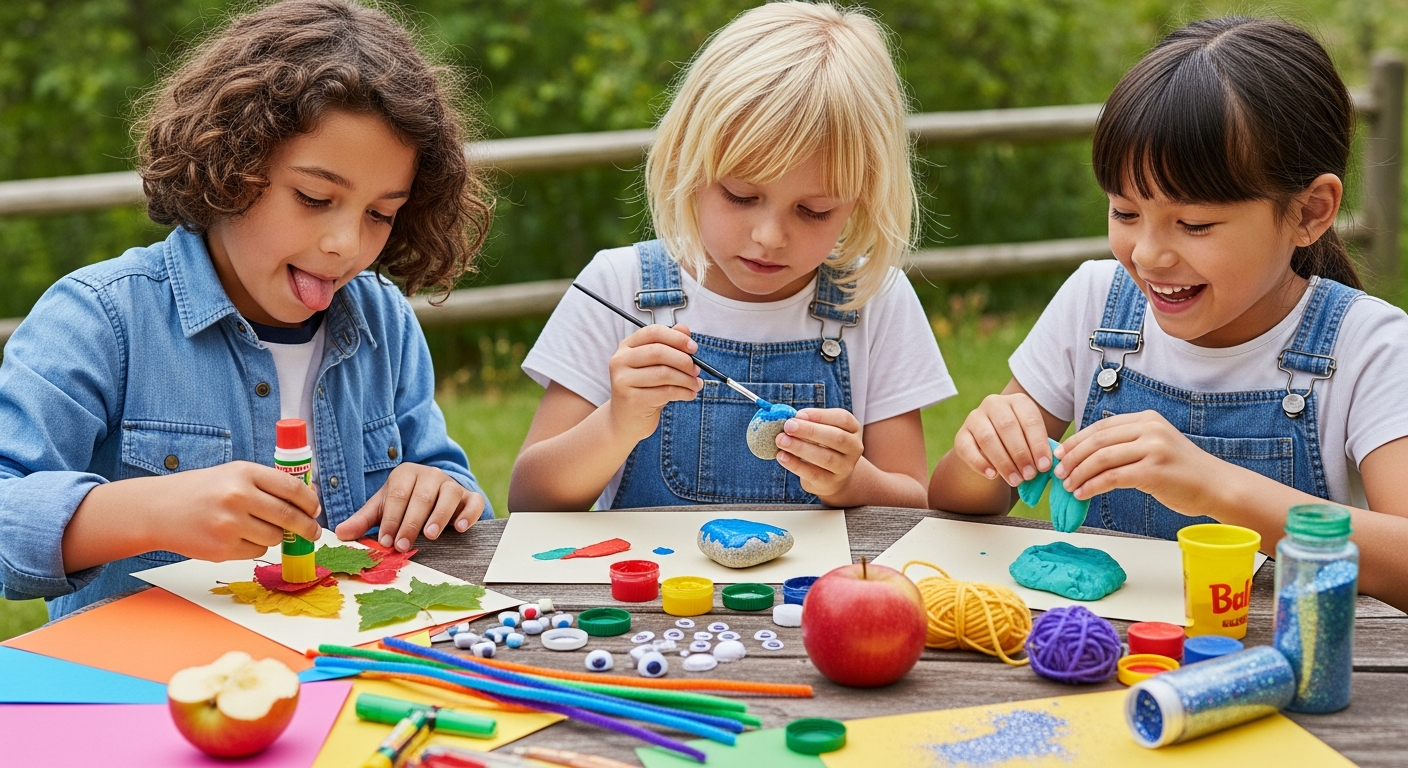
Table of Contents
- The Unseen Magic of Crafting: More Than Just Fun
- Why Easy and Cheap Crafts? The Power of Accessibility
- Crafting for Communication: Boosting Speech and Language Skills
- Your Go-To Guide: Easy Cheap Crafts for Kids
- Maximizing the Benefits: Tips for Parents
- The Value of Speech Blubs in Your Child's Journey
- Conclusion
- Frequently Asked Questions
Ever find yourself staring at a growing pile of "beloved" art projects, wondering how to honor your child's creativity without your home turning into a permanent gallery of half-colored masterpieces? You're not alone! Many parents feel the pressure to keep children entertained and engaged, often believing it requires expensive trips to the craft store or elaborate setups. But what if we told you that some of the most profound developmental breakthroughs and joyful family moments can come from the simplest, most budget-friendly crafts, using materials you already have around the house?
This post isn't just about providing a list of quick activities; it's a deep dive into the incredible power of easy, cheap crafts for fostering creativity, communication, and crucial developmental skills in children. We'll explore why these accessible projects are invaluable, how they can naturally boost your child's speech and language abilities, and how our approach at Speech Blubs beautifully complements these hands-on experiences. Get ready to transform everyday items into opportunities for learning and laughter, creating lasting memories without breaking the bank.

The Unseen Magic of Crafting: More Than Just Fun
Crafting with children is far more than just a way to pass the time; it's a dynamic learning laboratory that nurtures a wide array of skills essential for healthy development. While the immediate joy of cutting, gluing, and painting is undeniable, the deeper magic lies in the subtle ways these activities build foundational capabilities.
Beyond merely keeping little hands busy, crafts help children develop their fine motor skills as they manipulate small objects, cut with scissors, or string beads. This dexterity is critical for tasks like writing, dressing themselves, and even eating independently. Problem-solving skills are honed as they figure out how to attach two pieces of paper, or what to do if their glue isn't sticking. Creativity, of course, blossoms as children imagine and bring their unique visions to life, understanding that there's no "right" or "wrong" way to express themselves.
Perhaps most importantly, crafting offers rich opportunities for language development. As children engage in these activities, they're constantly learning new vocabulary (colors, textures, shapes, actions), practicing following multi-step instructions, and engaging in descriptive dialogue. They narrate their process ("I'm cutting the blue paper to make a long snake!"), ask questions ("What should I glue next?"), and explain their creations, all while expanding their expressive and receptive language abilities. It's in these moments of shared creation and conversation that real growth happens.
Why Easy and Cheap Crafts? The Power of Accessibility
In a world that often pushes for more, bigger, and brighter, there's profound beauty and benefit in simplicity. Easy and cheap crafts champion accessibility, making creative play a possibility for every family, regardless of budget or access to specialized stores.
One of the most immediate benefits is financial ease. Parents are constantly juggling expenses, and the thought of another outlay for craft supplies can be a deterrent. By using items typically found around the house – empty toilet paper rolls, cardboard boxes, old newspapers, fallen leaves, or even broken crayons – the financial stress is eliminated. This allows for spontaneous creativity, where a sudden burst of inspiration doesn't require a trip to the store, but rather a rummage through the recycling bin or the "junk" drawer.

Beyond the monetary aspect, easy and cheap crafts inherently promote sustainability and repurposing. It teaches children valuable lessons about giving new life to discarded items, reducing waste, and thinking creatively about resourcefulness. An old sock isn't just trash; it's a potential puppet character! A cardboard box isn't just packaging; it's a spaceship or a fairy house waiting to be built. This fosters an environmental consciousness from a young age, encouraging a "make do and mend" mentality.
Furthermore, these simple projects often require less elaborate setup and cleanup, lowering the barrier to entry for busy parents. When an activity can be pulled together in minutes with minimal fuss, parents are more likely to say "yes" to creative play, leading to more frequent and joyful interactions. The immediate gratification of creating something from everyday materials builds confidence and a sense of accomplishment in children, showing them that wonder can be found anywhere.
Crafting for Communication: Boosting Speech and Language Skills
The tactile, hands-on nature of crafting creates an ideal environment for nurturing speech and language development. When children are actively engaged in building, shaping, and decorating, their brains are primed for learning and communication. This is where the magic of "learning by doing" truly shines.
Imagine a child who is typically quiet or struggles with descriptive words. Crafting a simple bird feeder from recycled materials offers countless opportunities for language. "What color is this birdseed? Is the twig long or short? Can you say 'chirp' like a bird?" You can talk about the actions involved: "We're gluing the sticks," "You're pouring the seeds," "The birds will eat." For a parent whose child is a "late talker" and loves animals, creating a toilet paper roll bunny could be a motivating way to practice sounds like "hop-hop" or simple animal names. These concrete experiences make abstract words tangible and meaningful.
At Speech Blubs, we deeply understand this connection between engagement and language acquisition. Our mission is to empower children to speak their minds and hearts. Our company was born from the personal experiences of our founders, who all grew up with speech problems and created the tool they wished they had. We are committed to providing an immediate, effective, and joyful solution for the 1 in 4 children who need speech support, blending scientific principles with play into one-of-a-kind "smart screen time" experiences. We provide a screen-free alternative to passive viewing (like cartoons) and a powerful tool for family connection, much like crafting fosters connection.
Our unique approach teaches complex communication skills through our "video modeling" methodology, where children learn by watching and imitating their peers. This direct imitation method, combined with engaging activities, naturally reinforces the language learned during hands-on crafts. If your child is making an animal craft, you can then switch to Speech Blubs’s "Animal Kingdom" section to reinforce the sounds and names, seeing and hearing other children articulate them clearly. This seamless integration enhances vocabulary, articulation, and expressive language.
Ready to see how our app can support your child's speech journey? You can download Speech Blubs on the App Store or Google Play Store to begin your 7-day free trial today!
Your Go-To Guide: Easy Cheap Crafts for Kids
Let's dive into some fantastic, budget-friendly craft ideas that utilize everyday items and spark endless creativity and language opportunities.
Recycled Wonders: Turning Trash into Treasure
Repurposing household discards into art projects is not only eco-friendly but also incredibly stimulating for imaginative play and problem-solving.
- Toilet Paper Roll Creatures: Those empty cardboard rolls are gold! Transform them into bunnies, octopuses, birds, or any creature your child can imagine. Paint them, add googly eyes, pipe cleaners, or construction paper limbs. Language Focus: Practice animal names, sounds, body parts, colors, and action verbs (e.g., "The bunny hops," "The octopus has eight arms"). For a child struggling with animal sounds, pairing this craft with Speech Blubs' "Animal Kingdom" reinforces the targeted sounds through video modeling.
- Cardboard Box Creations: From cereal boxes to shipping boxes, the possibilities are vast. Cut them into shapes to make cardboard hedgehogs, create "nature crafts" by gluing found leaves and twigs onto them, build elaborate paper tunnels for small toys, or even construct a simple train set. Language Focus: Discuss shapes ("This box is a rectangle"), sizes ("a small box for a big train"), spatial concepts ("under," "through," "on top"), and imaginative play narratives.
- Cereal Box Mini-Storage: This frugal craft turns would-be trash into organizational gold. Help your child cut cereal boxes to desired heights, then decorate them with duct tape, markers, or scraps of fabric. These are perfect for storing small craft bits, pens, or LEGOs. Language Focus: Following multi-step instructions, naming items to be stored, discussing organization ("This is where the crayons go").
- Plastic Bottle Shrinky Dinks / Terrariums: Clean plastic containers can become fun "shrink art" (with adult supervision for baking) or miniature ecosystems. For a terrarium, use a recycled jar with a lid, and let your child collect dirt, pebbles, moss, and small plants from outside to create a thriving mini-world. Language Focus: Descriptive words for nature items (e.g., "soft moss," "smooth pebble"), size comparisons, and discussing the life cycle of plants.
- Upcycling Buttons: Dig out that jar of old buttons! Children can glue them onto paper to create mosaics, use them as eyes for creatures, or sew them onto old fabric scraps (with supervision) to practice fine motor skills. Language Focus: Counting, naming colors, discussing patterns, and describing textures.
Nature's Palette: Crafting with Outdoor Finds
Bring the outdoors in with crafts that encourage exploration and connection with nature.
- Painted Rocks as Reward Tokens: Collect smooth rocks and let your child paint them. These can be used as decorative art for the garden or transformed into "reward tokens." Assign different colors to desired behaviors (e.g., a blue rock for "using an inside voice"). Each time the child achieves the goal, they put a rock in a jar. When the jar is full, a reward is earned. Language Focus: Naming colors, discussing rules and expectations, expressing feelings, counting, and narrating the reward system.
- Leaf Rubbings & Flower Prints: Gather interesting leaves and flowers. Place a leaf under paper and rub a crayon over it to reveal its texture. For flower prints, place a flower on paper, cover with a paper towel, and gently hammer it to transfer its pigment (adult supervision required). Language Focus: Describing shapes, colors, textures (veins, smooth, rough), and discussing different types of plants.
- Fairy Cottages: Encourage imaginative play by building small dwellings for "fairies" using natural materials like sticks, moss, pebbles, and small flowers found in the yard. Language Focus: Storytelling, imaginative vocabulary, describing the function of different parts of the cottage, discussing habitats.
- Simple Homemade Bird Feeders: Using popsicle sticks, toilet paper rolls, or even pinecones, children can create feeders. Decorate sticks, assemble them with glue, and add twine for hanging. Fill with birdseed. Language Focus: Discussing birds, their sounds, what they eat, actions like "hanging," "pouring," and "eating."
Kitchen Cupboard Creations: Everyday Items, Extraordinary Fun
Your kitchen pantry is a treasure trove of craft supplies waiting to be discovered!
- Oobleck (Cornstarch & Water): Mix cornstarch and water for a fascinating non-Newtonian fluid. It acts like a solid when squeezed and a liquid when relaxed. Language Focus: Sensory descriptive words (e.g., "slimy," "gooey," "solid," "liquid," "squishy"), action verbs (e.g., "squeeze," "pour," "poke"). This is fantastic for children needing sensory input and practicing early concept words. If you're unsure if your child could benefit from speech support, take our quick 3-minute preliminary screener to get a simple assessment and a free 7-day trial.
- Broken Crayon Art: Don't throw away those broken crayons! Melt them into new, multi-colored crayons in silicone molds, or use a hair dryer (with supervision) to create "drip art" on canvas. Language Focus: Naming colors, discussing melting and solidifying, describing patterns and abstract art.
- Bubble Painting: Add a few drops of food coloring to soapy water, then have children blow bubbles through a straw onto paper. The bubbles create unique, colorful prints. Language Focus: Action words ("blow," "pop"), colors, shapes (circles), describing patterns.
- Homemade Slime: A classic for a reason! With white glue and an activator like Borax solution (or liquid starch), children can create their own slime. Language Focus: Sensory vocabulary, following instructions, expressing preferences ("I like the stretchy slime").
Paper & Scissors Magic: Simple, Classic Crafts
Paper is perhaps the most versatile and accessible craft material.
- Paper Plate Crafts: Paper plates can transform into anything! Make a paper plate fish by cutting a wedge out for the mouth and using it as a tail, then decorating. Or create a lion's face with a fringed mane. Language Focus: Naming shapes (circle, triangle), colors, animal names, and parts of the face.
- Construction Paper Art: From 3D paper trees to colorful jellyfish, clouds, and rainbows, construction paper provides endless possibilities. Cutting, folding, and gluing different shapes teaches geometric concepts and fine motor control. Language Focus: Colors, shapes, sizes, spatial concepts ("above," "below"), and telling stories about their creations.
- Magazine Collages: Cut out letters, words, or images from old magazines to create "ransom" notes, mood boards, or abstract art. Language Focus: Identifying letters and words, creating sentences, expressing ideas and feelings through imagery.
- Disposable Tablecloth Decorating: Cover a table with a roll of butcher paper or the back of old wrapping paper. Tape it down and let kids draw, color, or paint directly on it. This can also be used to teach table setting (drawing plates and cutlery) or practice math skills (dividing the table into equal "art squares"). Language Focus: Naming objects, describing actions, practicing pre-reading/pre-math skills, collaborative communication.
- Homemade Clean-Up Labels: This craft turns organization into an art project. Print blank pictures of toy categories (e.g., "Legos," "Dolls," "Cars"). Let your child paint or color them, then glue or tape the labels to storage bins and shelves. Language Focus: Object identification, categorization, following instructions, and discussing the importance of organization.
Textile Transformations: From Old Clothes to New Adventures
Give old fabrics a new purpose with these creative ideas.
- T-shirt Yarn Bracelets: Cut old t-shirts into strips, then braid or knot them into bracelets. This is a fantastic way to teach basic knotting and braiding techniques, improving fine motor coordination. Language Focus: Following sequential instructions, naming colors, discussing patterns, and describing the texture of the fabric.
- Sock Puppets with Personality: Old, clean socks are perfect for creating unique sock puppets. Add googly eyes, yarn hair, felt mouths, or buttons. These are incredible for fostering imaginative play, storytelling, and practicing dialogue. For a child needing practice with conversational turn-taking or expressing emotions, a sock puppet can be a safe and fun outlet. "What is your puppet saying? How does he feel?" Language Focus: Developing character voices, practicing turn-taking, expressing emotions, creating narratives, and using question words.
- Button Art: As mentioned before, buttons can be glued onto fabric scraps or old clothing to create decorative patterns or simple designs, practicing both fine motor skills and creative expression.
Themed Crafting for Connection & Gifting
These crafts focus on spreading joy and fostering social-emotional development.
- S'more Love for Neighbors and Friends: Create "campfire art" by gluing twigs onto paper, then using red and yellow handprints for flames. Above the fire, assemble a s'more using brown paper for graham crackers, brown clay for chocolate, and cotton balls for marshmallows. Deliver with actual s'mores ingredients to a friend. Language Focus: Discussing acts of kindness, following a sequence of steps, descriptive language for feelings (e.g., "happy," "thoughtful").
- Birthday-in-a-Box: Help your child decorate a box and fill it with handmade birthday surprises for someone. This could include a decorated card, simple handmade games, or drawings. Language Focus: Discussing celebrations, empathy, giving, and planning.
- Handmade Ornaments: Use salt dough, painted rocks, or recycled materials to create ornaments for any holiday or just for fun. Language Focus: Discussing traditions, shapes, colors, and the act of giving.
- Painted Plant Pots/Bird Houses: Thrift stores often have plain wooden birdhouses or terra cotta pots. Let your child decorate them with acrylic paints. These make wonderful, personalized gifts. Language Focus: Naming colors, discussing designs, and the joy of creating a gift for someone.
Maximizing the Benefits: Tips for Parents
To truly unlock the developmental potential of these easy cheap crafts, it’s not just about what you make, but how you engage with your child during the process.
- Embrace the Mess: Creativity often comes with a bit of mess. Lay down old newspapers or a cheap tablecloth, dress your child in play clothes, and let go of the need for perfection. Focus on the joy of the process.
- Focus on the Process, Not the Product: The outcome isn't nearly as important as the journey. Praise effort, experimentation, and imagination rather than just the final "perfect" craft. This builds confidence and a love for creating.
- Talk, Talk, Talk! This is crucial for language development.
- Describe: Narrate what you and your child are doing. "I'm cutting the paper," "You're gluing the button on top."
- Ask Open-Ended Questions: Instead of yes/no questions, ask "What color should we use next?" "Tell me about your drawing." "How does this feel?"
- Expand on Their Words: If your child says "Car!" you can respond with, "Yes, a fast red car!"
- Integrate Learning Naturally: Crafts are perfect for subtle learning. Count the buttons, name the colors, identify shapes, discuss textures ("Is the glue sticky?").
- Adult Co-Play and Support: While independent play is great, these activities are most beneficial when an adult is present to guide, encourage, and interact. This joint attention and shared experience significantly boost learning.
This active engagement and imitation are at the heart of our methodology at Speech Blubs. Our scientifically-backed app, rated in the top tier of speech apps worldwide (you can read about our research here), complements these hands-on learning moments. Our video modeling approach is powerful because children learn by watching and imitating their peers, fostering confidence and making speech practice feel like play. We often hear from parents about the success they’ve seen, and you can see what other parents are saying about their child's success with Speech Blubs here.
The Value of Speech Blubs in Your Child's Journey
As you embark on these creative crafting adventures, remember that comprehensive support for your child's development often involves a multi-faceted approach. Easy, cheap crafts lay a fantastic foundation for motor skills and language engagement, and Speech Blubs provides a powerful, scientifically-backed tool to accelerate and refine speech and language acquisition.
At Speech Blubs, we believe in providing a solution that is not only effective but also joyful and accessible. Our "smart screen time" approach is a screen-free alternative to passive viewing like cartoons, making it an active and engaging learning experience. It's designed to be a powerful supplement to a child's overall development plan and, when applicable, professional therapy.
We offer clear and transparent pricing options to suit your family's needs:
- Monthly Plan: For $14.99 per month.
- Yearly Plan: For just $59.99 per year. This breaks down to an incredible value of just $4.99 per month, allowing you to save 66% compared to the monthly option!
The Yearly Plan is truly the best choice for families committed to their child's speech journey. It includes exclusive, high-value features that enhance the learning experience:
- A 7-day free trial: Experience the full power of Speech Blubs before committing.
- The extra Reading Blubs app: Further support your child's literacy development.
- Early access to new updates: Be the first to enjoy new features and content.
- 24-hour support response time: Get prompt assistance whenever you need it.
The Monthly Plan, while flexible, does not include these valuable benefits. We encourage you to choose the Yearly Plan to get the free trial and the full suite of features that will empower your child to speak with confidence and clarity.
Conclusion
Easy cheap crafts for kids are a gateway to much more than just fleeting entertainment. They are powerful catalysts for developing fine motor skills, fostering creativity, boosting problem-solving abilities, and, critically, enriching speech and language development. By transforming everyday items into extraordinary opportunities, you not only save money but also instill valuable lessons in resourcefulness and sustainability.
Pairing these hands-on, language-rich crafting experiences with targeted support from Speech Blubs creates a comprehensive and joyful pathway to communication success. Together, we can help your child find their voice, build their confidence, and express themselves fully.
Ready to unlock a world of creative learning and empower your child's voice? Create your account and begin your 7-day free trial today! Remember to select the Yearly plan to gain access to the free trial and all the exclusive benefits, including the Reading Blubs app and priority support. You can also download Speech Blubs on the App Store or Google Play and start your free trial there. Your child's journey to speaking their mind and heart begins now!
Frequently Asked Questions
Q1: What are the main benefits of crafting for children's development?
A1: Crafting offers numerous benefits, including the development of fine motor skills, enhancement of creativity and imagination, improvement in problem-solving abilities, and significant opportunities for speech and language development through discussion, instruction-following, and descriptive language. It also fosters a sense of accomplishment and self-expression.
Q2: How can I make crafts more language-rich for my child?
A2: To make crafts more language-rich, engage in constant conversation: narrate your actions, describe materials (colors, textures, shapes, sizes), ask open-ended questions about their choices and ideas, and encourage them to explain their creations. Focusing on action verbs and prepositions ("cutting on the line," "gluing under the leaf") is also very beneficial.
Q3: What makes Speech Blubs different from other speech therapy apps?
A3: Speech Blubs stands out with its unique "video modeling" methodology, where children learn speech and language skills by imitating their peers in engaging video clips. This approach, backed by scientific research, makes learning intuitive and fun. Our app provides "smart screen time" that is an active alternative to passive viewing, promoting interaction, and our mission is rooted in the personal experiences of our founders who wanted to create the tool they wished they had for their own speech challenges.
Q4: What's the best way to get started with Speech Blubs and ensure I get the most value?
A4: The best way to get started and ensure maximum value is to begin your 7-day free trial by choosing the Yearly plan. This not only saves you 66% compared to the monthly option but also includes exclusive benefits like the extra Reading Blubs app, early access to new updates, and 24-hour support response time. This comprehensive package provides the full suite of tools to support your child's speech and language journey.
About the author