
Easy Christmas Crafts for Elementary Kids: Festive Family Fun
 By Speech Blubs Team•Dec 22, 2025•19 min.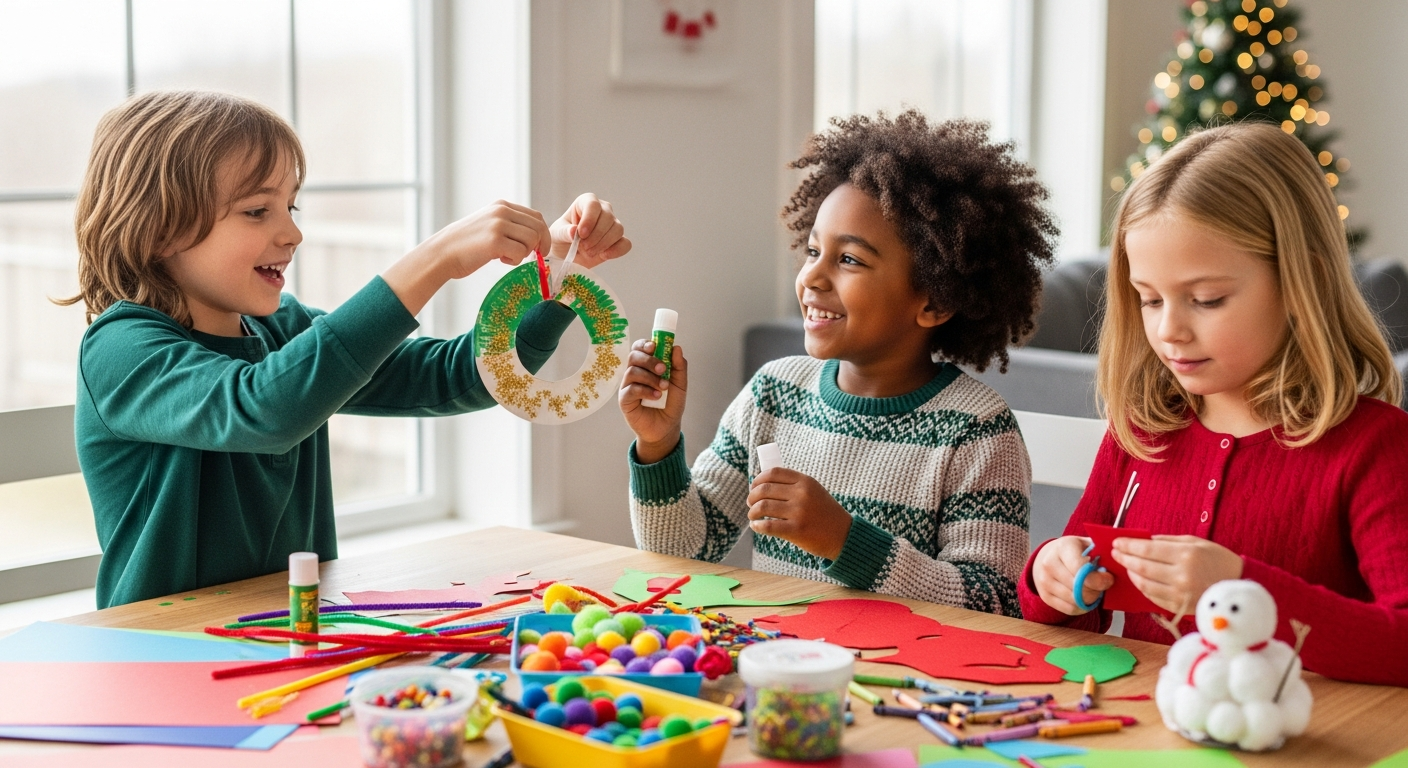
Table of Contents
- Why Crafting is More Than Just Fun: The Developmental Benefits
- Getting Started: Crafting Essentials for Elementary Kids
- Our Top Easy Christmas Crafts for Elementary Kids
- Maximizing Communication During Craft Time: The Speech Blubs Connection
- Beyond the Craft: Extending the Learning
- Speech Blubs: Your Partner in the Communication Journey
- Conclusion
- Frequently Asked Questions
As the crisp air of winter settles in and the magical glow of holiday lights begins to twinkle, there’s an undeniable excitement that fills our homes. For many parents, this season brings both joy and the familiar challenge of keeping energetic elementary-aged children engaged in meaningful, screen-free activities. While the allure of festive movies and games is strong, there’s a timeless, tangible magic in creating something with our own hands. Crafting during the holidays isn't just about making decorations; it’s an incredible opportunity to foster creativity, develop crucial skills, and build cherished family memories that will last a lifetime.
At Speech Blubs, we believe in empowering children to "speak their minds and hearts," and we know that engaging in hands-on activities like crafting can be a powerful catalyst for communication development. These moments provide a natural, joyful environment for children to express themselves, ask questions, describe what they see and do, and interact with their caregivers. This article will guide you through a fantastic collection of easy Christmas crafts designed specifically for elementary kids, ensuring they are fun, manageable, and packed with developmental benefits. Get ready to transform everyday materials into festive masterpieces and create beautiful memories that sparkle brighter than any Christmas lights.

Why Crafting is More Than Just Fun: The Developmental Benefits
Before we dive into the glitter and glue, let's explore why engaging in Christmas crafts with your elementary child is such a valuable experience. It’s far more than just a way to pass the time; it’s a holistic developmental workout.
Fine Motor Skills and Hand-Eye Coordination
Think about all the actions involved in crafting: cutting shapes with scissors, gluing small pieces, drawing lines, or carefully painting details. Each of these tasks refines your child's fine motor skills – the coordination of small muscles, especially in the hands and fingers. This precision is vital for everyday activities like writing, buttoning clothes, and even eating. Hand-eye coordination also gets a significant boost as children learn to direct their hands to perform tasks accurately based on what their eyes see. These skills are foundational, impacting their readiness for school tasks and independent living.
Creativity and Imagination
Crafting provides a blank canvas for imagination. There’s no single "right" way to decorate a paper plate Santa or a salt dough ornament. Children are encouraged to experiment with colors, textures, and designs, transforming simple materials into something uniquely their own. This freedom to create fosters imaginative thinking and helps children develop their unique artistic voice. It teaches them that it's okay to deviate from a template, to invent, and to celebrate individuality.
Problem-Solving and Following Instructions
Even easy crafts involve a sequence of steps, from gathering materials to the final touches. Children learn to follow multi-step instructions, developing their listening comprehension and sequential thinking. When a craft doesn't quite go as planned (and let's be honest, sometimes it happens!), they engage in problem-solving. How can we fix this? What can we use instead? These moments are invaluable for building resilience and adaptable thinking.
Language and Communication Development
This is where crafting truly shines from a speech and language perspective. Craft time is rich with natural opportunities for communication. As children engage with materials and tasks, they are naturally prompted to:

- Describe: "Look at the sparkly glitter!" "This red paper is for Santa's hat."
- Request: "Can I have the glue stick?" "I need more pipe cleaners."
- Explain: "First, we cut the paper, then we glue it." "I’m making a long chain."
- Ask and Answer Questions: "What color should I use next?" "What are we making now?"
- Collaborate: Discussing ideas, sharing materials, and working together on a project naturally encourages dialogue and turn-taking in conversation.
For a parent whose child might be a "late talker" or working on specific sounds, craft time offers countless chances to model language in context. For instance, while making an animal ornament, you might repeatedly say the animal's name and its sound, much like how our app introduces new words through engaging video modeling. Our mission at Speech Blubs is to help children "speak their minds and hearts," and craft activities are a wonderful, screen-free way to practice these skills in a fun, tangible setting. If you're looking for additional support and a playful way to build language skills, remember that you can download Speech Blubs on the App Store or Google Play Store and access hundreds of engaging activities designed by experts.
Emotional Expression and Confidence Building
Successfully completing a craft, no matter how simple, gives children a tremendous sense of accomplishment. They can proudly display their creations, show them to family, and even give them as gifts. This process builds self-esteem and confidence in their abilities. It also allows for emotional expression; children can pour their feelings into their creations, using colors and forms to communicate.
Family Bonding and Connection
Perhaps one of the most heartwarming benefits of holiday crafting is the opportunity for quality family time. Sitting side-by-side, sharing materials, laughing at mistakes, and celebrating successes creates powerful bonds and beautiful memories. These shared experiences become part of your family’s holiday traditions, fostering a sense of togetherness and warmth.
Getting Started: Crafting Essentials for Elementary Kids
Before you embark on your festive crafting adventure, a little preparation goes a long way. Having a well-stocked craft drawer and a designated space can make the experience smoother and more enjoyable for everyone.
Basic Supplies Checklist
You don't need fancy, expensive materials for amazing crafts. Many everyday items can be transformed into holiday masterpieces! Here’s a list of staples to keep on hand:
- Paper: Construction paper (various colors), white paper, cardstock, paper plates, paper bags.
- Adhesives: Child-safe glue sticks, liquid school glue, tape (masking, clear).
- Cutting Tools: Child-safe scissors (blunt-tip for younger elementary kids).
- Coloring Tools: Crayons, washable markers, colored pencils, tempera paints.
- Embellishments: Glitter, googly eyes, cotton balls, pipe cleaners, pom-poms, yarn, ribbons, buttons.
- Naturals/Recyclables: Pinecones, small twigs, empty toilet paper rolls, egg cartons, bottle caps, old magazines/newspapers.
- Miscellaneous: Popsicle sticks, paper doilies, hole punch, cookie cutters (for dough crafts).
Creating a Crafting Space
Dedicate a specific area for crafting, even if it's just a cleared-off kitchen table protected by a tablecloth or old newspaper. This signals to your child that it’s time for creative play. Keeping supplies organized in bins or clear containers makes cleanup easier and encourages children to put things away independently.
Safety First!
Always supervise elementary children during crafting, especially when using scissors, glue, or any small parts that could be a choking hazard for younger siblings. Ensure all materials are non-toxic and age-appropriate.
Our Top Easy Christmas Crafts for Elementary Kids
Now for the fun part! Here are some fantastic, easy Christmas craft ideas that your elementary kids will love, each offering unique developmental opportunities.
Ornament Crafts: Decorate Your Tree!
There’s something truly special about hanging handmade ornaments on the Christmas tree year after year, watching your child's skills and personality evolve.
Salt Dough Ornaments
This classic craft is incredibly versatile and allows for endless creativity.
- What you’ll need: 1 cup flour, 1/2 cup salt, 1/2 cup water (approx.), cookie cutters, straw, rolling pin, baking sheet, paint, glitter, ribbon/yarn.
- How to make them:
- Mix flour and salt in a bowl. Gradually add water, kneading until you have a smooth, firm dough. (This is a great opportunity to talk about "mix," "stir," "knead," and "smooth"!)
- Roll out the dough to about 1/4-inch thickness.
- Use Christmas-themed cookie cutters (stars, trees, bells, gingerbread men) to cut out shapes.
- Use a straw to poke a hole at the top of each ornament for hanging.
- Bake at 250°F (120°C) for 2-3 hours, or until hardened. Let cool completely. (Discuss "hot" and "cool.")
- Once cool, your child can paint and decorate their ornaments with glitter, markers, or even glue on small beads.
- Thread a ribbon or yarn through the hole for hanging.
- Language Focus: Describing textures ("soft dough," "smooth," "rough salt"), sequencing ("first, mix, then roll"), naming shapes and colors, asking for tools ("Can I have the star cutter?").
Pinecone Animals or Snowmen
Bring a touch of nature indoors with these adorable creations.
- What you’ll need: Pinecones (collected from outside!), cotton balls, googly eyes, small pom-poms, felt scraps, glue.
- How to make them:
- Clean any dirt from the pinecones.
- For snowmen: Glue cotton balls to the pinecone scales to create a snowy effect. Add googly eyes, a tiny felt carrot nose, and pom-pom buttons. You can even add small felt earmuffs! (Discuss "sticky glue," "fluffy cotton," "round eyes," "pointy nose.")
- For animals (like an owl or reindeer): Use felt scraps for ears/antlers, googly eyes, and a pom-pom nose.
- Language Focus: Naming body parts ("eyes," "nose," "ears"), descriptive words ("spiky," "soft," "brown"), animal sounds (if making animals), size comparisons ("big pinecone," "small pom-pom"). For children developing their ability to categorize, you can talk about the different materials: "This is a natural material, the pinecone, and this is a craft material, the pom-pom."
Popsicle Stick Santas or Snowflakes
Simple construction with endless possibilities.
- What you’ll need: Popsicle sticks, glue, paint (red, white, blue), glitter, cotton balls, buttons, pipe cleaners.
- How to make them:
- For Santas: Paint one popsicle stick red for the body. Glue a cotton ball beard and a red felt hat. Add googly eyes and a small pom-pom nose. You can glue a few sticks together to make a larger Santa. (Focus on "red hat," "white beard," "round nose.")
- For Snowflakes: Glue several popsicle sticks together in a star or crisscross pattern. Paint them white or blue, then decorate with glitter, small buttons, or small pom-poms. (Practice counting sticks, naming shapes like "star" or "X.")
- Language Focus: Counting ("one stick, two sticks"), spatial concepts ("on top," "next to"), action verbs ("glue," "paint"), describing colors and shapes.
Handprint/Footprint Reindeer or Santa
These personalized keepsakes are precious and capture a moment in time.
- What you’ll need: Washable paint (brown for reindeer, red/white for Santa), paper or cardstock, markers, googly eyes, red pom-poms.
- How to make them:
- Reindeer: Paint your child's hand brown and press it onto paper, fingers pointing upwards (these are the antlers!). Once dry, add googly eyes, a red pom-pom nose, and draw a mouth. (Talk about "hands," "fingers," "brown paint," "antlers.")
- Santa: Paint your child's foot white and press it onto paper, heel up (this is Santa's beard). Once dry, paint a red hat above the "beard" and add a face with googly eyes and a red nose. (Discuss "feet," "toes," "beard," "hat.")
- Language Focus: Body parts ("hand," "foot," "fingers," "toes," "eyes," "nose"), colors ("brown," "red," "white"), actions ("paint," "press," "draw"). This is also a fantastic opportunity for children to narrate their actions: "I'm painting my hand." "I'm making a reindeer."
Gift Crafts: Handmade with Love
There’s no gift more cherished than one made by a child's own hands. These crafts encourage thoughtfulness and generosity.
DIY Holiday Cards
Simple, yet incredibly meaningful.
- What you’ll need: Cardstock, markers, crayons, glitter, stickers, glue.
- How to make them: Fold cardstock in half. Children can draw festive pictures, write holiday messages (with help if needed), and decorate the cards. Encourage them to think about who the card is for and what they want to say.
- Language Focus: Expressing feelings ("I love you," "Happy holidays"), early literacy (writing letters, names), describing intentions ("This card is for Grandma"). This craft is perfect for encouraging descriptive language – "My card has a sparkly tree and a big snowman."
Decorated Mason Jar Gifts
Fill with treats, hot cocoa mix, or small trinkets.
- What you’ll need: Clean mason jars, paint (glass-safe if desired), markers, ribbons, labels, contents for the jar.
- How to make them: Children can decorate the outside of the jar with paint, markers, or by tying ribbons around the lid. They can also design a personalized label. Then, help them fill the jar with layers of hot cocoa mix ingredients, small candies, or homemade cookies.
- Language Focus: Sequencing ("first, decorate, then fill"), describing contents ("marshmallows," "chocolate chips"), adjectives ("sweet," "warm"), prepositions ("in the jar," "on the lid").
Decoration Crafts: Festive Touches for Your Home
Let your children help make your home sparkle and shine for the holidays!
Paper Chain Garlands
A classic craft that’s great for fine motor skills and patterns.
- What you’ll need: Construction paper (red, green, white, gold), scissors, glue stick or tape.
- How to make them:
- Cut strips of construction paper, about 1 inch wide and 8-10 inches long. (Practice "cut," "strip," "long.")
- Form one strip into a loop and glue or tape the ends together.
- Thread another strip through the first loop, form a loop, and secure.
- Continue linking strips to create a long chain. Encourage patterns (red, green, red, green).
- Language Focus: Counting links, naming colors, describing patterns, sequencing actions ("loop," "link," "glue"). "We need a red strip next! How many green ones do we have?"
Window Silhouettes
Create beautiful window art that glows.
- What you’ll need: Black construction paper, pencil, scissors, transparent colored tissue paper (optional), glue stick.
- How to make them:
- Draw simple Christmas shapes (stars, trees, reindeer, snowmen) onto black construction paper.
- Carefully cut out the shapes. For a stained-glass effect, cut out the center of the shape and glue transparent tissue paper over the opening.
- Tape them to a window. The light shining through will create a lovely silhouette.
- Language Focus: Naming shapes, describing light and shadow, spatial concepts ("on the window," "in the middle"). "The light makes our star shine!"
Edible Crafts: Sweet & Simple
These crafts are not only fun to make but delicious to eat!
Cookie Decorating
A sensory delight that encourages creativity and vocabulary.
- What you’ll need: Pre-baked Christmas cookies (gingerbread, sugar cookies), various colored icing, sprinkles, candies.
- How to make them: Provide a spread of cookies and decorations. Let your child choose their cookies and go wild with icing and sprinkles. This is all about artistic expression and enjoying the process!
- Language Focus: Naming colors, describing tastes ("sweet," "spicy"), shapes of cookies and candies, action verbs ("squeeze," "sprinkle," "decorate"). "Which color icing do you want? Green! What shape is this cookie? A star!"
Maximizing Communication During Craft Time: The Speech Blubs Connection
Craft time is a goldmine for language development, and it perfectly complements the "smart screen time" experiences we offer at Speech Blubs. Our mission is built on the understanding that children learn best through engagement, imitation, and joyful discovery.
When your child is meticulously gluing a cotton ball beard onto a Santa craft, they are practicing focused attention and fine motor skills. Simultaneously, you have a perfect opportunity to foster their communication. You can describe what they are doing ("You are gluing the white beard"), ask open-ended questions ("What should Santa's hat look like?"), and prompt them to use descriptive words ("That pom-pom is so fluffy!").
At Speech Blubs, we use a unique "video modeling" methodology where children learn by watching and imitating their peers. Just as your child might watch you or an older sibling craft and then try to imitate the actions, our app leverages this natural learning process for speech development. For example, in our "What Do You See?" section, children describe colors and shapes, much like they would during a crafting session. Or, if they're making a handprint reindeer, our "Animal Kingdom" section can reinforce animal names and sounds, making that learning even more engaging.
Imagine this scenario: Your 4-year-old is crafting a shiny star ornament, carefully choosing between gold and silver glitter. You can guide the conversation: "Which glitter are you choosing? Gold! Can you say 'gold'? It's so sparkly! Let's make our star sparkly!" This immediate, contextual language input is incredibly powerful. Later, when they use the Speech Blubs app, they might encounter our "Colors" section. The familiar words and visual cues from their craft experience will resonate, reinforcing their learning and boosting their confidence to speak. We provide a screen-free alternative to passive viewing (like cartoons) and a powerful tool for family connection, ensuring that screen time is interactive and beneficial, just like these craft activities.
Our founders grew up with speech problems and created the tool they wished they had—an immediate, effective, and joyful solution for the 1 in 4 children who need speech support. We blend scientific principles with play into one-of-a-kind experiences. To see how our methodology aligns with expert insights, you can explore the research behind Speech Blubs.
Beyond the Craft: Extending the Learning
The learning doesn't stop when the glue dries! Encourage your child to:
- Tell a story: What adventure did their pinecone snowman have?
- Gift with pride: Help them wrap their handmade gifts and explain to the recipient how they made it.
- Display their art: Find a special spot for their creations. This validates their effort and reinforces their sense of accomplishment.
These extensions further promote language, storytelling, and social-emotional development.
Speech Blubs: Your Partner in the Communication Journey
We understand that every child's developmental journey is unique. That's why at Speech Blubs, our mission is deeply personal: we want to empower every child to "speak their minds and hearts." Our company was born from the personal experiences of our founders, who all grew up with speech problems and created the tool they wished they had. We are committed to providing an immediate, effective, and joyful solution for the 1 in 4 children who need speech support, blending scientific principles with play into one-of-a-kind "smart screen time" experiences. We provide a screen-free alternative to passive viewing and a powerful tool for family connection. Our unique approach of teaching complex communication skills through our "video modeling" methodology, where children learn by watching and imitating their peers, is scientifically backed and incredibly effective.
We believe in being transparent about our offerings to build trust and help you make the best choice for your family. Speech Blubs offers two primary subscription plans:
- Monthly Plan: Priced at $14.99 per month.
- Yearly Plan: Priced at $59.99 per year, which breaks down to an incredible value of just $4.99 per month. This means you save 66% by choosing the Yearly plan!
The Yearly plan is clearly the best choice, not just for the significant cost savings, but also because it includes exclusive, high-value features designed to maximize your child's developmental journey:
- 7-Day Free Trial: Only with the Yearly plan do you get to experience the full app risk-free for an entire week.
- The Extra Reading Blubs App: Unlock our companion app, Reading Blubs, to further support early literacy and reading skills.
- Early Access to New Updates: Be among the first to explore new features and content.
- 24-Hour Support Response Time: Get priority support for any questions or assistance you might need.
The Monthly plan, while an option, does not include these valuable benefits. We highly recommend choosing the Yearly plan to gain full access to all features, including the 7-day free trial, and ensure your child receives the most comprehensive support at the best possible value.
Ready to see the difference Speech Blubs can make? Don't wait! Start your 7-day free trial today by creating your account here and select the Yearly plan to unlock all our premium features. Alternatively, you can download Speech Blubs on the App Store or Google Play Store and select the Yearly plan to begin your trial and embark on a joyful journey of communication and learning. We also encourage you to take our quick 3-minute preliminary screener to get an assessment and a personalized next-steps plan. See what other parents are saying about their child's success with Speech Blubs by visiting our testimonials page.
Conclusion
Christmas crafting with elementary kids is an incredibly rewarding experience, offering far more than just festive decorations. It’s an invaluable opportunity to nurture fine motor skills, spark creativity, build problem-solving abilities, and most importantly, enhance communication and strengthen family bonds. Each craft becomes a mini-lesson in language, a canvas for imagination, and a cherished memory in the making.
These easy Christmas crafts provide a perfect complement to your child's overall development, creating a rich environment for learning and self-expression. As you gather around the crafting table this holiday season, remember the joy of creating together and the power of those shared moments for fostering your child's ability to "speak their minds and hearts."
To continue supporting your child's communication journey in a fun, engaging, and expert-designed way, we invite you to explore Speech Blubs. Ready to empower your child's voice? Create your account today and start your 7-day free trial. Remember to choose the Yearly plan to unlock your free trial, the Reading Blubs app, and a host of exclusive benefits that will make this holiday season, and every season, a period of wonderful growth and connection for your family.
Frequently Asked Questions
Q1: What age group are these crafts best suited for?
These crafts are primarily designed for elementary school-aged children, typically 5-10 years old. However, many can be adapted for younger children with more adult assistance or simplified for older children to add more intricate details. The key is supervision and adjusting the complexity to your child's skill level.
Q2: How can I make crafting more engaging for a child who gets easily frustrated?
Start with very simple crafts that have quick, visible results to build confidence. Focus on the process, not just the perfect outcome. Offer choices (e.g., "Do you want to use red or green paper?"), break down tasks into small, manageable steps, and provide plenty of positive encouragement. Remember that the goal is fun and connection, not perfection.
Q3: What if I'm not "crafty" myself?
You don't need to be an artist to enjoy crafting with your child! The beauty of these easy crafts is their simplicity. Focus on facilitating your child's creativity rather than demonstrating your own artistic prowess. Your presence, encouragement, and willingness to participate are far more valuable than your crafting skills. Many ideas can be found online or by using simple pre-made kits.
Q4: How does Speech Blubs fit in with hands-on activities like crafting?
Speech Blubs provides "smart screen time" that complements hands-on learning. While crafting develops fine motor skills and provides natural communication opportunities, Speech Blubs uses engaging video modeling to directly target speech sounds, vocabulary, and sentence structure. Together, they create a well-rounded approach to communication development, with crafting offering screen-free interaction and Speech Blubs providing expert-designed, interactive digital support.
About the author