
Easy Christmas Crafts for Kids: Festive Fun & Learning
 By Speech Blubs Team•Dec 22, 2025•22 min.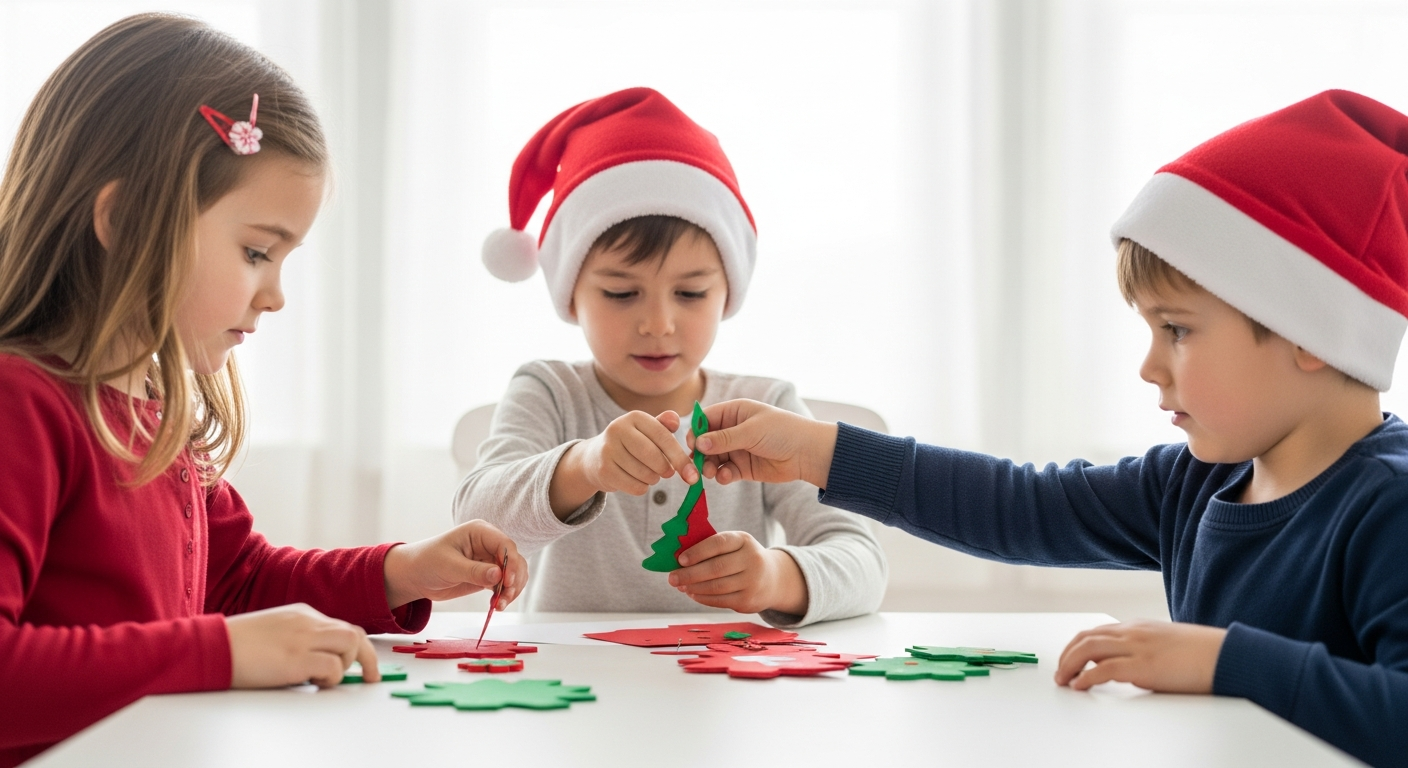
Table of Contents
- Why Christmas Crafts? More Than Just Fun
- Integrating Speech & Language into Craft Time
- Easy Christmas Crafts for Toddlers (Ages 1-3)
- Engaging Christmas Crafts for Preschoolers (Ages 3-5)
- Fun & Festive Crafts for School-Aged Kids (Ages 5-8+)
- Tips for a Successful & Speech-Rich Craft Session
- Beyond the Craft: Displaying & Gifting
- The Speech Blubs Difference: How We Empower Communication
- Conclusion
- Frequently Asked Questions (FAQ)
As the days grow shorter and a crisp chill fills the air, there's a unique magic that begins to sparkle – the Christmas season. For families with young children, this time of year isn't just about twinkling lights and presents; it's an unparalleled opportunity for connection, creativity, and precious memories. Imagine your child’s eyes lighting up as they transform simple materials into festive decorations, their small hands busy creating something beautiful. These moments are more than just fun; they are rich learning experiences, especially for developing crucial communication skills. This blog post will guide you through a wonderland of easy Christmas arts and crafts designed specifically for kids, from toddlers to early school-aged children. We'll explore how these joyful activities can boost fine motor skills, foster creativity, and, most importantly, provide natural, engaging opportunities for speech and language development, making every glitter-filled moment a chance for growth.

Why Christmas Crafts? More Than Just Fun
Engaging in arts and crafts during the festive season offers a treasure trove of developmental benefits that extend far beyond simply creating a pretty ornament. For children, these hands-on activities are a holistic learning experience, nurturing various aspects of their growth in a fun, pressure-free environment.
Sensory Exploration
Christmas crafts are a feast for the senses. Think about the sticky texture of glue, the soft fluffiness of cotton balls, the rough feel of a pinecone, the smooth coolness of paint, or the glimmer of glitter. These tactile experiences are vital for young children, helping them understand the world around them and build sensory awareness. Describing these sensations out loud (e.g., "sticky," "bumpy," "sparkly") is a fantastic way to expand vocabulary and descriptive language.
Fine Motor Skill Development
From gripping a crayon to snipping with child-safe scissors, peeling stickers, or carefully placing small decorations, crafts are a workout for tiny fingers and hands. These activities strengthen the small muscles in the hands and improve hand-eye coordination, which are foundational for later skills like writing, dressing, and self-feeding. The more practice children get with these intricate movements, the more confident and capable they become in a wide range of tasks.
Creativity & Imagination
Crafts are an open invitation to imagine and create. There's no single "right" way to decorate a paper plate Santa or paint a pinecone tree. Children learn to express their unique ideas, make choices, and bring their visions to life. This process nurtures their imaginative thinking and self-expression, empowering them to think outside the box and develop a sense of personal accomplishment.
Cognitive Growth
Following instructions, understanding sequences ("first we cut, then we glue"), problem-solving ("how can I make this stick?"), and recognizing colors, shapes, and numbers are all integral parts of crafting. These activities stimulate cognitive development, helping children to organize their thoughts, develop logical reasoning, and build their attention span. Simple counting exercises, like "how many bells should we put on the tree?", seamlessly integrate early math concepts.

Emotional Regulation & Patience
Crafts teach patience and perseverance. Sometimes glue takes time to dry, or a piece doesn't go exactly where planned. Children learn to manage frustration, wait their turn for materials, and celebrate the process as much as the final product. Completing a craft project provides a wonderful boost to self-esteem and a sense of pride in their capabilities.
Crucially: Speech & Language Development
Perhaps one of the most exciting aspects of crafting is its profound impact on speech and language. Every step of a craft project is ripe with opportunities for communication. From naming materials to describing actions, following multi-step directions, asking questions, and narrating their creative process, children are constantly engaging with language. This natural, play-based setting is ideal for practicing new words, forming sentences, and engaging in meaningful conversations. It's a low-pressure environment where communication flows freely and joyfully.
For those moments when you're looking for an additional boost to your child's speech and language skills, we are here to help. At Speech Blubs, our mission is to empower children to "speak their minds and hearts." Our app offers a unique, engaging, and scientifically-backed approach to building communication skills, perfectly complementing the rich learning experiences of hands-on crafts. You can download Speech Blubs on the App Store or Google Play Store to explore how our "smart screen time" can be a powerful addition to your child's developmental journey.
Integrating Speech & Language into Craft Time
Making crafts isn't just about what you create; it's about what you say, hear, and experience together. Here’s how you can transform your Christmas craft sessions into powerful speech and language lessons:
Naming & Labeling
As you introduce materials, explicitly name them: "Here's the red paper," "This is the sticky glue," "We need sparkly glitter." Encourage your child to repeat the names. Label colors, shapes, textures, and actions (e.g., "cut," "glue," "paint," "stick"). For a parent whose child is just starting to produce single words, simply labeling "star," "tree," "red" during a craft can be incredibly impactful.
Following Instructions
Crafts are perfect for practicing following directions. Start with one-step commands ("Give me the glue stick"). As your child progresses, introduce two-step instructions ("First, cut the circle, then glue it on"). You can even add in concepts like "before" and "after." This helps with auditory processing and comprehension.
Descriptive Language
Encourage your child to describe what they are doing and what they see. "What color is Santa's hat?" "How does the cotton feel?" "Tell me about your shiny star." Use adjectives liberally: "soft," "smooth," "rough," "bumpy," "bright," "dark," "big," "small." This enriches their vocabulary and ability to express complex ideas.
Sequencing & Storytelling
Talk about the steps of the craft in order: "First, we painted the pinecone. Next, we added glitter. Last, we put a star on top." This helps children understand sequence and build narrative skills. You can also create stories about the characters they're making (e.g., "What adventure will your reindeer go on?").
Asking & Answering Questions
Ask open-ended questions that require more than a "yes" or "no" answer. "What do you think we should do next?" "How can we make this even more sparkly?" "Why did you choose that color?" Encourage your child to ask you questions too.
Turn-Taking & Social Communication
Crafting is a wonderful opportunity for shared attention and turn-taking. "My turn to cut, then your turn to glue." Share materials, discuss ideas, and learn to compromise if you're working on a joint project. These interactions are crucial for developing social communication skills.
Emotional Expression
Talk about feelings associated with the craft: "I'm so excited about this project!" "Are you happy with how your reindeer turned out?" "It can be frustrating when the glue doesn't stick, can't it?" This helps children connect words to emotions.
Introducing Speech Blubs
Our app is designed to complement these real-world communication opportunities. Using our unique "video modeling" methodology, children learn by watching and imitating their peers, making speech practice engaging and natural. For instance, if your child is practicing animal sounds for a handprint reindeer, our "Animal Kingdom" section can provide fun, motivating activities. Our mission is to provide an immediate, effective, and joyful solution for the 1 in 4 children who need speech support, blending scientific principles with play into one-of-a-kind "smart screen time" experiences. We provide a screen-free alternative to passive viewing (like cartoons) and a powerful tool for family connection. Ready to give your child a head start? Create your account and begin your 7-day free trial today!
Easy Christmas Crafts for Toddlers (Ages 1-3)
Toddlers thrive on sensory experiences, simple actions, and repetition. The key is to keep it low-pressure, process-oriented, and focused on basic actions and vocabulary.
1. Cotton Ball Santa Beard
- Materials: Red construction paper (cut into a Santa hat shape), white paper (for face), googly eyes, cotton balls, glue stick.
- Steps:
- Glue the red hat onto the white paper face.
- Show your child how to pull apart cotton balls and stick them onto the "beard" area.
- Add googly eyes and draw a simple nose.
- Speech & Language Opportunities:
- Labeling: "red hat," "white cotton," "sticky glue," "eyes."
- Actions: "pull," "stick," "glue."
- Descriptive: "soft," "fluffy."
- Body Parts: "eyes," "nose," "beard."
2. Handprint Reindeer Ornaments
- Materials: Brown washable paint, paper or cardstock, red pom-poms, googly eyes, glue.
- Steps:
- Paint your child's hand (palm and fingers).
- Press their hand firmly onto the paper, fingers pointing upwards (these will be the antlers).
- Once dry, glue on a red pom-pom for the nose and googly eyes.
- Speech & Language Opportunities:
- Body Parts: "hand," "fingers."
- Colors: "brown," "red."
- Actions: "paint," "press," "glue."
- Animal Sounds: "Reindeer says 'neigh!' " (or general animal sounds if working on those). This connects beautifully with the "Animal Kingdom" section in Speech Blubs, where children can practice sounds and words related to animals.
- Sensory: "wet paint," "sticky glue."
3. Popsicle Stick Ornaments
- Materials: Popsicle sticks, washable paint, glue, glitter, small pom-poms, pipe cleaners.
- Steps:
- Glue two popsicle sticks into a 'T' shape or three into a triangle.
- Let your child paint the sticks any color.
- Once dry, decorate with glitter, pom-poms, or small pieces of pipe cleaner.
- Speech & Language Opportunities:
- Shapes: "T," "triangle."
- Colors: Name all the paint and decoration colors.
- Actions: "paint," "glue," "shake" (glitter).
- Counting: "One stick, two sticks."
4. Pasta Ornaments
- Materials: Various dry pasta shapes (e.g., penne, rigatoni, rotelle), liquid glue, glitter, yarn/string.
- Steps:
- Let your child glue different pasta shapes onto a piece of paper or directly onto another pasta shape to create a design.
- Sprinkle with glitter.
- Once dry, attach a loop of yarn to hang.
- Speech & Language Opportunities:
- Shapes: Point out the different pasta shapes.
- Textures: "hard pasta," "sticky glue."
- Actions: "glue," "sprinkle."
- Descriptive: "long," "round," "bumpy."
These simple crafts encourage exploration and basic communication. For late talkers who enjoy animals, like the reindeer craft, our "Animal Kingdom" section within Speech Blubs offers a fun, motivating way to practice sounds and words such as 'moo' and 'baa'. It’s an easy, joyful addition to their learning. Start your journey with Speech Blubs today!
Engaging Christmas Crafts for Preschoolers (Ages 3-5)
Preschoolers are ready for slightly more complex instructions, refining their fine motor skills, and engaging in imaginative play. These crafts allow for more creativity and detailed conversation.
1. Paper Plate Santa/Reindeer
- Materials: Paper plates, red/brown construction paper, cotton balls, googly eyes, red pom-poms, glue, child-safe scissors, markers.
- Steps:
- For Santa: Paint the plate white for the face. Cut a red hat from construction paper and glue it on. Glue cotton balls for the beard and hat trim. Add googly eyes and a red pom-pom nose.
- For Reindeer: Paint the plate brown. Cut brown antlers from paper and glue on top. Add googly eyes and a red pom-pom nose.
- Speech & Language Opportunities:
- Sequencing: "First, we paint, then we glue the hat."
- Descriptive: "fluffy beard," "shiny nose," "pointy antlers."
- Facial Features: "eyes," "nose," "mouth" (draw one).
- Prepositions: "on top," "under," "next to."
- Role-Playing: Use the finished craft for imaginative play, "Santa is coming!"
2. Salt Dough Ornaments
- Materials: 1 cup flour, 1/2 cup salt, 1/2 cup water, cookie cutters (Christmas shapes), paint, glitter, string.
- Steps:
- Mix flour, salt, and water to form a dough. Let your child help knead!
- Roll out the dough and use cookie cutters to make shapes. Make a small hole at the top for hanging.
- Bake at 250°F (120°C) for 2-3 hours until hard, or air dry for 24-48 hours.
- Once cool and hard, paint and decorate.
- Speech & Language Opportunities:
- Action Verbs: "mix," "knead," "roll," "cut," "paint."
- Sensory Words: "soft dough," "salty," "hard ornament."
- Counting: Count how many ornaments you make.
- Cause & Effect: "If we bake it, it will get hard."
- Naming Shapes: "star," "tree," "bell."
- Speech Blubs Connection: Our app’s "What's the Word" and "Sounds" sections can help children practice new vocabulary and phonemes, which are perfect for expanding their descriptions and understanding of new concepts during crafts like these. Discover how Speech Blubs makes learning fun and effective.
3. Pinecone Christmas Trees
- Materials: Pinecones, green paint, small pom-poms, beads, glitter, glue.
- Steps:
- Paint the pinecones green.
- Once dry, glue on small pom-poms, beads, or glitter to decorate them like mini Christmas trees. Add a star bead to the top!
- Speech & Language Opportunities:
- Descriptive Words: "bumpy," "prickly" (pinecone texture), "shiny," "sparkly."
- Colors: Name all the decoration colors.
- Counting: Count the decorations you put on.
- Concepts: "big pinecone," "small pom-pom," "top," "bottom."
4. DIY Snow Globes
- Materials: Small clean jars with lids, waterproof glue, small plastic Christmas figures (e.g., Santa, snowman, tree), glitter, distilled water, glycerin (optional, to make glitter fall slower).
- Steps:
- Glue the plastic figure to the inside of the jar lid. Let it dry completely.
- Fill the jar with distilled water, add a pinch of glitter, and a few drops of glycerin if using.
- Carefully screw on the lid, making sure it's tight.
- Turn it upside down and shake!
- Speech & Language Opportunities:
- Action Verbs: "glue," "fill," "shake," "turn."
- Descriptive: "sparkly," "shimmery," "tiny," "wet."
- Concepts: "up," "down," "inside," "outside."
- Sequencing: Discuss the steps needed to make the snow globe.
- Imagination: "What is the snowman doing in the snow?"
Fun & Festive Crafts for School-Aged Kids (Ages 5-8+)
Older children can handle more intricate projects, follow multi-step directions, and engage in more complex planning and problem-solving. These crafts also provide opportunities for developing early literacy skills.
1. Paper Chain Garlands
- Materials: Construction paper (red, green, white, gold), ruler, pencil, child-safe scissors, glue stick or stapler.
- Steps:
- Measure and cut strips of paper (e.g., 1 inch wide by 8 inches long).
- Form a loop with one strip and glue or staple the ends together.
- Thread another strip through the first loop, then glue/staple its ends.
- Continue until you have a long garland.
- Speech & Language Opportunities:
- Counting & Math Concepts: "How many strips do we need for the whole room?" "Longer," "shorter."
- Sequencing: Clearly explain each step.
- Pattern Recognition: Create color patterns (red, green, red, green).
- Following Multi-Step Directions: This craft is excellent for practicing this.
- Problem-Solving: "What if my chain breaks?"
2. Pop-Up Christmas Cards
- Materials: Cardstock, child-safe scissors, glue stick, markers, crayons, glitter, optional craft foam or stickers.
- Steps:
- Fold a piece of cardstock in half for the card base.
- On the folded edge, make two short parallel cuts. Push the cut section inwards to create a "pop-up" tab.
- Decorate the card and glue a small Christmas image (like a tree or Santa) onto the pop-up tab.
- Write a festive message inside.
- Speech & Language Opportunities:
- Spatial Concepts: "inside," "outside," "fold," "cut," "push in."
- Writing & Reading: Practice writing a message, reading it aloud.
- Descriptive: Describing the images and decorations on the card.
- Planning: "Who will we give this card to?" "What message do we want to write?"
- Speech Blubs Connection: As children build sentences and narratives during craft time, our app's structured activities can reinforce these skills, helping them to "speak their minds and hearts" with greater confidence and clarity. Our methods are backed by science, placing us in the top tier of speech apps worldwide. You can explore our research-backed methodology here.
3. DIY Advent Calendars
- Materials: Small cardboard boxes or paper bags, string, clothespins, number stickers (1-24), small treats or activity slips, decorations.
- Steps:
- Decorate each small box or bag.
- Attach number stickers 1-24.
- Fill each with a small treat or a slip of paper detailing a Christmas activity (e.g., "Bake cookies," "Read a Christmas book," "Watch a Christmas movie").
- Hang the boxes/bags on a string using clothespins.
- Speech & Language Opportunities:
- Counting & Number Recognition: Focus on numbers 1-24.
- Sequencing: Discuss the order of days leading up to Christmas.
- Planning & Organization: Deciding what goes in each box, how to arrange them.
- Predicting: "What do you think will be in box number 5?"
- Narrative: Talk about the activities and traditions each day.
4. Yarn Wrapped Ornaments
- Materials: Cardboard (cut into simple shapes like stars, trees, circles), various colors of yarn, glue (optional), child-safe scissors.
- Steps:
- Cut out cardboard shapes.
- Show your child how to wrap the yarn tightly around the cardboard shape, covering it completely. A dab of glue can help secure the start and end of the yarn.
- Mix colors, create patterns, or add small embellishments.
- Speech & Language Opportunities:
- Fine Motor & Hand-Eye Coordination: Wrapping requires focus and precision.
- Colors & Patterns: "What color should we use next?" "Can you make a stripe pattern?"
- Descriptive: "soft yarn," "tightly wrapped," "smooth."
- Patience & Perseverance: This craft takes time and focus.
- Following Multi-Step Directions: Guiding them through the wrapping technique.
Tips for a Successful & Speech-Rich Craft Session
To truly maximize the developmental benefits of your Christmas crafting, it’s important to approach it with intention and a playful spirit.
- Preparation is Key: Gather all materials beforehand. A well-organized space reduces frustration for both you and your child, allowing you to focus on the fun and communication.
- Simplify & Adapt: Always adjust the craft to your child's developmental level. If they're struggling with scissors, pre-cut some shapes. If a project feels too overwhelming, break it down into smaller, manageable steps. The goal is engagement, not perfection.
- Engage with Questions: Ask open-ended questions frequently. Instead of "Do you like it?", try "Tell me about your reindeer!" or "What's your favorite part of this tree?" This encourages more elaborate responses and critical thinking.
- Model Language: Narrate your own actions and thoughts. "I'm choosing the blue glitter because it reminds me of ice." "First, I'm going to cut the circle, then I will glue it here." Your child learns by hearing you model rich, descriptive language.
- Follow Their Lead: Let your child make choices – about colors, materials, or even how to create their design. When children feel in control, they are more invested and more likely to communicate their ideas. Celebrate their unique creations, even if they don't look exactly like the example.
- Praise Effort, Not Just Product: Focus on the process. Instead of "That's a perfect star!", try "Wow, you worked so hard gluing all those pieces!" or "I love how you chose all those different colors!" This builds resilience and a love for learning.
- Make it a Family Affair: Invite siblings, grandparents, or other family members to join in. Social interaction is a powerful catalyst for communication development. Children learn by interacting with a variety of communication partners.
- Screen-Free Quality Time: While Speech Blubs provides "smart screen time" that is active and engaging, these craft sessions are a wonderful opportunity for truly screen-free, face-to-face interaction. We believe in providing solutions that enhance family connection, not replace it. Our app is designed to be a powerful tool for family connection, not just a learning tool, transforming passive viewing into an interactive, educational experience.
- Consider a Speech Screener: If you have any concerns about your child's speech and language development, a preliminary check can offer peace of mind and guide your next steps. Our quick 3-minute preliminary screener involves just 9 simple questions and provides an assessment and next-steps plan, along with a free 7-day trial of Speech Blubs.
Beyond the Craft: Displaying & Gifting
The learning doesn't stop when the glue dries! Encourage your child to talk about their finished creations. "Who did you make this for?" "What is your favorite part of your ornament?" Display their art proudly, letting them see the value of their hard work. If they've made gifts, practice the language of giving: "I made this for you!" "Merry Christmas!" These moments reinforce expressive language and the joy of sharing.
The Speech Blubs Difference: How We Empower Communication
At Speech Blubs, we understand the challenges parents face when their child needs speech support. Our company was born from the personal experiences of our founders, who all grew up with speech problems and created the tool they wished they had. Our mission is to empower children to "speak their minds and hearts" by providing an immediate, effective, and joyful solution for the 1 in 4 children who need speech support.
We blend scientific principles with play into one-of-a-kind "smart screen time" experiences. Our unique approach utilizes "video modeling" methodology, where children learn by watching and imitating their peers. This active engagement is a powerful alternative to passive viewing, making learning fun and effective. We’ve even earned a high MARS scale rating for our scientifically-backed methods.
When it comes to supporting your child's communication journey, we want to be transparent and provide the best value.
- Monthly Plan: For $14.99 per month, you get access to our core speech development activities. However, this plan does not include a free trial or our exclusive bonus features.
- Yearly Plan: This is our best value, costing just $59.99 per year, which breaks down to an incredible $4.99 per month – a savings of 66%! The Yearly plan is truly the superior choice, offering a comprehensive suite of benefits:
- 7-day free trial: Experience the full power of Speech Blubs before committing.
- Extra Reading Blubs app: Enhance literacy skills alongside speech development.
- Early access to new updates: Be the first to enjoy new content and features.
- 24-hour support response time: Get prompt assistance whenever you need it.
We don't promise guaranteed outcomes like "your child will be giving public speeches in a month." Instead, we focus on the benefits of the process: fostering a love for communication, building confidence, reducing frustration, developing key foundational skills, and creating joyful family learning moments. Speech Blubs is a powerful supplement to a child's overall developmental plan and, when applicable, professional therapy, always encouraging adult co-play and support.
Ready to give your child the gift of confident communication this Christmas and beyond? We encourage you to choose the Yearly plan to get the free trial and the full suite of features that will empower your child's speech journey. Download Speech Blubs from the App Store or Google Play Store, and select the Yearly plan to unlock all the benefits. You can also sign up for your free trial and account on our website here!
Conclusion
Christmas crafts offer so much more than just pretty decorations; they are invaluable opportunities for connection, creativity, and robust developmental growth, especially in speech and language. By embracing these easy, engaging activities, you're not just making memories; you're actively nurturing your child's ability to communicate, express themselves, and build confidence. From the simplest cotton ball Santa to an intricate pop-up card, every snip, glue, and sparkle is a chance for a new word, a new sentence, and a joyful interaction.
Remember to keep the process fun, adapt to your child's needs, and engage them in conversation every step of the way. And as you fill your home with handmade festive cheer, consider how Speech Blubs can further support your child's journey to speak their minds and hearts. Our app provides an engaging, scientifically-backed approach to communication development, perfectly complementing your family's hands-on learning.
This Christmas, let's create, connect, and communicate. We invite you to start your child's journey to confident communication today. Download Speech Blubs and begin your 7-day free trial by selecting the Yearly plan for the best value and access to all our exclusive features, including the Reading Blubs app!
Frequently Asked Questions (FAQ)
Q1: What age group are these easy Christmas crafts suitable for?
A1: This guide includes crafts for a wide range of ages, generally from 1 year old (toddlers) up to 8 years old (early school-aged children). We've categorized them into sections: Toddlers (1-3), Preschoolers (3-5), and School-Aged Kids (5-8+), with suggestions on how to adapt them for different skill levels. The key is to select crafts that match your child's fine motor skills, attention span, and ability to follow instructions, always providing adult supervision and support.
Q2: How can crafts specifically help with my child's speech development?
A2: Crafts create natural, low-pressure opportunities for communication. They help with speech development by:
- Expanding Vocabulary: Naming materials, colors, shapes, and actions (e.g., "cut," "glue," "paint").
- Following Directions: Practicing one-step to multi-step instructions ("Get the red paper," "First cut, then glue").
- Descriptive Language: Using adjectives to describe textures, colors, and designs ("soft cotton," "sparkly glitter").
- Sequencing & Storytelling: Talking about the steps of the craft in order ("First we painted, then we decorated") and creating narratives about their creations.
- Asking and Answering Questions: Engaging in conversation about choices, preferences, and the creative process.
Q3: What if my child isn't interested in crafts?
A3: Every child is different! If your child isn't immediately interested, try these tips:
- Start Small: Begin with very simple, quick crafts to avoid overwhelming them.
- Follow Their Lead: Let them choose the materials or the colors. Their engagement will increase if they feel they have control.
- Focus on the Process: Don't worry about the final product. Emphasize the fun of mixing paint, sticking things, or making a mess.
- Incorporate Their Interests: If they love animals, find a craft that involves animals. If they love cars, decorate a car-themed ornament.
- Make it a Group Activity: Sometimes seeing siblings or parents participate can pique their interest.
- Don't Force It: If they're not into it, that's okay. Try again another day or switch to a different activity. Remember, the goal is joyful engagement, not forced participation.
Q4: How does Speech Blubs fit into our family's learning routine alongside hands-on activities?
A4: Speech Blubs is designed to be a powerful complement to your child's overall development, not a replacement for hands-on activities. While crafts offer valuable screen-free interaction, our app provides "smart screen time" that actively engages children through our unique video modeling methodology, where children learn by imitating their peers. This creates a fun, motivating environment for practicing speech sounds, building vocabulary, and forming sentences. Speech Blubs is perfect for dedicated learning sessions or for moments when you need a structured, educational activity. It’s a tool for family connection, offering a valuable alternative to passive screen time and working beautifully in tandem with real-world experiences like Christmas crafts to support your child's communication journey.
About the author