
Easy Crafts for Kids: Fun DIYs You Can Do at Home
 By Speech Blubs Team•Jan 13, 2026•21 min.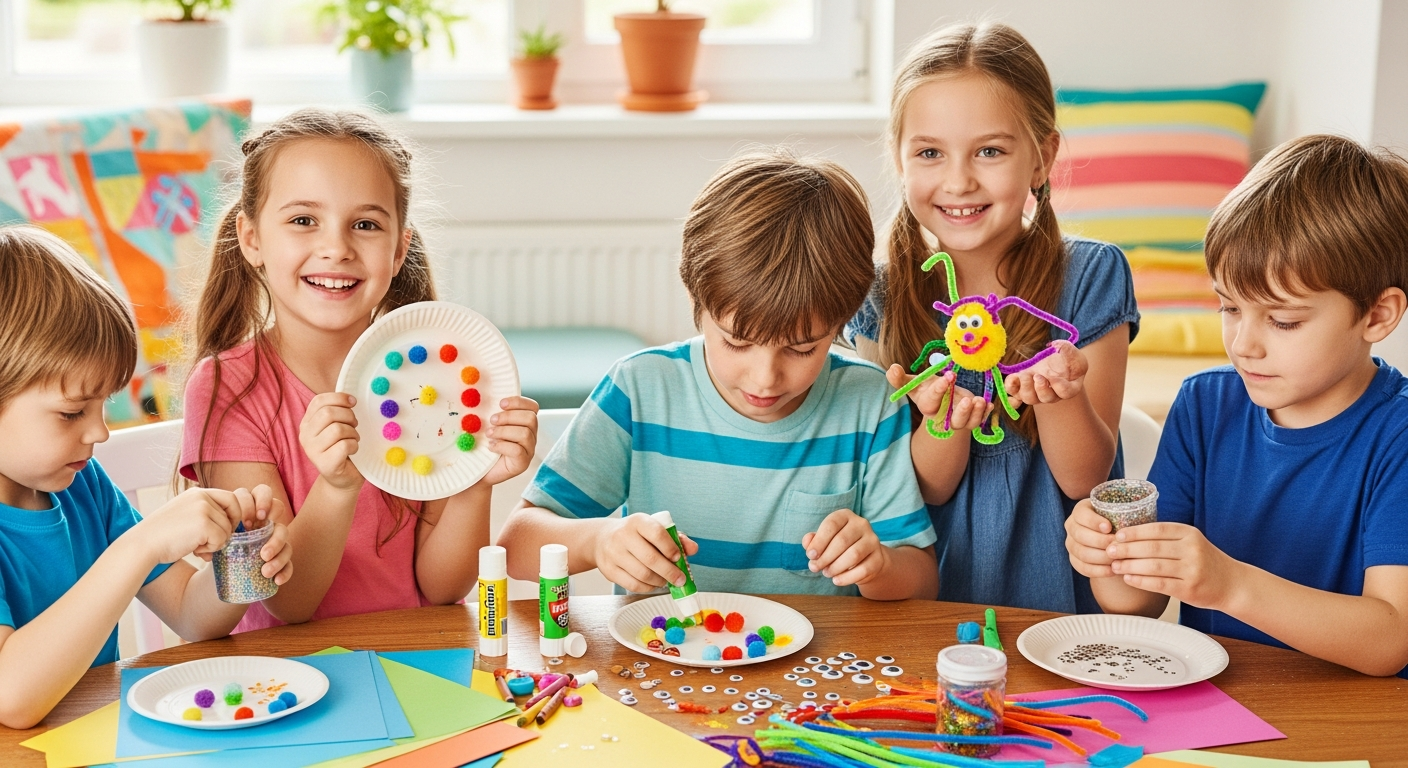
Table of Contents
- Beyond the Fun: Why Crafting is Essential for Child Development
- Gathering Your "Treasure Trove": Essential Household Craft Supplies
- Our Top Easy Crafts for Kids You Can Do At Home
- Maximizing the Learning: How to Integrate Speech & Language
- Speech Blubs: Your Partner in Joyful Communication Development
- Choosing Your Speech Blubs Plan: Value for Your Family
- Conclusion
- Frequently Asked Questions
Ever wonder what magic happens when a child's hands meet a blank piece of paper, a dab of glue, or a handful of colorful pom-poms? It's more than just a momentary distraction; it's a symphony of discovery, a burst of creativity, and a vital catalyst for development. In our increasingly digital world, finding engaging, screen-free activities that nurture growth can feel like a quest. But what if we told you that the answer lies in the simplest of materials, often found right within your home? This post is your comprehensive guide to unlocking that magic, offering a treasure trove of easy crafts for kids that promise not just fun, but also significant strides in their learning journey. We'll explore how these simple activities can enhance everything from fine motor skills to cognitive development, and crucially, how they lay a robust foundation for speech and language, empowering your child to express their "minds and hearts."

Beyond the Fun: Why Crafting is Essential for Child Development
Crafting offers a unique blend of entertainment and education, fostering a holistic approach to child development. It’s not merely about creating a finished product; it’s about the process, the exploration, and the rich learning opportunities embedded in every snip, glue, and dab. At Speech Blubs, we understand that every activity contributes to a child's overall growth, and crafts are a fantastic way to supplement formal learning and our engaging "smart screen time" app experience.
Fine Motor Skills: The Building Blocks for Precision
Think about all the intricate movements involved in crafting: holding a crayon, snipping with scissors, peeling a sticker, threading a bead, or carefully applying glue. These actions are fundamental for developing fine motor skills, which are crucial for later tasks like writing, tying shoelaces, and even eating independently. Repetitive, precise hand movements strengthen the small muscles in the fingers and hands, improving dexterity and hand-eye coordination. A child meticulously gluing small fabric scraps onto a paper plate is not just making art; they're training their hands for future challenges.
Cognitive Development: Problem-Solving and Planning in Action
Crafting is a continuous exercise in problem-solving. Children learn to follow instructions, sequence steps, and make decisions when faced with limited materials or unexpected outcomes. "How can I make this stick stand up?" "What color should I use next?" "How do I attach these two pieces together?" These questions, big and small, ignite critical thinking. They learn about cause and effect, spatial reasoning, and material properties. This active engagement helps build neural pathways that support learning in all areas, from math to reading.
Creativity & Imagination: Unleashing Inner Worlds
With crafting, there's no single "right" way to do things. This open-ended nature empowers children to explore their imagination, express their unique ideas, and develop a sense of self. They can transform a simple toilet paper roll into a majestic castle, a fearsome dragon, or a friendly robot. This imaginative play is vital for developing abstract thinking, fostering innovation, and building confidence in their own creative capabilities.

Emotional Regulation: Patience and Perseverance
Crafts often require patience. Waiting for glue to dry, carefully cutting along a line, or fixing a mistake teaches children about perseverance and managing frustration. Completing a project, especially one that presented challenges, provides a huge boost to self-esteem and teaches them the reward of hard work. The joyful feeling of accomplishment, even from a simple paper creation, is invaluable.
Speech & Language Connection: A Verbal Adventure
Perhaps one of the most exciting aspects of crafting is its profound connection to speech and language development. Every craft session is an opportunity for a rich language exchange, fostering communication skills that are central to our mission at Speech Blubs.
For a parent whose 3-year-old "late talker" loves animals, making a paper plate animal mask offers a fun, motivating way to practice sounds like "moo," "baa," and "roar" as they describe their creation. As you craft together, you naturally introduce new vocabulary ("sticky," "smooth," "crinkly," "vibrant"), describe actions ("cut," "glue," "fold," "draw"), and practice following multi-step directions ("First, get the paper; then, cut it in half; next, glue it here").
These interactions are the bedrock of language acquisition. They encourage children to:
- Label and Describe: "What color is your monster?" "Tell me about your castle."
- Request and Inquire: "Can I have the blue marker?" "What are we making next?"
- Narrate and Explain: "I'm cutting the paper for the wings." "This is how I made the suncatcher sparkle."
- Problem-Solve Verbally: "The glue isn't sticking. What should we do?"
- Engage in Imaginative Play Dialogue: Using their crafted puppets or costumes to create stories and characters.
At Speech Blubs, we believe in empowering children to "speak their minds and hearts." Our app provides a scientifically backed, playful environment for speech practice through our unique "video modeling" methodology, where children learn by watching and imitating their peers. Just as they imitate you during a craft, our app helps them imitate correct speech patterns, making communication accessible and joyful. This makes Speech Blubs a powerful tool for family connection and a wonderful complement to hands-on activities like crafting. If you’re curious about your child's communication development, you can take our quick 3-minute preliminary screener to get an assessment and next-steps plan.
Gathering Your "Treasure Trove": Essential Household Craft Supplies
One of the best things about easy crafts for kids is that you often don't need a special trip to the store. Many amazing projects can be made with items you already have around the house! At Speech Blubs, we champion accessible solutions, and crafting with everyday items perfectly embodies this value. Start by raiding your recycling bin and craft drawer, and you might be surprised at what treasures you find.
Here’s a basic list of supplies that will open up a world of creative possibilities:
- Paper, Paper, Everywhere!
- Construction Paper: Various colors are great for cutting, folding, and gluing.
- Printer Paper/White Paper: Perfect for drawing, painting, or creating templates.
- Paper Plates: The ultimate versatile base for masks, animals, and decorative items.
- Cardboard: From cereal boxes, paper towel rolls, or toilet paper rolls – sturdy and free!
- Newspaper/Magazines: Great for collages, tearing activities, or protecting surfaces.
- Adhesives:
- Glue Sticks: Less messy, great for younger kids.
- Liquid School Glue: Stronger hold, perfect for heavier items.
- Tape (Masking, Scotch, or Duct Tape): Instant adhesion, adds texture and color.
- Coloring & Decorating Tools:
- Crayons, Markers, Colored Pencils: Essential for adding color and detail.
- Kid-Safe Paint (Tempera or Washable Acrylics): For vibrant, expressive art.
- Googly Eyes: Instantly brings crafts to life (you can always draw eyes too!).
- Cutting & Shaping:
- Kid-Safe Scissors: For developing scissor skills and cutting various materials.
- Popsicle Sticks: Wonderful for building structures, puppets, or adding support.
- Odds & Ends (The "Optional but Awesome" Stuff):
- Cotton Balls: For fluffy textures, snow, clouds, or animal fur.
- Yarn/String/Ribbon: For hanging, tying, or adding decorative elements.
- Buttons, Beads, Pom-Poms: For embellishments, sorting, and fine motor practice.
- Fabric Scraps: From old clothes or towels, adds texture and color.
- Natural Materials: Leaves, small sticks, pebbles collected from outdoors.
Remember, the goal is not perfection but participation. Encourage your child to use what you have, fostering resourcefulness and creativity without the pressure of needing specific, expensive items. This approach aligns with our belief in providing immediate, effective, and joyful solutions that blend scientific principles with play.
Our Top Easy Crafts for Kids You Can Do At Home
Now, let's dive into some fantastic, easy crafts that cater to various ages and interests, all while promoting crucial developmental and language skills. Each activity offers a chance for interaction and learning, reinforcing the principles of active engagement we value at Speech Blubs.
Recycled Wonders: Turning Trash into Treasure
Transforming discarded items into works of art is not only eco-friendly but also sparks incredible imagination.
1. Toilet Paper Roll Creatures & Characters
- What you need: Empty toilet paper rolls, paint or markers, googly eyes (optional), construction paper scraps, glue.
- How it helps: Children practice rolling, painting, cutting simple shapes, and gluing. Verbally, they can name the animals (e.g., "frog," "bunny," "owl"), describe their features ("big eyes," "long ears"), and act out their sounds. For a child learning early words, creating a "meow" cat or a "woof" dog is a fun, tangible way to practice.
- Scenario: A child decorating a toilet paper roll to be a green frog with big googly eyes. You can prompt them: "What color is your frog? What sound does a frog make? Jump, frog, jump!"
- Download Speech Blubs today from the Apple App Store or Google Play Store to explore more animal sounds and vocabulary that can inspire your next craft!
2. Cereal Box Mini-Storage & Robots
- What you need: Empty cereal boxes, scissors, duct tape (or construction paper and glue), markers.
- How it helps: This craft teaches practical skills like measuring (approximately 2 inches from the bottom), cutting straight lines, and reinforcing structures. Children can label their new storage boxes, practicing letter recognition or drawing pictures of what goes inside (e.g., "Legos," "crayons"). Creating robots encourages discussions about shapes ("square head," "round eyes") and body parts ("arms," "legs").
- Scenario: Decorating a mini-storage box. "This box is for all your tiny cars. Can you draw a car on the label? What color is this tape?"
3. Painted Jars for Organizing
- What you need: Empty glass jars (jam, pickle), acrylic paint, paintbrushes.
- How it helps: This simple craft allows for free artistic expression through painting while creating something useful. Kids practice fine motor skills with the brush and learn about color mixing. Once dry, they can organize art supplies or small toys, reinforcing categorization and order.
- Scenario: A child painting a jar purple for their purple markers. "Look at your purple jar! Where do the purple markers go? Let's put them 'in' the jar."
Paper Plate Play: Simple & Versatile
Paper plates are incredibly versatile and inexpensive, making them a go-to for quick, engaging crafts.
4. Animal Masks
- What you need: Paper plates, scissors, paint or markers, elastic string or a craft stick, construction paper for features.
- How it helps: Designing and decorating a mask encourages imaginative play and role-playing, which are excellent for developing narrative skills and emotional expression. Cutting out eyeholes and facial features improves precision.
- Scenario: After making a lion mask, the child can roar and pretend to be a lion. "What does the lion say? Can the lion eat all the snacks?"
- Our research shows the power of play in learning, and these masks facilitate that perfectly!
5. Paper Plate Spin Art
- What you need: Paper plates, washable paint, a salad spinner (adult supervision recommended).
- How it helps: This exciting activity introduces basic physics (centrifugal force) in a fun, visual way. Children experiment with color combinations and enjoy the element of surprise as the patterns emerge. It’s a great way to talk about colors, movement, and patterns.
- Scenario: Watching the paint splatter as the plate spins. "Look at the colors mixing! What pattern do you see? Swirl, swirl!"
6. Paper Plate Themed Plates (Pizza, Sun, Donut)
- What you need: Paper plates, various colored construction paper, markers, glue.
- How it helps: Children can create a pizza with different "toppings," a bright sun with "rays," or a colorful donut with "sprinkles." This encourages naming objects, describing attributes (e.g., "round," "bumpy," "yellow"), and practicing counting skills with toppings or sprinkles.
- Scenario: Making a pizza. "How many pepperoni pieces should we put on? One, two, three! Yummy pizza!"
Popsicle Stick Projects: Building & Creating
Popsicle sticks are fantastic for building, stacking, and creating structures, promoting engineering skills and imaginative play.
7. Popsicle Stick Frames
- What you need: Popsicle sticks, glue, paint or markers, a photo.
- How it helps: Arranging and gluing sticks to form a frame teaches basic geometry and spatial awareness. Decorating the frame allows for personalization. Once complete, children can talk about the photo they framed, sharing memories and using descriptive language.
- Scenario: Framing a family picture. "Who is in this picture? What are we doing? This frame is so colorful!"
8. Popsicle Stick Puppets
- What you need: Popsicle sticks, construction paper, markers, glue, fabric scraps.
- How it helps: Creating characters encourages children to invent stories and engage in imaginative dialogue. Holding and manipulating the stick puppets enhances fine motor skills and provides a prop for practicing different voices and emotions.
- Scenario: Putting on a puppet show. "What does your puppet say? Can your puppet jump?"
9. Simple Homemade Bird Feeders
- What you need: Popsicle sticks, glue, twine, birdseed.
- How it helps: This craft is purposeful and connects children to nature. They learn about building structures, measuring (twine for hanging), and understanding the needs of local wildlife. It’s a wonderful opportunity to talk about birds, their sounds, and their habitats.
- Scenario: Hanging the bird feeder outside. "What kind of birds do you think will come? Listen for their 'chirp, chirp'!"
Sensory & Messy Fun (Controlled Mess!): Engaging Multiple Senses
Sensory crafts are fantastic for development, encouraging exploration through touch, sight, and sometimes even smell, while providing rich language opportunities.
10. Homemade Finger Paint
- What you need: Sugar, water, cornstarch, food coloring.
- How it helps: This activity is a sensory delight, allowing children to explore textures and colors with their hands. It promotes creativity and body awareness as they use their fingers to "paint." Describe the feel: "slippery," "smooth," "cool."
- Scenario: Finger painting. "How does the paint feel on your hands? Squishy! What color are you using?"
11. Easy Sidewalk Chalk
- What you need: Cornstarch, water, food coloring.
- How it helps: Taking art outdoors, children can draw large-scale creations, promoting gross motor skills and spatial awareness. They can practice writing letters, drawing shapes, or creating imaginative scenes, fostering conversation about their environment.
- Scenario: Drawing on the driveway. "Let's draw a big blue ocean! What swims in the ocean?"
12. Ooey Gluey Suncatchers
- What you need: School glue, food coloring, parchment paper.
- How it helps: Children experiment with color mixing and watch as the colors blend and dry into beautiful, translucent designs. This craft requires patience and careful handling, improving fine motor control. Discuss colors, light, and transparency.
- Scenario: Holding up a dried suncatcher to the window. "Look how the light shines through the red and yellow! It's so sparkly!"
Crafts with a Purpose: Making & Learning
These crafts go beyond simple creation, often serving a functional purpose or fostering social-emotional development.
13. DIY Costumes
- What you need: Old clothes, construction paper, markers, fabric scraps, glue, scissors.
- How it helps: Making simple costumes encourages dramatic play, storytelling, and role-playing. Children can transform into superheroes, pirates, or favorite book characters, developing narrative skills and practicing different voices and expressions. This fosters confidence in communication.
- Scenario: Creating a superhero mask and cape. "Who is your superhero? What are your superpowers? Can you fly?"
14. "Mail a Hug" or "S'more Love" Packages
- What you need: Paper, markers, glue, small twigs, cotton balls, s'mores ingredients (optional).
- How it helps: These crafts promote empathy and connection, teaching children about expressing affection and kindness to others. Sending a handmade hug to a distant relative or delivering a "s'more love" craft to a neighbor teaches them the joy of giving. It's a fantastic opportunity to discuss feelings and relationships.
- Scenario: Decorating a "Mail a Hug" card for Grandma. "Grandma will be so happy to get your hug! How do you think she'll feel?"
15. Homemade Clean-Up Labels
- What you need: Paper, markers, crayons, glue/tape.
- How it helps: This practical craft combines creativity with organizational skills. Children draw or paint pictures of their toys, then create labels for bins and shelves. This empowers them to participate in tidying up, practicing categorization and object identification.
- Scenario: Drawing a picture of building blocks for the "block bin." "This is a picture of your blocks. Where does this label go? Let's put the blocks away!"
16. Family Time Capsule
- What you need: A sturdy box, photos, letters, small mementos, paper, markers.
- How it helps: This meaningful project encourages reflection on the present and anticipation of the future. Children can select items that represent their current interests, write (or dictate) letters, and discuss memories. It's a wonderful way to foster conversations about self, family, and the passage of time.
- Scenario: Deciding what to put in the time capsule. "What is your favorite toy right now? Let's draw a picture of it for the time capsule."
Maximizing the Learning: How to Integrate Speech & Language
To truly leverage the power of crafting for speech and language development, it's essential to be an active participant and guide. Think of yourself as a language facilitator, creating a rich verbal environment around every craft project.
Talk Through Every Step
Narrate your actions and your child's actions. "First, I'm cutting the blue paper. Now you're gluing the eyes onto the monster." Ask open-ended questions: "What should we do next?" "How does this feel?"
Narrate & Describe
Use a wide range of vocabulary. Instead of just "good job," say, "Wow, your rainbow is so vibrant!" or "This glitter makes your star super sparkly!" Describe textures ("bumpy," "smooth," "sticky"), colors, shapes, and sizes. This exposure expands their vocabulary and encourages them to use more descriptive language.
Follow Directions
Crafts are perfect for practicing multi-step directions. "Please get the red crayon, then draw a circle on the paper." Gradually increase the complexity of instructions. If your child struggles, break it down into smaller, simpler steps.
Problem-Solving Language
Encourage your child to verbalize challenges and solutions. "Uh oh, the glue isn't working. What do you think we can do?" This helps them develop critical thinking skills and express their reasoning.
Storytelling & Role-Play
Once a craft is finished, especially a puppet or a costume, encourage your child to use it in imaginative play. "What adventures will your robot go on today?" "Tell me a story about your butterfly." This builds narrative skills, character development, and confidence in expressing ideas.
Remember, every shared moment during a craft session is a chance for connection and communication. Our app complements these interactions by providing structured practice in a fun way, empowering children to "speak their minds and hearts." We offer a fantastic screen-free alternative to passive viewing experiences like cartoons, turning screen time into "smart screen time" that sparks development. You can learn more about how our approach is backed by science and has earned a high MARS scale rating on our research page.
Speech Blubs: Your Partner in Joyful Communication Development
At Speech Blubs, we believe every child deserves the chance to express themselves fully, to "speak their minds and hearts." Our company was born from the personal experiences of our founders, who all grew up with speech problems and created the tool they wished they had. We are committed to providing an immediate, effective, and joyful solution for the 1 in 4 children who need speech support, blending scientific principles with play into one-of-a-kind "smart screen time" experiences.
Our unique approach teaches complex communication skills through our "video modeling" methodology, where children learn by watching and imitating their peers. This natural, engaging method is highly effective because children are hardwired to learn from others, especially their peers. It's not passive viewing; it's active participation, leading to real communication breakthroughs. Speech Blubs offers a powerful tool for family connection, providing parents with guided activities and exercises they can do alongside their children, reinforcing speech development in a loving, supportive environment. We never overpromise, but we consistently deliver tools that foster a love for communication, build confidence, reduce frustration, and develop key foundational skills.
Ready to see how Speech Blubs can support your child's communication journey? Create your account and begin your 7-day free trial today.
Choosing Your Speech Blubs Plan: Value for Your Family
We offer flexible plans to fit your family’s needs, but for the best experience and value, we highly recommend our Yearly plan.
- Monthly Plan: For $14.99 per month, you get access to our core speech development program.
- Yearly Plan: For just $59.99 per year, which breaks down to an incredible $4.99/month, you unlock a wealth of additional benefits and save 66%!
Why the Yearly Plan is the Best Choice:
The Yearly plan isn't just significantly more affordable; it's packed with exclusive features designed to maximize your child's development and your family's experience:
- 7-Day Free Trial: Only with the Yearly plan can you access a full 7-day free trial to experience everything Speech Blubs has to offer before committing.
- Extra Reading Blubs App: Gain full access to our Reading Blubs app, designed to further enhance literacy skills alongside speech development. This is a complete app that helps with reading readiness.
- Early Access to New Updates: Be the first to enjoy new features, activities, and content as soon as they are released.
- 24-Hour Support Response Time: Get priority support from our team, ensuring your questions are answered quickly and efficiently.
The Monthly plan does not include these valuable benefits, making the Yearly plan the clear best choice for comprehensive support and incredible savings. Don't just take our word for it; see what other parents are saying about their child's success with Speech Blubs on our testimonials page.
Conclusion
Easy crafts for kids offer so much more than just a way to pass the time; they are vital gateways to comprehensive development. From honing fine motor skills and sparking creativity to fostering problem-solving abilities and emotional regulation, crafting provides a rich, multi-faceted learning experience. Crucially, these hands-on activities create countless opportunities for language development, empowering children to describe, narrate, request, and express themselves, ultimately helping them "speak their minds and hearts."
By engaging in these simple, at-home crafts, you're not just making art; you're building connections, nurturing confidence, and laying a strong foundation for future communication success. And when you combine the magic of hands-on crafting with the targeted, engaging "smart screen time" provided by Speech Blubs, you unlock an even more powerful pathway to joyful communication development.
Ready to embark on this dual journey of creative play and effective speech support? Download Speech Blubs today from the Apple App Store or Google Play Store to get started. Remember to select the Yearly plan to enjoy a free 7-day trial and unlock all the exclusive features, including the Reading Blubs app, for the best value and comprehensive support for your child’s speech and language journey.
Frequently Asked Questions
Q1: What age group are these easy crafts best for?
These crafts are generally suitable for children between the ages of 2 and 10, with appropriate adult supervision and modifications. Younger children will benefit from simpler tasks like gluing pre-cut shapes and finger painting, while older children can tackle more intricate cutting, detailed decorating, and multi-step projects. The beauty of these crafts is their adaptability to various skill levels and interests.
Q2: How can I make crafting less messy?
To minimize mess, always prepare your workspace by covering surfaces with newspaper or an old tablecloth. Use washable paints and markers whenever possible. Keep wet wipes or a damp cloth nearby for quick clean-ups. For activities like finger painting, designate a specific area and consider using an old shirt as a smock. Engaging in "controlled messy" play can also be done outdoors for easier cleanup.
Q3: My child gets frustrated easily with crafts. How can I help them?
Frustration is a normal part of learning. To help, choose crafts that are appropriate for their developmental stage and offer immediate, visible results. Focus on the process, not just the perfect outcome. Provide ample praise for effort, not just perfection. If a child struggles, offer help or suggest a simpler alternative. Remember, the goal is joyful engagement, not a masterpiece. Taking breaks and coming back to a project can also be very effective.
Q4: How do I know if my child needs professional speech support, and how does Speech Blubs fit in?
If you have concerns about your child's speech and language development, it's always wise to consult with a pediatrician or a speech-language pathologist. Early intervention can make a significant difference. Speech Blubs is designed to be a powerful supplement to a child's overall development plan and, when applicable, professional therapy. Our app provides structured, engaging practice that reinforces skills learned in therapy or supports communication development at home. It empowers children to practice essential sounds and words in a fun, motivating way, helping them build confidence and a love for communication. You can also try our quick 3-minute preliminary screener for a preliminary assessment and suggested next steps.
About the author