
Easy Crafts for Kids: Simple Fun, Big Communication Boosts
 By Speech Blubs Team•Jan 13, 2026•22 min.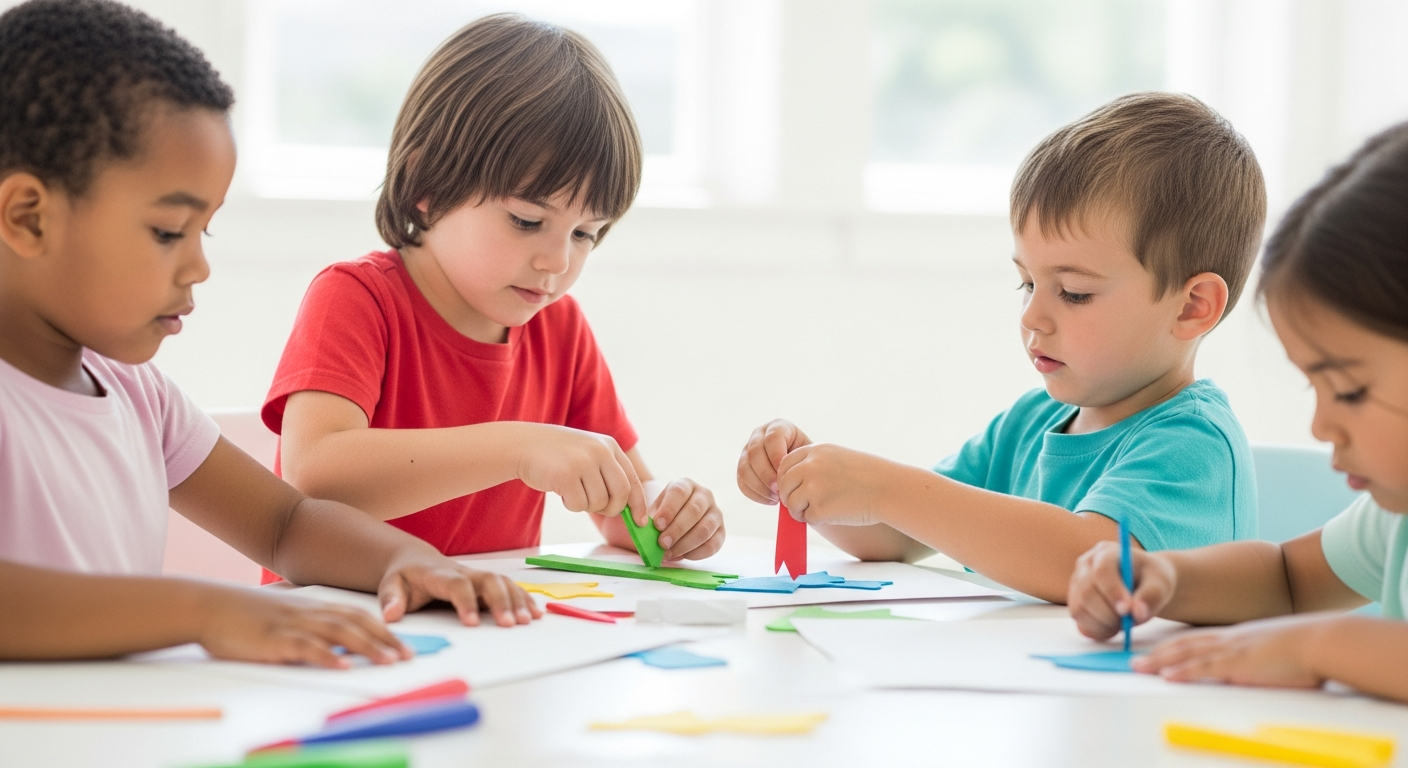
Table of Contents
- Introduction
- The Magic of Simple Crafts: More Than Just Play
- Crafting a Foundation for Communication
- Essential Supplies: Your Crafting Arsenal (Mostly Household Items)
- 25+ Super Easy Crafts for Kids (and Their Speech Development!)
- Integrating Speech Blubs into Your Crafting Journey
- Choosing the Right Tool for Your Child’s Communication Journey
- Conclusion
- Frequently Asked Questions (FAQ)
Introduction
Ever feel like your living room is a whirlwind of half-finished projects and discarded art supplies, yet your child is still asking, "What can I do now?" In our bustling lives, finding engaging activities that are both simple to set up and genuinely beneficial for our children's development can feel like a quest for hidden treasure. Yet, the answer often lies in the most humble of materials: the everyday items found right in our homes. Simple crafts for kids offer a vibrant escape from screens, a canvas for boundless creativity, and, perhaps most importantly, a powerful, playful pathway to fostering vital communication skills.
This post will explore how embracing easy, accessible crafts can unlock a world of learning, from boosting fine motor skills and problem-solving to enriching vocabulary and encouraging expressive language. We'll delve into a treasure trove of simple craft ideas, many using materials you likely already have, and discuss how these hands-on activities inherently support a child's journey toward clearer, more confident communication. Our goal is to equip you with practical ideas and insights, helping you transform everyday moments into joyful learning experiences that lay a strong foundation for your child to speak their minds and hearts.

The Magic of Simple Crafts: More Than Just Play
At first glance, a child gluing cotton balls onto a paper plate might seem like just a fun way to pass the time. However, beneath the surface of sticky fingers and colorful creations lies a profound developmental workout. Simple crafts are not merely entertainment; they are multi-faceted tools that nurture a child's growth in countless ways.
Consider the intricate dance of tiny muscles involved in cutting with scissors, tearing paper, or squeezing glue. These actions are invaluable for strengthening fine motor skills, which are crucial for tasks like writing, self-feeding, and dressing. As children manipulate materials, they're also engaging their cognitive abilities. They learn to follow instructions, solve minor problems (e.g., "How do I make this stick?"), and understand cause and effect. This process of planning and execution builds early executive function skills — abilities like working memory, flexible thinking, and self-control, which are foundational for academic success and life skills.
Beyond the physical and cognitive, crafts are a powerful emotional outlet. They provide a safe space for self-expression, allowing children to convey feelings and ideas that they might not yet have the words for. The pride a child feels in completing a craft, no matter how simple, significantly boosts their self-esteem and confidence. It teaches them perseverance and the joy of creating something unique.
But what truly excites us at Speech Blubs is the inherent link between crafting and language development. Every snip, every dab of glue, every choice of color presents a natural opportunity for communication. Parents become facilitators of language, narrating actions, asking open-ended questions, and introducing new vocabulary. A simple craft isn't just an activity; it's a conversation starter, a storytelling prompt, and a rich environment for building the verbal bridges that help children connect with the world around them.
Crafting a Foundation for Communication
It's astonishing how naturally communication blossoms during a crafting session. When children are immersed in a hands-on activity, they are more open to engaging verbally. This isn't just about labeling colors or shapes, though those are important foundational steps. It’s about building a richer linguistic landscape where descriptive words, action verbs, sequencing terms, and even storytelling spontaneously emerge.

Imagine a scenario: you're helping your child build a toilet paper roll creature. You might say, "First, we cut the paper. Then, we glue the ears. What color do you want the eyes to be? Let's make him happy!" This seemingly simple exchange is packed with opportunities to practice action verbs, adjectives, and sequencing. For a parent whose child is a 'late talker' and struggles with imitation, creating a "Paper Plate Lion" craft provides a clear, visual model for actions and sounds. You can make the lion roar as you draw its mouth, or mimic shaking its mane, then encourage your child to imitate those sounds and movements. This kind of interaction is precisely why we champion play-based learning.
At Speech Blubs, our mission is to empower children to "speak their minds and hearts," and we understand that every child's journey is unique. Our company was born from the personal experiences of our founders, who all grew up with speech problems and created the very tool they wished they had. We are committed to providing an immediate, effective, and joyful solution for the 1 in 4 children who need speech support, blending scientific principles with play into one-of-a-kind "smart screen time" experiences. Our unique approach of teaching complex communication skills through our "video modeling" methodology, where children learn by watching and imitating their peers, perfectly complements the benefits of hands-on crafting. While crafts offer a screen-free alternative to passive viewing like cartoons, Speech Blubs provides a powerful, interactive tool that can be integrated into your child's overall communication development plan, fostering family connection and building essential skills.
For parents who are uncertain if their child could benefit from extra communication support, we offer a valuable starting point. Take our quick 3-minute preliminary screener to get a simple assessment and a free 7-day trial of Speech Blubs. It's a low-pressure way to gain insights and discover potential next steps.
Essential Supplies: Your Crafting Arsenal (Mostly Household Items)
One of the greatest joys of simple crafts for kids is that you often don't need a trip to a specialty store. Many of the most engaging projects can be whipped up with items you already have stashed around the house. This not only makes crafting budget-friendly but also encourages creativity in repurposing and seeing everyday objects in new ways.
Before we dive into specific craft ideas, let's assemble your basic "crafting arsenal." We're talking about the MVP (Most Valuable Players) of the craft world:
- Paper, Paper, Everywhere:
- Construction Paper: Comes in a rainbow of colors, perfect for cutting, gluing, and folding.
- White Printer Paper: Versatile for drawing, painting, or as a base for collages.
- Paper Plates: The ultimate blank canvas for masks, animals, and decorative objects.
- Cardboard (from cereal boxes, shipping boxes): Sturdy, free, and fantastic for 3D structures.
- Toilet Paper/Paper Towel Rolls: Another free and endlessly versatile item for figures, tunnels, and feeders.
- Newspapers/Magazines: Great for tearing, collaging, or protecting surfaces.
- The Adhesives:
- Child-Safe Glue Sticks: Less mess, great for paper.
- Liquid School Glue: Stronger hold for thicker materials.
- Tape (Masking, Scotch, Duct Tape): Instant adhesion for quick builds.
- The Coloring Tools:
- Crayons: Classic, easy to use, and widely available.
- Markers (Washable!): Bright colors, great for details.
- Child-Safe Paint (Tempera, Watercolor): Introduces a different texture and blending experience.
- The Cutters:
- Kid-Friendly Scissors: Essential for developing fine motor skills and hand-eye coordination.
- Miscellaneous Magic:
- Popsicle Sticks: Sturdy and versatile for building or decorating.
- Cotton Balls/Pom-poms: Add texture and softness.
- Googly Eyes: Instantly brings characters to life (though drawing eyes is just as effective!).
- Yarn/String/Twine: For hanging, tying, or adding hair/texture.
- Natural Items: Leaves, twigs, small stones, pinecones collected from outdoors.
- Empty Jars/Plastic Bottles: Repurpose them for storage or unique art projects.
The beauty of this list is its flexibility. Don't have pom-poms? Cut up some colorful paper! No googly eyes? Draw expressive faces with markers! The idea is to encourage resourcefulness and creativity with what you already possess, making "simple crafts for kids easy" truly effortless.
25+ Super Easy Crafts for Kids (and Their Speech Development!)
Now, let's dive into some fantastic, easy craft ideas that are not only fun but also brimming with opportunities for language growth. Remember, the key is adult involvement — narrating, asking questions, and engaging your child in conversation throughout the process.
Paper Plate Powerhouses
Paper plates are a crafter's best friend: cheap, abundant, and incredibly versatile.
- Paper Plate Animals:
- Materials: Paper plates, construction paper, markers, glue, scissors.
- How-to: Cut shapes from construction paper for ears, tails, and features. Glue them onto the plate. Draw faces.
- Speech Boost: For a parent whose 3-year-old 'late talker' loves animals, the "Animal Kingdom" section in Speech Blubs offers a fun, motivating way to practice 'moo' and 'baa' sounds. While crafting a paper plate lion, practice "roar!" or "grrr!" as you draw the mouth. Discuss animal names, sounds, colors, and body parts ("big ears," "pointy nose"). "What sound does a lion make?" "What color is this fish?"
- Paper Plate Fish:
- Materials: Paper plate, markers, scissors, tissue paper (optional).
- How-to: Cut a triangle from the edge of the plate for the mouth, then glue it to the back for a tail fin. Decorate with scales and fins.
- Speech Boost: Focus on descriptive words like "colorful," "shiny," "swishy tail." Practice verbs like "swim," "flap," "eat." "My fish is swimming fast!"
- Paper Plate Masks:
- Materials: Paper plate, elastic string or a popsicle stick, markers, various decorative items (feathers, yarn).
- How-to: Cut eyeholes in a paper plate. Decorate it to be an animal, a superhero, or a silly face. Attach elastic or a stick.
- Speech Boost: Encourage imaginative play and role-playing. "Who are you?" "What does your character say?" Practice emotions: "My mask is happy!" This activity can be a wonderful precursor to practicing social scenarios and emotional vocabulary within the Speech Blubs app.
- Paper Plate Doughnuts:
- Materials: Paper plates, paint or markers, small strips of construction paper.
- How-to: Paint the middle of the plate a 'doughnut' color, leaving the outer rim for 'icing'. Cut a hole in the middle. Add 'sprinkles' with small paper strips or dots of paint.
- Speech Boost: Focus on colors, counting sprinkles, and descriptive words like "sweet," "round," "yummy." "How many sprinkles do you have?" "This is a pink doughnut."
- Paper Plate Sun and Rainbow:
- Materials: Paper plate, yellow paint/marker, strips of colorful construction paper or streamers, glue.
- How-to: Paint the plate yellow for the sun. Glue colorful strips of paper to the back of the plate to make a rainbow.
- Speech Boost: Practice color names ("red," "orange," "yellow"), descriptive words ("bright," "long"), and weather vocabulary. "The sun is shining!" "Look at the long rainbow strips."
Recycled Wonders
Transforming discarded items into treasures is both eco-friendly and creatively stimulating.
- Toilet Paper Roll Creatures:
- Materials: Toilet paper rolls, paint or markers, construction paper scraps, googly eyes (optional), glue.
- How-to: Decorate the roll to create animals (bunnies, owls, ladybugs, octopuses), people, or even miniature buildings. Add features with paper scraps.
- Speech Boost: Perfect for imaginative play and storytelling. "My bunny is hopping!" "The owl says hoo-hoo!" Focus on body parts and actions. For a child working on sequencing, creating a toilet paper roll bird feeder (glue sticks first, then twine, then seeds) provides clear steps to verbalize.
- Cereal Box Mini-Storage:
- Materials: Empty cereal boxes, scissors, duct tape or decorative paper, markers.
- How-to: Cut cereal boxes to desired height. Reinforce edges with tape and decorate. Label for organization.
- Speech Boost: Focus on categorizing and labeling. "This is for crayons." "Where do the Legos go?" "We are organizing!"
- Painted Jars for Organizing:
- Materials: Empty glass jars (e.g., jam jars), acrylic paint, brushes.
- How-to: Clean and dry jars. Let kids paint them inside or out. Use to store pencils, small toys, or craft supplies.
- Speech Boost: Practice color names, descriptive words ("smooth," "glassy"), and sorting vocabulary. "We are painting the blue jar." "Put the red pencils in the jar."
- Recycled Materials Art:
- Materials: Cardboard, buttons, yarn, fabric scraps, bottle caps, twigs, glue.
- How-to: Gather an assortment of "junk" from around the house and let kids create collages or 3D sculptures.
- Speech Boost: Encourage descriptive language ("This button is round," "The yarn is fuzzy") and creative storytelling about their unique creations. "Tell me about your robot!"
Nature's Nook Crafts
Bring the outdoors in and connect with the natural world.
- Painted Rocks as Reward Tokens:
- Materials: Smooth rocks, acrylic paint, brushes.
- How-to: Collect various sizes of smooth rocks. Wash and dry them. Let children paint them with different colors and designs.
- Speech Boost: Focus on colors, shapes, textures ("smooth," "rough"), and emotions (if drawing faces). For a child learning new vocabulary, painting a "big, smooth, blue rock" offers multiple descriptive word opportunities. These can then be used as tokens to reward communication efforts.
- Leaf Rubbings/Collages:
- Materials: Leaves of various shapes, paper, crayons (for rubbings) or glue (for collages).
- How-to: For rubbings, place a leaf under paper and rub a crayon over it to reveal its texture. For collages, glue leaves onto paper to create pictures or patterns.
- Speech Boost: Introduce vocabulary related to nature ("veins," "stem," "serrated"), colors, and sizes. "This leaf is big and red." "Can you find a spiky leaf?"
- Twig Weaving:
- Materials: Small twigs, yarn or string.
- How-to: Arrange a few twigs into a frame shape, tying them together. Weave yarn around the twigs to create a small tapestry.
- Speech Boost: Practice sequencing ("over, under, around"), colors of yarn, and descriptive words ("tight," "loose," "strong").
Paper Play Creations
Paper is incredibly versatile and allows for endless creativity with simple folds, cuts, and tears.
- Paper Chain Wall Art/Garlands:
- Materials: Strips of colorful construction paper, glue stick or stapler.
- How-to: Form paper strips into loops, linking them together to create long chains. Can be a single color or a rainbow.
- Speech Boost: Excellent for practicing color names, counting, patterns ("red, blue, red, blue"), and concepts like "long" vs. "short." "How many blue links do we have?"
- Origami Hearts/Stars:
- Materials: Square pieces of paper (construction or origami paper).
- How-to: Follow simple step-by-step instructions (many available online) to fold paper into basic shapes like hearts or stars.
- Speech Boost: Focus on directional words ("fold up," "turn over"), sequencing, and shapes ("triangle," "square"). This is great for fostering listening skills and following multi-step directions.
- 3D Paper Flowers:
- Materials: Construction paper, scissors, glue.
- How-to: Cut out petals and leaves, then curl them and glue them together to form a flower.
- Speech Boost: Discuss colors, sizes, and parts of a flower ("stem," "petals," "leaves"). "This flower is blooming!"
- Handprint/Fingerprint Art:
- Materials: Paper, child-safe paint, markers.
- How-to: Dip hands or fingers in paint to create various pictures (e.g., a "campfire" with red/yellow handprints, a "tree" with fingerprint leaves). Add details with markers.
- Speech Boost: Name body parts ("hand," "finger"), colors, and descriptive words. "Your hand is big!" "We made a colorful tree."
Imaginative Play & Purposeful Creations
Crafts can extend beyond simple art projects to tools for play and organization.
- DIY Costumes (Superhero Masks, Animal Ears):
- Materials: Cardboard, construction paper, felt scraps, markers, elastic string or headbands, glue.
- How-to: Cut out shapes for masks (eyes, nose, mouth) or animal ears. Decorate and attach to string or a headband.
- Speech Boost: Fuels imaginative play and storytelling. "Who are you today?" "What is your superhero power?" "Where are we going?" For a child building imaginative play, crafting a superhero mask encourages them to name characters, describe their powers, and create simple narratives. This practice supports the kind of role-playing and storytelling opportunities found in Speech Blubs.
- Homemade Clean-Up Labels:
- Materials: Cardboard or thick paper, markers, pictures of toys (drawn or printed), glue/tape.
- How-to: Have kids draw pictures of their toys (e.g., "Legos," "Dolls," "Cars") or color printed outlines. Glue these onto cardboard and attach them to toy bins or shelves.
- Speech Boost: Focus on categorizing, matching, and labeling. "Find the cars!" "Where does this puzzle go?" This helps reinforce object names and sorting skills.
- "S'more Love" Cards for Neighbors:
- Materials: Cardboard/thick paper, twigs, red/yellow/orange paint, cotton balls, brown paper scraps.
- How-to: Glue twigs for a "fire." Add handprint "flames" with paint. Create a s'more with brown paper (graham cracker/chocolate) and cotton balls (marshmallow). Write a kind message.
- Speech Boost: Discuss emotions ("kind," "happy"), sequencing (building the s'more), and social language. "We are being kind to our neighbors."
- Disposable Tablecloth Decorating:
- Materials: Butcher paper, large roll of paper, or the back of wrapping paper; crayons/markers/paint.
- How-to: Cover a table with the paper and tape it down. Let kids draw, scribble, or even practice writing letters/numbers all over it.
- Speech Boost: Encourages free expression, color naming, drawing simple objects, and practicing pre-writing strokes. "Draw a big circle!" "What color are you using now?"
Sensory & Exploratory Crafts
Engage multiple senses for a richer learning experience.
- Bubble Painting:
- Materials: Water, dish soap, food coloring, straws, paper.
- How-to: Mix water, soap, and food coloring in small cups. Kids blow through straws (carefully!) to create colored bubbles, then gently place paper on top to capture the prints.
- Speech Boost: Focus on action verbs ("blow," "pop," "dip"), descriptive words ("bubbly," "foamy," "colorful"), and comparing sizes ("big bubble," "little bubble").
- Broken Crayon Art (Melted Crayons):
- Materials: Broken crayons, silicone molds, oven.
- How-to: Peel paper from broken crayons, break into small pieces, place in silicone molds, and melt in a low oven. (Adult supervision crucial!)
- Speech Boost: Discuss colors, shapes of the molds, and textures ("smooth," "hard"). "Look at the star-shaped crayon!"
- Pipe Cleaner Snails:
- Materials: Pipe cleaners, pom-poms, googly eyes, glue.
- How-to: Coil a pipe cleaner for the snail's shell. Use another pipe cleaner for the body, adding pom-poms for the head and googly eyes.
- Speech Boost: Focus on colors, body parts, and actions ("crawl," "slither"). "My snail has two antennae."
Even More Simple Craft Ideas!
- Popsicle Stick Kitty Craft:
- Materials: Popsicle sticks, glue, paint/markers, construction paper scraps.
- How-to: Glue popsicle sticks together to form a shape (e.g., a square for the body). Paint or decorate, then add paper ears, whiskers, and a tail to make a cat.
- Speech Boost: Discuss animal names, sounds, body parts, and colors. "The kitty says meow!"
- 3D Paper Tree Craft:
- Materials: Construction paper (brown for trunk, green for leaves), scissors, glue.
- How-to: Cut out a tree trunk and multiple leaf shapes. Fold some leaf shapes in half and glue them to the trunk to create a 3D effect.
- Speech Boost: Focus on colors, sizes ("tall tree," "small leaves"), and seasons. "The tree is green in summer."
- Cloud and Rainbow Craft:
- Materials: White paper or cotton balls for the cloud, colorful construction paper strips for the rainbow, glue.
- How-to: Cut out a cloud shape or glue cotton balls onto paper. Glue strips of colored paper underneath to form a rainbow.
- Speech Boost: Practice color names, descriptive words ("fluffy," "bright"), and weather concepts. "The fluffy cloud is white."
Integrating Speech Blubs into Your Crafting Journey
While these simple crafts for kids provide invaluable opportunities for screen-free learning and communication, our unique "smart screen time" at Speech Blubs offers a complementary, powerful tool to further enhance your child's speech and language development.
Think of crafting as the perfect "warm-up" for language, where you're building a rich, interactive environment. When your child is exploring new sounds with their paper plate animal or narrating a story about their toilet paper roll creation, they are practicing foundational communication skills. Speech Blubs takes this a step further by providing structured, engaging activities that reinforce and expand these skills.
Our app uses "video modeling," where children learn by watching and imitating real kids their age. This method, backed by extensive research and highly rated on the MARS scale, is incredibly effective because children naturally gravitate towards imitating their peers. Just as your child might imitate you during a craft, they'll be inspired by the friendly faces in our app.
For example, if your child enjoyed making a paper plate lion and practicing "roar," they can then jump into Speech Blubs' "Animal Kingdom" section to see other children making various animal sounds and actions, reinforcing that learning in a new, exciting way. If you’re working on action verbs while building a paper chain, Speech Blubs has sections dedicated to verbs that can help solidify that vocabulary. This synergy between hands-on play and interactive learning creates a comprehensive approach to communication development, reducing frustration and building confidence. Our app serves as a powerful tool for family connection, offering activities you can do together, turning screen time into meaningful, joyful learning moments.
Many parents have shared their incredible success stories with us, highlighting how Speech Blubs has transformed their child's communication journey. You can read some of their inspiring testimonials on our website.
Choosing the Right Tool for Your Child’s Communication Journey
When it comes to supporting your child's communication, we believe in providing accessible, high-quality resources. Speech Blubs is designed to be just that – a tool created by founders who understood the challenges of speech development firsthand.
We offer two main subscription plans to fit your family's needs, but we truly believe one stands out for its incredible value and comprehensive features.
Our Monthly Plan is available at $14.99 per month. While this plan provides access to our core features, it does not include a free trial, our Reading Blubs app, early access to new updates, or expedited 24-hour support.
For the most enriching and cost-effective experience, we highly recommend our Yearly Plan. At just $59.99 per year, it breaks down to an incredible value of only $4.99 per month – allowing you to save 66% compared to the monthly option! The Yearly Plan is the best choice because it includes:
- A 7-day free trial to explore all our features before committing.
- Access to the extra Reading Blubs app, further supporting literacy development.
- Early access to new updates, ensuring your child always has the freshest content.
- Priority 24-hour support response time, so you always have help when you need it.
These additional features are specifically designed to give your child a holistic learning experience and provide you with peace of mind. Investing in the Yearly Plan means committing to a year of consistent progress and comprehensive support for your child's communication journey.
Ready to provide your child with this powerful complement to their hands-on play? We invite you to explore Speech Blubs today. You can download Speech Blubs on the App Store or Google Play Store to begin your 7-day free trial with the Yearly plan. Alternatively, you can create your account on our website and select the Yearly plan to unlock all these amazing benefits and start your trial.
Conclusion
The journey of childhood is one of continuous discovery and growth, and simple crafts for kids offer an accessible, joyful avenue for exploration. From the simple act of gluing cotton balls to crafting a paper plate mask, these activities provide invaluable opportunities for developing fine motor skills, fostering creativity, boosting confidence, and, crucially, nurturing robust communication. By engaging in hands-on play, children naturally build vocabulary, practice expressive language, and develop the foundational skills necessary to articulate their thoughts and feelings clearly.
Remember, every creative endeavor, no matter how small, is a chance for your child to learn, connect, and grow. These easy crafts, using everyday items, are a testament to the power of simplicity in fostering profound development. And when paired with innovative tools like Speech Blubs, which reinforces communication skills through engaging video modeling and play-based learning, your child’s potential for verbal expression truly blossoms.
Ready to empower your child to speak their minds and hearts, experiencing the joy of creativity and the confidence of clear communication? Start your journey today! We encourage you to download Speech Blubs on the App Store or Google Play Store to begin your 7-day free trial. When you sign up, be sure to select the Yearly Plan to unlock the free trial, our Reading Blubs app, early access to new updates, and 24-hour support for the best value and most comprehensive experience.
Frequently Asked Questions (FAQ)
1. How do simple crafts specifically help with speech and language development?
Simple crafts are fantastic for speech and language development because they provide a natural, engaging context for communication. As children engage in crafts, they practice following instructions, learning new vocabulary (colors, shapes, textures, action verbs), describing their creations, asking questions, and even storytelling about their art. Parents can narrate steps, ask open-ended questions, and encourage descriptive language, turning every craft into a language lesson.
2. Are these simple crafts for kids easy to adapt for different age groups and skill levels?
Absolutely! The beauty of simple crafts is their adaptability. For younger children (toddlers and preschoolers), focus on simple actions like tearing paper, sticking pre-cut shapes, or finger painting, emphasizing basic vocabulary and sensory exploration. For older children, you can introduce more complex cutting, folding, multi-step instructions, and encourage detailed descriptions, planning, and imaginative storytelling. Many crafts can be simplified or made more challenging by adjusting the materials or the level of independence expected.
3. How can Speech Blubs enhance the benefits of hands-on crafting activities?
Speech Blubs complements hands-on crafting by reinforcing and expanding communication skills in a dynamic, interactive way. While crafts build foundational language in a physical setting, Speech Blubs uses "video modeling" – children learning by imitating peers – to practice specific sounds, words, and sentences. For instance, if your child crafted an animal and practiced its sound, they can then use Speech Blubs' "Animal Kingdom" section to see and imitate other children making those sounds. This creates a synergistic learning environment that builds confidence and provides consistent practice. You can find out more about our unique methodology on our homepage.
4. What's the best way to get started with Speech Blubs?
The best way to get started with Speech Blubs is to take advantage of our 7-day free trial, which is included with our Yearly Plan. This allows you to explore all the features and see how your child engages with the app. Simply download Speech Blubs on the App Store or Google Play Store, or create an account on our website. Make sure to select the Yearly Plan during signup to access the free trial, the Reading Blubs app, early updates, and priority customer support at the best value.
About the author