
Easy Crafts for Kids: Sparking Creativity & Boosting Communication
 By Speech Blubs Team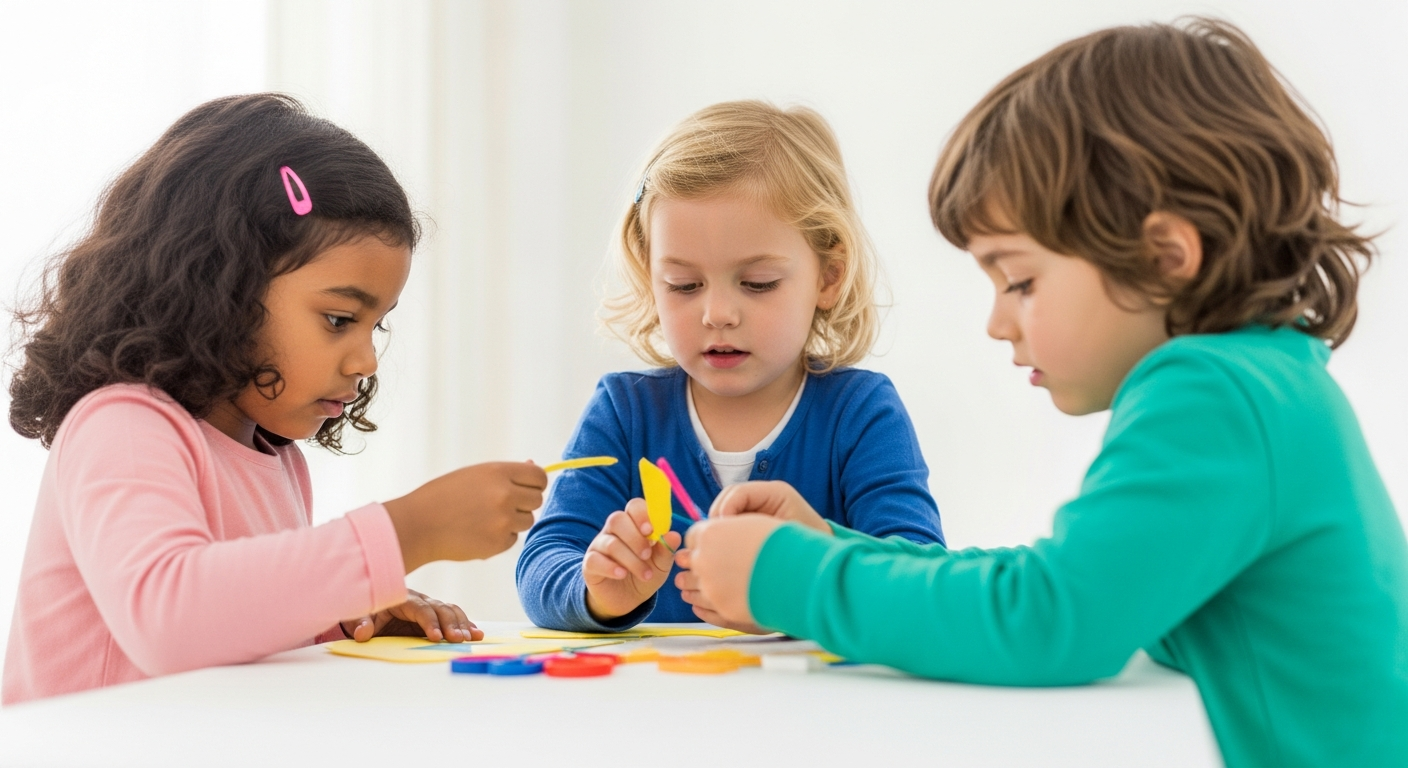
Table of Contents
- Introduction
- The Developmental Superpowers of Easy Crafts
- Essential Supplies for Effortless Crafting
- Top Easy Craft Ideas to Spark Communication
- Integrating Speech Blubs: Your Partner in Communication Growth
- Maximizing Your Child's Communication Journey with Speech Blubs
- Conclusion
- FAQ
Ever found yourself staring at a pile of colorful construction paper, a handful of pipe cleaners, and a bottle of glue, wondering how to transform them into more than just a momentary distraction for your child? Or perhaps you're a parent whose child is still exploring the vast world of sounds and words, and you're searching for fun, low-pressure ways to encourage their blossoming voice. As parents and caregivers, we all strive to provide engaging activities that not only entertain but also foster crucial developmental milestones. This is where the magic of easy crafts for kids truly shines.
This post will delve into a treasure trove of simple, accessible craft ideas that require minimal supplies, most of which you likely already have around the house. Beyond just keeping little hands busy, we’ll explore how these creative endeavors are powerful tools for nurturing speech and language development, fine motor skills, cognitive growth, and emotional expression. We’ll also reveal how integrating these hands-on activities with innovative tools like Speech Blubs can create a synergistic approach, empowering your child to "speak their minds and hearts" with confidence and joy. Get ready to transform everyday items into opportunities for learning, bonding, and communication growth.
Introduction
In the vibrant world of childhood, few activities capture a child's imagination quite like crafting. Yet, for many parents, the thought of elaborate craft projects can feel overwhelming, conjuring images of messy floors, expensive supplies, and hours of preparation. But what if we told you that the most impactful crafts are often the simplest, requiring little more than household items and a sprinkle of creativity? More importantly, what if these easy crafts could be a secret weapon in boosting your child's communication skills, fostering their ability to express themselves, and laying strong foundations for future learning?
At Speech Blubs, we understand the incredible power of play in a child's development. Our mission, born from the personal experiences of our founders who grew up with speech problems, is to empower every child to "speak their minds and hearts." We know that finding effective, joyful solutions for the 1 in 4 children who need speech support is paramount. This guide is dedicated to showing you how easy crafts are not just about creating something beautiful, but about creating opportunities for dialogue, discovery, and growth. We’ll cover a range of crafts, emphasizing those that promote conversation, encourage sound imitation, expand vocabulary, and build confidence, seamlessly tying them into a holistic approach to speech development. By the end, you'll be equipped with practical ideas to turn everyday moments into extraordinary learning adventures, understanding how these simple activities can be a powerful complement to tools like Speech Blubs and even professional therapy.
The Developmental Superpowers of Easy Crafts
Before diving into specific projects, let's appreciate why these seemingly simple activities are so beneficial. Crafts are a multisensory experience, engaging sight, touch, and even sound, all of which are crucial for early childhood development. When children manipulate materials, they're not just making art; they're building brains.
Enhancing Fine Motor Skills and Hand-Eye Coordination
The act of cutting with scissors, gluing small pieces, drawing lines, or tearing paper refines fine motor skills – the coordinated movements of the small muscles in the hands and fingers. These skills are fundamental not only for writing but also for speech articulation, as the same brain areas that control hand movements are often involved in controlling the muscles of the mouth and tongue. Improved dexterity can indirectly support clearer speech.
Boosting Cognitive Development and Problem-Solving
Crafts often involve following instructions, sequencing steps, and making choices about colors, shapes, and materials. This process stimulates cognitive functions such as memory, attention span, and critical thinking. When a child decides what color to paint a paper plate fish or how to construct a toilet paper roll rocket, they are actively engaging in problem-solving and creative planning.
Nurturing Emotional Expression and Self-Esteem
For many children, crafts offer a safe space to express emotions, ideas, and creativity without the pressure of words. Completing a project, no matter how simple, provides a sense of accomplishment and pride, significantly boosting self-esteem. This confidence can then spill over into other areas, including a willingness to try new sounds and words.
Igniting Language and Communication Skills
Perhaps most importantly, crafts are a natural springboard for language development. They provide context for conversation, introduce new vocabulary, and encourage descriptive language. As children work, parents can narrate actions ("You're cutting the blue paper!"), ask open-ended questions ("What do you think we should use for the fish's tail?"), and model new words. This interaction is invaluable. For a child who might be a "late talker," the low-pressure, engaging environment of a craft can be incredibly motivating to attempt new sounds or words related to what they are creating.
Essential Supplies for Effortless Crafting
One of the beautiful aspects of easy crafts is their reliance on everyday items. You don't need to visit a specialty craft store to get started. Many of the most engaging projects can be created with materials you likely already have. Think of it as a treasure hunt through your recycling bin and junk drawer!
Here’s a basic list to get you started:
- Paper Power: Construction paper (various colors), white printer paper, paper plates, toilet paper/paper towel rolls, old newspapers or magazines.
- Sticky Situations: Kid-safe glue sticks, liquid glue, tape (masking, clear, or colorful duct tape).
- Cutting & Coloring: Kid-safe scissors, crayons, washable markers, tempera or acrylic paints.
- Misc. Magic: Popsicle sticks, cotton balls, pipe cleaners, pom-poms, googly eyes (or just draw them!), yarn, string, small twigs from outside, empty cereal boxes, plastic bottles, buttons.
Remember, flexibility is key! If a craft calls for googly eyes and you don't have them, draw them on. If it needs tissue paper, cut up some colorful construction paper instead. The goal is to make it easy and accessible.
Top Easy Craft Ideas to Spark Communication
Now, let's dive into some fantastic, easy crafts that are not only fun but also purposefully designed to encourage speech and language development. We'll include practical scenarios to show how you can integrate these crafts with tools like Speech Blubs.
1. Paper Plate Adventures: From Animals to Aliens
Paper plates are a crafter's best friend – cheap, versatile, and readily available. They transform into almost anything with a little imagination.
- Craft Idea: Paper Plate Animals (fish, lion, bear, frog, owl), Paper Plate Masks, Paper Plate Spaceships.
- How it Boosts Communication:
- Vocabulary Expansion: Naming animals, colors, body parts (ears, eyes, nose, tail), shapes (circle plate, triangle ears). For the lion, "mane" is a new word. For a fish, "fins" and "scales."
- Sound Imitation: Making animal sounds ("Roar!" for the lion, "Ribbit!" for the frog, "Moo!" or "Baa!" for farm animals).
- Descriptive Language: "My fish is blue and has shiny scales." "The lion has a big, fuzzy mane."
- Following Directions: "First, cut out the ears. Next, glue them on top."
- Speech Blubs Connection:
- Scenario: A child is struggling with initial sounds, particularly /m/ and /b/. You're making a paper plate cow or sheep.
- Integration: While crafting, repeatedly say "Moo!" or "Baa!" As you finish, transition to the Speech Blubs app, specifically the "Animal Kingdom" section. Here, children learn by watching and imitating their peers make these sounds. The "video modeling" methodology allows them to see and hear the target sounds produced clearly, then mimic them in a fun, interactive way. This reinforces the sounds practiced during the craft, making learning holistic and engaging. You can also download Speech Blubs on Google Play.
2. Toilet Paper Roll Creations: Upcycling for Utterances
Don't toss those empty toilet paper rolls! They are fantastic, free resources for a multitude of crafts.
- Craft Idea: Toilet Paper Roll Animals (bunny, ladybug, octopus), Binoculars, Rockets, Mini Storage Bins.
- How it Boosts Communication:
- Action Verbs: "Roll," "paint," "glue," "cut," "stack."
- Prepositions: "On top," "inside," "under," "through." (e.g., "The pipe cleaner goes through the hole.")
- Narrative Skills: Creating a story about the rocket flying to the moon or the bunny hopping through a field.
- Creative Thinking: Encouraging children to think about what else they can make from a simple tube.
- Speech Blubs Connection:
- Scenario: Your child is making a toilet paper roll rocket and is excited about space. They are working on sequencing words and forming simple sentences.
- Integration: As you assemble the rocket, talk about "blast off!" and counting down. Then, open Speech Blubs and explore categories that encourage sequencing or descriptive words. The app's engaging activities, where kids mimic peers, can help them practice phrases like "Up, up, and away!" or "Ready for blast off!" The app's interactive nature means they're actively participating, rather than passively watching, reinforcing the language used during the craft. This is "smart screen time" at its best, moving beyond passive viewing and creating a powerful tool for family connection.
3. Popsicle Stick Wonders: Building Blocks for Language
Popsicle sticks are surprisingly sturdy and great for building.
- Craft Idea: Stick Puppets, Mini Frames, Small Houses, Bunny/Kitty Crafts.
- How it Boosts Communication:
- Counting & Numbers: Counting how many sticks are used.
- Spatial Concepts: "Long," "short," "wide," "narrow," "together," "apart."
- Storytelling: Using stick puppets to act out simple stories, encouraging dialogue and character voices.
- Question Formulation: "What will our puppet say?" "Where will the bunny live?"
- Speech Blubs Connection:
- Scenario: You've made popsicle stick puppets. Your child is shy about speaking in front of others but enjoys playing with the puppets.
- Integration: Use the puppets to encourage interaction, taking turns speaking for them. After playing, switch to Speech Blubs. Many of our activities encourage role-playing and mimicking emotions and expressions, which can be a stepping stone to speaking more confidently. The "video modeling" approach allows children to see other kids expressing themselves, which can lower inhibitions and build a love for communication. This is part of our commitment to providing an immediate, effective, and joyful solution for speech support.
4. Recycled Materials Art: Inventive Vocabulary
Gather various household recyclables – bottle caps, cardboard scraps, newspaper, fabric swatches.
- Craft Idea: Found Object Sculptures, Collages, Robots, Abstract Art.
- How it Boosts Communication:
- Categorization: Sorting items by color, size, texture ("smooth," "bumpy," "rough").
- Sensory Vocabulary: Describing the feel, look, and even sound of different materials.
- Creative Explanations: Encouraging your child to explain their creation, fostering complex sentence structures. "I used the bottle cap for the robot's eye because it is round and shiny."
- Concept Introduction: Discussing "recycling" and "repurposing."
- Speech Blubs Connection:
- Scenario: Your child is creating a "robot" out of various recycled items. They are developing their descriptive vocabulary but sometimes struggle to retrieve specific words.
- Integration: As they point to different parts of their robot, prompt them with questions. "What color is this part? What shape?" After the craft, explore Speech Blubs categories that focus on colors, shapes, or body parts (even robot body parts!). The app reinforces this vocabulary through engaging peer interactions, helping children build confidence in their expressive language. The scientific principles behind our app blend seamlessly with play, offering unique "smart screen time" experiences. Ready to get started? Create your account and start your 7-day free trial today.
5. Crafting with a Purpose: Beyond Decoration
Some of the most rewarding crafts are those that serve a practical purpose or can be gifted, giving children a sense of contribution and generosity.
a. Simple Homemade Bird Feeder
- Materials: Popsicle sticks, glue, string, birdseed.
- Communication Benefits: Discussing birds, nature, kindness. Using action verbs like "glue," "tie," "fill." Observing and describing the birds that visit.
- Speech Blubs Connection: "Look at the bird! It has feathers!" Then, explore Speech Blubs activities related to nature or animals, reinforcing the vocabulary.
b. DIY Costumes & Dress-Up Clothes
- Materials: Old t-shirts, construction paper, markers, fabric scraps.
- Communication Benefits: Role-playing, creating character voices, developing narratives, expressing emotions through play. "I am a brave superhero!"
- Speech Blubs Connection: The app's focus on video modeling allows children to see and imitate different expressions and sounds. This can inspire their costume play and enhance their ability to take on different roles, boosting their overall confidence in communication.
c. Painted Jars for Organizing
- Materials: Empty glass jars (e.g., jam jars), acrylic paint.
- Communication Benefits: Discussing colors, patterns, sorting categories (pens, crayons, small toys). "These are for the red pencils."
- Speech Blubs Connection: After organizing, use Speech Blubs to reinforce color recognition and object naming through its interactive games.
d. "S'more Love" for Neighbors
- Materials: Twigs, red/yellow paint, paper, cotton balls, graham crackers, chocolate, marshmallows.
- Communication Benefits: Discussing empathy, kindness, sharing. Sequencing steps for making s'mores. Describing the process and the delicious treat. "First, we paint the fire."
- Speech Blubs Connection: This craft emphasizes social communication and connection. Speech Blubs helps build foundational communication skills that make these social interactions richer and more confident.
e. Homemade Clean-Up Labels
- Materials: Pictures of toys, paper, markers/paint, glue/tape.
- Communication Benefits: Categorization ("Where do the Legos go?"), following multi-step instructions, reading simple words (if applicable). Reinforcing vocabulary for toys.
- Speech Blubs Connection: This activity can be paired with Speech Blubs sections that focus on object identification and categorizing, ensuring your child can clearly name and understand the items they are organizing.
Integrating Speech Blubs: Your Partner in Communication Growth
At Speech Blubs, we understand that every child's journey to confident communication is unique. We are committed to providing an immediate, effective, and joyful solution for families, blending scientific principles with play. Our app offers a one-of-a-kind "smart screen time" experience, acting as a screen-free alternative to passive viewing like cartoons, and a powerful tool for family connection.
Our unique approach is rooted in video modeling, where children learn by watching and imitating their peers. This method naturally activates mirror neurons in the brain, making learning new sounds, words, and phrases intuitive and fun. It's a scientific approach delivered through engaging activities that feel just like play.
How Speech Blubs Works Alongside Crafts:
- Pre-Craft Vocabulary Boost: Before starting a craft, use Speech Blubs to introduce relevant vocabulary. If you’re making a paper plate fish, explore the "Animal Kingdom" section to practice words like "fish," "swim," "blue," "fin."
- During-Craft Reinforcement: As you craft, narrate and prompt your child. If they're struggling with a particular sound or word, make a mental note.
- Post-Craft Practice: After the craft is complete, open Speech Blubs to reinforce the language used during the activity. The app’s interactive exercises can help solidify new words and sounds in a fun, pressure-free environment. For instance, if your child struggled with the /s/ sound while talking about "scissors" during the craft, target that sound in the app immediately after.
- Building Confidence: The app's peer-to-peer video modeling helps children feel less self-conscious and more motivated to speak, building the confidence they need to express themselves during craft time and beyond.
We believe in realistic expectations. Speech Blubs is a powerful supplement to a child's overall development plan and, when applicable, professional therapy. It fosters a love for communication, builds confidence, reduces frustration, develops key foundational skills, and creates joyful family learning moments. We are proud that our method is backed by science, placing us in the top tier of speech apps worldwide. You can explore our research page for more details.
Maximizing Your Child's Communication Journey with Speech Blubs
When considering Speech Blubs for your child, we want to be completely transparent about our options and value. Our goal is to provide accessible, high-quality support that fits your family's needs.
We offer two primary subscription plans:
- Monthly Plan: Priced at $14.99 per month. This plan offers access to our core features, allowing you to try Speech Blubs for a shorter period.
- Yearly Plan: Our most popular and highly recommended option, priced at $59.99 per year. This breaks down to just $4.99 per month, representing an incredible 66% savings compared to the monthly plan.
Why the Yearly Plan is the Best Choice
The Yearly plan isn't just about saving money; it’s about unlocking the full potential of Speech Blubs and gaining access to exclusive, high-value features designed to maximize your child's progress:
- 7-Day Free Trial: Only with the Yearly plan do you get a full 7-day free trial. This allows your child to fully explore the app, engage with its unique video modeling activities, and for you to experience firsthand how Speech Blubs can support their communication development without any commitment.
- Extra Reading Blubs App: As a Yearly subscriber, you'll gain access to our companion app, Reading Blubs. This app is specifically designed to complement speech development by building foundational reading and literacy skills, further enhancing your child's communication journey.
- Early Access to New Updates: Be among the first to experience our latest features, new activities, and exciting content additions.
- 24-Hour Support Response Time: Our dedicated support team prioritizes Yearly plan subscribers, ensuring you receive prompt assistance whenever you need it.
The Monthly plan, while flexible, does not include these valuable benefits. Choosing the Yearly plan truly provides the best value and the most comprehensive support for your child's development. We've seen countless families achieve wonderful milestones with this plan. See what other parents are saying about their child's success with Speech Blubs.
Conclusion
Engaging in easy crafts for kids is far more than just a way to pass the time; it's a powerful avenue for holistic development, especially for fostering robust speech and language skills. From honing fine motor control to sparking imaginative conversations and building self-confidence, these hands-on activities lay essential groundwork for your child’s ability to "speak their minds and hearts." By choosing simple projects that utilize everyday materials, you create a low-pressure, high-reward environment where learning feels like pure play.
When these creative endeavors are thoughtfully combined with scientifically-backed tools like Speech Blubs, the impact is even greater. Our unique video modeling method provides a joyful, effective "smart screen time" experience that reinforces the sounds, words, and phrases learned during craft time, turning every interaction into an opportunity for growth and connection. Remember, every "moo" imitated, every color named, and every story told during a craft contributes to building a confident communicator.
Don't let the thought of complex projects deter you. Start simple, embrace the mess, and cherish the learning that unfolds. Ready to empower your child's voice and turn everyday moments into communication milestones? Choose the Yearly plan for the best value and full access to all features, including the 7-day free trial and the Reading Blubs app. Download Speech Blubs now on the Apple App Store or Google Play Store, or sign up on our website to begin your 7-day free trial today.
FAQ
Q1: What age range are these easy crafts suitable for?
A1: Most of these crafts are adaptable for children between the ages of 3 and 10. Younger children will benefit from more adult assistance and supervision, focusing on sensory exploration and simple actions like tearing paper or painting with fingers. Older children can handle more intricate cutting, detailed drawing, and independent problem-solving. Always adjust the complexity based on your child's developmental stage and interests.
Q2: How can I encourage my child to talk more during craft activities?
A2: The key is to make it a natural conversation. Use descriptive language to narrate what you're doing ("I'm cutting the long, red strip"), ask open-ended questions that require more than a "yes" or "no" answer ("What do you think will happen if we mix these colors?"), and provide choices ("Do you want the blue glue or the yellow glue?"). Model sounds and words related to the craft, and celebrate every attempt your child makes to communicate. Turn-taking in speech is just as important as turn-taking in gluing!
Q3: My child seems disinterested in crafts. How can I make them more appealing?
A3: First, consider their interests. If they love animals, focus on animal crafts. If they love cars, make vehicle-themed projects. Second, keep it low-pressure and short. Start with a very simple 5-minute activity. Third, focus on the process, not the perfect outcome. Let them experiment and make a mess (within reason!). Lastly, incorporate an element of purpose or giving. Making a gift for a loved one or creating something useful (like a bird feeder) can be highly motivating. Sometimes, just having you sit down and engage with them is the biggest motivator.
Q4: How does Speech Blubs specifically help with communication skills learned during crafts?
A4: Speech Blubs acts as a powerful reinforcement tool. If your child learns new vocabulary during a craft (e.g., "star," "rocket," "glue"), you can then find those words or similar concepts within the Speech Blubs app's various sections. Our "video modeling" method allows children to see and imitate their peers making specific sounds and words, solidifying pronunciation and confidence. This direct correlation between hands-on play and interactive app learning creates a comprehensive approach, where children can practice expressive language, sound imitation, and build conversational skills in a fun, engaging, and scientifically-backed environment.