
Easy Crafts for Young Kids: Spark Creativity & Grow Skills
 By Speech Blubs Team•Jan 13, 2026•19 min.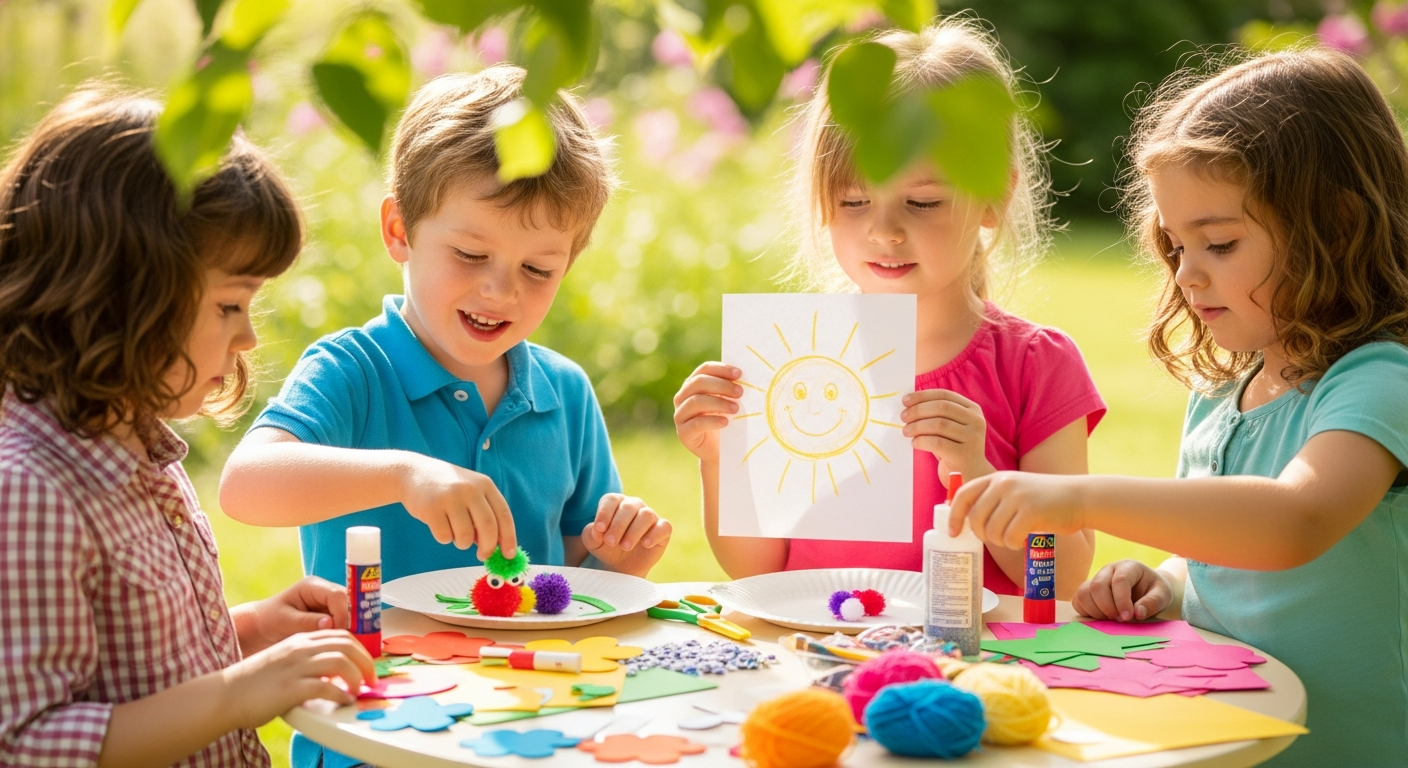
Table of Contents
- Introduction
- Why Crafts Matter: More Than Just Fun
- Getting Started: Your Essential Crafting Toolkit
- Our Favorite Easy Crafts for Young Kids
- Connecting Crafts to Communication: How Speech Blubs Can Help
- Ready to Empower Your Child's Voice?
- Making Craft Time a Success: Tips for Parents
- Conclusion
- Frequently Asked Questions
Have you ever watched your child's eyes light up, completely engrossed in mixing colors or carefully gluing shapes, and wondered if there's more to it than just a fun activity? The truth is, engaging in easy crafts with young children isn't just about keeping them busy; it's a powerful pathway to unlocking their imagination, building crucial developmental skills, and fostering invaluable family connections. In this comprehensive guide, we'll dive deep into why crafting is so beneficial for toddlers and preschoolers, share a treasure trove of simple, accessible craft ideas, and reveal how these hands-on activities can beautifully complement your child's communication journey. Get ready to transform everyday materials into tools for growth, joy, and meaningful learning experiences.
Introduction
In a world bustling with screens and fast-paced schedules, the simple act of crafting can feel like a refreshing pause, a moment where imaginations soar and little hands get delightfully messy. But for parents and caregivers, it’s often more than just creative play; it’s an opportunity for profound development. From the first wobbly brushstroke to the careful snip of child-safe scissors, each craft project is a chance for young children to build foundational skills that impact everything from problem-solving to self-expression. We'll explore the hidden benefits of crafting, providing you with practical, budget-friendly ideas that use materials you likely already have at home. This post aims to equip you with the knowledge and inspiration to make crafting a joyful, regular part of your child's growth, enhancing their cognitive, motor, and most importantly, their communication abilities.

Why Crafts Matter: More Than Just Fun
Crafting with young children goes far beyond creating a pretty picture for the fridge. These seemingly simple activities are rich learning experiences that contribute significantly to a child's holistic development. When children engage in crafts, they aren't just making something; they're learning, growing, and expressing themselves in profound ways.
Boosting Communication Skills
The tactile nature of crafts provides a fantastic springboard for language development. As children engage with materials, they naturally want to talk about what they're doing, seeing, and feeling. This is an incredible opportunity for parents to introduce new vocabulary, discuss colors, textures, and shapes, and encourage storytelling about their creations.
- Expanded Vocabulary: "Look at the squishy paint! What color is that? Can you hand me the long, shiny ribbon?" These descriptive words enrich a child's lexicon.
- Sequencing and Instructions: Following simple steps like "first, we cut; then, we glue" helps children understand sequencing and improves their ability to follow directions.
- Expressing Ideas: Crafting provides an outlet for children to communicate non-verbally, and then verbally articulate their intentions and the stories behind their art. For a parent whose child is shy about speaking but loves animals, crafting a paper plate lion can open up opportunities to imitate roaring sounds and animal names, perfectly complementing the "Animal Kingdom" section in Speech Blubs where they learn by watching peers. This engagement can lead to a breakthrough in expressing their thoughts.
- Asking Questions: Curiosity naturally leads to questions like "What if I mix blue and yellow?" or "How does this stick?" fostering an inquisitive mind and encouraging verbal interaction.
At Speech Blubs, we understand that nurturing a child's voice is about empowering them to "speak their minds and hearts." Our founders, who grew up with speech problems themselves, created a tool they wished they had—one that blends scientific principles with play. We believe that every interaction, including craft time, is a chance to build confidence and reduce communication frustration.

Developing Fine Motor Skills
Crafting is a workout for little fingers! The intricate movements involved in cutting, gluing, painting, and manipulating small objects are essential for strengthening the muscles in a child's hands and fingers. These fine motor skills are critical precursors to many other developmental milestones.
- Pincer Grasp: Picking up small beads or pom-poms for a collage refines the pincer grasp, crucial for holding a pencil and self-feeding.
- Scissor Skills: Learning to hold and manipulate scissors builds hand-eye coordination and strengthens hand muscles.
- Hand-Eye Coordination: Aligning shapes, painting within lines (or enjoying painting outside them!), and threading beads all require precise coordination between what the eyes see and what the hands do.
- Bilateral Coordination: Activities that require using both hands simultaneously, like holding paper with one hand and cutting with the other, improve bilateral coordination.
These physical skills are deeply intertwined with speech development. Strong oral motor skills, for example, are often supported by overall fine motor dexterity.
Nurturing Creativity & Problem-Solving
When given a blank canvas and a pile of materials, children are presented with endless possibilities. Crafting encourages them to think outside the box, experiment, and find unique solutions to creative challenges.
- Imagination: Turning a toilet paper roll into a rocket or a paper plate into a fish ignites imaginative thinking.
- Experimentation: What happens if I use a sponge instead of a brush? How can I make this stick? These questions drive experimentation and discovery.
- Problem-Solving: When a piece doesn't fit or a color isn't quite right, children learn to adapt, try new approaches, and persevere.
Fostering Emotional Expression
Art is a powerful tool for expressing feelings and thoughts that words might not yet capture. Crafting allows children to communicate their inner world, whether it's through vibrant colors reflecting joy or a particular shape representing something meaningful to them.
- Self-Expression: Creating something unique gives children a sense of agency and a way to share their feelings.
- Confidence Building: Completing a craft project, no matter how simple, provides a wonderful sense of accomplishment and boosts self-esteem.
- Patience and Persistence: Some crafts require waiting for glue to dry or carefully working on details, teaching children patience and the rewards of persistence.
Building Family Bonds
Perhaps one of the most beautiful aspects of crafting is the opportunity it creates for quality family time. Sitting side-by-side, sharing materials, and collaborating on a project strengthens parent-child bonds and creates lasting memories. It's a joyful, shared experience that builds connection and reduces passive screen time, transforming it into "smart screen time" when combined with educational tools.
Unsure if your child could benefit from a little extra communication support? Take our quick 3-minute preliminary screener to get a simple assessment and a free 7-day trial of Speech Blubs.
Getting Started: Your Essential Crafting Toolkit
You don't need a dedicated craft room or expensive supplies to unleash creativity. Many of the most engaging and developmentally beneficial crafts can be made with items you already have around the house or can easily acquire.
The "Must-Haves"
These are the foundational supplies that will open up a world of crafting possibilities:
- Paper: Construction paper in various colors, white printer paper, paper plates, cardboard (from cereal boxes or shipping boxes).
- Drawing & Coloring Tools: Kid-safe crayons, washable markers, tempera paint.
- Adhesives: Child-safe glue sticks, liquid school glue, masking tape.
- Cutting Tools: Kid-safe scissors (with blunt tips).
- Recyclables: Toilet paper rolls, paper towel rolls, egg cartons, old magazines.
The "Nice-to-Haves"
These items can add extra sparkle and sensory fun to your projects, but aren't strictly necessary:
- Googly Eyes: Instantly brings characters to life!
- Pom-Poms: Great for adding texture and practicing fine motor skills.
- Yarn/String/Ribbon: Useful for threading, hanging, or adding decorative elements.
- Stickers: Easy way to decorate and develop fine motor skills.
- Craft Sticks (Popsicle Sticks): Versatile for building, puppets, and more.
- Natural Elements: Leaves, small sticks, pebbles, flower petals (collected on a nature walk).
Safety First!
Always supervise young children during craft activities. Choose non-toxic materials, ensure scissors are kid-safe, and be mindful of small parts that could be choking hazards for toddlers. Prepare your workspace by covering surfaces with newspaper or a plastic tablecloth, and keep a damp cloth handy for quick clean-ups.
Our Favorite Easy Crafts for Young Kids
Here's a curated list of simple, engaging crafts designed for young children, focusing on process over product and maximizing developmental benefits. Each idea can be adapted for different age groups and skill levels.
Paper Plate Wonders
Paper plates are incredibly versatile and cheap!
- Paper Plate Pizza Craft:
- What you need: Paper plate, red construction paper (sauce), yellow construction paper (cheese), brown/black/green paper scraps (toppings), glue stick, kid-safe scissors.
- How to do it: Have your child spread red "sauce" glue on the plate, then tear or cut yellow "cheese" and various "toppings." This is fantastic for developing fine motor skills (tearing, cutting, gluing) and introducing food vocabulary. They can then "serve" their pizza, engaging in imaginative play and simple social interactions.
- Paper Plate Fish Craft:
- What you need: Paper plate, paint or markers, construction paper scraps, googly eyes (optional), glue.
- How to do it: Cut a triangle out of one side of the paper plate (this will be the mouth, and the cutout piece becomes the tail). Let your child paint or color the plate, then glue on paper scales, fins, and the tail. Add a googly eye. This craft helps with shape recognition, color identification, and practicing gluing skills. You can encourage them to make "fishy faces" and sounds, connecting the visual with vocal expression.
- Paper Plate Sun & Rainbow:
- What you need: Paper plate, yellow paint or marker, construction paper strips in rainbow colors, glue.
- How to do it: Color the paper plate yellow for the sun. Then, let your child glue rainbow-colored strips of paper around the edge to create sun rays or a rainbow. This is excellent for color matching, fine motor control, and discussing weather concepts.
Toilet Roll Creations
Don't toss those empty toilet paper rolls! They're craft gold.
- Toilet Paper Roll Animals (e.g., Olaf, Ladybug, Octopus):
- What you need: Toilet paper rolls, paint or markers, construction paper, googly eyes (optional), glue.
- How to do it: Choose an animal! For a ladybug, paint the roll red, add black dots and antennae from paper. For an octopus, cut strips at one end for tentacles, then curl them. This craft encourages imaginative play, animal identification, and practicing cutting and gluing. Imagine a child, having just crafted a "mooing" cow, then practicing the "moo" sound with our app's video modeling feature, imitating a peer.
- Cardboard Tube Telescope:
- What you need: Paper towel roll or toilet paper roll, paint or markers, stickers (optional).
- How to do it: Decorate the cardboard tube with paint, markers, or stickers. Once dry, your child can use it to "explore" their surroundings, developing observational skills and encouraging imaginative language about what they "see."
Nature's Art
Bring the outdoors in for these sensory-rich crafts.
- Nature Collage:
- What you need: Cardboard or thick paper, liquid glue, collected leaves, flowers, twigs, grass, pebbles.
- How to do it: Take a nature walk to collect various natural items. Back inside, let your child arrange and glue their treasures onto the cardboard. This activity builds vocabulary (soft, rough, smooth, pointy), encourages exploration, and enhances fine motor skills as they pick up and place small items.
- Suncatcher Nature Craft:
- What you need: Clear contact paper, collected natural items (thin leaves, petals), construction paper for frame.
- How to do it: Cut two pieces of contact paper. Peel the backing off one piece and let your child arrange their nature finds onto the sticky side. Carefully place the second piece of contact paper on top, sealing the items. Frame with construction paper. Hang it in a window to observe light and color. This is wonderful for color recognition, fine motor control, and understanding transparency.
Sensory & Process Art
These crafts focus on the experience, making them perfect for young children.
- Homemade Finger Paint:
- What you need: Cornstarch, water, food coloring (or washable paint).
- How to do it: Mix 1 cup cornstarch with 1 cup cold water, then slowly add 2 cups boiling water, stirring until thick. Divide into bowls and add food coloring. Let your child explore the colors and textures with their fingers. This provides an incredible sensory experience, encourages color mixing, and develops tactile awareness, which can be linked to sensory processing in speech.
- Ooey Gluey Suncatchers:
- What you need: School glue, food coloring, parchment paper or plastic lid.
- How to do it: Squirt puddles of glue onto parchment paper. Add a drop or two of different food colors to each puddle. Let your child swirl the colors with a toothpick or cotton swab. Once dry (which takes a day or two), peel off the colorful "suncatcher" and hang it. This fosters patience, color recognition, and fine motor control.
- Paint with Bubbles:
- What you need: Dish soap, water, non-toxic liquid paint, straws, paper.
- How to do it: Mix water, a few drops of dish soap, and a squirt of paint in shallow bowls. Show your child how to blow through a straw into the mixture to create colorful bubbles. Then, gently place paper over the bubbles to capture the prints. This is a wonderfully surprising activity that teaches cause and effect and encourages controlled breath, a crucial skill for speech production.
- Monster Puppets:
- What you need: Old socks, googly eyes, yarn scraps, felt scraps, glue.
- How to do it: Let your child decorate old socks with googly eyes, yarn hair, and felt mouths/teeth. Once dry, they can use their monster puppets for storytelling, imaginative play, and expressing different emotions through their puppet's "voice." This is fantastic for narrative development and emotional literacy.
Building & Constructing
These projects engage engineering and spatial reasoning skills.
- Recycled Guitar:
- What you need: Shoebox, rubber bands of varying thickness, toilet paper roll (for neck), paint or markers.
- How to do it: Decorate the shoebox. Stretch rubber bands around the opening of the shoebox. Attach a toilet paper roll as the neck. Your child can strum their "guitar," exploring different sounds and pitches. This craft introduces concepts of sound, vibration, and encourages musical exploration and creative expression.
- Cardboard Hedgehogs:
- What you need: Cardboard, scissors, markers.
- How to do it: Cut a simple hedgehog shape from cardboard. Your child can then draw "spikes" all over it, practicing repetitive strokes and fine motor control. This is a simple, low-mess craft that encourages attention to detail and creative design.
Connecting Crafts to Communication: How Speech Blubs Can Help
As a parent, you’re constantly looking for ways to enrich your child’s development. Crafting provides a fantastic foundation for communication, and our Speech Blubs app is designed to build on that foundation, offering a unique and effective approach to speech therapy and language development.
Video Modeling: Learning from Peers
One of the cornerstones of the Speech Blubs methodology is "video modeling," where children learn by watching and imitating their peers. This natural, engaging approach taps into mirror neurons, making learning intuitive and fun. Imagine your child crafting an animal, then seeing another child on Speech Blubs making the sound and word for that same animal. This multi-sensory experience reinforces learning and makes it stick. We provide an immediate, effective, and joyful solution for the 1 in 4 children who need speech support, blending scientific principles with play.
Interactive Screen Time: An Active Experience
Unlike passive screen time (like watching cartoons), Speech Blubs offers an interactive experience. Our app encourages children to actively participate, imitate, and speak, transforming screen time into "smart screen time." This approach ensures that children are not just observers but active learners, making choices, responding to prompts, and practicing their speech in a supportive environment. The joyful interaction fosters a love for communication and builds confidence. Learn more about the science behind our method and why we're consistently rated among the top-tier speech apps worldwide by visiting our research page.
Speech Blubs: Your Partner in Development
Our mission at Speech Blubs is to empower children to "speak their minds and hearts." We know the journey of language development can sometimes be challenging, which is why our company was born from the personal experiences of our founders. We offer a powerful tool for family connection, providing parents with a resource that complements their efforts at home and, when applicable, professional therapy. From exploring new vocabulary to practicing articulation, Speech Blubs provides a screen-free alternative to passive viewing and a fun way to engage with language. For instance, after a craft session making different colored paper flowers, you could transition to the Speech Blubs "Colors" section, allowing your child to connect their physical creation with verbal practice, reinforcing color names and descriptions.
See what other parents are saying about their child's success with Speech Blubs by reading our testimonials.
Ready to Empower Your Child's Voice?
Integrating fun, easy crafts into your child’s routine is a fantastic way to support their development across many areas, including communication. And when you’re ready to take their speech and language skills to the next level, Speech Blubs is here to help.
We believe in providing an accessible, effective, and joyful solution for every child. Our pricing is designed to offer maximum value, especially with our Yearly plan:
- Monthly Plan: For $14.99 per month, you get access to our core features.
- Yearly Plan: Our most popular and highly recommended option is just $59.99 per year. This breaks down to an incredible value of just $4.99 per month, allowing you to Save 66% compared to the monthly plan!
The Yearly plan isn't just cheaper; it unlocks exclusive, high-value features designed to give your child the best possible learning experience:
- A 7-day free trial: Experience the full benefits before committing.
- The extra Reading Blubs app: Expand your child's literacy skills alongside their speech.
- Early access to new updates: Be the first to try out exciting new content and features.
- 24-hour support response time: Get prompt assistance whenever you need it.
The Monthly plan does not include these additional benefits, making the Yearly plan the clear best choice for comprehensive support and savings.
Ready to see the difference for yourself? Create your account and begin your 7-day free trial today and select the Yearly plan to get the full suite of features and the best value. Or, you can download Speech Blubs on the App Store or Google Play to begin your journey with us.
Making Craft Time a Success: Tips for Parents
To ensure crafting remains a positive and productive experience for both you and your child, keep these tips in mind:
Embrace the Mess
Children learn through exploration, and sometimes that means a little mess. Cover your work surface, dress your child in play clothes, and relax. The joy of creation often involves paint on fingers and glue on the table – these are signs of active engagement! A little preparation can go a long way in managing the cleanup.
Focus on the Process, Not Just the Product
For young children, the act of doing is far more important than the finished item. Celebrate their efforts, their choices, and their enthusiasm, rather than striving for perfection or a specific outcome. This encourages creativity and reduces pressure. Ask "How did you do that?" or "What do you like about your creation?" instead of "What is it?"
Incorporate Language Naturally
Narrate what you’re doing ("Now we're cutting the long, blue strip"), ask open-ended questions ("What should we add next?"), and describe their actions ("You're making swirly lines!"). These interactions boost vocabulary, comprehension, and expressive language. Craft time is the perfect informal setting to practice and reinforce words and concepts.
Follow Their Lead
Offer choices of materials and ideas, but allow your child to lead the direction of their craft. If they want to paint the sky purple or turn a car into a bird, let them! This fosters independence, self-confidence, and a love for their unique creative process. It teaches them that their ideas are valued and that there's no single "right" way to be creative.
Conclusion
Easy crafts for young kids are much more than just a way to pass the time; they are vital tools for developmental growth, sparking creativity, boosting fine motor skills, and enriching communication abilities. By providing simple materials and a supportive environment, you empower your child to explore, learn, and express their unique selves. These hands-on activities create joyful memories and lay crucial foundations for future learning. Remember, every snip, glue, and splash is a step toward greater confidence and clearer communication.
Ready to combine the magic of crafting with powerful speech and language development tools? We invite you to experience the transformative power of Speech Blubs. Download Speech Blubs on the App Store or Google Play today to start your 7-day free trial. Be sure to select the Yearly plan to unlock exclusive features like the Reading Blubs app, early access to updates, and dedicated 24-hour support, giving your child the ultimate advantage in their communication journey. Create your account now and empower your child to speak their minds and hearts!
Frequently Asked Questions
Q1: What age are these easy crafts suitable for?
A1: Most of these crafts are designed for toddlers and preschoolers, typically ages 2-5, with adaptations to suit varying skill levels. Many can be simplified for younger children (with more adult assistance) or made more complex for older children. The key is to focus on the process and allow children to engage at their own pace.
Q2: How can I make craft time less messy?
A2: While embracing some mess is part of the fun, you can minimize it by using washable paints and markers, covering your workspace with old newspapers or a plastic tablecloth, and having wet wipes or a damp cloth readily available. Using craft trays or cutting mats can also help contain materials. Consider taking some messy crafts outdoors on a nice day!
Q3: What if my child isn't interested in a specific craft?
A3: Don't force it! Children have varying interests, and what excites one child might not appeal to another. Offer a variety of craft ideas and materials, and let your child choose. If they show disinterest, simply move on to another activity or let them lead their own creative play with the available materials. The goal is enjoyment and exploration, not adherence to a specific project.
Q4: How do crafts directly support speech development?
A4: Crafts support speech development by expanding vocabulary (describing colors, textures, actions), improving sequencing and comprehension (following multi-step instructions), and providing opportunities for expressive language (talking about their creations, storytelling). The fine motor skills developed during crafting also lay a foundation for oral motor skills needed for articulation. Our Speech Blubs app then reinforces these verbal connections through interactive video modeling.
About the author