
Easy DIY Crafts for Kids: Boosting Joy & Communication
 By Speech Blubs Team•Jan 13, 2026•18 min.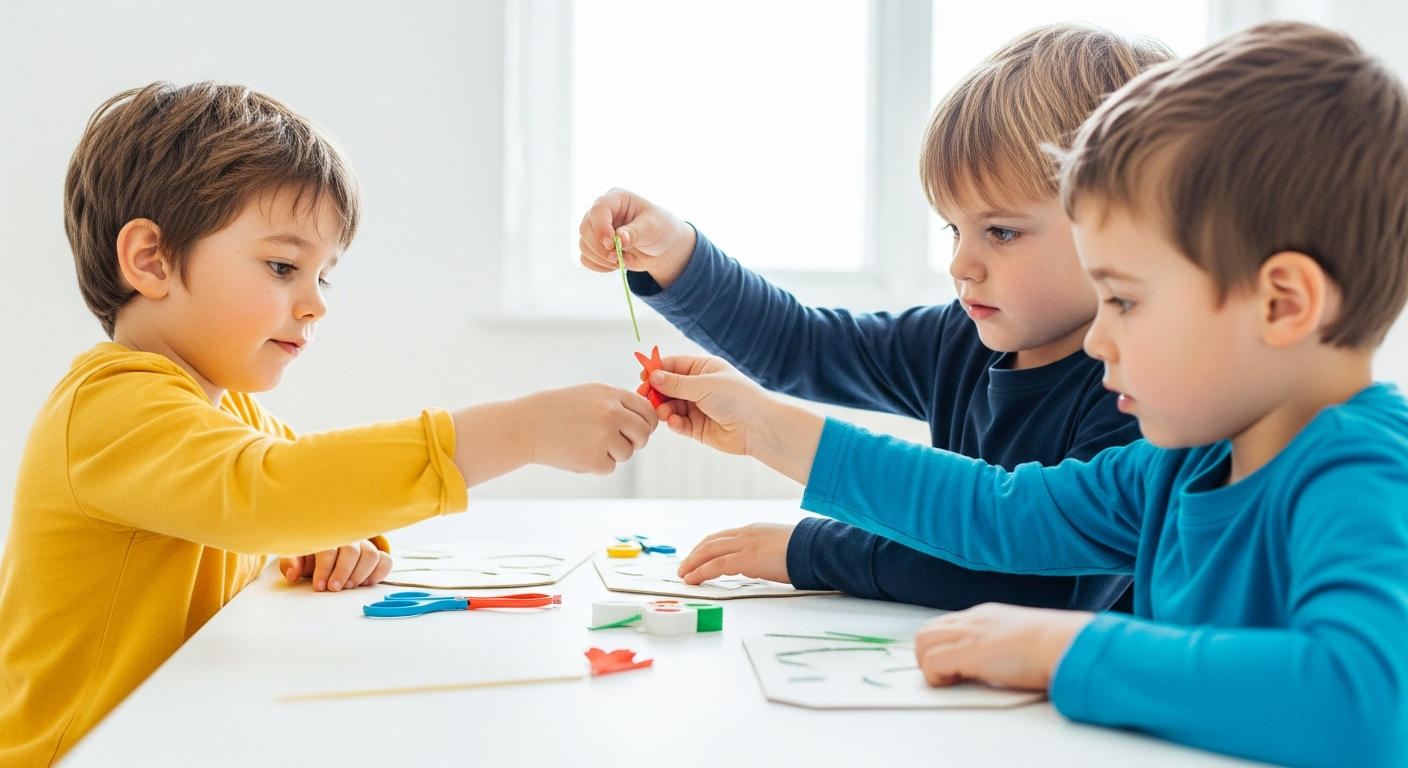
Table of Contents
- Introduction
- The Unseen Magic: How Easy DIY Crafts Fuel Child Development
- Speech Blubs: Your Partner in Communication Growth
- Crafting for Communication: Categories & Ideas
- Maximizing Language with Every Craft
- Supporting Your Child's Communication Journey with Speech Blubs
- Ready to Empower Your Child? Choose the Best Value!
- Conclusion
- Frequently Asked Questions (FAQ)
Does the thought of "I'm bored!" echoing through your home send a shiver down your spine? In an age dominated by passive screens, finding engaging, enriching activities that spark creativity and development can feel like a quest. But what if we told you that the simplest, most budget-friendly materials around your house hold the key to unlocking not just hours of fun, but also powerful communication skills in your child? Easy DIY crafts are more than just a way to fill time; they are a vibrant, hands-on playground for cognitive, emotional, and especially, linguistic growth. This post will dive deep into the world of accessible crafting, exploring how everyday items can become tools for development and how these activities beautifully complement comprehensive communication support, like what we offer at Speech Blubs.
Introduction
In a world where children often gravitate towards passive digital entertainment, the humble act of crafting stands out as a beacon of active engagement. Many parents wrestle with the desire to provide enriching experiences without breaking the bank or creating excessive mess. But the truth is, a few recycled materials and a sprinkle of imagination are all it takes to transform a dull afternoon into a vibrant learning adventure. This article isn't just a list of ideas; it's a guide to understanding the profound impact of easy DIY crafts on your child's holistic development, with a special emphasis on their journey to speaking their minds and hearts. We’ll explore how simple creative projects foster crucial skills, from fine motor coordination to problem-solving, and how they naturally create rich opportunities for language acquisition and practice. We’ll also show you how these hands-on activities harmonize with modern, scientifically-backed tools like Speech Blubs to build a truly comprehensive approach to your child's communication growth.

The Unseen Magic: How Easy DIY Crafts Fuel Child Development
At first glance, crafting might seem like just a fun pastime. But beneath the glitter and glue lies a powerhouse of developmental benefits. Easy DIY crafts offer a multi-sensory experience that engages various parts of a child's brain, fostering growth in ways that passive entertainment simply cannot.
Beyond Fun: Holistic Benefits of Hands-On Creation
- Fine Motor Skills: The act of cutting, gluing, drawing, molding, and tearing strengthens small hand muscles and improves dexterity, which are crucial for tasks like writing and self-care.
- Cognitive Development: Crafting involves problem-solving (how do I make this stick?), sequencing (what step comes next?), and critical thinking (what if I use this instead?). Children learn to plan, execute, and adapt.
- Creativity and Imagination: With open-ended crafts, children are free to express themselves, experiment with colors and textures, and bring their unique visions to life. This nurtures innovative thinking.
- Emotional Regulation: Crafting can be a calming and meditative activity, allowing children to focus, express feelings, and experience the satisfaction of completing a project. It builds patience and perseverance.
- Self-Esteem and Confidence: Successfully creating something, no matter how simple, gives children a tangible sense of accomplishment, boosting their self-worth and encouraging them to try new things.
The Crucial Link to Speech and Language Development
Perhaps one of the most significant, yet often overlooked, benefits of easy DIY crafts is their direct impact on speech and language development. Every snip, every dab of paint, every choice of color creates a natural springboard for communication.
- Vocabulary Expansion: As you craft together, you're constantly naming objects (paper, glue, scissors, pom-pom), colors (red, blue, sparkly), shapes (circle, square, star), actions (cut, fold, stick, paint), and textures (rough, smooth, sticky). This consistent labeling broadens a child's expressive and receptive vocabulary.
- Following Instructions: Most crafts involve a series of steps. "First, cut the paper. Then, glue it here." This process helps children understand and follow multi-step directions, a foundational skill for language comprehension.
- Describing and Narrating: Encourage your child to talk about their creation. "What are you making?" "Tell me about your alien." "How did you make that part?" This promotes descriptive language, storytelling, and sentence construction.
- Sequencing Events: Discussing the steps of a craft ("What did we do first? What's next?") helps children develop an understanding of temporal order, which is vital for narrating experiences and conversations.
- Problem-Solving and Negotiation: When a craft doesn't go as planned, it's an opportunity for discussion. "Oh no, the glitter spilled! What should we do now?" This encourages verbalizing solutions and negotiating ideas.
- Social Interaction and Joint Attention: Crafting together fosters shared experiences, eye contact, and turn-taking – all essential components of social communication. For children who may struggle with social cues, a focused activity like crafting provides a comfortable context for interaction.
For children who are late talkers or those working on specific speech sounds, crafts offer a low-pressure environment to practice. If a child is working on the "b" sound, making a "bouncing ball" craft provides numerous opportunities to say "b-b-ball," "b-b-bounce," or "b-b-blue." This kind of organic, play-based practice is incredibly powerful.

Speech Blubs: Your Partner in Communication Growth
Just as crafts lay a hands-on foundation for learning, we at Speech Blubs are dedicated to empowering children to "speak their minds and hearts" through our unique digital experience. Our company was born from the personal experiences of our founders, who all grew up with speech problems and created the tool they wished they had. We are committed to providing an immediate, effective, and joyful solution for the 1 in 4 children who need speech support, blending scientific principles with play into one-of-a-kind "smart screen time" experiences.
Our approach offers a screen-free alternative to passive viewing, like cartoons, by actively engaging children. We use a unique "video modeling" methodology, where children learn by watching and imitating their peers. This technique leverages mirror neurons, allowing children to intuitively grasp sounds, words, and expressions in a natural, engaging way. It’s not about replacing interaction, but enhancing it, providing a powerful tool for family connection and communication development. To see the science behind our methods and how we rank among the top speech apps worldwide, we invite you to explore our research page.
Crafting for Communication: Categories & Ideas
Now that we understand the incredible developmental benefits, let's dive into some easy DIY craft ideas that are not only fun but also packed with language-boosting potential. Remember, the goal is interaction and conversation, not perfection!
1. Recycled Wonders: Breathing New Life into Household Items
Every home has a treasure trove of recycled materials waiting to be transformed. These crafts teach sustainability and encourage imaginative play with open-ended possibilities.
- Toilet Paper Roll Animals:
- The Craft: Transform empty toilet paper or paper towel rolls into bunnies, hedgehogs, octopuses, or even mighty lions with paint, markers, and paper cutouts.
- Speech Connection:
- Vocabulary: Naming animals ("This is a lion," "Look at the octopus"), colors, body parts (ears, tentacles, mane).
- Sounds: Practicing animal sounds ("Roar!", "Baa!", "Moo!").
- Descriptive Language: "The lion has a fluffy mane," "The octopus has eight arms."
- Imaginative Play: Create a whole animal family and narrate their adventures. For a parent whose 3-year-old "late talker" loves animals, making a toilet paper roll lion and then roaring together provides a fun, motivating way to practice speech sounds while engaging with their favorite subject. Our "Animal Kingdom" section in Speech Blubs offers a perfect complement, with peers modeling animal sounds and names.
- Cardboard Box Creations:
- The Craft: Turn old shipping boxes into anything imaginable – a car, a house, a rocket ship, or even a simple nature collection box with a viewing window.
- Speech Connection:
- Spatial Concepts: "Let's go inside the box," "Put the toys on top."
- Action Verbs: "We need to cut here," "Let's paint the door."
- Storytelling: "Our rocket ship is going to the moon! What will we see up there?"
- Toilet Paper Roll Bird Feeder:
- The Craft: Roll a toilet paper tube in peanut butter (or sun butter for allergies) and then in birdseed. Hang it outside.
- Speech Connection:
- Sensory Words: "Sticky peanut butter," "crunchy seeds."
- Observation: "Look at the little bird! What is it doing?"
- Cause and Effect: "If we put seeds out, birds will come!"
2. Paper Play & Artistic Expressions: Simple Materials, Endless Creativity
Paper is arguably the most versatile craft material, requiring minimal setup and offering maximum impact on fine motor and artistic expression.
- Paper Plate Animals/Faces:
- The Craft: Use paper plates as a base for fish, suns, rainbows, or expressive masks. Paint, glue on tissue paper, or add googly eyes.
- Speech Connection:
- Identifying Feelings: If making masks, discuss emotions ("This mask is happy," "This one is sad").
- Colors & Shapes: "What color is your fish?" "Let's make a round sun."
- Describing: "My fish has big fins and shiny scales."
- Coffee Filter Flowers:
- The Craft: Color coffee filters with markers, mist with water to blend colors, then shape into flowers.
- Speech Connection:
- Color Mixing: "What happens when blue and yellow mix? It makes green!"
- Descriptive Words: "Wet," "soft," "beautiful," "colorful."
- Nature Vocabulary: "Petals," "stem," "flower," "bloom."
- Origami Heart Bookmarks:
- The Craft: Follow simple instructions to fold paper into a heart-shaped bookmark.
- Speech Connection:
- Sequencing: Verbally walk through each fold, emphasizing "first," "next," "then," "last."
- Prepositional Phrases: "Fold it in half," "Turn it over."
- Following Multi-Step Directions: This is a fantastic exercise for auditory processing and comprehension.
- Wax Paper Lanterns:
- The Craft: Layer colorful tissue paper shapes between two sheets of wax paper, iron gently, then form into a lantern shape.
- Speech Connection:
- Light and Dark: Discuss how the lantern creates light.
- Colors and Transparency: "The red paper lets the light through."
- Geometric Shapes: Identifying squares, circles, and triangles cut from tissue paper.
3. Sensory & Textural Adventures: Exploring Through Touch and Talk
Sensory crafts are incredible for engaging children and providing rich opportunities for descriptive language, especially for kids who might be more tactile learners.
- DIY Slime or Play-Doh:
- The Craft: Make homemade slime with laundry detergent or glow-in-the-dark play-doh.
- Speech Connection:
- Sensory Vocabulary: "Squishy," "stretchy," "gooey," "smooth," "cold," "warm."
- Action Verbs: "Mix," "knead," "pull," "squish," "roll."
- Cause and Effect: "If we add more glue, it gets stickier."
- Hot Rock Crayon Art:
- The Craft: Carefully heat rocks in the oven, then let children "draw" on them with crayons, watching the wax melt. Adult supervision is crucial for safety.
- Speech Connection:
- Temperature Concepts: "Hot rock," "melting crayon," "cooling down."
- Observation: "What is happening to the crayon?" "Look at the swirly colors!"
- Descriptive Words: "Smooth," "rough," "colorful," "shiny."
- Bubble Painting:
- The Craft: Mix paint with dish soap and water. Use a straw to blow bubbles onto paper, creating unique patterns.
- Speech Connection:
- Action Verbs: "Blow," "mix," "pop," "see."
- Size Concepts: "Big bubbles," "tiny bubbles."
- Sounds: Encourage "pop, pop, pop" sounds.
- Salt Painting:
- The Craft: Draw a design with glue on paper, sprinkle salt over the glue, then drop watercolors onto the salt, watching the colors spread.
- Speech Connection:
- Process Description: Narrate the steps. "First, glue. Then, salt. Next, paint."
- Observation: "Watch how the color travels!" "It's so sparkly!"
- Color Names: Reinforce color identification.
4. Wearable & Functional Creations: Personal Expression with Purpose
Crafts that result in something a child can wear, use, or give as a gift provide an extra layer of motivation and a sense of pride.
- Paper Beads & Jewelry:
- The Craft: Cut strips of paper, roll them tightly around a toothpick, glue the end, and string them onto a necklace or bracelet. Add varnish for durability.
- Speech Connection:
- Sequential Language: "Roll, glue, dry, string."
- Descriptive Words: "Round," "colorful," "long," "short."
- Comparing and Contrasting: "This bead is bigger than that one."
- Friendship Bracelets (Loom or Braided):
- The Craft: Use a simple cardboard loom or braid yarn/embroidery floss to create bracelets.
- Speech Connection:
- Social Language: Discussing who the bracelet is for, talking about friendship, expressing appreciation.
- Color Choices: "Which colors should we use for your friend?"
- Action Verbs: "Tie," "braid," "loop."
- DIY Magic Wands:
- The Craft: Decorate sticks or paper towel rolls with paint, glitter, ribbons, and beads to create unique magic wands.
- Speech Connection:
- Imaginative Play: "What magic spell will your wand cast?" "Who are you going to help with your magic?"
- Verbs: "Wave," "swish," "point," "transform."
- Descriptive Language: "Sparkly," "powerful," "colorful."
- Confetti Bookmarks:
- The Craft: Decorate cardstock bookmarks with tissue paper confetti and perhaps a touch of Mod Podge.
- Speech Connection:
- Reading Connection: Talk about favorite books or characters the bookmark will be used for.
- Colors and Patterns: "I'm making a rainbow pattern."
- Purpose: "This bookmark helps us remember where we stopped reading."
Maximizing Language with Every Craft
The secret to turning a fun craft into a powerful language lesson lies in how you interact with your child during the activity. Your role as a communication partner is key.
- Talk Through It: Narrate your actions and your child's actions. "Mommy is cutting the paper." "You are gluing the eyes."
- Label Everything: Point to and name objects, colors, shapes, and textures. "This is red paint." "Can you pass me the sticky glue?"
- Expand on Responses: If your child says "car," you can expand with "Yes, a big red car!" or "That's a car, and it's going fast!"
- Ask Open-Ended Questions: Instead of yes/no questions, ask questions that encourage more elaborate answers. "What are you going to do next?" "Tell me about your drawing."
- Encourage Storytelling: Once the craft is complete, encourage your child to tell a story about it. What adventures will their paper plate lion go on? Where will their straw rocket fly?
- Be a Co-Player: Join in the activity! Model language, demonstrate enthusiasm, and make it a shared, joyful experience. Children learn best when they are actively engaged with a responsive adult.
- Connect to Speech Blubs: For a child working on specific sounds or words, integrate their craft into the app experience. If they make an animal, after the craft, open Speech Blubs and find the "Animal Kingdom" section. This allows them to practice the sounds and words modeled by their peers, reinforcing the learning in a dynamic, engaging way. For example, a child who made an "octopus" can then imitate the word with peers in the app, or a "lion" can practice roaring. This creates a bridge between hands-on and "smart screen time" learning.
Supporting Your Child's Communication Journey with Speech Blubs
While easy DIY crafts provide invaluable hands-on learning, we understand that supporting a child's speech and language development often requires a multifaceted approach. That's where Speech Blubs comes in, providing a complementary layer of engaging and effective support.
Our app is designed as a powerful supplement to a child's overall development plan and, when applicable, professional therapy. It’s a tool that provides "smart screen time" – an active learning experience where children are prompted to imitate sounds and words from other children, fostering the development of complex communication skills through our video modeling methodology. This isn't passive viewing; it's active engagement that encourages speaking, imitating, and connecting. We truly believe in making learning joyful and accessible for families.
If you're ever uncertain about your child's speech development, we offer a quick 3-minute preliminary screener. It involves 9 simple questions and provides an immediate assessment and next-steps plan, giving you valuable insights into whether your child could benefit from additional support. It's a great starting point for many families, often leading to a free 7-day trial of our app. Don't just take our word for it; read what other parents are saying about their child's success and newfound confidence with Speech Blubs on our testimonials page.
Ready to Empower Your Child? Choose the Best Value!
You've seen how easy DIY crafts can transform everyday moments into powerful learning opportunities. Now, imagine combining that hands-on joy with an award-winning app designed to boost communication skills. With Speech Blubs, you can provide your child with both.
We offer flexible subscription plans to suit your family's needs:
- Monthly Plan: For just $14.99 per month, you get access to our core features.
- Yearly Plan: Our most popular and highly recommended option, priced at an incredible $59.99 per year. This breaks down to just $4.99 per month, which means you save a massive 66% compared to the monthly plan!
The Yearly plan isn't just about saving money; it's about unlocking the full Speech Blubs experience. With the Yearly plan, you receive:
- A 7-day free trial to explore all our engaging activities.
- The extra Reading Blubs app to further support literacy development.
- Early access to new updates and features.
- 24-hour support response time for any questions you may have.
These exclusive, high-value features are not included in the Monthly plan. To get the most comprehensive support for your child's communication journey and to truly experience everything Speech Blubs has to offer, we highly encourage you to choose the Yearly plan.
Ready to get started?
It's time to transform screen time into smart learning time and unleash your child's full communication potential. Choose the Yearly plan to begin your 7-day free trial today and access the full suite of features!
You can download Speech Blubs on the App Store or Google Play to begin this exciting adventure.
Conclusion
Easy DIY crafts are far more than mere entertainment; they are a profound avenue for child development, particularly for nurturing essential speech and language skills. By engaging in hands-on activities with readily available materials, you provide your child with rich opportunities for vocabulary expansion, instruction following, creative expression, and vital social interaction. These moments are where confidence is built, frustrations are reduced, and a genuine love for communication begins to blossom.
At Speech Blubs, we believe in supporting this natural growth with tools that empower children to "speak their minds and hearts." Our app complements these valuable hands-on experiences by offering "smart screen time" that leverages video modeling and peer imitation, making learning effective and joyful. Together, simple crafts and innovative technology create a powerful, holistic approach to your child's developmental journey.
Don't let another day pass without discovering the amazing potential within your home and at your fingertips. Take the first step towards a brighter, more communicative future for your child. Download Speech Blubs today on the App Store or Google Play and remember to select the Yearly plan to activate your free 7-day trial and unlock all the exclusive features for the best value!
Frequently Asked Questions (FAQ)
Q1: What are the best age groups for these easy DIY crafts?
A1: Most of these easy DIY crafts are suitable for children between the ages of 3 and 10, with some modifications. Younger children will benefit from more direct adult assistance and simpler tasks like gluing pre-cut shapes, while older children can handle more complex cutting, folding, and independent design. The key is to adapt the complexity to your child's current skill level and always prioritize safety with tools like scissors or hot items.
Q2: How can I make crafts truly educational for language development?
A2: The biggest impact comes from your interaction! Talk constantly throughout the process: narrate your actions, ask open-ended questions ("What happens if...?"), describe colors, shapes, and textures, and encourage your child to talk about their choices and creations. Expand on their responses, label everything, and use action verbs. For children needing specific speech practice, integrate words or sounds they are working on into the craft conversation.
Q3: What if my child gets frustrated with a craft?
A3: Frustration is a natural part of learning! Offer gentle encouragement, break down complex steps into smaller, manageable ones, and model patience. Sometimes, simply stepping back and letting them try a different approach, or even setting the craft aside for a bit, can help. Remember, the process is more important than the perfect outcome. Focus on the effort and the joy of creating together, rather than the final product.
Q4: How does Speech Blubs complement hands-on crafts?
A4: Speech Blubs acts as a powerful digital complement to hands-on learning. While crafts develop fine motor skills, sequencing, and natural language use through interaction, Speech Blubs provides a structured, engaging environment for direct speech and language practice. Our video modeling technique helps children learn specific sounds, words, and sentence structures by imitating peers. For instance, if you make an animal craft, your child can then practice animal sounds and names in the Speech Blubs app, reinforcing vocabulary and pronunciation in a fun, interactive way, turning screen time into "smart screen time."
About the author