
Easy Easter Crafts for Kids: Fun, Festive & Skill-Building
 By Speech Blubs Team•Jan 13, 2026•21 min.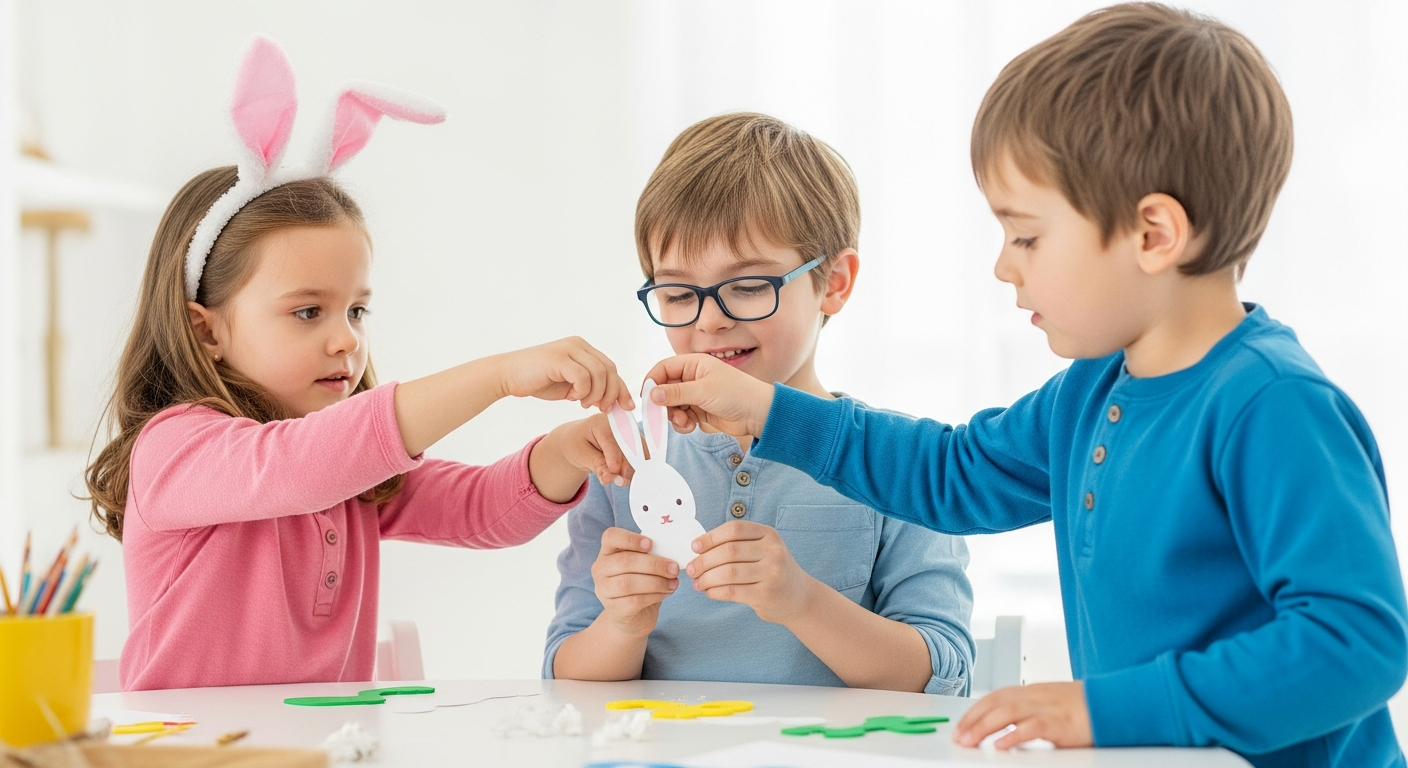
Table of Contents
- Introduction
- The Magic of Easter Crafts for Growing Minds
- Gather Your Essentials: Simple Supplies for Stress-Free Crafting
- Bunny-tastic & Chick-tastic Creations: Adorable Animal Crafts
- Egg-cellent Adventures: Decorating & Exploring Easter Eggs
- Springtime Scenery & Decorations: Bringing Easter to Life
- Beyond the Craft: Turning Play into Progress
- Speech Blubs: Your Partner in Joyful Communication
- Conclusion
- Frequently Asked Questions
Introduction
As the days grow longer and the first signs of spring emerge, Easter arrives, bringing with it a wonderful sense of renewal, joy, and the perfect opportunity for creative exploration with our children. While often associated with egg hunts and chocolate bunnies, Easter is also a fantastic time to engage little hands and minds in delightful craft projects. Have you ever considered that the simple act of cutting paper, painting an egg, or gluing cotton balls could be a powerful tool for your child's development, fostering more than just artistic flair?
This post will dive into a treasure trove of easy Easter crafts for kids, offering a vibrant collection of projects suitable for various age groups and skill levels. We'll move beyond just providing a list of activities, exploring how these festive creations not only bring smiles and decorate your home but also serve as incredible catalysts for fine motor skill development, cognitive growth, and crucially, speech and language enhancement. Our goal is to equip you with ideas that make this Easter truly special, turning everyday materials into cherished memories and developmental milestones, proving that joyful play is indeed the pathway to learning.

The Magic of Easter Crafts for Growing Minds
Easter crafts are far more than just a way to pass the time; they are miniature learning laboratories disguised as fun. For children, every snip of the scissors, every dab of paint, and every piece of glitter glued down contributes to a symphony of developmental benefits. These benefits span across several crucial areas, making crafting an invaluable activity for holistic child development.
Fostering Creativity and Imagination
At its heart, crafting encourages children to explore their artistic side, giving them the freedom to choose colors, shapes, and textures. When a child transforms a simple paper plate into a fluffy chick or a toilet roll into a hopping bunny, they are not just following instructions; they are engaging their imagination, envisioning something new, and bringing it to life. This process nurtures their ability to think outside the box, solve problems creatively, and express their unique perspective. It’s a powerful way for them to build self-expression and gain confidence in their own ideas.
Building Fine Motor Skills and Hand-Eye Coordination
Many Easter crafts involve tasks that are specifically designed to hone fine motor skills – the coordinated movements of small muscles in the hands and fingers. Cutting with child-safe scissors, gripping a paintbrush, peeling stickers, placing small buttons, or threading yarn all require precision and control. These activities strengthen the muscles in their hands, improve dexterity, and refine the all-important hand-eye coordination that is foundational for tasks like writing, drawing, and even self-feeding. The more opportunities children have to engage these muscles in fun, low-pressure ways, the more adept they become.
Enhancing Cognitive Development
Crafting also offers a wealth of cognitive benefits. Children learn about cause and effect ("If I glue this here, what happens?"). They practice problem-solving ("How can I make the bunny's ears stand up?"). They develop their ability to follow multi-step instructions, enhancing their memory and sequencing skills. Identifying colors, shapes, and patterns, as well as counting materials, all contribute to early math concepts. Furthermore, completing a craft project from start to finish instills a sense of accomplishment and teaches patience and perseverance.

Boosting Speech and Language Development
Perhaps one of the most exciting, yet often overlooked, benefits of crafting is its profound impact on speech and language development. As children engage with crafts, they create natural opportunities for conversation and communication. Think about it:
- Vocabulary Expansion: Naming colors ("This is a yellow chick!"), shapes ("Cut out a circle"), actions ("I'm gluing," "You're painting"), and objects ("Where's the button?").
- Following Instructions: "First, we cut the paper, then we glue it." This helps with receptive language and understanding multi-step commands.
- Descriptive Language: Encouraging children to describe their creations ("Tell me about your sparkly egg," "What is your bunny doing?").
- Narrative Skills: Creating stories around their craft ("This lamb lives on a green hill and eats flowers").
- Asking and Answering Questions: "What color should we use next?" "Can you pass me the glue?"
At Speech Blubs, we are deeply committed to empowering children to "speak their minds and hearts," and we understand that every interactive moment is a chance for language to blossom. Our company, Speech Blubs, was born from the personal experiences of our founders, who all grew up with speech problems and created the tool they wished they had. We believe in harnessing these joyful, interactive moments – like crafting – and complementing them with scientifically-backed resources that make speech development accessible and engaging. For parents who might be wondering if their child could benefit from additional support, our quick 3-minute preliminary screener is a great place to start, providing an assessment and next-steps plan.
Gather Your Essentials: Simple Supplies for Stress-Free Crafting
One of the best things about easy Easter crafts for kids is that they don't require fancy or expensive materials. Many items can be found around your home or picked up affordably at any craft or dollar store. Having a well-stocked "craft corner" with basics can make spontaneous crafting sessions a breeze.
Here’s a list of staple supplies that will get you started:
- Paper: Construction paper in various spring colors (yellow, pink, green, purple, blue), white paper, cardstock, paper plates.
- Adhesives: Child-safe glue sticks, liquid craft glue, tape.
- Cutting Tools: Kid-friendly scissors.
- Coloring Tools: Crayons, washable markers, tempera or finger paints, paintbrushes.
- Recycled Materials: Toilet paper rolls, egg cartons, old socks, newspaper.
- Textural Elements: Cotton balls, pom-poms, pipe cleaners, googly eyes, feathers, buttons, yarn, ribbon.
- Natural Elements: Small rocks or pebbles for painting.
- Other fun additions: Washi tape, glitter, stickers, plastic Easter eggs.
Remember, the goal is not perfection, but participation and enjoyment. Embrace the mess – it’s often a sign of deep engagement! Lay down old newspapers or a plastic tablecloth to make cleanup easier.
Bunny-tastic & Chick-tastic Creations: Adorable Animal Crafts
Easter is synonymous with cute animals, making them perfect subjects for children’s crafts. These projects are wonderful for introducing new vocabulary related to animals, sounds, and actions.
1. Fingerprint Bunnies & Chicks
This simple craft is a perennial favorite, especially for younger children, as it requires minimal supplies and creates delightful results.
- How-to: Provide paper and washable ink pads or paint. Guide your child to press their thumb or finger onto the pad, then press it onto the paper to make the body. Once dry, they can use markers to add ears, eyes, a nose, whiskers for bunnies, or a beak, eyes, and tiny wings for chicks.
- Developmental Boost: Fantastic for fine motor control (pressing fingerprints), color recognition, and descriptive language as you talk about the "fluffy bunny" or "yellow chick." For a child just learning animal sounds, practicing "cheep cheep" or "boing boing" (for hopping) while creating can be a fun, no-pressure activity. Our Speech Blubs app has engaging "Animal Kingdom" sections where children learn by watching peers make animal sounds, reinforcing these concepts playfully.
2. Cotton Ball Lambs
Soft and tactile, cotton ball lambs are a wonderful sensory craft.
- How-to: Draw or print a simple lamb outline on paper. Provide cotton balls and glue. Children can glue the cotton balls onto the lamb’s body to create its woolly texture. Once the "wool" is dry, they can add googly eyes, a small pink paper nose, and draw on a smile.
- Developmental Boost: Excellent for sensory exploration, fine motor skills (picking up and placing cotton balls), and descriptive vocabulary (soft, fluffy, white). Discussing the sound a lamb makes ("baa-baa") and where lambs live (farm) enriches their understanding of the world.
3. Paper Plate Animals (Chicks, Lambs, Bunnies)
Paper plates are incredibly versatile and make great foundations for animal faces or bodies.
- How-to: For a chick, paint a paper plate yellow. Add orange paper triangles for a beak, googly eyes, and yellow feathers for wings. For a lamb, paint it white, then add cotton balls or scrunched-up tissue paper for wool, black paper for legs, and googly eyes. For a bunny, cut the plate in half for ears or use two full plates for a round face, adding long paper ears, cotton ball tail, and a pink nose.
- Developmental Boost: Encourages cutting skills (for older kids), gluing, color mixing (if they paint), and imaginative play. You can turn these into puppets by adding a craft stick and have them "talk" to each other, promoting early conversational skills.
4. Toilet Roll Bunnies & Chicks
A fantastic way to repurpose common household items into cute Easter decor.
- How-to: Collect empty toilet paper rolls. Kids can paint them white for bunnies or yellow for chicks. Once dry, glue on paper ears (pink inside for bunnies), googly eyes, a small pom-pom nose for bunnies, or an orange paper beak for chicks. Draw on whiskers or chick feet with a marker.
- Developmental Boost: Teaches about recycling, enhances fine motor skills (painting, gluing small details), and provides opportunities for imaginative play as the finished crafts can become puppets or characters in a story. This kind of imaginative play is crucial for developing narrative skills and expressing ideas, which Speech Blubs actively nurtures through its interactive lessons.
Egg-cellent Adventures: Decorating & Exploring Easter Eggs
Easter eggs are a classic symbol of the holiday, offering endless possibilities for creative expression. From traditional painting to tactile and mess-free alternatives, there's an egg decorating method for every child.
1. Traditional Egg Painting (with a Twist!)
Decorating eggs is a beloved tradition, and there are many ways to make it kid-friendly.
- How-to: While blowing out eggs can be fun for older kids, consider hard-boiled eggs for younger ones, or even plastic/paper mâché eggs for reusability. For a less messy option, try "mess-free painting": put a hard-boiled egg and a few drops of paint inside a ziplock bag, seal it, and let your child shake and roll the bag to coat the egg.
- Developmental Boost: Encourages color recognition, pattern creation, and fine motor control (holding the egg, manipulating the bag). Describing the colors and patterns on their "unique egg" enhances descriptive language.
2. Washi Tape Eggs
For a mess-free and stylish alternative, washi tape is a game-changer.
- How-to: Provide hard-boiled or plastic eggs and various rolls of colorful washi tape. Children can tear or cut small pieces of tape and stick them onto the eggs in any pattern they like – stripes, polka dots, or abstract designs.
- Developmental Boost: Excellent for fine motor precision (peeling and sticking small pieces of tape), pattern recognition, and creativity. It's a quiet, focused activity that builds concentration.
3. Button Eggs
This tactile craft offers a unique sensory experience and beautiful results.
- How-to: Cut out large egg shapes from colored construction paper. Spread glue generously over the paper egg. Provide a collection of buttons in various sizes and colors. Children can press the buttons onto the glue to cover the egg. You can add "grass" at the bottom with green paper strips.
- Developmental Boost: Superb for fine motor skills (picking up and placing buttons), color sorting, counting, and sensory exploration. Discussing the "round buttons," "big buttons," or "small buttons" builds vocabulary and concept understanding.
4. Pebble Painting Easter Eggs
Take your egg decorating outdoors or bring nature inside with this fun idea.
- How-to: Gather smooth, flat pebbles or small rocks. Clean them thoroughly. Once dry, children can paint them with bright spring colors and patterns to resemble Easter eggs. Once the paint is dry, you can seal them with a clear varnish if they'll be placed outside.
- Developmental Boost: Connects children with nature, develops fine motor skills through painting, and encourages imaginative play. You can hide the painted pebbles for a unique "egg" hunt that can be talked about later, enhancing narrative recall.
5. Suncatcher Eggs
Capture the beautiful spring light with colorful suncatchers.
- How-to: Cut out large egg shapes from contact paper or clear sticky plastic. Provide tissue paper in various spring colors, cut into small squares or shapes. Children can stick the tissue paper onto the contact paper to create a stained-glass effect. Once complete, cover with another piece of contact paper and trim the edges. Punch a hole and hang in a window.
- Developmental Boost: Teaches about light and color, enhances fine motor skills (peeling and sticking), and provides a visual reward that encourages conversation about colors and patterns when the sun shines through.
6. Salt Dough Easter Eggs
A classic craft that combines modeling and painting for lasting keepsakes.
- How-to: Prepare a simple salt dough (flour, salt, water). Kids can roll out the dough and use egg-shaped cookie cutters or their hands to form egg shapes. Poke a hole at the top for hanging. Bake or air dry. Once hardened, children can paint their salt dough eggs with acrylic paints.
- Developmental Boost: Involves tactile exploration, strengthens hand muscles (kneading, rolling), and promotes creative expression through both molding and painting. This two-part project teaches patience and sequencing.
Springtime Scenery & Decorations: Bringing Easter to Life
Beyond individual crafts, creating larger decorations or themed items can turn your home into an Easter wonderland and involve children in bigger projects.
1. DIY Easter Wreath
A collaborative project that can involve multiple children or family members.
- How-to: Use a paper plate with the center cut out, a cardboard ring, or even a small embroidery hoop as the base. Children can glue on various Easter-themed items: small paper cutouts of bunnies, chicks, flowers; fabric scraps; yarn; pom-poms; or even plastic Easter egg halves.
- Developmental Boost: Promotes teamwork (if multiple children), teaches about spatial arrangement, and encourages imaginative design. Talking about where each item goes ("put the bunny on top of the flower") helps with understanding spatial prepositions.
2. Paper Daffodils
Bring the cheer of spring flowers indoors with simple paper daffodils.
- How-to: For older children, they can cut out petal and trumpet shapes from yellow and orange paper, then glue them together. Younger children can focus on cutting simple shapes (with assistance) and gluing, while an adult handles more intricate cuts or hot glue (if used).
- Developmental Boost: Improves scissor skills, teaches about plant anatomy (petals, stem), and introduces color combinations. Describing the process and the final flower ("It's bright yellow and pretty") builds descriptive language.
3. DIY Easter Baskets
A practical craft that children will love using for their egg hunts.
- How-to: Use a sturdy paper bag, a small cardboard box, or a pre-made basket. Children can decorate it with paint, markers, stickers, glitter, or by gluing on construction paper shapes like eggs, grass, or flowers. Add a handle with a paper strip or pipe cleaners.
- Developmental Boost: Encourages planning and purpose-driven crafting. It's a project with a clear end-use, which can be highly motivating. Children can describe what they will put in their basket, practicing future tense and narrative sequencing.
4. Easter Table Runner (Peep Stamps)
A fun and unique way to create a festive table decoration.
- How-to: Lay out a long roll of white paper or plain fabric. Provide paint in shallow dishes. Children can dip Marshmallow Peeps into the paint and stamp them repeatedly onto the paper or fabric to create colorful patterns. Let dry completely.
- Developmental Boost: Offers a unique sensory experience (the squishy Peeps), teaches about patterns and repetition, and encourages creative expression through stamping. It's a fun way to involve children in preparing for a family meal.
Beyond the Craft: Turning Play into Progress
The true magic of these easy Easter crafts for kids extends beyond the finished product. It lies in the shared experience, the conversations sparked, and the developmental leaps made along the way.
The Power of Co-Play and Engaged Interaction
When you sit down with your child to craft, you're not just supervising; you're co-creating. This active involvement is critical. Ask open-ended questions like, "What are you going to add next?" or "Tell me about your bunny." Describe your own actions ("I'm carefully cutting the paper") and narrate what your child is doing ("You're working so hard to glue those buttons!"). This kind of responsive interaction is a cornerstone of language development. It helps children connect words to actions, understand concepts, and feel heard and valued.
For a parent whose 3-year-old "late talker" loves animals, the "Animal Kingdom" section within the Speech Blubs app offers a fun, motivating way to practice "moo" and "baa" sounds. Imagine pairing that with making a cotton ball lamb – the real-world craft provides context, and the app reinforces the sounds through engaging peer video modeling. This synergistic approach maximizes learning and enjoyment.
Fostering Communication and Confidence
Every decision a child makes during crafting – choosing a color, deciding where to place an eye – is an opportunity for communication. Encouraging them to articulate their choices, describe their process, or tell a story about their finished piece nurtures their expressive language skills. Successfully completing a craft, especially with your positive encouragement, builds immense confidence. They see tangible proof of their efforts and creativity, which translates into a stronger self-image and a greater willingness to communicate.
If a child struggles with following two-step commands during craft time (e.g., "First get the glue, then find the red paper"), our Speech Blubs app provides targeted activities focusing on sequencing and instructions. This can then be practiced in a fun, tangible way during a craft session, reinforcing skills in a real-world context and reducing frustration. Our mission at Speech Blubs is to provide an immediate, effective, and joyful solution for the 1 in 4 children who need speech support, blending scientific principles with play into one-of-a-kind "smart screen time" experiences. We are a screen-free alternative to passive viewing (like cartoons) and a powerful tool for family connection.
Reducing Frustration and Cultivating Patience
Crafting, like any skill, takes practice. Sometimes things don't go as planned – the glue drips, the paper rips, or the colors mix unexpectedly. These moments are invaluable for teaching problem-solving, resilience, and patience. Instead of focusing solely on a perfect outcome, emphasize the process and the effort. Celebrate the unique qualities of their creation. This supportive environment helps reduce frustration and teaches children that it's okay to make mistakes and try again.
We know that speech development can sometimes be a journey with its own frustrations for both children and parents. That's why our unique approach of teaching complex communication skills through our "video modeling" methodology, where children learn by watching and imitating their peers, is so powerful. It makes learning feel like play, helping children build foundational skills and a love for communication in a joyful, low-stress environment. Our method is backed by science, placing us in the top tier of speech apps worldwide. You can learn more about our research and methodology here.
Speech Blubs: Your Partner in Joyful Communication
While Easter crafts provide wonderful hands-on opportunities, we at Speech Blubs are here to complement these experiences, providing targeted, engaging activities that supercharge your child's communication journey. We offer a "smart screen time" experience that transforms passive viewing into active, interactive learning. Our app is not just a tool; it's a movement towards empowering every child to express themselves fully. Many parents have seen remarkable progress; you can read what other parents are saying about their child's success with Speech Blubs.
We understand the unique challenges parents face, and that's why we've designed Speech Blubs to be an effective, joyful solution for the 1 in 4 children who need speech support. Our founders personally experienced speech challenges and developed Speech Blubs to be the innovative, supportive resource they wished they had growing up.
Unlock Your Child's Potential with the Best Value
We offer flexible plans to suit every family's needs:
- Monthly Plan: For $14.99 per month, you get access to our core features, designed to kickstart your child's speech development.
- Yearly Plan: This is by far our most popular and best value option at just $59.99 per year, which breaks down to an incredible $4.99 per month. That's a 66% savings compared to the monthly plan!
Why choose the Yearly Plan? It's not just about saving money; it's about unlocking the full potential of Speech Blubs with exclusive, high-value features:
- 7-Day Free Trial: Experience Speech Blubs with full access before committing. This trial is only available with the Yearly plan.
- Extra Reading Blubs App: Get access to our companion app, Reading Blubs, designed to further support literacy and language skills.
- Early Access to New Updates: Be the first to enjoy new activities, features, and content.
- 24-Hour Support Response Time: Get priority assistance whenever you need it.
The Monthly plan does not include these fantastic benefits, making the Yearly plan the clear choice for families committed to their child's long-term speech and language development.
Ready to provide your child with an engaging, scientifically-backed tool for speech and language development? Don't miss out on the incredible value and exclusive features of our Yearly plan. Start your 7-day free trial today and begin a joyful journey of communication with Speech Blubs. You can easily create your account and begin your free trial on our website, or download the app directly:
Conclusion
Easter is a season brimming with opportunities for family connection, creativity, and growth. Engaging in easy Easter crafts for kids offers much more than just a festive decoration; it’s a powerful pathway to developing essential fine motor skills, boosting cognitive abilities, and significantly enhancing speech and language development. From the simple joy of fingerprint bunnies to the tactile fun of button eggs, each craft provides a unique platform for learning, conversation, and building confidence.
By actively participating in these creative endeavors, asking open-ended questions, and narrating actions, parents can transform craft time into invaluable learning moments. And when combined with the innovative, scientifically-backed approach of Speech Blubs, these joyful experiences become even more potent. Our app, built on the power of video modeling, provides a captivating "smart screen time" experience that complements hands-on play, helping children speak their minds and hearts with confidence and joy.
Ready to make this Easter not just memorable for its crafts, but for the blossoming of your child's communication skills? Take the first step today. We encourage you to explore our app and witness firsthand the engaging and effective learning environment we've created.
Start your 7-day free trial and experience the full suite of features by choosing our best-value Yearly plan. You can create your account and begin your trial right here or download the app from your preferred store:
Join the Speech Blubs family and let's empower your child to communicate, create, and thrive this Easter and beyond!
Frequently Asked Questions
1. How do Easter crafts help with speech development?
Easter crafts provide natural opportunities for conversation and language practice. Children learn new vocabulary (colors, shapes, craft items, actions like "cut," "glue," "paint"), practice following multi-step instructions, use descriptive language to talk about their creations, and develop narrative skills by telling stories about their art. These interactive moments strengthen both receptive and expressive language skills.
2. What age group are these crafts suitable for?
Many of the crafts listed are adaptable for various age groups. Younger children (toddlers and preschoolers) will benefit from simpler tasks like fingerprint painting, gluing cotton balls, or stamping, often requiring more adult assistance. Older children (pre-teens) can tackle more complex projects involving cutting, detailed painting, or multi-step assembly. The key is to choose activities appropriate for your child's developmental stage and ensure adult supervision and co-play.
3. How can Speech Blubs enhance the benefits of crafting?
Speech Blubs complements hands-on crafts by providing targeted, engaging activities that reinforce language and speech skills. For example, if your child is learning animal sounds while making a chick craft, they can then practice those sounds through video modeling with their peers in the Speech Blubs app. The app's interactive lessons on vocabulary, following instructions, and articulation directly support and expand upon the language practice initiated during craft time, turning screen time into "smart screen time."
4. Is there a free trial for Speech Blubs?
Yes! We offer a 7-day free trial, allowing you to experience the full range of Speech Blubs features and see the benefits for your child. To access this valuable free trial, we encourage you to choose our Yearly plan, which also provides the best value and includes exclusive features like the Reading Blubs app and priority customer support. You can start your free trial by creating an account on our website or downloading the app from the Apple App Store or Google Play Store.
About the author