
Easy Fabric Crafts for Kids: Simple Projects & Big Smiles
 By Speech Blubs Team•Jan 13, 2026•26 min.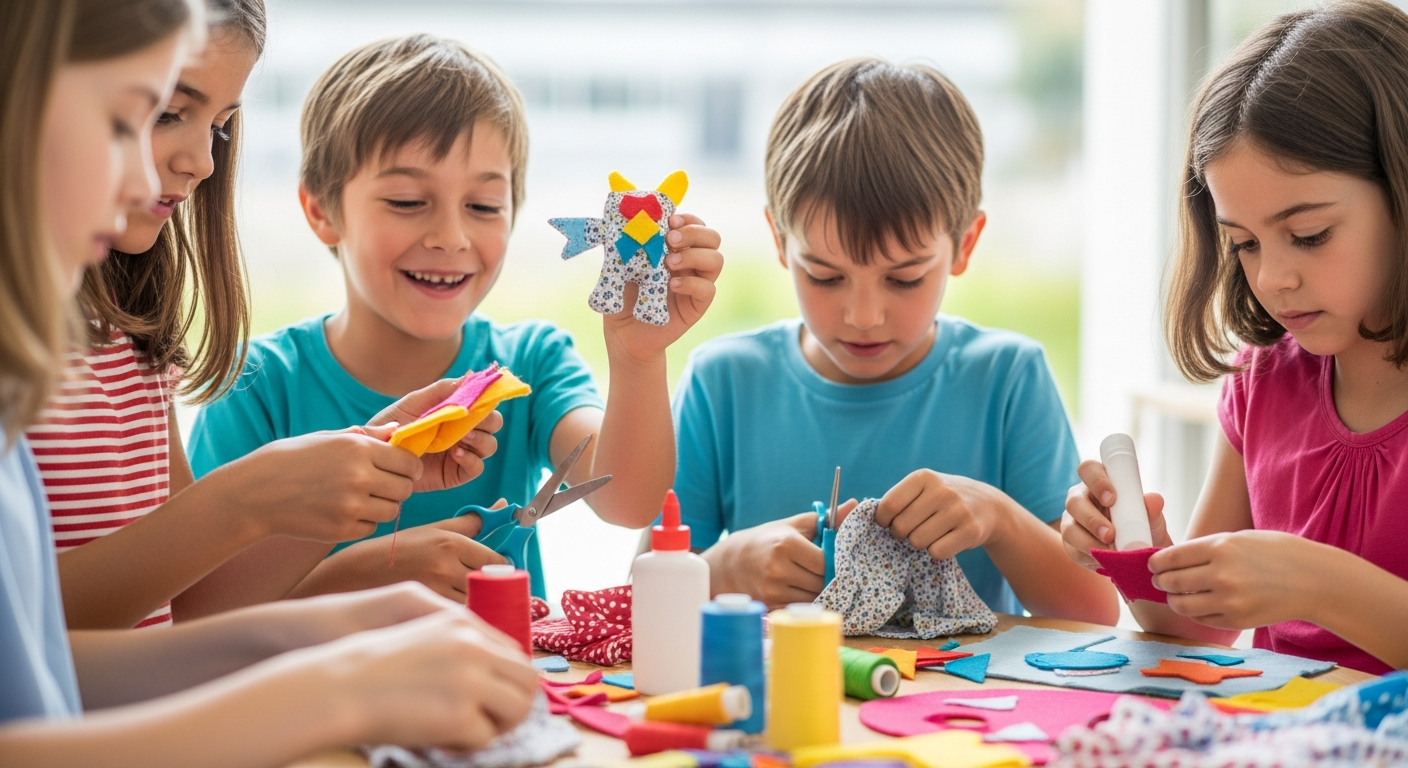
Table of Contents
- Beyond the Screen: Nurturing Growth with Fabric
- Fabric Collages: Textural Masterpieces
- Decorating Everyday Items: Upcycling with Style
- No-Sew Tied Crafts: Fun with Knots
- Lacing and Burlap Stitching: Early Needlework
- Cardboard Looms: Weaving Wonders
- Fabric Painting and Printing: Colorful Creations
- Tie-Dye and Glue Batik: Magical Transformations
- Fabric Wall Organizers: Taming Clutter Creatively
- Fabric Bookmarks: Encouraging a Love for Reading
- No-Sew Rag Dolls: Cherished Companions
Introduction
Have you ever watched a child transform a simple piece of fabric into a treasured creation? It’s a moment of pure magic, where scraps of material become superheroes, secret hiding places, or vibrant works of art. In an era often dominated by glowing screens, providing children with opportunities for tangible, hands-on engagement is more crucial than ever. Fabric crafts for kids offer a wonderful gateway to creativity, skill development, and screen-free fun, turning simple materials into endless possibilities. This blog post will dive deep into the enchanting realm of fabric crafts, exploring everything from no-sew wonders to simple stitching projects, and the surprising developmental benefits hidden within each colorful scrap. We’ll uncover how working with fabric sparks curiosity, hones fine motor skills, fosters problem-solving, and provides invaluable opportunities for self-expression, ultimately helping children to "speak their minds and hearts" through their unique creations. Get ready to transform everyday fabric into extraordinary adventures, creating cherished memories and building essential skills, one stitch or glue dab at a time.

The Textile Tapestry: Why Fabric is a Crafting Gem
Fabric holds a unique and irresistible allure for children. Unlike paper, which often has a predictable texture and feel, fabric offers a diverse sensory experience that immediately engages young hands and minds. The smooth glide of silk, the comforting softness of cotton, the rustic roughness of burlap, or the playful springiness of felt – each evokes a different sensation and sparks a new idea. This rich tactile engagement is incredibly beneficial for sensory development, helping children to better understand and interact with the world around them through touch. Beyond its profound sensory appeal, fabric is also remarkably versatile and often readily accessible, making it an ideal material for a vast array of crafts that cater to children of all ages and varying skill levels.
At Speech Blubs, our core mission is to empower children to "speak their minds and hearts." This isn't just about verbal communication; it's about fostering every avenue of expression, confidence, and connection. Our company was born from the personal experiences of our founders, who all grew up facing speech challenges and ultimately created the very tool they wished they had. We understand the profound impact that finding one's voice, whether through words, actions, or creative output, can have on a child's development and well-being. Fabric crafts resonate deeply with this philosophy because they provide a powerful, non-verbal outlet for imagination and self-expression, building foundational skills that support all forms of communication.
Moreover, fabric crafts often champion sustainability, which is a value we deeply appreciate. Utilizing fabric scraps from old clothing, discarded linens, or leftover pieces from previous sewing projects teaches children the invaluable lesson of upcycling and reducing waste. It encourages them to see potential and beauty in items that might otherwise be thrown away, transforming them into something beautiful, useful, and new. This resourceful approach not only benefits our environment but also cultivates ingenuity, a "make do and mend" mentality, and a sense of responsibility – all crucial life skills.

Beyond the Screen: Nurturing Growth with Fabric
In today's fast-paced, digital world, where children spend increasing amounts of time interacting with screens, finding activities that offer a genuinely screen-free alternative is paramount. Fabric crafts provide a refreshing and much-needed respite, offering a wealth of developmental benefits that passive screen viewing simply cannot replicate:
- Fine Motor Skills and Hand-Eye Coordination: The intricate actions involved in fabric crafts, such as carefully cutting fabric with blunt-tip scissors, threading a large needle (for older children), meticulously applying glue, and manipulating different textures, all demand precision and control. These activities actively strengthen the small muscles in a child's hands and fingers, which are essential prerequisites for tasks like writing, drawing, fastening buttons, and countless other daily self-care and academic skills.
- Creativity and Imagination: With a vibrant pile of fabric scraps, a child's imagination is truly limitless. There are no rigid instructions or prescribed outcomes, only endless possibilities. They can envision fantastical characters, create imaginary landscapes, design abstract patterns, or construct miniature worlds. This open-ended play fosters original thought, encourages divergent thinking, and develops crucial problem-solving abilities. For a child who might be a "late talker" and finds verbal expression challenging, creating a fabric puppet can provide a safe and motivating way to practice sounds and simple words through their character's voice.
- Sensory Exploration: The varied textures, diverse colors, and even distinct smells of different fabrics engage multiple senses simultaneously. This rich sensory input is fundamental for cognitive development, helping children to categorize, differentiate, and understand the physical properties of materials. It also helps in building sensory pathways in the brain.
- Patience and Persistence: Many fabric crafts, especially those involving simple stitching or more intricate designs, require sustained effort and focus. Children learn the deep satisfaction of seeing a project through to completion, understanding that beautiful and rewarding results often come from patience, perseverance, and a willingness to try again. This builds resilience and a growth mindset.
- Problem-Solving: Deciding which fabric best suits a particular idea, how to accurately cut it to fit a specific shape, or figuring out the most effective way to attach different pieces together often involves mini problem-solving challenges. These moments are invaluable for building critical thinking skills, spatial reasoning, and logical planning in a fun, low-pressure, and hands-on environment.
- Self-Expression: Fabric crafts empower children to express their unique personalities, individual preferences, and even their emotions through their thoughtful choices of colors, patterns, and designs. The finished product is a tangible, visible representation of their unique creative voice and a testament to their own capabilities. This boosts self-esteem and confidence.
Embracing these tangible, hands-on experiences is at the very heart of what we do at Speech Blubs. Just as we believe that mixing ingredients to create a delicious dish (like in our imaginary kitchen adventures) is a powerful way to learn and practice language, we know that manipulating fabric to create a craft offers equally profound developmental opportunities. Both types of activities provide a screen-free alternative to passive viewing and foster powerful family connection through shared experiences.
Ready to supplement these wonderful hands-on activities with "smart screen time" that truly helps your child thrive? Speech Blubs offers a joyful, immediate, and effective solution for the 1 in 4 children who need speech support, blending scientific principles with play. Our unique "video modeling" methodology, where children learn by watching and imitating their peers, is backed by extensive research, placing us in the top tier of speech apps worldwide for efficacy and engagement. Discover more about our approach and its proven benefits on our Research page.
No-Sew Fabric Crafts: Instant Gratification for Little Hands
Not every fabric craft requires a needle and thread, and for younger children or those just beginning their crafting journey, no-sew projects are an absolute game-changer. These activities are fantastic for building confidence and allowing kids to see quick, satisfying results, which fuels their enthusiasm for future crafting adventures. Relying on simple techniques like gluing, knotting, or clever folding, no-sew crafts offer instant gratification and a powerful sense of accomplishment.
Fabric Collages: Textural Masterpieces
One of the simplest yet most profoundly effective no-sew fabric crafts is the fabric collage. Think of it as painting with fabric scraps, creating a visual and tactile masterpiece!
Materials:
- A sturdy base: This could be a piece of cardboard, thick paper, a canvas, or even another larger piece of fabric.
- An exciting assortment of fabric scraps: Include a variety of textures like soft cotton, fuzzy felt, rigid denim, delicate lace, shiny satin ribbons, or even textured yarn.
- Child-safe fabric glue or a good quality school glue.
- Blunt-tip scissors suitable for children.
Process:
- Gather & Explore: Begin by letting your child dive into the fabric bin. Encourage them to explore the different pieces, choosing those that appeal to them based on color, texture, and pattern. This initial selection phase is a sensory delight and a wonderful opportunity for language development as you discuss "soft," "bumpy," "red," or "shiny."
- Cut & Tear: Empower your child to cut various shapes, strips, or even tear fabric into irregular pieces. Tearing fabric is especially beneficial for younger children as it helps develop bilateral coordination (using both hands together) and builds hand strength, which are essential pre-writing skills.
- Arrange & Glue: On their chosen base, children can freely arrange the fabric pieces. They might create abstract designs, recognizable objects (like a house, a tree, or an animal), or imaginary scenes. Encourage them to overlap pieces, create layers, and experiment with different compositions. Once they are happy with their arrangement, guide them to apply glue to each piece and firmly press it onto the base, smoothing out any bubbles.
Learning Outcomes: This activity profoundly refines scissor skills, develops crucial spatial awareness, encourages color and pattern recognition, and allows for boundless creative expression without the added complexity of sewing. For a child learning to describe attributes, a fabric collage provides a tangible way to talk about "big," "small," "rough," and "smooth," expanding their vocabulary.
Decorating Everyday Items: Upcycling with Style
Fabric scraps are absolutely perfect for personalizing and upcycling common household items. This gives old objects a fresh new look while simultaneously fostering a strong sense of ownership and pride in a child's unique creations.
Fabric-Covered Frames: Displaying Memories with a Personal Touch
Materials:
- Plain wooden or cardboard picture frames (readily available at craft stores or even upcycled from old frames).
- Assorted fabric scraps (strips, small squares, or irregular shapes all work beautifully).
- Fabric glue.
- Scissors.
Process:
- Preparation: Guide your child to select their favorite fabric scraps. You can pre-cut strips or squares, or let them practice their scissor skills by cutting their own.
- Gluing & Placing: Apply a thin, even layer of glue to a small section of the frame. Carefully help your child press a fabric piece onto the glued area, smoothing out any wrinkles. They can overlap pieces for a layered, textured effect or use contrasting patterns for a visually striking design. This is a wonderful opportunity to discuss patterns like "stripes," "polka dots," and "florals."
- Finishing: Once the entire frame is covered and the glue is dry, carefully trim any excess fabric from the edges for a neat finish.
Benefits: This project is a fantastic way to develop precision, cultivate informal measurement skills (e.g., "Is this piece long enough?"), and practice patience. The finished frame makes a lovely, heartfelt gift for friends or family, adding a personal touch to cherished photos or beloved artworks. It encourages children to "speak their hearts" through a thoughtful, handmade gesture.
Fabric Covered Boxes/Containers: Tidy Treasures
Materials:
- Empty shoe boxes, cereal boxes, or simple craft store wooden boxes – perfect for upcycling!
- Various fabric scraps of different sizes.
- Fabric glue and a paint brush or foam applicator for spreading the glue evenly.
Process:
- Design & Cut: Children can choose to cut larger pieces of fabric to fully cover the sides and top of a box, or use smaller scraps to create a vibrant mosaic effect, similar to the fabric collage.
- Apply & Smooth: Guide them to apply glue to one section of the box at a time. Carefully place the fabric, ensuring it is smooth and free of wrinkles. Work systematically around the box.
- Corners & Edges: For neat corners, you might need to make small cuts in the fabric before folding and gluing. This teaches basic spatial reasoning.
Benefits: This craft helps children develop an understanding of spatial relationships and how flat fabric conforms to three-dimensional shapes. It promotes organizational skills by creating personalized storage, and the final product can be used to hold their small toys, craft supplies, or other treasures.
No-Sew Tied Crafts: Fun with Knots
Tying knots is a fundamental fine motor skill that many children enjoy learning. It's also a precursor to tying shoelaces!
No-Sew Tied Cushions: Cozy Creations
Materials:
- Two equally sized squares of fabric (felt or fleece work best as they don’t fray).
- Standard cushion filling or soft stuffing.
- Sharp scissors.
Process:
- Cut Fringes: Place the two fabric squares perfectly atop each other. Around the entire perimeter of both squares, make cuts inward, about 1 inch deep and 1/2 inch apart, creating fringes.
- Tie the Sides: Starting from one side, show your child how to take a top fringe and a bottom fringe and tie them together in a simple knot. Continue this along three of the four sides. This repetitive action is great for reinforcing fine motor patterns.
- Stuff & Finish: Once three sides are tied, help your child gently stuff the cushion with filling until it's plump and soft. Then, tie the fringes of the final side to close the cushion.
Benefits: This project is excellent for developing bilateral coordination, fine motor strength, and the ability to follow a repetitive sequence. The resulting soft cushion is a tangible reward for their efforts.
Fabric Flowers: Blooming Beauty
Materials:
- Fabric scraps (felt, cotton, or silky fabrics work well).
- Scissors.
- Hot glue gun (adult supervision required) or strong fabric glue.
- Optional: Buttons, beads, or small leaves for embellishment.
Process:
- Cut Circles/Shapes: Help your child cut out several circles or petal-like shapes from different fabrics. Varying sizes adds depth.
- Layer & Glue: Show them how to layer the fabric shapes, from largest to smallest, to form a flower. Secure each layer with a dot of glue in the center.
- Embellish: Add a button or bead to the center for a finished look. These can be attached to hair clips, headbands, or even as embellishments on other fabric crafts.
Benefits: This activity helps with shape recognition, sequencing, and developing a sense of aesthetic arrangement. It’s also a great way to talk about colors and sizes.
Simple Stitching & Weaving: A Gentle Introduction to Textiles
Once children have mastered no-sew crafts and developed sufficient fine motor control, introducing simple stitching and weaving can be a natural next step. These activities offer a fantastic entry point into the world of textiles, teaching fundamental skills that build confidence and set the stage for more complex projects. Our commitment at Speech Blubs extends to fostering all aspects of a child's development, including the practical, hands-on skills that underpin learning.
Lacing and Burlap Stitching: Early Needlework
Lacing cards are often a child's first introduction to the concept of stitching, but using real fabric adds a new dimension of texture and challenge.
Materials:
- Pieces of burlap or sturdy felt (which won't fray easily).
- Large plastic or blunt metal needles.
- Thick yarn or embroidery floss.
- Embroidery hoops (optional, for holding the fabric taut).
Process:
- Prepare Fabric: If using an embroidery hoop, help your child secure the fabric in place. This makes it easier to handle.
- Simple Stitches: Show your child how to push the needle through the fabric from the back, then pull it through the front, creating a simple "up-and-down" or running stitch. They can create lines, shapes, or simply experiment with patterns.
- Beading (Optional): For an added challenge, introduce large beads that can be threaded onto the yarn as they stitch, adding another layer of fine motor practice.
Benefits: This activity is phenomenal for refining hand-eye coordination, practicing the pincer grasp, and developing concentration. It also introduces the concept of cause and effect ("If I push here, the thread comes out there"). For children working on sequencing or following multi-step directions, these activities provide a low-stakes environment for practice. Just as our Speech Blubs app breaks down complex speech sounds into manageable steps, simple stitching breaks down textile creation into simple, repeatable actions.
Cardboard Looms: Weaving Wonders
Weaving is an ancient craft that teaches pattern, rhythm, and the interplay of different strands. Cardboard looms make it incredibly accessible for kids.
Materials:
- Sturdy cardboard (e.g., from a cereal box).
- Scissors.
- Yarn or fabric strips of various colors and textures.
- Ruler and pencil (for marking).
Process:
- Create the Loom: Help your child cut a rectangular piece of cardboard. On the top and bottom edges, mark notches about 1/2 inch apart. Cut small slits at each mark, about 1/4 inch deep.
- Warp the Loom: Show your child how to thread yarn (the "warp" threads) by wrapping it around the cardboard, securing it in the notches. Ensure the threads are taut.
- Weave: Using a different color of yarn or fabric strip (the "weft" thread), show them how to weave it "over, under, over, under" the warp threads. They can use their fingers or a large blunt needle.
- Experiment: Encourage them to change colors, experiment with different textures of yarn, or even weave in thin fabric strips for unique designs.
Benefits: Weaving significantly develops fine motor skills, pattern recognition, and problem-solving (e.g., "What happens if I skip a thread?"). It also introduces mathematical concepts like rhythm and repetition. This is a wonderful way to foster patience and persistence, as a beautiful woven piece takes time and dedication. For children who enjoy structure and visual patterns, weaving can be incredibly satisfying.
Fabric Art Techniques: Beyond Cutting and Gluing
Fabric isn't just for cutting and gluing; it's also a fantastic canvas for various artistic techniques, allowing children to express themselves through color and design in unique ways.
Fabric Painting and Printing: Colorful Creations
Materials:
- Plain white or light-colored cotton fabric pieces (old pillowcases or t-shirts work great).
- Fabric paints (Jacquard Textile Paint or BioColor paint mixed with BioColor Fabric Medium are good options) or permanent markers (like Sharpies).
- Brushes, sponges, or natural elements (leaves, flowers) for printing.
- Iron (for setting fabric paints, adult task).
Process:
- Design: Children can use brushes to paint directly onto the fabric, creating abstract designs, pictures, or patterns. For a different effect, they can use sponges to dab paint, or apply paint to leaves and then press them onto the fabric to create natural prints.
- Marker Magic: Permanent markers are fantastic for drawing intricate designs or writing messages on fabric. The colors will stay vibrant even after washing.
- Setting: Once dry, most fabric paints require heat setting with an iron to become permanent and washable. This is an adult's job.
Benefits: This activity encourages artistic expression, color mixing, and understanding how different tools create different effects. Using natural elements for printing connects children with nature and observation skills. For a child who might struggle with forming letters verbally, drawing them on fabric with markers can be a fun, low-pressure way to practice literacy skills.
Tie-Dye and Glue Batik: Magical Transformations
These techniques offer exciting, unpredictable results that children adore.
Sharpie Tie-Dye: Accessible Color Blending
Materials:
- White cotton fabric (t-shirts, pillowcases, cloth napkins).
- Sharpie permanent markers in various colors.
- Rubbing alcohol in a spray bottle or droppers.
- Rubber bands (optional, for classic tie-dye patterns).
Process:
- Draw: Have children draw designs, dots, or patterns on the fabric with Sharpie markers. They can also use rubber bands to create scrunched patterns before drawing.
- Drip & Blend: Lightly spray or drip rubbing alcohol onto the Sharpie designs. Watch as the alcohol makes the colors spread and blend, creating beautiful, watercolor-like effects.
- Dry: Allow the fabric to dry completely. The alcohol evaporates, leaving behind vibrant, permanent designs.
Benefits: This activity introduces basic chemistry (how alcohol reacts with the ink) and encourages experimentation with color blending and pattern creation. The element of surprise as the colors spread is incredibly engaging.
Glue Batik: Resisting Patterns
Materials:
- Light-colored cotton fabric.
- White school glue in a squeeze bottle.
- Liquid watercolors or diluted fabric dyes.
- Plastic container for dyeing.
Process:
- Draw with Glue: Children draw designs onto the fabric using the school glue. Encourage thicker lines for clearer resist patterns.
- Dry Completely: Let the glue dry completely (this is crucial!).
- Dye: Once dry, immerse the fabric in a shallow bath of diluted liquid watercolor or fabric dye. The glue will "resist" the dye, preventing it from soaking into those areas.
- Rinse & Reveal: After dyeing, rinse the fabric under cool water. As the glue washes away, the beautiful batik pattern is revealed!
Benefits: This is a fantastic introduction to resist dyeing, teaching children about positive and negative space in art. It requires patience and offers a delightful reveal, fostering a sense of wonder and accomplishment.
Functional Fabric Crafts: Creativity with a Purpose
Crafts that have a practical use are incredibly rewarding for children, as they demonstrate how creativity can solve problems or enhance everyday life. These projects encourage thoughtful design and a sense of pride in creating something useful.
Fabric Wall Organizers: Taming Clutter Creatively
Materials:
- Sturdy fabric remnant (denim, canvas, or thick felt).
- Smaller fabric scraps for pockets.
- Fabric glue or basic sewing kit (for older kids).
- Dowels or a branch for hanging.
- Optional: Buttons, ribbons, or beads for decoration.
Process:
- Base: Help your child cut a large rectangle from the sturdy fabric to serve as the base of the organizer.
- Pockets: Cut smaller rectangles or squares from different fabric scraps for pockets. Discuss what they might want to store to determine pocket sizes.
- Attach Pockets: Glue or sew the pockets onto the fabric base, leaving the top edge open. Older children can practice simple straight stitches here.
- Decorate: Decorate the pockets and base with embellishments.
- Hang: Create a casing at the top of the base and insert a dowel or branch, adding a hanging string.
Benefits: This project combines creative design with practical problem-solving. It encourages children to think about organization and personalize their space. For a child learning to categorize or follow instructions, creating an organizer for specific items (e.g., "pens here," "small toys there") provides real-world context for those skills.
Fabric Bookmarks: Encouraging a Love for Reading
Materials:
- Small fabric scraps (felt or sturdy cotton).
- Fabric glue.
- Ribbons, buttons, or beads for decoration.
- Scissors.
Process:
- Cut Shapes: Help your child cut out two identical shapes from felt (rectangles, animals, or fun monsters).
- Decorate: Decorate one side of each shape with smaller fabric pieces, ribbons, or buttons.
- Glue Together: Glue the two decorated shapes together, leaving a small opening at the bottom if they want to insert a ribbon loop before sealing.
Benefits: This simple craft promotes literacy by creating a personalized tool for reading. It’s quick, satisfying, and encourages attention to detail.
No-Sew Rag Dolls: Cherished Companions
Creating a personalized rag doll is a timeless craft that results in a beloved toy.
Materials:
- An old stocking or sock.
- Pillow stuffing or fabric scraps for filling.
- Thin ribbons or elastic bands.
- Colorful fabric scraps for clothes.
- Googly eyes, markers, or embroidery floss for facial features.
- Hot glue (with adult supervision) or fabric glue.
Process:
- Doll Body: Fill the stocking with stuffing to form the head and body. Use elastic bands or tie ribbons to define the head, neck, and limbs.
- Face: Attach googly eyes or draw facial features with markers.
- No-Sew Clothes: For clothes, children can cut strips of fabric to wrap around the doll, securing with glue or elastic bands. Create a layered skirt by gathering several fabric strips with an elastic.
- Hair: Yarn scraps can be glued on for hair.
Benefits: This craft encourages imaginative play, nurturing, and storytelling. Children can create a unique character, fostering empathy and narrative skills. For parents whose children are working on expressive language, narrating the doll's creation ("First we make the head, then the body...") and then playing with the doll ("The doll is happy! She wants to play!") provides excellent language practice.
Fostering a Love for Learning: The Speech Blubs Philosophy in Fabric Crafts
At Speech Blubs, we firmly believe that learning should be a joyful and engaging adventure. Our commitment to providing an immediate, effective, and joyful solution for the 1 in 4 children who need speech support stems from this core belief. We blend scientific principles with play to create one-of-a-kind "smart screen time" experiences. Just as our app utilizes powerful "video modeling" – where children learn by watching and imitating their peers – we see the parallel power of observational learning in fabric crafts. When children watch a parent, caregiver, or older sibling cut, glue, or stitch, they are engaging their mirror neurons, effectively "practicing" the actions in their minds before attempting them themselves. This makes fabric crafts a truly effective and developmentally rich activity.
Our approach goes beyond traditional learning, encouraging active participation and exploration. Fabric crafts perfectly embody this spirit, providing a screen-free alternative to passive viewing (like cartoons) and serving as a powerful tool for family connection. These shared crafting moments create invaluable opportunities for conversation, problem-solving together, and mutual encouragement, strengthening bonds while building crucial skills.
We also understand the importance of setting realistic expectations. While fabric crafts won't magically turn your child into a master tailor overnight, they will consistently foster a love for creativity, build confidence in their abilities, reduce frustration through successful completion of tasks, develop key foundational skills (like fine motor control and concentration), and create countless joyful family learning moments. Similarly, while Speech Blubs is a powerful supplement to a child's overall development plan and, when applicable, professional therapy, we focus on the consistent progress and confidence gained, helping children gradually "speak their minds and hearts."
Ready to embark on a journey that blends hands-on creativity with cutting-edge speech development support? Take our quick 3-minute preliminary screener to get a simple assessment and a personalized next-steps plan for your child. It’s an easy way to understand if your child could benefit from our unique approach, and it’s the perfect first step towards their 7-day free trial!
Setting Up Your Fabric Craft Station: Tips for Success
Creating a dedicated, inspiring space for fabric crafts is key to encouraging sustained engagement and making the process enjoyable for both you and your child.
- Designate a Spot: This doesn't have to be a permanent room; a corner of a table, a portable bin, or a craft mat on the floor can work. The important thing is that it's a place where they feel comfortable creating.
- Organize Materials: Store fabric scraps in clear bins or baskets by color, texture, or size. Keep tools like scissors, glue, and markers in easily accessible containers. This helps children find what they need and encourages them to put things away.
- Safety First: Always use child-safe, non-toxic glues and blunt-tip scissors. Supervise closely, especially when using hot glue guns or sharp tools.
- Embrace the Mess: Crafting can be messy, and that's okay! Lay down old newspapers, a craft mat, or an old tablecloth to protect surfaces. Part of the fun is getting hands-on.
- Encourage Independence: Once materials are set up, step back and let your child lead the creative process. Offer guidance when asked, but resist the urge to "fix" their art. The process is more important than the perfect product.
Conclusion
The world of easy fabric crafts for kids is a vibrant, tactile, and endlessly rewarding realm waiting to be explored. From the simplest no-sew collages to the gentle introduction of stitching and weaving, these activities offer far more than just entertainment. They are powerful tools for developing crucial fine motor skills, sparking boundless creativity, fostering resilience through problem-solving, and providing rich sensory experiences. Most importantly, fabric crafts offer a precious opportunity for screen-free engagement and meaningful family connection, allowing children to express themselves, build confidence, and truly "speak their minds and hearts" through their unique creations.
At Speech Blubs, we champion every avenue of a child's development, recognizing that foundational skills nurtured through activities like fabric crafts complement the targeted support our app provides. We are committed to providing an immediate, effective, and joyful solution for children needing speech support, blending scientific principles with play in our one-of-a-kind "smart screen time" experience.
Ready to provide your child with both the joy of hands-on creativity and the incredible benefits of our scientifically-backed speech development app? It’s time to unlock their full communication potential.
Download Speech Blubs on the App Store or Google Play Store today!
Alternatively, you can create your account and begin your 7-day free trial directly on our website. We offer flexible plans to suit your family’s needs: our Monthly plan is $14.99, but for the best value, choose our Yearly plan at just $59.99 per year, which breaks down to an incredible $4.99 per month! By choosing the Yearly plan, you save 66% and unlock exclusive benefits, including a 7-day free trial, access to our extra Reading Blubs app, early access to new updates, and 24-hour support response time. The Monthly plan does not include these valuable extras. Make the smart choice for your child’s development and communication journey.
Don't just take our word for it! See what other parents are saying about their child's success with Speech Blubs by visiting our Testimonials page.
FAQ: Fabric Crafts for Kids
Q1: What age are fabric crafts suitable for?
A1: Fabric crafts can be adapted for a wide range of ages! Toddlers can enjoy exploring different fabric textures and tearing soft felt into pieces. Preschoolers can engage in simple gluing and cutting activities. School-aged children can move on to more intricate collages, basic weaving, or simple stitching with blunt needles. The key is to choose projects that match their developmental stage and fine motor skills.
Q2: What kind of fabric scraps are best for beginners?
A2: For young children and beginners, felt and fleece are excellent choices because they don't fray when cut and are easy to glue. Cotton fabrics are also versatile for collages, painting, and printing. Denim scraps can be sturdy for specific projects like tied cushions. Avoid very slippery or thin fabrics initially, as they can be harder for small hands to manage.
Q3: How can fabric crafts help with a child's communication development?
A3: Fabric crafts foster communication in many ways! They encourage descriptive language as children talk about colors, textures ("soft," "bumpy"), and shapes. They promote narrative skills when children create characters or scenes and tell stories about their creations. They also build confidence and self-expression, which are crucial for effective communication. The shared activity provides natural opportunities for conversation, turn-taking, and following instructions, all vital for language acquisition. For a child who might be hesitant to speak, using a fabric puppet to "speak for them" can be a fantastic way to practice verbal expression in a non-threatening context.
Q4: My child gets frustrated easily when crafting. How can I help?
A4: It's common for children to get frustrated, especially when trying new skills. To help, start with very simple, no-fail projects that offer quick gratification. Focus on the process of creating, rather than achieving a "perfect" end product. Provide plenty of praise for their effort and creativity, not just the outcome. Break down tasks into small, manageable steps, and offer hands-on assistance when needed. Remember that these activities are about learning and enjoyment, not perfection. Just like with speech development, consistent, positive reinforcement and a supportive environment are far more impactful than pressure.
About the author