
Easy Father's Day Crafts for Kids: Create Joyful Keepsakes
 By Speech Blubs Team•Jan 13, 2026•23 min.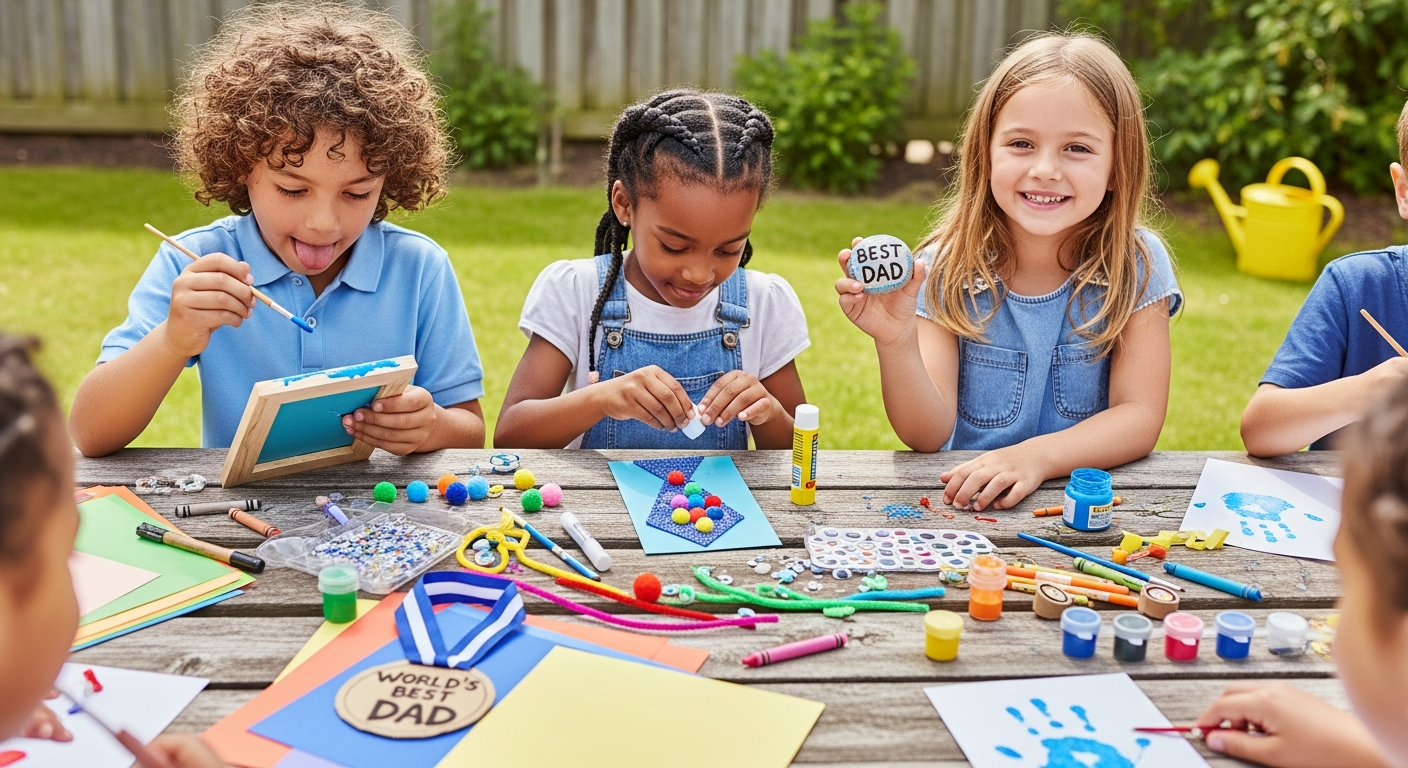
Table of Contents
- Why Handmade Gifts Matter: More Than Just a Craft
- Pre-Crafting Prep: Setting Up for Success
- Toddler-Friendly Treasures: Crafts for Little Hands (Ages 1-3)
- Preschool & Early Elementary Power: Crafts for Growing Kids (Ages 4-7+)
- Beyond the Basics: Adding a Personal Touch
- Crafting & Communication: How Speech Blubs Helps
- Why Choose Speech Blubs for Your Family?
- A Gift from the Heart, Skills for Life
- Frequently Asked Questions (FAQ)
Every year, as Father’s Day approaches, a familiar quest begins for many parents: finding that perfect gift that truly shows Dad how much he’s loved. While store-bought gifts have their place, there’s an undeniable magic in a handmade creation. A finger-painted card, a handprint keepsake, or a lovingly decorated frame carries a unique emotional weight – it's a tangible piece of a child's heart, a snapshot of their tiny hands, and a testament to their budding creativity. These aren't just gifts; they're cherished memories in the making, destined to be pulled out and smiled over for years to come.
But let's be honest, the idea of "crafting with kids" can sometimes feel more daunting than delightful, especially when you're aiming for something "easy" that still looks presentable and involves minimal meltdowns. We understand that balancing fun with practicality is key, and ensuring that the activity genuinely engages your child while also fostering their development is a win-win. This comprehensive guide is designed to transform that annual quest into a joyful, stress-free experience, offering a treasure trove of easy Father's Day craft ideas suitable for kids of all ages. We’ll explore how these simple projects not only delight dads but also provide invaluable opportunities for children to develop crucial skills, including communication. By the end, you'll be equipped with practical tips, inspiring ideas, and even a unique perspective on how to integrate smart tools like Speech Blubs into your child’s developmental journey, making Father's Day celebrations meaningful and skill-building.

Why Handmade Gifts Matter: More Than Just a Craft
Before we dive into the glitter and glue, let's reflect on why handmade Father's Day gifts hold such a special place in our hearts. They are far more than just paper and paint; they are powerful conduits for connection, creativity, and crucial childhood development.
The Unmatched Emotional Value
A gift crafted by a child's own hands carries a warmth that no store-bought item can replicate. It’s an expression of love, effort, and unique personality. Dads often treasure these simple, imperfect creations above all else because they represent a child's pure affection and earnest endeavor. Imagine Dad's face lighting up as he sees his child's tiny handprint immortalized, or reads a heartfelt (and perhaps hilariously misspelled) message of love. These are moments that build lasting memories and reinforce the special bond between father and child.
Nurturing Developmental Skills Through Play
Beyond the sentimental value, crafting offers a rich playground for a child's development. Every snip of the scissors, every squeeze of the glue bottle, every stroke of a paintbrush contributes to a tapestry of learned skills:
- Fine Motor Skills: These are the foundational abilities that allow children to manipulate small objects with their hands and fingers. Cutting, gluing, drawing, tearing paper, stamping, and painting all require precise hand-eye coordination and strengthen the small muscles in the hands and wrists, essential for future writing and self-care tasks.
- Cognitive Development: Following instructions, problem-solving (e.g., "How do I make this stick?"), understanding cause and effect, and making choices about colors and materials all stimulate cognitive growth. Crafting encourages children to think creatively and critically.
- Language and Communication: This is where crafting truly shines as a developmental powerhouse. As children craft, they naturally engage in conversations with their caregivers. They learn new vocabulary (e.g., "glue stick," "glitter," "ribbon," "template"), follow verbal instructions ("first, cut the paper; then, glue the picture"), describe their creations ("It's a red car for Daddy!"), and express their ideas and feelings. This interactive communication is vital for speech development, allowing children to practice articulation, sentence structure, and narrative skills in a meaningful context. For a child who might be a "late talker" or struggling with certain sounds, the low-pressure, engaging environment of crafting provides a perfect opportunity for gentle verbal prompting and modeling.
- Emotional Expression: Crafting provides a safe and creative outlet for children to express their feelings, especially love and appreciation. Choosing colors, designing patterns, or dictating messages allows them to personalize their gifts and convey emotions that they might not yet be able to articulate fully.
- Patience and Focus: Completing a craft, even a simple one, requires a degree of patience and sustained attention. These are crucial executive function skills that benefit children in all areas of learning.
At Speech Blubs, we believe that empowering children to "speak their minds and hearts" is paramount. Our mission, born from the personal experiences of our founders who all grew up with speech challenges, is to provide effective, joyful solutions. We understand that every interaction, including crafting, is a chance to build communication confidence. If you're wondering about your child's communication development, our quick 3-minute preliminary screener can offer immediate insights and next steps.

Pre-Crafting Prep: Setting Up for Success
To ensure your Father's Day crafting session is more joy than jumble, a little preparation goes a long way. It's about creating an environment that encourages creativity and minimizes stress for both you and your child.
Setting Realistic Expectations (A Parent's Secret Weapon)
This is perhaps the most crucial tip, especially when crafting with toddlers and preschoolers. As one of our favorite insights from seasoned parents reminds us, the DIY craft will not be an artistic masterpiece. And that’s perfectly okay! The beauty lies in the effort, the intent, and the child's unique touch. Embrace the imperfections; they are part of the charm. If you go into it expecting a gallery-worthy piece, you might find yourself frustrated, and your child might pick up on that pressure. Instead, focus on the process, the shared laughter, and the learning experience.
Choosing the Right Craft: Age-Appropriate Fun
Consider your child's age, attention span, and skill level when selecting a craft.
- For toddlers (1-3 years): Think simple, sensory, and mess-tolerant. Handprints, footprints, big brush strokes, sticker placement, and simple gluing (pre-cut shapes are great) are ideal. The goal here is exploration and exposure to textures, colors, and actions.
- For preschoolers (3-5 years): They can handle a bit more complexity, like simple cutting with safety scissors, more precise gluing, drawing, and decorating pre-made templates.
- For early elementary (5-7+ years): These children can manage more intricate cutting, detailed coloring, basic writing, and following multi-step instructions more independently.
Also, consider your personal "mess tolerance." Some crafts, like finger painting, are inherently messier than others. Decide how much mess you're willing to embrace and prepare your workspace accordingly.
Gathering Your Supplies: The Crafting Arsenal
Having all your materials ready before you start can prevent interruptions and maintain momentum. Many of these crafts use common household items or inexpensive craft supplies:
- Basics: Paper (construction paper, cardstock), washable paints, child-safe scissors, glue sticks, liquid glue, crayons, markers, colored pencils.
- Decorative Extras: Glitter, googly eyes, stickers, pipe cleaners, pom-poms, cotton balls, fabric scraps, yarn.
- Recycled Materials: Cardboard tubes, bottle caps, old magazines for collages, clean food containers.
- Nature Finds: Small rocks, leaves, twigs (if incorporating natural elements).
- Essentials for Hand/Footprints: Non-toxic washable paint, paper or canvas, wet wipes for quick clean-up.
Creating a Language-Rich Crafting Environment
This is your golden opportunity to blend crafting with communication development. As you prepare and craft, talk, talk, talk!
- Narrate: "First, we get the red paper. Now, we're going to cut it."
- Question: "What color should we use next? Do you want the big scissors or the small scissors?"
- Describe: "This glue is sticky! The glitter is sparkly."
- Prompt: "Can you say 'cut'? Can you say 'glue'?"
- Role-play: "Let's pretend this is Dad's favorite car. What sound does a car make?"
This rich linguistic input supports vocabulary acquisition, encourages verbal participation, and builds confidence in expressing thoughts and needs. For parents navigating speech development with their little ones, our platform at Speech Blubs offers a complementary approach to creating these language-rich environments, turning screen time into smart learning time.
Toddler-Friendly Treasures: Crafts for Little Hands (Ages 1-3)
Crafting with toddlers is all about sensory exploration, simple actions, and celebrating their tiny contributions. These ideas focus on safe, easy-to-manage activities that produce adorable, heartfelt gifts for Dad.
Handprint and Footprint Art: Timeless Keepsakes
There's a reason handprint and footprint crafts are perennial favorites – they're incredibly sweet, simple, and capture a moment in time.
- "Dad Rocks" Handprint Frame:
- Concept: Use your child’s handprints to decorate a simple picture frame, adding collected rocks for texture.
- How-to: Get a plain wooden or cardboard frame. Let your toddler paint the frame (or parts of it) with their hands or a large brush. Once dry, help them press their painted hand onto the frame for a memorable print. Gather small, smooth rocks from your yard or a craft store. Help your child glue these rocks around the frame. You can add letter stickers that spell "Dad Rocks" or write the phrase by hand. This craft, like the "You Rock DIY Fathers Day Frame" concept, is wonderfully adaptable.
- Speech Blubs Connection: While painting, talk about colors ("red," "blue," "green") and actions ("push," "press," "paint"). When gluing rocks, discuss textures ("smooth," "bumpy") and numbers ("one rock, two rocks"). If your child loves vehicles, practicing "car" or "truck" sounds in Speech Blubs can be a fun way to warm up for other activities.
- Wood Slice Handprint Art:
- Concept: A rustic take on the classic handprint, perfect for an outdoorsy Dad.
- How-to: Purchase an unfinished wood slice from a craft store. Have your child paint their hand with acrylic paint and press it onto the wood slice. Once dry, you can add details like "Best Dad Ever" or the year with a paint pen.
- Communication Benefits: Name the colors of the paint. Talk about the "hard" wood. "Press, press, press!"
- "Tiny Little Hands Will Melt Dad’s Heart" Shrinky Dink Keychains/Magnets:
- Concept: Turn miniature handprints or footprints into durable, adorable keychains or fridge magnets.
- How-to: Purchase Shrinky Dink paper. Help your child paint their thumb or finger and make prints on the paper. Alternatively, you can trace a small hand or foot. Cut out the shapes, punch a hole (if making a keychain), and bake according to package directions. Watch the magic as they shrink!
- Speech Blubs Connection: This is great for discussing "small" and "big," "hot" (oven) and "cool." You can count fingers or toes as you make prints. Our "Animal Kingdom" section, for instance, is perfect for practicing sounds and words like "bear" (for bear paws) or "frog" if using a green print, fostering imaginative play and verbal expression.
- Sweetest Father's Day Footprint Art (e.g., Pepper Print):
- Concept: Transform a footprint into a creative image, like a bell pepper or an animal.
- How-to: Paint your child's foot (or a portion of it) with green or red paint and stamp it onto paper. Once dry, add a stem and leaf to create a pepper, or draw details to make an animal.
- Communication Benefits: "Wiggle your toes!" "Tickle, tickle!" Name the colors, discuss the shape of the foot.
Simple DIY Cards and Decorated Items
- Scribble/Sticker Cards:
- Concept: Even the youngest toddlers can create a vibrant card.
- How-to: Fold a piece of cardstock. Give your child crayons or washable markers to scribble freely. Provide a sheet of stickers and let them peel and stick wherever they like.
- Speech Blubs Connection: "Scribble, scribble, scribble!" "Peel the sticker, press it down!" Talk about the colors and shapes of the stickers.
- Decorated Grill Mitt/Oven Mitt:
- Concept: A practical gift that Dad can use, personalized with a child's handprint.
- How-to: Purchase a plain oven mitt. Help your child paint their hand and press it onto the mitt. Use fabric paint for durability. Once dry, you can write "Best Grill Master!"
- Communication Benefits: Talk about cooking, food, and the "hot" stove. "Who uses this? Daddy!"
Tips for Toddler Crafting:
- Prep Ahead: Have all paints open, paper ready, and plenty of wipes.
- Embrace the Process: The joy is in the doing, not just the finished product.
- Keep it Short: Toddler attention spans are fleeting. A 5-10 minute session is often perfect.
- Mess Management: Cover your workspace with newspaper or a plastic tablecloth. Dress your child in old clothes.
Remember, crafting with toddlers is an opportunity for shared discovery and interaction. It’s a chance to bond, learn, and grow together. Our app is designed to foster these connections, providing a screen-free alternative to passive viewing and a powerful tool for family engagement. Ready to make your own family connections? Download Speech Blubs on the App Store or Google Play today!
Preschool & Early Elementary Power: Crafts for Growing Kids (Ages 4-7+)
As children grow, their fine motor skills, cognitive abilities, and language proficiency blossom, opening the door to more elaborate (but still easy!) crafting projects. These activities encourage greater independence, creativity, and the development of narrative skills.
"All About Dad" Keepsakes: Words from the Heart
These crafts combine art with early writing and storytelling, creating truly personal and often hilarious gifts.
- Father's Day Questionnaire Book/Tie-Shaped Flip Book:
- Concept: Kids answer questions about Dad (his favorite color, what he does for work, what he loves to do, why he's special), creating a charming, insightful book.
- How-to: Use printable templates (many free ones are available online in shapes like a tie or a toolbox). Guide your child through answering questions about Dad. For younger children, you can write their answers for them; older kids can write themselves. They can then illustrate each page. Assemble into a small book or a flip-book shape.
- Speech Blubs Connection: This is fantastic for descriptive language ("My Dad is funny," "He is strong"), expressing opinions, asking and answering questions, and building narrative skills. For a child learning to articulate specific words like "favorite" or "strong," practicing these words through fun, interactive games in Speech Blubs can build confidence, allowing them to express themselves more clearly in their "All About Dad" book.
- "I Couldn't Have Built a Better Dad" Tool Frame:
- Concept: A frame decorated with construction-themed elements.
- How-to: Start with a plain frame. Kids can paint it or decorate it with construction paper cutouts of tools (hammers, saws, wrenches). A photo of the child goes in the center. Write the phrase "I couldn't have built a better Dad!"
- Communication Benefits: Introduce vocabulary like "hammer," "nail," "saw," "build." Discuss "hard" and "soft" materials. Following multi-step instructions ("First we paint, then we glue the tools") enhances comprehension.
- "Newspaper for Dad" Craft:
- Concept: Kids create a "newspaper" filled with stories and facts about their dad.
- How-to: Provide large sheets of paper or use newspaper templates. Kids can draw pictures, write headlines ("Dad Saves the Day!"), and create short articles about Dad's hobbies, favorite foods, or funny moments.
- Speech Blubs Connection: Encourages storytelling, descriptive writing, and sequencing events. "What happened next?" "Tell me more about Dad's adventure!"
Creative & Practical Gifts
- DIY Bookmarks (Footprint/Decorated):
- Concept: A personalized bookmark for the Dad who loves to read.
- How-to: Use heavy cardstock. Kids can decorate them with drawings, stickers, or even a smaller footprint. Laminate for durability. Add a ribbon or tassel.
- Communication Benefits: Talk about books, stories, and reading. Discuss patterns and colors.
- Coupon Book for Dad:
- Concept: A booklet filled with "coupons" for hugs, chores, or special favors.
- How-to: Fold paper into a small booklet or staple together several slips of paper. Kids can draw pictures on each "coupon" and dictate or write what the coupon is for (e.g., "One free car wash," "A giant hug," "Breakfast in bed").
- Speech Blubs Connection: This activity is excellent for expressing actions ("wash," "hug," "make"), identifying items ("car," "bed"), and understanding promises. It encourages politeness and appreciation.
- "Donut You Know I Love You" Adjective Craft:
- Concept: A cute donut craft "sprinkled" with words describing Dad.
- How-to: Cut out large donut shapes from brown or tan paper, and a smaller circle for the "hole." Kids can decorate the donut with "frosting" and then write (or have you write) adjectives like "strong," "funny," "kind," "smart" on small "sprinkle" shapes to glue onto the donut.
- Communication Benefits: Expands vocabulary, particularly adjectives. Encourages children to think about qualities and describe people. This is directly supported by Speech Blubs activities that help children identify and use descriptive words.
Tips for Older Kids Crafting:
- Encourage Independence: Let them make choices about colors, designs, and wording. Offer help only when truly needed.
- Provide Options: Offer a few craft ideas and let them choose their favorite, increasing engagement.
- Focus on the Message: Help them articulate why they love their dad and how they want to express it.
These crafts are not just about making a gift; they're about nurturing a child's confidence, fostering their creativity, and most importantly, building their communication skills in a fun, natural way. Our scientific methodology at Speech Blubs, which features unique "video modeling" where children learn by imitating their peers, complements these real-world interactions beautifully. Curious about the science behind our methods? Check out our research page to learn more.
Beyond the Basics: Adding a Personal Touch
Making a craft truly special often comes down to those unique, personal elements that speak directly to Dad.
Incorporating Photos
Adding a photo of your child (or the whole family!) instantly elevates any craft.
- Photo Collage: Let your child choose favorite photos of themselves with Dad and glue them onto a card or a poster board. They can decorate around the photos.
- "Blowing Kisses" Keepsake: Take a picture of your child "blowing a kiss." Print it out, cut around their silhouette, and glue it onto a card with a drawn or cutout heart. This makes a heartwarming gift.
- Alphabet Photo Frame: Take letters that spell "DAD" and have your child hold up each letter in a separate photo. Then, arrange these photos in a frame or on a card. This not only makes a sweet gift but also helps with letter recognition!
Customizing with Dad's Hobbies
Think about what Dad loves!
- If he loves fishing, make a "Reel-y Great Dad" craft with a fish-shaped card.
- If he's a superhero fan, create a "Super Dad" mask or card.
- For the golf enthusiast, a "Best Dad by Par" golf ball decorated by your child.
This personalization makes the gift even more meaningful and shows that your child understands and appreciates Dad's unique interests.
Crafting & Communication: How Speech Blubs Helps
As we've explored these wonderful craft ideas, a clear thread emerges: crafting is inherently a language-rich activity. It naturally encourages children to listen, understand, express, and communicate. This synergy between hands-on play and verbal interaction is at the core of what we do at Speech Blubs.
Natural Language Opportunities in Crafting
Think about the sheer volume of communication that happens during a craft session:
- Following Directions: "First, cut the paper. Then, glue the stars."
- Vocabulary Expansion: Learning names for colors, shapes, tools, actions (cut, paste, draw, squeeze, sprinkle).
- Descriptive Language: "The paint is sticky," "This glitter is sparkly," "My picture is big and blue."
- Expressing Ideas and Needs: "I want more glue," "Can I draw a heart?" "Look what I made!"
- Storytelling: Explaining what they're making and why it's for Dad.
These are all critical components of speech and language development. However, for some children, these natural opportunities might still present a challenge. They might struggle to articulate their desires, follow complex instructions, or produce certain sounds clearly. This is precisely where Speech Blubs steps in as a powerful, complementary tool.
Our Unique Approach: Video Modeling and Smart Screen Time
At Speech Blubs, our mission is to provide an immediate, effective, and joyful solution for the 1 in 4 children who need speech support. We achieve this by blending scientific principles with play into one-of-a-kind "smart screen time" experiences. Our methodology is rooted in video modeling, where children learn by watching and imitating their peers. This technique leverages the power of "mirror neurons" in the brain, making imitation a natural and effective pathway to learning new sounds, words, and communication skills.
Imagine a child who wants to tell Dad he’s “the best,” but struggles with the 's' sound. They might hesitate to say it during crafting. With Speech Blubs, they can engage in fun activities focused on 's' sounds, practicing in a low-pressure, playful environment. When it comes time to write or say their message for Dad, they'll have built more confidence and skill. For a parent whose 3-year-old "late talker" loves animals and wants to say "baa" for a sheep craft, the "Animal Kingdom" section within Speech Blubs offers a fun, motivating way to practice those specific sounds, making the craft experience even richer.
We provide a screen-free alternative to passive viewing (like cartoons) by offering interactive activities that demand engagement and verbal response. Our app becomes a tool for family connection, where parents and children can learn and practice together, fostering communication in an engaging way. Read some of our amazing testimonials to see how Speech Blubs has helped other families!
Why Choose Speech Blubs for Your Family?
Our company was born from the personal experiences of our founders, who all grew up with speech problems and created the tool they wished they had. We are committed to empowering children and supporting families on their communication journey.
Benefits of Speech Blubs:
- Scientifically Backed: Our methods are supported by research and align with speech therapy best practices, placing us in the top tier of speech apps worldwide (as rated on the MARS scale).
- Engaging Content: Over 1,500 activities, face filters, and educational mini-games keep children motivated and learning.
- Personalized Learning: The app adapts to your child’s needs, offering a customized experience.
- Parent Resources: Access to expert advice, progress tracking, and support.
- A Joyful Solution: We believe learning should be fun! Our app is designed to bring joy and confidence to your child's speech development.
Transparent Pricing for Every Family:
We believe in making high-quality speech support accessible. Here’s how our plans work:
- Monthly Plan: For $14.99 per month, you get access to our core features.
- Yearly Plan: The Best Value! At just $59.99 per year, this plan breaks down to an incredible $4.99 per month – a savings of 66% compared to the monthly option!
What the Yearly Plan Includes (and the Monthly Plan Doesn't):
By choosing the Yearly plan, you unlock a complete suite of benefits designed to maximize your child's progress and your family's experience:
- 7-Day Free Trial: Experience the full power of Speech Blubs before committing.
- Extra Reading Blubs App: Gain access to our companion app, Reading Blubs, designed to enhance early literacy skills.
- Early Access to New Updates: Be among the first to explore new features and content.
- 24-Hour Support Response Time: Get your questions answered quickly and efficiently by our dedicated support team.
The Yearly plan is clearly the best choice for comprehensive support and incredible value. It provides the full array of tools and resources to help your child truly speak their minds and hearts.
A Gift from the Heart, Skills for Life
This Father's Day, as you gather your craft supplies, remember that you’re not just making a gift; you're nurturing a child's development, strengthening family bonds, and creating cherished memories. Each easy Father's Day craft for kids is a stepping stone for fine motor skills, cognitive growth, and, crucially, communication.
Whether it’s a handprint masterpiece from a toddler or a heartfelt "All About Dad" book from an older child, these creations are invaluable. They are a testament to love, effort, and the unique spark within every child. And as your child grows, so too will their ability to express themselves – a journey that Speech Blubs is proud to support every step of the way.
We invite you to make this Father's Day a celebration of both creativity and communication. Embrace the glue, the glitter, and the giggles, knowing that every interaction is building a stronger foundation for your child's future.
Frequently Asked Questions (FAQ)
Q1: What are the best easy Father's Day crafts for toddlers?
A1: For toddlers (ages 1-3), the easiest and most beloved crafts often involve handprints and footprints. Ideas include "Dad Rocks" handprint frames, wood slice handprint art, Shrinky Dink keychains with tiny prints, or simple footprint animals. These require minimal fine motor skill and maximize sensory exploration. Simple scribble cards with stickers are also a great option, allowing them to express creativity with ease.
Q2: How can I make Father's Day crafting less messy?
A2: To minimize mess, preparation is key! First, choose your craft wisely – paint is messier than crayons. If using paint, opt for washable, non-toxic varieties and put down newspaper or a plastic tablecloth. Dress your child in old clothes or an apron. Use shallow plates for paint to dip hands or brushes. Have wet wipes and paper towels easily accessible for quick clean-ups. For gluing, glue sticks are often less messy than liquid glue for little hands. Lastly, embrace that a little mess is part of the fun and learning process!
Q3: How do crafts help my child's speech development?
A3: Crafting naturally fosters speech development through several avenues. It introduces new vocabulary (colors, shapes, craft tools, actions like "cut" or "glue"), encourages children to follow multi-step verbal instructions, and provides opportunities for descriptive language ("sticky glue," "sparkly glitter"). Children also learn to express their ideas, ask for help, and narrate their actions during the creative process. This interactive, low-pressure environment is ideal for practicing communication skills and building confidence in speaking.
Q4: How can Speech Blubs support my child's communication journey alongside crafting?
A4: Speech Blubs acts as a powerful complement to hands-on activities like crafting. While crafting provides real-world communication opportunities, our app offers structured, engaging "smart screen time" that reinforces and builds upon those skills. Through our unique video modeling methodology, children learn new sounds and words by imitating peers, a technique rooted in scientific principles. For example, if a child struggles with a specific sound needed for a craft description (e.g., 'sh' for 'shine'), they can practice that sound playfully within the app. Speech Blubs turns passive screen time into interactive learning, helping children build confidence, expand their vocabulary, and articulate their thoughts and feelings more clearly, enabling them to truly "speak their minds and hearts." Ready to explore how Speech Blubs can empower your child? Create your account and begin your 7-day free trial today! For the best value, remember to select the Yearly plan, which includes the free trial and exclusive features like the Reading Blubs app and priority support.
About the author