
Easy Frankenstein Craft for Kids: Stitching Up Creativity & Communication
 By Speech Blubs Team•Jan 13, 2026•23 min.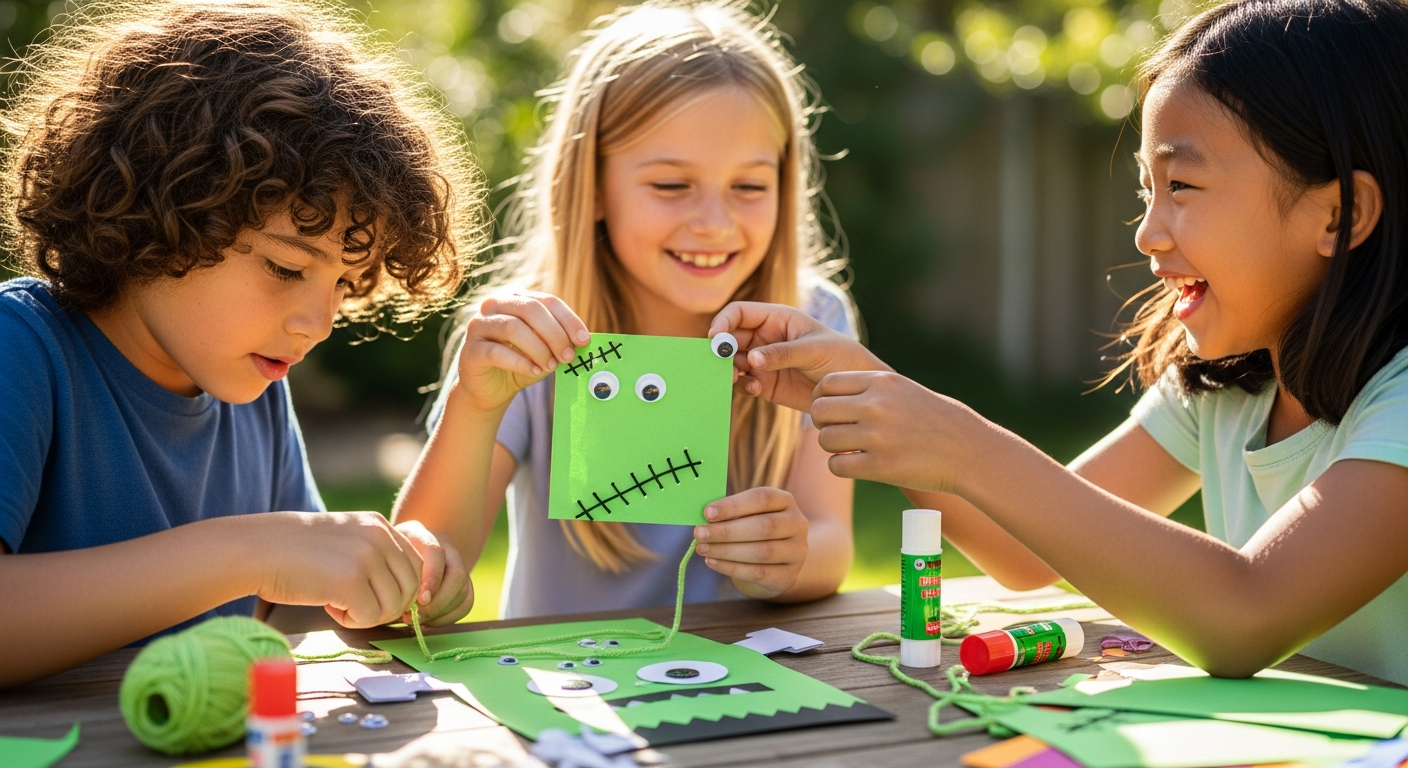
Table of Contents
- Introduction
- Why Frankenstein Crafts Are a Monstrously Good Idea for Young Minds
- Age-Appropriate Frankenstein Fun: Tailoring Crafts for Every Little Mad Scientist
- A Laboratory of Materials: Bringing Your Friendly Monster to Life
- Step-by-Step Spooky Creations: Ideas to Get Started
- Beyond the Bolts: Integrating Communication & Learning
- Tips for a Ghoulishly Good Crafting Session
- Speech Blubs: Your Partner in Communication Adventures
- Conclusion
- Frequently Asked Questions About Easy Frankenstein Crafts for Kids
Imagine a world where playful stitches and friendly bolts bring a beloved character to life right in your own home. The tale of Frankenstein's monster, often perceived as spooky, actually offers a rich canvas for creativity, learning, and imaginative play for children. Far from being just a Halloween gimmick, crafting a Frankenstein monster can be an incredible "edutainment" experience, blending science, art, and storytelling in a way that truly engages young minds.
This post will delve into the exciting world of easy Frankenstein crafts for kids, exploring how these hands-on activities do more than just fill an afternoon. We’ll uncover the surprising developmental benefits, suggest age-appropriate ideas from toddlers to school-aged children, and discuss a laboratory of materials you can use to bring your friendly monster to life. From simple paper creations to edible delights, we'll focus on fostering creativity, developing crucial skills, and creating joyful family memories – all without a screen in sight. At Speech Blubs, our mission is to empower children to "speak their minds and hearts," and we believe that engaging, screen-free play, like crafting, is a powerful tool for building foundational communication skills.

Introduction
Does the idea of a fun, screen-free activity that sparks your child's imagination and supports their development sound like a monster hit? It can be challenging to find engaging activities that are both educational and entertaining, especially when juggling the demands of daily life. Many parents seek out creative outlets that don't just occupy their children, but genuinely contribute to their growth. This is where the magic of crafting comes in, and few themes offer as much playful potential as the iconic, yet often misunderstood, Frankenstein's monster.
This article is designed to guide you through a fantastic collection of easy Frankenstein craft ideas, perfect for kids of all ages. We'll explore why these delightful monster-making sessions are so beneficial, from boosting fine motor skills to sparking imaginative storytelling, and even subtly introducing STEM concepts. You'll discover a variety of crafts, complete with material lists and simple steps, ensuring that you can find the perfect project for your child's developmental stage. By the end, you'll be equipped with practical, engaging activities that not only create adorable Frankenstein monsters but also foster vital communication skills, encourage confidence, and create joyful family learning moments.
Why Frankenstein Crafts Are a Monstrously Good Idea for Young Minds
Engaging in creative activities, especially those inspired by familiar characters like Frankenstein's monster, offers a multitude of developmental benefits for children. It's not just about making something; it's about the journey of creation and discovery.
Unleashing Creative Expression
Children naturally possess boundless imagination, and crafting provides a wonderful outlet for them to express it. A Frankenstein craft isn't about replicating a perfect image; it's about interpreting the character in their own unique way. Will their monster have bright pink hair? Sparkly bolts? A huge, friendly smile? Allowing children the freedom to make these choices helps them develop their personal aesthetic and fosters a sense of ownership over their creation. This self-expression is vital for emotional development and building confidence. It teaches them that their ideas are valuable and that there's no single "right" way to be creative.

Developing Fine Motor Skills
From cutting shapes with scissors to gluing tiny googly eyes, manipulating small objects, or carefully painting within lines, Frankenstein crafts are a fantastic workout for developing fine motor skills. These are the small muscle movements in the hands and wrists that are crucial for tasks like writing, buttoning clothes, and using utensils. As children practice these actions, their hand-eye coordination improves, and their dexterity increases, laying essential groundwork for academic and daily life activities. For instance, carefully cutting out a jagged hairline for their Frankenstein monster requires precision and strengthens the small muscles in their hands, which are also vital for holding a pencil later on.
Fostering Problem-Solving and Critical Thinking
Crafting often presents mini-challenges that encourage children to think critically and solve problems. "How do I make this paper stand up?" "What can I use for the monster's bolts?" "If I use too much glue, will it get messy?" These are all simple questions that prompt children to experiment, adapt, and find solutions. They learn about cause and effect – for instance, how different amounts of paint change the color, or how a specific type of tape holds better than glue for certain materials. This hands-on experimentation is a foundation for scientific inquiry and engineering thinking. Choosing the right material for the monster's eyes or deciding how to attach its arms without them falling off engages their spatial reasoning and encourages creative solutions.
Enriching Storytelling and Language Arts
Once a friendly Frankenstein monster is created, the story possibilities are endless! Children can invent names, backstories, and adventures for their new companion. This process naturally enhances language skills, vocabulary, and narrative development. They might describe their monster's personality, what it likes to eat, or where it goes on adventures. This imaginative play can be a powerful tool for developing communication skills and fostering a love for storytelling, transforming a simple craft into a springboard for literary exploration.
For a parent whose child struggles with expressive language, using their handmade Frankenstein puppet can be a fantastic conversation starter. They might describe their puppet's green skin, its stitched smile, or ask, "What does Frankie want to say?" This encourages verbalization in a low-pressure, playful context. At Speech Blubs, we understand the power of play in developing communication skills. Our app utilizes "video modeling" where children learn by watching and imitating their peers, much like they might imitate their favorite Frankenstein's monster's actions or expressions during play. Discover more about our scientifically-backed methodology and how it can benefit your child by visiting our research page here.
Introducing Subtle STEM Concepts
While a Frankenstein craft might seem purely artistic, it's actually brimming with subtle STEM connections. Children might explore:
- Shapes and Geometry: Identifying and using circles for eyes, squares for heads, or rectangles for bodies.
- Symmetry and Balance: Understanding how to place features evenly on a face or body.
- Basic Engineering: Constructing a 3D monster from flat materials, thinking about how different parts connect and hold together.
- Color Theory: Mixing paints to create the perfect shade of "monster green" or understanding how different colors create contrast.
- Material Properties: Discovering why some materials are easier to cut, bend, or glue than others.
These concepts are introduced in a fun, accessible way, laying groundwork for future learning without ever feeling like a lesson.
Building Emotional Development and Confidence
Creating something from scratch and seeing it through to completion gives children a profound sense of accomplishment. Successfully finishing a craft, no matter how simple, builds confidence and self-esteem. It also helps children to work through the "messy" parts of creativity, teaching them that mistakes are just opportunities to try a different approach. Furthermore, exploring characters that might initially seem "scary" in a playful, creative context can help children understand and manage their emotions, transforming fear into fun.
Fostering Family Bonding and Screen-Free Engagement
In a world increasingly dominated by screens, finding engaging, hands-free activities that bring families together is more important than ever. Frankenstein crafts provide a wonderful opportunity for collaborative projects, shared laughter, and meaningful conversations. Parents and caregivers can guide, assist, and create alongside their children, fostering deeper connections and making lasting memories. These are the moments that truly matter – shared experiences that educate, entertain, and strengthen family ties. This aligns perfectly with our values at Speech Blubs, where we aim to provide "smart screen time" experiences that are powerful tools for family connection, not just passive viewing.
Age-Appropriate Frankenstein Fun: Tailoring Crafts for Every Little Mad Scientist
Just as a master chef adjusts a recipe for different tastes, crafting experiences should be tailored to a child's developmental stage. Here’s how you can adapt Frankenstein crafts for various age groups, ensuring maximum engagement and success.
Toddlers (1-3 Years): Simple Sensory Exploration
For our youngest crafters, the focus should be on sensory experiences, basic motor skills, and safe, easy-to-handle materials. Supervision is key to ensure all materials are non-toxic and used appropriately.
- Handprint/Footprint Frankenstein: This is a classic for a reason! Paint a toddler's hand or foot with non-toxic green washable paint and press it onto paper. Once dry, help them add large googly eyes and draw a simple stitched mouth and a few bolts with a black marker. It’s a wonderful keepsake and a great sensory experience. This activity helps with body awareness and introduces simple concepts like "green" and "eyes."
- Large Sticker Frankenstein: Pre-cut large green paper shapes for the head and body. Provide large, easy-to-peel stickers for eyes, mouths, and hair (like black construction paper cut into strips). This activity enhances hand-eye coordination and introduces shape recognition without the complexity of scissors or glue. It’s a fantastic way to practice grasping and placing.
- Edible Frankenstein Snacks: Transform simple snacks into friendly monsters. Spread green frosting or avocado smash on graham crackers or rice cakes. Let toddlers add pretzel sticks for bolts, mini chocolate chips or candy eyes, and a line of icing for a mouth. This introduces early cooking skills and texture exploration in a safe, delicious way. Always supervise closely.
Preschoolers (3-5 Years): Guided Creativity and Basic Tools
Preschoolers are ready for slightly more complex tasks, including using child-safe scissors (with supervision) and glue. They can follow simple multi-step instructions and begin to express more detailed ideas.
- Paper Plate Frankenstein: A perennial favorite! Children can paint a paper plate green. Once dry, they can glue on pre-cut black paper hair, googly eyes, and draw a mouth and stitches. Pipe cleaners or strips of black paper can be added as bolts. This activity is excellent for color recognition, developing scissor skills (with assistance), and mastering gluing techniques. For a child learning to say body parts, pointing to the "eyes," "mouth," and "hair" while crafting is an excellent reinforcement.
- Toilet Paper Roll Frankenstein: Collect empty toilet paper rolls. Children can paint them green, then add features using markers, yarn for hair, and small pieces of paper for bolts and a mouth. This introduces 3D construction and encourages imaginative decoration. This simple craft can become a puppet for imaginative play, sparking dialogue and role-playing.
- Collage Frankenstein: Provide a variety of green, black, and white paper scraps, fabric pieces, yarn, and googly eyes. Children can practice tearing paper (great for hand strength!) and gluing them onto a larger paper background to create a textured Frankenstein face. This promotes sensory exploration and encourages creative composition.
School-Aged Kids (6+ Years): Independent Projects and Complex Ideas
Older children are capable of more independence, precision, and can tackle crafts that involve multiple steps and finer details. They can also incorporate their own design choices more fully.
- Popsicle Stick Frankenstein Puppets: Using jumbo craft sticks, children can paint them green and glue them together to form a rectangle. Once dry, they can add black construction paper for hair, draw facial features with markers, and attach small nuts or beads for bolts. Adding a stick to the back turns it into a puppet, perfect for storytelling and acting out scenes. This advanced fine motor work is crucial for pre-writing skills.
- Frankenstein Treat Boxes/Bags: Upcycle small cardboard boxes (like tissue boxes or snack boxes) or paper bags by painting them green. Children can then cut intricate black paper shapes for hair, use white paper for eyes, and draw detailed mouths and stitches. These can be used to hold treats or as decorative storage. This craft encourages careful measuring and precise cutting.
- Origami Frankenstein Faces: For a true challenge in following instructions and developing spatial reasoning, introduce simple origami techniques to create a Frankenstein face. Start with green square paper and guide them through basic folds. Once the face is formed, they can draw on the features. This is excellent for concentration and understanding geometric transformations.
- Frankenstein Photo Craft: This is a fun, personalized twist! Have children cut out a photo of their own face and glue it onto a green paper or painted cardboard body, complete with black paper hair, drawn stitches, and bolts. It brings humor and a personal touch to the craft, encouraging self-recognition and silly self-expression.
For parents wondering if their child might benefit from additional speech support, our quick 3-minute preliminary screener can provide immediate insights. It involves 9 simple questions and provides an assessment and next-steps plan, along with a free 7-day trial of Speech Blubs. Take the screener today to learn more here.
A Laboratory of Materials: Bringing Your Friendly Monster to Life
The beauty of Frankenstein crafts is that you don't need a mad scientist's lab full of expensive equipment. Many fantastic materials can be found right in your home or at a local craft store. Here’s a list of essentials to stock up on:
The "Green" Foundation
- Construction Paper: Various shades of green and black are a must.
- Paper Plates: Ideal for round heads.
- Cardboard/Cardstock: For sturdier monsters or 3D elements.
- Empty Toilet Paper/Paper Towel Rolls: Perfect for standing figures.
- Recycled Boxes: Think cereal boxes, tissue boxes, or small delivery boxes for larger projects.
- Green Paint (Washable!): Acrylic or tempera paints are great for paper, cardboard, or even rocks.
- Green Fabric Scraps: Felt, craft foam, or any green cloth for textural elements.
The "Black" Details
- Black Construction Paper: For hair, mouths, and details.
- Black Markers/Sharpies: For drawing features and stitches.
- Black Yarn/Pipe Cleaners: For hair, eyebrows, or adding texture.
- Black Electrical Tape/Washi Tape: For bolts or easy-to-apply stripes.
Essential Adornments and Fasteners
- Googly Eyes: A classic for adding personality to any monster! Various sizes are fun.
- Glue Sticks/Liquid Glue: Keep both on hand. Glue sticks are less messy for paper, while liquid glue is stronger for heavier items.
- Child-Safe Scissors: For cutting paper and fabric.
- Cotton Balls/Tissue Paper: For stuffing 3D crafts or adding texture.
- Pretzel Sticks/Craft Sticks: For bolts, arms, or structural support.
- Small Nuts/Bolts (Hardware): For a realistic touch on older kids' crafts (ensure proper supervision and no choking hazards for younger children).
- Yarn/String: For hair or hanging decorations.
- Buttons/Beads: For eyes, bolts, or decorative elements (again, mindful of choking hazards).
- Cupcake Liners: Can be used for ruffled hair or collar details.
"Smart Screen Time" for Inspired Minds
While we encourage screen-free play, we also know that technology, used wisely, can be a powerful tool for learning. At Speech Blubs, we've blended scientific principles with play into one-of-a-kind "smart screen time" experiences. Our app offers thousands of engaging activities that support speech and language development, featuring our unique video modeling methodology where children learn by imitating their peers. This is a screen-free alternative to passive viewing (like cartoons) and a powerful tool for family connection, complementing the creativity sparked by hands-on crafts. Download Speech Blubs on the App Store here or Google Play here to explore how we empower children to speak their minds and hearts.
Step-by-Step Spooky Creations: Ideas to Get Started
Ready to bring your friendly monster to life? Here are a few detailed, easy Frankenstein craft ideas with simple steps to get you started.
1. The Classic Paper Plate Frankenstein
This is a fantastic craft for preschoolers and young school-aged children, promoting painting, cutting, and gluing skills.
Materials:
- Paper plate
- Green washable paint and paintbrush
- Black construction paper
- Googly eyes (2)
- Glue stick
- Child-safe scissors
- Black marker
Instructions:
- Paint the Plate: Have your child paint the front of the paper plate completely green. Let it dry thoroughly. This is a great opportunity to talk about the color green and practice spreading motions with the brush.
- Cut the Hair: While the paint dries, help your child cut a strip of black construction paper for the hair. Make it wavy, spiky, or jagged for a classic monster look.
- Add Features: Once the plate is dry, glue the black paper hair to the top edge of the plate.
- Place the Eyes: Glue the two googly eyes onto the plate, just below the hair.
- Draw the Face: Use the black marker to draw a simple stitched mouth below the eyes. Add a few small lines on the sides of the head to represent bolts.
- Optional: For older kids, they can cut out small rectangles from black paper for the bolts and glue them on.
2. Toilet Paper Roll Frankenstein Puppet
A fun way to upcycle and create a 3D character for imaginative play.
Materials:
- Empty toilet paper roll
- Green washable paint and paintbrush
- Black construction paper
- Googly eyes (2)
- Glue stick or liquid glue
- Child-safe scissors
- Black marker
Instructions:
- Paint the Roll: Paint the entire toilet paper roll green and set it aside to dry. Discuss the cylindrical shape of the roll and how it's different from the flat paper plate.
- Make the Hair: Cut a strip of black construction paper and snip one edge to create a jagged "hairline." Glue this inside the top rim of the toilet paper roll, allowing the "hair" to stick up.
- Add the Face: Glue the googly eyes onto the top front of the roll.
- Draw Details: Use the black marker to draw a stitched mouth and small lines on the sides of the roll for bolts.
- Playtime! Once dry, your child has a ready-made puppet to tell stories with. Encourage them to make silly monster voices! For children working on articulation, practicing sounds like "m-m-monster" or "b-b-bolts" with their puppet can be a fun exercise.
3. Frankenstein's Monster Handprint Keepsake
Perfect for toddlers and preschoolers, this creates a personalized memory.
Materials:
- Green washable paint
- White paper or cardstock
- Black marker
- Googly eyes (2)
- Glue
Instructions:
- Green Handprint: Paint your child's palm and thumb green. Carefully press their hand onto the white paper, fingers pointing down (the thumb will be one of the "bolts").
- Dry and Decorate: Let the paint dry completely.
- Add Features: Glue two googly eyes onto the "palm" area of the handprint.
- Draw Details: Use the black marker to draw a stitched mouth below the eyes. Add a small black rectangle on the opposite side of the thumb for the second bolt, and draw a jagged hairline at the top of the "palm" section. Write the date on the back to remember when this adorable monster was made!
Beyond the Bolts: Integrating Communication & Learning
While these crafts are wonderful on their own, you can easily enhance their educational value, especially for speech and language development.
Sparking Conversation and Storytelling
As your child creates their Frankenstein monster, engage them in conversation:
- Describe It: "Tell me about your monster. What color is his skin? Does he have big eyes or little eyes?"
- Give It a Name: "What's your monster's name? Does he have a happy name or a silly name?"
- Invent a Story: "Where does your monster live? What does he like to do for fun? Does he have any friends?"
- Emotional Exploration: "How do you think your monster feels today? Happy? Silly? A little bit grumpy?" (Encourage them to make different faces on their monster or act out emotions with a puppet).
For children who might be "late talkers" or need extra encouragement, these prompts can provide a gentle, playful context for practicing new words and phrases. Our "TalkNow" activities within Speech Blubs are designed specifically for this, using engaging visuals to prompt expressive language in a fun, pressure-free way.
Building Vocabulary
Introduce new words as you craft:
- Adjectives: Green, black, jagged, spiky, round, big, small, friendly, spooky.
- Verbs: Paint, cut, glue, stick, press, draw, create, imagine.
- Nouns: Monster, paper, plate, eyes, hair, mouth, stitches, bolts.
- Positional Words: On, under, next to, above, below, inside, outside.
Connecting to Books and Songs
Pair your crafting session with Frankenstein-themed children's books or Halloween songs. Reading a story about a friendly monster before or after crafting can enrich the experience and give your child more ideas for their own creation. Many children's books feature non-scary versions of Frankenstein that are perfect for young audiences.
Encouraging Turn-Taking and Collaboration
Crafting together encourages important social skills like turn-taking ("My turn to cut, your turn to glue!") and collaboration. This shared activity strengthens the parent-child bond and provides a natural setting for practicing social communication.
Tips for a Ghoulishly Good Crafting Session
To ensure your crafting session is fun and frustration-free, keep these tips in mind:
- Prepare Your Space: Lay down newspaper or a washable tablecloth to protect surfaces. Have all materials easily accessible.
- Embrace the Mess: Crafting can get messy, and that's part of the fun! Remind yourself (and your child) that it's okay.
- Focus on the Process, Not Perfection: The goal is exploration and enjoyment, not a museum-worthy masterpiece. Praise effort and creativity.
- Let Them Lead: Offer guidance, but allow your child to make choices and experiment. Their monster might not look exactly like yours, and that's wonderful!
- Break It Down: For multi-step crafts, break the process into smaller, manageable chunks. You might paint one day and add features the next.
- Keep It Short: Especially for younger children, attention spans are limited. A 15-30 minute crafting session might be perfect. You can always come back to it later.
- Celebrate Their Creation: Display their Frankenstein monster proudly! This boosts confidence and makes them feel valued.
Speech Blubs: Your Partner in Communication Adventures
At Speech Blubs, we believe every child deserves the chance to "speak their minds and hearts." Our company was born from the personal experiences of our founders, who all grew up with speech problems and created the tool they wished they had. We are committed to providing an immediate, effective, and joyful solution for the 1 in 4 children who need speech support, blending scientific principles with play into one-of-a-kind "smart screen time" experiences. We are proud to have a MARS scale rating that places us in the top tier of speech apps worldwide, a testament to our commitment to research and effective design. See what other parents are saying about their child's success with Speech Blubs by checking out our testimonials here.
We provide a screen-free alternative to passive viewing (like cartoons) and a powerful tool for family connection, complementing hands-on activities like crafting. Our unique approach of teaching complex communication skills through our "video modeling" methodology, where children learn by watching and imitating their peers, sets us apart. This active learning environment helps children build confidence, reduce frustration, and develop key foundational skills.
Ready to integrate "smart screen time" into your child’s development plan? We offer transparent pricing to build trust with our families.
- Monthly Plan: $14.99 per month.
- Yearly Plan: $59.99 per year, which breaks down to just $4.99/month – a significant saving of 66%!
The Yearly Plan is truly the best value, offering exclusive, high-value features not included in the Monthly plan:
- A 7-day free trial.
- The extra Reading Blubs app, for comprehensive literacy support.
- Early access to new updates and a prioritized 24-hour support response time.
The Monthly plan does not include these fantastic benefits.
We invite you to experience the full power of Speech Blubs. Choose the Yearly plan to unlock your 7-day free trial and gain access to the complete suite of features, including the bonus Reading Blubs app. Begin your journey toward joyful communication today! Create your account and begin your 7-day free trial today here.
Conclusion
Creating easy Frankenstein crafts with your children is more than just a fun way to spend an afternoon; it’s an enriching experience that nurtures creativity, refines fine motor skills, fosters problem-solving, and significantly boosts language and communication abilities. These engaging, screen-free activities provide a wonderful opportunity for family bonding, allowing you to create lasting memories while supporting your child’s developmental journey. From simple handprint monsters for toddlers to more intricate paper plate or toilet paper roll creations for preschoolers and school-aged kids, there’s a friendly Frankenstein craft for every age and skill level.
As you embark on these crafting adventures, remember that the true value lies in the process – the conversations, the shared laughter, and the sense of accomplishment your child gains. These hands-on experiences lay crucial groundwork for confident communication, reducing frustration and building a love for learning that extends far beyond the craft table. Just as these crafts help children express themselves creatively, Speech Blubs empowers them to speak their minds and hearts through engaging, scientifically-backed "smart screen time."
Ready to unleash your child's creativity and supercharge their communication skills? Download Speech Blubs on the Apple App Store or Google Play Store today and start your 7-day free trial! Remember to select the Yearly plan to gain access to the full suite of features, including the Reading Blubs app and priority support, offering the best value and the most comprehensive support for your child's development. Let's stitch up some joy and communication together!
Frequently Asked Questions About Easy Frankenstein Crafts for Kids
Q1: What age group are Frankenstein crafts best for?
Frankenstein crafts are wonderfully versatile and can be adapted for children of all ages, from toddlers to school-aged kids. For toddlers (1-3 years), focus on sensory activities like handprints or large stickers. Preschoolers (3-5 years) can enjoy simple cutting, painting, and gluing with paper plates or toilet paper rolls. Older children (6+ years) can tackle more complex projects involving multiple steps, finer details, and independent design, such as popsicle stick puppets or origami. The key is to select activities that match your child's developmental stage and motor skills.
Q2: What are some non-scary Frankenstein craft ideas for very young children?
For very young children, focus on friendly, rather than scary, monsters. Handprint or footprint Frankensteins using green paint are excellent, as are large sticker crafts where they can place pre-cut shapes for features. Edible Frankenstein snacks, made with green frosting on graham crackers and pretzel sticks for bolts, are also a huge hit. The goal is to make the monster cute, colorful, and fun, emphasizing playful imagination over any spooky elements.
Q3: How do Frankenstein crafts help with speech and language development?
Frankenstein crafts offer numerous benefits for speech and language development. They provide a natural context for introducing new vocabulary (e.g., green, jagged, eyes, mouth, glue, cut), practicing descriptive language ("My monster has big, round eyes and spiky hair!"), and encouraging storytelling. Creating a puppet can prompt imaginative play and dialogue, while following instructions for a craft enhances listening comprehension. Engaging in conversation about their creation also builds confidence in expressive communication. For more targeted support, consider using a tool like Speech Blubs, which offers scientifically-backed activities to complement hands-on play.
Q4: What common household items can I use for easy Frankenstein crafts?
You don't need fancy materials to make a great Frankenstein craft! Many common household items work perfectly. Think empty toilet paper or paper towel rolls, cardboard boxes (cereal boxes, tissue boxes), paper plates, green or black construction paper scraps, yarn, old buttons, and even pretzel sticks for bolts. Washable green paint and black markers are useful. Recycling and repurposing items adds an extra layer of learning about sustainability to your crafting session.
About the author