
Easy Fun Christmas Games for Kids: Spark Joy & Development This Holiday Season
 By Speech Blubs Team•Dec 24, 2025•24 min.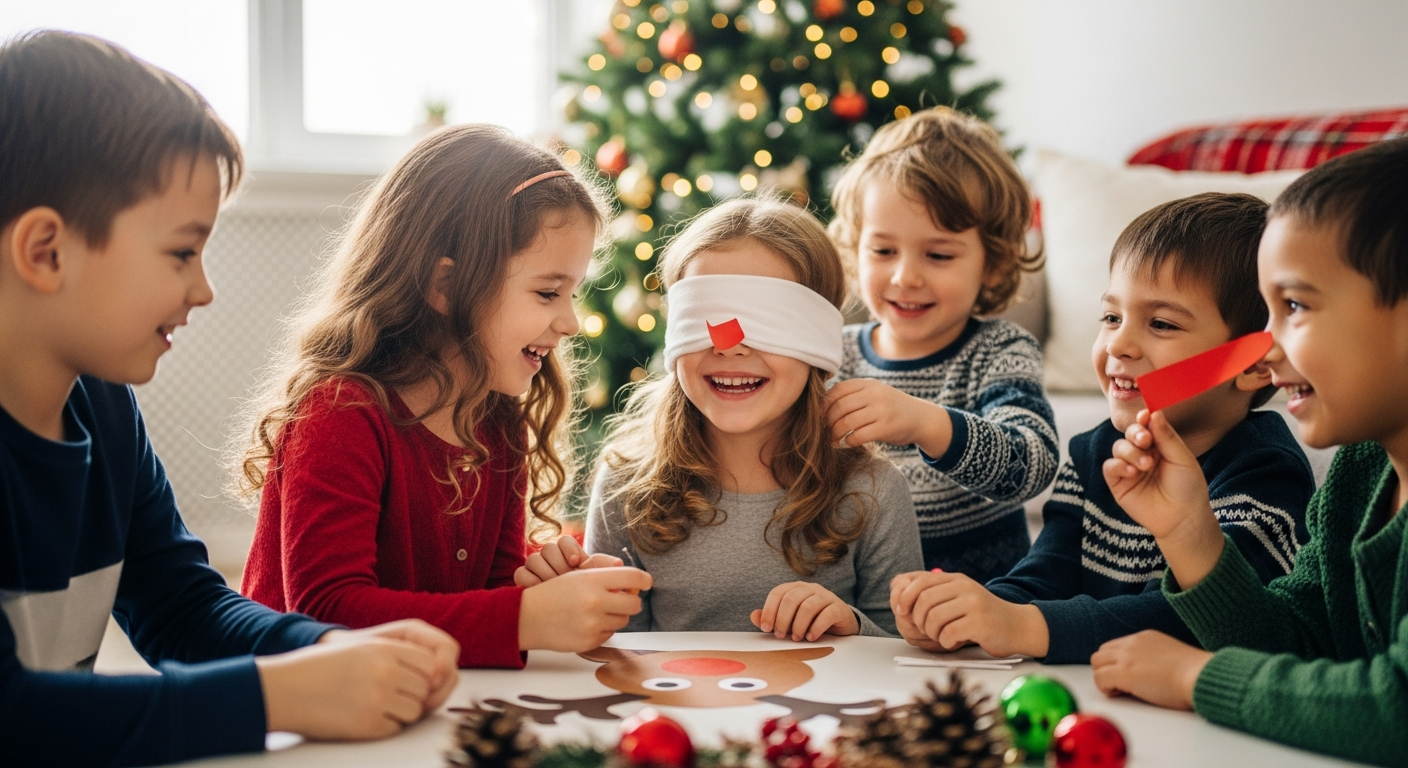
Table of Contents
- Introduction
- Why Christmas Games Matter for Kids' Development
- Crafting the Perfect Christmas Game Experience
- Easy & Fun Christmas Games for All Ages
- Beyond the Game: Nurturing Communication Skills with Every Play
- Empowering Your Child with Speech Blubs: Our Commitment to Joyful Learning
- Choosing the Right Speech Blubs Plan for Your Family
- Conclusion
- Frequently Asked Questions
Introduction
Picture this: a house filled with laughter, the delightful scent of pine and cookies, and children utterly captivated by festive play, not passive screens. The holiday season is a magical time, brimming with opportunities to create cherished memories and foster joyful connections. But with all the hustle and bustle, it’s easy for quality family time to take a backseat. How can we ensure the holidays remain a time for genuine interaction, learning, and fun, especially for our children's developing minds and hearts?
This blog post is your ultimate guide to making that vision a reality. We’re diving deep into a treasure trove of easy, fun Christmas games for kids that promise more than just entertainment. These activities are designed not only to spark holiday cheer but also to subtly boost crucial developmental skills, from communication and fine motor coordination to social interaction and problem-solving. We believe that play is the most powerful catalyst for learning, and we’re here to show you how to transform your festive gatherings into rich, engaging experiences. We'll explore how thoughtful engagement during these games can significantly impact a child's confidence and ability to express themselves, much like the supportive environment we foster at Speech Blubs.

Why Christmas Games Matter for Kids' Development
Christmas games are far more than mere distractions; they are vibrant playgrounds for growth. In an age where passive screen time often dominates, active, engaged play offers a powerful alternative, fostering holistic development. When children participate in games, they're not just having fun; they're building foundational skills that will serve them for a lifetime.
Think about the incredible benefits:
- Language and Communication Skills: Games naturally encourage children to listen, follow instructions, ask questions, describe actions, and express their feelings. This dynamic interaction is vital for vocabulary expansion, sentence formation, and understanding social cues.
- Social-Emotional Development: Taking turns, sharing, negotiating, celebrating wins, and navigating losses are all part of the game-playing experience. These moments teach empathy, cooperation, patience, and emotional regulation – critical components of healthy social-emotional growth.
- Cognitive Abilities: Many games require strategic thinking, problem-solving, memory recall, and quick decision-making, all of which sharpen cognitive functions.
- Fine and Gross Motor Skills: From stacking small objects to running an obstacle course, Christmas games engage various muscle groups, improving dexterity, hand-eye coordination, balance, and spatial awareness.
At Speech Blubs, our mission is to empower children to "speak their minds and hearts," and we understand that true communication flourishes through interaction and engagement. We champion "smart screen time" that acts as a powerful tool for family connection, not a substitute for it. Our approach, born from the personal experiences of our founders who grew up with speech problems, provides a joyful solution that blends scientific principles with play. We know that the joy of discovery and active participation in fun activities, whether screen-based or entirely "unplugged," is key to a child's success.
Crafting the Perfect Christmas Game Experience
To truly maximize the developmental benefits and fun factor of your Christmas games, a little thoughtful preparation goes a long way. The goal isn't perfection, but rather creating an atmosphere of joyful, low-pressure engagement.

Here are some tips:
- Keep it Frugal and Simple: Many of the best games require minimal supplies, often things you already have around the house or can pick up cheaply. The focus should be on interaction, not elaborate setups.
- Adapt for All Ages: A good Christmas game can often be modified to suit different developmental levels. Younger children might need simpler rules or more hands-on assistance, while older kids might enjoy more complex challenges or team dynamics.
- Embrace Adult Co-Play and Support: Your active participation is invaluable. Sit on the floor, cheer them on, model how to take turns, and gently guide them through challenges. These shared moments deepen family bonds and make learning feel effortless.
- Prioritize Process Over Perfection: The true win is the laughter, the effort, and the shared experience, not who comes in first. Encourage trying new things and celebrating small victories.
- Integrate Language Naturally: During play, use descriptive language ("Wow, look at that tall tower!"), ask open-ended questions ("What do you think will happen next?"), encourage sound effects ("Whoosh!"), and model new vocabulary. This organic integration of language makes learning fun and relevant.
Easy & Fun Christmas Games for All Ages
Let's dive into a fantastic collection of games, broken down into categories for easy navigation. Many of these can be adapted for any age, ensuring everyone from toddlers to grandparents can join in the festive fun!
Minute-to-Win-It Inspired Holiday Challenges
These fast-paced, high-energy games are perfect for keeping everyone engaged and often lead to hilarious moments. Each challenge typically lasts for one minute, adding an exciting race-against-the-clock element.
- Gingerbread Shuffle:
- How to Play: Each player places a small gingerbread cookie on their forehead. On "go," players must try to move the cookie from their forehead to their mouth using only facial muscles, without using their hands.
- Developmental Benefits: This game is fantastic for encouraging facial motor control and awareness, which are crucial for articulation. It also promotes body awareness and problem-solving as children figure out how to manipulate their faces.
- Candy Cane Slide:
- How to Play: Each player holds one candy cane in their mouth, with the hook facing down. On "go," players have one minute to hook as many additional candy canes onto the one in their mouth as possible, using only their mouth and no hands. The player with the most hooked candy canes wins.
- Developmental Benefits: Excellent for developing fine motor skills, hand-eye coordination, and oral motor control. It also requires patience and concentration.
- Hershey's Kiss Toss:
- How to Play: Divide players into teams of two. One teammate unwraps Hershey's Kisses and tosses them into the other teammate's mouth. The team with the most successful catches in one minute wins.
- Developmental Benefits: This game boosts hand-eye coordination, teamwork, and gross motor skills (for tossing). It’s also great for encouraging verbal communication and strategy within teams.
- Tannenbaum Avalanche:
- How to Play: Give each player a stack of small red plastic cups. In one minute, players must build the tallest possible Christmas tree tower.
- Developmental Benefits: Enhances fine motor skills, spatial reasoning, planning, and problem-solving. Children learn about balance and stability.
- Bell Stack:
- How to Play: Provide each player with a handful of bell-shaped candies. In one minute, they must stack the candies as high as possible.
- Developmental Benefits: Another excellent game for fine motor precision, concentration, and patience. It also involves tactile exploration.
- Oh, Christmas Tree (Reddi-Wip Edition):
- How to Play: Each player gets a paper plate and a can of whipped cream. In one minute, they must spray the whipped cream onto their plate to create the tallest (or best-looking) Christmas tree.
- Developmental Benefits: Promotes creativity, fine motor control (squeezing the can), and sensory exploration. It’s also a wonderful opportunity for descriptive language as children talk about their "trees."
- Snowman Stack (Marshmallow Edition):
- How to Play: Give each player six large marshmallows. In one minute, they must stack three marshmallows on top of each other, twice, using only one hand, to create two "snowmen."
- Developmental Benefits: This game is particularly good for younger children to practice fine motor control and gentle manipulation. For older kids, the one-hand rule adds a challenge.
- Reindeer Nose Dive:
- How to Play: Tie a red pompom onto a ribbon. Put petroleum jelly on each player's nose. Players hold the other end of the ribbon in their mouth and, without using hands, swing the ribbon to land the pompom on their nose, making it stick. One minute to succeed.
- Developmental Benefits: Fantastic for coordination, persistence, and proprioception (awareness of body position). The silly nature encourages laughter and reduces inhibition.
- Christmas Cliffhanger:
- How to Play: Place ten Christmas cards in a row on a table near the edge, propping them up like tents. Players have one minute to gently blow the cards across the table, aiming to have one card hang over the edge without falling off.
- Developmental Benefits: This game requires breath control, fine motor skills, and careful planning. It's also a great lesson in cause and effect.
- Candy Cane Catch (Garland Edition):
- How to Play: String a garland between two chairs. Players stand on a chair and drop candy canes, trying to hook them onto the garland below. Count how many they can hook in one minute.
- Developmental Benefits: Improves hand-eye coordination, gross motor control, and aiming skills. It can also be a fun competitive game for pairs.
- Jingle Bell Clock:
- How to Play: Each player places a craft stick in their mouth. They then have one minute to line six to eight jingle bells across the stick.
- Developmental Benefits: This challenge seriously hones fine motor skills, dexterity, and patience. Using a wider craft stick can make it easier for younger children, while a narrower one can increase the difficulty for older players.
- Snow Shovel:
- How to Play: Give each player two bowls, one containing fifteen white pompoms (snowballs) and a plastic spoon. Players must transfer all pompoms from one bowl to the other using only the spoon held in their mouth, within one minute.
- Developmental Benefits: This highly engaging game is excellent for oral motor skills, hand-eye coordination (even without hands!), and persistence. For younger children, reduce the number of pompoms to make it achievable.
- Bobbing for Candy Canes:
- How to Play: Fill a bowl with wrapped candy canes. Players hold one candy cane in their mouth and try to hook and transfer five other candy canes out of the bowl onto the table, all within one minute.
- Developmental Benefits: Challenges oral motor control, problem-solving, and fine motor skills. It’s a messy but fun way to practice dexterity.
- Peppermint Twist:
- How to Play: Each player gets an uncooked spaghetti noodle to hold in their mouth and six holiday-themed Life Savers candies. In under one minute, players must pick up all six candies using only the spaghetti noodle and stack them on it.
- Developmental Benefits: This game demands extreme focus, fine motor control, and patience. It's a wonderful exercise in delicate manipulation.
- Snowball Run:
- How to Play: Set up two buckets at one end of the room and a pile of white pompoms (snowballs) at the other. Players balance a pompom on a plastic spoon and race to deposit it in the bucket. Play as a relay or head-to-head to see who can transfer the most snowballs in a minute.
- Developmental Benefits: A fantastic gross motor game that enhances balance, coordination, and speed. It’s also great for teamwork if played as a relay.
- Good Things Come in Small Packages:
- How to Play: Wrap several small household items in Christmas wrapping paper. Each player puts on a pair of oven mitts and has one minute to unwrap as many gifts as possible.
- Developmental Benefits: Hilarious and challenging for fine motor skills, problem-solving, and frustration tolerance. It teaches adaptability when traditional methods (using fingers) aren't available.
- White Christmas (Toilet Paper Wrap):
- How to Play: Divide into teams of two. One person stands still while the other races to wrap them completely in toilet paper, turning them into a "snowman." The team that finishes their roll first wins.
- Developmental Benefits: Promotes teamwork, gross motor coordination, and communication ("Hold still!", "Turn around!"). It’s a highly active and laughter-inducing game.
Classic Christmas Twists
These familiar games get a holiday makeover, bringing new life to old favorites while still offering valuable developmental boosts.
- Christmas Bingo:
- How to Play: Create bingo cards with festive images (Santa, reindeer, presents, snowflakes) for younger kids, or holiday words/phrases for older children. Call out items, and players mark them off with candy pieces or small themed markers.
- Developmental Benefits: Enhances listening skills, visual discrimination, vocabulary acquisition, and focus. For younger children, it can help with object identification and matching.
- Pin the Nose on Rudolph:
- How to Play: Draw or print a large picture of Rudolph the Red-Nosed Reindeer without his nose. Blindfold players, spin them around gently, and have them try to pin a red pompom or sticky bow in the correct spot.
- Developmental Benefits: Develops spatial awareness, body control, and following instructions. It’s a wonderful game for laughs and lighthearted competition.
- Holiday Memory Game:
- How to Play: Use festive images (Christmas ornaments, Santa hats, snowmen) printed on cards, or even turn old Christmas cards into a memory game. Lay them face down and have players take turns flipping two cards to find a match.
- Developmental Benefits: Supercharges memory recall, visual recognition, and concentration. It also teaches turn-taking and patience.
- Christmas Scavenger Hunt:
- How to Play: Hide themed objects or clues around the house (e.g., a small elf figurine, a stocking, a toy soldier). Provide a list of items or clues, and let children search. Make it more challenging with riddles for older kids.
- Developmental Benefits: Encourages problem-solving, following directions, vocabulary expansion (as they identify items), and gross motor movement.
- Holiday Tic-Tac-Toe:
- How to Play: Draw a tic-tac-toe grid on paper or use washi tape on the floor. Use festive markers like mini wrapped candies or small ornaments (e.g., red vs. green).
- Developmental Benefits: Teaches basic strategy, turn-taking, and logical thinking. Simple enough for young children but still engaging for older ones.
- Guess Who Christmas Character Game:
- How to Play: Write various Christmas characters (e.g., Santa, Elf, Reindeer, Snowman, Grinch) on sticky notes. Each player gets one stuck to their forehead without looking. Players take turns asking "yes" or "no" questions to guess their character.
- Developmental Benefits: Excellent for developing questioning skills, deductive reasoning, vocabulary, and social interaction. It helps children formulate clear questions and analyze answers.
- Christmas Movie Trivia / Bingo:
- How to Play: Prepare trivia questions about popular holiday films, or create bingo cards with common movie tropes (e.g., "someone sings a carol," "a character says 'Merry Christmas'"). Watch a movie and play along!
- Developmental Benefits: Boosts auditory processing, memory, and social engagement. It's a great way to bond over shared media and practice recall.
- Holiday Mad Libs:
- How to Play: Use pre-made Christmas Mad Libs or create your own stories with blanks for nouns, verbs, adjectives, etc. Have players contribute words before reading the hilarious results.
- Developmental Benefits: A fantastic, fun way to teach parts of speech, expand vocabulary, and encourage creative thinking. The laughter generated is priceless.
- Reindeer Antler Ring Toss:
- How to Play: Players wear inflatable reindeer antlers while others try to toss inflatable rings onto them. Or, use a stationary target like a homemade reindeer cutout with antlers.
- Developmental Benefits: Enhances hand-eye coordination, aiming skills, and gross motor control. It's a silly game that encourages friendly competition.
- Snowman Slam Game:
- How to Play: Decorate empty plastic cups like snowmen and stack them in a pyramid. Players use a soft ball to try and knock them down.
- Developmental Benefits: Improves aiming, gross motor control, and understanding cause and effect. Simple to set up and endlessly fun.
- Christmas Scent Game:
- How to Play: Fill small, opaque containers with cotton balls soaked in various Christmas scents (peppermint, pine, gingerbread, cinnamon, cranberry). Blindfold players and have them guess the scent.
- Developmental Benefits: Sharpens sensory discrimination, memory, and descriptive language (as they try to describe what they smell).
- Hit the Grinch Game:
- How to Play: Print or draw a large Grinch target. Players use soft Nerf darts or beanbags to try and "hit the Grinch" to bring back Christmas spirit.
- Developmental Benefits: A fun game for aiming, gross motor skills, and hand-eye coordination. Can be modified for different ages by adjusting the distance.
- Christmas Tree Bowling Game:
- How to Play: Decorate empty plastic bottles (soda bottles work well) to look like Christmas trees. Set them up like bowling pins and use a small ball to knock them down.
- Developmental Benefits: Great for gross motor skills, aiming, and understanding physics principles like force and motion.
Creative & Outdoor Christmas Play
When the weather allows, take the festive fun outside! These activities encourage exploration, creativity, and plenty of fresh air.
- Snow Paint:
- How to Play: Mix food coloring with water in spray bottles. Let children "paint" colorful designs in the snow.
- Developmental Benefits: Unleashes creativity, provides sensory exploration, and refines fine motor skills (squeezing the bottle).
- Snowman Building Competition:
- How to Play: If you have snow, divide into teams or individuals and challenge everyone to build the most creative snowman. Provide traditional accessories or unexpected items.
- Developmental Benefits: Encourages teamwork, creativity, problem-solving, and gross motor skills (rolling snow).
- Christmas Obstacle Course:
- How to Play: Design an outdoor course with holiday-themed challenges: crawl through "Santa's tunnel" (a cardboard box), toss "presents" (beanbags) into a chimney, weave through candy cane poles.
- Developmental Benefits: Boosts gross motor skills, following directions, spatial awareness, and problem-solving.
- Campfire Storytelling:
- How to Play: Gather around a backyard fire pit (safely!) with hot cocoa. Encourage everyone to share a favorite holiday memory or make up a festive tale about North Pole adventures.
- Developmental Benefits: Fosters narrative skills, imagination, listening, and expressive language in a cozy, intimate setting. It’s a wonderful way to connect and share.
Beyond the Game: Nurturing Communication Skills with Every Play
While these games are inherently fun, their true power lies in how they can be leveraged to nurture your child's communication skills. Every turn, every laugh, every challenge is an opportunity to learn and grow.
Imagine a child who is a "late talker." Playing the "Oh, Christmas Tree" whipped cream game isn't just about making a mess; it's a chance to practice exclamations like "Wow!" or "Mine!" and verbally describe their messy masterpiece. For a child learning to identify objects, a "Christmas Scavenger Hunt" becomes a practical lesson in vocabulary and following multi-step directions. If your child struggles with asking questions, the "Guess Who Christmas Character Game" provides a safe, engaging framework to practice those vital inquiry skills.
At Speech Blubs, we understand the profound impact of seeing and hearing real people communicate. This is why our unique methodology revolves around "video modeling." Children learn by watching and imitating their peers – real kids just like them – not cartoons. This approach taps into the incredible power of "mirror neurons" in the brain, which activate when we observe an action performed by someone else. When a child sees another child making a sound or a movement in our app, their brain lights up as if they are performing the action themselves, creating a powerful pathway for imitation and learning. It’s a scientifically-backed method that makes learning complex communication skills feel natural and fun.
We’re dedicated to providing "smart screen time" that’s an active and engaging experience, a stark contrast to the passive viewing of traditional cartoons. Our app becomes a powerful tool for family connection, offering structured, joyful activities that you can do with your child, guiding them through new sounds, words, and concepts. It's about empowering your child to use their voice, fostering confidence, and reducing the frustration that can come with communication challenges. When you see what other parents are saying about their journey with Speech Blubs, you’ll understand the magic of this approach. See what other parents are saying about their journey with Speech Blubs and discover the real-world impact.
Empowering Your Child with Speech Blubs: Our Commitment to Joyful Learning
At Speech Blubs, our commitment to helping children find their voice runs deep. Our company was born from the personal experiences of our founders, all of whom grew up with speech problems and created the tool they wished they had. We know firsthand the challenges and triumphs of the communication journey, and that's why we're dedicated to providing an immediate, effective, and joyful solution for the 1 in 4 children who need speech support.
We blend scientific principles with play, transforming screen time into one-of-a-kind "smart screen time" experiences. Our app isn't just another passive viewing platform; it's an interactive adventure where children learn by engaging with real peers through our proven video modeling methodology. This active, imitative learning process helps children develop key foundational skills, from articulation and vocabulary to social communication.
We want to be clear about expectations: Speech Blubs is a powerful supplement to your child's overall development plan. While we don't promise your child will be giving public speeches in a month, we do promise a journey that fosters a love for communication, builds confidence, reduces frustration, and creates countless joyful family learning moments. We are backed by scientific research and methodology, ensuring that our playful approach is also a highly effective one.
Whether your child is taking their first steps in verbalizing, expanding their vocabulary, or refining their speech sounds, Speech Blubs provides a supportive and engaging environment. You can explore a vast library of themed activities that resonate with children's interests. For instance, if your child is a "late talker" who adores animals, our "Animal Kingdom" section offers a fun, motivating way to practice "moo" and "baa" sounds by watching and imitating other children. Similarly, for a child who struggles with expressing emotions, our "Feelings" section provides concrete examples and playful prompts to help them articulate what’s in their heart.
Unsure if your child could benefit from a little extra support? Take our quick 3-minute preliminary screener to get a simple assessment and a free 7-day trial, allowing you to see the magic of Speech Blubs firsthand.
Choosing the Right Speech Blubs Plan for Your Family
We believe in transparency and providing value that supports your child's communication journey. To help you choose the best fit for your family, here's a clear breakdown of our plans:
- Monthly Plan: For $14.99 per month, you get access to our core Speech Blubs app. This is a good option if you want to try it out for a shorter period, but it doesn't include our most valuable features.
- Yearly Plan: Our Yearly plan is by far the best choice for incredible value, priced at just $59.99 per year. This breaks down to an unbeatable $4.99 per month, allowing you to save 66% compared to the monthly subscription!
The Yearly plan isn't just cheaper; it comes packed with exclusive, high-value features designed to maximize your child's learning and your family's experience:
- 7-Day Free Trial: You get a full week to explore all the amazing features before committing.
- The Extra Reading Blubs App: Unlock an additional app focused on early reading skills, complementing your child's speech and language development.
- Early Access to New Updates: Be among the first to experience our latest activities and improvements.
- 24-Hour Support Response Time: Get your questions answered quickly and efficiently by our dedicated support team.
The Monthly plan does not include these valuable benefits. To truly experience the full power of our "smart screen time" and give your child the best opportunity to speak their minds and hearts, we strongly encourage you to select the Yearly plan.
Ready to see the difference Speech Blubs can make? Download Speech Blubs on the App Store or Google Play and embark on a joyful journey of communication and connection.
Conclusion
The holiday season offers a unique opportunity to pause, connect, and engage with our children in meaningful ways. By embracing easy, fun Christmas games for kids, we're not just filling time; we're actively nurturing their growth across multiple developmental domains. From the laughter of a Gingerbread Shuffle to the teamwork of a Snowman Building Competition, every activity becomes a chance for language, social, and motor skill development.
Remember, the most powerful ingredient in any game is your presence and engaged participation. These festive moments, rich with interaction and playful learning, lay a strong foundation for your child's confidence and ability to express themselves. Just as these games foster real-world communication, Speech Blubs provides a unique, scientifically-backed, and joyful approach to supporting your child's speech and language journey through "smart screen time." Our mission is to empower children to "speak their minds and hearts," turning every moment into an opportunity for growth and connection.
Don't let this holiday season pass by without enriching your family's connection and your child's development. Give the gift of joyful learning and confident communication. Start your journey with us today and choose the Yearly plan to get your 7-day free trial and unlock the full suite of our award-winning features, including the extra Reading Blubs app and priority support. Create your account and begin your 7-day free trial today! Your family's holiday memories, and your child's voice, will thank you.
Frequently Asked Questions
Q1: How can these games specifically help with my child's speech development?
A1: Christmas games, when played interactively with an adult, naturally encourage language development. They provide context for learning new vocabulary (e.g., "star," "gingerbread," "jingle"), encourage listening and following instructions, and create opportunities for children to express emotions, make requests, and describe actions. For example, during a "Christmas Scavenger Hunt," you can ask your child, "What did you find?" or "Where is the red ornament?" fostering both receptive and expressive language skills. Many games also involve fine and gross motor skills that underpin speech readiness. To further support this, Speech Blubs provides a structured environment for speech practice through engaging video modeling, where children learn by imitating peers, reinforcing these vital communication skills.
Q2: What if my child is shy or doesn't want to participate in games right away?
A2: It's completely normal for some children to be hesitant. The key is to create a low-pressure, inviting environment. Start by allowing your child to observe the game without needing to participate. You can engage yourself, model enthusiasm, and offer gentle invitations ("Do you want to help me stack these bells?"). Try individual activities first, or choose games that don't put them in the spotlight, like "Christmas Bingo." Emphasize the fun and the process, not the outcome. Our app, Speech Blubs, offers a similar safe space for practice, allowing children to learn and gain confidence at their own pace in a fun, private setting before applying those skills in group play.
Q3: Are the Speech Blubs activities really a "screen-free alternative to passive viewing"? How does that work?
A3: Yes, Speech Blubs is designed to be "smart screen time" that actively engages children, unlike passive cartoons. Our core methodology, video modeling, means children learn by watching and imitating real kids their age, not animated characters. This approach leverages mirror neurons in the brain, making the learning process highly effective and interactive. We encourage parents to use the app with their child, turning screen time into a guided, social learning experience that builds connection and communication skills. It's a powerful tool for focused skill development that complements and enhances the "unplugged" play we've discussed in these Christmas games.
Q4: How do I choose the best Speech Blubs plan for my family, the Monthly or Yearly subscription?
A4: We highly recommend the Yearly plan as it offers the best value and the most comprehensive experience for your child's development. For just $59.99 per year (equating to only $4.99/month), you save 66% compared to the Monthly plan. Beyond the significant savings, the Yearly plan includes exclusive benefits like a 7-day free trial to explore everything, access to the additional Reading Blubs app, early access to new updates, and 24-hour priority customer support. The Monthly plan, while an option, does not include these valuable features. Choosing the Yearly plan ensures you get the full suite of tools and support to empower your child's communication journey effectively.
About the author