
Easy Halloween Crafts for Kids: Spooky Fun for Growing Voices
 By Speech Blubs Team•Jan 13, 2026•21 min.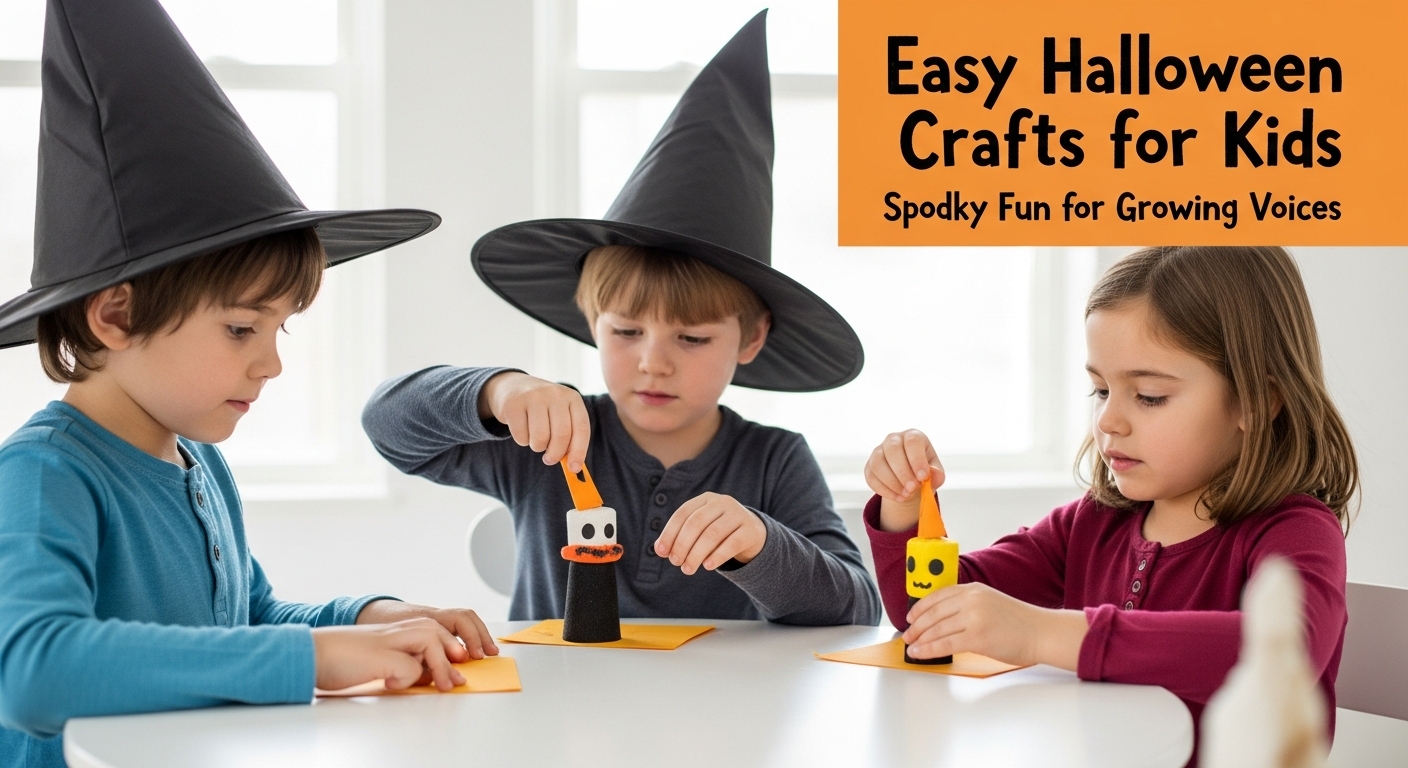
Table of Contents
- Introduction
- Why Crafting is More Than Just Fun for Kids
- Our Philosophy: Playful Learning & Empowering Voices
- Spooktacularly Simple Crafts for All Ages
- Maximizing the Speech Blubs Experience: Smart Screen Time
- Getting Started with Speech Blubs: Our Plans
- Conclusion
- FAQ
Introduction
As autumn leaves begin their vibrant descent and a crisp chill fills the air, there's a unique magic that whispers to us – the magic of Halloween! Beyond the costumes and candy, this enchanting holiday offers a treasure trove of opportunities for creativity, connection, and growth. For parents and caregivers, it’s not just about finding the perfect treat; it’s about crafting moments that spark joy and learning. This blog post isn't just a list of delightful spooky projects; it's a guide to transforming simple crafts into powerful tools that foster imagination, fine motor skills, and, crucially, language development. Get ready to discover a world where glue sticks, googly eyes, and giggles become the building blocks for curious minds and confident voices, enhancing family bonds along the way.
Why Crafting is More Than Just Fun for Kids
Engaging in arts and crafts goes far beyond simply keeping little hands busy. These activities are foundational to a child's holistic development, laying groundwork for skills they'll use throughout their lives. When children immerse themselves in creative projects, they are simultaneously nurturing a wide array of cognitive, physical, and emotional capabilities.

Unlocking Creativity and Problem-Solving
Crafting provides an open canvas for imagination. When a child decides how to decorate their monster, what colors to use for their pumpkin, or how to bring a character to life, they’re not just following steps; they’re making choices, experimenting, and often solving small problems. "What if the googly eye doesn't stick here?" "How can I make this bat fly?" These questions, big or small, encourage innovative thinking and critical decision-making from a young age.
Fine Motor Skill Development
The intricate actions involved in crafting—cutting paper, gluing small pieces, drawing lines, wrapping yarn, squeezing paint—are all essential exercises for developing fine motor skills. These are the small, precise movements of the hands and fingers that are crucial for tasks like writing, buttoning clothes, tying shoelaces, and using utensils. The repetitive nature of many crafts strengthens hand muscles and improves hand-eye coordination, preparing children for future academic and self-care endeavors. For instance, carefully placing cotton balls to make a puffy ghost or manipulating fabric scraps for a candy corn mosaic hones this vital skill.
Sensory Exploration
Many crafts are a feast for the senses. Children get to feel the sticky texture of glue, the smoothness of paper, the fluffiness of cotton, the squishiness of shaving cream, or the roughness of yarn. They see vibrant colors mix, smell different materials, and hear the snip of scissors or the crumple of paper. This multi-sensory engagement enriches their understanding of the world around them and can be particularly beneficial for children who learn best through tactile experiences. Imagine the delight of a child exploring a Jack-o-Lantern shaving cream art project!
Cognitive Growth
Crafting naturally integrates numerous cognitive concepts. Children learn to follow instructions, sequence steps ("First we paint, then we add the eyes"), recognize and name colors and shapes, count materials, and understand spatial relationships ("put it on top," "glue it next to"). These activities help reinforce early math and literacy skills in a fun, pressure-free environment. A pumpkin name puzzle, for example, combines fine motor skills with letter recognition and spelling practice.

Emotional Expression and Confidence Building
The act of creating something with their own hands can be incredibly empowering for a child. Successfully completing a craft, no matter how simple, instills a sense of pride and accomplishment. It allows children to express emotions, develop patience, and learn to cope with minor frustrations (like a crooked cut or a smudge) by finding solutions or embracing imperfections. When they proudly display their handmade decorations, they gain confidence in their abilities and creativity.
Language and Communication Skills
Perhaps one of the most significant, yet often overlooked, benefits of crafting is its profound impact on language development. As children work on projects, they engage in conversations with parents or peers. They describe their actions ("I'm cutting the red paper"), request materials ("Can I have the blue crayon?"), follow verbal instructions, and talk about their creations ("My monster is silly and green"). This natural, unforced dialogue builds vocabulary, improves sentence structure, and enhances listening comprehension. It's an ideal setting for practicing new words and sounds, making connections between objects and their names, and understanding descriptive language. For a parent whose child is a late talker, observing their enthusiasm for a craft provides countless opportunities to label objects, describe actions, and encourage imitation of sounds or words. This is where the power of playful learning truly shines, and where tools like Speech Blubs can further amplify these organic communication efforts.
Our Philosophy: Playful Learning & Empowering Voices
At Speech Blubs, we believe that every child deserves to find their voice and "speak their minds and hearts." Our journey began from a deeply personal place: our founders, all of whom grew up facing their own speech challenges, recognized a critical need for accessible, engaging, and effective speech support. They created the very tool they wished they had during their own childhoods.
We understand that for the 1 in 4 children who need speech support, waiting for assistance can be frustrating for both the child and their family. That's why we're committed to providing an immediate, effective, and joyful solution. Our approach blends scientific principles with the magic of play, transforming screen time from a passive activity into a powerful, interactive "smart screen time" experience.
Unlike passive viewing, like cartoons, Speech Blubs offers a dynamic, screen-free alternative designed to foster active participation and family connection. Our unique methodology, known as "video modeling," is at the core of what we do. Children learn by watching and imitating their peers on screen, a highly effective and natural way to acquire complex communication skills. This peer-to-peer interaction capitalizes on mirror neurons in the brain, making the learning process intuitive and engaging. Just as a child might learn to tie their shoes by watching an older sibling, they learn to articulate sounds and words by imitating the children in our app.
Our mission aligns perfectly with the benefits of hands-on activities like crafting. Both approaches recognize the immense value of play in learning. While crafting provides a tactile, multi-sensory environment for organic conversation and skill-building, Speech Blubs offers a structured yet playful digital space to practice specific sounds, words, and concepts. Together, they create a comprehensive and supportive ecosystem for a child's communication journey. Discover more about our mission and methods by visiting our homepage.
Spooktacularly Simple Crafts for All Ages
Halloween crafts are wonderfully versatile, offering activities suitable for every age and skill level. Here’s a curated list of easy, engaging, and developmentally beneficial projects to get your family into the spooky spirit!
Toddler-Friendly & Sensory Adventures (Ages 1-3)
For our littlest learners, the focus is on sensory exploration, simple actions, and opportunities for basic language.
- Sensory Ghosts: Instead of messy glue, use contact paper! Cut ghost shapes out of contact paper (sticky side up) and let toddlers stick cotton balls, tissue paper, or even white fabric scraps onto them. This is a fantastic tactile experience. While they're sticking, practice sounds like "boo!" or simple words like "white" and "soft."
- Fabric Candy Corn Craft: Gather yellow, orange, and white fabric scraps (or even felt). Let your toddler rip or cut (with child-safe scissors) these into smaller pieces and glue them onto a candy corn outline drawn on paper. This boosts fine motor skills and introduces textures. Talk about the "pointy" top and the "round" bottom, and, of course, name the colors.
- No-Carve Pumpkin Monsters: Pumpkin carving can be tricky for little hands, but decorating is pure joy! Provide child-safe paints, stickers, googly eyes, pipe cleaners, and felt shapes. Let them decorate small pumpkins or gourds. Focus on describing the silly faces they create – "happy," "sad," "scared," "silly." This is a great chance to model emotional vocabulary.
- Easy Toddler Halloween Wreath: Cut a large circle out of cardboard with the center removed to create a wreath base. Provide pre-cut Halloween shapes (bats, ghosts, pumpkins) from construction paper and let your toddler stick them onto the wreath with glue sticks. It’s a mess-free way to create their own festive decor. Practice "stick on," "round," and "put it here."
- Shape Monsters: Pre-cut various geometric shapes (circles, squares, triangles) in different colors from construction paper. Give your child a blank paper and let them create their own unique monsters using glue. This is fantastic for shape and color recognition. Engage in rich conversations: "Please pass a green triangle," or "My monster has two big circles for eyes." This kind of interactive play is exactly what fosters early communication. Unsure if your child could benefit from targeted speech support? Take our quick 3-minute preliminary screener to get a simple assessment and a free 7-day trial.
- Finger-painted Bat Craft: Draw a simple bat outline on paper. Let your toddler use black finger paint to fill it in. Even if it gets a bit messy (which is part of the fun!), the reveal of the bat shape is always exciting. Encourage flapping motions and "whoosh" sounds for the bat.
Preschooler Play & Skill Builders (Ages 3-5)
These crafts introduce more complex fine motor tasks and opportunities for following multi-step directions.
- Balancing Bat: Find a printable bat template online (many are free!). Children can color and cut out the bat, then add pennies or small weights to the wings to help it balance on a finger or pencil. This introduces basic physics in a playful way. Talk about "up," "down," and "tipping."
- Chalk Ghosts: Take the creativity outdoors! Using sidewalk chalk, children can draw large ghost shapes, then smudge and blend them to create a spooky, ethereal effect. This engages large motor skills and encourages imaginative storytelling.
- Sockingly Spooky Ghosts: Gather old white socks, fill them with cotton balls or crumpled paper, and tie off the top to create a head. Draw faces with markers. These make fantastic indoor decorations and can even be used for imaginative play. Encourage "spooky" whispers or "boo" sounds.
- Dixie Ghosts: These involve gluing cotton balls onto paper or Dixie cups to create puffy ghosts. It's excellent for developing the pincer grasp and counting skills as they place each cotton ball.
- Jack-o-Lantern Shaving Cream Art: On a tray or piece of waxed paper, let your child spread shaving cream, then add drops of orange and black food coloring. They can swirl and mix to create marbled pumpkin designs. This is a wonderfully messy sensory experience, but the cleanup is surprisingly easy. Discuss the "squishy" texture and "bright" colors.
- Pumpkin Name Puzzles: Cut pumpkin shapes from orange construction paper. Write each letter of your child’s name (or a simple Halloween word like "BOO") on separate pumpkins. Then, cut each pumpkin in half or into a simple puzzle shape. Your child can then match the pieces to spell the word. This reinforces letter recognition and name identification.
- Yarn-Wrapped Mummy: Provide a cardboard cut-out of a mummy shape. Children wrap white yarn around the mummy, strengthening fine motor skills and spatial awareness. Adding googly eyes at the end completes the transformation. "Wrap it around and around."
- Puffy Paint Pumpkins: Mix equal parts glue and shaving cream, then add orange paint or food coloring for a delightful puffy paint. Children can "paint" pumpkins, and even embed small embellishments like sequins or buttons into the wet paint. The unique texture is a sensory delight.
- Straw Blown Ghost Art: Drop small puddles of white paint onto black paper. Give your child a straw and let them blow the paint, creating eerie, wispy ghost shapes. This is not only fun but also helps develop oral motor skills essential for speech. "Blow," "whoosh," and "watch it move."
- Paper Plate Witch: Paint a paper plate green for a witch's face. Add construction paper features for hair, hat, and a nose. This craft can easily be adapted into a puppet by adding a popsicle stick, or even a mask! Talk about the witch's "pointy hat" or "long nose."
- Toilet Paper Roll Monsters: Collect empty toilet paper rolls. Provide paint, construction paper scraps, googly eyes, pipe cleaners, and markers. Let your child transform the rolls into adorable, silly monsters. These can become puppets for storytelling or decorations. Encourage roaring and silly monster voices.
- Foam Jack-o-Lantern Face Magnets: Cut pumpkin shapes from craft foam. Provide pre-cut foam shapes for eyes, noses, and mouths. Children can arrange and re-arrange these to create endless jack-o-lantern faces on a magnetic surface like the refrigerator. This encourages creative play and discussion of different facial expressions.
- Easy Finger-painted Monsters: On a large piece of paper, let your child finger paint with various vibrant colors. Once dry, they can return to the paper, adding googly eyes, drawn features, or paper cut-outs to transform their abstract paint into unique monsters. It’s two stages of fun and creativity!
- Popsicle Stick and Yarn Spider Web: Glue three popsicle sticks together in a star shape. Have your child weave white yarn around the sticks to create a spider web. This is excellent for fine motor skills, hand-eye coordination, and learning about patterns. Add a plastic spider for extra effect.
- Jack-o-Lantern Potato Stamping: Cut a potato in half and carve a simple jack-o-lantern face into the flat side. Dip the potato stamp into orange paint and let your child stamp pumpkins onto paper. They can then add details with markers. This introduces patterning and repetition.
- Paperbag Monster Puppets: Use paper lunch bags as the base for monster puppets. Children can paint, glue construction paper features, yarn hair, and googly eyes to bring their monsters to life. Then, put on a puppet show and encourage lots of monster sounds and dialogue!
- Hidden Ghost Painting: On a piece of white paper, draw ghost shapes or other Halloween images using a white crayon. Then, have your child paint over the entire paper with watercolors. The crayon will resist the paint, magically revealing the hidden images! The surprise element is always a hit.
- Spider Web Art (Crayon Resist): Similar to the hidden ghost, children can draw intricate spider webs with white or light-colored crayons on paper. Then, they paint over the paper with dark watercolors. Adding a sprinkle of salt to the wet paint creates a cool textured effect, sparking a little science talk about absorption.
- Stained Glass Pumpkin: Cut out a pumpkin shape from black construction paper, leaving a border. Cut squares or strips of tissue paper in fall colors (orange, yellow, red, brown). Children glue the tissue paper onto the back of the pumpkin cut-out. When held up to a window, it creates a beautiful stained-glass effect. Talk about light and colors.
- Yarn Pumpkins: These simple pumpkins require only orange yarn and a pair of scissors. Preschoolers can wrap yarn around their fingers or a small cardboard template to create fluffy pom-pom-like pumpkins. These are great for improving focus and fine motor skills.
- Glowing Nose Jack-o-Lanterns: Use paper cups or small plastic containers. Children draw or glue jack-o-lantern faces on them. Cut a small hole where the nose would be, then poke a battery-powered tealight through the hole from the inside. When lit, the nose glows!
- Puffy Ghosts (Cotton Balls): On a ghost outline drawn on paper, children glue cotton balls to make a soft, puffy ghost. This is another tactile delight. For children easily distracted by the softness of cotton, apply glue in small sections to keep it from drying too quickly.
- Pumpkin Hand-print Photo Keepsake: Paint your child's hand orange and press it onto paper to create a pumpkin shape. Once dry, add a green stem, a little vine, and a photo of your child's face peeking out from the pumpkin. It’s a wonderful keepsake to remember their tiny hands!
Integrating Language Development with Crafts
Every single craft activity is a golden opportunity to boost your child’s communication skills. Here's how to intentionally weave language learning into your spooky creations:
- Describe Everything: Use rich descriptive language for colors, shapes, sizes, textures, and actions. "This ghost is fluffy and white." "The spider web is sticky and intricate." "We need to snip the paper, then glue it down."
- Encourage Requests & Sharing: Prompt your child to ask for materials using full sentences: "May I have the red paint, please?" or "I need more glue." This promotes polite social language.
- Practice Following Directions: Break down steps into simple, sequential instructions: "First, find the googly eyes. Next, put one on the monster." This improves auditory processing and comprehension.
- Tell Stories: Once a craft is complete, encourage your child to tell a story about it. "What adventures will your monster have?" "Where does this bat fly at night?" This stimulates narrative skills and imagination.
- Imitate Sounds and Words: While making a monster, encourage "roar!" sounds. When creating a bat, make "flap, flap" noises. For our younger children, this imitation is a critical precursor to verbal language. This is where the principles of Speech Blubs truly shine; our app utilizes video modeling to encourage imitation, mirroring the natural way children learn from their peers.
- Connect to Themes: If you're making a farm-themed pumpkin, talk about farm animals and their sounds. If it’s a spooky scene, discuss "scared" or "brave" feelings.
Maximizing the Speech Blubs Experience: Smart Screen Time
While hands-on crafting offers incredible benefits, we recognize that modern families also navigate the world of digital learning. This is where Speech Blubs steps in, providing a powerful complement to your child's developmental journey. Our app is designed to be "smart screen time," turning what could be passive viewing into an active and highly effective learning experience.
We built Speech Blubs on a foundation of scientific methodology, focusing on engaging children through "video modeling." This means children learn by watching real children their age speak, imitate, and interact. This peer-to-peer approach, coupled with playful activities and filters, helps spark their own desire to communicate. It's a joyful solution that supports speech and language development in a way that feels natural and fun. We are proud of our methodology, which has been rigorously evaluated, placing us in the top tier of speech apps worldwide. You can explore the research behind our methods on our website.
Think of it this way: your child might be describing the "spooky" ghost they crafted, then transition to Speech Blubs to practice the "s" sound in "spider" or "star" by imitating their friends in the app. This creates a continuous learning loop where real-world play reinforces digital practice, and vice-versa. We provide a fantastic tool for family connection, as the app is designed for interactive co-play with adults, turning screen time into shared learning moments. Our mission is to empower children to confidently speak their minds and hearts, reducing frustration and building confidence along the way. Don't just take our word for it; see what other parents are saying about their child's success with Speech Blubs by reading their testimonials.
We're here to offer an immediate, effective, and joyful solution for the 1 in 4 children who may need speech support, blending scientific principles with play into one-of-a-kind "smart screen time" experiences. We are a powerful supplement to a child's overall development plan and, when applicable, professional therapy.
Getting Started with Speech Blubs: Our Plans
Ready to bring the power of playful speech development into your home? Getting started with Speech Blubs is easy, and we offer plans designed to fit your family’s needs.
We strive to be transparent with our pricing to build trust and ensure you get the most value. Our Monthly plan is available for $14.99 per month. However, for families looking for the best value and a comprehensive experience, our Yearly plan is the clear choice.
The Yearly plan is priced at just $59.99 per year, which breaks down to an incredible $4.99 per month – a substantial saving of 66% compared to the Monthly plan!
Choosing the Yearly plan isn't just about saving money; it unlocks a full suite of exclusive, high-value features designed to maximize your child's progress:
- A 7-day free trial: Experience the full power of Speech Blubs before committing.
- The extra Reading Blubs app: Enhance literacy skills alongside speech development.
- Early access to new updates: Be the first to enjoy new features and content.
- 24-hour support response time: Get prompt assistance whenever you need it.
The Monthly plan does not include these additional benefits. We strongly encourage you to choose the Yearly plan to take full advantage of the 7-day free trial and gain access to the complete Speech Blubs and Reading Blubs experience. It's the best way to support your child’s communication journey comprehensively.
You can download Speech Blubs directly from the Apple App Store or Google Play Store to begin your 7-day free trial today! Or, if you prefer to sign up on your desktop, you can create your account and start your journey on our free trial & sign-up page.
Conclusion
Halloween crafts offer a delightful blend of spooky fun and powerful developmental benefits, making them an invaluable part of your child's growth. From boosting fine motor skills and sparking creativity to fostering crucial language and communication abilities, these easy activities create lasting memories and vital learning opportunities. When we engage with our children in these hands-on ways, we not only celebrate the season but also lay strong foundations for their future.
Remember, every "snip," "glue," and "roar" is a chance for your child to explore, learn, and express themselves. And by complementing these tactile experiences with tools like Speech Blubs, you’re providing a truly comprehensive approach to nurturing their voice. Our unique video modeling methodology and "smart screen time" ensure that learning to speak is always engaging, effective, and joyful.
Ready to empower your child's voice and enrich your family's learning journey? Dive into the world of Speech Blubs today! Download our app from the Apple App Store or the Google Play Store and start your 7-day free trial. For the best value and access to all premium features, remember to choose the Yearly plan. Let's make this Halloween season not just spooktacular, but also a significant step forward in your child's communication adventure!
FAQ
Q1: What age group are these crafts best for?
A: This blog post offers a wide range of crafts suitable for various age groups, primarily from toddlers (1-3 years old) to preschoolers (3-5 years old) and even older children. We've categorized them to help you easily find age-appropriate activities, focusing on simpler, sensory-rich crafts for younger children and those requiring more fine motor skills for older kids.
Q2: How can crafting help my child's speech development?
A: Crafting provides numerous natural opportunities for language development. As children engage in crafts, they describe actions, request materials, follow multi-step instructions, label colors, shapes, and textures, and even create stories about their finished projects. This active communication builds vocabulary, improves sentence structure, enhances listening comprehension, and encourages imitation of sounds and words, all crucial for speech development.
Q3: What makes Speech Blubs different from other speech apps?
A: Speech Blubs stands out with its unique "video modeling" methodology, where children learn by watching and imitating their peers. This approach, rooted in scientific principles, transforms screen time into "smart screen time" by making it interactive and engaging. We offer a joyful solution for speech support, born from our founders' personal experiences with speech challenges, providing a powerful supplement to traditional therapy and fostering genuine family connection.
Q4: How do I get the most value from Speech Blubs?
A: To get the most value from Speech Blubs, we highly recommend choosing our Yearly plan. Not only does it offer significant savings (66% compared to the Monthly plan), but it also includes a 7-day free trial, the bonus Reading Blubs app, early access to new updates, and 24-hour support response time. These exclusive features ensure a comprehensive and continuously enriched learning experience for your child.
About the author