
Easy Halloween Crafts for Kids: Spooky Fun & Skill Building
 By Speech Blubs Team•Jan 13, 2026•16 min.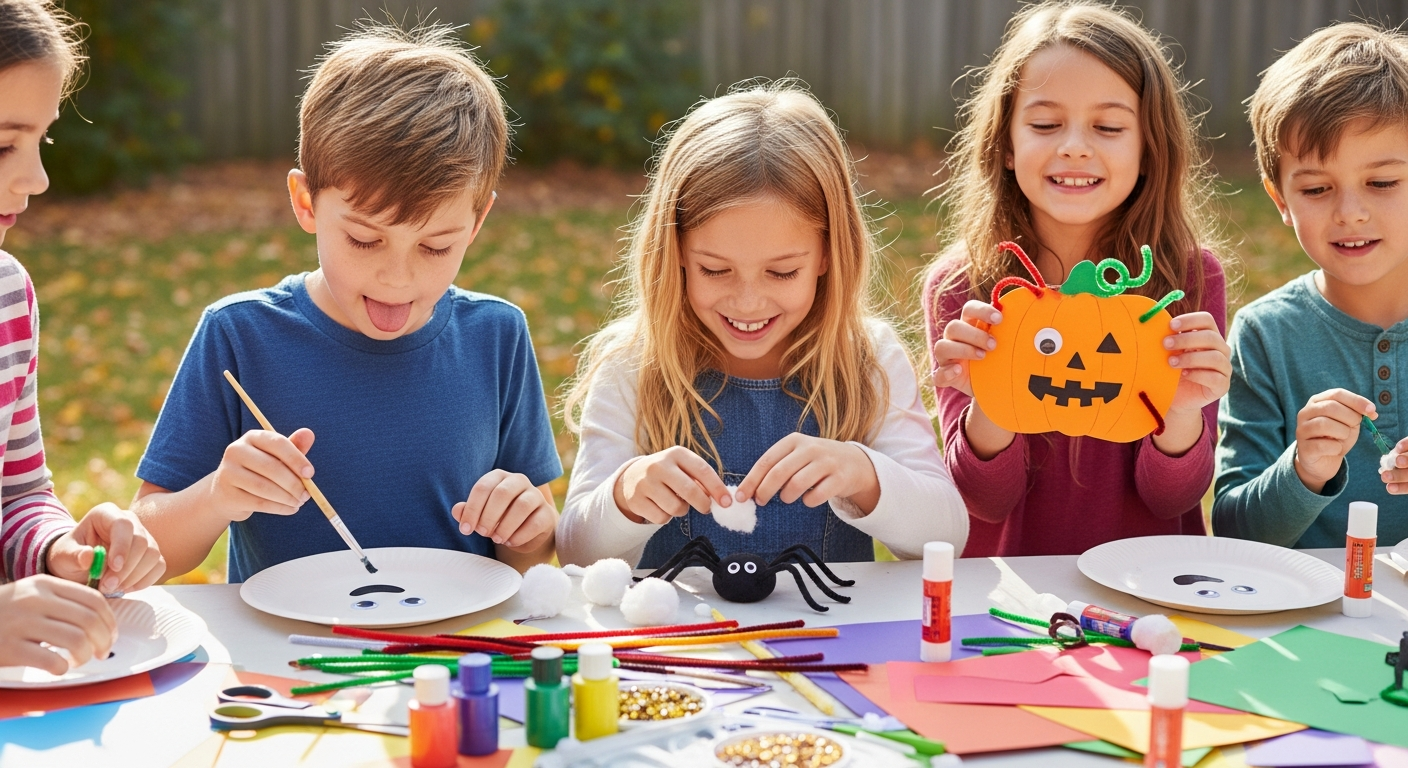
Table of Contents
- Introduction
- The Magic of Halloween Crafts: More Than Just Fun
- Integrating Speech & Language into Craft Time
- Our Top Easy Halloween Crafts for Kids
- Making Craft Time Count for All Ages
- Speech Blubs: Your Partner in Communication Growth
- Conclusion
- FAQ
Introduction
As autumn leaves dance and a crisp chill fills the air, a magical transformation begins. Homes glow with warm lights, and whispers of ghosts and goblins fill children's imaginations. Halloween isn't just a single night of trick-or-treating; it's a whole season of playful anticipation. For families, this festive period offers a unique opportunity to create cherished memories and, importantly, foster essential developmental skills through the joy of crafting. Beyond the endless candy, engaging in creative activities allows children to explore their imaginations, practice patience, and refine their fine motor skills—all while having a spook-tacular time.
This blog post delves into a treasure trove of easy Halloween crafts perfect for kids of all ages, from toddlers to school-aged children. We'll explore simple projects that require minimal materials and effort but promise maximum fun and learning. More than just sticky fingers and glitter, we'll uncover how these creative endeavors are powerful catalysts for developing crucial communication skills, boosting confidence, and strengthening family bonds. Get ready to transform everyday items into enchanting Halloween masterpieces, knowing that each snip, glue, and dab contributes to your child's holistic growth.

The Magic of Halloween Crafts: More Than Just Fun
Crafting during Halloween is about more than just making decorations; it’s a multisensory experience that sparks development on many levels. From the tactile sensation of working with different materials to the visual delight of seeing a creation come to life, these activities are rich with learning opportunities.
Fine Motor Skill Development
Every action in crafting—cutting, gluing, tearing, painting, weaving, molding—is a workout for small hands and fingers. These activities enhance hand-eye coordination, dexterity, and precision, all crucial foundations for skills like writing, dressing, and self-feeding. When your child carefully places googly eyes on a pipe cleaner spider or snips along a line to cut out a bat, they are refining the very movements that will serve them throughout their lives.
Fostering Creativity and Imagination
Halloween is a time for transformation and make-believe. Crafts provide a blank canvas for children to bring their imaginative worlds to life. They learn to visualize an idea and then translate it into a tangible object, fostering problem-solving skills and innovative thinking. Whether they're creating a friendly monster or a spooky ghost, children develop their own unique artistic expression.
Boosting Confidence and Self-Esteem
There’s immense pride in saying, "I made this!" Completing a craft project, no matter how simple, gives children a sense of accomplishment. Displaying their creations around the house reinforces their efforts and validates their creative contributions, building confidence in their abilities. It’s a wonderful way to show them that their ideas and efforts are valued.
Enhancing Language and Communication Skills
This is where Halloween crafts truly shine as a powerful tool for development. While crafting, children are immersed in a language-rich environment. They learn new vocabulary (e.g., "spooky," "goblin," "decorate," "glue," "cut," "smooth," "bumpy"), practice following multi-step directions, describe their creations, and engage in imaginative storytelling. For a child working on specific sounds or sentence structure, crafts offer countless natural opportunities for practice. At Speech Blubs, we understand the profound connection between engaging activities and communication growth. Our mission is to empower children to speak their minds and hearts, and we believe joyful, hands-on experiences like crafting are invaluable complements to that journey.

Integrating Speech & Language into Craft Time
Making craft time count for speech and language development doesn't require extra effort; it just needs a little intentionality. Here’s how you can weave communication practice seamlessly into your Halloween crafting sessions:
Building Vocabulary
Introduce new words as you craft. For example, while making a pumpkin, talk about its "round" shape, "orange" color, "ridged" texture, and the "stem" on top. If you're making a monster, use descriptive words like "hairy," "goofy," "spiky," or "friendly."
Following Directions
Crafts are fantastic for practicing listening skills and following instructions. Start with simple one-step directions ("Get the glue") and gradually introduce two-step commands ("First, cut the paper, then glue it onto the pumpkin"). For children who might struggle, visual cues or gestures can be very helpful.
Sound Practice
Many Halloween-themed words contain sounds children commonly work on.
- "M" sound: "Mummy," "monster," "mask," "make," "more."
- "P" sound: "Pumpkin," "paper," "paint," "purple," "poof."
- "G" sound: "Ghost," "goblin," "glue," "green," "googly eyes."
- "S" sound: "Spider," "skeleton," "spooky," "scissors," "stick."
- "W" sound: "Witch," "web," "white," "weave."
Encourage repetition in a playful way. For a child learning their 'p' sound, creating a puffy paint pumpkin can involve saying "p-p-pumpkin," "p-p-paint," and "p-p-purple" repeatedly. This kind of contextual practice is invaluable.
Storytelling and Imaginative Play
Once a craft is finished, it often becomes a prop for imaginative play. Encourage your child to tell a story about their creation. "What adventures will your monster go on?" "Is your ghost friendly or a little bit mischievous?" This boosts narrative skills, creativity, and the ability to articulate thoughts.
Our Top Easy Halloween Crafts for Kids
We've gathered a collection of easy-to-do Halloween crafts, perfect for engaging little hands and minds. These projects use common household items or inexpensive craft supplies, ensuring that the focus remains on fun and connection, not complicated preparation.
Spooky Characters: Ghosts, Mummies & Skeletons
- Puffy Ghosts (Cotton Ball Fun)
- Materials: Black construction paper, cotton balls, glue, googly eyes.
- How To: Draw a simple ghost outline on black paper. Have your child apply glue within the outline, then stick cotton balls to create a "puffy" texture. Add googly eyes for personality.
- Speech Blubs Connection: This craft is excellent for sensory play and practicing the "p" sound in "puffy" and "ghost." As you work, you can talk about the ghost being "soft" or "white." For a parent whose child is working on early sounds, saying "p-p-puffy ghost!" reinforces the 'p' sound in a fun, tactile way.
- Tissue Paper Ghosts
- Materials: White tissue paper, string or pipe cleaners, markers.
- How To: Crumple a small piece of tissue paper into a ball for the head. Drape a larger piece of tissue paper over the ball. Secure it with a string or pipe cleaner below the "head" to form the ghost's body. Draw eyes and a mouth.
- Speech Blubs Connection: This activity helps with fine motor skills (crumpling, tying) and color identification if you use different colored tissue paper. Talk about the "g-g-ghost" being "light" or "floating."
- Yarn-Wrapped Mummies
- Materials: Cardboard cutouts (mummy shape), white yarn, googly eyes, glue.
- How To: Cut a simple mummy shape from cardboard. Have your child wrap white yarn around the cardboard, securing the ends with glue. Add googly eyes once the mummy is fully wrapped.
- Speech Blubs Connection: Wrapping yarn is fantastic for fine motor development. Focus on the "m" sound, saying "m-m-mummy" as they wrap. "M-m-more yarn?" "M-m-make it tight!" This is an ideal scenario for practicing initial sounds.
- Cotton Swab Skeletons
- Materials: Black paper, cotton swabs, glue, white paper (for skull).
- How To: Draw a simple skull shape on white paper, cut it out, and glue it to the top of the black paper. Then, help your child arrange and glue cotton swabs to form the bones of a skeleton body.
- Speech Blubs Connection: This craft is excellent for learning body parts and practicing the "s" sound. Name each "s-s-skeleton" part as you glue it: "s-s-spine," "s-s-arm," "s-s-leg." Following multi-step directions ("first the head, then the ribs") is also key here.
Pumpkin & Jack-o'-Lantern Fun
- Potato Stamping Jack-o'-Lanterns
- Materials: Potatoes, orange paint, black paint, paper, carving tools (adult supervision required).
- How To: An adult cuts a potato in half and carves a simple jack-o'-lantern face or a plain pumpkin shape into the cut side. Dip the potato stamp into orange paint and stamp onto paper. Once dry, use black paint or a marker to add faces.
- Speech Blubs Connection: Stamping is a satisfying sensory experience. Practice the "p" sound with "p-p-pumpkin" and "p-p-paint." Count the "p-p-pumpkins" you make. This activity can also be a great way to talk about "happy" or "silly" pumpkin faces, expanding emotional vocabulary.
- No-Carve Pumpkin Monsters
- Materials: Small pumpkins, acrylic paints, googly eyes, pipe cleaners, felt scraps, glue.
- How To: Paint small pumpkins in vibrant colors. Once dry, let your child decorate them with googly eyes, pipe cleaner arms/antennas, and felt mouths or teeth.
- Speech Blubs Connection: This craft encourages descriptive language. Talk about the "m-m-monster's" "spiky" hair (pipe cleaners) or "big" eyes. Children can create their own unique monster and describe its features, fostering descriptive vocabulary and imaginative storytelling.
- Stained Glass Pumpkins
- Materials: Contact paper, orange and yellow tissue paper squares, black construction paper, scissors.
- How To: Cut two pumpkin shapes from contact paper. Cut a pumpkin frame from black construction paper. Stick one contact paper pumpkin to a window (sticky side out). Let your child arrange tissue paper squares onto the sticky surface. Place the black paper frame on top, then cover with the second contact paper pumpkin (sticky sides together) to seal.
- Speech Blubs Connection: This is a wonderful tactile and visual craft. Discuss "s-s-shapes" (squares), "c-c-colors" (orange, yellow), and "s-s-sticky" texture. Watching the sunlight transform the "p-p-pumpkin" is also a great opportunity for "w-w-wow" exclamations and observations.
Creepy Crawlies: Spiders & Bats
- Popsicle Stick and Yarn Spider Web
- Materials: Popsicle sticks (3 per web), yarn, glue, plastic spiders (optional).
- How To: Glue three popsicle sticks together in the center to form a snowflake-like star. Once dry, tie the end of a yarn piece to the center. Guide your child to weave the yarn over and under each stick, creating a "web."
- Speech Blubs Connection: This craft is fantastic for developing fine motor skills and bilateral coordination. Use action words like "w-w-weave," "o-o-over," and "u-u-under." Practice the "s" sound with "s-s-spider" and "w-w-web."
- Handprint Spiders/Bats
- Materials: Construction paper (black for bats, various for spiders), paint, googly eyes, markers.
- How To: For bats, paint your child's hands black and stamp them on paper, thumbs overlapping to create wings. Add a face. For spiders, paint hands a color and stamp them, then draw a body and eight legs.
- Speech Blubs Connection: This is a lovely keepsake and a chance to talk about body parts. "Let's paint your h-h-hand!" "Look at the b-b-bat's w-w-wings!" Counting the "l-l-legs" of the "s-s-spider" is also great for early math and language.
Playful Monsters & Witches
- Toilet Paper Roll Monsters
- Materials: Empty toilet paper rolls, paint, construction paper scraps, googly eyes, glue.
- How To: Paint the toilet paper rolls in bright colors. Once dry, let your child glue on construction paper teeth, horns, hair, and googly eyes to create unique monsters.
- Speech Blubs Connection: This promotes creativity and recycling! Encourage your child to describe their monster: "My m-m-monster has b-b-big teeth!" or "Your m-m-monster is s-s-silly!" Making monster sounds ("R-r-roar!") is also a fun way to practice vocalizations and articulation.
- Shape Monsters
- Materials: Construction paper in various colors, scissors, glue, googly eyes.
- How To: Cut out various geometric shapes (circles, squares, triangles, rectangles) in different colors and sizes. Let your child assemble these shapes onto a piece of paper to create unique monsters. Add googly eyes.
- Speech Blubs Connection: This craft is a fantastic way to reinforce shape and color recognition. "Can you find a r-r-red s-s-square for the monster's b-b-body?" Talk about "b-b-big" and "s-s-small" shapes. This provides rich opportunities for descriptive language and early concept development.
- Paper Plate Witch
- Materials: Paper plates, green paint, construction paper (black, orange, purple), glue, markers.
- How To: Paint the paper plate green for the witch's face. Cut out a black witch hat, orange hair, and facial features from construction paper. Glue them onto the plate.
- Speech Blubs Connection: This craft helps with color recognition ("g-g-green face," "b-b-black hat") and following directions. You can talk about the "w-w-witch's" "s-s-silly smile" or "pointy hat."
Making Craft Time Count for All Ages
Crafting can be adapted to suit any age and skill level. The key is to focus on the process, not just the perfect outcome.
- For Toddlers: Prioritize sensory experiences and simple actions like tearing, sticking, dabbing paint, and lots of verbal interaction from you. Pre-cut shapes can make projects more accessible. Focus on single-step directions.
- For Preschoolers: Introduce more complex cutting and gluing, encourage independent decision-making on colors and placement, and use crafts for pre-reading skills like letter recognition (e.g., using pumpkin shapes to create name puzzles).
- For School-Aged Children: Challenge them with multi-step projects, encourage intricate details, and use crafts as prompts for writing short stories or creating elaborate scenes.
Remember, the goal is not perfection, but participation, exploration, and connection. Encourage them to embrace the imperfections and celebrate their unique creations.
Speech Blubs: Your Partner in Communication Growth
Just as these hands-on crafts provide a nurturing environment for development, Speech Blubs offers a complementary "smart screen time" solution, blending scientific principles with engaging play. Our app was born from the personal experiences of our founders, who all grew up with speech problems and created the tool they wished they had. We are committed to providing an immediate, effective, and joyful solution for the 1 in 4 children who need speech support.
We know that many parents wonder if their child could benefit from extra communication support. To help, we offer a quick 3-minute preliminary screener that involves 9 simple questions, providing you with an assessment and a next-steps plan. It’s a great way to gain clarity and discover if Speech Blubs is the right fit for your family.
Our unique "video modeling" methodology is at the heart of our approach. Children learn by watching and imitating their peers, a natural and powerful way to develop complex communication skills. This mirrors the natural learning that happens when a child observes and imitates an adult during a crafting session. We transform passive viewing into an interactive, educational experience, providing a screen-free alternative to passive cartoons and a powerful tool for family connection. You can see what other parents are saying about their child's success with Speech Blubs by visiting our testimonials page.
Whether your child is working on specific sounds, expanding their vocabulary, or building confidence in expressing themselves, Speech Blubs offers a supportive and fun environment. Imagine your child practicing animal sounds in our "Animal Kingdom" section, then making a paper bag monster puppet and using those newly practiced sounds in imaginative play!
Conclusion
Halloween crafts are a wonderful way to celebrate the season, create lasting family memories, and foster critical developmental skills. From boosting fine motor coordination and sparking creativity to enriching language and building confidence, each simple project offers a wealth of benefits. By engaging intentionally, talking through the steps, and encouraging descriptive language, you can transform a fun crafting session into a powerful learning experience for your child.
Just as these crafts provide a hands-on pathway to growth, we at Speech Blubs are dedicated to empowering children to communicate effectively and joyfully. We provide a unique blend of scientific methodology and playful learning to support your child's speech and language journey.
Ready to combine the magic of crafting with engaging, research-backed speech development? Start your journey towards empowering your child's voice today! Take advantage of our incredible offer by choosing our Yearly plan. For just $59.99 per year, which breaks down to an unbeatable $4.99 per month, you'll save 66% compared to the monthly plan. The Yearly plan isn't just cheaper; it includes a 7-day free trial to experience the full app, the extra Reading Blubs app, early access to new updates, and a 24-hour support response time. The Monthly plan, priced at $14.99 per month, does not include these valuable benefits.
Unlock the full potential for your child's communication and creativity. Download Speech Blubs on the App Store or Google Play to begin your 7-day free trial today! If you prefer to sign up via our website, you can create your account and start your free trial here. Choose the Yearly plan to get the best value and access to the complete suite of features designed to help your child speak their mind and heart.
FAQ
Q1: What age group are these Halloween crafts generally suitable for?
Most of the crafts listed are adaptable for a wide range of ages, from toddlers (with adult assistance) to school-aged children. For younger children, focus on simple steps like sticking and painting, with pre-cut materials. Older children can handle more intricate cutting, weaving, and independent design. The key is to match the complexity of the craft to your child's developmental stage and allow them to enjoy the process, regardless of the "perfect" outcome.
Q2: How can I make crafts truly beneficial for my child's speech and language development?
To maximize speech and language benefits, engage actively with your child during crafting. Narrate your actions, describe materials using rich vocabulary (e.g., "sticky glue," "smooth paper," "bumpy pumpkin"), ask open-ended questions ("What do you think will happen next?"), and encourage them to describe their creations. Focus on specific sounds or words your child is working on by playfully repeating them in context (e.g., "p-p-pumpkin," "m-m-monster"). Always praise their efforts and celebrate their communication attempts.
Q3: What if my child gets frustrated easily during crafts?
Frustration is a natural part of learning. When it arises, offer gentle support rather than taking over. Break down complex steps into smaller, manageable ones. Offer choices ("Do you want to use the red paint or the blue paint?"). If a particular task is too challenging, modify it or switch to an easier part of the craft. Remember, the goal is positive engagement and connection, not a flawless final product. Acknowledge their feelings and remind them that it's okay for things not to be perfect.
Q4: How does Speech Blubs fit into our crafting routine?
Speech Blubs complements hands-on crafting beautifully by reinforcing communication skills in a different, engaging format. For example, if your child practices descriptive words while making a "s-s-spooky s-s-spider" craft, they can then use Speech Blubs to explore our "Making Sounds" sections, like the "Silly Sounds" module, to reinforce articulation through video modeling. The app provides a structured, joyful environment for practicing sounds, words, and concepts that can then be applied and expanded upon during creative play, making learning holistic and fun. It's "smart screen time" that supports and enriches the foundational skills developed through hands-on activities.
About the author