
Easy Home Crafts for Kids: Joyful Learning & Communication
 By Speech Blubs Team•Jan 13, 2026•19 min.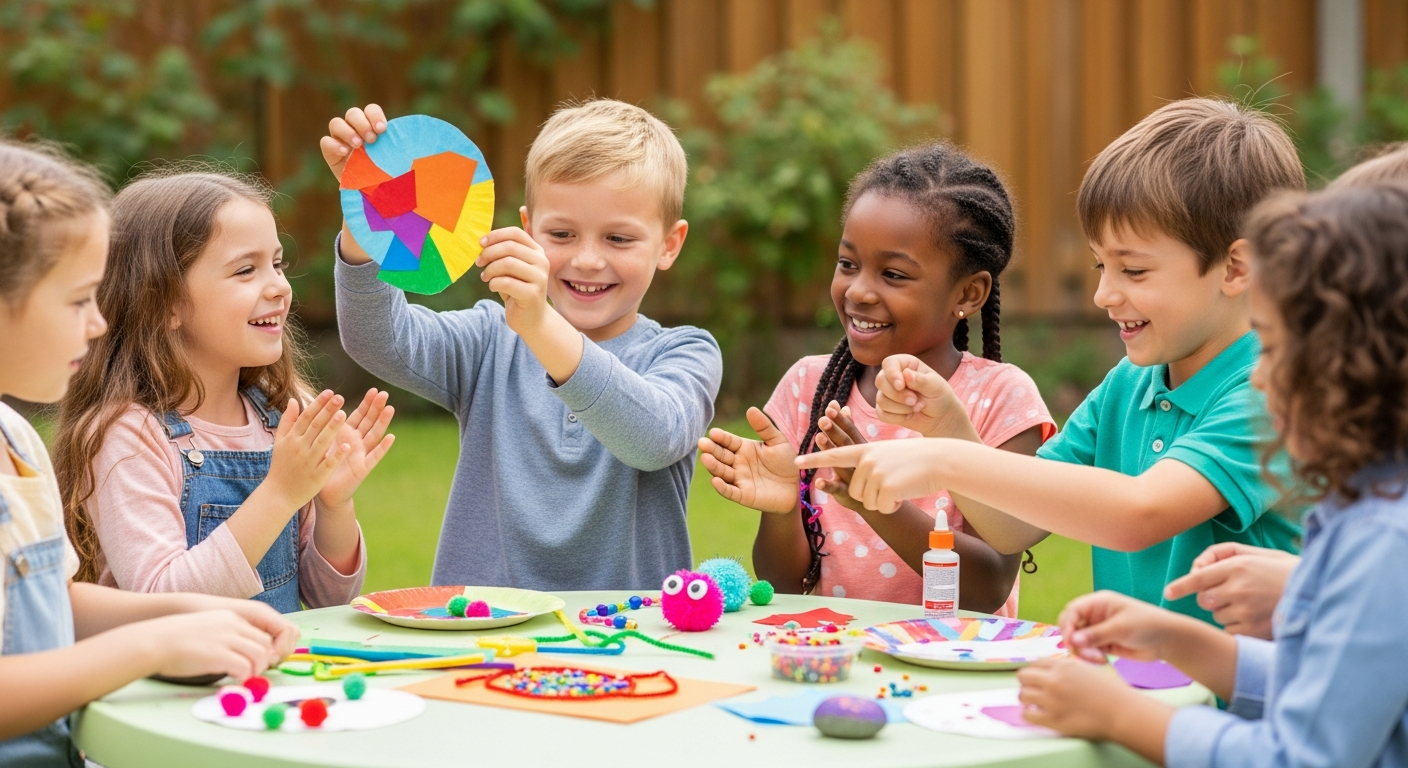
Table of Contents
- Introduction
- Why Crafting is a Developmental Powerhouse
- The "Stuff You Already Have" Philosophy
- Easy Home Crafts for Kids: Ideas & Inspiration
- Tips for a Joyful Crafting Experience
- Speech Blubs: Your Partner in Every Step of the Journey
- Conclusion
- FAQ
Have you ever looked around your home after a particularly enthusiastic craft session and wondered, "What am I going to do with all of this?" From glitter-covered tables to proudly displayed (and slightly wilting) paper flowers, the artistic endeavors of our little ones often bring a mix of delight and a touch of domestic chaos. Yet, beyond the temporary mess, lies a world of profound benefits. This post isn't just about finding ways to occupy your child's hands; it's about harnessing the incredible power of easy home crafts to foster essential developmental skills, spark communication, and create unforgettable family memories. We'll explore a variety of simple, purposeful crafts using everyday items, demonstrating how these activities become crucial stepping stones for your child's growth, particularly in developing vital communication abilities.
Introduction
Imagine a quiet afternoon, sunlight streaming through the window, as your child excitedly describes the "super cool robot" they're building from an old cereal box. They articulate their vision, request specific colors, and explain the robot's special powers. This isn't just play; it's a vibrant lesson in language, creativity, and self-expression. Far too often, we underestimate the immense developmental impact of simple arts and crafts. They are not merely time-fillers but powerful tools that build foundational skills, from fine motor coordination to problem-solving, and perhaps most importantly, communication. In this comprehensive guide, we'll dive into how easy home crafts can become a dynamic classroom for your child, transforming everyday materials into opportunities for learning, bonding, and speaking their minds and hearts.

Why Crafting is a Developmental Powerhouse
The allure of crafts goes far beyond simply keeping little hands busy. Each snip of the scissors, every stroke of paint, and every piece of tape applied is a miniature workout for developing minds and bodies. These activities are particularly vital for early childhood development, laying groundwork that supports everything from academic success to social-emotional intelligence.
Building Foundational Skills
Crafting engages multiple developmental domains simultaneously:
- Fine Motor Skills: Holding a crayon, cutting along a line, peeling a sticker, or squeezing a glue bottle all strengthen the small muscles in the hands and fingers. These are the same muscles needed for writing, self-feeding, and buttoning clothes. The precision required for many crafts hones hand-eye coordination, a critical skill for many aspects of daily life.
- Cognitive Development: Following instructions, selecting materials, planning a design, and problem-solving when a craft doesn't go exactly as planned are all powerful cognitive exercises. Children learn about shapes, colors, textures, and spatial relationships. They learn to think creatively and adapt.
- Language and Communication: This is where crafts truly shine as a partner to our mission at Speech Blubs. As children craft, they naturally engage in conversations. They describe what they're doing ("I'm making a blue monster with big eyes!"), ask questions ("Can I have the red paper?"), follow verbal directions ("Glue the pompom here"), and narrate their imaginative play ("My robot is flying to the moon!"). These interactions build vocabulary, improve sentence structure, and enhance their ability to express complex thoughts and feelings. Crafts become a natural stage for conversation, reducing pressure and making communication joyful.
- Social-Emotional Growth: Crafting can be a shared experience, teaching patience, turn-taking, and cooperation. Completing a project fosters a sense of accomplishment and boosts self-esteem. It also provides an outlet for emotional expression, allowing children to convey feelings through colors, shapes, and themes.
At Speech Blubs, we believe in empowering children to "speak their minds and hearts." This mission was born from the personal experiences of our founders, who all grew up with speech problems and envisioned a tool they wished they had. We know firsthand the frustration that can arise when a child struggles to communicate. That's why we're committed to providing immediate, effective, and joyful solutions. Crafts are a fantastic screen-free complement to our "smart screen time" approach, creating a holistic environment for language development. They offer hands-on experiences that nurture the very communication skills we aim to strengthen through our app's scientifically-backed methods. You can learn more about our commitment to children's development and our values by visiting our homepage.

The "Stuff You Already Have" Philosophy
One of the greatest joys of home crafting is that you don't need a specialty store or an endless budget. The most engaging and enriching projects often come from the treasures lurking in your recycling bin or utility drawer. This approach not only saves money but also teaches children about resourcefulness and sustainability.
Before you start any craft project, take a quick inventory of your home. You might be surprised by what you find! Here’s a list of common household items that can be transformed into artistic masterpieces:
- Paper Goods: Toilet paper/paper towel rolls, cereal boxes, cardboard delivery boxes, paper plates, old newspapers or magazines, construction paper scraps, coffee filters, paper bags.
- Kitchen Staples: Pasta (uncooked), rice, dried beans, food coloring, cornstarch, baking soda, salt, tin foil, plastic wrap.
- Recycled Items: Plastic bottles/jars, bottle caps, plastic containers (yogurt cups, fruit containers), old socks, fabric scraps from old clothes.
- Crafty Basics (you might already have): Glue (stick or liquid), tape (masking, clear, or colorful duct tape), scissors (kid-safe), markers, crayons, colored pencils, watercolors, basic acrylic paints, yarn, string, twine, pipe cleaners, pom-poms (if you have them), googly eyes (optional, but fun!).
- Nature's Bounty: Small twigs, leaves, pebbles, flowers (collected on a nature walk!).
Embracing this "use what you have" mindset makes crafting accessible, spontaneous, and a wonderful lesson in creativity and problem-solving for your child.
Easy Home Crafts for Kids: Ideas & Inspiration
Let’s dive into some easy, engaging, and purposeful craft ideas that you can do with your children right at home, using many of the supplies listed above. We've categorized them by the primary developmental benefit they offer, though most crafts offer a blend of all!
Crafts for Communication & Language Development
These crafts are fantastic for sparking conversation, building vocabulary, and encouraging your child to articulate their ideas and tell stories.
1. Monster Puppets & Storytelling Props
What you’ll need: Old socks, paper bags, construction paper, glue, markers, yarn, fabric scraps, googly eyes. How to do it: Turn old socks or paper bags into unique monster or animal puppets. Children can draw faces, glue on yarn for hair, fabric scraps for clothing, or googly eyes for extra silliness. Once the puppets are made, encourage your child to put on a puppet show! This activity is a treasure trove for language development.
Why it's great for communication: For a parent whose 3-year-old 'late talker' struggles with expressive language, creating a monster puppet offers a low-pressure way to practice sounds like "roar" or "grrr," or simple phrases like "big monster," "silly monster," or "monster eats cookies." As they manipulate the puppet, they naturally engage in dialogue, describe their character's actions, and even negotiate storylines with you. This process builds confidence and makes speaking a joyful, imaginative act. Our research shows that children learn best when they are engaged and having fun, and activities like this perfectly complement the interactive learning found in the Speech Blubs app, where children learn by imitating peers through our video modeling methodology.
2. Cardboard Box Creations (Cars, Houses, Robots)
What you’ll need: Large cardboard boxes, scissors (adult supervision!), glue, paint, markers, tape, miscellaneous recycled items (bottle caps for wheels, plastic containers for dials). How to do it: Transform a large box into a car, a house, a rocket ship, or a robot. Let your child lead the design. They can paint it, add details, and personalize their creation.
Why it's great for communication: This craft invites sustained imaginative play. As they build, children explain their vision ("This is the steering wheel for my car," "My robot needs a button to fly"). During play, they narrate stories ("The car is driving to the store!"), practice descriptive language ("The house has a red roof"), and engage in turn-taking conversations. These extended interactions significantly boost vocabulary and narrative skills.
3. "Mail a Hug" or Friendly Letters
What you’ll need: Paper, crayons/markers, envelopes (optional). How to do it: Help your child trace their hands and arms on paper, then cut it out to make a "hug" they can send to a loved one. Or simply encourage them to draw pictures and "write" letters (scribbles are perfect!) to friends or family.
Why it's great for communication: This activity connects creativity with the social function of language. Children can talk about who they're sending the hug/letter to, what they want to say, and how it will make the recipient feel. It's a wonderful way to practice expressing affection and thoughts to others, even if the "writing" is mostly visual.
Ready to provide your child with more tools to express themselves? Download Speech Blubs on the App Store or Google Play Store to explore activities designed to build confidence in speech and language.
Crafts for Fine Motor Skills & Coordination
Precision, dexterity, and hand-eye coordination are key takeaways from these crafts.
1. Paper Plate Spin Art
What you’ll need: Paper plates, washable paints, an old salad spinner. How to do it: Drip small amounts of paint onto a paper plate placed inside a salad spinner. Close the lid and spin vigorously! Open to reveal a unique, swirling masterpiece.
Why it's great for fine motor skills: The act of dripping paint with precision, then engaging the spinner, refines hand-eye coordination and controlled movements. It's a fun introduction to cause and effect, and the surprise element keeps kids engaged.
2. Homemade Clay or Playdough Sculptures
What you’ll need: Flour, salt, water, cream of tartar, food coloring (for playdough); baking soda, cornstarch, water (for homemade clay). How to do it: Follow a simple recipe to make non-toxic dough. Children can then mold, roll, pinch, and sculpt whatever they imagine.
Why it's great for fine motor skills: The tactile experience of kneading and shaping dough is excellent for strengthening hand muscles, improving dexterity, and refining finger control. It’s also wonderful for sensory exploration.
3. Yarn Wrapping / String Art
What you’ll need: Cardboard cutouts (shapes, letters), yarn/string, glue. How to do it: Apply glue to a cardboard shape, then have your child wrap yarn around it, creating colorful patterns. For older kids, create a simple string art design by poking holes in cardboard and weaving string through them.
Why it's great for fine motor skills: This activity requires careful manipulation of yarn, precise wrapping, and consistent tension, all of which are fantastic for developing fine motor control and bilateral coordination.
Crafts for Cognitive Development & Problem Solving
These activities challenge children to think, plan, and innovate.
1. Recycled Material Art Collages
What you’ll need: A base (cardboard, thick paper), glue, a collection of "found objects" (buttons, bottle caps, pasta, small fabric scraps, dried beans, yarn bits). How to do it: Provide your child with a variety of textures and shapes from your recycled stash. Encourage them to arrange and glue these items onto their base to create abstract art, robots, animals, or whatever their imagination sparks.
Why it's great for cognitive development: Children make decisions about composition, texture, and color. They solve spatial puzzles ("Where does this bottle cap fit?"), categorize objects, and experiment with different ways to attach materials. It's a wonderful exercise in open-ended creativity and problem-solving.
2. DIY Microscopes or Telescopes
What you’ll need: Paper towel rolls, craft foam/cardboard, googly eye (large), small plastic container/cup, water. How to do it: For a "water microscope," attach a large googly eye to a paper cup. Fill the cup with water. Children can then look through the "lens" at small objects, observing how the water magnifies them. For a "telescope," simply decorate a paper towel roll.
Why it's great for cognitive development: These crafts introduce basic scientific concepts in a playful way. Children learn about observation, magnification, and the properties of water. They engage in imaginative scientific exploration, sparking curiosity about the world around them.
3. Homemade Cleanup Labels
What you’ll need: Blank index cards or paper, markers/crayons, pictures of toys (drawn or printed). How to do it: Print or draw simple pictures of toy categories (Legos, dolls, cars, blocks). Let your child color or decorate these pictures. Then, glue or tape the finished labels onto corresponding storage bins or shelves.
Why it's great for cognitive development: This craft turns organization into a game and directly addresses problem-solving for everyday routines. Children learn to categorize, match, and understand visual cues, which aids in developing organizational skills and independence. This can also prevent arguments, reducing frustration for both children and parents—a core value at Speech Blubs. Unsure if your child could benefit from more targeted language support? Take our quick 3-minute preliminary screener to get a simple assessment and a free 7-day trial.
Crafts for Emotional Expression & Connection
These activities foster empathy, generosity, and strong family bonds.
1. "S'more Love" for Neighbors & Friends
What you’ll need: Twigs, red/yellow/orange paint, thick paper/cardboard, cotton balls, brown paper, glue. How to do it: Gather small twigs for the "campfire." Have kids paint flames above the twigs on paper using handprints or brushes. Then, create s'mores above the fire using brown paper for graham crackers, small brown scraps for chocolate, and cotton balls for marshmallows. Write a sweet note.
Why it's great for emotional connection: This craft is a beautiful way to spread kindness and teach generosity. It encourages children to think about others and express love, fostering empathy and community spirit. It's a meaningful family project that brings joy to both the creators and the recipients.
2. Decorated Time Capsule
What you’ll need: An empty shoebox or plastic container, paint/markers, stickers, photos, small mementos, letters. How to do it: Decorate the outside of the box. Then, as a family, collect small items that represent your child's interests or family memories from the current time. Write letters to your future selves. Seal the capsule and set a date to open it years later.
Why it's great for emotional connection: This deeply personal craft creates a tangible link to memories and the passage of time. It sparks conversations about the past, present, and future, strengthening family bonds and providing a unique keepsake. It's a wonderful way to reflect on growth and shared experiences. We love seeing children grow and develop their voices; see what other parents are saying about their child's success with Speech Blubs and how we help foster this growth.
Tips for a Joyful Crafting Experience
To make the most of your home crafting adventures, consider these practical tips:
- Embrace the Process, Not Just the Product: The biggest learning happens during the making, not necessarily in the perfect finished item. Encourage exploration, experimentation, and unique ideas over strict adherence to a template.
- Set Up a "Craft Station": Dedicate a space, even a corner of a table, that is easy to clean and where supplies are accessible. This signals to your child that it’s time to create and helps manage mess.
- Keep Supplies Organized (and Accessible): Use jars (painted, perhaps, as a craft in itself!), bins, or drawers to store supplies. If children can easily get what they need (with supervision), they are more likely to engage.
- Join In the Fun! Crafting with your child isn't just about supervising; it's about connecting. Sit down, create your own project, and engage in conversation. This models enthusiasm and makes the activity a shared joy.
- Manage Expectations (Yours and Theirs): Don't expect museum-worthy art from a toddler! Celebrate effort and creativity. Also, understand that attention spans vary. A 10-minute session is perfectly fine.
- Turn Clean-Up into a Game: Sing a clean-up song, make it a race, or assign roles. This teaches responsibility and prevents crafting from becoming a chore.
- Document and Display: Take photos of their creations, and proudly display a rotating selection of their art. This validates their efforts and boosts their confidence.
Speech Blubs: Your Partner in Every Step of the Journey
While hands-on crafts provide invaluable sensory and motor experiences, supplementing them with targeted, engaging activities can supercharge your child's communication development. At Speech Blubs, we are dedicated to being that partner. Our app offers a unique blend of scientific principles and playful engagement, designed to provide an immediate, effective, and joyful solution for the 1 in 4 children who need speech support.
We leverage a distinctive "video modeling" methodology, where children learn by watching and imitating their peers. This natural form of learning is highly effective, as it taps into mirror neurons and makes the learning process relatable and fun. We transform screen time from passive viewing (like cartoons) into active, "smart screen time" experiences that foster family connection and communication skills.
Our comprehensive library of activities covers a wide range of speech and language areas, from first sounds and words to storytelling and social skills. For instance, if your child is working on animal sounds through a craft project, they can then reinforce those sounds and words with interactive games in Speech Blubs' Animal Kingdom section. This seamless integration ensures a consistent and reinforcing learning environment. Our methodology is backed by science and has earned us a top-tier rating on the MARS scale for educational apps. We invite you to explore the research behind our effective approach.
Investing in Your Child's Future: Our Plans
We believe in transparency and providing value to families. When you choose Speech Blubs, you're investing in a powerful tool that complements your child's overall developmental plan and, when applicable, professional therapy.
We offer two main plans:
- Monthly Plan: For $14.99 per month, you get access to our core speech and language activities.
- Yearly Plan: This is by far our most popular and value-packed option at $59.99 per year. This breaks down to just $4.99 per month, allowing you to save 66% compared to the monthly plan!
Why the Yearly Plan is the Best Value:
The Yearly plan isn't just about saving money; it comes with exclusive, high-value features designed to give your child the best possible experience:
- A 7-Day Free Trial: Try out all our features before committing.
- The Extra Reading Blubs App: Get access to our supplementary app focused on early reading skills.
- Early Access to New Updates: Be among the first to experience our latest features and content.
- 24-Hour Support Response Time: Get quick assistance whenever you need it.
The Monthly plan does not include these additional benefits. For the most comprehensive support and the best possible value for your child's speech and language journey, we highly recommend our Yearly plan.
Conclusion
Easy home crafts for kids are more than just a delightful pastime; they are essential engines for development. They provide tactile experiences that refine fine motor skills, cognitive challenges that foster problem-solving, and, crucially, a natural, joyful environment for language and communication to blossom. From the simplest paper plate creation to the most elaborate cardboard fort, each craft session is an opportunity for your child to explore, learn, and express themselves.
By integrating purposeful crafts into your routine, you're not only nurturing creativity but also building vital foundational skills that support their journey to "speak their minds and hearts." And when paired with the engaging, scientifically-backed approach of Speech Blubs, you provide a comprehensive ecosystem for growth. Our unique video modeling methodology and "smart screen time" offer targeted support that complements your hands-on activities, ensuring your child receives immediate, effective, and joyful solutions for their communication needs.
Don't wait to empower your child with the gift of confident communication. Ready to embark on this exciting journey? Start your 7-day free trial today and unlock a world of engaging activities designed for your child's unique needs. We encourage you to choose the Yearly plan to get the full suite of features, including the Reading Blubs app and early access to updates, ensuring the best value and experience for your family.
Download Speech Blubs on the App Store or get it on the Google Play Store, or create your account and begin your 7-day free trial today and select the Yearly plan to begin.
FAQ
Q1: What age group are these easy home crafts for kids most suitable for?
These crafts are generally suitable for toddlers and preschoolers (ages 2-5), but many can be adapted for older children as well. The key is to focus on the process rather than a perfect end product, allowing younger children to explore materials freely and older children to engage with more complex ideas and fine-tuned details. Adult supervision and assistance with things like cutting are always recommended, especially for younger crafters.
Q2: How exactly do crafts help with speech and language development?
Crafts naturally encourage speech and language in several ways: they provide opportunities for vocabulary building (naming colors, shapes, tools, actions), following directions ("glue the paper here"), making requests ("can I have the red marker?"), and describing their work ("I'm making a tall tower"). Most importantly, they create a shared, engaging activity that encourages conversation and imaginative storytelling, which are crucial for developing expressive language and social communication skills.
Q3: What if my child isn't interested in crafts or gets frustrated easily?
It's common for children's interests and attention spans to vary. If your child isn't keen on traditional crafts, try making them more open-ended or integrating them into play. Focus on sensory experiences (like homemade clay) or purposeful crafts (like making a "treasure box"). Keep sessions short, celebrate effort, and avoid pressure. Sometimes, just having materials available for spontaneous creation can spark interest. Remember, the goal is joyful learning, not perfection.
Q4: How can Speech Blubs integrate with our crafting routine to further support my child's communication?
Speech Blubs perfectly complements hands-on crafting by reinforcing and expanding language skills in a targeted, engaging way. For example, if your child makes animal masks, they can then practice animal sounds and names with the interactive animal activities in Speech Blubs. If they create a story with puppets, Speech Blubs has sections dedicated to storytelling and social communication. Our video modeling approach with peer imitation provides a structured "smart screen time" experience that extends the language learning from their craft play, making communication practice consistent and fun.
About the author