
Easy January Crafts: Fun for Kids & Growing Voices
 By Speech Blubs Team•Jan 13, 2026•21 min.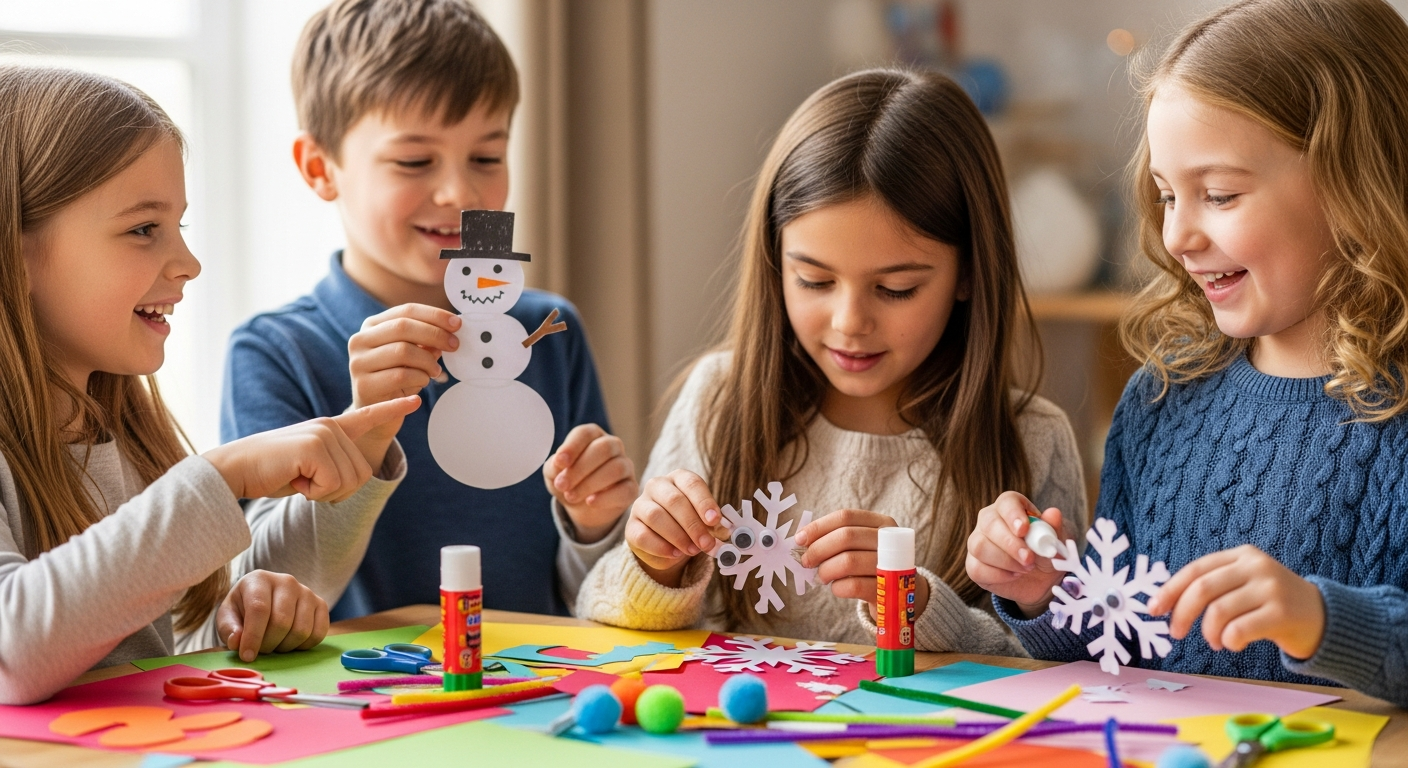
Table of Contents
- The Developmental Power of Crafting
- Wonderful Winter Wonderland Crafts
- Celebrating Nature & Animals Indoors
- Crafting for a Fresh Start & Learning
- Building Foundational Skills Through Intentional Play
- Speech Blubs: Your Partner in Communication Growth
- Conclusion: Crafting a Path to Confident Communication
- Frequently Asked Questions
As the last echoes of holiday cheer fade, January arrives with its crisp air and the promise of new beginnings. For many families, it ushers in a desire for cozy indoor activities that are both engaging and enriching. But beyond simply keeping boredom at bay, what if these winter pastimes could also be powerful catalysts for your child's development, especially their communication skills? Here at Speech Blubs, we believe every moment is an opportunity for growth, and that includes those delightful, glitter-filled craft sessions.
This month, we're diving into the wonderful world of easy January crafts for kids – activities that not only spark creativity but also lay crucial groundwork for speech and language development. We’ll explore how simple paper, glue, and a dash of imagination can transform quiet afternoons into vibrant learning experiences, fostering fine motor skills, cognitive growth, and a love for language. Prepare to discover how these hands-on projects, combined with targeted support from resources like Speech Blubs, can empower your child to "speak their minds and hearts" with confidence and joy. Let's make this January a month of artistic discovery and communication triumphs!

The Developmental Power of Crafting
Crafting is far more than just a fun way to pass the time; it's a multi-sensory activity that profoundly impacts a child's overall development. When little hands engage with materials, they're not just making art; they're building foundational skills that are critical for everything from academic success to social interaction.
Nurturing Fine Motor Skills: The Hand-Speech Connection
One of the most immediate benefits of crafting is the development of fine motor skills. Tasks like cutting with scissors, gluing small pieces, tearing paper, drawing, or manipulating buttons and beads directly strengthen the small muscles in the hands and fingers. You might wonder, what does this have to do with speech? The connection is more significant than you might think! The areas of the brain that control fine motor movements in the hands are closely linked to the areas responsible for oral motor control – the muscles of the mouth, tongue, and jaw used for speech. Developing dexterity in the hands can indirectly support the precise movements needed for clear articulation.
Consider a simple craft stick snowflake. Painting the sticks, waiting for them to dry, then carefully gluing on glitter or small buttons – each step requires precision and hand-eye coordination. These deliberate actions mirror the coordinated movements needed to produce different speech sounds. For a parent whose child might be experiencing a speech delay, these seemingly small victories in fine motor control can be incredibly encouraging.
Boosting Cognitive Development: A Playground for the Brain
Crafts are also a fantastic workout for the brain. Children learn to follow multi-step instructions, solve problems (e.g., "how do I make this stick here?"), recognize patterns, understand cause and effect, and categorize objects by color, shape, or size. They engage in imaginative play as they envision their finished creation, which strengthens their ability to think abstractly and creatively.

For example, when making a paper plate melting snowman, a child uses their understanding of shapes (circles for the head and body), colors for accessories, and the concept of "melting." These cognitive processes are fundamental to language comprehension and expression. They learn new concepts and can then apply new vocabulary to describe them.
Expanding Language and Communication: Finding Their Voice
Perhaps most excitingly for us at Speech Blubs, crafting is a rich environment for language development. It provides natural, engaging contexts for children to use and understand new words, practice descriptive language, and even tell stories.
- Vocabulary: As children work, they encounter new words – the names of tools (scissors, glue stick), materials (felt, cotton balls, pipe cleaners), colors, shapes, and actions (cut, paste, rip, crumple, paint). "Can you pass me the red piece of construction paper? Let's glue it onto the snowman's hat!"
- Descriptive Language: Encouraging your child to talk about their craft – "How does the cotton ball feel? Is it soft or bumpy?" or "What color should we use for the penguin's belly?" – helps them develop a rich descriptive vocabulary. This ability to articulate details is crucial for clear and effective communication.
- Following Directions: Craft instructions provide an excellent opportunity to practice listening comprehension. "First, we cut the circle, then we glue on the eyes." Breaking down tasks into sequential steps helps children understand and process multi-part commands, a skill vital for school readiness and daily interactions.
- Storytelling and Narrative: Once a craft is complete, it can become a prop for imaginative play and storytelling. "Tell me about your snowstorm mobile. Where is the snow falling? What will the animals do?" This encourages narrative skills, helping children organize their thoughts and express them coherently.
- Social Communication: Collaborative crafting teaches turn-taking, sharing, asking for help, and expressing preferences. These are fundamental social communication skills that are practiced in a low-pressure, fun environment.
At Speech Blubs, our mission, born from the personal experiences of our founders who all grew up with speech problems, is to empower children to "speak their minds and hearts." We understand the frustration that can come with communication challenges. That's why we’ve created a tool we wished we had – an immediate, effective, and joyful solution for the 1 in 4 children who need speech support. Our app uses a unique "video modeling" methodology, where children learn by watching and imitating their peers. This approach perfectly complements the hands-on learning from crafts, providing a "smart screen time" experience that’s a screen-free alternative to passive viewing and a powerful tool for family connection. Ready to explore hundreds of activities designed to boost communication? Download Speech Blubs on the App Store or Google Play today!
Wonderful Winter Wonderland Crafts
January is synonymous with winter, snow, and cozy indoor moments. These themed crafts are perfect for embracing the season while nurturing crucial developmental skills.
Snowflake Spectacles: Embracing Intricate Beauty
Snowflakes, with their unique designs, offer endless crafting possibilities that are fantastic for fine motor skills and encouraging descriptive language.
Coffee Filter Snowflakes
These are a childhood classic for a reason. Kids love watching the colors "run" when water is applied, and the act of snipping folded paper is excellent for developing scissor skills.
- Materials: Coffee filters, washable markers, spray bottle with water, scissors.
- Process: Flatten coffee filters, let children color them with markers. Fold the filters multiple times and let them snip small shapes from the edges. Unfold to reveal unique snowflake designs. Lightly mist with water to blend colors.
- Developmental Boost:
- Fine Motor: Holding markers, folding paper, and most importantly, using scissors to cut intricate patterns. This builds hand strength and precision.
- Language: Discussing colors, shapes (circles, triangles, squares they cut), actions ("fold," "cut," "spray," "open"). Describing the unique patterns: "This one has pointy bits! Yours is swirly."
Craft Stick Snowflakes
A simple yet beautiful way to create winter decorations.
- Materials: Craft sticks (popsicle sticks), white or blue paint, glitter, buttons, glue.
- Process: Glue 3-4 craft sticks together in a starburst pattern. Once dry, paint them and then decorate with glitter, buttons, or small gems.
- Developmental Boost:
- Fine Motor: Gluing small objects requires precision.
- Cognitive: Creating patterns, counting the sticks or buttons.
- Language: Naming colors, discussing concepts like "big," "small," "many," "few."
Engaging Snowman Adventures: From Cotton Balls to Upcycled Fun
Snowmen crafts are incredibly versatile and allow for various textures and creative expressions.
Cotton Ball Snowman Card
This craft is wonderfully tactile and makes a sweet keepsake.
- Materials: Blue or black construction paper, cotton balls, googly eyes, orange construction paper (for nose), markers, glue.
- Process: Glue cotton balls onto paper to form a snowman's body. Add googly eyes, a triangle carrot nose, and draw a mouth and stick arms.
- Developmental Boost:
- Sensory/Fine Motor: Pulling apart cotton balls and gluing them down provides unique sensory input and builds finger strength.
- Language: Describing textures ("soft," "fluffy"), naming body parts, talking about colors. "Your snowman has big, round eyes!"
TP Roll Snowman Bowling
An upcycled craft that turns into a fun game!
- Materials: Empty toilet paper rolls, white paint, markers, old socks (for hats/scarves), small ball.
- Process: Paint the toilet paper rolls white. Once dry, draw snowman faces and buttons. Decorate with cut-up old socks for hats and scarves. Arrange them like bowling pins and use a small ball to knock them down.
- Developmental Boost:
- Cognitive: Problem-solving (how to make them stand, how to roll the ball), counting how many fall down.
- Language: Action verbs ("roll," "knock down," "stand up"), numbers, turn-taking phrases ("My turn!").
For parents whose little ones are captivated by winter scenes but might struggle with clear articulation, crafting a fluffy snowman offers a playful bridge to practicing sounds and descriptive words. Then, our "Winter Fun" section within the Speech Blubs app provides a vibrant, interactive platform where children can watch their peers make winter-themed sounds and words, learning through our unique video modeling methodology. This dual approach of hands-on creativity and guided speech practice creates a powerful learning environment, backed by science.
Enchanting Ice and Sensory Play: Beyond the Visual
January offers opportunities for crafts that engage more than just sight and touch, bringing in the science of winter.
DIY Snow Recipe
Create your own sensory snow indoors – a popular choice for good reason!
- Materials: Baking soda, hair conditioner (or shaving cream), glitter (optional).
- Process: Mix baking soda with conditioner until it reaches a snow-like consistency. Add glitter for extra sparkle. Let children play with it, mold it, and explore its texture.
- Developmental Boost:
- Sensory: Engaging multiple senses – touch, smell. Great for children who benefit from sensory input.
- Language: Rich opportunities for descriptive vocabulary: "cold," "soft," "crumbly," "squishy," "smooth." Verbs: "mix," "mold," "pat."
Ice Ornaments
Combine art with a basic science lesson.
- Materials: Small plastic containers or muffin tins, water, natural elements (berries, pine needles, small leaves), string.
- Process: Fill containers with water, add natural elements. Lay a loop of string in each, ensuring the ends stick out. Freeze overnight. Pop out the beautiful ice ornaments.
- Developmental Boost:
- Cognitive/Science: Learning about freezing, water, temperature changes. Prediction ("What will happen if we put it outside?").
- Language: Vocabulary related to nature, science ("melt," "freeze," "solid," "liquid"), descriptive terms for what they see in the ice.
Celebrating Nature & Animals Indoors
Bring the beauty of winter animals and nature inside with these engaging crafts that also double as great ways to learn new vocabulary and sounds.
Crafting Arctic Animals: Learning Through Play
Winter is a great time to focus on animals that thrive in the cold, like polar bears and penguins.
Toilet Paper Roll Polar Bear Craft
An adorable and fun way to upcycle.
- Materials: Empty toilet paper rolls, white paint, black marker, small black pom-pom (for nose), googly eyes, white construction paper (for ears).
- Process: Paint the toilet paper roll white. Once dry, add googly eyes, a black pom-pom nose, and draw a mouth. Cut out two small white circles for ears and glue them to the top.
- Developmental Boost:
- Fine Motor: Painting, gluing small items (eyes, nose, ears).
- Language: Naming body parts (eyes, nose, ears, belly), animal sounds ("Grrr!"), discussing habitats. "Can you make a happy polar bear face?"
Penguin Handprint Craft
A classic keepsake that's also a fantastic way to engage little ones.
- Materials: White paper, black and white paint, orange construction paper, googly eyes.
- Process: Paint your child's hand white, then press it onto paper. Once dry, paint the palm black around the white handprint to create the penguin's body. Add googly eyes and an orange triangle for a beak and feet.
- Developmental Boost:
- Sensory: The feeling of paint on hands.
- Language: Naming colors, body parts, animal features. Action verbs ("print," "paint," "stick"). "Let's make our penguin waddle!" This craft can inspire children to practice 'p-p-p' sounds, and our app's Animal Kingdom activities are perfect for that! If you're wondering about your child's speech development, take our quick 3-minute preliminary screener to get a simple assessment and a free 7-day trial.
Helping Our Feathered Friends: Pine Cone Bird Feeders
This craft is not only fun but also teaches empathy and care for nature.
- Materials: Pine cones, peanut butter (or sunbutter/seed butter for allergies), birdseed, string.
- Process: Tie a string to the top of a pine cone for hanging. Spread peanut butter all over the pine cone, then roll it in birdseed. Hang outside for birds to enjoy.
- Developmental Boost:
- Sensory/Fine Motor: Spreading sticky peanut butter, rolling in seeds.
- Language: Naming materials, discussing birds and their needs ("hungry," "cold"), action verbs ("spread," "roll," "hang").
Crafting for a Fresh Start & Learning
January is also a time for reflections, new beginnings, and celebrating unique holidays. These crafts tie into those themes, offering opportunities for goal setting, learning about the world, and embracing early literacy.
New Year Goal Crafts: Flying into the Future
Encourage your child to think about what they want to learn or achieve in the new year.
New Year Paper Plane Craft
- Materials: Construction paper, markers.
- Process: Fold paper into a plane. Decorate the plane with drawings or words representing goals or wishes for the new year. Fly them!
- Developmental Boost:
- Language: Discussing future events ("What do you want to do this year?"), expressing wishes, using action verbs ("fly," "soar").
- Cognitive: Simple planning and prediction.
"Our 2024 Era" Goal Craft
- Materials: Paper plate or cardstock, markers, stickers, glitter, yarn.
- Process: Have children decorate a "time capsule" or a "star" with things they want to learn or experience this year. This can involve drawing pictures, writing a few words, or sticking on relevant stickers.
- Developmental Boost:
- Language: Using future tense, expressing ideas, building vocabulary around aspirations and activities ("I want to learn to read," "I want to play outside more").
- Emotional: Fostering a sense of purpose and excitement for the future.
National Holiday Inspired Crafts: Learning Through Special Days
January is full of unique national days that can inspire themed crafts and learning.
Apple Gifting Day (Jan 1st): Paper Apples
- Materials: Red, green, or yellow construction paper, brown pipe cleaners (for stem), green paper (for leaf), glue.
- Process: Cut out two apple shapes from colored paper. Glue them together, leaving a small opening at the top to insert a pipe cleaner stem and a leaf.
- Developmental Boost:
- Language: Naming colors, shapes, discussing fruit and health. Storytelling about "gifting" apples.
- Cognitive: Color recognition, shape matching.
National Bird Day (Jan 5th): Personalized Bird Nest Craft
- Materials: Paper plate, brown construction paper (cut into strips), small twigs or yarn, cotton balls (for "eggs"), small plastic bird figurines (optional).
- Process: Cut out the center of a paper plate to create a ring. Glue brown paper strips, twigs, or yarn around the ring to make a nest. Add cotton balls as eggs.
- Developmental Boost:
- Fine Motor: Tearing paper strips, gluing small items.
- Language: Discussing birds, nests, eggs. Counting eggs, describing colors.
Squirrel Appreciation Day (Jan 21st): Paper Bag Squirrel Craft
- Materials: Paper lunch bag, brown construction paper, googly eyes, markers.
- Process: Cut out squirrel ears, tail, and paws from brown paper. Glue them onto the paper bag. Add googly eyes and draw a face.
- Developmental Boost:
- Language: Naming animal parts, talking about squirrels, their actions ("climb," "gather," "hide"), and what they eat.
- Fine Motor: Cutting and gluing shapes.
Building Foundational Skills Through Intentional Play
Every craft project, regardless of its theme, offers opportunities to strengthen core developmental areas. By being intentional, parents can maximize these moments for significant growth.
Fine Motor Mastery: Precision and Strength
Beyond the obvious cutting and gluing, consider crafts that specifically target different aspects of fine motor development.
Rip and Tear Art
This simple activity builds hand strength and bilateral coordination (using both hands together).
- Materials: Various colored construction paper, glue, a base paper.
- Process: Encourage children to rip paper into small pieces, then glue them onto the base paper to create a picture or pattern.
- Developmental Boost:
- Fine Motor: Develops finger and hand strength, pincer grasp, and coordination. This directly supports the muscle control needed for clear speech articulation.
- Sensory: The tactile experience of tearing paper.
Q-Tip Painting Mats
Excellent for developing a precise grip and fine motor control.
- Materials: Q-tips, washable paint, paper with simple outlines (e.g., snowman, snowflake).
- Process: Children use Q-tips to dab paint within the outlines.
- Developmental Boost:
- Fine Motor: Strengthens the pincer grasp, improves hand-eye coordination and precision, essential for writing and other detailed tasks.
Literacy and Numeracy: Crafting Knowledge
Integrate early learning concepts into your January crafts.
Printable Name Puzzle
A fun way for preschoolers and kindergarteners to learn to spell their name.
- Materials: Printable name template, scissors, glue, construction paper.
- Process: Print your child's name in large letters. Let them color and decorate each letter. Cut out the letters, then let them reassemble their name like a puzzle and glue it onto another piece of paper.
- Developmental Boost:
- Literacy: Letter recognition, sequencing, spelling their name.
- Cognitive: Problem-solving to put letters in order.
Snowman Counting Craft
- Materials: Paper snowman template, buttons (0-10), glue, markers.
- Process: Have children glue a specific number of buttons onto their snowman, then write the corresponding number.
- Developmental Boost:
- Numeracy: One-to-one correspondence, number recognition, counting.
- Fine Motor: Picking up and placing small buttons.
The early literacy skills fostered through these crafts are beautifully complemented by our Reading Blubs app, which is included with our Yearly plan! Just as these crafts build finger dexterity, Speech Blubs builds the muscle memory for clear speech through our video modeling approach, placing us in the top tier of speech apps worldwide. Our methods are backed by extensive research, ensuring you're providing your child with scientifically-sound support.
Speech Blubs: Your Partner in Communication Growth
At Speech Blubs, we understand that supporting your child's communication journey is a continuous process, blending hands-on activities with targeted, engaging learning tools. Our app is designed to be a powerful supplement to your child's overall development plan and, when applicable, professional therapy, providing "smart screen time" that truly makes a difference.
How Speech Blubs Enhances Your Crafting Efforts
Imagine your child proudly showing off their paper penguin. This is the perfect moment to transition to a related activity in Speech Blubs. Our app features a vibrant "Animal Kingdom" section where children can watch and imitate their peers making animal sounds and names. This video modeling technique is incredibly effective, as children are naturally inclined to learn from other children.
- For the "Late Talker" who loves animals: Crafting a polar bear can inspire curiosity. Then, the "Animal Kingdom" section in Speech Blubs offers a fun, motivating way to practice 'brrr' sounds or the word "bear."
- For the child developing descriptive language: After creating a "fluffy" cotton ball snowman, explore the "Sounds" section in Speech Blubs to practice sounds related to feelings or actions, connecting the sensory experience to vocal expression.
- For building confidence: The joy and sense of accomplishment from a completed craft boost a child's self-esteem. Speech Blubs mirrors this by providing a positive, encouraging environment where children can practice speech without pressure, building confidence in their vocal abilities. Many parents have seen remarkable progress, and you can read their testimonials here.
We believe in fostering a love for communication, building confidence, reducing frustration, and developing key foundational skills, all while creating joyful family learning moments. Our app isn't about guaranteeing overnight public speaking; it's about providing a consistent, fun pathway to clearer communication and greater self-expression.
Getting Started with Speech Blubs: Choose Your Plan
We want to make Speech Blubs accessible and valuable for every family. To get the most out of our app, we highly recommend our Yearly plan, which offers superior value and exclusive benefits.
- Monthly Plan: For $14.99 per month, you get access to our core speech therapy activities.
- Yearly Plan: For just $59.99 per year, you save 66% compared to the monthly option, breaking down to only $4.99 per month! This is clearly the best choice for families committed to their child's communication growth.
Exclusive Benefits of the Yearly Plan: When you choose the Yearly plan, you unlock a comprehensive suite of features designed to maximize your child's progress and your family's convenience:
- A 7-day free trial: Experience the full power of Speech Blubs before committing.
- The extra Reading Blubs app: Double the fun and learning with a bonus app focused on early literacy.
- Early access to new updates: Be the first to enjoy new activities and features.
- 24-hour support response time: Get quick answers and assistance whenever you need it.
The Monthly plan does not include these valuable benefits. To get the free trial and the full suite of features, including Reading Blubs, early access, and priority support, we encourage you to select the Yearly plan. Why wait to start your child's communication journey? Sign up for Speech Blubs and begin building confidence today!
Conclusion: Crafting a Path to Confident Communication
As January unfolds, bringing with it the tranquility of winter and the promise of new beginnings, it’s the perfect time to embrace the simple joys of crafting with your children. From the delicate patterns of a coffee filter snowflake to the proud grin of a paper bag squirrel, each craft is more than just an art project; it's a stepping stone in your child's developmental journey. These easy January crafts for kids offer invaluable opportunities to build fine motor skills, enhance cognitive abilities, and most importantly, nurture their language and communication.
At Speech Blubs, we are dedicated to supporting this growth, providing engaging, scientifically-backed tools that complement your family’s hands-on learning. We believe that joyful play, combined with targeted support, can empower every child to find their voice and express their unique "minds and hearts." Whether it’s through the tactile exploration of DIY snow or the imitative learning of our video modeling, we are here to make communication fun and accessible.
Don't let this January pass without seizing the opportunity to connect, create, and communicate. Ready to empower your child's voice and unlock their full communication potential? Download Speech Blubs now from the App Store or Google Play and begin your 7-day free trial today! Remember to choose the Yearly plan to gain access to our bonus Reading Blubs app, early updates, and dedicated 24-hour support – the best value for your child’s brighter future.
Frequently Asked Questions
1. What are the specific benefits of crafts for a toddler's speech development?
Crafts offer a rich environment for speech development by engaging multiple senses and skills. They build fine motor skills (like cutting and gluing), which are connected to oral motor skills needed for articulation. They also expand vocabulary as children learn names for tools, materials, colors, and actions. Furthermore, crafts encourage descriptive language as children talk about what they're making, following directions, and developing narrative skills by telling stories about their creations. All of these contribute to clearer communication and stronger language comprehension.
2. How can Speech Blubs enhance our craft time?
Speech Blubs can act as a natural extension of your craft time, taking the learning from hands-on play to interactive speech practice. For example, if you make an animal craft, you can then switch to Speech Blubs' "Animal Kingdom" section to practice animal sounds and names through our engaging video modeling. The app reinforces new vocabulary, encourages imitation, and provides a fun, low-pressure environment for children to practice speech sounds and words they've just explored in a craft. It transforms screen time into "smart screen time" that complements your family activities.
3. Are these January crafts suitable for different age groups?
Absolutely! Many of these crafts can be adapted for various ages and skill levels. For toddlers, focus on simpler activities like tearing paper, large gluing tasks, or sensory play like DIY snow, with heavy adult supervision and participation. Preschoolers can engage in more detailed cutting, painting, and multi-step crafts, which are excellent for developing fine motor skills and following instructions. Older children can tackle more intricate designs, develop complex narratives, and even incorporate early literacy or numeracy elements into their projects. The key is to adapt the complexity to your child's developmental stage, always emphasizing the process over a perfect end product.
4. How do I get started with Speech Blubs and what is the best value?
Getting started with Speech Blubs is easy and provides immediate, joyful support for your child's communication. Simply download the Speech Blubs app from the Apple App Store or Google Play Store. We highly recommend choosing our Yearly plan at just $59.99 per year (saving 66% compared to monthly). The Yearly plan includes a 7-day free trial, the bonus Reading Blubs app, early access to new updates, and 24-hour support response time. The Monthly plan ($14.99/month) does not include these exclusive benefits. For the best value and full access to our comprehensive features, select the Yearly plan when you create your account.
About the author