
Easy Kid Valentine Crafts for Joyful Family Fun
 By Speech Blubs Team•Jan 13, 2026•20 min.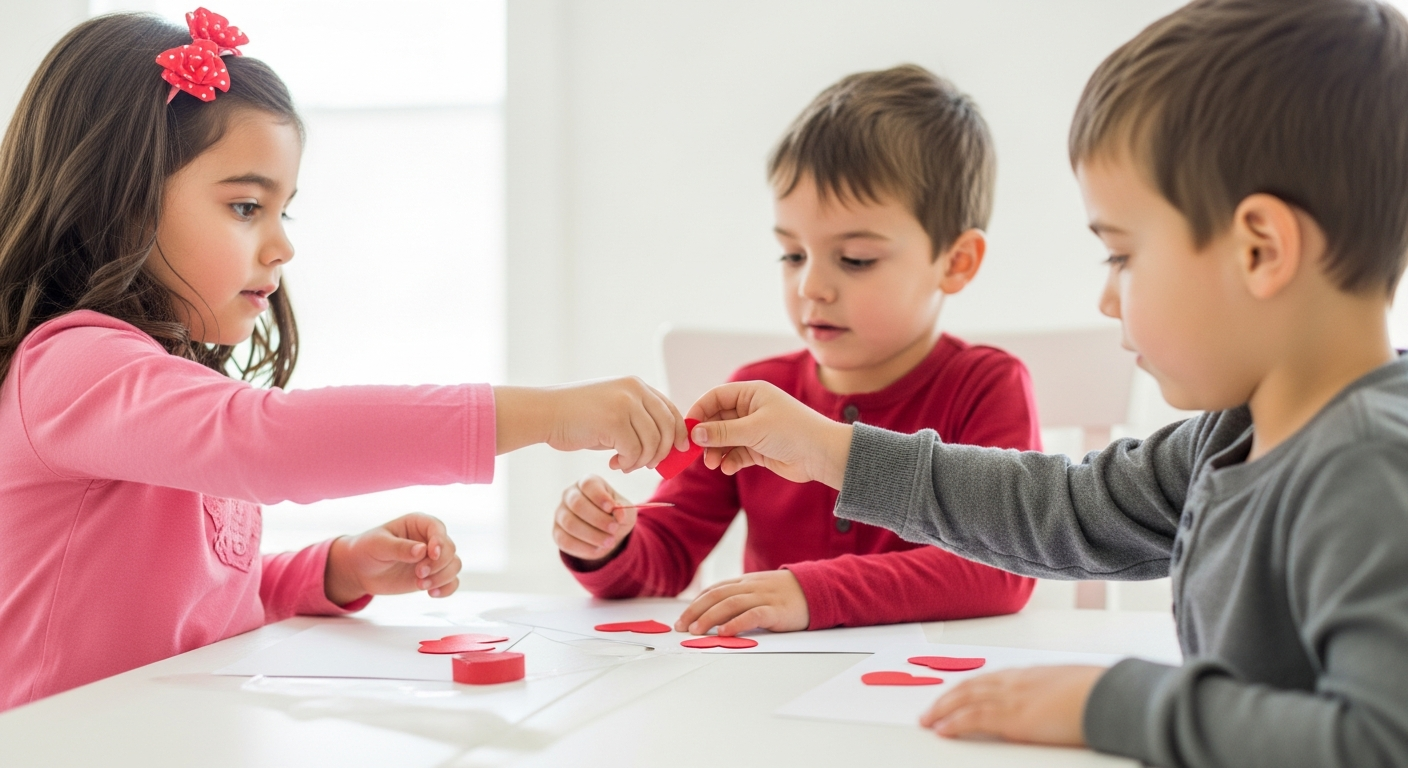
Table of Contents
- The Magic of Making: Why Crafts Matter for Little Ones
- Heartwarming Valentine Crafts for Every Age
- Beyond the Craft: Turning Projects into Language Lessons
- Making Communication a Priority with Speech Blubs
- Conclusion: Crafting Connections and Confident Communicators
- Frequently Asked Questions (FAQ)
Valentine's Day is a beautiful opportunity to celebrate love, friendship, and connection. For parents, it's also a fantastic chance to engage in creative activities with their children, fostering not just fun memories but also crucial developmental skills. Picture this: your child's eyes light up as they proudly present a handmade heart card or a vibrant suncatcher, their little fingers sticky with glue and glitter. These aren't just crafts; they are building blocks for creativity, fine motor skills, and, perhaps most importantly, communication. But let's be honest, finding crafts that are genuinely "easy" and genuinely engaging can sometimes feel like a treasure hunt.
In this comprehensive guide, we'll embark on a delightful journey through a myriad of easy kid Valentine crafts, perfect for toddlers, preschoolers, and elementary-aged children. We'll explore activities that require minimal supplies and prep, ensuring that the focus remains on joy and learning, not stress. More than just a list of ideas, we'll dive into how these hands-on projects naturally boost cognitive development, fine motor control, and language skills, creating rich opportunities for conversation and expression. We'll also share how Speech Blubs can seamlessly integrate into these heartwarming moments, offering "smart screen time" that complements the hands-on fun and helps empower children to speak their minds and hearts. Get ready to transform simple materials into cherished keepsakes and precious learning experiences.

The Magic of Making: Why Crafts Matter for Little Ones
Before we dive into the glitter and glue, let's take a moment to appreciate the profound impact that crafting has on a child's development, far beyond just creating a pretty object. When children engage in crafts, they're not just playing; they're learning, growing, and exploring their world in multi-faceted ways.
Nurturing Fine Motor Skills and Coordination
Many parents marvel at how quickly their toddlers grow into preschoolers and then into independent elementary students. During these formative years, the development of fine motor skills—the coordination of small muscles, especially in the hands and fingers—is paramount. Crafts provide an ideal playground for these skills. Think about the act of cutting with child-safe scissors, gluing small pieces of paper, threading beads, or even peeling stickers. Each action refines dexterity, hand-eye coordination, and grip strength, which are all foundational for tasks like writing, drawing, and even self-feeding.
For example, a simple heart stamp craft, where a child dips a cardboard roll into paint and presses it onto paper, not only introduces them to shapes and colors but also hones their grasp and controlled release. The careful placement of tissue paper onto a suncatcher further develops precision and patience. These seemingly small movements contribute significantly to a child's overall independence and readiness for school.
Sparking Creativity and Imagination
Children possess an innate sense of wonder and creativity, and crafts are a beautiful way to encourage this. When given a pile of colorful paper, some glue, and a few embellishments, a child’s imagination can run wild. There's no single "right" way to make a craft, and this freedom is incredibly empowering. Allowing children to choose colors, decide where elements go, and even invent their own variations fosters divergent thinking and problem-solving skills.
Imagine your child creating a "love bug" from a recycled water bottle. They might choose googly eyes of different sizes, pipe cleaners for antennae, and paint it a color you never expected. This act of personal expression builds self-confidence and a sense of accomplishment. It teaches them that their ideas are valuable and that they can bring their unique visions to life.

Boosting Cognitive Development and Problem-Solving
Crafting often involves following steps, understanding instructions, and making choices, all of which are critical for cognitive development. When a child assembles a mosaic heart, they're not just sticking pieces of paper; they're thinking about patterns, spatial reasoning, and how different shapes fit together. If a project doesn't go exactly as planned, they learn to adapt and find alternative solutions, cultivating resilience.
Crafts can also introduce early math concepts (counting pieces, understanding sizes like "bigger" or "smaller"), color recognition, and shape identification. For a child learning about the concept of cause and effect, a simple science-based craft like Borax crystal hearts can be truly mesmerizing, showcasing how ingredients combine to create something new.
Enhancing Language and Communication Skills
Perhaps one of the most significant, yet often overlooked, benefits of crafting is its profound impact on language and communication development. Crafts naturally create rich conversational opportunities. As you create alongside your child, you can:
- Describe Actions: "We are cutting the paper," "Now we're gluing it down," "Let's paint this heart red."
- Expand Vocabulary: Introduce new words like "texture," "sparkle," "pattern," "symmetrical," "overlap."
- Ask Open-Ended Questions: "What color should we use next?" "How does that feel?" "Tell me about your design." "Who are you making this for, and why?"
- Practice Following Instructions: "First, put the glue here, then stick the heart on top."
- Encourage Narrative Skills: "Tell me the story of your heart dinosaur!" or "What do you think your love bug will do today?"
For parents whose children are working on specific sounds or vocabulary, crafts offer a tangible, engaging context for practice. For instance, making a "strawberry heart" craft could be a perfect chance to practice the "s" sound or talk about words like "sweet" and "red."
At Speech Blubs, we understand the power of engaging, interactive experiences in fostering communication. Our mission, born from our founders' personal journeys with speech challenges, is to empower children to "speak their minds and hearts." We believe that combining hands-on play with scientifically-backed "smart screen time" offers an immediate, effective, and joyful solution for the 1 in 4 children who need speech support. Our app uses a unique video modeling methodology where children learn by watching and imitating their peers, a powerful alternative to passive viewing.
Ready to see how Speech Blubs can support your child's communication journey alongside these fun crafts? Download Speech Blubs on the App Store or Google Play today!
Heartwarming Valentine Crafts for Every Age
Let's dive into some easy, engaging, and developmentally beneficial Valentine crafts, categorized to help you find the perfect activity for your child. Remember, the goal is fun and connection, not perfection!
For Our Littlest Valentines: Toddler-Friendly Crafts (Ages 1-3)
Toddlers thrive on sensory exploration and simple, repetitive actions. These crafts are designed to be low-mess (or easily contained) and focus on fundamental skills.
1. Heart Stamps with Recycled Rolls
- How-to: Take an empty toilet paper or paper towel roll, bend it into a heart shape, and secure it with tape. Pour a small amount of washable paint onto a paper plate. Let your toddler dip the heart stamp into the paint and press it onto paper.
- Developmental Boost: Enhances grip, hand-eye coordination, shape recognition, and color naming. The repetitive motion is also soothing and helps build focus.
- Language Tip: Talk about "press," "stamp," "heart," and the colors they are using. "You're making so many red hearts!"
- Speech Blubs Connection: If your child is learning color words, reinforce them with our "Colors" section in the app, where peers demonstrate saying "red," "pink," and "purple" with clear video modeling.
2. Tissue Paper Heart Suncatchers
- How-to: Cut out a heart shape from contact paper (sticky side up). Provide various colors of tissue paper squares. Your toddler can stick the tissue paper onto the contact paper. Once covered, place another heart-shaped piece of contact paper on top to seal it. Trim edges and hang in a window!
- Developmental Boost: Fine motor skills (peeling and sticking), color recognition, sensory exploration (feeling the tissue paper).
- Language Tip: Describe the "sticky" paper and the "crinkly" tissue. Ask, "What color is that piece?" and talk about how the light shines "through" them.
3. Fingerprint Heart Tree
- How-to: Draw or paint a tree trunk and branches on a piece of paper. Guide your child to dip their finger in red, pink, or purple washable paint and press it onto the branches to create "heart leaves."
- Developmental Boost: Develops fine motor control, encourages creativity, and provides a sensory experience. It's also a wonderful keepsake!
- Language Tip: Talk about "tree," "leaf," "fingerprint," "push," and "tap." Count the fingerprints together. "How many hearts are on the tree?"
4. Valentine Slime or Playdough
- How-to: Make a batch of homemade slime or playdough with Valentine's colors (red, pink, white) and add glitter or heart-shaped confetti. Let your child squish, roll, and explore!
- Developmental Boost: Excellent for sensory play, strengthening hand muscles, and encouraging imaginative play. It's a fantastic tactile experience.
- Language Tip: Use descriptive words like "sticky," "soft," "squishy," "cold," "glittery." Ask, "What are you making with the playdough?"
- Speech Blubs Connection: For children who love sensory exploration, our app offers sounds and movements that can be incorporated into imaginative play, such as animal sounds or vehicle noises, which can easily be tied into stories created with playdough.
Growing Hearts: Preschooler Crafts (Ages 3-5)
Preschoolers are ready for slightly more complex tasks, including basic cutting, gluing, and following multi-step instructions. These crafts will engage their burgeoning fine motor and cognitive abilities.
1. Paper Plate Love Birds or Animals
- How-to: Give your child a paper plate to paint or color. Once dry, cut out heart shapes from construction paper for wings, ears, tails, or beaks. Help them glue the hearts onto the paper plate to create a "love bird," "snail heart," or "fox mask." Add googly eyes for extra fun.
- Developmental Boost: Practices cutting skills, gluing, shape recognition, and imaginative construction. Develops visual-spatial reasoning.
- Language Tip: Name the animal ("bird," "fox," "snail"), describe its parts ("wings," "beak," "tail"), and make its sound. Discuss the colors and shapes used. "Can you find the small red heart for the nose?"
- Speech Blubs Connection: Our "Animal Kingdom" section is perfect for practicing animal names and sounds. For a child who loves animals, this provides a great bridge from the physical craft to interactive learning within the app.
2. DIY Valentine's Day Window Clings
- How-to: Using Elmer's glue and food coloring, create colorful mixtures. Your child can draw heart shapes on wax paper with the colored glue. Let them dry completely (this can take 24-48 hours), then carefully peel them off and stick them to a window.
- Developmental Boost: Fine motor control (drawing with glue), color mixing, patience, and understanding of cause and effect (liquid glue drying into a cling).
- Language Tip: Discuss the process – "squeeze," "draw," "wait," "dry," "peel." Talk about how the sun will make them "sparkle."
3. Heart Windsock Craft
- How-to: Decorate a piece of construction paper (which will form the cylinder). Cut out various small paper hearts and streamers. Glue the hearts and streamers to the bottom edge of the paper. Roll the paper into a cylinder and staple or glue the seam. Punch holes at the top and attach a string for hanging.
- Developmental Boost: Cutting, gluing, following a sequence of steps, and understanding spatial concepts ("top," "bottom," "inside," "outside").
- Language Tip: Describe the "wind," "streamers," and "dancing" hearts. Practice words like "up," "down," "long," "short."
4. No-Sew Heart Pillows
- How-to: Cut two matching heart shapes from fleece fabric. Place them together and make small cuts around the edges, about an inch apart and an inch deep. Your child can then tie the corresponding strips from the top and bottom hearts together, working their way around. Leave a small opening to stuff with cotton batting before tying it closed.
- Developmental Boost: Enhances fine motor skills (tying knots), patience, and an introduction to basic textile work.
- Language Tip: Use words like "soft," "fluffy," "tie," "stuff," and "squeeze." Talk about giving the pillow to someone "special."
Creative Expressions: Elementary-Aged Crafts (Ages 6+)
Children in elementary school can handle more intricate details, multi-step processes, and can often work more independently. These crafts offer challenges that foster sustained focus and advanced skills.
1. Borax Crystal Hearts
- How-to: Bend pipe cleaners into heart shapes. Boil water and dissolve Borax powder in it (adult supervision required for this step). Submerge the pipe cleaner hearts into the Borax solution, ensuring they are fully covered. Let them sit overnight.
- Developmental Boost: Introduces basic chemistry concepts, encourages observation, and develops fine motor skills in bending pipe cleaners.
- Language Tip: Discuss "crystals," "grow," "dissolve," "solution," and "science." Ask predictive questions: "What do you think will happen overnight?"
2. Cardboard Lacing Hearts
- How-to: Cut heart shapes from sturdy cardboard. Punch holes around the perimeter of the hearts. Provide yarn or shoelaces for your child to thread through the holes, creating a lacing pattern. They can use different colors for variety.
- Developmental Boost: Excellent for fine motor coordination, bilateral coordination (using both hands), pattern recognition, and problem-solving.
- Language Tip: Use directional words like "through," "over," "under," "in," "out." Describe the "pattern" and the "colorful" yarn.
3. Heart String Art
- How-to: Draw or print a heart shape onto a piece of wood or thick cardboard. Hammer small nails or push pins along the outline (adult supervision for nails). Provide colorful string or yarn for your child to wrap and weave around the nails, creating intricate patterns within the heart.
- Developmental Boost: Enhances fine motor control, spatial reasoning, creativity, and hand-eye coordination. Requires patience and focus.
- Language Tip: Discuss "design," "pattern," "weave," "wrap," and "create." Talk about the "tension" of the string.
4. DIY Candy Gumball Machine
- How-to: Use a small terracotta pot (upside down as the base), a plastic bowl for the "dome," and a plastic bottle lid for the "coin slot." Paint and decorate all pieces. Once dry, glue the bowl onto the pot. Create a mechanism for dispensing candy (e.g., a small cardboard flap). Fill with small candies.
- Developmental Boost: Advanced problem-solving, construction skills, painting, and imaginative design. Requires planning and assembly.
- Language Tip: Talk about "mechanism," "assemble," "design," "invent," and "dispense." This is a great opportunity to use more complex vocabulary.
Remember, every craft is an opportunity for learning and connection. Whether it's a toddler's first messy paint project or an elementary student's intricate string art, the shared experience and the conversations that unfold are truly priceless. And for parents looking for additional support in nurturing their child's communication, Speech Blubs is here to help. Take our quick 3-minute preliminary screener to get an assessment and a next-steps plan to kickstart your child's journey!
Beyond the Craft: Turning Projects into Language Lessons
The real magic happens not just in the creation of the craft, but in the interaction surrounding it. Here's how to maximize the language and learning opportunities:
- Narrate as You Go: "First, we're cutting the big red heart. Then, we'll glue it right here." This models language and helps your child understand sequences.
- Ask Engaging Questions: Move beyond "yes/no" questions. "What do you like best about your craft?" "How did you decide on those colors?" "If your heart could talk, what would it say?"
- Encourage Choice and Decision-Making: "Do you want pink glitter or purple glitter?" "Should we put the sticker here or there?" This gives your child a sense of agency and practices expressing preferences.
- Describe Sensory Details: "This paper feels smooth," "The glue is sticky," "Listen to the crinkle of the tissue paper." This expands their descriptive vocabulary.
- Connect to Real-World Concepts: "Who will you give this Valentine to?" "How do you think they'll feel when they get it?" This fosters empathy and social awareness.
These simple strategies transform a fun activity into a powerful language-building session. For children who may need extra encouragement or structured practice, Speech Blubs provides a fantastic complementary resource. Our app is designed to be "smart screen time," not a passive viewing experience. We provide a screen-free alternative to passive viewing (like cartoons) and a powerful tool for family connection, where children learn complex communication skills by watching and imitating their peers through our unique video modeling.
Want to learn more about the science behind our method and why we're rated in the top tier of speech apps worldwide? Check out our research page. We're proud of our high MARS scale rating, reflecting our commitment to effective and engaging content.
Making Communication a Priority with Speech Blubs
At Speech Blubs, we are deeply committed to empowering children to "speak their minds and hearts." Our company was founded by individuals who grew up with speech challenges and created the tool they wished they had—an immediate, effective, and joyful solution for the millions of children needing speech support. We blend scientific principles with play, creating one-of-a-kind "smart screen time" experiences that are powerful tools for family connection.
We understand that every child's journey is unique, and we strive to provide resources that fit seamlessly into your family's life. While crafting provides invaluable hands-on learning, Speech Blubs offers a structured environment for targeted speech and language practice. Imagine your child happily making a "bee mine" Valentine, then transitioning to the Speech Blubs app to practice the "b" sound or learn new words related to insects or love. The synergy between hands-on play and interactive digital learning creates a holistic approach to development.
Unlocking Full Potential: The Speech Blubs Yearly Plan
We want to make it as easy as possible for families to access our full suite of features and embark on this empowering journey. We offer two convenient subscription plans:
- Monthly Plan: Priced at $14.99 per month.
- Yearly Plan: Our best value at $59.99 per year, which breaks down to just $4.99 per month! This means you save 66% when you choose the Yearly plan.
The Yearly plan is designed to provide the most comprehensive and rewarding experience for your family, offering exclusive high-value features that aren't available with the Monthly plan:
- A 7-Day Free Trial: Experience the full power of Speech Blubs before committing. This allows you to explore all the fun activities and see the positive impact on your child firsthand.
- The Extra Reading Blubs App: Unlock an additional app focused on early literacy skills, further enriching your child's developmental journey.
- Early Access to New Updates: Be among the first to explore exciting new features and content as soon as they're released.
- 24-Hour Support Response Time: Get priority assistance from our dedicated support team whenever you need it.
We genuinely believe the Yearly plan offers unparalleled value, giving your child continuous access to a world of engaging and effective speech and language development tools. It’s an investment in their future communication, confidence, and joy.
Don't just take our word for it—see what other parents are saying about their child's success with Speech Blubs!
Conclusion: Crafting Connections and Confident Communicators
As we wrap up our delightful journey through easy kid Valentine crafts, it's clear that these simple projects offer far more than just holiday decorations. They are powerful vehicles for developing fine motor skills, sparking creativity, boosting cognitive abilities, and, most importantly, enhancing language and communication. Every snipped heart, every dab of glue, and every colorful stroke of paint is an opportunity for connection, learning, and growth. These moments of shared creation build confidence, reduce frustration, and foster a love for communication that extends far beyond the craft table.
By embracing these crafts, you're not just making keepsakes; you're building memories and laying foundational skills for your child's future. And when you're looking for a structured, engaging, and scientifically-backed way to complement this hands-on learning, Speech Blubs is here to support you. Our mission is to empower every child to "speak their minds and hearts," blending play with purpose.
Ready to embark on this dual journey of joyful crafting and empowered communication? We invite you to experience the full potential of Speech Blubs today. Create your account and begin your 7-day free trial by choosing our Yearly plan. It's the best value, offering not just significant savings but also exclusive features like the Reading Blubs app and priority support, ensuring your child has every tool they need to flourish. Join our community of parents who are transforming screen time into "smart screen time" and fostering confident, happy communicators!
Frequently Asked Questions (FAQ)
Q1: Are these Valentine crafts suitable for children of all ages?
A1: Yes, these crafts are generally suitable for a range of ages, but remember that adult supervision and adaptation are key. We've categorized them by age group (toddlers, preschoolers, elementary) to help you choose appropriate activities. For younger children, you might need to do more of the cutting or prep work, focusing their involvement on simpler tasks like painting, sticking, or threading. Older children can handle more intricate steps and work more independently, following multi-step instructions and adding their unique creative touches.
Q2: How do Valentine crafts specifically help with speech and language development?
A2: Crafts are fantastic for speech and language development because they provide a concrete, hands-on context for communication. As you craft together, you naturally:
- Expand Vocabulary: By naming colors, shapes, materials ("glue," "glitter," "paper"), and actions ("cut," "stick," "paint").
- Practice Following Directions: "First, put the glue here, then stick the heart."
- Encourage Descriptive Language: "The slime is sticky and pink."
- Foster Narrative Skills: By talking about what they're making and who it's for.
- Support Social Communication: When discussing ideas, sharing materials, and expressing feelings about their creations. These interactions build a rich language environment that enhances expressive and receptive communication skills.
Q3: What if my child gets frustrated during a craft activity? How can I help?
A3: It's completely normal for children to get frustrated, especially when learning new skills or if a project doesn't turn out exactly as they envisioned. Here are a few tips:
- Keep it Low-Stakes: Emphasize that it's about the process and fun, not perfection.
- Offer Help Strategically: Ask, "Would you like some help with that?" rather than taking over. Break down the task into smaller, manageable steps.
- Simplify: If a step is too hard, find an easier alternative or do that part for them.
- Positive Reinforcement: Praise effort and creativity, not just the finished product. "You worked so hard on that!"
- Take a Break: Sometimes a short pause is all that's needed to reset. Remember, every challenge is an opportunity to learn resilience.
Q4: How can Speech Blubs complement these hands-on crafting activities?
A4: Speech Blubs acts as a powerful complement to hands-on crafting by offering targeted, engaging "smart screen time" that reinforces and expands language skills. For example, if your child is making a "love bug" craft, you can transition to Speech Blubs to practice animal sounds, descriptive words (like "small," "cute," "flying"), or even explore the "Feelings" section to talk about the emotions associated with giving or receiving a Valentine. Our unique video modeling methodology allows children to learn by imitating their peers, providing a dynamic and interactive way to build vocabulary, articulate sounds, and develop conversational skills. It's a joyful way to extend the learning from the craft table into a focused speech and language session, turning passive screen time into an active learning experience. Download Speech Blubs today and see the difference!
About the author