
Easy Kids Thanksgiving Crafts for Joyful Communication
 By Speech Blubs Team•Jan 13, 2026•19 min.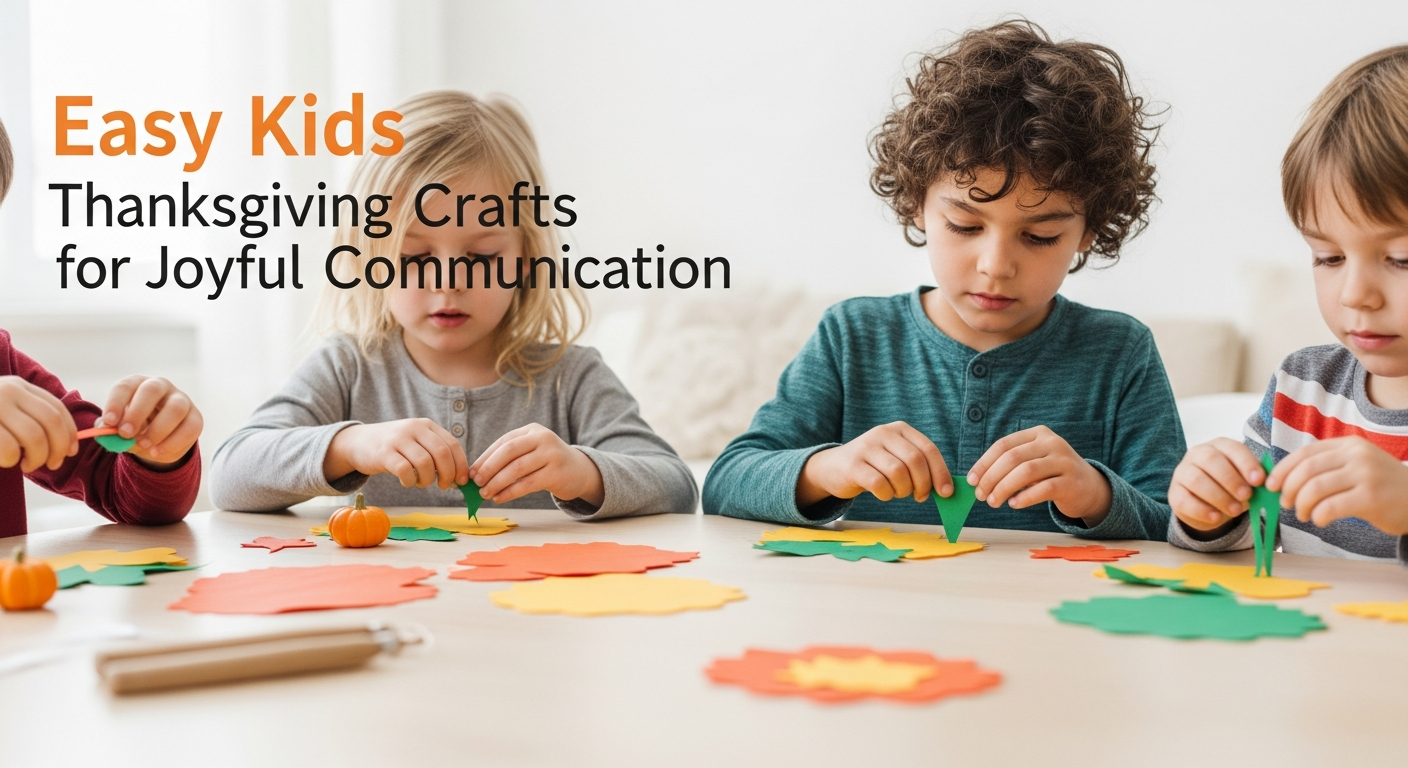
Table of Contents
- The Developmental Magic of Thanksgiving Crafts
- Easy Thanksgiving Turkey Crafts: The Classic Centerpiece
- Harvest & Gratitude Crafts: Celebrating the Season's Bounty
- Crafting for Communication: How Easy Crafts Support Speech Development
- Making Craft Time "Smart Screen Time" with Speech Blubs
- Getting Started with Speech Blubs: Your Partner in Communication
- Conclusion
- FAQ
Thanksgiving, a time for gratitude, delicious food, and gathering with loved ones, also brings a unique opportunity for families to connect and create. While the adults might be busy in the kitchen, a common question echoes through many homes: "How do we keep the kids happily engaged?" The answer often lies in the simple magic of crafts. Beyond just a fun distraction, these easy Thanksgiving crafts for kids are powerful tools for developing crucial skills, fostering creativity, and even building foundational communication abilities.
At Speech Blubs, we understand the immense value of playful, interactive experiences in a child's development. Our mission is to empower children to speak their minds and hearts, and we believe that every moment of play, including crafting, is an opportunity to nurture those essential communication skills. This guide is designed to not only provide you with a treasure trove of simple, delightful Thanksgiving craft ideas but also to reveal how these activities can naturally enhance your child's language journey. Get ready to transform ordinary materials into extraordinary memories, all while creating rich opportunities for your child to learn, grow, and communicate.

The Developmental Magic of Thanksgiving Crafts
Crafting isn't just about glue and glitter; it's a multi-sensory experience that engages various parts of a child's developing brain. Especially during a busy holiday like Thanksgiving, setting aside dedicated craft time offers a structured yet creative outlet that supports critical developmental areas.
Nurturing Fine Motor Skills and Hand-Eye Coordination
Think about the actions involved in crafting: cutting with scissors, tearing tissue paper, squeezing glue, coloring within lines, placing googly eyes, or stringing beads. Each of these requires precise control of small muscles in the hands and fingers, building essential fine motor skills. This dexterity is fundamental not only for writing and self-care but also for the intricate movements of the tongue and mouth involved in producing speech sounds. Improved hand-eye coordination helps children process visual information and execute movements accurately, a skill transferable to many aspects of learning.
Boosting Cognitive Development and Problem-Solving
Crafts often involve following a sequence of steps, making choices about colors or materials, and adapting when something doesn't go exactly as planned. These activities encourage children to listen to instructions, remember details, and think creatively to solve small problems. For instance, if a child wants to make a pumpkin, they might decide whether to paint it orange or use orange paper. If they run out of one material, they learn to substitute. This early exposure to problem-solving helps build critical thinking skills that extend far beyond the craft table.
Encouraging Creative Expression and Emotional Well-being
Crafts provide a wonderful platform for children to express themselves without words. They can choose colors that reflect their mood, invent unique characters, or create gifts that show affection. This freedom of expression can be incredibly validating and confidence-boosting, especially for children who may struggle with verbal communication. The act of creating something tangible also instills a sense of accomplishment, fostering self-esteem and joy.

Strengthening Family Bonds and Social Interaction
Craft time is inherently a social activity. When parents and children craft together, they engage in shared attention, turn-taking, and conversation. It’s an opportunity for laughter, collaborative problem-solving, and quality time that strengthens the parent-child bond. This co-play environment is crucial for language development, as children learn best through meaningful interactions with trusted adults. These shared moments become cherished memories, reinforcing the warmth and connection that Thanksgiving embodies.
Easy Thanksgiving Turkey Crafts: The Classic Centerpiece
No Thanksgiving craft collection would be complete without the beloved turkey! These projects are often the first images that come to mind and are fantastic for kids of all ages because of their adaptability and simple materials.
Handprint and Footprint Turkeys
These crafts are not only easy but also create precious keepsakes that mark your child's growth year after year.
Supplies:
- Washable paint (brown, red, orange, yellow)
- Construction paper or canvas
- Paint brushes
- Googly eyes (optional, paper cut-outs work too!)
- Glue
Directions:
- For Handprint Turkeys: Have your child spread their fingers wide. Paint their palm brown for the body. Paint each finger a different "feather" color (red, orange, yellow). Gently press their hand onto the paper.
- For Footprint Turkeys: Paint the bottom of your child's foot brown. Carefully press it onto the paper for the turkey's body. Once dry, add painted handprints around the foot for feathers, or simply draw them on.
- Finishing Touches: Once the paint is dry, glue on googly eyes or draw them. Add a small orange triangle for the beak and a red wattle with paint or paper. Write your child's name and the year.
- Communication Connection: While painting, talk about the colors ("What color is this? Red!"), count the fingers, or describe the textures ("Squishy paint!"). For older toddlers, ask them what sound a turkey makes ("Gobble, gobble!"). This provides a natural context for naming, describing, and even imitating sounds, which is a cornerstone of our video modeling methodology at Speech Blubs.
Paper Plate Turkeys
Paper plates are incredibly versatile and inexpensive, making them a go-to for many easy kid crafts.
Supplies:
- Paper plates
- Construction paper in fall colors (red, orange, yellow, brown)
- Scissors
- Glue stick
- Googly eyes or markers
- Feathers (optional)
Directions:
- Body: Cut out a turkey body shape from brown construction paper and glue it to the center of the paper plate, or paint the plate brown.
- Feathers: Cut strips of construction paper in various fall colors. Loop them into teardrop shapes or simple strips and glue them around the back of the paper plate to create the turkey's tail feathers. For younger children, pre-cut the strips and let them practice their gluing skills.
- Face: Add googly eyes or draw them, along with a beak and wattle.
- Communication Connection: This craft is perfect for practicing shape recognition ("Can you find the circle plate?"), color identification, and action verbs ("Cut the paper," "Glue the feathers"). It's also a fantastic way to encourage following multi-step directions, a key receptive language skill.
Toilet Paper Roll Turkeys
Recycling everyday items into crafts is a wonderful way to teach resourcefulness.
Supplies:
- Empty toilet paper rolls
- Construction paper in fall colors
- Scissors
- Glue
- Markers or googly eyes
Directions:
- Body: You can leave the toilet paper roll natural or paint it brown.
- Feathers: Cut out various feather shapes from colorful construction paper. Children can draw lines on them for added detail.
- Assembly: Glue the feathers to the back of the toilet paper roll. Cut out a small circle for the head and glue it to the front. Add eyes, a beak, and a wattle.
- Communication Connection: Talk about how we are "upcycling" or "reusing" materials. Ask questions about the feathers: "Are they big or small?" "How many feathers did you glue on?" This helps build descriptive vocabulary and number concepts.
Pinecone Turkeys
Bring a bit of nature indoors with these adorable pinecone turkeys.
Supplies:
- Pinecones (collected from outside!)
- Small craft feathers or construction paper for feathers
- Googly eyes or markers
- Small orange or yellow pom-pom for the head
- Glue
Directions:
- Body: The pinecone serves as the turkey's body.
- Feathers: Glue colorful craft feathers into the crevices of the pinecone, fanning them out like a tail. If using construction paper, cut out feather shapes and glue them to the back.
- Face: Glue a small pom-pom onto one end of the pinecone for the head. Add googly eyes and draw a tiny beak and wattle.
- Communication Connection: This is an excellent opportunity to discuss nature and descriptive adjectives. Before crafting, go on a "pinecone hunt" and talk about what you see, hear, and feel. Use words like "spiky," "smooth," "rough," "big," "small." This enriches vocabulary and sensory language.
Playdough Turkeys
Sensory play is incredibly beneficial for young children, and playdough offers a fantastic tactile experience.
Supplies:
- Brown playdough
- Colorful craft feathers or paper cut-outs
- Googly eyes
- Small orange paper triangle for the beak
Directions:
- Body: Help your child roll the brown playdough into a ball or an oval for the turkey's body.
- Feathers: Stick colorful craft feathers directly into the playdough. If using paper, cut out feathers and stick them in.
- Face: Press googly eyes onto the front, and add the paper beak.
- Communication Connection: Playdough is a wonderful medium for developing speech muscles as children engage in actions like "squish," "roll," "pat," and "poke." Describe the textures: "Is it soft or hard?" Encourage imaginative play: "What is your turkey doing?" These open-ended questions encourage narrative skills and imaginative language.
Harvest & Gratitude Crafts: Celebrating the Season's Bounty
Thanksgiving isn't just about turkeys; it's also about the fall harvest and expressing gratitude. These crafts beautifully capture those themes and offer unique learning opportunities.
Fall Leaf Crafts: Nature's Palette
Collecting leaves outside is an adventure in itself, and using them in crafts brings the beauty of autumn indoors.
Leaf Suncatchers
Supplies:
- Clear contact paper or clear sticky-back plastic
- Pressed fall leaves (various colors and shapes)
- Scissors
Directions:
- Cut two pieces of contact paper into the desired shape (rectangle, circle, or even a leaf shape).
- Have your child arrange the pressed leaves on the sticky side of one piece of contact paper. This is a great opportunity to talk about leaf types, colors, and sizes.
- Carefully place the second piece of contact paper on top, sticky side down, sealing the leaves inside. Press firmly to remove air bubbles.
- Trim the edges and hang in a window to catch the light.
- Communication Connection: As you gather leaves, talk about their colors ("Look at this red leaf!"), their shapes ("This one looks like a star"), and how they feel ("Crinkly!"). This activity encourages descriptive language and observation skills.
Leaf Lanterns
Supplies:
- Glass jars (cleaned)
- Mod Podge or school glue mixed with a little water
- Paintbrush
- Dried fall leaves
- Tea lights (battery-operated for safety)
Directions:
- Brush a layer of Mod Podge onto a section of the glass jar.
- Have your child gently press dried leaves onto the glue, overlapping them slightly.
- Once the jar is covered, apply another thin layer of Mod Podge over the leaves to seal them.
- Let it dry completely. Place a battery-operated tea light inside for a warm, autumnal glow.
- Communication Connection: This craft provides excellent chances to discuss sequencing ("First glue, then leaves, then glue again!") and the concept of "light" and "dark." It’s also a tactile experience, feeling the smooth glass and rough leaves.
Gratitude Leaf Garlands
Supplies:
- Construction paper in fall colors or real preserved leaves
- Markers or pens
- Hole punch
- Twine or yarn
Directions:
- Cut out leaf shapes from construction paper, or use real preserved leaves.
- Have each family member write or draw something they are thankful for on each leaf.
- Punch a hole at the top of each leaf.
- Thread the leaves onto twine or yarn to create a garland. Hang it where everyone can see it and be reminded of their blessings.
- Communication Connection: This is perhaps one of the most powerful crafts for fostering expressive language. Encourage your child to articulate what they are thankful for. For younger children, provide prompts ("Are you thankful for your teddy bear? For apples?"). This activity directly relates to our mission at Speech Blubs to help children "speak their minds and hearts," giving them a platform to verbalize their feelings and appreciation.
Pumpkin Crafts: The Iconic Fall Symbol
Pumpkins are synonymous with fall and Thanksgiving, offering a versatile theme for easy crafts.
Yarn-Wrapped Pumpkins
Supplies:
- Orange yarn
- Green pipe cleaners or felt for leaves
- Cardboard cut into a pumpkin shape
- Glue
Directions:
- Cut a simple pumpkin shape from cardboard.
- Apply glue to the cardboard.
- Help your child wrap the orange yarn around the pumpkin shape, covering it completely. This is great for fine motor practice.
- Once covered, add a green pipe cleaner for the stem and a small felt leaf.
- Communication Connection: Discuss the sensation of the yarn ("soft," "fuzzy"). Practice counting how many times you wrap the yarn. This repetitive action with accompanying verbalizations helps reinforce vocabulary.
Paper Plate Pumpkins
Supplies:
- Paper plates
- Orange paint or construction paper
- Green construction paper
- Glue
- Scissors
Directions:
- Paint a paper plate orange, or cover it with orange construction paper.
- Cut a small green rectangle for the pumpkin stem and glue it to the top.
- Cut out a few small green leaf shapes and glue them near the stem.
- Communication Connection: This simple craft is perfect for discussing colors, shapes, and the growth of pumpkins. "How does a pumpkin grow?" "What can we do with pumpkins?" These questions spark curiosity and encourage longer sentences.
Gratitude Tree
A "Thankful Tree" is a beautiful, interactive centerpiece that promotes a spirit of thankfulness.
Supplies:
- A small branch or twigs collected from outside
- A vase or jar to hold the branch
- Construction paper in fall colors (or real leaves)
- Hole punch
- Ribbon or string
- Markers or pens
Directions:
- Place your branch securely in a vase or jar.
- Cut out leaf shapes from construction paper.
- Have each family member write down something they are thankful for on a leaf.
- Punch a hole in each leaf and tie a piece of ribbon or string through it.
- Hang the gratitude leaves on the branches of your tree. As the days lead up to Thanksgiving, watch your tree fill with messages of appreciation.
- Communication Connection: This is an intentional way to prompt children to think about and articulate their gratitude. For a child working on expanding their vocabulary, you can offer sentence starters like "I am thankful for..." or use pictures to help them express their feelings if words are still developing. It builds narrative skills by encouraging them to share why they are thankful for something.
Crafting for Communication: How Easy Crafts Support Speech Development
At Speech Blubs, we know that communication isn't just about speaking; it's about listening, understanding, and connecting. Easy Thanksgiving crafts create natural, low-pressure environments for children to practice and strengthen a wide range of communication skills, often without even realizing they're learning.
Consider a common scenario: A child, perhaps a "late talker" who is typically quiet, is handed some colorful paper and glue. What happens?
- Receptive Language: You might say, "First, get the red paper, then glue it here." The child is practicing listening and following multi-step directions. This skill is vital for classroom learning and everyday interactions.
- Expressive Language: As they work, you can ask open-ended questions: "What color do you want next?" "Tell me about your turkey!" or even "How does the glue feel?" These prompts encourage them to use words, describe, and share their thoughts. For a parent whose 3-year-old struggles to combine words, asking "Red... paper?" and waiting for a response helps scaffold their language.
- Vocabulary Expansion: Every material and action introduces new words. "Crinkly," "smooth," "sticky," "cut," "glue," "paint," "feathers," "beak," "pumpkin," "leaf." By naming objects and actions as they occur, you help children connect words to real-world experiences.
- Pre-Language Skills: For the youngest crafters, activities like pointing to colors, making eye contact, or sharing a smile over a created masterpiece build crucial pre-language skills like joint attention and social engagement.
Our founders at Speech Blubs grew up with speech problems themselves, and they created the tool they wished they had—one that blends scientific principles with play. We understand that learning to communicate thrives in joyful, interactive settings. Just as children learn to speak by watching and imitating their peers through our unique video modeling methodology, they also learn through hands-on experiences, observation, and guided interaction during crafts. Crafting provides a fantastic backdrop for this kind of active, engaged learning.
Making Craft Time "Smart Screen Time" with Speech Blubs
While hands-on crafts are invaluable, we also live in a world where screens are part of our children's lives. At Speech Blubs, we believe in "smart screen time" – turning screen engagement into a powerful, interactive, and educational experience. Our app offers a screen-free alternative to passive viewing (like cartoons) and a powerful tool for family connection, much like crafting.
Imagine a child who has just created a beautiful paper plate turkey. They are full of pride and excitement. This is the perfect moment to extend that positive engagement. Speech Blubs complements this creative energy by:
- Reinforcing Vocabulary: If your child made a turkey, they can then explore the "Animal Kingdom" section in Speech Blubs, practicing the sound "gobble" or identifying other farm animals. Our app's thousands of therapist-approved activities are designed to build upon these real-world experiences, translating hands-on learning into structured speech practice.
- Building Confidence: Successfully completing a craft boosts confidence, which is vital for encouraging communication. Speech Blubs continues this by celebrating every sound and word your child makes, fostering a love for communication and reducing frustration.
- Guided Interaction: Just as you guide your child through a craft, Speech Blubs guides them through speech exercises using "video modeling," where children learn by watching and imitating their peers. This natural, engaging method is backed by science and rated highly on the MARS scale, placing us in the top tier of speech apps worldwide. You can read more about our approach on our research page.
For a parent whose child enjoys screen time but needs more interactive engagement than passive viewing, Speech Blubs provides a structured, positive, and communicative experience. It's not just an app; it's a partner in your child's communication journey, designed to make learning fun and effective. Don't just take our word for it—see what other parents are saying about their child's success with Speech Blubs by visiting our testimonials page.
Unsure if your child could benefit from speech support? Take our quick 3-minute preliminary screener to get a simple assessment and a free 7-day trial. It involves 9 simple questions and provides an assessment and next-steps plan tailored to your child's needs.
Getting Started with Speech Blubs: Your Partner in Communication
At Speech Blubs, we are committed to providing an immediate, effective, and joyful solution for the 1 in 4 children who need speech support. Our easy-to-use app is designed to blend scientific principles with play, creating one-of-a-kind "smart screen time" experiences that empower children to "speak their minds and hearts."
Ready to empower your child's communication journey? Download Speech Blubs on the App Store or Google Play to begin.
When you're ready to subscribe, we offer two flexible plans to fit your family's needs:
- Monthly Plan: For just $14.99 per month.
- Yearly Plan: Our best value at $59.99 per year, which breaks down to just $4.99 per month. You save 66% with the Yearly plan!
The Yearly plan is clearly the best choice, offering superior value and exclusive features designed to give your child the most comprehensive support:
- A 7-day free trial: Experience the full benefits of Speech Blubs before committing.
- The extra Reading Blubs app: Enhance literacy skills alongside speech development.
- Early access to new updates: Be the first to try our latest features.
- 24-hour support response time: Get help when you need it most.
The Monthly plan does not include these fantastic benefits. To ensure you get the free trial and the full suite of features that will truly empower your child's communication, we encourage you to choose the Yearly plan when you create your account.
Conclusion
Thanksgiving is a time for connection, gratitude, and creating lasting memories. By incorporating easy Thanksgiving crafts into your holiday plans, you're not just providing a fun activity; you're offering a rich, multi-faceted learning experience that supports your child's fine motor skills, cognitive development, creative expression, and, most importantly, their communication journey.
From handprint turkeys to gratitude trees, these simple projects create natural opportunities for conversation, vocabulary building, and social interaction. Every "gobble, gobble" sound, every color named, and every shared moment of crafting strengthens the pathways to confident communication. At Speech Blubs, we are honored to be a part of that journey, offering innovative tools that complement these hands-on experiences and empower children to speak their minds and hearts.
So, this Thanksgiving, gather your craft supplies, get creative, and embrace every opportunity to talk, laugh, and connect with your child. And when you're ready to further support their communication development with a smart, engaging, and scientifically-backed solution, remember Speech Blubs.
Ready to embark on a journey of joyful communication? Start your 7-day free trial today by downloading Speech Blubs on the App Store or Google Play, or create your account on our website. Be sure to select the Yearly plan to unlock your free trial and access all the exclusive features for the best value!
FAQ
Q1: What are some benefits of doing Thanksgiving crafts with kids?
A1: Thanksgiving crafts offer numerous benefits beyond just keeping kids busy. They enhance fine motor skills, hand-eye coordination, and cognitive development through following instructions and problem-solving. Crafts also provide a creative outlet for emotional expression, boost self-confidence, and foster valuable social interaction and communication skills within the family.
Q2: How can I make Thanksgiving crafts more accessible for very young children or those with developmental delays?
A2: Simplify the steps, pre-cut materials, and focus on sensory experiences rather than perfect outcomes. For example, let them tear paper instead of cutting, use larger objects for gluing, or engage in playdough activities. Focus on the process and verbalize actions and colors as you go, which supports receptive and expressive language. Speech Blubs also offers an engaging platform that adapts to various developmental stages, complementing these hands-on activities.
Q3: What common household items can I use for easy Thanksgiving crafts?
A3: Many easy Thanksgiving crafts can be made with items you likely already have. Think empty toilet paper rolls, paper plates, construction paper, glue, scissors, markers, pinecones and leaves collected from outdoors, yarn, and even dried pasta or beans for texture. Creativity often blossoms when working with limited resources!
Q4: How can Speech Blubs enhance the language learning opportunities from Thanksgiving crafts?
A4: Speech Blubs complements craft activities by reinforcing vocabulary and concepts learned during hands-on play. For example, if your child makes an animal craft, they can then practice animal sounds and names in the app. Our video modeling method provides structured imitation opportunities that build on the natural learning environment created by crafting, fostering confidence and encouraging children to speak their minds and hearts through interactive "smart screen time."
About the author