
Easy Kids Valentine Crafts for Heartfelt Fun
 By Speech Blubs Team•Jan 13, 2026•21 min.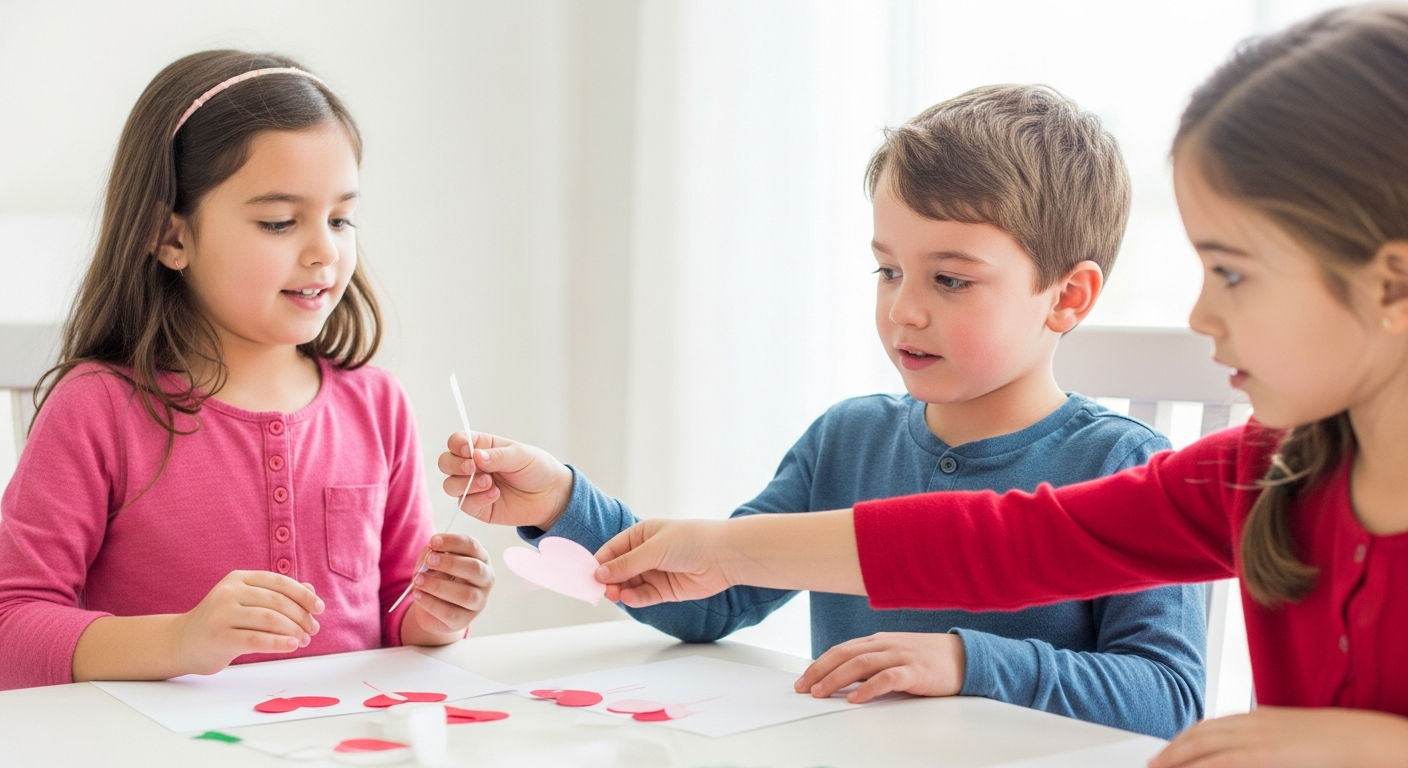
Table of Contents
- Why Valentine's Crafts? More Than Just Fun
- Crafting for Every Age: Tailoring Activities for Development
- Bringing Language to Life: How Crafts Enhance Communication
- Seamlessly Integrating Speech Blubs into Your Crafting Journey
- Getting Started with Speech Blubs: Choose Your Plan
- Conclusion
- FAQ
As Valentine's Day approaches, many parents find themselves looking for ways to celebrate with their children. But beyond the store-bought cards and chocolates, there's a world of creativity waiting to be explored with easy kids Valentine crafts. Imagine a quiet afternoon, glitter (or maybe just paper!) scattered, and your child's joyful focus as they create a special gift for someone they love. These aren't just activities to fill time; they're powerful opportunities to foster connection, develop crucial skills, and build a love for communication. In this post, we'll dive into a treasure trove of simple yet meaningful Valentine's Day craft ideas tailored for different age groups, exploring how each activity can become a stepping stone for your child's development, especially in communication. We believe that joyful play is the best learning, and by the end, you'll be inspired to make this Valentine's season a truly memorable and speech-rich experience for your family.

Why Valentine's Crafts? More Than Just Fun
Crafting with your child on Valentine's Day is far more than just a seasonal activity; it's a rich, multi-faceted learning experience. While the immediate joy of creating something beautiful is evident, the deeper benefits contribute significantly to a child's overall development.
Fostering Creativity and Imagination
When children engage in crafts, they step into a world of endless possibilities. A pile of paper and glue isn't just supplies; it's the raw material for a heart-shaped snail, a suncatcher, or a unique card. This open-ended play encourages them to think outside the box, experiment with colors and textures, and translate their internal ideas into tangible objects. This creative freedom is vital for problem-solving skills and innovative thinking in all areas of life.
Developing Fine Motor Skills
Many crafts, even the "easy" ones, require precise hand movements. Cutting with scissors, gluing small pieces, drawing lines, or tearing tissue paper all contribute to the development of fine motor skills. These are the small muscle movements in the hands and wrists that are essential for tasks like writing, buttoning clothes, and self-feeding. The repetitive, focused actions in crafting strengthen these muscles and improve hand-eye coordination, laying crucial groundwork for academic and daily living skills.
Encouraging Communication and Expression
Crafting provides a natural, low-pressure environment for children to communicate. They might describe their artistic choices ("I'm using red because it's love!"), ask for help ("Can you pass the glitter?"), or explain their finished masterpiece ("This is for Grandma, and it has a big heart!"). This constant back-and-forth verbal exchange builds vocabulary, encourages descriptive language, and helps children articulate their thoughts and feelings. At Speech Blubs, we believe that empowering children to "speak their minds and hearts" is paramount, and activities like crafting are wonderful ways to nurture this. Our founders created Speech Blubs from their own personal experiences with speech challenges, building the tool they wished they had – a joyful solution blending scientific principles with play. You can learn more about the science behind our approach on our research page.

Building Family Connection and Reducing Frustration
There's something uniquely bonding about creating together. Sitting side-by-side, sharing materials, and working towards a common goal fosters a sense of teamwork and strengthens family ties. For children who might struggle with communication, crafting offers an alternative outlet for expression, which can significantly reduce frustration. When they successfully complete a craft, guided by your encouragement, it builds their confidence and reinforces the positive experience of shared activity. This kind of "smart screen time" with Speech Blubs, where children learn by watching and imitating their peers, offers a similar interactive and joyful experience, creating a powerful tool for family connection, not passive viewing.
Boosting Confidence and Self-Esteem
Every finished craft is a testament to a child's effort and creativity. The pride they feel when they hold up their completed project, especially when it's made for a loved one, is immense. This sense of accomplishment boosts their self-esteem and encourages them to take on new challenges. It teaches them that their ideas have value and that they are capable of creating wonderful things.
By choosing easy kids Valentine crafts, you're not just preparing for a holiday; you're investing in your child's developmental journey, providing them with rich opportunities to grow, learn, and connect.
Crafting for Every Age: Tailoring Activities for Development
Children grow and develop rapidly, and their crafting abilities evolve with them. What might be perfect for a toddler could be too simple for a preschooler or too challenging for an elementary-aged child. Here, we'll explore age-appropriate Valentine's Day crafts, ensuring each activity is engaging, achievable, and conducive to developmental growth.
Toddler Valentine Crafts (Ages 1-3)
For our littlest learners, the focus is on sensory exploration, simple actions, and introducing basic concepts like colors and shapes. These crafts are all about the process, not just the perfect product. Adult supervision and assistance are key for safety and engagement.
- Heart Stamps: A classic for a reason! Take a cardboard roll (from toilet paper or paper towels), bend it into a heart shape, secure with tape, and dip it in paint. Toddlers can stamp hearts onto paper. This activity is fantastic for developing cause and effect, as well as practicing color names ("red heart," "pink heart").
- Speech Blubs Connection: As your child stamps, describe the colors they're using. You can then open the Speech Blubs app and explore the "Colors" section, where children watch and imitate peers saying color names. If they are stamping "red," find the "red" activity in the app to reinforce the word.
- Fingerprint Heart Tree: Draw a simple tree trunk on paper. Let your toddler dip their fingers in red and pink paint to make "heart leaves" around the tree. This is incredibly sweet for capturing those tiny prints and helps with hand-eye coordination.
- Speech Blubs Connection: While making the tree, talk about the "tree" and "leaves." In Speech Blubs, you might explore the "Animals" section and discuss where certain animals live, or use the "Sounds" category to practice sounds associated with nature.
- Crayon Resist Hearts: For this activity, you draw simple heart shapes on paper with a white crayon (which will resist the paint). Then, let your toddler go wild with watercolors over the page. The hearts will magically appear! This introduces color mixing and the concept of resistance.
- Speech Blubs Connection: Talk about the "magic" of the disappearing and reappearing hearts. Encourage descriptive words like "wet," "dry," "bright." You can then practice these words and more with our free 7-day trial available with the Yearly plan.
- Tissue Paper Heart Wreath: Cut a heart shape out of cardboard. Have your toddler tear or crumple small pieces of red, pink, and white tissue paper and glue them onto the cardboard heart. Tearing paper is excellent for fine motor development.
- Speech Blubs Connection: Focus on action words: "tear," "crumple," "glue." Practice "more" when they want more tissue paper. The app's "Daily Talkers" section can help reinforce these action verbs in other contexts.
- Handprint Card Holder Craft: Using paper plates or construction paper, help your child trace their handprints. Cut them out and glue them to a folded piece of paper to create a "hug" for a Valentine's card. This is a wonderfully personal keepsake.
- Speech Blubs Connection: Discuss body parts like "hand" and "fingers." If your child is making animal handprints, use the "Animal Kingdom" section of Speech Blubs to practice animal sounds and names.
Preschooler Valentine Crafts (Ages 3-5)
Preschoolers are ready for slightly more complex instructions, supervised scissor skills, and imaginative play. These crafts can foster storytelling and allow for more independent decision-making.
- Rainbow Heart Suncatchers: Use clear contact paper and colorful tissue paper cut into squares or strips. Children can arrange the tissue paper between two sheets of contact paper, then cut out heart shapes. These look beautiful hanging in a window.
- Speech Blubs Connection: Encourage descriptive language about colors ("bright pink," "shiny red") and shapes ("square," "heart"). This can naturally lead to discussions about light and reflections, expanding vocabulary.
- Tissue Paper Flowers: Cut out several heart shapes from different colors of tissue paper. Stack them together, fold them like an accordion, and secure the middle with a pipe cleaner or string. Gently fan out and separate the layers to create a flower.
- Speech Blubs Connection: Focus on sequencing words like "first," "next," "then." Discuss where flowers grow and their parts. If your child struggles with specific sounds, the "Sound Practice" section in Speech Blubs can help them articulate words like "flower" or "pretty."
- Heart Windsock Craft: Decorate a paper tube (from paper towels) with hearts and streamers. Attach a string to hang it. This is a fun, easy craft that introduces the concept of wind and movement.
- Speech Blubs Connection: Practice words related to wind: "blow," "swish," "spin." If they are attaching streamers, count them together. Speech Blubs offers activities that support early numeracy and counting skills.
- Penguin Heart Craft: Cut hearts of various sizes from black, white, and orange paper. Guide your child to arrange and glue them to form an adorable penguin. This is great for spatial reasoning and following patterns.
- Speech Blubs Connection: Talk about animals and their characteristics ("Penguins live in cold places," "They waddle"). If your child enjoys animals, explore the "Animal Kingdom" section in Speech Blubs to imitate animal sounds and names.
- 3D Optical Illusion Heart Craft: On lined paper, draw a large heart. Then, inside the heart, draw wavy lines that connect to the straight lines of the paper. This creates a fascinating optical illusion that preschoolers can easily color.
- Speech Blubs Connection: Discuss "straight" and "wavy" lines, "inside" and "outside." Encourage them to describe what they see. Our app uses a unique "video modeling" methodology, where children learn complex communication skills by watching and imitating their peers, much like observing and reproducing the lines in this craft. You can download it today from the Apple App Store or Google Play Store.
Elementary Valentine Crafts (Ages 5-9)
Elementary-aged children can handle more complex steps, make independent design choices, and even write messages. These crafts can be more detailed, fostering patience and artistic expression.
- Air-Dry Clay Valentines Hearts: Use air-dry clay or salt dough to sculpt heart shapes. Children can decorate them with paint, glitter, or by pressing textures into the clay before it dries. These can become trinket dishes or ornaments.
- Speech Blubs Connection: Describe the texture of the clay ("squishy," "smooth," "rough"). Discuss the process: "roll," "shape," "decorate." This encourages a rich vocabulary for sensory experiences.
- Heart Mason Jars: Decorate mason jars with paint, stickers, or tissue paper hearts. Once dry, they can be used as vases for flowers or holders for pencils. This introduces repurposing and practical application of crafts.
- Speech Blubs Connection: Talk about the purpose of the jar. Encourage your child to give instructions on how they decorated it. Our app's "Story Time" section can inspire them to create their own narratives about the jar's journey.
- Watercolor Cards: Provide watercolor paints and paper. Encourage children to create abstract heart designs or paint scenes inspired by love and friendship. They can then write personalized messages inside.
- Speech Blubs Connection: Focus on encouraging narrative and expressing feelings. Ask them: "Who is this card for? What will you write inside? How does this person make you feel?" The "My Daily Talkers" section in Speech Blubs is great for initiating conversations about emotions.
- Valentine Elephant Craft: Using a printable template or by cutting heart shapes, children can assemble a charming 3D elephant. This involves cutting, folding, and gluing, refining fine motor and spatial reasoning skills.
- Speech Blubs Connection: Discuss animal names and characteristics. Practice sounds if your child enjoys mimicking. Creating the 3D element involves following multi-step directions, a skill reinforced through the structured activities in Speech Blubs.
- Mosaic Heart: Cut small squares of colorful construction paper. Children can glue these pieces onto a larger heart outline to create a mosaic effect. This teaches pattern recognition and patience.
- Speech Blubs Connection: Talk about patterns, colors, and shapes. Ask questions like, "What color comes next?" or "Why did you choose that pattern?" This promotes critical thinking and descriptive communication.
Bringing Language to Life: How Crafts Enhance Communication
Crafting is a silent language in itself, but when paired with interaction, it becomes a powerful catalyst for verbal communication. Every step of a craft, from planning to execution to showcasing the final product, is ripe with opportunities to build and strengthen a child's speech and language skills.
Descriptive Language
When children are engaged in crafts, they encounter a wealth of new sensory experiences. Encourage them to describe what they see, feel, and hear.
- Colors: "What color is this paper? Is it bright red or dark red?"
- Shapes: "We need a big heart and a little heart."
- Textures: "Feel how sticky the glue is!" or "This glitter is sparkly!"
- Size: "Let's find the biggest heart."
- Feelings: "This craft makes me feel happy!"
This rich vocabulary building helps children express themselves more precisely and creatively.
Following Directions and Sequencing
Crafts inherently involve a series of steps. This makes them ideal for practicing listening skills and understanding sequential instructions.
- "First, we cut the paper, then we glue the hearts, and finally, we add glitter."
- "Put the glue under the heart, not on top."
- "Hand me the scissors after you're done cutting."
Using prepositions (under, on top, after, before) and temporal words (first, next, then, finally) helps children develop a stronger grasp of grammar and sentence structure.
Storytelling and Narrative Skills
Once a craft is complete, encourage your child to tell a story about it.
- "Tell me about your heart suncatcher. What does it do when the sun shines?"
- "Who will get your handmade card? What message do you want to send them?"
- "If your love bug could talk, what would it say?"
Creating narratives around their creations stimulates imagination and builds crucial narrative skills, which are foundational for reading comprehension and social communication. Our Speech Blubs app includes activities specifically designed to foster storytelling and expand vocabulary through engaging prompts.
Expressing Emotions
Valentine's Day is all about love and friendship, making it a perfect time to talk about emotions.
- "We are making this for Grandma because we love her. How does that make you feel?"
- "It's okay to feel a little frustrated if the glue is messy. Let's try again together."
- "What makes your heart feel warm?"
Discussing emotions openly helps children develop emotional literacy and empathy. The "My Daily Talkers" section in Speech Blubs provides excellent prompts for discussing feelings and experiences, reinforcing the emotional vocabulary learned during crafting.
Question-Asking and Answering
Crafting naturally generates questions. Encourage both asking and answering:
- "What do you need next?"
- "Why did you choose blue for the background?"
- "How can we make this heart sparkle even more?"
These interactions are vital for developing conversational turn-taking and active listening skills.
By consciously integrating language into your crafting sessions, you transform a simple art project into a powerful speech and language therapy session, all while having fun together.
Seamlessly Integrating Speech Blubs into Your Crafting Journey
At Speech Blubs, our mission is to empower children to "speak their minds and hearts." We understand that every child's journey to communication is unique, and sometimes, a little extra support can make all the difference. Our company was born from the personal experiences of our founders, who all grew up with speech problems and created the tool they wished they had. We are committed to providing an immediate, effective, and joyful solution for the 1 in 4 children who need speech support, blending scientific principles with play into one-of-a-kind "smart screen time" experiences.
Think of Speech Blubs not as a replacement for precious family time or professional therapy, but as a powerful supplement that can amplify the developmental benefits of activities like Valentine's crafts. We provide a screen-free alternative to passive viewing (like cartoons) and a powerful tool for family connection, through our unique approach of teaching complex communication skills via "video modeling," where children learn by watching and imitating their peers.
Here are some practical scenarios illustrating how Speech Blubs can seamlessly integrate with your Valentine's crafting journey:
- For the Child Learning Colors: Imagine your child is making a "Rainbow Heart Suncatcher." They are excited about the different colored tissue paper. After the craft, you can open the Speech Blubs app and navigate to the "Colors" section. Here, children can watch and imitate other children saying "red," "pink," "purple," reinforcing the vocabulary they just used in their craft. This direct connection between a tangible activity and targeted speech practice makes learning stick.
- For the Child Practicing Specific Sounds: If your child is struggling with the "s" sound and you're making a "Heart Suncatcher," you can specifically point out the "s" sound in "suncatcher," "sparkle," or "scissors." Later, in Speech Blubs, you can go to the "Sound Practice" section and choose activities focusing on the "s" sound, giving them a fun, visual way to practice articulation with their peers. This repetition in different contexts can be incredibly effective.
- For the Child Developing Descriptive Language: When creating a "Valentine Elephant Craft," you might discuss the elephant's "big ears," "long trunk," and how it's "gray" and "cute." Afterwards, explore the "Animals" section in Speech Blubs to see and hear other children talk about elephants and other animals, encouraging your child to use their descriptive words again and expand their animal vocabulary.
- For the Child Expressing Emotions: While crafting a "Heart Mason Jar" to give to a loved one, you can talk about the feelings of "love," "happiness," and "gratitude." The "My Daily Talkers" section in Speech Blubs offers prompts about feelings, family, and friends, allowing your child to connect their crafted gift with the emotions it represents. This helps build emotional literacy and social communication skills.
- For the Child Who Needs a Boost in Confidence: If a child feels shy about speaking, the joyful, encouraging environment of both crafting and Speech Blubs can be incredibly empowering. Our app focuses on positive reinforcement, and seeing other children successfully speak their minds can inspire confidence. We never suggest guaranteed outcomes like "your child will be giving public speeches in a month," but we absolutely focus on fostering a love for communication, building confidence, reducing frustration, and creating joyful family learning moments. We are proud to be in the top tier of speech apps worldwide, a rating reflected in our high MARS scale score. You can read testimonials from other parents who've seen their child's confidence blossom on our testimonials page.
We believe that by blending hands-on creative play with the interactive learning experiences of Speech Blubs, you're giving your child a holistic and engaging path to stronger communication skills. It's about making learning a natural, integrated part of their everyday fun.
Getting Started with Speech Blubs: Choose Your Plan
Ready to embark on a joyful journey of communication with your child? Integrating Speech Blubs into your family's routine is simple and designed to offer maximum value. We have two main plans to choose from, but one truly stands out as the best choice for your family.
Our Monthly Plan is available for $14.99 per month. It provides access to the core Speech Blubs app and its features, allowing you to try it out on a month-to-month basis.
However, for the ultimate value and the most comprehensive experience, we highly recommend our Yearly Plan, priced at just $59.99 per year. This breaks down to an incredible $4.99 per month, allowing you to save 66% compared to the monthly plan!
The Yearly Plan isn't just about saving money; it unlocks exclusive, high-value features that enhance your child's learning journey:
- A 7-day free trial: Experience the full power of Speech Blubs before committing. This is not included with the Monthly plan.
- The extra Reading Blubs app: Access our complementary Reading Blubs app, designed to further support your child's early literacy skills.
- Early access to new updates: Be among the first to explore new activities, features, and content as we continuously enhance our app.
- 24-hour support response time: Get prompt assistance whenever you need it, ensuring a smooth and uninterrupted learning experience.
These incredible benefits, including the free trial and the Reading Blubs app, are only available with the Yearly Plan. We want to give your child every advantage in their communication development, and the Yearly Plan offers the full suite of tools to do just that.
How to Get Started
Unsure if Speech Blubs is the right fit? Take our quick 3-minute preliminary screener. It involves 9 simple questions and provides an immediate assessment and a personalized next-steps plan, which can also lead you to a free 7-day trial.
To begin your child's communication adventure and unlock all these amazing features, choose the Yearly Plan. You can create your account and begin your 7-day free trial today or download the app directly from the Apple App Store or Google Play Store and select the Yearly plan during signup. Give your child the gift of clear communication and joyful learning!
Conclusion
As we've explored, easy kids Valentine crafts are much more than just festive decorations; they are invaluable tools for fostering creativity, honing fine motor skills, building strong family connections, and, most importantly, enhancing communication. Each heart-shaped cutout, every splash of paint, and every shared giggle during a crafting session becomes an opportunity for your child to "speak their minds and hearts" – a mission we deeply champion at Speech Blubs.
By engaging in these joyful, hands-on activities, you're not just creating keepsakes; you're building foundational skills, boosting confidence, and creating a language-rich environment. And when you combine the magic of crafting with the scientific, play-based approach of Speech Blubs, you unlock an even more powerful pathway for your child's development. Our unique video modeling methodology and interactive activities seamlessly complement the natural learning that happens through play.
Ready to make this Valentine's Day truly special and empower your child's voice? Take the first step towards a more communicative and confident future. Create your account and begin your 7-day free trial today by choosing our Yearly Plan – it’s not only the best value, saving you 66%, but it also gives you access to the full suite of premium features, including the extra Reading Blubs app and priority support. Download Speech Blubs from the Apple App Store or Google Play Store and select the Yearly plan to get started on this exciting journey of discovery and communication!
FAQ
Q1: What are the benefits of doing Valentine's crafts with kids?
A1: Valentine's crafts offer numerous benefits, including fostering creativity and imagination, developing fine motor skills, encouraging communication and language development, building stronger family connections, reducing frustration, and boosting a child's confidence and self-esteem through successful creation. They provide a joyful, hands-on learning experience that supports overall development.
Q2: How can crafts help with my child's speech and language development?
A2: Crafts create natural opportunities for language practice. Children use descriptive language (colors, shapes, textures), practice following multi-step directions, learn sequencing words (first, next, then), engage in storytelling about their creations, and express emotions. These interactions build vocabulary, grammar, and conversational skills, all within a fun, low-pressure environment.
Q3: What makes Speech Blubs a good complement to crafting for communication development?
A3: Speech Blubs enhances crafting by offering targeted practice for skills used in crafts. For instance, after a craft, you can use the app to reinforce color names, practice specific sounds your child might struggle with (like 's' for 'suncatcher'), or discuss emotions related to gifting a craft. Our "video modeling" approach encourages imitation and confidence, turning screen time into "smart screen time" that supports and extends hands-on learning, while focusing on interaction and family connection.
Q4: How do I get started with Speech Blubs and what plan is best?
A4: You can get started by taking our quick 3-minute preliminary screener for an assessment and next-steps plan. We recommend choosing the Yearly Plan for the best value. At just $59.99 per year (saving 66% compared to monthly), it includes a 7-day free trial, the Reading Blubs app, early access to updates, and 24-hour support. You can create your account and begin your 7-day free trial today or download the app from the Apple App Store or Google Play Store and select the Yearly plan during signup.
About the author