
Easy Outdoor Crafts: Nature Art for Kids
 By Speech Blubs Team•Jan 13, 2026•23 min.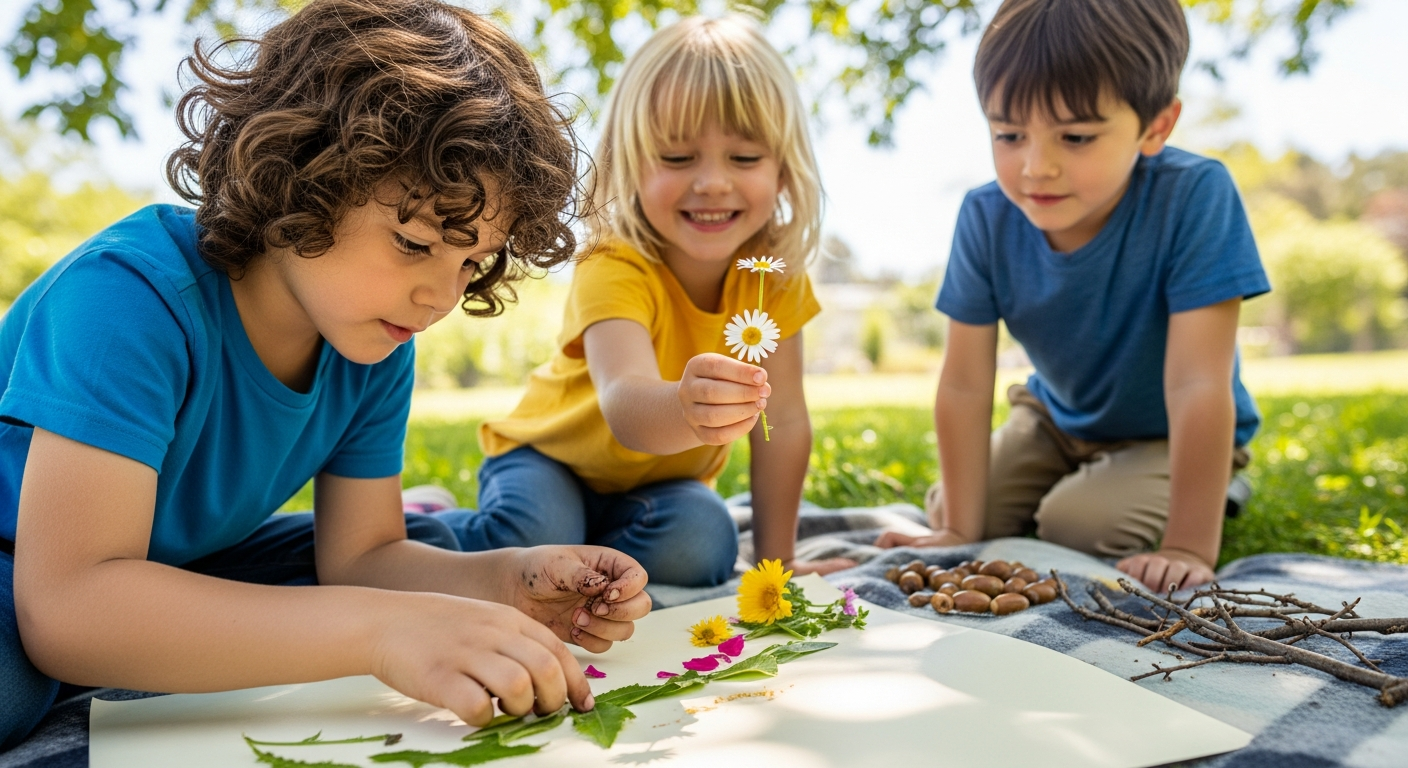
Table of Contents
- Introduction
- Why Embrace Outdoor Crafts for Kids?
- Getting Started: Gathering Your Outdoor Crafting Kit
- Easy Outdoor Crafts: Our Top Picks for Every Young Explorer
- Bringing Language to Life with Outdoor Crafts
- Tips for a Successful Outdoor Crafting Session
- Choosing the Right Tools for Your Child's Journey
- Conclusion
- FAQ
Does the thought of long summer days filled with boundless kid energy send shivers down your spine, or perhaps a sudden craving for extra coffee? We get it. As parents, we often find ourselves navigating the tricky balance between keeping our children entertained, engaged, and away from endless screen time, all while trying to maintain our own sanity. While screens can offer a quick reprieve, there's a unique magic in stepping outside and letting nature become the ultimate playground and art studio.
This summer, imagine redirecting that boundless energy into imaginative, hands-on activities that not only entertain but also foster crucial developmental skills. This blog post is your comprehensive guide to discovering a treasure trove of easy outdoor crafts for kids, designed to spark creativity, connect them with the natural world, and even lay foundations for stronger communication. We’ll explore a variety of simple, engaging projects that utilize everyday outdoor materials, discuss the incredible benefits these activities offer for your child's growth, and share how platforms like Speech Blubs can enhance their language development journey, making every outdoor adventure a step towards speaking their minds and hearts.

Introduction
As the seasons change and the world outside beckons with its vibrant colors, intriguing textures, and endless possibilities, it’s the perfect time to trade indoor playtime for outdoor exploration. Children, with their innate curiosity and energy, thrive in environments that encourage discovery and hands-on engagement. While the convenience of digital entertainment can be tempting, there's an undeniable richness in connecting with nature through creative play. This article will delve into a delightful array of easy outdoor crafts that utilize natural materials found right in your backyard or local park. From transforming ordinary pebbles into whimsical characters to weaving masterpieces from leaves and twigs, these activities are more than just fun – they are powerful tools for cognitive growth, sensory development, and, crucially, language acquisition. Join us as we uncover how these simple, joyful crafting sessions can empower your child to explore, create, and communicate, paving the way for a summer filled with discovery and delight.
Why Embrace Outdoor Crafts for Kids?
Stepping outside with a craft project in hand offers a unique blend of benefits that indoor activities simply can’t replicate. It’s an opportunity to engage all the senses, move freely, and connect deeply with the environment. For parents, it's a chance to witness pure, uninhibited joy and learning unfold.
Developmental Benefits Beyond the Obvious
Outdoor crafts are powerhouses for holistic child development. They tap into a wide range of skills, often simultaneously, providing a rich learning experience.
- Fine and Gross Motor Skills: From picking up tiny pebbles for a mosaic to wielding a paintbrush for a large-scale leaf painting, children refine their fine motor skills (precision, dexterity) and engage their gross motor skills (running, bending, stretching) as they collect materials and create.
- Sensory Exploration: Nature offers an unparalleled sensory feast. The feel of rough bark, smooth stones, soft petals, the smell of damp earth, the sound of rustling leaves – these experiences stimulate sensory processing, enhancing awareness and understanding of the world.
- Language and Cognitive Development: As children interact with natural elements, they encounter new vocabulary. Describing the "bumpy" texture of a pinecone, the "bright red" color of a berry (observe, don't eat!), or the "fragile" nature of a flower petal expands their descriptive language. Planning a craft, problem-solving when a stick won't glue, or deciding on colors all build cognitive flexibility and critical thinking.
- Emotional Regulation and Creativity: The open-ended nature of outdoor crafts encourages imagination and self-expression. There’s no "right" way to make a stick fairy, fostering a sense of accomplishment and boosting self-esteem. Spending time in nature also has a calming effect, helping children regulate emotions and reduce stress.
- Early STEM Concepts: Many outdoor crafts naturally incorporate elements of science, technology, engineering, and math. Building a stick raft involves understanding buoyancy, while creating a bird feeder teaches about local wildlife and ecosystems.
Connecting with Nature and Reducing Screen Time
In an increasingly digital world, children often spend less time outdoors. Outdoor crafts provide a compelling reason to step away from screens and immerse themselves in the natural environment. This connection fosters an appreciation for the planet, encourages observation skills, and can lead to a lifelong love of nature.

At Speech Blubs, we understand the challenge of balancing screen time with developmental needs. That's why we're committed to providing a "smart screen time" alternative – engaging, interactive experiences that are a world away from passive viewing like cartoons. Our app transforms screen time into an active learning opportunity, perfectly complementing the hands-on exploration of outdoor crafts. It’s about empowering children to "speak their minds and hearts," a mission born from our founders' personal experiences with speech challenges. We created the tool we wished we had, blending scientific principles with play to offer an immediate, effective, and joyful solution for the 1 in 4 children who need speech support.
Fostering Family Connection
Outdoor crafting is inherently a collaborative activity. It encourages parents and caregivers to engage directly with their children, fostering deeper bonds and shared joyful moments. These are the memories that last a lifetime – the laughter over a messy mud sculpture, the shared excitement of a bird visiting a homemade feeder, the pride in a collaboratively created nature collage. It's a powerful tool for family connection, creating an environment where learning and love intertwine.
Getting Started: Gathering Your Outdoor Crafting Kit
One of the most appealing aspects of outdoor crafts is that your primary art supplies are literally all around you! However, a small collection of basic household items will help transform nature’s bounty into masterpieces.
Essential Supplies to Have on Hand
- Adhesives: Non-toxic glue (PVA glue works well for many nature items), glue sticks, or even a hot glue gun (for adult use only, with supervision for attaching larger or heavier items).
- Cutting Tools: Child-safe scissors for leaves, string, or paper.
- Coloring Materials: Washable paints (tempera or acrylic), paintbrushes of various sizes, markers, crayons (especially for rubbings), and chalk.
- Containers: Buckets, bags, or baskets for collecting nature treasures. Small jars or clear plastic bottles for sensory activities or observation.
- String & Twine: For hanging mobiles, tying rafts, or nature weaving.
- Paper & Cardboard: For collages, drawing, or as a base for many projects.
- Optional Enhancements: Googly eyes, glitter (biodegradable is a plus!), pipe cleaners, feathers, old fabric scraps.
Nature’s Bounty: Your Free Art Store
Encourage your child to be a nature detective! Before starting any craft, go on a scavenger hunt to collect materials.
- Leaves: Of all shapes, sizes, and colors.
- Sticks & Twigs: From tiny ones to larger branches.
- Flowers & Petals: Freshly fallen or carefully picked (teach respect for plants).
- Rocks & Pebbles: Smooth ones are great for painting, textured ones for sensory play.
- Pinecones & Acorns: Excellent for making figures or adding texture.
- Mud & Sand: For sculptures and sensory bins.
- Water: Essential for cleanup and many sensory activities.
Safety Tips for Outdoor Crafting
- Supervision is Key: Always supervise children, especially with tools like scissors or hot glue, and when collecting materials.
- Identify Safely: Teach children which plants are safe to touch and which to avoid (e.g., poison ivy, thorny bushes). Emphasize not putting anything from nature in their mouths.
- Non-Toxic Materials: Ensure all glues and paints are clearly labeled non-toxic, especially for younger children.
- Sun Protection: Don't forget hats, sunscreen, and plenty of water on sunny days.
- Bug Awareness: Check for ticks after outdoor play and be mindful of bee stings.
Easy Outdoor Crafts: Our Top Picks for Every Young Explorer
Here's a curated list of engaging outdoor crafts, designed to be simple, fun, and developmentally enriching.
Nature-Based Art & Sensory Play
These crafts blend artistic expression with sensory exploration, allowing children to create unique pieces while engaging their senses.
Leaf Rubbings & Paintings
- How to: For rubbings, place a leaf under a piece of paper, then rub the side of a crayon or colored pencil over the paper to reveal the leaf's intricate veins and shape. For painting, collect various leaves and use them as natural stamps or paint directly onto them.
- Why it's great: Enhances fine motor skills, encourages observation of nature's patterns, teaches about textures, and builds color recognition.
- Language Connection: Describe the leaves: "pointy," "round," "rough," "smooth," "green," "yellow," "crinkly." Talk about the "lines" and "shapes."
Rock Painting & Kindness Rocks
- How to: Gather smooth, flat rocks. Wash and dry them thoroughly. Use acrylic paints to decorate them with faces, animals, patterns, or positive messages. Once dry, seal with varnish for durability. Hide "kindness rocks" in your neighborhood for others to find, or create a personal rock garden.
- Why it's great: Unleashes creativity, promotes fine motor control through detailed painting, and can foster community spirit when hiding kindness rocks.
- Language Connection: Discuss colors, shapes, and what designs to create. If making kindness rocks, talk about the messages: "happy," "love," "kind."
Flower & Nature Collages
- How to: Collect leaves, flowers, twigs, pebbles, and other small nature items. Arrange them on a piece of paper or cardboard, then glue them down to create a unique nature collage. Experiment with textures and colors.
- Why it's great: Develops an understanding of composition, texture, and natural beauty. It’s a wonderful sensory activity, allowing children to touch and feel diverse materials.
- Language Connection: Encourage descriptive words for each item: "soft petal," "hard stone," "long stick," "bright flower." Ask questions: "What does this feel like?" "What color is this?"
Stick Fairies & Nature Figures
- How to: Find sticks that can serve as the body for a fairy, animal, or person. Use leaves, petals, grass, and twine to add clothes, hair, or features. Attach with glue or by wrapping with string.
- Why it's great: Boosts imagination and creative storytelling. Children can create a whole family of characters for imaginative play.
- Language Connection: Develop narratives around the characters: "The fairy flew over the big tree." "The stick dog barked at the squirrel." Practice character voices and actions.
Mud Sculptures & Nature Weaving
- How to: For mud sculptures, mix dirt with water to create a workable clay-like consistency. Let children sculpt animals, houses, or abstract forms. For nature weaving, create a simple loom from sticks tied together with string, then weave leaves, grass, and thin twigs through the strings.
- Why it's great: Engaging sensory play that connects children directly with earth elements. Mud sculpting strengthens hand muscles; weaving improves dexterity and pattern recognition.
- Language Connection: "Squishy mud," "sticky," "smooth." Talk about the shapes and sizes of the sculptures. When weaving, describe the process: "over, under, push, pull."
Nature Sensory Bottles
- How to: Collect small nature items like tiny leaves, petals, sand, or small pebbles. Place them in an empty, clean plastic bottle with water and a tiny bit of glitter or food coloring if desired. Seal tightly.
- Why it's great: Offers a calming sensory experience, perfect for quiet time or as a visual aid for language. Develops observation skills as items slowly float and settle.
- Language Connection: Discuss what's inside: "What do you see?" "The leaf is floating up." "The glitter is sinking down." Introduce concepts like "fast," "slow," "many," "few."
Bubble Art & Splatter Painting
- How to: For bubble art, mix dish soap, water, and tempera paint. Blow bubbles onto paper. For splatter painting, dip a brush in watery paint and flick it onto a large sheet of paper or an old sheet spread outdoors.
- Why it's great: Messy, exciting, and encourages gross motor skills. Teaches about cause and effect and color mixing in a dynamic way.
- Language Connection: "Pop, pop, pop!" "Big bubbles, small bubbles." "Whoosh!" "Splash!" Describe the colors mixing.
Chalk Paint & Puffy Sidewalk Paint
- How to: For chalk paint, crush sidewalk chalk and mix it with a little water until it forms a paint-like consistency. For puffy sidewalk paint, combine flour, water, dish soap, and food coloring in squeeze bottles.
- Why it's great: Allows for large-scale outdoor art. Sensory experience with different paint textures. Easy cleanup with water.
- Language Connection: Talk about the "big drawing," "long lines," "swirls." Describe the "soft," "bumpy" texture of the puffy paint.
Crafts for Our Feathered & Buggy Friends
These projects offer a wonderful way to foster empathy, responsibility, and an understanding of the natural ecosystem.
DIY Bird Feeders
- How to: A classic: coat a pinecone in peanut butter (or a nut-free alternative like sunflower seed butter), then roll it in birdseed. Hang it from a tree branch with twine. Alternatively, decorate an empty milk carton and cut out openings for birds.
- Why it's great: Teaches children about caring for animals and observing local wildlife. Promotes responsibility and patience.
- Language Connection: "Bird," "seed," "eat," "fly," "tweet." "What color is the bird?" "Is it a big bird or a small bird?" For a parent whose 3-year-old "late talker" loves animals, the 'Animal Kingdom' section in Speech Blubs offers a fun, motivating way to practice "moo" and "baa" sounds, which can easily extend to bird sounds like "tweet" or "caw" after making a bird feeder. Download Speech Blubs on the App Store or Google Play to explore how our engaging activities can complement your child's outdoor learning adventures.
Bug Observation Boxes
- How to: Decorate a clear plastic container with air holes. Children can gently collect bugs (e.g., ladybugs, roly-polies) to observe them for a short period, then release them back into their habitat.
- Why it's great: Fosters scientific inquiry, respect for living creatures, and keen observation skills.
- Language Connection: "Bug," "crawl," "fly," "small," "fast." Talk about the parts of the bug: "legs," "wings."
Bee Baths
- How to: Place a shallow dish (like a plant saucer) in a quiet spot in your garden. Fill it with water and arrange pebbles or marbles inside so bees have landing spots.
- Why it's great: Teaches about the importance of pollinators and environmental awareness.
- Language Connection: "Bee," "buzz," "drink," "water," "flower."
Outdoor Games & STEM Crafts
Inject some science, technology, engineering, and math into your outdoor play with these engaging projects.
Stick Rafts
- How to: Collect several sticks of similar length. Arrange them side-by-side and lash them together with string or twine. Test them in a puddle, creek, or water table to see if they float.
- Why it's great: A fantastic introduction to basic engineering and the concept of buoyancy. Encourages problem-solving and critical thinking.
- Language Connection: "Float," "sink," "tie," "strong," "water." "Will it float?" "Why did it sink?"
Ladybug Tic-Tac-Toe
- How to: Find 10 smooth, flat rocks (5 for ladybugs, 5 for another symbol like bees or flowers). Paint them accordingly. Draw a tic-tac-toe grid on a larger flat rock or directly on the ground.
- Why it's great: Combines crafting with game-play, fostering turn-taking, strategic thinking, and basic math concepts.
- Language Connection: "Your turn," "my turn," "win," "lose," "first," "next." Identify the painted symbols: "ladybug," "bee."
Color-Changing Flowers
- How to: Place white flowers (like daisies or carnations) into jars of water mixed with different food colorings. Observe how the flowers change color over time.
- Why it's great: A simple, captivating science experiment demonstrating how plants absorb water. Encourages patience and observation.
- Language Connection: "Red flower," "blue water," "change," "drink," "see." "What do you think will happen?"
Garden Markers
- How to: Collect flat rocks or sturdy popsicle sticks. Paint or write the names of plants (e.g., "Tomato," "Carrot," "Basil") onto them. Place them next to the corresponding plants in the garden.
- Why it's great: Connects children to gardening, promotes early literacy, and teaches responsibility.
- Language Connection: Practice reading and writing plant names. Discuss plant growth: "grow," "water," "sun."
Preserving Nature's Beauty
These crafts create lasting keepsakes and teach children about the delicate beauty of the natural world.
Pressed Flower Resin Magnets
- How to: With significant adult supervision, press flowers in a book or flower press. Once dry, arrange them in small magnet molds, mix and pour clear resin over them, and let them cure. Attach magnets to the back.
- Why it's great: Creates beautiful, practical keepsakes. Teaches patience and careful handling of delicate items. (Note: Resin requires adult handling and good ventilation.)
- Language Connection: "Pretty," "small," "delicate," "memory." "What flowers did we find?"
DIY Flower Press
- How to: Layer cardboard, blotting paper, and collected flowers. Place this stack between two pieces of sturdy wood and secure with screws or heavy books. Wait several weeks for the flowers to dry.
- Why it's great: A hands-on lesson in patience and the science of preservation. The pressed flowers can then be used in other crafts.
- Language Connection: "Press," "flat," "dry," "wait." Discuss the colors and shapes of the original flowers versus the pressed ones.
Bringing Language to Life with Outdoor Crafts
Beyond the joy of creation, outdoor crafts offer an unparalleled environment for fostering language development. The dynamic, sensory-rich nature of these activities provides countless opportunities for vocabulary expansion, descriptive language practice, and storytelling.
How Crafts Support Speech Development
Imagine a child collecting sticks for a craft. They might point to a "long" stick, then a "short" one. A parent can then reinforce these concepts by asking, "Can you find a bumpy stick?" or "Which stick is thicker?" This natural back-and-forth helps children categorize, describe, and understand their world through words.
- New Vocabulary: Every new material, tool, or action introduces new words. "Pinecone," "twine," "splatter," "sculpt," "weigh," "balance."
- Descriptive Language: Nature is full of adjectives! "Rough," "smooth," "prickly," "soft," "bright," "dull," "big," "tiny," "wet," "dry." Encourage children to describe what they see, feel, and hear.
- Following Instructions: Crafting often involves a sequence of steps: "First, find a rock. Next, paint it blue. Then, let it dry." This builds crucial receptive language skills.
- Storytelling: Once a craft is complete (like a stick fairy or a painted rock character), children can create stories about their creations, developing narrative skills and imagination.
- Sound Imitation: The sounds of nature – birds chirping, leaves rustling, water splashing – provide excellent opportunities for sound imitation, a foundational skill for speech development.
For a parent whose child is just beginning to form sentences, making a bird feeder can be a fantastic way to introduce simple verbs and nouns. "Bird eat," "seed fall," "hang high." These short, meaningful phrases, paired with the physical action, create strong connections. Later, watching the birds, you can say, "Look! The red bird is eating the seed."
At Speech Blubs, we resonate deeply with this approach to language learning. Our methodology is built on the power of "video modeling," where children learn by watching and imitating their peers – a natural, intuitive way to acquire complex communication skills. Just as children learn to describe a "fuzzy" caterpillar they find outdoors, they can watch other children in the Speech Blubs app produce sounds and words, mimicking their movements and expressions. Our app is a powerful tool designed to support children in their journey to "speak their minds and hearts," offering an immediate, effective, and joyful solution for the 1 in 4 children who need speech support. It’s a purposeful screen time experience that perfectly supplements the rich language opportunities found in outdoor play.
Discover more about the science behind our effective methodology on our Research page and see why our unique approach is trusted by parents and therapists worldwide. And if you're ever unsure if your child could benefit from targeted speech support, take our quick 3-minute preliminary screener. It involves 9 simple questions and provides an assessment and next-steps plan, along with a free 7-day trial to experience Speech Blubs firsthand.
Connecting Crafts to Speech Blubs Activities
Many of our app’s activities can seamlessly extend or reinforce concepts learned through outdoor crafts.
- Animal Crafts (e.g., bird feeders, bug boxes): After creating, children can explore the "Animal Kingdom" section of Speech Blubs to learn animal names, sounds, and actions.
- Nature Sounds: While listening to the wind or birds outside, practice sound imitation prompts within the app that focus on environmental sounds.
- Descriptive Language: The "What's Missing?" or "Guess the Word" activities in Speech Blubs encourage descriptive language, which can be pre-practiced by describing outdoor items.
- Storytelling: After making stick figures or rock characters, use the "Story Time" sections to inspire narratives.
These connections turn playtime into comprehensive learning. Read what other parents are saying about their child's incredible progress with Speech Blubs and how it's transformed their family's communication journey.
Tips for a Successful Outdoor Crafting Session
To make your outdoor crafting experiences as enjoyable and beneficial as possible, keep these tips in mind:
- Embrace the Mess: Outdoor crafts are often wonderfully messy! Dress children in old clothes, set up in an area that’s easy to rinse (like near a hose), and remember that mess equals exploration and fun.
- Focus on Process, Not Product: The true value lies in the experience of creating, experimenting, and discovering, not in producing a perfect end result. Celebrate effort and creativity over flawless execution.
- Follow Your Child's Lead: Offer suggestions, but allow your child to adapt the craft, choose their own materials, and direct the creative process. Their unique ideas are valuable.
- Incorporate Storytelling: As children collect items or work on their crafts, encourage them to tell stories about what they’re doing, what they see, or what their creation will be.
- Be Present and Engage: Put away your phone (unless you’re taking photos of their masterpieces!). Engage in conversation, ask open-ended questions, and participate alongside them. These shared moments build connection and foster language.
- Keep It Simple: You don't need elaborate plans or expensive supplies. The best outdoor crafts are often the simplest, using readily available items and a sprinkle of imagination.
- Respect Nature: Teach children to be gentle with plants, not to pick too many flowers, and to leave areas as they found them.
Choosing the Right Tools for Your Child's Journey
Just as you gather your crafting supplies, choosing the right tools to support your child's speech and language development is a key decision. We believe in transparency and providing the best value to empower every child to "speak their minds and hearts."
Our Speech Blubs app offers two main subscription plans, designed to fit different family needs:
- Monthly Plan: For $14.99 per month, you get access to our core app features.
- Yearly Plan: At just $59.99 per year, this plan breaks down to an incredible value of only $4.99 per month. That's a 66% savings compared to the monthly option!
But the Yearly plan offers so much more than just a lower price. It's truly the best way to fully support your child's journey with Speech Blubs, offering exclusive, high-value features:
- A 7-day free trial: Start exploring all the incredible content and activities without commitment. (This is not included with the Monthly plan.)
- The extra Reading Blubs app: Unlock a powerful companion app designed to boost early literacy skills alongside speech development. (Also not included with the Monthly plan.)
- Early access to new updates and 24-hour support response time: Be among the first to experience new features and get priority assistance whenever you need it.
We designed the Yearly plan to provide a complete, uninterrupted, and enriched experience, giving your child the consistency and diverse learning opportunities they deserve.
Ready to provide your child with an immediate, effective, and joyful solution for their speech development? Create your account and begin your 7-day free trial today by choosing the Yearly plan to unlock all these amazing benefits!
Conclusion
Embracing easy outdoor crafts for kids is more than just a fun pastime; it's an investment in your child's holistic development. These activities provide rich sensory experiences, hone fine and gross motor skills, spark creativity, and, critically, create a vibrant backdrop for language acquisition. As children explore the textures of leaves, the colors of flowers, and the sounds of nature, they naturally expand their vocabulary, practice descriptive language, and build narrative skills. These shared moments of discovery not only foster a deeper connection with the natural world but also strengthen family bonds and reduce reliance on passive screen time.
At Speech Blubs, we are passionate about empowering children to "speak their minds and hearts," a mission deeply rooted in our founders' personal journeys. We believe in blending scientific principles with the joy of play, offering a "smart screen time" solution that complements and enhances the rich learning found in outdoor adventures. By integrating our video modeling methodology with the real-world experiences of nature crafts, we provide a powerful, immediate, and effective tool for the 1 in 4 children who need speech support.
Don't let another season pass without harnessing the simple magic of nature. Encourage your child to collect, create, and communicate, knowing that every leaf, rock, and stick holds the potential for incredible growth.
Ready to embark on this dual journey of outdoor discovery and language empowerment? Download Speech Blubs on the App Store or Google Play today! Be sure to select the Yearly plan to unlock your 7-day free trial, gain access to the Reading Blubs app, and receive all the exclusive benefits that will truly set your child on the path to confident communication.
FAQ
Q1: Are these outdoor crafts suitable for all ages?
A1: Many outdoor crafts are highly adaptable! Younger children can focus on collecting materials and simple sensory play (like mud sculpting or leaf rubbings) with adult assistance. Older children can tackle more intricate projects like stick rafts or elaborate nature collages, often with greater independence. The key is to adapt the complexity of the craft to your child's developmental stage and interest.
Q2: How can outdoor crafts specifically help with speech development?
A2: Outdoor crafts create natural, hands-on opportunities for language. Children learn new vocabulary (e.g., "pinecone," "twig," "texture"), practice descriptive language ("bumpy," "smooth," "bright green"), follow multi-step instructions ("first, glue the leaf, then add the twig"), and engage in storytelling about their creations. These activities provide real-world context for words, making learning meaningful and memorable.
Q3: What if my child isn't interested in crafts?
A3: Don't force it! Start with simple invitations to play rather than structured crafts. Offer a tray of mud and some natural "tools," or just a bucket for collecting treasures. Frame it as "exploring" or "discovering" rather than "making art." Often, the open-ended nature of outdoor play will naturally lead to creative expression without the pressure of a "craft." Remember, the process is more important than the product.
Q4: How does Speech Blubs fit into outdoor play and crafting?
A4: Speech Blubs complements outdoor play by reinforcing and expanding language skills learned in nature. For example, after making a bird feeder, your child can use the app to learn bird sounds or practice words like "fly" or "eat." Our "video modeling" method allows children to imitate peers, building confidence in new vocabulary and sounds. It's a "smart screen time" solution that connects directly to real-world experiences, providing a joyful, effective way to enhance communication skills even after the outdoor adventure is done.
About the author