
Easy Poinsettia Crafts for Kids: Festive Fun & Language Growth
 By Speech Blubs Team•Jan 13, 2026•19 min.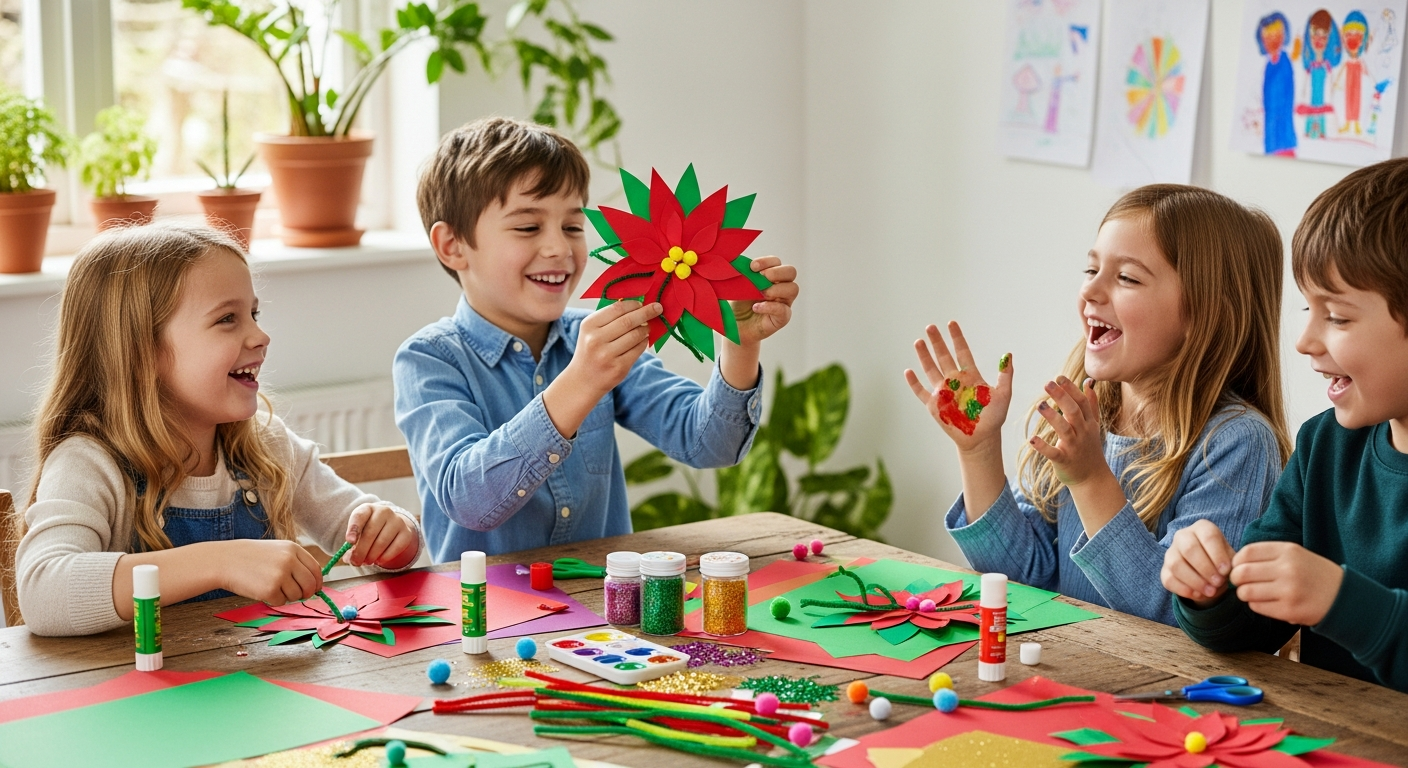
Table of Contents
- Introduction
- Why Crafting is More Than Just Fun
- The Beauty of the Poinsettia: A Cultural Journey
- Our Favorite Easy Poinsettia Crafts for Kids
- Enhancing the Crafting Experience with Speech Blubs
- Choosing Your Speech Blubs Plan: Get the Most Value
- Conclusion
- Frequently Asked Questions (FAQ)
Introduction
Ever notice how a simple craft session can transform a quiet afternoon into a buzzing hub of creativity and joyful chatter? As parents and caregivers, we often seek activities that entertain our children, but what if those activities could also powerfully support their communication and overall development? This holiday season, we invite you to dive into the wonderful world of poinsettia crafting! Beyond creating beautiful festive decorations, these crafts offer a fantastic opportunity to foster crucial fine motor skills, cognitive development, and, perhaps most importantly, language growth. In this comprehensive guide, we'll explore several easy poinsettia craft ideas for kids of all ages, seamlessly integrating them with strategies to boost speech and confidence. Get ready to turn glitter, paper, and glue into a rich learning experience, making this holiday season not just merry, but profoundly meaningful for your child's developmental journey.

Why Crafting is More Than Just Fun
Crafting might seem like just a fun way to pass the time, but for children, it's a multi-faceted developmental powerhouse. When little hands cut, glue, paint, and manipulate materials, they're engaging in activities that are fundamental to their growth in many areas.
Fine Motor Skills
Think about the precision required to cut along a line or place a small piece of tissue paper. These actions strengthen the tiny muscles in a child’s hands and fingers, improving their dexterity and coordination. This is vital for tasks like holding a pencil, buttoning a shirt, or even manipulating objects in play. Poinsettia crafts, with their various petal shapes and assembly steps, offer abundant practice for these essential skills.
Cognitive Development
Crafting is a continuous exercise in problem-solving. Children learn to follow multi-step instructions, sequence actions, and think creatively to achieve a desired outcome. They practice spatial reasoning as they arrange petals or decide where to glue a leaf. When a child carefully follows the steps to create a poinsettia, they're building critical thinking pathways that will serve them in all aspects of learning.
Emotional Growth
The process of crafting teaches patience and perseverance. Not every cut will be perfect, and glue might get a little messy, but seeing a project through to completion instills a profound sense of accomplishment. This builds self-esteem and confidence, encouraging children to express themselves freely and embrace their unique creative voice. The pride in showing off a handmade poinsettia is a truly heartwarming moment for both child and parent.
Language Development
Perhaps most exciting for us at Speech Blubs, crafting is a goldmine for language development. Every step of a craft provides an opportunity for descriptive language, instruction-following, and conversation. As your child works, you can describe colors ("red petals," "green leaves"), shapes ("round center," "pointy edges"), textures ("smooth paper," "bumpy glitter"), and actions ("cut, glue, tear, paint"). You can ask open-ended questions like, "What color should we use next?" or "How does that feel?"

For a parent whose 3-year-old "late talker" loves engaging in hands-on activities but struggles to articulate their thoughts, crafting a poinsettia offers a perfect, low-pressure environment for verbal practice. Imagine describing the texture of glitter ("sparkly!") or the action of gluing ("stick!"). This is where we at Speech Blubs shine, transforming everyday interactions into rich, language-learning moments. Our app uses a unique video modeling methodology, where children learn new words and phrases by watching and imitating their peers. This active, engaging approach mirrors the natural way children learn by observing and doing, making it a powerful supplement to your crafting adventures. Ready to turn playtime into communication progress? Download Speech Blubs on the App Store or Google Play to begin your family's journey toward joyful communication.
The Beauty of the Poinsettia: A Cultural Journey
Before we dive into the crafts, let's appreciate the star of our show: the poinsettia! This iconic "Christmas flower" has a rich history, originating in Mexico. Known as "Flor de Nochebuena" (Christmas Eve Flower), its vibrant red and green hues have become synonymous with the holiday season. The Legend of the Poinsettia is a beautiful Mexican folk tale often told during Las Posadas, a nine-day celebration leading up to Christmas. The legend speaks of a poor girl whose humble offering of weeds transformed into brilliant red flowers, teaching us that even the simplest gift, given with love, can be truly miraculous.
Engaging with the cultural significance of the poinsettia can add another layer of learning to your craft session. It's a fantastic way to introduce children to "Holidays Around the World," fostering curiosity and an understanding of diverse traditions. As you craft, you can tell stories, discuss the colors, and even play some festive music from Mexico, making the experience even more immersive and educational.
Our Favorite Easy Poinsettia Crafts for Kids
We've gathered a selection of our favorite easy poinsettia crafts, perfect for varying skill levels and preferences. Each craft is designed to be low-prep, high-fun, and packed with developmental benefits.
1. The Classic Paper Plate Poinsettia (Multi-layered 3D Effect)
This craft takes simple paper plates and transforms them into beautiful, textured poinsettias, often with a delightful natural curl as the paint dries!
Materials You'll Need:
- 3 paper plates of varying sizes (e.g., 10-inch, 9-inch, 6-inch – exact sizes aren't crucial, just distinct differences)
- Red, white, green, and yellow liquid tempera or craft acrylic paint
- Optional: Gold metallic paint for shimmer
- Small kitchen sponges (cut into smaller rectangles for easy handling)
- Red, white, and green oil pastels or crayons
- Paintbrushes
- Yellow tissue paper or glitter foam sheets
- Scissors
- Pencil
- Small plastic cup or lid (for tracing a circle)
- White school glue
Step-by-Step Instructions:
- Prepare the Plates: Give each child three paper plates of different sizes. The largest plate will be for the green leaves, the medium for the large red petals, and the smallest for the inner red petals.
- Draw the Center: Place a small plastic cup or lid in the middle of the LARGEST plate and trace a circle. This circle will serve as your "stop cutting" guide.
- Cut the Leaves/Petals:
- For younger children, you might pre-draw leaf shapes on the green plate and petal shapes on the red plates to guide their cutting.
- For older children, encourage them to freehand cut leaf shapes from the outside edge of each plate towards the center circle, stopping at the line. The shapes don't need to be perfect; irregular shapes can add charm!
- Repeat this for all three plates, creating more pointed, petal-like shapes on the red plates.
- Paint with Sponges:
- Using sponges, dab green paint onto the largest plate (for leaves).
- Apply a combination of red and white paint onto the two smaller plates (for petals). Mixing a little gold metallic paint can add a lovely shimmer!
- This sponge-painting technique is fantastic for sensory input and building hand strength.
- Let Dry: Allow the painted plates to dry completely (about an hour). The secret to the natural 3D curl? Inexpensive paper plates tend to curl as the paint dries, adding a wonderful, organic look to your poinsettia!
- Add Details: Once dry, use oil pastels or crayons to draw veins on the leaves and petals, adding depth and realism.
- Create the Center: Wad small pieces of yellow tissue paper into little balls to represent the seeds or stamen in the center of the flower. Alternatively, cut small circles from glitter foam sheets.
- Assemble: Glue the yellow center pieces onto the smallest petal plate. Then, layer and glue the three painted plates together, with the largest green plate on the bottom, the medium red plate next, and the smallest red petal plate on top. Press gently and let the glue set.
Language & Learning Tie-ins:
As you work, use comparative language: "This is the biggest plate, and this is the smallest." Describe actions: "We are cutting with scissors," "We are dabbing with the sponge." Talk about the colors and shapes you're seeing. For a parent with a shy child who might hesitate to verbalize, the structured yet open-ended nature of this craft, combined with the visual learning of our video modeling approach, builds confidence. They can articulate "I cut the red part!" or "I painted the green leaf!"
2. Accordion Fold Poinsettias (Elegant 3D Decorations)
This craft results in stunning 3D paper flowers that can be used as decorations, ornaments, or even gift toppers. It's a wonderful exercise in precision folding and cutting.
Materials You'll Need:
- A5 sheet of red paper (for larger flowers, use A4)
- A6 sheet of dark red or contrasting red paper (for larger flowers, use A5)
- Scraps of yellow paper
- Green paper for leaves (optional)
- Scissors
- Stapler
- White school glue
Step-by-Step Instructions:
- Fold the Papers: Take both your red paper sheets and fold them across the "short" edge into exactly 16 equal sections, concertina-style (like an accordion). The easiest way to do this neatly is to fold the paper in half, then half again, then half again, creating strong creases. Then, refold along these creases in an alternating accordion pattern.
- Cut the Petal Shape:
- For petals that "pop out," take your folded concertina paper. Ensure the open flap is facing your scissors. Cut a smooth curve, making sure the point of your curve is on the closed side of the concertina paper.
- For petals that "pop away," have the closed side of the concertina paper facing your scissors and cut a similar curve, with the point ending at the open flap. Experiment with both!
- Crease the Middle: Fold both concertina papers in the very middle, making a strong crease. This will be the center of your flower.
- Assemble the Base: Slot the two concertina papers together, aligning their middle creases. Staple them together as close to the center fold as possible.
- Form the Flower: Now for the magic! Take the top and bottom edges of one side of a concertina and carefully fold them towards each other, fanning out the paper into half a flower. Secure this half with another staple near the center. Repeat this on the other side.
- Add Details: Cut small circles from yellow paper for the flower's center and glue them in place. You can also cut simple leaf shapes from green paper and glue them to the back of your poinsettia.
Language & Learning Tie-ins:
This craft emphasizes sequential instructions and descriptive vocabulary. "First, we fold. Then, we cut." Discuss the difference between "open" and "closed" edges, "curves" and "points." The act of carefully folding and stapling is excellent for fine motor precision. Ready to empower your child's communication journey? Start your 7-day free trial with Speech Blubs today and discover a world of interactive learning tailored to your child's needs!
3. Recycled Paper Roll Poinsettia Ornaments (Sparkly Tree Decor)
Transform an ordinary toilet paper roll into a dazzling poinsettia ornament! This craft is not only fun but also promotes recycling and creative thinking.
Materials You'll Need:
- Empty toilet paper rolls (or paper towel rolls, cut down)
- Red craft paint (acrylic works well)
- Paintbrush
- White school glue
- Red craft glitter
- Silver rhinestones, small pom-poms, or cut circles of yellow paper for the center
- Green ribbon (about 8 inches per ornament)
- Scissors
- Ruler
- Single hole punch
- Optional: Glue gun (for adult use, for quick rhinestone attachment)
- Disposable plates (for glue and glitter)
Step-by-Step Instructions:
- Paint the Roll: Paint the entire paper roll – both inside and outside – with bright red craft paint. Ensure good coverage.
- Let Dry: Allow the painted roll to dry completely. This might take 30 minutes to an hour, depending on the paint.
- Flatten and Cut: Once dry, gently press down on the roll to flatten it. Using a ruler, make marks every 3/4 inch along the flattened roll, then cut the roll into 5 equal strips. Each strip will become a petal.
- Shape the Petals: Take one strip. Holding both ends, gently pinch them together and push inward to create a "petal" shape with slightly pointed ends. Repeat for all 5 strips.
- Glitter Time!
- Pour a puddle of white glue onto one disposable plate. Make sure the puddle is wide enough to dip a petal edge.
- Pour a generous amount of red glitter onto a second disposable plate.
- Dip one of the long edges of a petal into the glue, coating it generously.
- Immediately press the glue-covered edge into the red glitter, ensuring it's completely covered.
- Repeat this for all 5 petals. Set them aside to dry completely (this can take an hour to overnight).
- Assemble the Flower: Once the petals are completely dry, lay them out in a circle to form a flower shape. Re-shape any petals that lost their point. Add a small line of glue to the end of one petal and attach it to the petal next to it. Continue around the circle until all 5 petals are glued together, forming the poinsettia.
- Add the Center: Use hot glue (adult supervision!) or strong craft glue to attach 3 silver rhinestones, small yellow pom-poms, or yellow paper circles to the very center of your flower.
- Add a Hanger: Use a single hole punch to punch two holes at the tip of one of the petals. Thread an 8-inch piece of green ribbon through the holes and tie it at the top to create a loop for hanging.
Language & Learning Tie-ins:
This craft is excellent for practicing descriptive adjectives like "sparkly," "shiny," "smooth," and "rough" (when touching the glitter). It also introduces action verbs like "paint," "cut," "pinch," "dip," and "glue." For parents whose children struggle with sound production, the descriptive language involved in crafts – "glittery," "shiny," "red" – provides natural practice for initial consonant sounds or blending. Speech Blubs offers dedicated sections for practicing specific sounds in a playful, engaging way, helping children master phonemes through imitation and repetition, just like they learn sounds by describing their beautiful creations.
4. Torn Paper Poinsettias (Sensory & Fine Motor for Little Hands)
This super simple craft is perfect for toddlers and preschoolers, focusing on sensory exploration and building hand strength without the need for scissors.
Materials You'll Need:
- Red construction paper (various shades if desired)
- Green construction paper
- Yellow construction paper scrap
- White school glue stick or liquid glue
- Base paper (cardstock or construction paper for gluing onto)
Step-by-Step Instructions:
- Tear Red Petals: Encourage your child to tear strips and pieces of red construction paper into various sizes and shapes. Emphasize the "tearing" action. These will be the poinsettia petals. The uneven edges are part of the charm!
- Tear Green Leaves: Similarly, have them tear pieces of green construction paper for the leaves.
- Tear Yellow Center: Tear a small circle or irregular shape from yellow paper for the center.
- Glue onto Base: Spread glue onto the base paper in a circular area. Have your child layer the red torn paper pieces onto the glue, overlapping them to form the poinsettia shape.
- Add Center and Leaves: Glue the yellow torn piece in the center. Then, glue the green torn pieces around the bottom or sides of the red petals to create leaves.
Language & Learning Tie-ins:
This craft is fantastic for building hand strength and dexterity through tearing. It's a wonderful sensory activity, focusing on the tactile experience of paper. Use action words like "rip," "tear," "crumple," and "smooth." Discuss concepts like "big pieces," "little pieces," "on top," "underneath." Every time a child communicates, they're building confidence. Our mission at Speech Blubs is to empower children to speak their minds and hearts. Our founders, who experienced speech challenges themselves, created Speech Blubs as the tool they wished they had. We are committed to providing an immediate, effective, and joyful solution for the 1 in 4 children who need speech support, blending scientific principles with play to create "smart screen time" experiences.
Enhancing the Crafting Experience with Speech Blubs
As you engage in these festive poinsettia crafts, remember that the most profound learning happens when we combine hands-on experiences with targeted, engaging support. This is precisely where Speech Blubs steps in, offering a powerful supplement to your child's overall development plan.
We believe in "smart screen time" – an active, engaging alternative to passive viewing like cartoons. While you might be creating a physical poinsettia, Speech Blubs can extend that learning by:
- Reinforcing Vocabulary: Use words learned during crafting (e.g., "red," "flower," "cut," "glue") and then find activities within Speech Blubs that use those same words. Our app offers thousands of expertly designed activities that cover a vast range of vocabulary.
- Encouraging Imitation: Our unique video modeling methodology leverages the power of mirror neurons. Children watch videos of their peers performing sounds and words, then imitate them. This is incredibly effective for developing pronunciation, clarity, and confidence, much like they might imitate your crafting actions and descriptions.
- Building Confidence: Both crafting and Speech Blubs activities foster a sense of accomplishment. Successfully creating a poinsettia or mastering a new sound in the app empowers children to "speak their minds and hearts," a core part of our mission.
- Creating Family Connection: Just as crafting is a wonderful bonding activity, Speech Blubs is designed for active co-play. Parents are encouraged to play alongside their children, turning digital learning into shared, joyful family moments.
If you're ever unsure if your child could benefit from speech support, we encourage you to take our quick 3-minute preliminary screener. It involves 9 simple questions and provides an immediate assessment and next-steps plan. This valuable tool can help you understand your child's developmental stage and how Speech Blubs can best support them. Parents tell us all the time how Speech Blubs has transformed their child's confidence and communication, a sentiment echoed in many parent reviews on our site. Our method is backed by science, placing us in the top tier of speech apps worldwide.
Choosing Your Speech Blubs Plan: Get the Most Value
At Speech Blubs, we are committed to making effective speech and language development accessible and joyful for every child. We offer flexible plans designed to fit your family's needs, but for the best experience and value, we always recommend our Yearly plan.
Here's a transparent look at our pricing:
- Monthly Plan: $14.99 per month. This plan offers flexibility for shorter-term use.
- Yearly Plan: $59.99 per year. This breaks down to just $4.99 per month – a significant saving of 66% compared to the Monthly plan!
The Yearly plan isn't just cheaper; it unlocks a full suite of premium features designed to maximize your child's progress and your family's convenience:
- 7-Day Free Trial: Only with the Yearly plan do you get a full 7-day free trial to explore all the features and see the magic of Speech Blubs firsthand.
- Extra Reading Blubs App: Access to our Reading Blubs app, providing additional literacy support.
- Early Access to New Updates: Be the first to enjoy new games, activities, and features as they're released.
- 24-Hour Support Response Time: Get priority support from our dedicated team whenever you need assistance.
The Monthly plan, while flexible, does not include the free trial, the Reading Blubs app, early access to updates, or 24-hour support.
We strongly encourage you to choose the Yearly plan. It offers unparalleled value, comprehensive features, and the peace of mind of a free trial, ensuring you get the most out of your Speech Blubs experience. Don't miss out on these exclusive benefits! Download Speech Blubs on the App Store or Google Play and select the Yearly plan to unlock all our features and begin your 7-day free trial today!
Conclusion
Poinsettia crafts are more than just holiday decorations; they are vibrant pathways to developmental growth, offering a festive blend of fine motor skill building, cognitive challenges, emotional victories, and rich language opportunities. By engaging in these easy and enjoyable activities, you're not just creating beautiful flowers; you're nurturing your child's ability to communicate, express themselves, and build confidence. And with Speech Blubs by your side, these hands-on learning moments are amplified, turning "smart screen time" into an active, engaging, and scientifically-backed journey toward clearer speech and stronger communication skills. Our mission at Speech Blubs, born from the personal experiences of our founders, is to empower every child to "speak their minds and hearts." This holiday season, embrace the joy of creation and communication.
Ready to empower your child's voice and enrich their learning journey? Start your child's communication journey today with a 7-day free trial of Speech Blubs by signing up for our Yearly plan – the tool created by founders who understand the challenges and celebrate every breakthrough.
Frequently Asked Questions (FAQ)
Q1: What age group are these poinsettia crafts suitable for?
A1: These crafts are adaptable for various age groups! The torn paper poinsettia is excellent for toddlers and preschoolers (ages 2-4) due to its focus on tearing and gluing. The paper plate and recycled paper roll poinsettias are great for preschoolers through early elementary (ages 4-8) with varying levels of adult assistance for cutting and assembly. Older elementary children (ages 8+) can enjoy the accordion fold poinsettia for its precision and 3D effect, or personalize any of the crafts with more complex details.
Q2: How do crafts help with speech and language development?
A2: Crafts are fantastic for speech and language development because they create natural opportunities for conversation and learning. Children practice descriptive language (colors, shapes, textures), follow multi-step instructions, expand their vocabulary with action verbs (cut, glue, tear, paint), and articulate their thoughts and feelings about their creations. These interactions provide a rich context for practicing sounds, forming sentences, and boosting overall communication confidence.
Q3: What makes Speech Blubs different from other speech therapy apps?
A3: Speech Blubs stands out through its unique "video modeling" methodology, where children learn by watching and imitating their peers, rather than animated characters. This approach leverages mirror neurons, making learning highly engaging and effective. Our app offers thousands of expertly designed activities, blending scientific principles with play to create "smart screen time." It was also created by founders who personally experienced speech challenges, ensuring an empathetic and effective solution for the 1 in 4 children who need speech support.
Q4: How can I ensure my child gets the most out of Speech Blubs?
A4: To maximize your child's benefits from Speech Blubs, we recommend active co-play. Engage with your child during the activities, praise their efforts, and connect the app's vocabulary and concepts to real-world experiences (like poinsettia crafting!). Consistency is key; even short, regular sessions can make a big difference. Choosing the Yearly plan also gives you access to the 7-day free trial, the Reading Blubs app, early updates, and 24-hour support, providing the most comprehensive and supported learning experience.
About the author