
Easy Pterodactyl Craft for Kids: Soar into Learning & Fun!
 By Speech Blubs Team•Jan 13, 2026•18 min.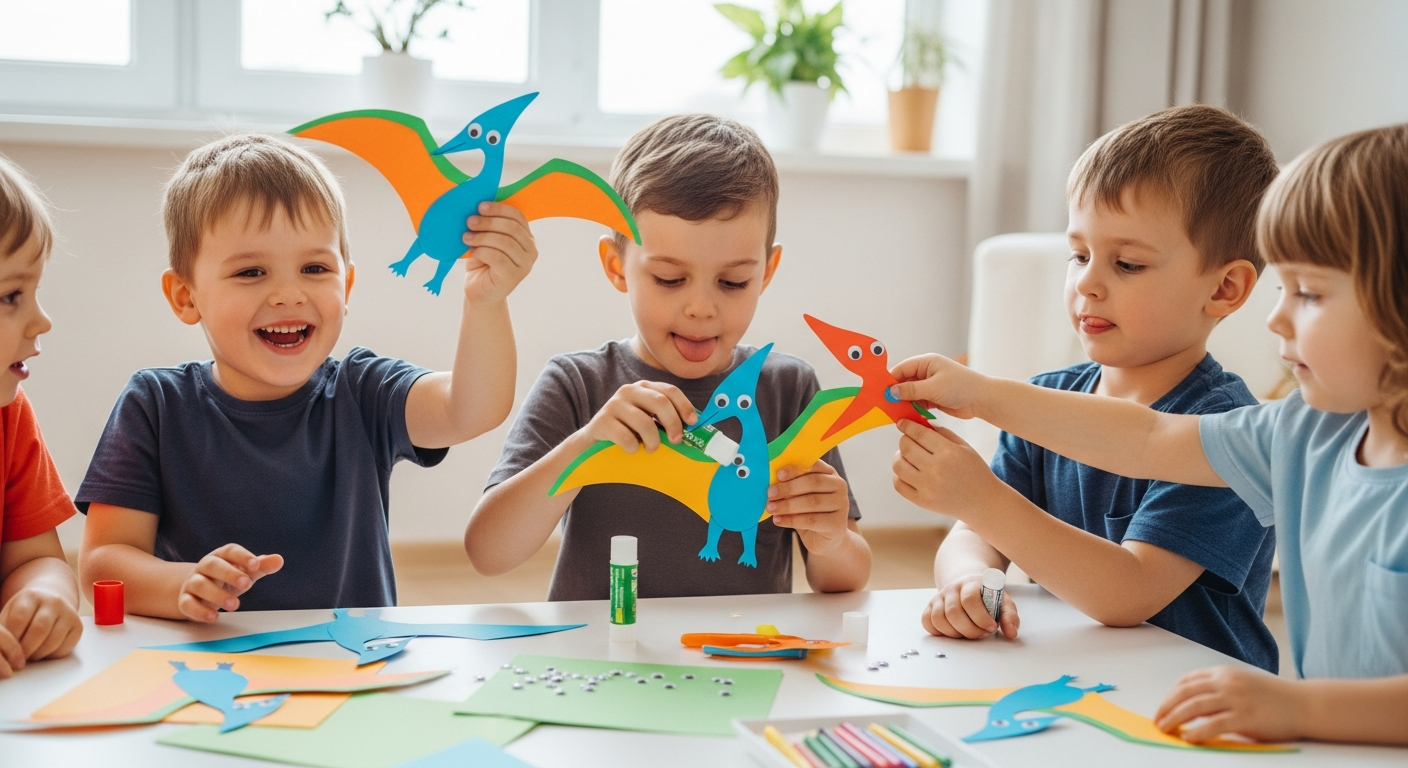
Table of Contents
- Introduction
- The Roaring Benefits of Crafting for Kids
- Choosing Your Pterodactyl Craft: What Makes It "Easy"?
- Craft Idea 1: The Classic Paper Pterodactyl Puppet
- Craft Idea 2: The Paper Plate Pterodactyl
- Craft Idea 3: The Simple Flying Cardboard Pterodactyl
- Beyond the Craft: Bringing Pterodactyls to Life with Speech Blubs
- Getting Started with Speech Blubs Today
- Conclusion
- Frequently Asked Questions (FAQ)
Introduction
Imagine the sheer delight in your child's eyes as they watch a majestic creature soar through the air – a creature from a time long past, a dinosaur with wings! Dinosaurs have captivated imaginations for generations, and the pterodactyl, with its unique ability to fly, holds a special place in that wonder. But what if you could not only explore this ancient world but also bring one of these magnificent flyers to life right in your living room? This blog post isn't just about making a fun craft; it's about unlocking a world of learning, creativity, and communication with an easy pterodactyl craft for kids. We'll dive into why crafting is incredibly beneficial for children's development, explore three distinct and simple ways to create your very own flying dino friend, and discover how these hands-on activities can seamlessly enhance language skills and foster joyful family connections. By the end, you'll be equipped with practical projects and innovative tools to help your child speak their mind and heart.

The Roaring Benefits of Crafting for Kids
Crafting is far more than just a way to pass the time; it's a foundational activity that underpins numerous developmental milestones for children. When little hands engage with materials to create something new, a symphony of learning happens.
Fine Motor Skills and Hand-Eye Coordination
Think about the precise movements involved in cutting out a pterodactyl wing or carefully gluing a head onto a body. These seemingly simple actions are powerful exercises for developing fine motor skills – the coordination of small muscles, especially in the hands and fingers. This development is crucial for everyday tasks like dressing, eating, and eventually, writing. As children manipulate scissors, pencils, and glue, their hand-eye coordination also sharpens, allowing them to translate what their eyes see into accurate hand movements.
Cognitive Growth and Problem-Solving
Crafting often involves following instructions, whether from a template or your guidance. This process hones a child's ability to sequence steps, understand cause and effect, and think critically. What happens if the wing is too small? How can we make it flap better? These questions encourage problem-solving and spatial reasoning. They learn to visualize the end product and plan their actions accordingly, building vital cognitive pathways.
Language Development: A Natural Extension of Play
This is where the magic truly happens, especially for us at Speech Blubs. Crafts provide a natural, engaging context for language development. As you create a pterodactyl together, you'll naturally use a rich vocabulary:
- Action Verbs: "cut," "fold," "glue," "paint," "fly," "swoop," "flap."
- Descriptive Words: "big," "small," "spiky," "colorful," "smooth," "rough."
- Prepositions: "on," "under," "over," "through," "up," "down."
- Sequencing Language: "first," "next," "then," "last."
These conversations aren't just background noise; they are crucial opportunities for children to hear, understand, and eventually use new words and sentence structures. For a parent whose 3-year-old "late talker" loves animals and is just starting to string words together, the "Animal Kingdom" section within Speech Blubs offers a dynamic way to practice these very sounds and words. Imagine your child making their pterodactyl "fly high" while simultaneously imitating the "swoosh" sound or saying "up" with their peers in the app, creating a powerful, multisensory learning experience. We believe that empowering children to "speak their minds and hearts" starts with these fundamental, joyful interactions.

Boosting Creativity and Self-Expression
There's no single "right" way to make a pterodactyl craft. Children can choose colors, add patterns, or even invent their own unique features. This freedom nurtures their creativity and allows them to express themselves. The pride they feel in creating something with their own hands is a fantastic confidence booster.
Fostering Family Connection
Crafting together creates wonderful opportunities for shared experiences and quality time. It's a moment to put aside distractions, engage in conversation, and bond over a common project. This shared activity strengthens relationships and provides a supportive environment for learning and growth.
Ready to incorporate more joyful learning into your child's day? Discover how Speech Blubs makes learning fun and effective by visiting our homepage today!
Choosing Your Pterodactyl Craft: What Makes It "Easy"?
When we talk about an "easy" craft, we're focusing on several key elements that ensure a positive and frustration-free experience for both children and caregivers:
- Low-Prep: Minimal setup time and readily available materials. You shouldn't need to hunt for obscure items.
- Low-Mess: While some mess is inevitable with kids, these crafts aim to keep it manageable, using mostly paper, glue sticks, and perhaps some paint.
- Simple Steps: Instructions are straightforward and can be adapted for various age groups, from toddlers with significant adult help to older children working more independently.
- Age-Appropriate: The complexity matches the developmental stage of the child, ensuring they feel successful rather than overwhelmed.
Below, we'll explore three fantastic ways to create a pterodactyl, each offering a unique spin on simple crafting.
Craft Idea 1: The Classic Paper Pterodactyl Puppet
This craft is a timeless favorite because it results in a toy that can be played with immediately, extending the fun and developmental benefits. It's a wonderful way to introduce concepts of balance and movement.
Materials You'll Need:
- Thick colored paper or light cardstock (for durability)
- Scissors (child-safe if appropriate for your child's age)
- A hole punch
- String (about 12-18 inches)
- A long craft stick, dowel rod, or even a sturdy pencil/ruler
- A blunt knife (like a butter knife) and a ruler (for scoring – adult-only step!)
- Tape (optional, for balance)
- Pencil for outlining
Step-by-Step Instructions:
- Prepare the Body: Fold your piece of cardstock in half horizontally. On one side of the folded paper, carefully draw half of your pterodactyl's body, ensuring the folded edge represents the spine. Include a distinct head, a long beak, and a tail. Don't forget a small, thin slit mark near the top of the head for the mouth/crest.
- Score the Fold (Adult Step): Along the drawn fold line (the pterodactyl's spine), place a ruler and gently score the line with a blunt knife. This isn't about cutting through, but creating a clean crease that will help the puppet balance later. This step is important for a perfectly even fold.
- Cut It Out: While the paper is still folded, cut along the outline you drew. Make sure to cut through both layers of paper. Carefully cut the small slit on the head and a separate small, elongated diamond or triangle shape for the mouth/head crest.
- Fold and Assemble: Unfold the pterodactyl body. You'll now have a symmetrical shape. Fold the wings down evenly, creating a natural flying pose. Take the separate mouth/crest piece and thread it through the slit on the head, letting half stick out the top to form the crest on the back of the pterodactyl's skull. You can secure it with a tiny dab of glue if needed.
- Punch the Holes: Using your hole punch, carefully make two holes along the pterodactyl's spine, ideally right on the fold line you scored earlier. Try to keep them equidistant from each other and centered for optimal balance.
- Tie the String: Thread your string through the two holes from the bottom side of the pterodactyl. Pull it up and tie a knot on top to secure it. Then, tie the other end of the string to your craft stick or dowel rod.
- Test for Balance: Hold up your craft stick, and your pterodactyl puppet should hang and balance. If it tilts unevenly, you might need to adjust the string slightly or add a small piece of tape to its belly to keep the string in place.
- Decorate and Play: Now for the fun part! Let your child decorate their pterodactyl with crayons, markers, or paint. Add eyes, patterns, or scales. Once dry, they can make their pterodactyl "fly" by holding the stick and moving it up and down, encouraging imaginative play and verbalization.
Connecting to Language with Speech Blubs:
As your child plays with their new flying friend, encourage them to describe its actions. "The pterodactyl is flying up! Now it's flying down! It's making a swoosh sound!" For children who are developing their speech and language skills, such interactive play is invaluable. Our video modeling methodology at Speech Blubs, where children learn by imitating their peers, complements this perfectly. They see other kids making "swoosh" sounds, roaring like dinosaurs, or using action verbs, and are encouraged to join in. This "smart screen time" provides a powerful, interactive alternative to passive viewing, promoting active engagement and strengthening vocabulary.
Craft Idea 2: The Paper Plate Pterodactyl
Paper plates are a staple for easy crafts, offering a sturdy, pre-shaped base that simplifies many projects. This pterodactyl variation is wonderful for exploring shapes and colors.
Materials You'll Need:
- 1 paper plate
- Construction paper (various colors for wings, head, legs)
- Scissors
- School glue or glue stick
- Pencil
- Paint and paintbrush (optional, but highly recommended for fun!)
Step-by-Step Instructions:
- Prepare the Body: Fold the paper plate in half and cut along the fold line. You'll use one half for the main body of the pterodactyl. You can also cut a smaller half-circle from one of these halves to make the body slightly less bulky.
- Sketch and Cut Body Parts: On your chosen construction paper, sketch out the pterodactyl's head and neck (perhaps with a small crest), two symmetrical legs and feet, and two large, bat-like wings. Remember, you can fold the paper in half before cutting wings or legs to ensure they are symmetrical.
- Assemble the Pterodactyl: Apply glue to the backside of the paper plate semi-circle. Carefully attach the head, legs, and wings to the plate in their appropriate places. Let the glue dry completely.
- Paint Your Dino (Optional but Fun!): Once the glue is dry, set up your paint palette. Your child can dab a paintbrush into the paint and color their pterodactyl. They might choose realistic dinosaur colors or fantastical, vibrant hues! This step is excellent for color recognition and creative expression.
- Add Details: After the paint dries, use markers to add eyes, scales, or any other fun details to bring your pterodactyl to life.
Connecting to Language with Speech Blubs:
This craft is a fantastic opportunity to discuss shapes ("We need a semi-circle for the body, and triangles for the wings!"), colors ("What color should we paint our pterodactyl? Green? Blue?"), and body parts ("Here's the head, here are the big wings!"). For children who are working on identifying and naming colors, the "Colors" category in our app offers engaging activities to reinforce this learning. As they paint their craft, parents can prompt them with questions like, "What color is this?" and then follow up with activities in Speech Blubs where children imitate peers naming colors, solidifying their understanding. We are committed to providing an immediate, effective, and joyful solution for the 1 in 4 children who need speech support, and blending scientific principles with play, as seen in these crafts and our app, is at the core of our approach.
Craft Idea 3: The Simple Flying Cardboard Pterodactyl
This version focuses on making a truly "flying" pterodactyl, perfect for demonstrating basic physics and encouraging active play.
Materials You'll Need:
- Cardboard paper (like from a cereal box or a file folder, slightly thicker than regular paper)
- Scissors
- String (a few feet long)
- Pencil
- Markers or crayons for decoration
Step-by-Step Instructions:
- Prepare the Cardboard: Fold your cardboard paper in half.
- Outline Half a Pterodactyl: On the folded edge, draw half of your pterodactyl's body, similar to the paper puppet, but perhaps with slightly larger, more pronounced wings that can be folded down. Ensure the folded edge forms the top of the body/spine.
- Cut and Unfold: Cut out the pterodactyl shape while the paper is still folded. When you unfold it, you'll have a full, symmetrical pterodactyl.
- Make the Wings Distinct: Gently fold the pterodactyl down the middle again to create a clear crease along its back. Then, fold the wings down slightly from this crease to give them a distinct, angled shape, making it look ready for flight.
- Punch Holes for String: Punch two small holes along the pterodactyl's spine, near the center, a few inches apart. These are where your "flight" strings will go.
- Lace the String: Thread a long piece of string through one hole from the bottom, then back down through the second hole. Tie the ends of the string together at the top, forming a loop.
- "Fly" Your Pterodactyl: You can now hold the loop of string with your hand or tie it to a pencil or a lightweight stick. By tilting and moving the stick, your child can make their pterodactyl glide and "fly" through the air! Experiment with different ways of soaring!
Connecting to Language with Speech Blubs:
This craft lends itself beautifully to practicing action verbs and descriptive adverbs related to movement. "It's flying fast! It's flying slow! Can it fly high? What about low?" These dynamic questions encourage rich language use. Our app is a powerful tool for family connection, offering a "smart screen time" experience where parents can engage directly with their children. For a child who might be hesitant to try new words, seeing themselves and peers engaging in similar actions and sounds within Speech Blubs can provide the confidence boost they need. Ready to see the incredible progress your child can make? Take our quick 3-minute preliminary screener to get a simple assessment and a free 7-day trial!
Beyond the Craft: Bringing Pterodactyls to Life with Speech Blubs
The joy of crafting a pterodactyl doesn't have to end once the glue dries. In fact, these hands-on activities are a perfect springboard for further language development, especially when paired with an innovative tool like Speech Blubs. At Speech Blubs, our mission is to empower children to "speak their minds and hearts," and our approach is rooted in the personal experiences of our founders, who all grew up with speech problems and created the tool they wished they had.
The Power of Play and Practice
Imagine your child proudly showing off their handmade pterodactyl. This moment of accomplishment is ripe for language opportunities:
- Narrative Skills: "Tell me about your pterodactyl. What's its name? Where does it fly?"
- Descriptive Language: "What color are its wings? Does it have a spiky tail?"
- Sound Imitation: Making "roar" sounds, "swoosh" sounds as it flies, or repeating the name "pterodactyl" (which can be a tricky word!).
This is where Speech Blubs truly shines as a supplement. Our app's "video modeling" method is designed to teach complex communication skills through the simple, effective act of children watching and imitating their peers. If your child struggles with specific sounds or words like "fly" or "roar," they can find engaging activities within Speech Blubs to practice these very sounds and actions. Our "Amazing Animals" section, for instance, is packed with video examples of kids making animal sounds and movements, reinforcing the imaginative play from their craft.
We provide a screen-free alternative to passive viewing, making screen time interactive and beneficial. While cartoons are often passive, Speech Blubs encourages active participation, turning learning into a game. The high MARS scale rating we've achieved confirms our scientific methodology and commitment to quality, placing us in the top tier of speech apps worldwide. You can delve deeper into the science behind our effective approach on our research page.
Setting Realistic Expectations for Progress
It's important to approach any developmental journey with realistic expectations. Crafting a pterodactyl and using Speech Blubs are powerful tools, but they are part of a larger process. We don't promise your child will be giving public speeches in a month. Instead, our focus is on:
- Fostering a love for communication: Making learning to speak enjoyable and natural.
- Building confidence: Helping children feel comfortable expressing themselves.
- Reducing frustration: Providing an outlet and tools for clearer communication.
- Developing key foundational skills: Targeting articulation, vocabulary, and social communication.
- Creating joyful family learning moments: Turning therapy and learning into shared, positive experiences.
Speech Blubs is a powerful supplement to a child's overall development plan and, when applicable, professional therapy. The activities within the app are designed to be played together, with adult co-play and support, transforming "screen time" into "family time." See what other parents are saying about their child's success with Speech Blubs by reading our testimonials.
Getting Started with Speech Blubs Today
You've seen how a simple pterodactyl craft can open doors to creativity, fine motor skill development, and rich language opportunities. By combining these hands-on activities with the engaging and scientifically-backed approach of Speech Blubs, you can create a truly holistic and joyful learning experience for your child.
We are dedicated to providing an immediate, effective, and joyful solution for children who need speech support, and our goal is to make high-quality resources accessible to every family.
Ready to embark on this exciting journey with your child? We offer two straightforward plans to fit your family's needs:
- Monthly Plan: For just $14.99 per month, you can access a wide range of our interactive speech activities.
- Yearly Plan: This is our most popular and value-packed option! At only $59.99 per year, it breaks down to an incredible $4.99 per month. That's a massive saving of 66% compared to the monthly plan!
Why Choose the Yearly Plan?
The Yearly Plan isn't just about significant savings; it's about unlocking the full Speech Blubs experience and maximizing your child's potential:
- 7-Day Free Trial: Dive into the app and explore all its features before committing.
- Exclusive Reading Blubs App: Get access to our companion app designed to boost early reading skills, seamlessly integrating with their speech development journey.
- Early Access to New Updates: Be among the first to experience exciting new features and content.
- 24-Hour Support Response Time: Get priority assistance whenever you need it.
The Monthly Plan, while flexible, does not include these exclusive benefits, nor does it offer a free trial. We highly recommend starting with the Yearly Plan to take full advantage of the 7-day free trial and experience the comprehensive suite of tools we offer.
Don't let another day pass without giving your child the gift of clear communication and confident expression.
Conclusion
Creating an easy pterodactyl craft for kids is more than just an art project; it's an adventure into imagination, a hands-on lesson in fine motor skills, and a golden opportunity for language development. From the careful snip of scissors to the imaginative swoosh of a paper puppet, each step fosters growth and connection. By integrating these tactile experiences with the innovative "smart screen time" provided by Speech Blubs, you create a powerful synergy that helps your child develop crucial communication skills in a fun, engaging, and effective way. We're here to support you in empowering your child to find their voice and speak their minds and hearts.
Are you ready to witness the incredible potential within your child? Start your journey today! Choose the Yearly Plan to get your 7-day free trial and unlock all the exclusive features, including the Reading Blubs app. Download Speech Blubs on the App Store or Google Play to begin making a real difference in your child’s communication journey!
Frequently Asked Questions (FAQ)
Q1: What age group is best for these pterodactyl crafts?
A1: These crafts can be adapted for a wide range of ages. Younger children (toddlers and preschoolers) will need more adult assistance with cutting and intricate steps, focusing on gluing, painting, and imaginative play. Older children (kindergarten and up) can follow instructions more independently, improving their fine motor skills and problem-solving abilities. Always ensure age-appropriate tools, like child-safe scissors, are used.
Q2: How can I make these crafts more environmentally friendly?
A2: You can easily make these crafts more eco-conscious by using recycled materials. Instead of new cardstock, try using old cereal boxes, paper bags, or even junk mail for your pterodactyl's body or wings. Utilize leftover yarn or fabric scraps for string, and use non-toxic, washable paints. Repurposing household items adds another layer of creative problem-solving to the activity!
Q3: My child struggles with fine motor skills. How can I adapt these crafts?
A3: For children with fine motor challenges, focus on the aspects they can do successfully. Pre-cut shapes for them to assemble, use tearable tape instead of glue, or provide larger pieces for them to tear and stick. Instead of intricate cutting, let them decorate with stickers, finger paints, or chunky crayons. The goal is participation and enjoyment, not perfection, ensuring they build confidence while engaging with the activity.
Q4: How does Speech Blubs specifically help with language development related to crafts?
A4: Speech Blubs enhances language development by providing a structured, engaging environment for practicing the vocabulary and sounds learned during crafting. For example, after making a "flying" pterodactyl, children can use Speech Blubs to imitate peers making "swoosh" sounds, saying "up" and "down," or naming colors used in their craft. Our unique "video modeling" approach encourages active participation, reinforcing new words and actions through repetition and play, turning abstract concepts into concrete, imitable actions.
About the author