
Easy Summer Camp Crafts: Joyful Creations for Kids
 By Speech Blubs Team•Jan 13, 2026•22 min.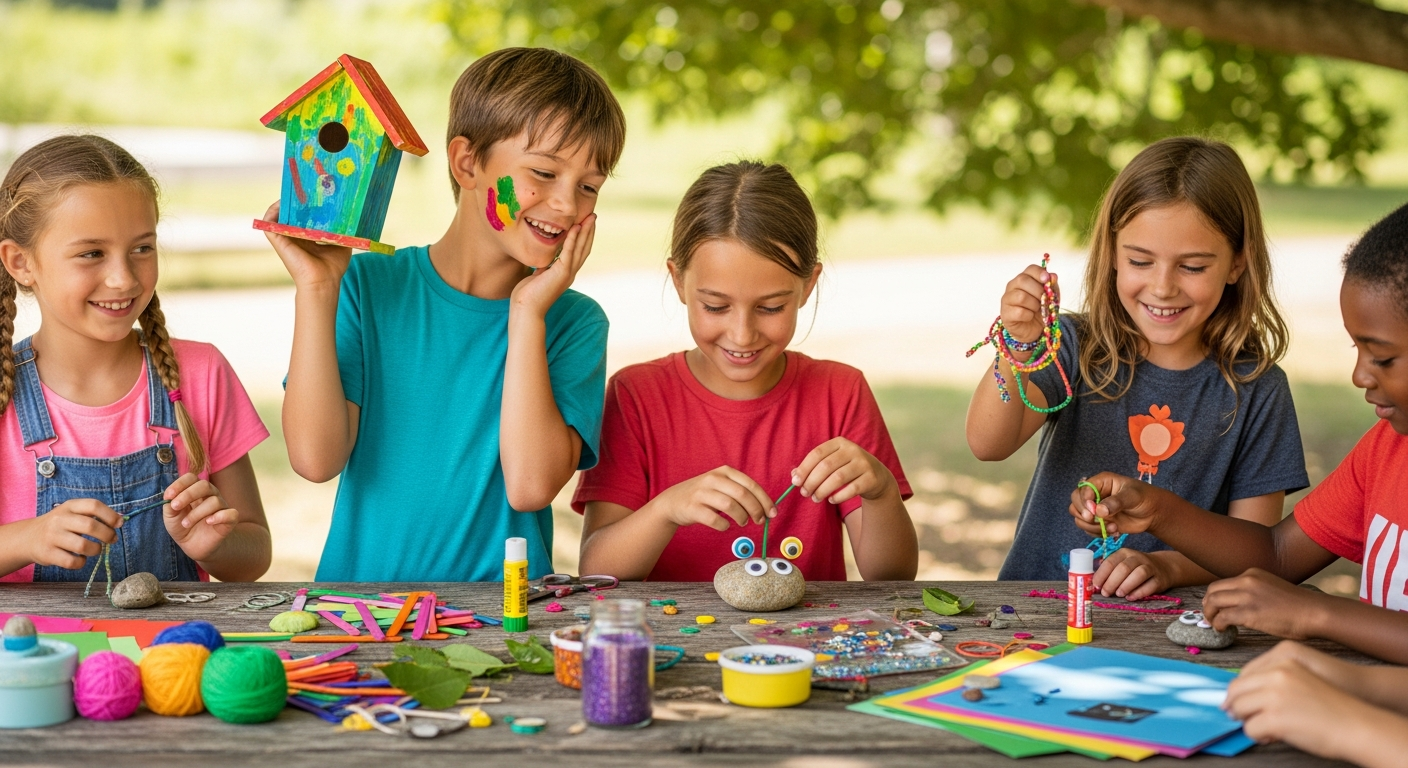
Table of Contents
- Introduction to the Power of Playful Creation
- Why Easy Crafts are Essential for Summer Development
- The Connection Between Crafts and Communication
- Our Favorite Easy Summer Camp Crafts for Kids
- The Speech Blubs Approach to Empowering Young Communicators
- Conclusion: A Summer Full of Speaking, Creating, and Connecting
- Frequently Asked Questions About Summer Crafts & Communication
Summer is a magical time for children, filled with long, sun-drenched days, outdoor adventures, and the boundless potential for creativity. Yet, many parents grapple with how to keep those young minds engaged and away from passive screen time. The solution doesn't have to be complicated or expensive. In fact, some of the most memorable and impactful summer activities are the simplest: easy summer camp crafts. These hands-on projects aren't just about making something pretty; they are powerful tools for developing crucial skills, fostering communication, and strengthening family bonds.
This comprehensive guide will dive into a treasure trove of simple, engaging craft ideas perfect for any summer setting—whether it's an organized camp, a backyard adventure, or a cozy afternoon indoors. We’ll explore how these crafts can spark imagination, refine fine motor skills, and, crucially, create abundant opportunities for language development and joyful communication. Get ready to transform everyday materials into extraordinary memories, all while nurturing your child's ability to express their unique minds and hearts.

Introduction to the Power of Playful Creation
Remember the thrill of bringing home a macaroni necklace or a painted rock from summer camp? That tangible piece of self-expression wasn't just a craft; it was a badge of accomplishment, a story waiting to be told. In a world increasingly dominated by digital interactions, the simple act of creating with one's hands offers profound benefits for children's holistic development. These easy summer camp crafts are more than just boredom busters; they are gateways to discovery, problem-solving, and self-expression. They invite children to explore textures, colors, and shapes, helping them make sense of their world in a tactile, engaging way.
Beyond the obvious artistic advantages, crafts are powerful catalysts for cognitive and linguistic growth. As children engage in crafting, they naturally practice following multi-step instructions, expand their vocabulary by naming materials and actions, and develop narrative skills as they describe their creations. For parents seeking to enrich their child's summer with meaningful activities, integrating these crafts provides a unique blend of fun, learning, and connection. And for children who might need a little extra support in expressing themselves, these creative endeavors create low-pressure environments where communication can flourish alongside artistic exploration.
Why Easy Crafts are Essential for Summer Development
The beauty of "easy" crafts lies in their accessibility and the reduced pressure they place on both children and parents. When a craft is straightforward, children are more likely to jump in, experiment, and feel a sense of accomplishment, even if the end result isn't "perfect." This fosters resilience and a willingness to try new things. For parents, easy crafts mean less setup, less cleanup, and more time enjoying the process with their child, rather than stressing over complicated instructions.
Moreover, easy crafts naturally integrate into everyday summer life. A nature walk can become a treasure hunt for craft materials, a rainy afternoon transforms into an art studio, and a quiet evening can feature storytelling with handmade props. These opportunities for spontaneous creativity are invaluable, providing consistent, joyful learning moments that are essential for development.

The Connection Between Crafts and Communication
At Speech Blubs, we understand that every child deserves to "speak their minds and hearts," and we believe that communication is intrinsically linked to all forms of play and learning. Our company was born from the personal experiences of our founders, who all grew up with speech problems and created the tool they wished they had—an immediate, effective, and joyful solution for the 1 in 4 children who need speech support. Crafts, much like our innovative app, blend scientific principles with play, offering unique "smart screen time" experiences that are a screen-free alternative to passive viewing.
How do crafts support communication?
- Vocabulary Expansion: Naming colors, shapes, materials, and actions (e.g., "cut," "glue," "paint," "smooth," "rough") enriches a child's lexicon.
- Following Directions: Multi-step crafts help children practice listening comprehension and sequential memory, crucial for understanding and producing complex sentences.
- Descriptive Language: Encouraging children to talk about their creations ("My birdhouse has a red roof and a tiny blue door!") builds their ability to use adjectives and expand their sentence structure.
- Narrative Skills: Creating a "story stone" or a puppet can naturally lead to imaginative storytelling, a foundational skill for communication and literacy.
- Social Interaction: When crafting with others, children learn to share, take turns, negotiate, and express ideas, boosting their social communication skills.
- Fine Motor Development: The intricate movements involved in cutting, gluing, and painting strengthen the small muscles in the hands, which also play a role in oral motor control and speech articulation.
By engaging in these easy summer camp crafts, parents create rich linguistic environments, fostering a love for communication and building confidence in a fun, natural way. And for those moments when you want to continue this learning journey with structured, engaging support, Speech Blubs is here to help children articulate their newfound ideas and build their confidence further. To see how Speech Blubs can complement your child’s development, explore our research-backed methodology and discover how our video modeling approach helps children learn by imitating their peers.
Our Favorite Easy Summer Camp Crafts for Kids
Let's dive into some fantastic craft ideas, broken down into categories for easy inspiration! For each craft, we’ll suggest simple supplies and highlight the developmental benefits, particularly for language and communication.
Nature-Inspired Creations: Bringing the Outdoors In
Nature provides an endless supply of free, exciting craft materials. These projects encourage children to observe their environment, connect with nature, and use natural elements in creative ways.
1. Nature Weaving
- What it is: Using a simple stick frame or a forked stick, children weave in found natural materials like leaves, flowers, grasses, and twigs.
- Supplies: Sticks (Y-shaped or two sticks tied into a cross), yarn or string, natural items (leaves, petals, feathers, small twigs).
- How to make it:
- Create a simple loom by tying yarn back and forth across a stick or between two sticks.
- Go on a nature walk to collect treasures. Encourage your child to describe what they see, hear, and feel. "Look at this rough bark!" "Can you find a soft feather?"
- Weave the collected items into the yarn, tucking them in to create a natural tapestry.
- Speech Blubs Connection: This craft is perfect for expanding descriptive vocabulary. Talk about the "smooth stone," the "fragrant flower," the "crinkly leaf." Asking open-ended questions like "What did you find that's red?" or "How does this leaf feel?" prompts descriptive answers. For a child learning to identify and name objects, our app offers engaging categories like "Animal Kingdom" or "Around the House" where they can practice these words through fun video modeling.
2. Painted Rocks & Story Stones
- What it is: Decorating smooth stones with paint to create art or characters for storytelling.
- Supplies: Smooth river stones, acrylic paints, paintbrushes, clear sealant (optional).
- How to make it:
- Collect smooth stones. Wash and dry them thoroughly.
- Paint simple images: animals, stars, suns, houses, cars, emotions (happy face, sad face). For younger kids, just let them freely paint!
- Once dry, apply a sealant to protect the paint.
- Speech Blubs Connection: Story stones are a goldmine for narrative development. Once the stones are painted, lay them out and encourage your child to pick a few and create a story using the images. "Once upon a time, a [cat stone] met a [sun stone]..." This fosters sequencing, imagination, and spontaneous language. If your child is a "late talker," using these visual prompts alongside an app like Speech Blubs, which features real kids modeling words and sounds, can be incredibly motivating.
3. Nature Mobiles
- What it is: Hanging various natural elements from a stick or hoop to create a decorative mobile.
- Supplies: A sturdy stick or embroidery hoop, string, found natural objects (pinecones, shells, dried leaves, acorns, feathers).
- How to make it:
- Tie several pieces of string of varying lengths to the main stick or hoop.
- Attach collected natural items to the ends of the strings. Use glue, tie knots, or poke small holes (adult supervision for poking).
- Hang the mobile outdoors or by a window.
- Speech Blubs Connection: This craft provides opportunities for practicing prepositions ("above," "below," "next to") and comparative language ("This pinecone is bigger than that one"). You can also count the items as you hang them. For kids working on their consonant clusters or multisyllabic words, describing "pinecone" or "feather" repeatedly helps with articulation practice.
4. Leaf Painting & Rubbings
- What it is: Using leaves as stencils, stamps, or for creating texture rubbings.
- Supplies: Various leaves with prominent veins, paper, paint (tempera or acrylic), crayons.
- How to make it:
- Painting: Place leaves on paper, paint over them, then remove for a stencil effect. Or, paint directly onto the leaf and press it onto paper like a stamp.
- Rubbings: Place a leaf under a piece of paper. Rub the side of a crayon over the paper to reveal the leaf's texture. Create a collage with multiple rubbings.
- Speech Blubs Connection: Discuss the different shapes of leaves ("pointy," "round," "jagged") and their textures ("bumpy," "smooth"). Talk about the colors used and how they blend. This visual and tactile exploration enhances vocabulary related to attributes.
Wearable & Keepsake Crafts: Cherished Memories
These crafts create tangible reminders of summer fun, often worn or displayed, offering a sense of pride and accomplishment.
5. Friendship Bracelets
- What it is: Weaving colorful embroidery floss into unique patterns to create bracelets.
- Supplies: Embroidery floss in various colors, scissors.
- How to make it:
- Teach simple knot-tying techniques (e.g., square knot, candy stripe).
- Guide children in choosing colors and creating patterns.
- Speech Blubs Connection: Friendship bracelets are wonderful for discussing colors, patterns, and sequencing. "First, we make a knot with the blue thread, then the yellow." They also promote social skills when children make them for friends, encouraging conversations about giving, sharing, and appreciation. For parents observing their child's progress, sharing a positive testimonial about their communication journey can be incredibly inspiring for others.
6. Tie-Dye Shirts
- What it is: Folding, twisting, and tying fabric before applying vibrant dyes to create unique patterns.
- Supplies: Plain white cotton t-shirts (or bandanas), tie-dye kit (includes dyes, rubber bands, gloves), plastic bags.
- How to make it:
- Pre-wash shirts.
- Teach different folding/tying techniques (spiral, crumple, bullseye).
- Apply dyes according to kit instructions. Talk about the color choices and the expected patterns.
- Let sit, then rinse, wash, and reveal!
- Speech Blubs Connection: This messy, magical process is fantastic for verb practice ("twist," "squeeze," "drip," "rinse") and color vocabulary. Children can describe their "swirly" or "striped" shirts. It's a great opportunity to talk about cause and effect ("If we put blue and yellow close, they might make green!"). For a parent whose child struggles with expressive language, describing the steps of tie-dying can be an excellent low-pressure exercise.
7. Popsicle Stick Picture Frames
- What it is: Decorating popsicle sticks to create a frame for a favorite camp photo.
- Supplies: Popsicle sticks, glue, paint, markers, glitter, small beads, a favorite photo.
- How to make it:
- Arrange popsicle sticks into a square or rectangle and glue them together.
- Decorate the frame using paints, markers, glitter, or other embellishments.
- Once dry, glue a photo to the back.
- Speech Blubs Connection: This craft is perfect for discussing memories ("Who is in this picture? What were we doing?"). It encourages children to narrate past events, which strengthens their past tense usage and sequencing skills. Describing the decorations on the frame also expands descriptive vocabulary.
Sensory & Process Art Crafts: Exploring Textures and Techniques
These crafts emphasize the experience of creating and exploring different materials, making the process as valuable as the product.
8. Puffy Paint Art
- What it is: Creating a fluffy, textured paint that dries puffy.
- Supplies: Elmer's school glue, foam shaving cream, food coloring, cardstock paper, paintbrushes or spoons.
- How to make it:
- Mix equal parts shaving cream and glue in a bowl. Add a few drops of food coloring for desired color. Repeat for multiple colors.
- Children use spoons or brushes to create designs on cardstock.
- Let dry for a few hours to achieve the puffy texture.
- Speech Blubs Connection: This sensory craft is fantastic for exploring adjectives related to texture ("fluffy," "soft," "smooth") and states ("wet," "dry," "puffy"). Talk about the process: "We are mixing the glue and shaving cream." "Now we are painting the picture." For children who enjoy tactile experiences, this is a fun way to engage them while subtly encouraging verbal interaction.
9. Salt Painting
- What it is: Drawing with glue, sprinkling with salt, and then painting with watercolors to create vibrant, textured art.
- Supplies: Cardstock paper, white school glue, table salt, watercolors, paintbrush.
- How to make it:
- Draw a picture on cardstock with glue (thicker lines work best).
- Generously sprinkle salt over the glue, then shake off the excess onto a tray.
- Use watercolors to touch the salt lines. Watch the color spread!
- Speech Blubs Connection: This visually engaging craft introduces concepts of absorption and color blending. Children can describe the "sparkling" salt and the "spreading" colors. It's a great opportunity to practice verbs related to the actions ("squeeze," "sprinkle," "shake," "paint"). For children who are building their early vocabulary, naming the colors and the shapes they create offers rich practice.
10. Ice Paints
- What it is: Painting with frozen, colored ice cubes.
- Supplies: Washable paint, water, ice cube tray, popsicle sticks, cardstock paper.
- How to make it:
- Add a small amount of washable paint to each section of an ice cube tray.
- Fill with water and stir gently. Place a half popsicle stick in each section.
- Freeze overnight.
- Pop out the ice paints and use them to draw on cardstock.
- Speech Blubs Connection: This craft engages multiple senses and provides a direct opportunity to talk about temperature ("cold," "freezing," "melting"). Children can describe the colors, the lines they create, and the sensation of the melting ice. "The blue ice is melting onto the paper!" This supports expressive language and understanding of cause and effect.
Functional & Playful Crafts: For Imaginative Adventures
These crafts result in items that children can actively play with or use, extending the creative fun beyond the making process.
11. DIY Boat Crafts
- What it is: Making simple boats from household items like sponges, pool noodles, or wine corks for water play.
- Supplies: Pool noodles, wine corks, sponges, small rubber bands, skewers, foam paper, scissors (adult supervision).
- How to make it:
- Pool Noodle Boats: Cut pool noodle into small disks. Cut foam paper into a triangle sail. Attach sail to a skewer, then poke skewer through noodle.
- Wine Cork Boats: Bundle 3 wine corks together with rubber bands. Poke a skewer with a foam sail through the middle cork.
- Sponge Boats: Cut a sponge into a boat shape. Poke a skewer with a foam sail through it.
- Test them in a basin of water, bathtub, or pool!
- Speech Blubs Connection: This craft is perfect for imaginative play and action verbs related to water ("float," "sink," "blow," "splash"). Children can name their boats, describe their designs, and create scenarios for their boats to "sail" through. For example, "My red boat is sailing to the island!" These activities naturally encourage children to develop their narrative skills and use their words in context.
12. Plate Sunshine (Alphabet Practice)
- What it is: A cheerful sun craft using a paper plate and clothespins to practice letter matching.
- Supplies: Paper plate, yellow acrylic paint, yellow clothespins, Sharpie.
- How to make it:
- Paint the paper plate yellow and let it dry. Draw a happy face on the sun.
- Write uppercase letters around the edge of the plate.
- Write corresponding lowercase letters on the clothespins.
- Children match the lowercase clothespins to the uppercase letters on the sun.
- Speech Blubs Connection: This craft is fantastic for early literacy and letter recognition, which are foundational to speech and reading. Children say the letters aloud as they match them, reinforcing phonetic awareness. It also works on fine motor skills crucial for speech. In our app, we offer Reading Blubs (exclusive to the Yearly plan), which provides a parallel path for early reading skills, working hand-in-hand with speech development.
13. Sponge Balls
- What it is: Transforming sponges into reusable "water balloons" for outdoor water play.
- Supplies: Sponges, scissors, twine or rubber bands.
- How to make it:
- Cut each sponge lengthwise into 4 strips.
- Stack 8 strips (from two sponges) and tie them tightly in the middle with twine or a rubber band. Fluff them out to form a ball.
- Take them outside, dip in water, and play!
- Speech Blubs Connection: This craft encourages action verbs related to play ("throw," "catch," "squeeze," "splash") and adjectives like "wet" and "soft." It's a great way to facilitate outdoor communication and social interaction, encouraging children to articulate rules or describe their play.
Recycled & Upcycled Art: Giving New Life to Old Things
These crafts teach children about sustainability and creative reuse, turning "trash" into treasure.
14. Mason Jar Lanterns
- What it is: Decorating mason jars to hold battery-powered tea lights, creating charming nightlights.
- Supplies: Mason jars, paint (acrylic or glass paint), tissue paper, glue, glitter, battery-powered tea lights, wire (for handles, optional).
- How to make it:
- Clean and dry mason jars.
- Decorate the jars by painting, gluing tissue paper in a mosaic pattern, or adding glitter.
- Once dry, place a battery-powered tea light inside. Add a wire handle for hanging.
- Speech Blubs Connection: This craft is wonderful for discussing light and shadow, colors, and patterns. Children can describe the "sparkling" glitter, the "glowing" light, and how their lantern makes them feel ("cozy," "magical"). This encourages imaginative and descriptive language.
15. Recycle Art Sculptures
- What it is: Creating sculptures or collages using various recycled materials.
- Supplies: Cardboard tubes, bottle caps, plastic containers, old magazines, fabric scraps, glue, tape, scissors, paint.
- How to make it:
- Collect a variety of clean, safe recycled materials.
- Encourage children to explore the shapes, sizes, and textures of the materials.
- Use glue and tape to connect the items, forming abstract sculptures, robots, animals, or imaginary creatures.
- Speech Blubs Connection: This project is a fantastic exercise in divergent thinking and problem-solving. Children can name the recycled items and describe how they are transforming them. "The toilet paper roll is the body, and these bottle caps are the eyes of my robot!" This supports categorization, descriptive language, and imaginative storytelling. For parents looking for a simple tool to assess their child's communication progress, our quick 3-minute preliminary screener offers an immediate assessment and next-steps plan.
The Speech Blubs Approach to Empowering Young Communicators
Just as these crafts provide a foundation for creative expression and skill development, Speech Blubs offers a dynamic platform for speech and language growth. Our mission is to empower children to "speak their minds and hearts," and we achieve this through a unique blend of scientific principles and play. We understand the challenges families face, as our founders personally experienced speech difficulties and designed the tool they wished they had. We are committed to providing an immediate, effective, and joyful solution for the 1 in 4 children who need speech support.
Our approach centers on "video modeling," where children learn by watching and imitating their peers. This natural learning method is incredibly effective because children are hardwired to mimic. Instead of passive viewing, our app provides "smart screen time" experiences that are interactive and engaging, encouraging active participation and communication. This can be a powerful supplement to a child's overall development plan and, when applicable, professional therapy, providing consistent, motivating practice.
We focus on building confidence, fostering a love for communication, and reducing frustration, offering realistic expectations for growth. While we don't promise your child will be giving public speeches in a month, we do promise to support them in developing key foundational skills and creating joyful family learning moments. We believe in co-play and support, encouraging adults to engage with children during app use, turning screen time into a powerful tool for family connection.
Unlocking the Full Potential with Speech Blubs: Our Value-Packed Yearly Plan
We want every child to have the best opportunity to thrive, which is why we offer flexible plans for Speech Blubs. For the ultimate value and an enriched experience, we highly recommend our Yearly plan.
Here's a transparent look at our pricing and what you get:
- Monthly Plan: $14.99 per month. This plan offers access to our core speech and language activities.
- Yearly Plan: $59.99 per year. This breaks down to just $4.99 per month, allowing you to save 66% compared to the monthly option!
But the savings are just the beginning. The Yearly plan is our clear best choice because it includes exclusive, high-value features designed to accelerate your child's progress:
- 7-Day Free Trial: Experience the full power of Speech Blubs before committing. The Monthly plan does not include a free trial.
- The Extra Reading Blubs App: This fantastic companion app is included, providing an additional layer of support for early literacy and reading skills.
- Early Access to New Updates: Be the first to try out new features and content as we continuously evolve our app.
- 24-Hour Support Response Time: Get your questions answered quickly and efficiently by our dedicated support team.
The Monthly plan does not include these additional benefits, making the Yearly plan the superior choice for comprehensive support and value.
Ready to see the difference Speech Blubs can make? We invite you to create your account and begin your 7-day free trial today! Make sure to select the Yearly plan to unlock all these amazing features and give your child the best start to their communication journey. Alternatively, you can download Speech Blubs directly on the App Store or Google Play to explore the world of smart screen time.
Conclusion: A Summer Full of Speaking, Creating, and Connecting
Easy summer camp crafts are more than just simple activities; they are invaluable opportunities to foster creativity, build confidence, and profoundly support a child's speech and language development. From the textured wonders of puffy paint to the storytelling magic of painted rocks, each craft offers a unique pathway for children to explore, express, and articulate their thoughts and feelings. By engaging in these joyful creations, parents provide rich environments that naturally encourage vocabulary expansion, descriptive language, narrative skills, and crucial fine motor development, all while creating lasting family memories.
At Speech Blubs, we stand with you in this journey of nurturing young communicators. Our mission to empower children to "speak their minds and hearts" aligns perfectly with the spirit of these engaging crafts. Just as crafting fosters hands-on learning, our app provides "smart screen time" that actively engages children through video modeling, making learning to communicate fun and effective. Together, through creative play and targeted support, we can help children build the foundational skills they need to confidently express themselves.
Don't let this summer pass without igniting your child's creative spark and fueling their communication journey. We encourage you to download Speech Blubs today on the App Store or Google Play Store to start your 7-day free trial. Remember to choose the Yearly plan to unlock exclusive benefits like the Reading Blubs app and priority support, ensuring your child gets the most comprehensive and valuable experience possible. Let's make this a summer of joyful creation and confident communication!
Frequently Asked Questions About Summer Crafts & Communication
Q1: What are the main benefits of doing easy summer crafts with my child?
A1: Easy summer crafts offer a multitude of benefits, including enhancing fine motor skills, fostering creativity and imagination, developing problem-solving abilities, and boosting self-esteem through accomplishment. Crucially, they create natural opportunities for language development, allowing children to expand vocabulary, practice following directions, use descriptive language, and engage in storytelling. These activities also provide valuable bonding time for families and a screen-free way to engage children during summer.
Q2: How can I encourage my child to talk more while we're doing crafts?
A2: To encourage more communication during crafts, make it a collaborative activity. Ask open-ended questions like "What color should we use next?" or "How does that feel?" Describe your own actions and observations ("I'm cutting the paper carefully. It feels a little rough."). Encourage them to narrate their process ("First, I glue the sticks, then I paint them.") and to describe their finished creation. Don't correct errors directly; instead, model the correct language by repeating their sentences with the correct word or structure. For a child needing extra support, Speech Blubs provides a fun environment for practicing words and sounds through video modeling, complementing these real-world interactions.
Q3: My child gets frustrated easily when crafts don't turn out "perfectly." How can I help?
A3: Focus on the process, not just the product. Emphasize that crafting is about exploring and having fun, not about making something flawless. Talk about how mistakes can lead to new ideas or unique designs. You can model this by making a "mistake" yourself and showing how you adapt. Provide easy, open-ended crafts where there's no single "right" way for things to look, such as painted rocks or nature collages. Celebrating their effort and unique choices will build their confidence and reduce the pressure for perfection.
Q4: How does Speech Blubs fit into a summer routine that includes crafts and other activities?
A4: Speech Blubs is designed to be a powerful, joyful supplement to your child's overall development, blending seamlessly into a summer routine. While crafts offer tactile and social learning, our app provides structured, engaging "smart screen time" that reinforces speech and language skills. For instance, after making animal crafts, your child can practice animal sounds and names with real kids in the Speech Blubs app. It's a convenient, scientifically-backed tool for consistent practice, especially beneficial for children who need speech support, providing a screen-free alternative to passive viewing. Our Yearly plan offers a 7-day free trial and includes the Reading Blubs app for even more comprehensive support.
About the author