
Easy Thanksgiving Crafts for Kids That Spark Joy and Language
 By Speech Blubs Team•Jan 13, 2026•19 min.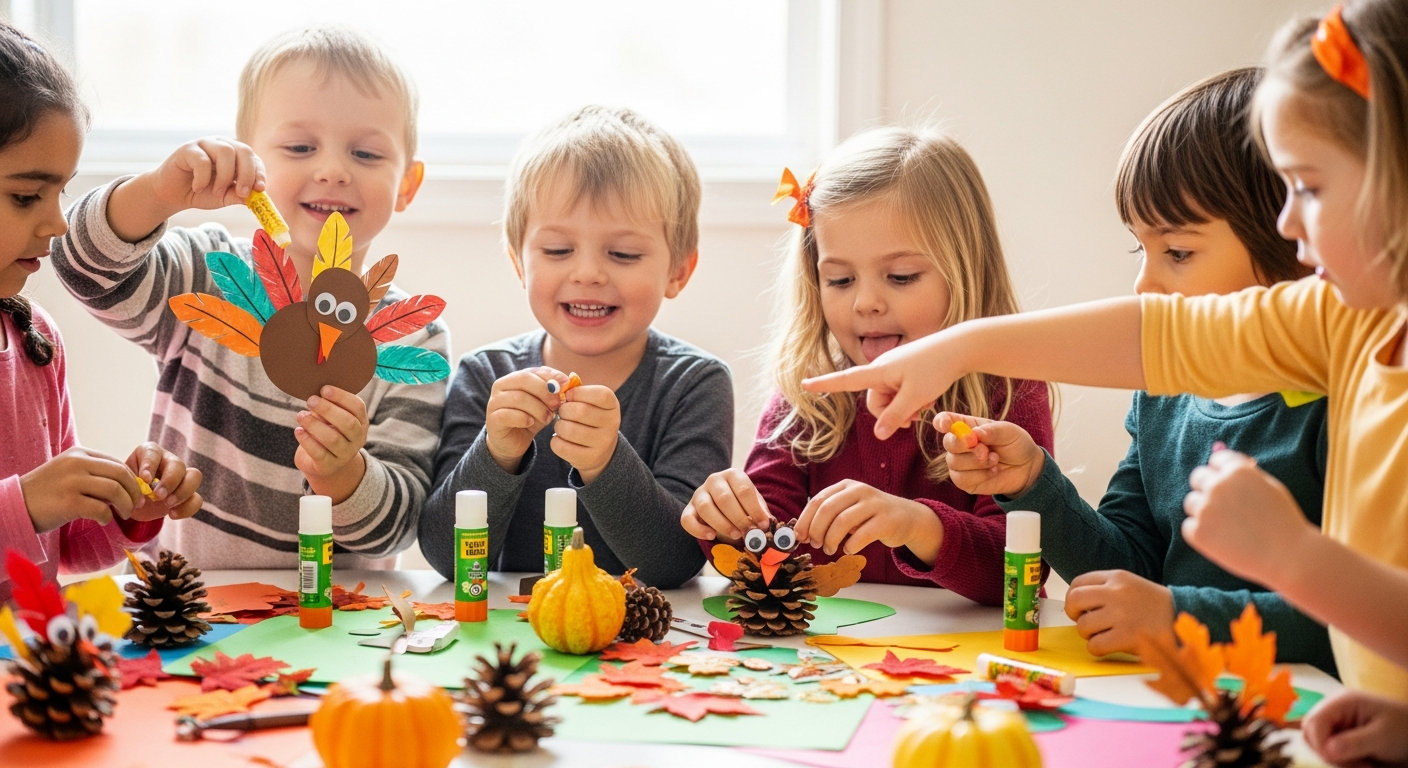
Table of Contents
- Introduction
- The Developmental Harvest: Why Crafts Are More Than Just Fun
- A Feast of Easy Thanksgiving Crafts for Kids
- Making the Most of Craft Time: Tips for Parents
- Empowering Communication with Speech Blubs
- Conclusion
- FAQ
The air fills with the aroma of spices, the crackle of autumn leaves, and the joyous (and sometimes chaotic) sounds of family gathering. Thanksgiving is a cherished time, a moment to pause, reflect, and connect. But for many parents, the holiday also brings a familiar question: How do we keep our little ones happily engaged amidst the cooking, catching up, and football? The answer, as we've discovered time and again, often lies in the simple, magical world of easy Thanksgiving crafts for kids.
This isn't just about occupying tiny hands; it's about creating cherished memories, fostering crucial developmental skills, and opening up a world of communication. In this comprehensive guide, we'll dive into a treasure trove of simple, delightful Thanksgiving crafts that are not only fun but also incredibly beneficial for your child's growth. We’ll explore how these hands-on activities become powerful platforms for language development, emotional expression, and fine motor skill enhancement, seamlessly connecting to the mission we champion at Speech Blubs. Get ready to transform your Thanksgiving prep into a canvas of creativity and connection!

Introduction
Imagine the scene: the kitchen is a whirlwind of activity, delightful scents waft through the air, and suddenly, a small voice pipes up, "I'm bored!" Sound familiar? Thanksgiving, while wonderful, can be a long day for little ones, caught between adult conversations and the anticipation of a grand feast. This is where the magic of easy Thanksgiving crafts for kids steps in. More than just a time-filler, crafting offers a unique opportunity for children to participate in the holiday preparations, express their creativity, and, perhaps most importantly, develop vital communication skills.
At Speech Blubs, we believe every child deserves to find their voice, to speak their minds and hearts. Our journey began with our founders, who, having personally experienced speech challenges in childhood, envisioned and built the tool they wished they had. This blog post isn't just a list of fun activities; it's an invitation to see Thanksgiving crafting as a powerful, play-based approach to nurturing your child's overall development, including their communication journey. We’ll explore how engaging in simple crafts can naturally boost fine motor skills, encourage descriptive language, and build confidence, making it a perfect complement to the "smart screen time" experiences we provide.
The Developmental Harvest: Why Crafts Are More Than Just Fun
Crafting is far more than just sticking things together. It's a holistic activity that taps into multiple areas of a child's development, laying foundational groundwork for future learning and social interaction.
Nurturing Fine Motor Skills and Coordination
From gripping a crayon to snipping with scissors, spreading glue, or placing tiny googly eyes, nearly every craft activity is a workout for small hands and fingers. These repetitive, precise movements are essential for developing:
- Pincer Grasp: Holding small objects, crucial for writing later on.
- Hand-Eye Coordination: Aligning actions with what they see.
- Bilateral Coordination: Using both hands together, like holding paper with one hand and cutting with the other.
These skills are fundamental for self-care tasks, academic readiness, and even for the precise muscle movements required for clear articulation in speech.

Boosting Cognitive Development and Problem-Solving
Crafts present mini-challenges that children solve through creativity and logic:
- Following Instructions: Listening to or interpreting steps in a sequence.
- Decision-Making: Choosing colors, materials, or where to place an element.
- Spatial Reasoning: Understanding how pieces fit together in space.
- Creativity and Imagination: Transforming simple materials into something new and unique.
When a child decides how to make their paper plate pie look like "cherry" or figures out how to make a pinecone turkey stand, they are actively engaging their brains in problem-solving scenarios.
Fostering Emotional Expression and Self-Esteem
The process of creating something tangible from their imagination is incredibly rewarding for children:
- Self-Expression: Using colors, shapes, and textures to convey feelings or ideas.
- Patience and Persistence: Working through a project from start to finish.
- Sense of Accomplishment: The pride in showing off their completed masterpiece.
This sense of achievement significantly contributes to a child's self-esteem and confidence, which in turn empowers them to be more vocal and expressive in other areas of their lives.
Unlocking Language and Communication Opportunities
Here’s where easy Thanksgiving crafts for kids truly shine as a powerful tool for language development. Every step of a craft is ripe with opportunities for conversation, vocabulary building, and expressive language practice.
- Descriptive Language: "This paint is red and sticky!" "The leaf feels crunchy." "Can I have the long, yellow ribbon?"
- Following Directions: "First, we glue the body, then the feathers." "Put the eyes above the beak."
- Asking and Answering Questions: "What should we make next?" "How does a turkey sound?" "Where does the pumpkin pie go?"
- Vocabulary Expansion: Introducing words like "gobble," "harvest," "gratitude," "cornucopia," "feast," and the names of various craft materials.
- Narrative Skills: Encouraging children to describe the steps they took, tell a story about their creation, or explain what they are thankful for.
- Social Interaction: Collaborating on a craft, sharing supplies, and discussing ideas with siblings or parents.
For a parent whose 3-year-old "late talker" loves animals, making a footprint turkey becomes a fun, motivating way to practice sounds like "gobble gobble," identify colors, and imitate actions. These interactions create valuable "smart screen time" moments that we champion at Speech Blubs, providing a screen-free alternative to passive viewing and a powerful tool for family connection.
A Feast of Easy Thanksgiving Crafts for Kids
Let's roll up our sleeves and explore some delightful, easy Thanksgiving crafts that promise fun, learning, and plenty of opportunities for communication.
1. Handprint and Footprint Turkeys: Timeless Keepsakes
Nothing captures a child’s growth quite like a handprint or footprint craft. These iconic turkeys are not only adorable but also provide endless language practice.
Supplies:
- Washable paint (brown, red, orange, yellow, green)
- Paper or small canvas
- Googly eyes
- Glue
- Optional: construction paper for extra feathers, crayons/markers
Directions:
- Feather Fun: Help your child paint their palm with different fall colors, or paint individual fingers in stripes. Press onto paper to create colorful "feathers." Alternatively, for a footprint turkey, paint fingers (or use paper cut-outs) for feathers.
- Turkey Body: Paint the bottom of your child's foot brown and carefully press it in the center of the painted feathers for the turkey's body. For handprint versions, paint their palm brown and press it above the colorful "feathers" made by their other hand's print or paper cut-outs.
- Details: Once dry, glue on googly eyes. Use orange paint or a marker for a small triangle beak and a red wattle (the dangly bit under the beak!).
- Personal Touch: Write your child's name and the year on the craft.
Communication Opportunities:
- Colors & Body Parts: "What color are we using for your thumb?" "Where is your foot going?"
- Sensory Language: "How does the squishy paint feel?" "Is it cold?"
- Action Words: "Let's paint!" "Time to press!" "Now we glue the eyes."
- Sound Imitation: "What sound does a turkey make? Gobble gobble!"
2. Paper Plate Pie Craft: A Sweet Pretend Play Treat
Pie is a Thanksgiving staple, and this craft allows children to "bake" their own, sparking imaginative play and fine motor development.
Supplies:
- Paper plates
- Construction paper (brown for crust, various colors for filling like red for cherry, orange for pumpkin, green for apple)
- Cotton balls or white pom-poms for "whipped cream"
- Glue stick or liquid glue
- Scissors (child-safe)
Directions:
- Crust Base: Cut a paper plate in half to form the base of the pie slice.
- Filling: Let your child tear or cut strips/shapes from colored construction paper (e.g., orange for pumpkin, red for cherry). Glue these pieces onto the paper plate half. Tearing paper is excellent for developing finger strength!
- Top Crust (Optional): Cut thin strips of brown construction paper to create a lattice top for the pie and glue them over the filling.
- Whipped Cream: Glue cotton balls or white pom-poms onto the edge for a dollop of "whipped cream."
Communication Opportunities:
- Concepts: "This is a half circle, like a slice of pie!" "The glue is sticky."
- Pretend Play: "What kind of pie did you bake?" "Should we share our pie?" "Let's pretend to eat it!"
- Descriptive Words: "This pie is sweet and orange!" "The 'whipped cream' is so fluffy!"
3. Nature Turkeys: Exploring the Outdoors
Combine a nature walk with crafting by collecting fallen leaves and pinecones for these charming turkeys.
Supplies:
- Pinecones (collected from outside)
- Assorted colorful leaves (real or artificial, collected or craft store)
- Googly eyes
- Small piece of orange felt or paper for beak, red for wattle
- Glue (liquid glue works best for pinecones)
Directions:
- Gathering: Go for a walk and collect various sizes and colors of leaves, and some pinecones. Talk about what you see, hear, and feel.
- Feather Arrangement: Have your child arrange the leaves on the back of the pinecone, tucking them into the scales, to create a fanned "tail." Glue them in place if they don't hold.
- Face: Glue googly eyes onto the wider end of the pinecone. Cut a small orange triangle for the beak and a tiny red blob for the wattle, then glue them below the eyes.
- Stand Tall: Ensure the pinecone can stand on its own, perhaps by gluing it to a small cardboard base if needed.
Communication Opportunities:
- Nature Vocabulary: "Look at this crinkly leaf!" "What kind of tree do you think this came from?" "This pinecone is so bumpy."
- Comparison: "Which leaf is bigger?" "Do you have a red leaf like mine?"
- Prepositions: "Put the leaf on the pinecone." "The beak goes under the eyes."
- Imagination: "Where do you think this turkey lives?"
4. Gratitude Crafts: Expressing Thankfulness
Thanksgiving is all about gratitude. Crafts focused on thankfulness provide a wonderful way for children to reflect on their blessings and articulate their feelings.
A. Thankful Tree
Supplies:
- Small branches (collected from outside)
- Vase or sturdy container
- Construction paper (fall colors)
- Hole punch
- String or ribbon
- Markers or crayons
Directions:
- Branch Base: Arrange the branches in a vase.
- Leaf Tags: Cut leaf shapes from construction paper.
- Gratitude Prompts: Help your child think about things they are thankful for. For younger children, you can prompt them ("What makes you happy?"), or write down what they say. For older children, they can write it themselves.
- Hang 'Em Up: Punch a hole in each leaf, thread with string, and hang them on the branches.
Communication Opportunities:
- Emotional Vocabulary: "What are you grateful for?" "What makes you happy?" "How do you feel when you think about that?"
- Narrative Skills: "Tell me about why you're thankful for your pet."
- Sentence Expansion: Moving from "Mommy" to "I am thankful for Mommy."
B. Turkey Place Settings
Supplies:
- Construction paper (fall colors)
- Scissors
- Glue
- Markers
- Googly eyes (optional)
Directions:
- Body: Cut a brown oval for the turkey's body.
- Feathers: Cut various colored paper strips or leaf shapes for feathers.
- Assemble: Glue the feathers to the back of the turkey's body. Add eyes, beak, and wattle.
- Personalize: Write each guest's name on the turkey's body. On the back, encourage your child to write or draw something they are thankful for about that person.
Communication Opportunities:
- Social Skills: Practicing saying a guest's name. Discussing why they appreciate that person.
- Vocabulary: "Guest," "place setting," "thankful."
- Expressing Affection: "What do you like about Grandma?"
5. Toilet Paper Roll Turkeys: Repurposing Fun
A classic craft that's wonderfully versatile and uses recycled materials!
Supplies:
- Empty toilet paper rolls
- Construction paper (fall colors for feathers, brown for body, orange/red for face details)
- Googly eyes
- Glue stick or liquid glue
- Scissors (child-safe)
Directions:
- Body Base: You can either leave the toilet paper roll as is or wrap it in brown construction paper and glue it down.
- Feathers: Cut out several colorful feather shapes from construction paper. Encourage a variety of colors and sizes.
- Assemble: Glue the feathers to the back of the toilet paper roll.
- Face: Glue googly eyes near the top front of the roll. Cut a small orange triangle for the beak and a tiny red wattle, then glue them below the eyes.
- Imaginative Play: Once dry, these turkeys make great puppets for storytelling!
Communication Opportunities:
- Sequence: "First, we cut the feathers, then we glue them."
- Character Voices: Using different voices for the turkey.
- Describing Actions: "The turkey is waving!" "He is eating."
6. Leaf Suncatchers: Window Wonders
Capture the beauty of fall leaves with these simple, dazzling suncatchers.
Supplies:
- Clear contact paper
- Assorted fall-colored tissue paper (red, orange, yellow, green)
- Black construction paper
- Leaf template (you can draw or print one)
- Scissors (child-safe)
- Hole punch and string for hanging
Directions:
- Tear and Create: Have your child tear small pieces of tissue paper. This is fantastic for fine motor skills!
- Sticky Canvas: Peel one side of the contact paper and lay it sticky-side up. Let your child arrange and press the torn tissue paper onto the sticky surface.
- Seal: Once covered, place another piece of contact paper (sticky-side down) on top to seal the tissue paper in.
- Leaf Shape: Use the leaf template to draw a leaf shape on black construction paper. Cut out the leaf shape, leaving a border (frame). You can also cut out a leaf shape from the contact paper "sandwich."
- Display: Punch a hole and hang your beautiful suncatcher in a window.
Communication Opportunities:
- Colors & Shapes: "What color is this tissue paper?" "It's a leaf shape!"
- Sensory: "The contact paper is sticky." "The tissue paper is so light."
- Descriptive: "The sun is making the leaves look so bright!"
Making the Most of Craft Time: Tips for Parents
To truly maximize the developmental and communication benefits of these easy Thanksgiving crafts for kids, consider these tips:
- Ask Open-Ended Questions: Instead of "Is that red?", try "What color did you choose here?" or "Tell me about your turkey." This encourages more than a yes/no answer.
- Describe Everything: Narrate your actions and your child's actions. "I'm cutting the long, red strip." "You are carefully gluing the eyes."
- Focus on the Process, Not Just the Product: Celebrate the effort and creativity, not just how "perfect" the finished craft is. This reduces pressure and encourages exploration.
- Connect to Daily Life: Talk about where turkeys live, what pies taste like, or why we celebrate Thanksgiving. "We are making a turkey for Thanksgiving, just like the big one we will eat!"
- Patience and Encouragement: Children learn at their own pace. Your positive encouragement is key to building their confidence.
These natural, joyful interactions during craft time are incredibly powerful. They create a rich language environment that significantly contributes to communication development. For children who need a little extra support, these moments can be amplified and reinforced by tools designed to build those foundational skills.
Empowering Communication with Speech Blubs
At Speech Blubs, we understand that every child's communication journey is unique. Our mission is to provide an immediate, effective, and joyful solution for the 1 in 4 children who need speech support, blending scientific principles with play into one-of-a-kind "smart screen time" experiences. We know firsthand the challenges families face, as our company was born from the personal experiences of our founders, who all grew up with speech problems and created the tool they wished they had.
Our app is a screen-free alternative to passive viewing (like cartoons) because it actively engages children through our unique video modeling methodology. Children learn by watching and imitating their peers, a natural and highly effective way to develop complex communication skills. Imagine a child learning to articulate sounds or express gratitude by seeing and hearing other children do it – it's incredibly motivating! This mirrors the way children naturally learn from each other in real-life play situations, making Speech Blubs a powerful tool for family connection.
How Speech Blubs Complements Crafting Fun
- Vocabulary Expansion: After a craft like the "Paper Plate Pie," Speech Blubs offers sections like "Food Fun" or "Shapes & Colors" to reinforce new words in a dynamic, interactive setting.
- Following Directions: The app guides children through sequences of actions, strengthening their ability to understand and execute multi-step instructions, a skill practiced during crafting.
- Expressing Emotions: Through various activities, children learn to identify and verbalize feelings, which can then be applied when discussing what they are thankful for in gratitude crafts.
- Sound Production: Many crafts involve making animal sounds (turkey gobble), vehicle sounds, or descriptive sounds, all of which are targeted and practiced within Speech Blubs’ extensive library of activities.
- Building Confidence: Just as completing a craft builds a child's self-esteem, success within the Speech Blubs app empowers them to communicate more freely and confidently in all aspects of their lives.
Unsure if your child could benefit from Speech Blubs? We’ve made it easy to find out. Take our quick 3-minute preliminary screener which involves 9 simple questions. You’ll receive an immediate assessment and a personalized next-steps plan. It’s a great way to understand your child's communication needs and how Speech Blubs can support their development, often leading directly to a free 7-day trial. You can also see what other parents are saying about their child's success with Speech Blubs.
Discover the Full Value of Speech Blubs
We believe in making high-quality speech and language support accessible to every family. That’s why we offer flexible plans, designed to fit your needs.
Our Monthly Plan is available for $14.99 per month. It's a great way to start exploring the app and all its engaging activities.
However, for the best value and a truly comprehensive experience, we highly recommend our Yearly Plan at just $59.99 per year. That breaks down to an incredible $4.99 per month, allowing you to save 66% compared to the monthly subscription!
The Yearly Plan isn't just cheaper; it unlocks a suite of exclusive, high-value features designed to supercharge your child's development:
- 7-Day Free Trial: Experience the full power of Speech Blubs completely risk-free for a whole week. The Monthly plan does not include this benefit.
- The Extra Reading Blubs App: Gain full access to our complementary Reading Blubs app, fostering early literacy skills alongside speech development. The Monthly plan does not include this benefit.
- Early Access to New Updates: Be among the first to explore new games, activities, and features as soon as they're released.
- 24-Hour Support Response Time: Get your questions answered quickly and efficiently by our dedicated support team, ensuring a smooth and rewarding experience.
Ready to provide your child with joyful, effective speech and language development support? Choose the Yearly plan to get your 7-day free trial and the full suite of features!
You can download Speech Blubs directly from your app store:
Conclusion
This Thanksgiving, let's embrace the simple joys and profound benefits of easy Thanksgiving crafts for kids. From the tactile experience of making a handprint turkey to the thoughtful reflection of a gratitude tree, these activities are more than just ways to pass the time; they are vital opportunities for your child to develop fine motor skills, boost cognitive abilities, express emotions, and most importantly, build foundational communication skills.
These playful, interactive moments are exactly what we champion at Speech Blubs. We're here to support every child's unique journey to find their voice, and our app serves as a powerful supplement to these real-world learning experiences. By combining hands-on creativity with our engaging, science-backed "smart screen time," you’re providing a holistic approach to nurturing your child's communication abilities.
Don't let another Thanksgiving pass without fully engaging your child's creative and communicative potential. Take the first step today: create your account and begin your 7-day free trial. Remember to select the Yearly plan to unlock the free trial, the bonus Reading Blubs app, and exclusive benefits that provide the very best value for your family's journey toward confident communication.
FAQ
Q1: What are the best easy Thanksgiving crafts for toddlers?
A1: For toddlers, crafts that involve simple actions and sensory exploration are best. Handprint and footprint turkeys, paper plate pie crafts (with pre-cut shapes for gluing), and simple leaf suncatchers (where they mostly tear and stick tissue paper) are excellent choices. Focus on the process of creating, rather than a perfect end product, to maximize their engagement and developmental benefits.
Q2: How can I make Thanksgiving crafts more educational for my child?
A2: Integrate learning opportunities by asking open-ended questions ("What colors are you using?"), describing objects and actions ("You're carefully cutting the long, red paper"), and discussing vocabulary related to the craft and Thanksgiving itself ("What does a turkey say?"). Encourage them to explain their choices and tell stories about their creations. These interactions naturally boost language and cognitive skills.
Q3: What common household items can I use for Thanksgiving crafts?
A3: Many easy Thanksgiving crafts can be made with items you already have! Think toilet paper rolls, paper plates, construction paper scraps, cotton balls, dry pasta or beans, pinecones and leaves collected from outside, and old buttons. Repurposing these items teaches children about recycling and resourcefulness while sparking creativity.
Q4: My child struggles with speaking. How can crafts help, and what else can I do?
A4: Crafts provide a natural, low-pressure environment for communication practice. The sensory input and shared activity offer direct prompts for language. You can model words, encourage imitation, and use descriptive language. For more targeted support, Speech Blubs offers a fun, engaging app that uses video modeling to help children develop speech and language skills. It's a powerful tool to supplement your efforts, providing structured practice in a playful format.
About the author