
Easy Toddler Frog Craft Ideas for Speech and Fun
 By Speech Blubs Team•Feb 20, 2026•13 min.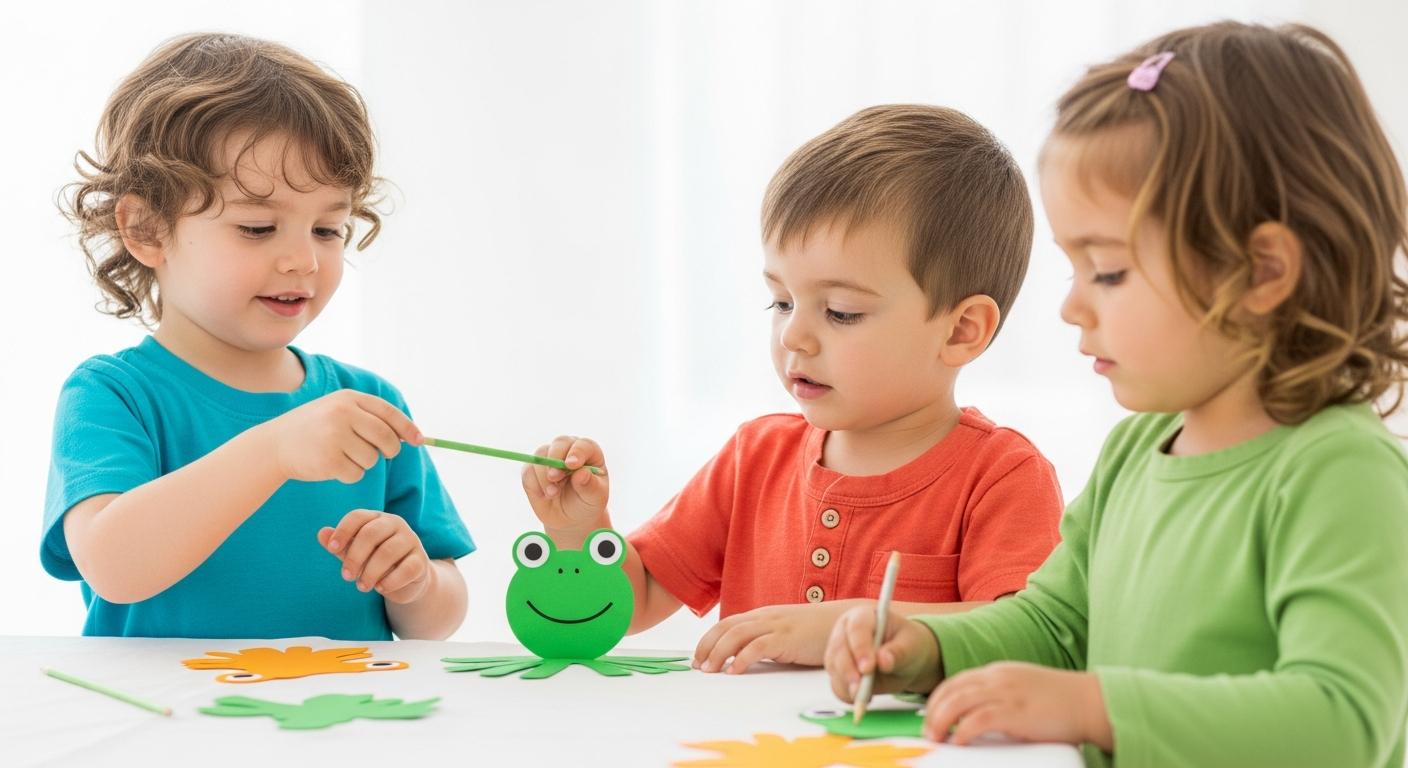
Table of Contents
- Introduction
- Why Frog Crafts are Great for Development
- The "Fly-Catching" Paper Plate Frog
- The Eco-Friendly Toilet Paper Roll Frog
- Simple Finger Puppet Frogs for Storytelling
- Integrating Speech Blubs into Craft Time
- Practical Scenarios for Speech Success
- Educational Fun: The Frog Life Cycle
- Choosing the Right Plan for Your Family
- Setting Realistic Expectations
- Summary of Key Takeaways
- FAQ
- Conclusion
Introduction
"Five green and speckled frogs sat on a speckled log, eating some most delicious bugs. Yum, yum!" If you have a toddler, chances are you have sung this classic nursery rhyme more times than you can count. There is something inherently magical about frogs for little ones—the way they hop, their vibrant green skin, and that iconic "ribbit" sound. But did you know that these swamp-dwelling creatures are also incredible tools for boosting your child’s speech and language development?
At Speech Blubs, we believe that the best way for children to learn is through joyful, hands-on experiences that blend play with scientific principles. Our mission is to empower children to speak their minds and hearts, and often, that journey starts with a simple, engaging activity like a toddler frog craft. This blog post is designed to be your go-to resource for creating memorable "smart screen time" and "smart play time" moments. We will cover a variety of easy frog-themed crafts, explain the developmental benefits behind them, and show you how to pair these activities with the Speech Blubs app to create a holistic learning environment.

By the end of this guide, you will have a toolkit of activities that not only result in cute refrigerator art but also foster a love for communication and build foundational speech skills. Whether your child is a "late talker" or simply loves animals, these crafts are designed to reduce frustration and create joyful family learning moments.
Why Frog Crafts are Great for Development
Before we dive into the glue and glitter, let’s talk about why we are focusing on frogs. As experts in child development, we look for themes that offer a "triple threat" of benefits: sensory engagement, fine motor practice, and speech stimulation.
Fine Motor Skills and Hand Strength
Every time your toddler rips a piece of construction paper to make a "fly" or uses a glue stick to attach a frog’s eye, they are strengthening the tiny muscles in their hands. This is known as fine motor development. These skills are the building blocks for future tasks like holding a pencil, using scissors, and even buttoning a shirt. For a toddler, the act of squishing paper into small balls provides excellent sensory feedback and improves their pincer grasp.
Speech and Language Stimulation
Frogs are perfect for speech practice because of the "onomatopoeia" associated with them. Words like "ribbit," "hop," "jump," and "splash" are fun to say and easy for toddlers to imitate. When we encourage a child to make the "R" sound in "ribbit" or the "P" sound in "hop," we are helping them practice specific articulatory movements.
At Speech Blubs, our unique approach focuses on "video modeling." This is based on the science of mirror neurons—the idea that children learn best by watching and imitating their peers. If you are unsure if your child’s speech is on track, you can take our quick 3-minute preliminary screener to get a simple assessment and a free 7-day trial.
Fostering Confidence and Joy
There is no "wrong" way for a toddler to make a frog. If the eyes end up on the frog's belly, that’s okay! The goal of these activities is to build confidence. When a child creates something and shares it with you, they are practicing the most basic form of communication: sharing their world with others. Our founders, who grew up with speech problems themselves, created Speech Blubs to be the tool they wished they had—one that turns learning into a joyful, pressure-free experience.

The "Fly-Catching" Paper Plate Frog
This is our favorite toddler frog craft because it is interactive. It’s not just an art project; it’s a game!
Materials You Will Need:
- One paper plate (white or green)
- Green paint or markers
- Red construction paper (for the tongue)
- Black construction paper (for the flies)
- Googly eyes (optional)
- Glue or tape
- Scissors (for adult use)
Step-by-Step Instructions:
- Prepare the Base: Have your child paint the paper plate green. If you don't have paint, green markers or crayons work just as well. We recommend painting both sides if your little one is on a "painting spree."
- Create the Fold: Once the paint is dry, fold the plate in half. This creates a large, snapping mouth.
- The Sticky Tongue: Cut a long, thin strip of red construction paper. To make it look like a real frog tongue, wrap it around a pencil to give it a "curl." Glue or tape the end of the tongue inside the fold of the plate.
- Add the Eyes: Glue googly eyes to the top of the folded plate. If you don't have googly eyes, help your child draw two big circles with a black marker.
- Make the Flies: This is the best part for fine motor practice! Give your child scraps of black construction paper and encourage them to rip off small pieces and squish them into little balls. These are the "flies."
- Play Time: Now, take turns "tossing" the flies into the frog's mouth. As you play, use descriptive words: "The frog is hungry," "The fly is small," "The frog says yum yum!"
Expert Tip: For a child who loves animals, the "Animal Kingdom" section of the Speech Blubs app is a perfect companion to this craft. They can watch other kids make frog sounds while they play with their paper plate creation! Download Speech Blubs on the App Store to see it in action.
The Eco-Friendly Toilet Paper Roll Frog
Don't throw away those cardboard tubes! They make the perfect body for a hopping friend.
Materials You Will Need:
- Empty toilet paper roll
- Green construction paper or paint
- Scraps of red and yellow paper
- Glue stick
How to Make It:
- Cover the Roll: Wrap the toilet paper roll in green paper or have your child paint it.
- Cut Out Legs: Cut out four simple "L" shapes from green paper to serve as legs and glue them to the bottom of the roll.
- The Face: Add eyes and a small red strip for a tongue.
- Speech Integration: Use this frog to practice "prepositions." Ask your child, "Can the frog hop on the table?" "Can he hide under the chair?" This builds their understanding of how language describes space and movement.
If you are looking for more ways to support your child's journey, we recommend checking out the research behind our method. Our app is backed by science and designed by speech-language pathologists to ensure every minute of screen time is "smart" screen time.
Simple Finger Puppet Frogs for Storytelling
Finger puppets are a fantastic way to encourage "expressive language"—the ability to put thoughts into words.
Instructions:
- Cut out a small circle from green cardstock.
- Cut two holes near the bottom where your child can poke their fingers through. Their fingers become the frog's legs!
- Decorate the circle with a face.
- Social Play: Use the puppets to act out a conversation. You can say, "Hello, Mr. Frog! How are you today?" and wait for your child to respond. This teaches the "turn-taking" aspect of communication.
Integrating Speech Blubs into Craft Time
We know that parenting in the digital age is a balancing act. You want to avoid passive screen time (like mindlessly watching cartoons), but you also need tools that work. Speech Blubs is designed to be a powerful tool for family connection, not a replacement for it.
The Power of Video Modeling
When your child sees a peer on the screen making a sound or performing an action, their brain’s mirror neurons fire. This makes them much more likely to try the sound themselves. For a parent whose 3-year-old is a "late talker," the "Animal Kingdom" section offers a fun, motivating way to practice "ribbit" and "hop" sounds.
Imagine your child sitting with their "Fly-Catching" paper plate frog while watching a video of a child in the app saying "Frog." The combination of the physical toy and the peer model creates a multi-sensory learning experience that is much more effective than flashcards or passive viewing.
Creating Joyful Family Moments
Our app is meant to be used together. Sit with your child, explore the "Animal Kingdom" or "Early Sounds" sections, and then bring those sounds to life with your toddler frog craft. This co-play builds a bridge between the digital and physical worlds, ensuring that the skills learned in the app transfer to real-life situations.
Get it on Google Play to begin your journey today.
Practical Scenarios for Speech Success
Let's look at how these frog crafts solve common real-world challenges:
- The Reluctant Communicator: If your child is frustrated because they can't express their needs, the "Fly-Catching" game provides a low-pressure environment. They can simply point, "feed" the frog, and mimic the "mmm" sound for "yum," which builds confidence without the stress of "saying it right."
- The Energetic Toddler: For the child who can't sit still, the "Hopping Paper Frog" is perfect. You can incorporate "gross motor" movements. Ask them to hop like a frog to the other side of the room every time they finish a step of the craft.
- The Late Talker: By using the "video modeling" in Speech Blubs alongside the craft, you are giving the child multiple ways to process the word "frog." They see it, they hear it, they touch it, and they see a peer do it. This holistic approach is why 1 in 4 children who need speech support find success with our tools.
Educational Fun: The Frog Life Cycle
While you are crafting, you can introduce simple scientific concepts. This expands your child's "receptive vocabulary" (the words they understand).
- Eggs: Talk about how frogs start as tiny dots in the water.
- Tadpoles: Explain that they look like little fish with tails. You can even make a "tadpole" craft using a black balloon or a small piece of paper with a yarn tail!
- Froglets: Mention that they grow legs but still have a tail.
- Adult Frog: This is the stage where they can finally hop and say "ribbit."
Using these terms while you work on your toddler frog craft helps your child categorize information and understand the world around them. For more stories from parents who have seen their children's vocabulary bloom, visit our testimonials page.
Choosing the Right Plan for Your Family
We are committed to providing an immediate, effective, and joyful solution for families. To help your child "speak their minds and hearts," we offer two simple subscription plans.
Monthly Plan: $14.99 per month
This is a great way to test the waters and see how your child responds to our "smart screen time" experiences.
Yearly Plan: $59.99 per year (The Best Value!)
The Yearly plan is the clear choice for families committed to their child's development. It breaks down to just $4.99/month, which is a 66% savings compared to the monthly rate.
The Yearly Plan includes exclusive, high-value features:
- 7-Day Free Trial: Try everything before you commit.
- Reading Blubs App: An extra app specifically designed to help your child transition from speaking to reading.
- Priority Support: 24-hour support response time.
- Early Access: Be the first to try our newest updates and features.
The Monthly plan does not include the free trial or the Reading Blubs app. We highly encourage parents to choose the Yearly plan to get the full suite of features and the best possible start for their child. Sign up on our website to lock in this value.
Setting Realistic Expectations
At Speech Blubs, we want to foster a love for communication, but it is important to remember that every child's journey is unique. We do not suggest guaranteed outcomes like "your child will be giving public speeches in a month." Instead, we focus on the benefits of the process:
- Building confidence in social interactions.
- Reducing the frustration that comes from not being understood.
- Developing key foundational skills like imitation and turn-taking.
- Creating joyful family learning moments that strengthen your bond.
Our app is a powerful supplement to your child's overall development plan and can be a wonderful companion to professional speech therapy.
Summary of Key Takeaways
- Crafting is Learning: A toddler frog craft is a multi-sensory experience that builds fine motor skills and hand strength.
- Speech Through Play: Use onomatopoeia (Ribbit! Hop! Splash!) to encourage vocal imitation.
- Video Modeling Works: Speech Blubs uses the science of peer imitation to help kids learn sounds naturally.
- Smart Screen Time: Our app provides a screen-free alternative to passive viewing, encouraging kids to be active participants in their learning.
- Great Value: The Yearly plan offers the best value at $4.99/month, including a free trial and the Reading Blubs app.
Whether you are making a paper plate frog or a finger puppet, remember that the goal is connection. Every "ribbit" and every squished paper "fly" is a step toward your child finding their voice.
FAQ
Q: My toddler is under 2 years old. Are these crafts safe? A: Most of these crafts are excellent for young toddlers, but always supervise them, especially when using glue, paint, or small items like googly eyes. For children under 2, we recommend drawing the eyes on the frog instead of using small adhesive parts to avoid choking hazards.
Q: How long should we spend on the Speech Blubs app each day? A: We recommend short, frequent sessions—about 5 to 15 minutes a day. The goal is "smart screen time" that leads to offline play. Using the app as a "warm-up" before doing a toddler frog craft is a perfect way to integrate it into your routine.
Q: What if my child refuses to make the frog sounds? A: Don't push! The goal is to reduce frustration, not increase it. Focus on the "joy of the craft" first. If they just want to paint and play with the flies, that’s great! They are still hearing you model the language. Over time, as they watch their peers in Speech Blubs, their confidence will grow.
Q: Can these crafts help with "late talking"? A: Yes! Crafts provide a physical context for new words. When a child is physically engaged, they are more likely to retain the language they hear. Pairing these activities with the "video modeling" method in Speech Blubs provides a powerful support system for late talkers.
Conclusion
Creating a toddler frog craft is about more than just green paint and paper—it's about opening a door to communication. By engaging your child's hands and imagination, you are laying the groundwork for a lifetime of confident speaking. At Speech Blubs, we are honored to be a part of that journey. Our mission is to provide you with the tools, science, and joy needed to help your child thrive.
Ready to see your child's communication skills leap forward? Download Speech Blubs on the App Store or Get it on Google Play to begin.
Don't forget to choose the Yearly plan when you sign up to take advantage of our 7-day free trial, the Reading Blubs app, and the best pricing at just $4.99/month. Let's make learning to speak the most joyful part of your child's day! For more information about our approach, feel free to visit our homepage.
About the author