
Easy Toilet Paper Roll Crafts: Fun for Kids
 By Speech Blubs Team•Jan 13, 2026•19 min.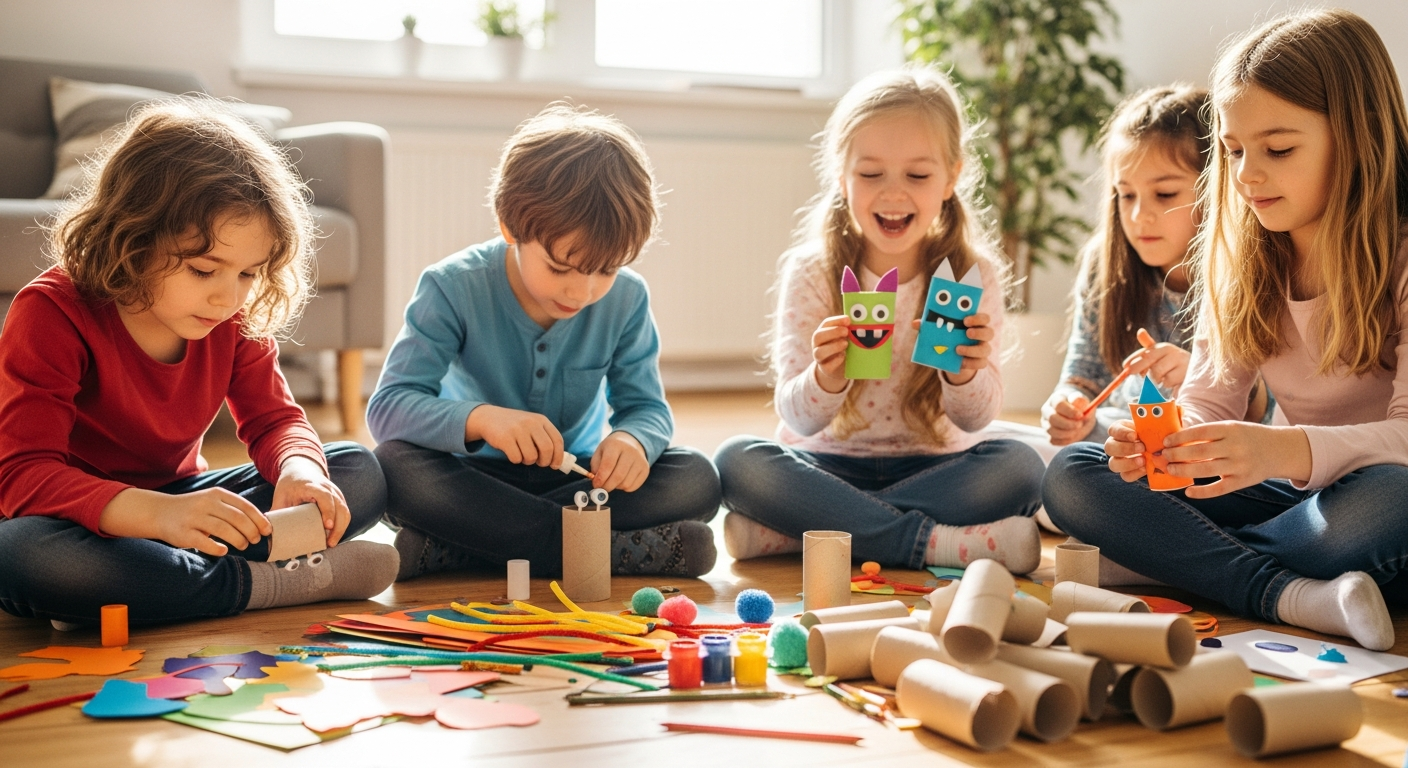
Table of Contents
- Why Toilet Paper Roll Crafts? More Than Just Recycling
- Getting Started: Your Essential Crafting Kit
- A World of Imagination: Easy Toilet Paper Roll Craft Categories
- Enhancing Learning with Speech Blubs: Crafting and Communication Hand-in-Hand
- Making the Most of Your Speech Blubs Experience: Value and Features
- Tips for a Smooth Crafting Session (and Happy Communicators)
- Conclusion
- FAQ
Ever found yourself staring at that growing pile of empty toilet paper rolls, wondering if there’s a better destiny for them than the recycling bin? You're not alone! Many parents see these humble cardboard tubes as a daily reminder of bathroom necessities, but we see them as tiny cylinders of pure creative potential. Imagine transforming those everyday discards into fantastical creatures, festive decorations, or beloved storybook characters, all while sparking joy and fostering crucial developmental skills in your child.
This isn't just about keeping little hands busy; it's about unlocking a world of imaginative play, strengthening fine motor skills, and, perhaps most importantly, creating wonderful opportunities for communication and connection. In this comprehensive guide, we'll dive deep into the incredibly versatile world of easy toilet paper roll crafts, offering a treasure trove of ideas for every season and interest. We’ll explore how these simple projects can become powerful tools for learning, development, and even speech growth, all while showing you how to turn mundane household items into masterpieces. Get ready to gather your rolls, unleash your inner artist, and discover how crafting can beautifully intertwine with your child's journey to speak their minds and hearts.

Why Toilet Paper Roll Crafts? More Than Just Recycling
The beauty of toilet paper roll crafts lies in their simplicity and accessibility. They don't require expensive materials or complicated techniques, making them perfect for spontaneous creative bursts. But beyond the obvious benefits of being a free, readily available resource, these crafts offer a wealth of developmental advantages for children of all ages.
First and foremost, using recycled materials like toilet paper rolls instills an early understanding of environmental responsibility. It teaches children the value of repurposing and reducing waste, turning "trash" into "treasure." This hands-on lesson in sustainability is invaluable in today's world, fostering eco-friendly habits from a young age.
Beyond the green aspect, these crafts are powerhouses for fine motor skill development. Cutting, gluing, painting, tearing paper, bending pipe cleaners – every step involves precise hand-eye coordination and manipulation of small objects. These are the same foundational skills that are critical for writing, self-feeding, and countless other daily tasks. For a child who might struggle with holding a pencil or fastening buttons, the playful, low-pressure environment of crafting can provide much-needed practice and build confidence.
Creativity and imagination truly soar when children are given an open-ended material like a toilet paper roll. A simple cylinder can become anything: a telescope, a bee, a castle turret, a character from a favorite book. This process of transformation encourages abstract thinking, problem-solving, and the ability to visualize an idea and bring it to life. There's no "right" or "wrong" way to decorate a toilet paper roll monster, which empowers children to express themselves freely and uniquely.
And here's where we see a beautiful connection to language and communication development. Crafting naturally creates a rich environment for conversation. Parents and caregivers can describe the steps ("First, we paint the roll brown"), ask open-ended questions ("What color should we use for the wings?"), encourage descriptive language ("Tell me about your sparkly monster!"), and practice following instructions ("Can you hand me the blue marker?"). This isn't just background noise; it's active engagement that builds vocabulary, strengthens comprehension, and encourages expressive language in a meaningful, contextual way.

For instance, if your child is working on action verbs, crafting a rocket can lead to discussions about "flying," "launching," and "zooming." If they're developing their descriptive language, making a colorful mermaid allows them to talk about "shiny scales," "long hair," and "swishy tails." These are precisely the kinds of interactive experiences that make communication come alive for children.
Getting Started: Your Essential Crafting Kit
Before diving into the exciting projects, let's gather your basic supplies. The good news is, most of these items are probably already hiding in your home!
- The Stars of the Show: Empty toilet paper rolls (and paper towel rolls for longer projects!). Start saving them now!
- The Basics:
- Scissors: Kid-safe scissors are essential for little hands.
- Glue: A glue stick is great for paper, while white school glue or craft glue is better for attaching heavier embellishments.
- Markers/Crayons/Colored Pencils: A rainbow of options for coloring.
- Paint: Washable tempera or acrylic paints are perfect for vibrant creations.
- Construction Paper: Various colors for cutting out shapes, wings, ears, etc.
- Googly Eyes: These instantly bring any creation to life and add a touch of whimsy.
- Embellishments & Fun Extras:
- Pipe Cleaners: Bendable, colorful, and great for limbs, antennae, or decorations.
- Yarn/String: For hair, tails, or hanging ornaments.
- Cotton Balls/Pompoms: For texture and softness.
- Glitter/Glitter Glue: For a touch of sparkle (if you dare!).
- Fabric Scraps/Ribbons: Add different textures and patterns.
- Nature Finds: Leaves, small twigs, pebbles can add an organic touch.
Pro Tip: Keep a dedicated "craft box" or drawer where you store all these supplies and your stash of toilet paper rolls. This makes it easy to pull out for spontaneous crafting sessions and keeps everything organized.
A World of Imagination: Easy Toilet Paper Roll Craft Categories
Now for the fun part! Let’s explore some fantastic ideas, categorized by theme, and see how they can be enriched with communication-focused play.
Animal Adventures: Roar, Chirp, and Buzz!
Animals are a perennial favorite for kids, offering endless opportunities for imaginative play and language development.
- Bumble Bees: After reading about a bear's honey hunt (like "The Berenstain Bears and the Big Honey Hunt"), create adorable toilet paper roll bumble bees. Paint the rolls yellow and black, add paper wings and antennae. While crafting, encourage your child to "buzz" like a bee, describe the stripes ("black, yellow, black"), and talk about where bees live.
- Bunnies: Inspired by stories like "It’s Not Easy Being a Bunny," make a cute P.J. Funnybunny. Cover the roll in white paper or paint, add long ears, a cotton ball tail, and draw on a face. This is a great chance to practice animal names and sounds, but also to discuss feelings – "P.J. felt confused, how does your bunny feel?"
- Mermaids: Dive into the magic of "How to Catch a Mermaid" and craft shimmering toilet paper roll mermaids. Use colorful paper for tails, yarn for hair, and glitter for scales. This activity can spark conversations about the ocean, different sea creatures, and descriptive words like "sparkly," "long," and "swishy."
- Caterpillars & Butterflies: Follow the journey of "The Very Hungry Caterpillar" by creating your own. You can either make a long caterpillar by connecting several decorated rolls or paint a caterpillar pattern on a single roll. This offers a fantastic way to discuss the life cycle, counting ("how many rings on your caterpillar?"), and actions like "eat," "crawl," and "transform."
- Under the Sea Creatures: Explore ocean life with books like "Hello World! Ocean Life" and make an array of underwater friends – octopuses with pipe cleaner tentacles, colorful fish, or majestic whales. This is perfect for expanding vocabulary related to marine biology, discussing colors, and using prepositions ("under," "on," "in").
- Lions, Monkeys, Elephants, and More: The possibilities are endless! Turn rolls into the king of the jungle, a mischievous monkey, or a gentle giant elephant. For a parent whose 3-year-old "late talker" loves animals, our Speech Blubs 'Animal Kingdom' section offers a fun, motivating way to practice animal sounds and names. Children watch and imitate peers in a unique "video modeling" approach, which our founders, who all grew up with speech problems, developed to provide the immediate, effective, and joyful solution they wished they had. This complements hands-on animal crafts beautifully, building foundational vocabulary and encouraging confident vocalizations.
Holiday & Seasonal Fun: Celebrate All Year Round!
Toilet paper roll crafts are fantastic for getting into the festive spirit for any holiday or season.
- Christmas Creations: The holiday season offers a bounty of ideas:
- Snowmen: Paint rolls white, add paper hats and scarves from old socks! You can even number them for a fun "snowman bowling" game, integrating early math skills.
- Santa, Reindeer, Elves: Bring classic Christmas characters to life. Use twiggy antlers for Rudolph or make a Santa that doubles as a small treat box.
- Angels & Nativity Characters: Create an army of angels or the Three Kings to complement a nativity scene, fostering discussions about traditions and storytelling.
- Christmas Trees: Decorate rolls with glitter and small pom-poms to make mini trees that can be ornaments or even festive napkin rings.
- Gift Boxes & Crackers: Easily transform rolls into small gift boxes or DIY Christmas crackers, perfect for small treasures or notes.
- Halloween Horrors (Friendly Ones!):
- Bats, Frankenstein, Spiders: Spooky but sweet, these crafts can be decorated with paint, googly eyes, and pipe cleaners. Use them to talk about friendly monsters and emotions ("Is Frankenstein happy or silly?").
- Mummies: Wrap rolls in white paper strips.
- Spring Blooms & Easter Fun:
- Spring Trees: Paint rolls brown for trunks, and use green construction paper or tissue paper for leaves, adding colorful "blooms" with pink tissue paper or buttons. This is a simple yet effective way to talk about the changing seasons.
- Easter Bunnies & Chicks: Celebrate spring with cute bunnies and fluffy chicks.
- Fall Harvest & Thanksgiving:
- Scarecrows: Dress up rolls with fabric scraps and straw hair.
- Turkeys: Use colorful paper feathers to create a festive turkey.
- Fall Trees: Adapt the spring tree idea with orange, red, and yellow leaves.
These seasonal crafts naturally lend themselves to talking about traditions, the passage of time, and new vocabulary related to specific holidays. They encourage narrative skills as children recount holiday stories or describe what they're looking forward to. This kind of imaginative play aligns perfectly with our philosophy at Speech Blubs, where we turn screen time into "smart screen time" – an active, engaging experience that fosters connection and learning, helping children to articulate their thoughts and feelings about these special times.
Beloved Book Characters & Storytelling Scenes
Bringing stories to life through crafts deepens comprehension and enhances literacy skills.
- Dr. Seuss Characters: After reading "The Lorax," create a Lorax craft or a Truffula Tree. Dive into "The Cat in the Hat" by making the iconic character. These crafts invite discussions about character traits, moral lessons, and whimsical rhyming words.
- Peter Rabbit's Garden: Read about Peter's adventures and then use toilet paper rolls to create elements of Mr. McGregor's garden – bunnies, fences, or even vegetables. This encourages children to retell parts of the story, describe scenes, and identify characters.
- The Color Monster: After exploring emotions with "The Color Monster," make different colored monsters from toilet paper rolls, each representing a feeling. This provides a tangible way for children to identify and discuss their own emotions, building emotional literacy alongside language skills. "My blue monster feels sad today."
- Pete the Cat: Any Pete the Cat book can inspire a cool Pete the Cat craft. Discuss his groovy attitude and what makes him special.
Crafting characters from books encourages children to retell stories, use descriptive language to talk about the characters, and even create their own new adventures. For a child who might be a "late talker" and loves storytime, pairing these crafts with our Speech Blubs app can significantly boost their engagement. We provide a screen-free alternative to passive viewing and a powerful tool for family connection, where interactive learning can reinforce the themes and vocabulary introduced through books and crafts.
Beyond the Basics: Imaginative Builds
Don't limit yourself to just characters and animals. Toilet paper rolls can form the basis of fantastic imaginative structures and vehicles.
- Rockets & Spaceships: Inspired by books like "There’s No Place Like Space," transform rolls into rockets. Paint them silver, red, or blue, add paper flames and fins. This is excellent for talking about space, planets, and action verbs like "launch," "fly," and "explore."
- Castles & Forts: Connect multiple rolls to build turrets for a grand castle or a secret fort. This encourages spatial reasoning, planning, and descriptive language ("tall tower," "drawbridge").
- Cars, Trains, & Robots: Simple attachments can turn a roll into a wheeled vehicle or a futuristic robot. Discuss parts of the vehicle, how it moves, and what sounds it makes.
These open-ended builds empower children to design and construct, developing their problem-solving skills and expanding their vocabulary related to shapes, sizes, and functions.
Enhancing Learning with Speech Blubs: Crafting and Communication Hand-in-Hand
The synergy between hands-on crafting and speech development is truly remarkable. These activities create natural, engaging contexts for children to practice and expand their communication skills. When children are immersed in a creative project, they are more motivated to express themselves, ask questions, and follow instructions.
At Speech Blubs, our mission is to empower children to "speak their minds and hearts." We understand the unique challenges children face in their communication journey because our company was born from the personal experiences of our founders, who all grew up with speech problems. They created the tool they wished they had – blending scientific principles with play into one-of-a-kind "smart screen time" experiences. We are committed to providing an immediate, effective, and joyful solution for the 1 in 4 children who need speech support.
How does this connect to your toilet paper roll crafts? Think of crafts as the perfect "warm-up" for language practice.
- Vocabulary Expansion: As you craft, you introduce new words: "glitter," "texture," "stripe," "assemble," "decorate." Speech Blubs reinforces this with themed activities designed to build rich vocabulary.
- Following Instructions: Craft recipes are excellent for practicing multi-step commands: "First, paint the roll, then glue on the eyes." This skill is crucial for understanding and processing verbal information, a key component of language development.
- Descriptive Language: Encourage your child to describe their creation – its colors, shapes, what it does, how it feels. This helps them articulate thoughts and build expressive language. Our app's interactive games encourage children to describe objects, actions, and scenes, mirroring this real-world practice.
- Joint Attention & Social Skills: Crafting together fosters joint attention, where you and your child focus on the same activity. This shared engagement is a cornerstone of social-emotional development and communication.
- Imitation: Many crafts involve imitating a model or following steps, much like our unique "video modeling" methodology in Speech Blubs. Children learn complex communication skills by watching and imitating their peers. This direct imitation is a powerful learning tool, building confidence and reducing frustration, just like successfully completing a craft project does! You can learn more about the science behind our method and our high MARS scale rating on our Research page.
Speech Blubs isn't a replacement for hands-on activities; it's a powerful supplement to a child's overall development plan and, when applicable, professional therapy. We provide engaging, interactive content that extends the learning and fun, ensuring that screen time is productive and beneficial. For instance, if you're making animal crafts, follow up with our "Animal Kingdom" section to practice animal sounds and names. If you're working on emotions with the Color Monster, our "Feelings" section can provide further practice in identifying and expressing emotions.
Making the Most of Your Speech Blubs Experience: Value and Features
We believe that every child deserves the opportunity to communicate confidently. That's why we've designed Speech Blubs to be accessible and provide immense value to families. When considering an immediate, effective, and joyful solution for speech support, we offer two main subscription plans:
- Monthly Plan: Priced at $14.99 per month.
- Yearly Plan: Our most popular and highly recommended option, priced at $59.99 per year. This breaks down to just $4.99 per month, offering incredible savings.
We strongly encourage families to choose the Yearly Plan because it provides the best value and unlocks the full suite of Speech Blubs features, helping you save 66% compared to the monthly option.
Here's what makes the Yearly Plan the superior choice:
- 7-Day Free Trial: Only with the Yearly Plan can you enjoy a full 7-day free trial to explore all the app has to offer before committing. This allows you to see firsthand how engaging and effective our "smart screen time" approach is for your child.
- Extra Reading Blubs App: The Yearly Plan includes access to our companion Reading Blubs app, further enhancing your child's literacy development.
- Early Access to New Updates: Get first dibs on exciting new features and content.
- 24-Hour Support Response Time: Our dedicated support team is there for you with quicker assistance.
The Monthly Plan, while flexible, does not include these valuable benefits. We've structured our pricing to ensure that families who commit to their child's long-term development receive the most comprehensive and affordable support.
Ready to embark on this joyful communication journey? We invite you to explore the benefits of our app. Take our quick 3-minute preliminary screener involving 9 simple questions to get a simple assessment and a clearer understanding of your child's communication needs, which also leads to a free 7-day trial. You can also create your account and begin your 7-day free trial today and choose the Yearly plan to get the free trial and the full suite of features.
Tips for a Smooth Crafting Session (and Happy Communicators)
To make your toilet paper roll crafting adventures as enjoyable and beneficial as possible, keep these tips in mind:
- Preparation is Key: Gather all your materials before you start. This minimizes interruptions and keeps the creative flow going.
- Embrace the Mess: Crafting can be messy, and that's part of the fun! Lay down newspaper or a washable tablecloth. Focus on the process, not just a perfect outcome.
- Follow Their Lead: While you might have an idea in mind, allow your child to personalize their craft. If their animal wants rainbow stripes instead of brown fur, encourage it! This fosters independence and creativity.
- Encourage Conversation: Ask open-ended questions: "What do you want to make next?" "How does it feel?" "Tell me about your [creation]!" This turns crafting into a natural language lesson.
- Focus on the Process, Not Perfection: The goal isn't a gallery-worthy masterpiece, but the engagement, learning, and shared experience. Celebrate effort and creativity over flawless execution. This mirrors our approach at Speech Blubs, where every vocalization and attempt at communication is celebrated, building a positive and encouraging learning environment.
- Turn Crafts into Play: Once the crafts are dry, use them for imaginative play. Put on a puppet show with your toilet paper roll characters, or drive the toilet paper roll cars around a homemade track. This extends the language-rich environment.
You can also see what other parents are saying about their child's success with Speech Blubs by visiting our Testimonials page, confirming the positive impact of our approach on communication development.
Conclusion
From whimsical animals to festive holiday decorations, the humble toilet paper roll holds endless potential for creativity, learning, and connection. These easy crafts are more than just a way to pass the time; they are powerful tools for developing fine motor skills, sparking imagination, and, crucially, fostering robust language and communication abilities. By engaging in these hands-on activities, you're not just making crafts; you're building a foundation for your child to express themselves confidently and joyfully.
At Speech Blubs, we believe that every child deserves the chance to speak their mind and heart. Our innovative app, developed from personal experience and backed by scientific methodology, provides a unique "smart screen time" experience that complements these invaluable real-world interactions. Together, crafts and Speech Blubs create a holistic approach to nurturing your child's communicative growth, ensuring that learning is always engaging, effective, and full of joy.
Ready to empower your child to speak their mind and heart? Don't wait to discover the incredible potential that awaits. Download Speech Blubs on the App Store or Google Play to begin your journey. For the best value and access to all exclusive features, including a 7-day free trial and the Reading Blubs app, remember to select the Yearly Plan when you create your account. Let's unlock a world of confident communication together!
FAQ
Q1: What specific skills do toilet paper roll crafts help develop in children? A1: Toilet paper roll crafts are fantastic for developing several key skills. They significantly boost fine motor skills through activities like cutting, gluing, and decorating, which helps improve hand-eye coordination. These crafts also ignite creativity and imagination, allowing children to transform a simple roll into anything they envision. Furthermore, they support language development by creating natural opportunities for conversation, descriptive language, following instructions, and discussing new vocabulary related to the craft.
Q2: Are toilet paper roll crafts suitable for all ages? A2: Absolutely! These crafts are incredibly versatile and can be adapted for children of all ages. Younger children (toddlers and preschoolers) might need more adult assistance with cutting and more complex gluing, but they'll love the sensory experience of painting and sticking. Older children can tackle more intricate designs, incorporate finer details, and even develop their own original craft ideas, making it a wonderful activity for family crafting where everyone can participate.
Q3: How can I make these crafts even more beneficial for my child's speech development? A3: To maximize the speech benefits, actively engage your child in conversation throughout the crafting process. Describe what you're doing ("I'm cutting the red paper"), ask open-ended questions ("What color should we use for the wings?"), and encourage them to describe their own creation using adjectives and action verbs. Retell stories that relate to the crafts, and use them as puppets for imaginative play. For even more structured and engaging speech practice, consider complementing these activities with interactive tools like Speech Blubs, which offers video modeling and themed exercises to reinforce vocabulary and communication skills.
Q4: Where can I find more ideas for toilet paper roll crafts and other developmental activities? A4: The internet is brimming with creative ideas for toilet paper roll crafts, often categorized by season, animal, or character. Pinterest and various parenting blogs are excellent resources. For comprehensive support in your child's communication journey and a wealth of engaging activities, visit the Speech Blubs homepage. Our blog offers numerous articles and practical tips for parents, and our app provides a structured, joyful, and effective solution for speech development.
About the author