
Easy Valentine's Crafts for Kids: Sparking Joy and Boosting Communication
 By Speech Blubs Team•Jan 13, 2026•20 min.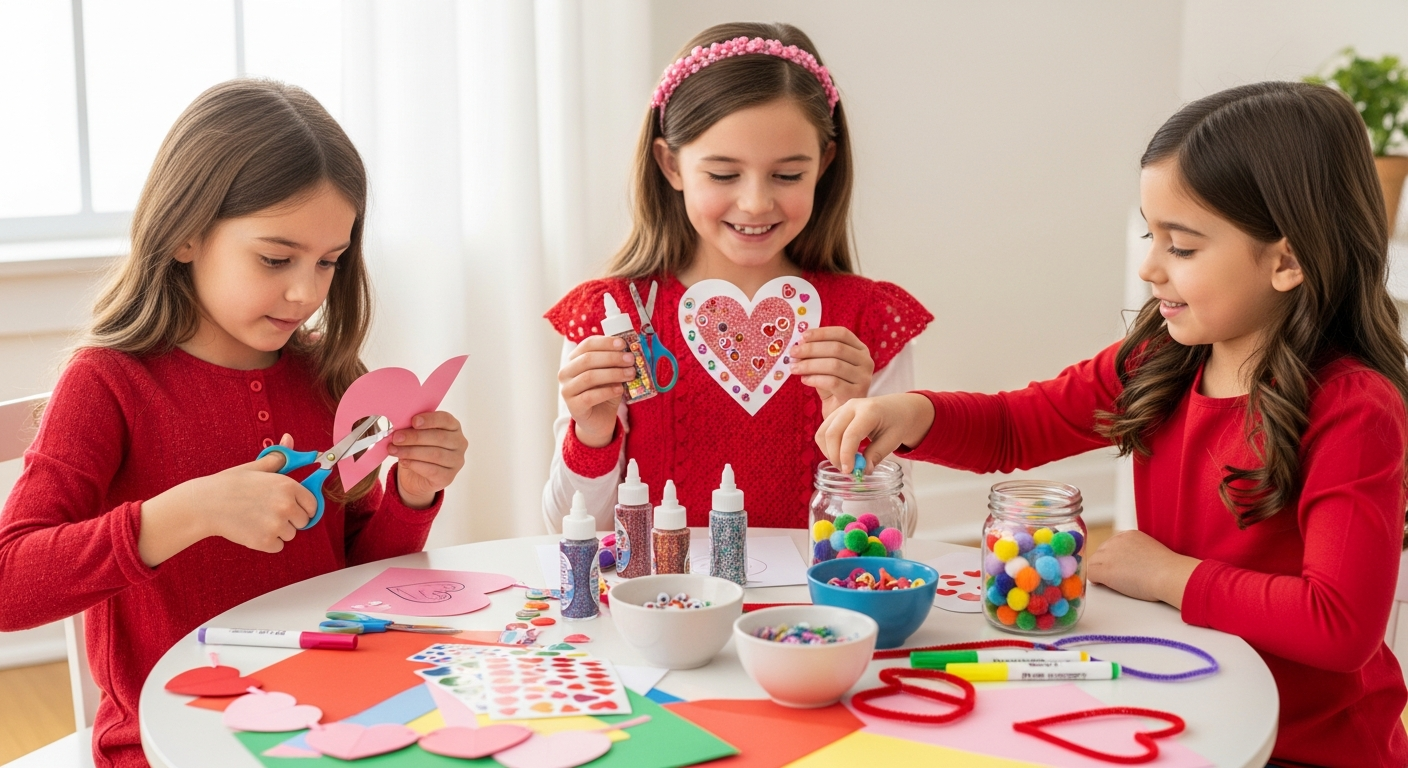
Table of Contents
- Why Crafts Are a Heartfelt Boost for Growing Minds
- Crafting by Age: Tailored Fun for Every Child
- Beyond the Craft: Boosting Communication with Speech Blubs
- Making the Most of Speech Blubs: Plans and Value
- Conclusion
- Frequently Asked Questions (FAQ)
Valentine's Day isn't just about red and pink; it's a golden opportunity to celebrate love, nurture creativity, and crucially, boost children's communication skills. In a world full of digital distractions, gathering around a table to create something with our hands offers an invaluable chance for connection and growth.
This post will explore a delightful array of easy Valentine's crafts for kids of all ages, from toddlers taking their first steps in artistic expression to elementary students mastering intricate designs. More importantly, we'll dive into how these heartwarming activities naturally support language development, foster emotional intelligence, and create joyful family memories. At Speech Blubs, we believe in empowering children to "speak their minds and hearts," and you'll discover how hands-on crafts, coupled with our innovative approach, can make all the difference.
Why Crafts Are a Heartfelt Boost for Growing Minds
Crafts are far more than just a way to pass the time; they are powerful tools for holistic child development. When children engage in creative activities, they're not just making pretty things – they're building foundational skills that impact everything from academic success to social-emotional well-being.

The Developmental Power of Crafting
- Fine Motor Skill Development: The intricate movements involved in cutting, gluing, drawing, and manipulating small objects strengthen the tiny muscles in a child's hands and fingers. This precision is vital for tasks like writing, self-feeding, and buttoning clothes.
- Cognitive Growth: Crafts challenge children to follow instructions, solve simple problems (e.g., "how do I make this stick?"), plan steps, and understand cause and effect. They learn about shapes, colors, textures, and spatial relationships.
- Sensory Exploration: From the sticky feel of glue to the rough texture of glitter or the smooth glide of paint, crafts engage multiple senses. This sensory input is crucial for brain development and helps children interpret and understand the world around them.
- Emotional Expression and Regulation: Creating art provides a safe outlet for children to express feelings that they might not yet have the words for. The process of creation, and the pride in a finished product, also builds self-esteem and teaches patience and perseverance.
- Problem-Solving Skills: What happens if the paper tears? How can I make this heart symmetrical? Crafts present little challenges that encourage children to think critically and adapt.
The Communication Connection: Crafting a Pathway to Words
While the physical and cognitive benefits are clear, crafts are also incredibly powerful for nurturing communication skills. These hands-on activities create natural, low-pressure environments for language-rich interactions between children and their caregivers.
- Vocabulary Expansion: Every craft introduces new words. Children learn to name colors (red, pink, purple), shapes (heart, circle, square), materials (paper, glue, glitter), and actions (cut, fold, stick, paint, stamp). Parents can intentionally model and repeat these words.
- Following Directions: "First, we cut the paper. Next, we glue the pieces." Crafting requires children to listen attentively and follow sequential instructions, strengthening their receptive language skills.
- Descriptive Language: Encouraging children to talk about their creations ("Tell me about your shiny red heart!") prompts them to use adjectives and expand their sentences. They learn to articulate their choices and processes.
- Social-Emotional Learning (SEL) through Language: Valentine's crafts, in particular, revolve around themes of love, friendship, and kindness. This provides a natural context for discussions about feelings ("Who are you making this for? How do you think they'll feel?"), sharing, and expressing gratitude.
- Joint Attention: When a child and parent are focused on the same craft activity, they engage in "joint attention" – a crucial precursor to conversational turn-taking and shared understanding. It's about being present together in a shared experience.
For a child who might be a "late talker" or struggles with initiating conversations, a simple crafting session provides a perfect, engaging environment to practice new words and sounds. When crafting together, a parent can model language and encourage the child to imitate. This direct, imitative learning mirrors the video modeling approach we use at Speech Blubs, where children learn by watching and imitating their peers, making learning sounds and words a natural, joyful process.

Crafting by Age: Tailored Fun for Every Child
Let's explore some easy Valentine's crafts, broken down by age group, highlighting how each activity supports developmental milestones and offers unique communication-boosting opportunities.
Toddler-Friendly Valentine's Creations (Ages 1-3)
For our littlest learners, the focus is on sensory exploration, simple repetitive actions, and building early vocabulary. These crafts are less about the perfect finished product and more about the joyful process. Always ensure supervision and child-safe materials.
1. Heart Stamps with Recycled Rolls
- How: Take an empty toilet paper or paper towel roll, gently bend it into a heart shape, and secure with a bit of tape. Dip it in shallow paint (red, pink, purple) and stamp onto paper.
- Why it Helps: The simple act of grasping the roll and pressing it down develops primitive grasp and release, laying groundwork for more complex fine motor tasks. As children press the stamp, parents can verbally label the action "stamp!" and the color "red!" This repetitive verbal modeling, coupled with the action, reinforces vocabulary and understanding. It’s a great way to introduce prepositions like "up" and "down."
- Speech Blubs Connection: This direct, imitative learning mirrors the video modeling approach we use at Speech Blubs. For toddlers learning first words, our app offers sections like "Animal Kingdom" or "Yummy Time," where children can watch peers make sounds for familiar objects, strengthening their speech muscles in a playful way, much like imitating actions during craft time.
2. Rainbow Heart Suncatchers
- How: Apply clear contact paper to a window or table, sticky side up. Let your toddler tear small pieces of tissue paper (red, pink, purple, white) and stick them onto the contact paper. Cover with another layer of contact paper, cut into a heart shape, and hang.
- Why it Helps: Tearing tissue paper is an excellent fine motor exercise, building finger strength. The vibrant colors stimulate visual perception. Parents can talk about "sticky," "soft," "colors," and "light," introducing a variety of descriptive words.
- Speech Blubs Connection: When describing the "sticky" contact paper or the "bright" colors, parents are naturally modeling rich vocabulary. Speech Blubs reinforces these concepts through engaging activities that encourage naming and describing objects, helping children build a robust vocabulary.
3. Fingerprint Heart Tree
- How: Draw or paint a simple tree trunk and branches on a piece of paper. Provide child-safe red and pink paints. Let your toddler dip their fingers and press them onto the branches to create "heart leaves."
- Why it Helps: This craft offers direct sensory interaction with paint and promotes hand-eye coordination. It's a wonderful opportunity to talk about "my finger," "tree," "leaves," and "making a print." Each press of a finger can be accompanied by a sound or word, building association.
- Speech Blubs Connection: This personal and tactile craft helps children connect actions to words. For a child who might be struggling with specific sounds, say 'p' for 'print', our app provides a safe space for repetition and practice, reducing frustration and fostering confidence.
4. Valentine Slime
- How: Follow a simple, safe slime recipe using clear glue, liquid starch, and water. Add red or pink food coloring and glitter.
- Why it Helps: Slime is the ultimate sensory play experience. Children can squish, stretch, and poke, developing hand strength and coordination. This is perfect for expanding descriptive vocabulary: "sticky," "stretchy," "gooey," "sparkly," "cold," "warm."
- Speech Blubs Connection: Engaging with slime naturally invites questions and comments. "What does it feel like?" "Can you stretch it?" These open-ended questions encourage children to describe their experiences, which Speech Blubs further supports by providing activities that build expressive language and conversational skills.
Preschooler's Artistic Adventures (Ages 3-5)
Preschoolers are ready for slightly more complex tasks, focusing on developing fine motor skills, color and shape identification, and beginning to tell simple stories with their art.
1. Tissue Paper Heart Wreath
- How: Cut a heart shape out of the center of a paper plate to create a wreath base. Have preschoolers cut (with safety scissors) or tear tissue paper into small squares. Glue the tissue paper onto the paper plate heart, overlapping colors for a fluffy effect.
- Why it Helps: Cutting with safety scissors refines scissor skills and hand strength. Arranging the tissue paper improves spatial awareness and pattern recognition. This is great for discussions about "round wreath," "many hearts," "different colors," and "making it pretty."
- Speech Blubs Connection: Asking a child to choose colors or decide where to place tissue paper encourages them to make choices and verbalize their preferences. Our app's interactive games help children practice making choices and responding to prompts, which are key skills for early communication.
2. Heart Air Balloons (Paper Bag Craft)
- How: Decorate a small paper bag with markers, crayons, or stickers. Cut out several paper hearts of various sizes and colors. Glue the hearts to the bag, making it look like a hot air balloon. Attach a string for hanging.
- Why it Helps: Decorating the bag and gluing hearts refines fine motor control. This craft sparks imagination and encourages storytelling. "Who is in the balloon?" "Where is it going?" "Balloon fly high!"
- Speech Blubs Connection: For a child excited about making a "heart air balloon," parents can extend the conversation, asking "What color is your balloon?" or "Where would you go in a balloon?" Speech Blubs encourages this back-and-forth by creating opportunities for children to express themselves, helping them to "speak their minds and hearts," which is central to our mission.
3. Penguin Heart Craft
- How: Provide pre-cut heart shapes of various sizes (one large white, two medium black, two small black, one small orange) from cardstock. Guide children to assemble them to form a penguin (large white heart for belly, medium black for body/head, small black for wings, orange for beak/feet).
- Why it Helps: This project boosts fine motor skills as children manipulate and glue shapes. It's excellent for visual reasoning and following multi-step instructions, reinforcing concepts like "big," "small," "first," "next," and "on top of."
- Speech Blubs Connection: This craft is perfect for practicing positional words and descriptive language. If a child needs support with articulating phrases like "put the wing on top," Speech Blubs offers targeted activities that build sentence structure and vocabulary through playful interactions.
4. Heart Windsocks
- How: Decorate a piece of construction paper with heart stickers, glitter, and markers. Roll it into a cylinder and staple the ends. Attach colorful party streamers to the bottom and a string to the top for hanging.
- Why it Helps: Stickers, drawing, and cutting streamers all work on fine motor precision. The finished product encourages discussion about movement ("wind blow," "streamers dance") and the weather.
- Speech Blubs Connection: This craft fosters a sense of accomplishment. When a child proudly displays their windsock, it's an ideal moment to practice expressing pride ("I made this!") and describing their creation, building self-confidence in communication.
5. Paper Heart Stuffies
- How: Cut two identical heart shapes from construction paper. Children can decorate them. Then, glue the edges together, leaving a small opening. Stuff with tissue paper, cotton balls, or even a sweet treat, then seal the opening.
- Why it Helps: Gluing edges, stuffing, and sealing improves fine motor skills and spatial reasoning. The concept of "stuffing" introduces new vocabulary and texture descriptions ("soft," "full").
- Speech Blubs Connection: This craft can inspire imaginative play. A child might give their heart stuffie a name or a story, prompting narrative language development. Speech Blubs helps children build the vocabulary and sentence structures needed to tell stories and engage in imaginative play more effectively.
Elementary Explorations (Ages 5+)
Older children are ready for more intricate projects that hone advanced fine motor skills, encourage independent work, and allow for deeper creative and personal expression. These crafts can become platforms for planning, problem-solving, and thoughtful communication.
1. Watercolor Cards
- How: Provide watercolor paints, brushes, and thick paper. Encourage children to create abstract heart designs, write heartfelt messages, or draw specific scenes.
- Why it Helps: Watercolor painting allows for experimentation with color mixing and texture. Writing personal messages develops literacy skills and encourages thoughtful expression of affection. It's a great opportunity to discuss feelings and empathy: "What message do you want to share?"
- Speech Blubs Connection: This craft is a perfect segue into discussions about emotions and expressing love. For a child who might find it challenging to verbalize complex feelings, Speech Blubs provides a supportive environment to learn new emotional vocabulary and practice expressing themselves in clear, confident ways.
2. Mosaic Heart
- How: Draw a large heart outline on cardstock. Provide colorful construction paper, magazines, or scraps. Children cut or tear small pieces and glue them within the heart outline to create a mosaic pattern.
- Why it Helps: Cutting or tearing small pieces is a fantastic fine motor workout. Arranging the pieces develops spatial reasoning, pattern recognition, and patience. Discussing the "pattern," "colors," and "pieces" expands descriptive vocabulary.
- Speech Blubs Connection: This craft encourages meticulous work and the ability to follow a vision. Describing the process and the final outcome can be a rich language activity. If a child struggles with sequencing or describing visual details, Speech Blubs offers activities that build these specific communication competencies.
3. Air-Dry Clay Valentine Hearts
- How: Use air-dry clay to sculpt heart shapes. Children can press textures into the clay (lace, leaves), add beads, or carve designs before letting it dry. Once dry, they can paint their hearts.
- Why it Helps: Sculpting with clay is a highly tactile activity that strengthens hand muscles and encourages creativity in three dimensions. The multi-step process (sculpt, dry, paint) teaches planning and patience. Children can name their creations, describe the textures, and explain their artistic choices.
- Speech Blubs Connection: Creating with clay can be a calming and expressive activity. If a child needs support with articulation or forming longer sentences to describe their art, Speech Blubs offers tools to practice sounds and expand utterance length, fostering clearer communication.
4. Heart Mason Jars
- How: Decorate clean mason jars with paint (spray paint or acrylic), stickers, or tissue paper decoupage. Cut out heart shapes from contact paper to use as stencils before painting, revealing clear hearts when peeled off. These can be used as vases or pencil holders.
- Why it Helps: Painting and applying stickers refines fine motor control. The stencil technique introduces basic negative space concepts. This craft can be given as a gift, prompting discussions about generosity and gratitude.
- Speech Blubs Connection: Gifting a homemade item provides a natural opportunity for social communication: "This is for you!" "I made it myself." Speech Blubs helps children practice social phrases and polite expressions, building their confidence in these meaningful interactions.
5. "Bee Mine" Valentine (Paper Craft)
- How: Use heart-shaped paper cut-outs (yellow for body, black for stripes, white for wings) to assemble a bumblebee. Add googly eyes and pipe cleaner antennae. Write "Will you BEE mine?"
- Why it Helps: This craft involves more intricate cutting and assembly, sharpening fine motor and spatial reasoning skills. It’s a playful way to use a pun, introducing wordplay and humor, which are advanced communication concepts.
- Speech Blubs Connection: Incorporating humor and wordplay, like the "bee mine" pun, is a sophisticated language skill. For children developing their expressive language, our app provides opportunities to practice rhyming, word associations, and even retelling jokes, all of which contribute to richer communication.
Beyond the Craft: Boosting Communication with Speech Blubs
From Craft Table to Confident Communication
The true magic of crafts lies in the interactions they facilitate. As parents and children create together, countless opportunities arise to naturally integrate language development:
- Modeling Language: Parents can narrate every step, using clear, simple language: "I am cutting the red paper. Now, you glue the pink heart."
- Expanding Utterances: If a child says "red," a parent can expand it to "Yes, that's a bright red heart!" or "You chose the big red heart!"
- Asking Open-Ended Questions: Instead of "Do you like it?", try "What's your favorite part?", "How does it feel?", or "What should we do next?" This encourages more than a yes/no response.
- Developing Emotional Vocabulary: "Are you happy with your craft?" "This heart makes me feel loved and warm inside."
- Encouraging Storytelling: "Tell me the story of your rainbow suncatcher." "Who is this special Valentine for, and why?"
Speech Blubs: Your Partner in Communication Development
At Speech Blubs, our mission is deeply rooted in empowering children to "speak their minds and hearts." Our company was born from the personal experiences of our founders, who all grew up with speech problems and created the tool they wished they had. We are committed to providing an immediate, effective, and joyful solution for the 1 in 4 children who need speech support.
- Science-Backed Play: We blend scientific principles with engaging play, transforming screen time into "smart screen time." Our unique approach utilizes video modeling, where children learn by watching and imitating their peers. This natural, imitative learning process is highly effective and engages mirror neurons, making speech practice fun and impactful. It's a screen-free alternative to passive viewing (like cartoons) because it demands active participation and interaction.
- A Powerful Tool for Family Connection: Speech Blubs isn't just an app for kids; it's designed to be a tool for family connection. Parents can join in, make silly faces, and practice sounds alongside their child, turning learning into a shared, joyful adventure. This family engagement strengthens bonds and creates a supportive environment for communication growth.
- Tailored Support for Every Child: Whether your child is working on first words, expanding their vocabulary, mastering specific sounds, or building social communication skills, our app offers a wealth of activities designed by speech therapists to support their unique journey. With Speech Blubs, children develop key foundational skills, build confidence, and reduce frustration, fostering a love for communication that lasts a lifetime. You can learn more about our comprehensive offerings on our homepage.
Unsure Where to Start? Try Our Free Screener!
We understand that as a parent, you might sometimes wonder if your child's speech development is on track. That's a common and valid concern. To help provide some clarity, we invite you to take our quick 3-minute preliminary screener. It involves 9 simple questions and provides you with an instant assessment and personalized next steps tailored to your child's needs. It's a great, no-pressure way to gain insights and begin your journey with a free 7-day trial of Speech Blubs.
Making the Most of Speech Blubs: Plans and Value
We are committed to transparency and providing incredible value to families who choose Speech Blubs. We want you to feel confident that you're investing in the best possible resource for your child's communication journey.
- Monthly Plan: For $14.99 per month, you get access to our core features, offering a flexible way to support your child's speech development.
- Yearly Plan: The Best Value! This is where you unlock incredible savings and exclusive benefits. At just $59.99 per year, it breaks down to an amazing $4.99 per month!
- Save 66% compared to the monthly plan. That's significant savings for year-round support!
- Exclusive Features with the Yearly Plan:
- A 7-day free trial to fully experience the app before committing.
- The additional Reading Blubs app, further supporting literacy development alongside speech.
- Early access to exciting new updates and features, ensuring you're always at the forefront of our innovations.
- 24-hour support response time from our dedicated team, so your questions are always answered promptly.
- Important Note: The Monthly plan does not include the free trial, the Reading Blubs app, early access to updates, or priority 24-hour support.
We highly recommend the Yearly plan to give your child the most comprehensive support from day one, complete with a free trial and all the exclusive features at an unbeatable price. It's the smart choice for long-term communication growth and family connection. You can also read what other parents are saying about their child's success with Speech Blubs on our testimonials page.
Conclusion
This Valentine's season, let's embrace the power of connection and creativity. Easy Valentine's crafts for kids are a wonderful way to celebrate love, spark imagination, and, most importantly, build crucial communication skills in children of all ages. From the simplest sensory activities for toddlers to more intricate projects for elementary students, each craft provides a unique and joyful opportunity for language enrichment and meaningful family bonding.
At Speech Blubs, we are here to support your child's journey to confident communication every step of the way. Our scientifically-backed, joyful "smart screen time" experience perfectly complements hands-on learning, offering a powerful tool to help your child find their voice and express their hearts.
Ready to make this Valentine's season a time of both creative expression and significant communication growth? Empower your child's voice and download Speech Blubs on the App Store or Google Play today! Remember to choose the Yearly plan to get your 7-day free trial and unlock the full suite of features, including the Reading Blubs app and priority support, for the best value and most comprehensive developmental support.
Frequently Asked Questions (FAQ)
Q1: How do Valentine's crafts help with my child's speech development?
A1: Valentine's crafts naturally create rich language opportunities. As children engage with materials, they learn new vocabulary (colors, shapes, textures, actions like "cut," "glue," "paste"), practice following multi-step directions, and develop descriptive language by talking about their creations. These activities also encourage joint attention and social interaction, which are foundational for conversational skills. Our Speech Blubs app complements this by providing structured opportunities to practice these skills through fun, interactive video modeling.
Q2: What if my child is a "late talker"? Can crafts and Speech Blubs still help?
A2: Absolutely! For "late talkers," crafts offer a low-pressure, engaging environment for language modeling and imitation. Parents can narrate actions, point to objects, and encourage simple sounds or words. Speech Blubs uses video modeling, where children imitate peers, which is a powerful way to encourage vocalization and mimicry, bridging the gap from simple sounds to first words. Combined, these approaches create a supportive ecosystem for speech development, building confidence and reducing frustration.
Q3: How is Speech Blubs different from other educational apps?
A3: At Speech Blubs, we stand out by offering "smart screen time" that is rooted in scientific principles. Unlike passive viewing, our app engages children through interactive video modeling, where they learn by imitating real children. This methodology, combined with a focus on empowering children to "speak their minds and hearts," creates a unique and effective learning experience. It's designed to be a powerful tool for family connection, not just a child's solo activity, supporting the 1 in 4 children who need speech support with an immediate, joyful solution.
Q4: Which Speech Blubs plan offers the best value for my family?
A4: We strongly recommend our Yearly plan for the best value and most comprehensive experience. For just $59.99 per year (saving 66% compared to the monthly plan), you gain access to a 7-day free trial, the additional Reading Blubs app, early access to new features, and 24-hour support. The Monthly plan ($14.99/month) does not include these exclusive benefits. Choosing the Yearly plan ensures your child has all the tools they need for joyful communication and literacy development.
About the author