
Empower Your Child: Finding the Best Apps for Delayed Speech
 By Speech Blubs Team•Mar 9, 2026•14 min.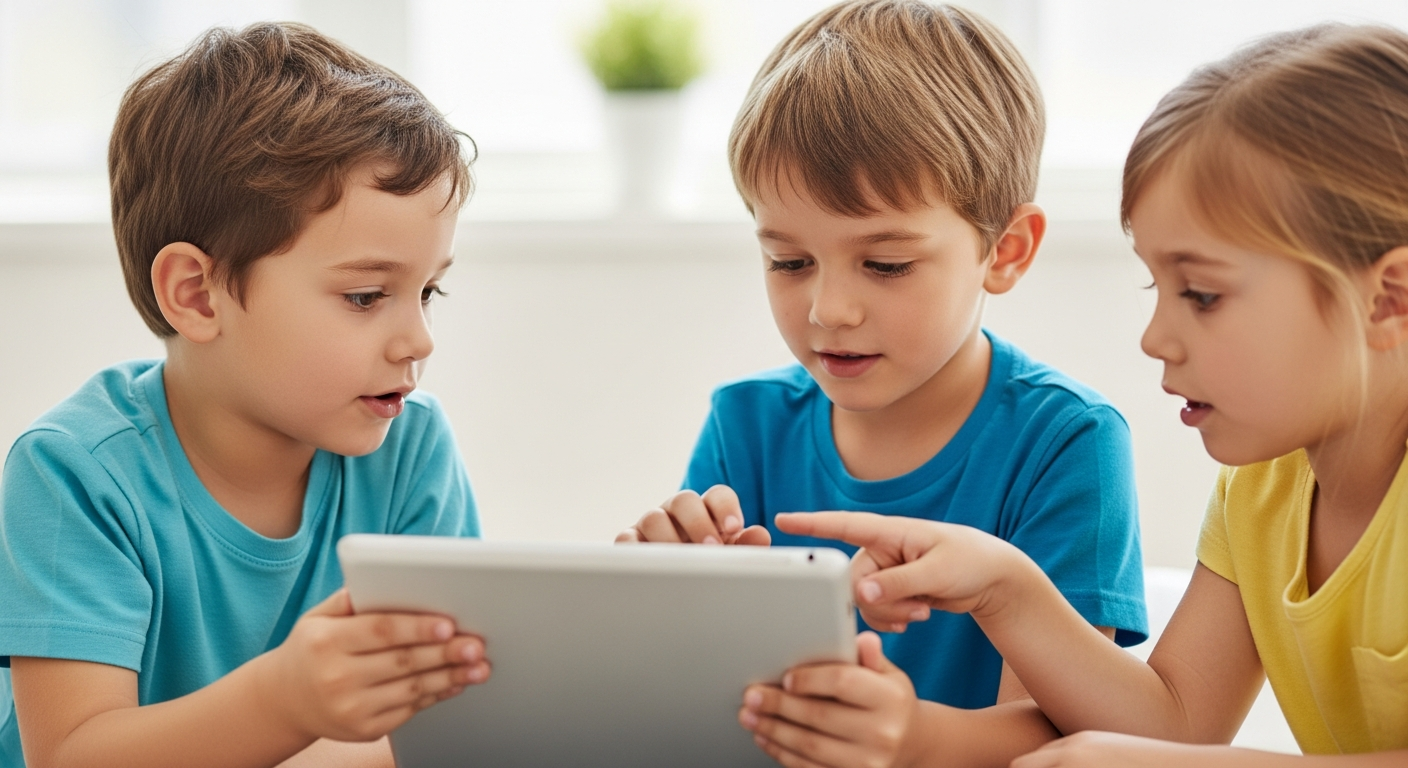
Table of Contents
- Introduction
- Understanding the Landscape of Speech Delays
- The Shift from Passive to Active Screen Time
- The Science of Video Modeling and Mirror Neurons
- Practical Scenarios: How Speech Blubs Works in Real Life
- Features That Make a Difference
- Setting Realistic Expectations and Celebrating Small Wins
- Choosing the Right Plan for Your Family
- Tips for Success: Making the Most of Your App Time
- The Speech Blubs Commitment
- FAQs
- Conclusion
Introduction
Did you know that approximately one in four children will experience some form of speech or language delay during their early development? For a parent, realizing your little one isn't hitting those expected milestones can be a source of immense worry. You might find yourself scrolling through forums at 2:00 AM, wondering if you should have read more books or if that extra hour of cartoons did more harm than good. But here is the truth: speech delays are incredibly common, and they are not a reflection of your parenting. At Speech Blubs, we understand this journey intimately because our founders grew up with speech challenges themselves. We created the tool they wished they had—a way to turn "screen time" into "smart time" that actually helps children find their voices.
In this guide, we are going to explore the landscape of digital tools designed to support communication. We will dive deep into why certain technologies work better than others, the science behind effective peer-to-peer learning, and how you can use apps for delayed speech as a powerful supplement to your child’s daily routine. Our mission is to empower children to speak their minds and hearts, and we believe that with the right approach, learning to communicate can be a joyful, play-filled experience rather than a stressful chore. By the end of this article, you’ll have a clear understanding of how to choose the right resources and how to integrate them into a lifestyle that fosters confidence and connection.

Understanding the Landscape of Speech Delays
When we talk about "delayed speech," we are referring to a broad spectrum. Some children are "late talkers" who understand everything but struggle to produce words. Others might have difficulty with articulation—the physical act of forming sounds—or with expressive language, which is the ability to put thoughts into sentences. Regardless of the specific challenge, the goal of intervention is always the same: to reduce frustration and build a foundation for lifelong communication.
The early years are a critical window for brain development. This is when the neural pathways responsible for language are at their most "plastic," meaning they are incredibly receptive to learning and adaptation. When a child struggles to communicate, it can lead to "behavioral" issues simply because they lack the tools to express their needs. "I want juice" becomes a tantrum because the words aren't available. By introducing supportive tools early, we aren't just teaching words; we are providing a relief valve for that frustration.
It is important to remember that technology should never replace human interaction. However, when used correctly, the right apps can act as a bridge. For parents who are unsure where their child stands, we recommend starting with our quick 3-minute preliminary screener. It involves nine simple questions and provides an assessment and a next-steps plan, giving you the clarity you need to move forward with confidence.
The Shift from Passive to Active Screen Time
There is a lot of "noise" out there regarding screen time. Many experts (and many parents) are understandably wary of children spending hours staring passively at bright, fast-paced cartoons. This type of passive viewing is often "one-way" communication—the child sits back, and the information washes over them without requiring a response.
However, not all screen time is created equal. We advocate for "Smart Screen Time," which is active, participatory, and grounded in educational principles. Instead of a child watching a character go on an adventure, they should be interacting with a peer who encourages them to make a sound, mimic a face, or name an object. This interactive loop—watch, listen, imitate, and be rewarded—is what transforms a tablet from a distraction into a learning tool.

At Speech Blubs, we’ve designed our experience to be a "screen-free alternative" in spirit. While it happens on a device, the goal is to get the child looking away from the screen to interact with you, the parent. We encourage co-play, where you sit with your child and cheer them on as they practice. This turns a digital activity into a powerful tool for family connection.
The Science of Video Modeling and Mirror Neurons
Why do children seem to gravitate toward certain apps more than others? The answer lies in how the human brain is wired to learn. Our methodology is built on a scientific principle called Video Modeling.
Research, including studies published by the American Speech-Language-Hearing Association (ASHA) and conducted at institutions like UCLA, shows that children learn more effectively when they watch their peers rather than adults. This is because of "mirror neurons." When a child watches another child perform an action—like puckering their lips to make a "fish face" or saying the word "apple"—the mirror neurons in their own brain fire as if they were doing the action themselves.
This peer-to-peer connection is the heartbeat of our app. Instead of a computer-generated voice or an adult instructor, your child sees real kids—our "Blubers"—sharing their successes. This creates a sense of "If they can do it, I can too!" It builds confidence and reduces the "performance anxiety" that some children feel when they are put on the spot by an adult to "say the word." Our scientific research highlights how this approach places our tools in the top tier of speech support worldwide.
Practical Scenarios: How Speech Blubs Works in Real Life
To truly understand the value of apps for delayed speech, it helps to see how they fit into the daily lives of families. We don't just provide a list of words; we provide themes that resonate with a child's natural interests.
The Animal Lover’s Breakthrough
Imagine a 3-year-old named Leo who loves his pet dog but hasn't yet started naming other animals. In the "Animal Kingdom" section of the app, Leo doesn't just see a picture of a lion; he sees a kid his age wearing a fun lion filter, making a "Roar!" sound. The app uses positive reinforcement, rewarding Leo with digital stickers and fun mini-games when he attempts to imitate the sound. For a parent, seeing that first intentional "Roar" is a milestone worth celebrating. It’s not just about the sound; it’s about Leo realizing he has the power to make that sound happen.
Building Confidence for the Shy Communicator
For a child who is hesitant to speak because they are self-conscious, the "Mouth Gym" section offers a low-pressure way to practice the physical movements of speech. Let’s say 4-year-old Maya struggles with certain consonant sounds. By using our fun face filters—which turn her into a silly monster or a brave firefighter—the focus shifts from "practicing speech" to "playing with filters." While she is laughing at her reflection, she is also practicing the tongue and lip placements necessary for clearer articulation. This play-based approach is key to building the confidence needed to speak in more public settings.
Connecting Daily Routines to Language
Parents often struggle to find time for "speech practice." We believe practice should happen naturally. For a child who loves cars and trucks, the "Ride Your Wheels" section provides the perfect vocabulary for your next walk around the neighborhood. After playing with the app and learning words like "stop," "go," "beep," and "bus," you can reinforce those words in real-time as you see a bus drive by. This bridge between the digital world and the physical world is where true learning sticks.
Features That Make a Difference
We have packed our platform with over 1,500 activities across 28 fun sections. Here is a closer look at what makes our "smart screen time" effective:
- Parents’ Academy: We believe that informed parents are the best advocates for their children. Our academy features over 350 articles written by speech professionals and educators, covering everything from homeschooling to managing tantrums.
- Reading Blubs: For those who choose our yearly plan, we include a dedicated reading app. Literacy and speech go hand-in-hand, and this tool helps children bridge the gap between spoken language and written words.
- Video Modeling: As mentioned, this is our "secret sauce." Watching peers makes the learning process relatable and less intimidating.
- No Ads or Distractions: We provide a 100% kid-safe environment. There are no flashy, distracting ads that take your child away from the learning experience.
- Multiple Profiles: We know families often have more than one child. One subscription allows you to create profiles for all your kids, ensuring everyone gets a personalized experience.
If you are ready to see these features in action, you can download Speech Blubs on the App Store or get it on Google Play.
Setting Realistic Expectations and Celebrating Small Wins
It is vital to approach any speech tool with a healthy perspective. While we are incredibly proud of our high success rates—which you can read about in our parent testimonials—we never want to overpromise. Every child is on their own timeline.
Using an app is a marathon, not a sprint. You might not see a complete change in your child's vocabulary in a week, and that is okay. The goal is to foster a love for communication. We look for the "small wins":
- Increased eye contact during play.
- A new attempt at a sound they previously ignored.
- Reduced frustration during mealtime because they pointed to a picture in the app to show what they wanted.
- A joyful giggle when they see themselves with a new face filter.
These foundational skills are the building blocks of complex communication. Our app is a powerful supplement to a child’s overall development plan and often works best alongside professional therapy if your child is already seeing an SLP.
Choosing the Right Plan for Your Family
We want to be transparent about our pricing because we believe in building trust with the families we serve. We offer two main ways to access our full library of content:
- Monthly Plan: At $14.99 per month, this is a great way to test the waters and see if your child responds well to our video modeling method.
- Yearly Plan: At $59.99 per year, this is our most popular and highest-value option. It breaks down to just $4.99 per month, which is a 66% saving compared to the monthly rate.
Why we recommend the Yearly Plan: The yearly plan isn't just about the cost savings. It includes several exclusive benefits designed to give your child the best possible start:
- 7-Day Free Trial: You can explore everything we have to offer for a full week before you are charged.
- Reading Blubs App: You get full access to our secondary app dedicated to literacy and early reading skills.
- Priority Support: You receive a 24-hour response time from our support team and early access to all new updates and features.
The monthly plan does not include the free trial or the Reading Blubs app. To get the full suite of features and the best value, we encourage you to sign up and begin your 7-day free trial today.
Tips for Success: Making the Most of Your App Time
To maximize the benefits of apps for delayed speech, consider these strategies:
Make it a Routine, Not a Chore Try to integrate the app into a specific time of day, such as after breakfast or before nap time. When a child knows what to expect, they are more likely to engage.
Be the Cheerleader Sit with your child. When the "Bluber" on the screen makes a sound, you make the sound too! Show your child that making sounds is fun and that you are proud of every attempt they make.
Use the "Boop" Method When your child touches an object on the screen, add a fun vocalization like "Boop!" or "Pop!" This adds an extra layer of engagement and encourages them to associate physical touch with sound production.
Follow Their Lead If your child is obsessed with the "Yummy Time" section because they love food, stay there! Don't feel like you have to move through the sections in order. Motivation is the strongest driver of learning.
The Speech Blubs Commitment
At the heart of everything we do is a commitment to the "1 in 4." We know that speech support can be expensive and difficult to access. Our mission is to provide an immediate, effective, and joyful solution that fits into your pocket. We aren't just a tech company; we are a group of individuals who know what it’s like to feel "stuck" behind a wall of unspoken words.
Our app is designed to be "smart," but the real magic happens between you and your child. We provide the prompts, the peer models, and the scientific framework, but the connection—the moment your child looks at you and shares a new word—is all yours.
FAQs
1. Are apps for delayed speech a replacement for traditional speech therapy?
No, we view our app as a powerful supplement to professional therapy. While many families use Speech Blubs to jumpstart their child's language journey at home, it is always a good idea to consult with a certified Speech-Language Pathologist (SLP) for a personalized clinical assessment. Our app provides the "at-home" practice that can help reinforce what is learned in clinical sessions.
2. My child is easily overstimulated. Is the app too "busy"?
We have specifically designed Speech Blubs to be a safe, non-intrusive learning experience. Unlike many "fast-paced" apps or cartoons, we have zero ads and no flashy, unnecessary features. The focus remains on the peer models and the speech exercises to ensure that children with sensory sensitivities can engage comfortably.
3. Does the app work for children with Autism or Down Syndrome?
Yes! Our app is used by many children with neurodevelopmental disorders, including Autism Spectrum Disorder (ASD) and Down Syndrome. The video modeling technique and the ABA-inspired (Applied Behavior Analysis) positive reinforcement are particularly effective for these learners. However, every child is unique, so we recommend using our 7-day trial to see how your child responds.
4. Can I use the app on more than one device?
Absolutely. One of the benefits of our platform is that we support multiple devices. With one sign-in, you can access the app on your phone, a tablet, or even a partner’s device. This makes it easy to maintain a routine whether you are at home, at a grandparent's house, or on the go.
Conclusion
Navigating a speech delay can feel like a lonely path, but you don't have to walk it alone. The right tools can transform frustration into curiosity and silence into a "Roar!" or a "Mama!" By focusing on science-backed methods like video modeling and choosing "smart screen time," you are giving your child a head start in a world that relies on communication.
Remember, the most important part of this journey is the bond you share with your child. Whether you are playing in the "Mouth Gym" or learning about animals together, those moments of connection are where the real progress happens. We are honored to be a part of your family's story and to help your child finally "speak their mind and heart."
Ready to start this journey with us? We invite you to download Speech Blubs on the App Store or Google Play to begin. To get the absolute best value—including a 7-day free trial, the Reading Blubs app, and full access to our Parent Academy—be sure to select the Yearly plan. It’s an investment in your child’s voice that costs less than a single session of traditional therapy. Let’s start talking!
About the author