
Endless Joy: Over 100 Fun Activities to Do with Kids for Communication & Connection
 By Speech Blubs Team•Jan 13, 2026•19 min.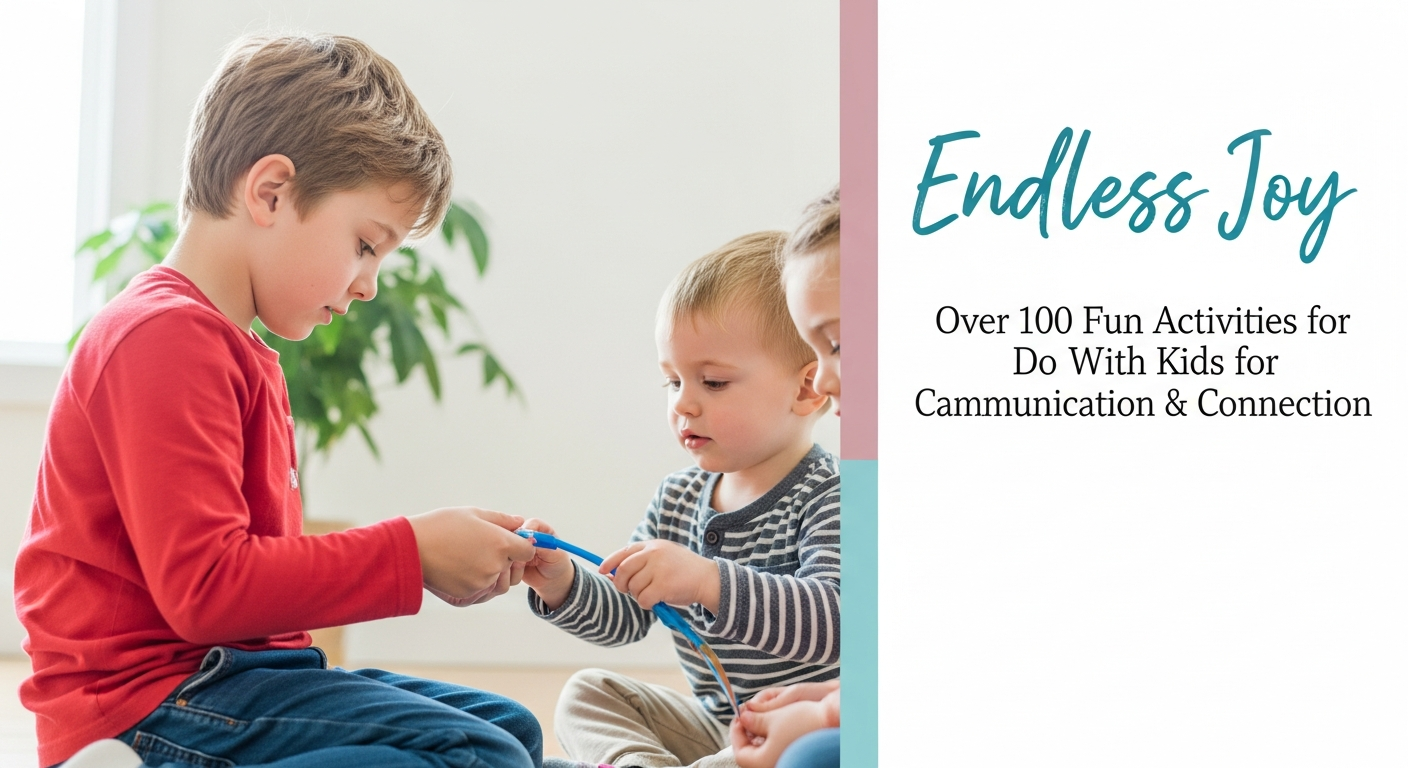
Table of Contents
- Introduction
- The Power of Play: Why Fun Activities Matter Beyond Entertainment
- Unleashing Creativity: Indoor Adventures for Every Mood
- Getting Active Indoors: Energy-Busting Fun
- Exploring the Great Outdoors: Fresh Air & Discovery
- Connecting Through Communication: Making Every Activity a Language Opportunity
- Integrating Speech Blubs into Your Family's Fun Activities
- Making the Most of Speech Blubs: Our Value & Plans
- Conclusion
- FAQ
Introduction
"I'm bored!" Has this familiar refrain ever echoed through your home, leaving you scrambling for ideas? Or perhaps you're simply seeking fresh inspiration to enrich your child's days with laughter, learning, and meaningful connection. In a world brimming with digital distractions, fostering engaging, hands-on experiences for our children is more vital than ever. It's not just about filling time; it's about nurturing their development, igniting their creativity, and building stronger family bonds. This comprehensive guide is designed to be your go-to resource, packed with over 100 diverse, fun activities that promise to transform ordinary moments into extraordinary adventures. From imaginative indoor escapades to invigorating outdoor explorations, we’ll dive into how play can naturally enhance everything from fine motor skills to crucial language development, empowering your child to express themselves confidently and joyfully.

The Power of Play: Why Fun Activities Matter Beyond Entertainment
Play is often seen as mere recreation, but for children, it is the primary avenue through which they learn, grow, and understand the world. It’s their work, their classroom, and their therapist all rolled into one. Engaging in fun, diverse activities offers a wealth of developmental benefits that extend far beyond simply keeping them occupied.
From a cognitive perspective, play sharpens problem-solving skills, encourages critical thinking, and boosts creativity. When building a towering fort, a child isn't just stacking pillows; they're experimenting with physics, spatial reasoning, and engineering principles. Similarly, a treasure hunt involves memory, deduction, and following sequential instructions. These seemingly simple games lay crucial foundations for academic success later on.
Socially and emotionally, play is indispensable. It teaches children how to share, negotiate, cooperate, and empathize with others. Whether it's a board game that demands turn-taking or a pretend play scenario that requires role-switching, children learn vital social cues and emotional regulation. They learn to navigate conflict, express feelings appropriately, and understand different perspectives, all within a safe and joyful context.
And then there's language. Every single activity, whether it involves drawing a picture, chasing bubbles, or baking cookies, is a golden opportunity for language development. Children learn new vocabulary as they describe colors, textures, and actions. They practice forming sentences as they explain what they're doing, ask questions, or tell stories about their play. The back-and-forth dialogue during play strengthens conversational skills, listening comprehension, and narrative abilities, giving them the tools to confidently "speak their minds and hearts."
At Speech Blubs, we understand this profound connection between play and development. Our mission is built on the belief that every child deserves the chance to communicate effectively. Our company was born from the personal experiences of our founders, who all grew up with speech problems and created the tool they wished they had: a solution that blends scientific principles with play into one-of-a-kind "smart screen time" experiences. We are committed to providing an immediate, effective, and joyful solution for the 1 in 4 children who need speech support, providing a screen-free alternative to passive viewing (like cartoons) and a powerful tool for family connection. We believe that when play is purposeful and engaging, it becomes a catalyst for remarkable growth. To learn more about our values and approach, you can visit our main homepage.

Unleashing Creativity: Indoor Adventures for Every Mood
When the weather outside is frightful, or you're simply looking for a quiet afternoon indoors, your home becomes a canvas for imagination. These activities are designed to spark creativity, encourage self-expression, and foster focused play.
Crafts & Artistic Expression
Art is a universal language, and providing opportunities for creative expression is vital for cognitive and emotional development.
- Drawing, Painting & Sculpting: Provide a variety of materials like crayons, markers, washable paints, play-dough, or even kinetic sand. Encourage them to draw what they see, feel, or imagine. Ask them about their creations – "Tell me about this blue monster!" or "What's happening in your drawing?"
- DIY Instruments: Gather empty tissue boxes, rubber bands, rice, and jars to create shakers, guitars, or drums. This introduces concepts of sound, rhythm, and cause-and-effect.
- Paper Crafts: From simple paper airplanes that teach basic aerodynamics to intricate origami (for slightly older kids) or cutting out paper snowflakes, paper offers endless possibilities. You can even make postcards to send to family, practicing writing and addressing skills.
- Found Object Art: Collect natural items from a walk (pinecones, leaves, small stones) or household recyclables (cardboard tubes, bottle caps) and let your child glue or tape them into unique sculptures or collages. This encourages observation and repurposing.
Building & Construction
Building activities are fantastic for developing spatial reasoning, problem-solving skills, and fine motor control. They also naturally encourage descriptive language and collaboration.
- Forts & Cozy Nooks: Use couch cushions, blankets, pillows, and chairs to construct the ultimate hideaway. Once built, read a story inside with a flashlight or enjoy a quiet snack. This promotes imaginative play and cooperative effort.
- LEGOs, Blocks & Magnatiles: Provide a diverse set of building materials. Encourage them to build structures, vehicles, or fantastical worlds. Ask open-ended questions like, "What are you building here?" or "How did you make that part stay up?"
- Box Creations: Save those large cardboard boxes! They can be transformed into anything a child imagines – a rocket ship, a car, a house, a puppet theater, or even an animal hospital. Decorating them with paint and markers adds another layer of fun. This is wonderful for symbolic play and detailed descriptions.
- Rube Goldberg Machines: For older children, introduce the concept of a Rube Goldberg machine using dominoes, marbles, LEGO bricks, and other construction toys. This challenges their STEM skills and ability to plan sequential events, using language to explain the chain reaction.
Imaginative & Pretend Play
Pretend play is crucial for developing narrative skills, empathy, and social understanding. It allows children to explore different roles and situations in a safe environment.
- Dress-Up & Role-Playing: Keep a bin of old clothes, costumes, and accessories for spontaneous dress-up. Encourage them to embody characters – a doctor, a chef, a superhero, or a zookeeper. This sparks dialogue and allows them to practice different voices and scenarios.
- Puppet Shows: Use socks, paper bags, or even stuffed animals to create characters. Cut a big hole in a cardboard box for a stage and let the show begin. This is excellent for storytelling, character development, and using varied vocalizations.
- Pretend Restaurant/Grocery Store: Set up a mock restaurant with menus and play food, or a grocery store with empty food containers. This involves counting, categorizing, making requests, and following social scripts.
- Animal Hospital: Gather stuffed animals and pretend medical supplies (bandages, toy stethoscope). Children can diagnose, treat, and comfort their "patients," using empathetic language and following simple care instructions.
For parents whose 3-year-old "late talker" loves animals and has just come back from the zoo, the "Animal Kingdom" section within Speech Blubs offers a fun, motivating way to practice "moo" and "baa" sounds, or even simple sentences like "elephant big" by watching peers. This reinforces learning from the real-world experience, seamlessly blending play with targeted speech practice.
Sensory Play
Engaging the senses helps children learn about textures, temperatures, and properties of materials, while also being incredibly calming and engaging.
- Slime or Kinetic Sand: These provide unique tactile experiences. Encourage them to describe how it feels: "Is it squishy? Sticky? Stretchy?"
- Water Play: A tub of water with some cups, scoops, and toys can provide hours of fun. Add a few drops of food coloring for extra visual appeal. Discuss concepts like "full," "empty," "float," and "sink."
- Sensory Bins: Fill a container with rice, dried beans, pasta, or sand, and add small toys, scoops, and cups. Children can dig, pour, and explore, describing what they find and do.
Getting Active Indoors: Energy-Busting Fun
Sometimes, kids just need to move! These activities are perfect for burning off energy indoors, developing gross motor skills, and integrating language into physical action.
Movement Games
- Obstacle Courses: Use pillows, blankets, tunnels, chairs, and tape on the floor to create a course. Give instructions like "crawl under the chair," "jump over the pillow," or "walk on the tape line." This is excellent for following multi-step directions and understanding spatial concepts.
- Dance Parties: Put on some upbeat music and just let loose! Encourage different dance moves or have a "freeze dance" party. This can be a great way to express emotions and learn body parts through movement.
- Hide-and-Seek: A classic for a reason. This game promotes spatial awareness, problem-solving, and encourages the use of directional language ("Are you behind the curtain?").
- "The Floor is Lava": A fun imaginative game that requires quick thinking and problem-solving as children navigate furniture to avoid touching the "lava."
- Balloon Volleyball/Soccer: Use a blown-up balloon as a soft, safe "ball" for indoor games. This develops hand-eye coordination and provides a context for words like "hit," "catch," and "pass."
- Mini Trampoline: A great way for kids to bounce out energy. You can count jumps together, or describe different ways to jump (e.g., "frog jump," "star jump").
Structured Play
- Board Games & Card Games: Introduce age-appropriate board games like "First Orchard," "Don't Break the Ice," or "Hungry Hungry Hippos." Card games like UNO or Rat-a-tat cat are also great. These teach turn-taking, following rules, counting, and strategy, all while encouraging conversation and negotiation.
- "Minute to Win It" Challenges: Set up simple, quick challenges using household items (e.g., stacking cups, moving cotton balls with a straw). These are exciting, build focus, and often involve explaining the rules or cheering others on.
Exploring the Great Outdoors: Fresh Air & Discovery
There’s nothing quite like the fresh air and open space for invigorating play and learning. Outdoor activities connect children with nature, encourage physical activity, and provide rich sensory experiences that are perfect for language growth.
Nature Walks & Scavenger Hunts
- Exploration Walks: Simply go for a walk in your neighborhood, a local park, or a nature trail. Encourage observation: "What do you hear?" "What do you see?" Bring a magnifying glass to examine leaves, insects, or tiny flowers up close. This expands vocabulary and encourages descriptive language.
- Nature Scavenger Hunts: Create a list of items for children to find (e.g., "something red," "a smooth stone," "a feather," "a bumpy leaf"). This sharpens observational skills, categorization, and introduces new descriptive words.
- Geocaching: For older kids, this high-tech treasure hunt uses GPS coordinates to find hidden containers, combining outdoor adventure with problem-solving.
Active Outdoor Play
- Biking & Scootering: These activities develop gross motor skills, balance, and coordination. Discuss directions ("turn left," "go straight") and safety rules.
- Park Play: Head to a local playground for climbing, swinging, and sliding. These activities help with muscle development and spatial awareness. Encourage descriptive language about the equipment and actions.
- Sports & Ball Games: Kicking a soccer ball, throwing a frisbee, or playing catch. These activities build coordination, teamwork, and provide opportunities for simple commands and descriptive words ("fast," "high," "miss!").
- Water Play: Splashing in a puddle, running through sprinklers, or playing with water balloons on a warm day. This is a sensory delight and a fun way to cool off, with endless opportunities to talk about "wet," "splash," "cold," and "hot."
Gardening & Observation
- Planting & Tending: Start a small garden together, whether it’s a raised bed, pots on a patio, or even an indoor herb garden. Children can help plant seeds, water plants, and observe their growth. This teaches patience, responsibility, and introduces vocabulary related to nature and life cycles.
- Rock Painting: Collect smooth rocks and paint them with colorful designs. You can hide them in public places for others to find, or use them to create a rock garden. This is a creative and community-minded activity.
Connecting Through Communication: Making Every Activity a Language Opportunity
Every single activity, regardless of its primary purpose, is a valuable opportunity to foster your child’s communication skills. The key is active engagement from you, the caregiver.
Read Alouds & Storytelling
- Reading Together: This is arguably one of the most impactful activities for language development. Read books aloud, point to pictures, ask questions about the story, and encourage predictions. This builds vocabulary, comprehension, and a love for reading. For quiet time, try listening to audiobooks together.
- Creating Stories: Encourage your child to create their own stories, either verbally or by drawing pictures. You can act as their scribe, writing down their words. This develops narrative skills, sequencing, and imaginative thinking.
- Puppet Shows & Plays: As mentioned earlier, these are fantastic for character development, dialogue, and expressing emotions through different voices.
Conversational Games
- "I Spy": This classic game builds vocabulary and descriptive language ("I spy something green and round").
- "Would You Rather?": These questions spark imagination, encourage choices, and prompt children to explain their reasoning ("Would you rather fly like a bird or swim like a fish, and why?").
- Riddles: Solving riddles enhances critical thinking, vocabulary, and problem-solving skills.
- Family Conversations: Make time for open-ended questions at meal times or during car rides. "What was the best part of your day?" or "If you could invent anything, what would it be?" These questions encourage thoughtful responses and conversational turn-taking.
Real-Life Skills with a Language Twist
Involving children in everyday tasks provides practical learning experiences and natural contexts for language.
- Cooking & Baking: Let your child help with simple steps like mixing, pouring, or kneading dough. Talk about ingredients, measurements, and the steps of the recipe ("First, we add the flour, then we stir"). This builds vocabulary, sequencing, and following multi-step instructions.
- Cleaning & Chores: Turn cleaning into a game. "Let's find all the red toys and put them in the bin!" or "Can you help me wipe the table?" This teaches responsibility and provides context for directional words and task-related vocabulary.
- Packing Lunches/Snacks: Discuss food choices, categories (fruits, vegetables), and healthy eating habits. "Which fruit would you like for your snack today?"
These activities, combined with our carefully designed approach at Speech Blubs, create a holistic environment for language growth. We understand that parents are looking for tools that are not only effective but also fit seamlessly into their busy lives.
Integrating Speech Blubs into Your Family's Fun Activities
At Speech Blubs, we believe that effective speech support should be an engaging and empowering journey for both children and parents. Our app is designed to be a powerful supplement to these wonderful activities you do with your child, enhancing their communication skills in a joyful, scientifically-backed way. It's not a replacement for human interaction or professional therapy, but rather a robust tool that makes "smart screen time" work for you and your child.
Our core methodology, video modeling, is a cornerstone of our approach. Children learn by watching and imitating their peers, leveraging the natural power of mirror neurons. This technique is clinically proven and highly engaging for children, as they respond intuitively to other kids. Imagine your child seeing a peer demonstrate the sound "moo" in our "Animal Kingdom" section; they are naturally encouraged to imitate, making the learning process feel like play. This scientific basis is why leading research institutions have given us a high MARS scale rating. You can delve deeper into the science behind our methods by visiting our research page.
Here’s how Speech Blubs seamlessly integrates with and elevates your family’s fun activities:
- Reinforcing Real-World Learning: After a trip to the zoo, a nature walk, or even just playing with toy animals, our app’s diverse sections (like "Animal Kingdom," "Outer Space," or "Yummy Time") offer a structured way to reinforce new vocabulary and sounds. If your child is learning about farm animals, they can practice saying "cow" or "pig" by watching and imitating kids on screen, bridging their real-life experiences with targeted speech practice.
- Building Confidence Through Play: Many children struggle with speech delays, leading to frustration. Our app aims to reduce this frustration by providing a low-pressure, playful environment where they can practice at their own pace. The joyful interactions with peers on screen build self-esteem and encourage them to try new sounds and words, empowering them to "speak their minds and hearts."
- A Tool for Family Connection: Unlike passive cartoons, Speech Blubs is designed for active participation. Parents often sit with their children, guiding them, celebrating their progress, and engaging in the activities together. This transforms screen time into an opportunity for shared learning and bonding, strengthening family connections.
- Addressing Specific Speech Needs: For a parent whose 4-year-old is having trouble with specific consonant sounds, the "Speech Sounds" section of Speech Blubs offers targeted exercises. They can practice making the 'sh' sound, for example, by mimicking various peers, making it a game rather than a chore. This focused practice can be a powerful supplement to any professional therapy they might be receiving.
Unsure if your child could benefit from a little extra speech support? Take our quick 3-minute preliminary screener. It involves 9 simple questions and provides you with an assessment and next-steps plan, including a free 7-day trial of Speech Blubs, so you can see the magic for yourself. Read what other parents are saying about their child's success with our app on our testimonials page.
Making the Most of Speech Blubs: Our Value & Plans
We believe in transparency and providing exceptional value to every family. Choosing the right plan for Speech Blubs means unlocking the full potential of our unique, science-backed approach.
We offer two straightforward subscription options:
- Monthly Plan: For just $14.99 per month, you get access to all the core features of the Speech Blubs app. This is a great option for those who prefer month-to-month flexibility.
- Yearly Plan: Our most popular and highly recommended option, priced at $59.99 per year. This breaks down to an incredible $4.99 per month, allowing you to save a significant 66% compared to the monthly plan!
The Yearly Plan isn't just about significant savings; it's about unlocking the ultimate Speech Blubs experience with exclusive, high-value features designed to support your child's communication journey even further:
- A 7-Day Free Trial: Only with the Yearly Plan can you enjoy a full week of free access to explore all the features and see firsthand how Speech Blubs can benefit your child. It’s a risk-free way to ensure it’s the perfect fit for your family.
- The Extra Reading Blubs App: This fantastic companion app is included exclusively with the Yearly Plan, offering additional literacy support to complement speech development. It's like getting two powerful tools for the price of one!
- Early Access to New Updates: Be among the first to experience exciting new activities, features, and content as soon as they're released, keeping your child's learning fresh and engaging.
- 24-Hour Support Response Time: Get priority support from our dedicated team, ensuring any questions or technical issues are addressed quickly and efficiently, so your child's learning never misses a beat.
The Monthly Plan, while flexible, does not include these valuable benefits. For the best value, the most comprehensive features, and the chance to try it out completely free for 7 days, we strongly encourage you to choose the Yearly Plan. It's the ideal way to fully commit to your child's speech development with all the tools at your fingertips.
Ready to provide your child with joyful, effective speech support? Create your account and begin your 7-day free trial today by choosing the Yearly plan.
Conclusion
Engaging in fun activities with your children is more than just entertainment; it's an investment in their holistic development, fostering critical thinking, emotional intelligence, physical coordination, and, most importantly, powerful communication skills. From the simple joy of building a fort to the expansive wonder of a nature walk, every moment is an opportunity to connect, learn, and grow together.
At Speech Blubs, we are committed to empowering children to "speak their minds and hearts." We provide a unique, science-backed approach that turns screen time into "smart screen time," leveraging video modeling to make speech practice engaging, effective, and joyful. By seamlessly blending our app into your family's daily fun, you're not just supporting speech development; you're nurturing confidence, reducing frustration, and creating countless cherished memories.
Don't let another day pass by wondering how to spark your child's communication potential. Take the first step towards a brighter, more communicative future for your child. We invite you to experience the transformative power of Speech Blubs. Download our app and start your 7-day free trial today by choosing the Yearly plan to unlock all the premium features and exclusive content, including the Reading Blubs app and priority support.
Join our community of happy families and discover how delightful speech development can be!
FAQ
Q: How do these fun activities help my child's speech development? A: Engaging in diverse activities naturally provides rich contexts for language learning. Children acquire new vocabulary as they describe objects and actions, practice forming sentences when explaining their play, and develop conversational skills through back-and-forth dialogue. Activities like storytelling, role-playing, and following instructions specifically target narrative abilities, comprehension, and expressive language, all while making learning fun and organic.
Q: How is Speech Blubs different from other educational apps? A: Speech Blubs stands out with its unique video modeling methodology, where children learn by watching and imitating their peers, rather than animated characters. This approach leverages the power of mirror neurons, making learning intuitive and highly engaging. Our app is rooted in scientific principles and designed by experts, offering "smart screen time" that encourages active participation and family connection, providing a purposeful alternative to passive viewing experiences.
Q: What if my child is resistant to trying new activities? A: It's completely normal for children to prefer familiar routines. Start by offering choices from a selection of activities, allowing them some control. Introduce new activities gradually, starting with short bursts of time and integrating their favorite toys or themes. Model enthusiasm yourself and emphasize the "fun" aspect rather than "learning." Remember, the goal is joyful engagement, not perfection.
Q: How much time should we spend on these activities daily? A: There's no magic number, as every child and family is different. Aim for quality over quantity. Even 15-30 minutes of focused, interactive play each day can be incredibly beneficial. Incorporate activities naturally throughout your day – involve them in meal prep, talk about what you see on a walk, or spend a short period crafting. The key is consistent, engaged interaction that creates a language-rich environment.
About the author