
Endless Summer Fun: Easy Beach Crafts for Kids
 By Speech Blubs Team•Jan 13, 2026•23 min.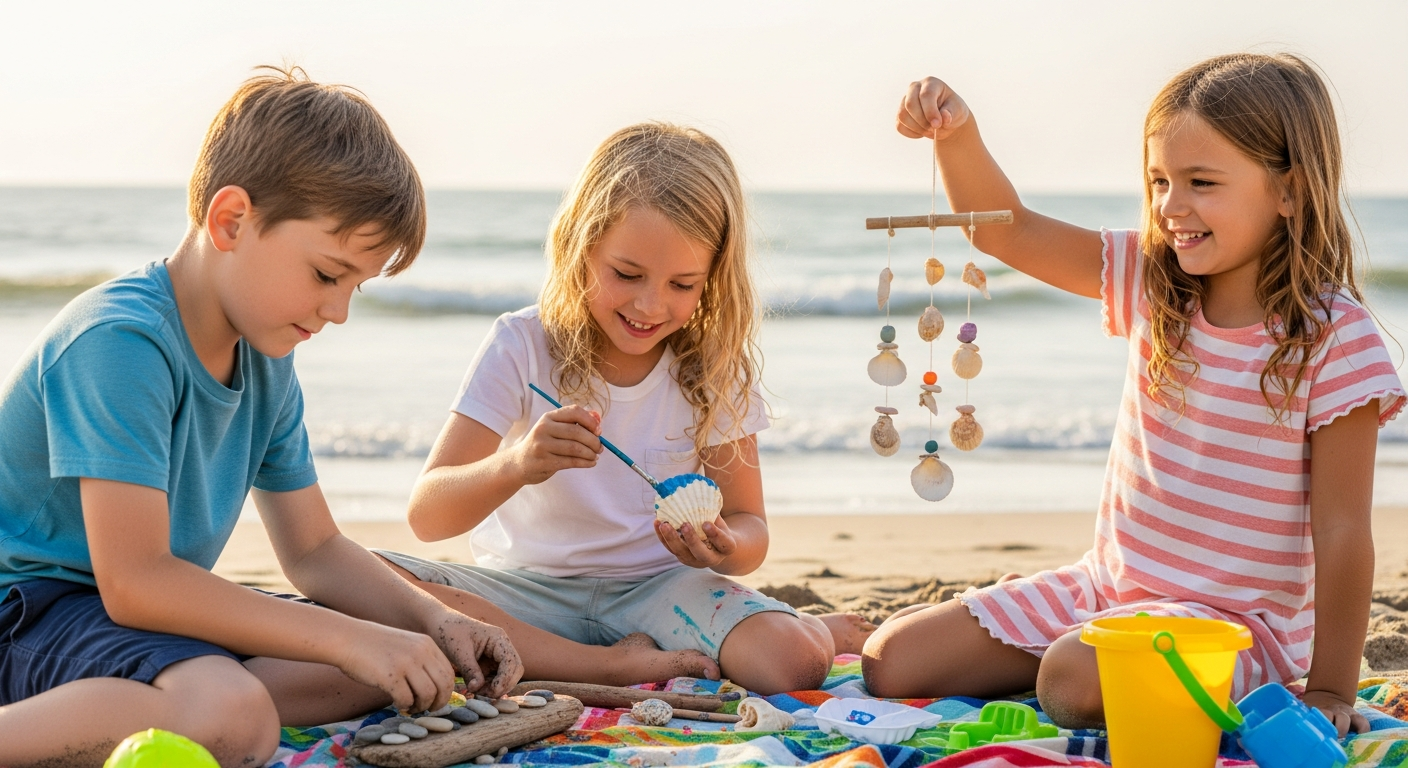
Table of Contents
- Why Beach Crafts Are More Than Just Fun
- Getting Started: Your Essential Beach Craft Kit
- On-the-Beach Craft Adventures: Instant Gratification & Exploration
- Bringing the Beach Home: Crafts for Lasting Memories & Continued Learning
- Beyond the Craft: Enhancing Communication with Speech Blubs
- Making it Educational: STEM Connections in Beach Crafts
- Troubleshooting & Tips for Seamless Beach Crafting
- The Speech Blubs Difference: Your Partner in the Communication Journey
- Conclusion
- FAQ: Your Beach Crafting Questions Answered
Ever found yourself on a beautiful beach day, surrounded by the soothing sound of waves and a mountain of sand, only to hear the familiar refrain, "I'm bored!" from your little adventurer? Or perhaps you've returned home with pockets full of shimmering shells and smooth pebbles, wondering how to turn these treasures into lasting memories. The beach is a wonderland of natural materials, a giant sandbox begging for creative exploration. This isn't just about keeping little hands busy; it's a powerful opportunity to ignite imagination, foster development, and create truly special family moments.
At Speech Blubs, we believe in empowering children to "speak their minds and hearts," and we know that engaging with the world around them is key to unlocking their communication potential. Our company was born from a deeply personal place; our founders, all of whom experienced speech challenges as children, created the very tool they wished they had. We are passionate about providing an immediate, effective, and joyful solution for the 1 in 4 children who need speech support, blending scientific principles with play into one-of-a-kind "smart screen time" experiences. Just as our app encourages interaction and imitation through video modeling, beach crafts offer a rich, screen-free alternative that fosters connection and skill-building. This comprehensive guide will transform your beach outings into treasure hunts for creativity, offering a wealth of engaging and educational craft ideas that promise to turn every shell, pebble, and grain of sand into a story waiting to be told.

Why Beach Crafts Are More Than Just Fun
Engaging in crafts at the beach or with beach-found treasures isn't just a delightful pastime; it's a dynamic avenue for holistic child development. These activities inherently align with many of the core values we champion at Speech Blubs, offering rich, screen-free educational alternatives that benefit children in myriad ways, especially in fostering communication skills.
Sparking Curiosity and Creativity
The beach itself is a colossal natural laboratory and art studio. With its ever-changing landscape, diverse natural materials, and the constant ebb and flow of the tide, it naturally ignites a child’s innate sense of wonder. Beach crafts encourage children to observe their surroundings more closely, to ask questions about how things work, and to imagine new possibilities for the items they collect. Why does this shell have ridges? How did this piece of wood get so smooth? What can I turn these seemingly ordinary objects into? This open-ended approach to play and creation is fundamental to nurturing creative thinking and problem-solving skills. As children engage with these natural elements, they are constantly finding new ways to express themselves, which directly supports their desire to communicate their discoveries and ideas.
Developing Essential Skills
Beyond boundless imagination, beach crafts are instrumental in honing a variety of crucial developmental skills:
- Fine Motor Skills: The precision required to pick up tiny shells, paint intricate patterns, thread beads, or carefully arrange small pebbles all strengthens the small muscles in the hands and fingers. These actions are vital precursors for tasks like writing, drawing, and even forming speech sounds with tongue and lip movements.
- Language Development: This is where beach crafts truly shine in support of a child's communication journey. As children explore, collect, and create, they naturally use and expand their vocabulary. They describe the textures of sand ("gritty," "smooth"), the colors of sea glass ("teal," "amber"), the shapes of shells ("spiral," "fan"), and the actions they perform ("digging," "piling," "painting"). Parents can narrate the process, ask open-ended questions, and encourage their child to articulate their choices and observations, transforming every craft into a language-rich learning experience.
- Problem-Solving & Critical Thinking: Deciding how to balance a driftwood sculpture, how to make sand stick together for a complex structure, or how to attach a shell to a piece of art encourages children to think critically, experiment with different approaches, and learn from trial and error. This iterative process builds resilience and fosters innovative thinking, skills invaluable in both play and communication.
- Sensory Exploration: The beach is a feast for the senses. The cool, wet sand, the rough texture of a barnacle-covered rock, the smooth polish of sea glass, and the unique scent of the ocean all provide rich sensory input. Crafts that involve touching, molding, and manipulating these natural materials enhance sensory integration and awareness, which can be particularly beneficial for children who are still developing their sensory processing skills. This sensory engagement can also be a springboard for descriptive language.
- Patience and Persistence: Some beach craft projects, especially those involving drying times or intricate designs, teach children the value of patience and the reward of seeing a project through to completion. This builds resilience and a sense of accomplishment, reinforcing the idea that effort leads to satisfying outcomes, much like the practice required in learning new speech sounds.
- Emotional Regulation: The rhythmic sounds of the ocean and the focused nature of crafting can have a calming effect, helping children regulate their emotions and reduce frustration. This peaceful environment is ideal for encouraging communication without pressure.
Facilitating Family Bonding & Screen-Free Fun
In a world increasingly dominated by screens, beach crafts offer a refreshing and meaningful alternative for family engagement. These activities provide a shared focus, encouraging communication, collaboration, and laughter. Imagine the joy of building a magnificent sandcastle together, or the pride in creating a collaborative piece of art using collected treasures. These moments become cherished family memories, strengthening bonds and fostering a sense of togetherness. We at Speech Blubs are passionate about creating opportunities for families to connect over engaging, hands-on learning experiences, and beach crafting is a perfect example of this philosophy in action. It’s about creating "smart screen time" with our app and "smart family time" with activities like these.

Unsure if your child could benefit from a little extra support with their communication? Take our quick 3-minute preliminary screener to get a simple assessment and a free 7-day trial. It's a great first step on your journey to empowering your child to "speak their minds and hearts." Take our quick 3-minute preliminary screener!
Getting Started: Your Essential Beach Craft Kit
Before you embark on your creative beach adventures, a little preparation goes a long way. The beauty of beach crafts is that many materials are naturally abundant. However, a small, portable craft kit can amplify the possibilities and ensure you're ready for any burst of inspiration.
Beach-Found Materials: Your Natural Treasure Trove
Encourage children to become keen observers and collectors. The beach provides an endless supply of free, inspiring craft materials. As they gather, prompt them to describe what they find: "What color is that shell?" "Is that pebble smooth or rough?" "How big is that piece of driftwood?"
- Seashells: From tiny fragments to large conchs, each shell is unique in shape, texture, and color. These are perfect for counting, sorting, and describing.
- Pebbles & Rocks: Smooth, colorful, textured, or oddly shaped – ideal for painting, stacking, or creating patterns.
- Driftwood: Weathered and smoothed by the ocean, offering fascinating shapes for sculptures or decorative pieces. Talk about the shapes you see, like "curly," "long," "bumpy."
- Sand: The ultimate malleable medium, ready for sculpting, drawing, and molding. Discuss its texture: "Is it wet sand or dry sand?"
- Sea Glass: Polished by the waves, these colorful shards are like nature's jewels. Name the colors and count the pieces.
- Feathers, Dried Seaweed, Pinecones (if nearby): Add organic texture and variety to creations. These can be great for practicing descriptive adjectives.
Tip for Collection: Bring a few mesh bags or buckets for collecting. Mesh allows sand and water to drain, and a separate container for fragile items is wise. Remind children to only take what they need and to leave plenty for others and for the ecosystem. Emphasize that we never take live creatures or shells with living inhabitants. This is a great opportunity to talk about respecting nature.
Your Portable Beach Craft Kit: Small but Mighty
While the beach provides the canvas, a few carefully chosen items can transform your crafting experience. When packing these, discuss each item with your child: "We're bringing glue to stick things. What does glue do?"
- Small Squeeze Bottles of Washable Glue: Great for impromptu collages on rocks or paper. Encourages fine motor control in squeezing.
- Waterproof Markers or Acrylic Paint Pens: For decorating shells and rocks without needing brushes and water. Name the colors as you use them. "Let's use the blue marker!"
- Small Paintbrushes & a Small Cup for Water: If using liquid paints. Helps practice color names and actions like "dip" and "paint."
- Small Pad of Paper or Sketchbook: For drawing inspiration from the ocean or sketching ideas. Encourages pre-writing and storytelling.
- Ziploc Bags (Various Sizes): To store collected treasures, protect unfinished projects, or mix sand clay. Good for practicing "open" and "close."
- Small Containers (like empty spice jars): For tiny shells or sea glass. Great for sorting and categorizing.
- Child-Safe Scissors: For cutting paper or other lightweight materials if you bring any. Reinforces fine motor skills.
- Wet Wipes & Hand Sanitizer: Essential for cleanup before and after crafting. Talk about being "clean."
- Old Towel or Picnic Blanket: To create a designated crafting zone and protect clothes.
- Magnifying Glass: To examine tiny shells, sand grains, and beach finds up close, sparking scientific observation and prompting descriptive language ("Look how tiny that is!").
Safety First at the Beach
Always prioritize safety. Ensure adult supervision is constant. Remind children to avoid picking up anything sharp, potentially harmful (like jellyfish), or anything that appears to be trash. Sunscreen, hats, and plenty of water are also crucial for a safe and enjoyable crafting session. Talk about what is "safe" and "not safe" to touch.
On-the-Beach Craft Adventures: Instant Gratification & Exploration
These crafts are perfect for enjoying right there on the sand, making the most of the immediate surroundings and the fleeting beauty of the tide. Each activity offers fantastic opportunities for language development.
Nature Mandalas & Art Installations
Instead of just collecting, encourage children to arrange their finds into beautiful, temporary art.
- What to do: Gather a variety of shells, pebbles, seaweed, and driftwood. Find a flat, open patch of sand and create concentric circles or other patterns. Build elaborate "sandcastles" decorated with these natural elements, using rocks for walls and shells for windows.
- Language Focus: Describe the patterns ("repeating," "spiral"), count the items ("one, two, three shells"), compare sizes ("big rock, little pebble"), and discuss colors. "Let's put the round shells in the middle." "We need more smooth stones."
Sand Sculpting & Casting
Beyond traditional sandcastles, the beach offers opportunities for more intricate sand art.
- What to do: Use buckets and shovels to build impressive structures, but also experiment with sand casting. Dig a shallow hole, decorate the bottom with shells and pebbles, then mix plaster of Paris (pre-measured in Ziploc bags for easy mixing with seawater) and pour it in. Let it set, then carefully dig out your unique beach keepsake.
- Language Focus: Use action words like "dig," "pour," "mix," "smooth." Describe the finished cast: "It's hard now!" "Look at the imprint of the shell!" This activity is fantastic for explaining a sequence of events.
Shell Decorating & Painting
Take your collected shells to the next level with a splash of color.
- What to do: Wash and dry shells. Using waterproof markers or acrylic paint pens, let children decorate them. They can draw patterns, paint them solid colors, or create tiny scenes. For a unique effect, try "melted crayon shells" by placing shells in the sun to warm, then rubbing crayons on the inside for a vibrant, waxy finish (adult supervision required for hot shells).
- Language Focus: Practice color recognition ("What color are you using?"), shape names ("Draw a circle on the shell"), and descriptive words for their designs ("It's a swirly pattern!"). Ask them to explain their artistic choices.
Drawing & Writing in the Sand
A timeless classic that never gets old.
- What to do: Use fingers, sticks, feathers, or even driftwood to draw pictures, write letters, or spell out words in the vast sandy canvas. Draw an ocean scene, write a message to the waves, or practice spelling your child's name.
- Language Focus: This activity directly supports early literacy. Practice letter sounds, name letters, and encourage storytelling. "Draw a fish! What sound does fish start with?" "Can you write your name?"
Sensory Play at the Beach
While not a "craft" in the traditional sense, focused sensory play is invaluable for development and a natural fit for the beach.
- What to do: Bring scoops, cups, funnels, and small toys. Let children explore the sand and water, filling, pouring, and mixing. They can build "dams" or "rivers" and observe how water moves.
- Language Focus: Use prepositions like "in," "out," "over," "under." Describe the actions ("scoop," "pour," "splash"). Engage in imaginative play scenarios ("The water is flowing under the bridge!").
Bringing the Beach Home: Crafts for Lasting Memories & Continued Learning
Once you've gathered your treasures, the fun doesn't have to end! These crafts are perfect for quiet afternoons, reminiscing about your beach trip, and continuing to build those vital communication skills.
Seashell Animals & Creatures
Turn your collected shells into charming little characters.
- What to do: Use larger shells for bodies and smaller shells, pebbles, or even googly eyes for limbs and features. Glue them together to create crabs, turtles, fish, or even imaginary sea monsters.
- Language Focus: Name the animals you create, describe their body parts ("legs," "claws," "fins"). Practice animal sounds. Engage in imaginative play with the finished creatures, encouraging storytelling: "The crab is walking sideways!" "The turtle is swimming slowly."
Driftwood & Pebble Art
Create rustic and beautiful art pieces using nature's sculptures.
- What to do: Arrange driftwood pieces into abstract sculptures, or glue pebbles and sea glass onto a sturdy piece of cardboard or wood to create a mosaic. You can also paint individual pebbles with designs or letters.
- Language Focus: Discuss balance and stability for sculptures. For mosaics, talk about spatial concepts ("This shell goes next to the blue one"), colors, and shapes. "Can you find a long piece of driftwood?"
Sand Clay Keepsakes
Capture a moment in time with a personalized beach souvenir.
- What to do: Mix sand with flour and water (and perhaps a little salt for preservation) to create a moldable clay. Press your child's handprint into it, or use cookie cutters to make shapes. Decorate with small shells or sea glass before letting it dry completely.
- Language Focus: Describe the process ("mix," "press," "decorate"). Discuss the feeling of the clay ("squishy," "gritty"). Talk about the memory you're preserving: "This is your hand when you were little."
Beach-Themed Story Stones
Turn ordinary pebbles into powerful storytelling tools.
- What to do: Paint simple beach-themed images on smooth pebbles (e.g., a crab, a wave, a sun, a boat, a child playing, a sandcastle). Once dry, use these stones as prompts for telling stories. Pick a few stones and create a narrative based on the images.
- Language Focus: This is a fantastic activity for developing narrative skills, sequencing events, and using descriptive language. "Once upon a time, a little crab saw a big wave..." Encourage your child to add to the story, describing what happens next.
"Ocean in a Jar" Dioramas
Create a miniature underwater world.
- What to do: Layer sand, small shells, sea glass, and even a tiny toy fish or two inside a clear jar. You can add water and a few drops of blue food coloring for a more realistic ocean effect (ensure everything is sealed properly).
- Language Focus: Identify the objects in the jar: "What do you see inside the jar?" "The shell is under the sand." Discuss concepts like "big/small," "top/bottom."
DIY Beach-Inspired Jewelry/Keychains
Craft wearable art from your collected treasures.
- What to do: For older children, tiny pieces of sea glass or small, drilled shells can be strung onto wire or string to make necklaces, bracelets, or keychains. Use appropriate tools and adult supervision.
- Language Focus: Practice color names and fine motor vocabulary ("thread," "string," "tie"). Discuss patterns they create with the beads and shells.
Beyond the Craft: Enhancing Communication with Speech Blubs
While beach crafts are wonderfully engaging, we know that sometimes children need a little extra support to truly "speak their minds and hearts." This is where Speech Blubs steps in as a powerful companion on their communication journey. Our app is designed to complement these real-world experiences, translating the joy of discovery into tangible speech and language growth.
At Speech Blubs, our unique "video modeling" methodology allows children to learn by watching and imitating their peers, not passive cartoons. This active learning environment is a screen-free alternative to passive viewing and a powerful tool for family connection. Imagine a child who loves the beach, but struggles with certain sounds or vocabulary. Our app offers targeted, playful activities that can reinforce the language learned through crafting.
For a parent whose 3-year-old "late talker" loves animals, the "Animal Kingdom" section of Speech Blubs offers a fun, motivating way to practice "moo" and "baa" sounds, mirroring the animal characters they might create from seashells. If your child is fascinated by the "big blue ocean," our "Numbers & Colors" sections can help them practice "blue," "big," and "water" with engaging peer models, making their beach discoveries even more meaningful.
How Speech Blubs Complements These Activities:
- Video Modeling: Children can watch and imitate peers saying the names of beach items (e.g., "shell," "sand," "fish"), actions (e.g., "dig," "build," "find"), and descriptive words (e.g., "blue," "smooth," "rough"). This imitative learning is incredibly effective.
- Vocabulary Expansion: Our app introduces and reinforces words for objects, actions, and concepts, directly expanding on the language used during beach crafts. This helps solidify new words encountered.
- Sentence Building: As children progress, Speech Blubs activities encourage combining words into phrases and sentences, turning "shell" into "I found a big shell" or "The crab is walking."
- Articulation Practice: Many beach-related words contain sounds that children may be working on (e.g., /s/ in "sand," /sh/ in "shell," /f/ in "fish"). Speech Blubs offers targeted activities to practice these sounds in a fun, engaging way.
- Social Skills: The app encourages children to express themselves, describe, and share, fostering the social communication skills needed to talk about their craft creations and interact with others.
- "Smart Screen Time": We provide a highly interactive, screen-free alternative to passive viewing. Our activities require active participation, encouraging children to mimic and respond, turning screen time into productive learning time.
We are committed to providing an immediate, effective, and joyful solution for the 1 in 4 children who need speech support. Our scientific approach, backed by research and rated highly on the MARS scale, ensures that our methods are effective. You can learn more about the science behind our unique methodology and high ratings on our Research page.
Ready to give your child the tools to communicate confidently and joyfully? Download Speech Blubs on the App Store or Google Play to begin your journey.
Making it Educational: STEM Connections in Beach Crafts
While seemingly simple, beach crafts are brimming with opportunities to explore Science, Technology, Engineering, and Math (STEM) concepts.
- Science: Children become geologists as they examine different types of sand, rocks, and shells, learning about their formation and composition. They explore marine biology by observing sea life and physics by understanding wave patterns and sandcastle stability. Mixing water and sand to create moldable material is an early lesson in material science.
- Technology: Simple tools like shovels, buckets, and even magnifying glasses become "technology" that aids in their exploration and creation, helping them understand how tools extend our capabilities.
- Engineering: Building a sandcastle or a driftwood sculpture is a direct exercise in engineering principles—planning, designing, constructing, and understanding structural integrity. They learn about load-bearing and foundations in a very hands-on way.
- Math: Sorting shells by size, shape, or color introduces classification and set theory. Creating patterns, measuring distances for a sand drawing, or counting collected items are all practical applications of mathematical concepts.
The beauty of beach crafts lies in their accessibility and versatility. Whether you're directly on the shore or bringing your collected treasures home, these activities provide a unique blend of creative expression, skill development, and educational enrichment.
Troubleshooting & Tips for Seamless Beach Crafting
Even with the best intentions, beach crafting can present a few challenges. Here are some tips to keep the fun flowing:
- Dealing with Wind: Wind can be a nuisance for paper crafts or delicate arrangements. Opt for heavier materials like rocks and shells, or anchor paper with pebbles. For drawing, choose a sheltered spot or use the wet sand.
- Wet Sand vs. Dry Sand: Wet sand is excellent for sculpting and molding, while dry sand is perfect for drawing. Embrace both! Talk about the differences in their textures.
- Limited Finds: If your beach isn't teeming with shells, don't despair! Focus on sand art, drawing, or simple rock painting. Sometimes, a scarcity of materials encourages even more imaginative problem-solving.
- Keeping Mess Contained: While the beach is naturally messy, designate a "crafting zone" with an old towel or blanket. Have wet wipes and hand sanitizer readily available for quick cleanups.
- Respecting Nature: Always emphasize that we leave the beach cleaner than we found it. Pack out everything you bring in, and only take a small, sustainable amount of natural treasures. This teaches environmental responsibility.
The Speech Blubs Difference: Your Partner in the Communication Journey
At Speech Blubs, we are dedicated to helping children "speak their minds and hearts." We know that fostering communication is a journey, not a sprint, and we are here to support families every step of the way. We blend scientific principles with joyful play, offering a powerful tool for developing speech and language skills.
Our mission is to provide an immediate, effective, and joyful solution for the 1 in 4 children who need speech support. We believe that learning should be fun and accessible, and that every child deserves the opportunity to communicate confidently. Our app creates a unique "smart screen time" experience, turning passive viewing into active learning through our patented video modeling approach, where children imitate their peers. This fosters a love for communication, builds confidence, and reduces frustration, creating joyful family learning moments.
We offer flexible plans to fit your family's needs, but for the best value and access to all our incredible features, we highly recommend our Yearly plan:
- Monthly Plan: $14.99 per month.
- Yearly Plan: $59.99 per year, which breaks down to just $4.99 per month!
By choosing the Yearly plan, you save 66% and unlock a world of exclusive benefits:
- A 7-day free trial to explore all our features.
- Access to the extra Reading Blubs app, helping your child on their literacy journey.
- Early access to new updates and a lightning-fast 24-hour support response time.
The Monthly plan does not include these valuable benefits. We truly want you to experience the full power of Speech Blubs and discover how we can empower your child's communication skills. See what other parents are saying about their child's success with Speech Blubs on our Testimonials page.
Conclusion
The beach offers a magnificent backdrop for more than just sunbathing and swimming; it’s a boundless canvas for creativity, learning, and connection. By embracing easy beach crafts, you’re not just keeping boredom at bay; you’re actively fostering your child’s fine motor skills, sparking their curiosity, engaging their senses, and crucially, building their communication abilities. Every shell collected, every sandcastle built, and every pebble painted becomes a stepping stone in their developmental journey, creating lasting memories and opening doors for them to express their world.
Remember, the goal isn't perfection in art, but participation, exploration, and the rich dialogue these activities inspire. These moments of shared discovery, away from screens and amidst the wonder of nature, are priceless. And when you’re ready to complement these real-world adventures with targeted, playful support for communication, Speech Blubs is here to help your child truly "speak their minds and hearts."
Don't let another beach day pass without unlocking its full creative and developmental potential. Ready to combine beach creativity with award-winning speech support? Get started today! Create your account and begin your 7-day free trial with Speech Blubs, and make sure to select the Yearly plan to unlock all the premium features, including the Reading Blubs app and early access to updates, while saving 66%! Download Speech Blubs on the App Store or Google Play and start your child's joyful communication journey.
FAQ: Your Beach Crafting Questions Answered
Q1: What age group are these easy beach crafts suitable for?
A1: Many of these crafts are adaptable for a wide range of ages. Simple activities like collecting, sorting, and drawing in the sand are perfect for toddlers and preschoolers, while older children can engage in more intricate tasks like shell painting, sand casting, or creating detailed driftwood sculptures. Adult supervision and assistance should always be provided, especially for younger children or crafts involving glue and paint.
Q2: What if my child isn't interested in crafting at the beach?
A2: That's perfectly fine! The key is to offer the opportunity without pressure. Some children prefer free play, digging, or exploring. You can introduce one simple idea, like collecting a few interesting shells, and see if their curiosity is sparked. Sometimes, just seeing you engage in a craft can inspire them. Remember, any interaction with the beach environment can be a learning experience, whether it's building a craft or simply observing nature.
Q3: How can I make these crafts more educational for my child?
A3: To boost the educational value, focus on asking open-ended questions that encourage descriptive language, critical thinking, and observation. For example, instead of just saying "that's a pretty shell," ask "What does that shell feel like? Is it smooth or rough? What colors do you see on it? What do you think lives in it?" Encourage counting, sorting by size or shape, and telling stories about their creations. Connecting these observations to real-world concepts (like marine life or geology) further enhances learning.
Q4: Are there any specific safety precautions for beach crafts besides sun protection?
A4: Yes, always supervise children closely. Instruct them not to put beach items in their mouths. Be mindful of sharp objects like broken shells or glass, and always check driftwood for splinters. Teach children to identify and avoid potentially harmful marine life (like jellyfish). Only collect items that are no longer alive or inhabited, and ensure you leave the beach cleaner than you found it. Wash all collected items thoroughly at home before crafting.
About the author